
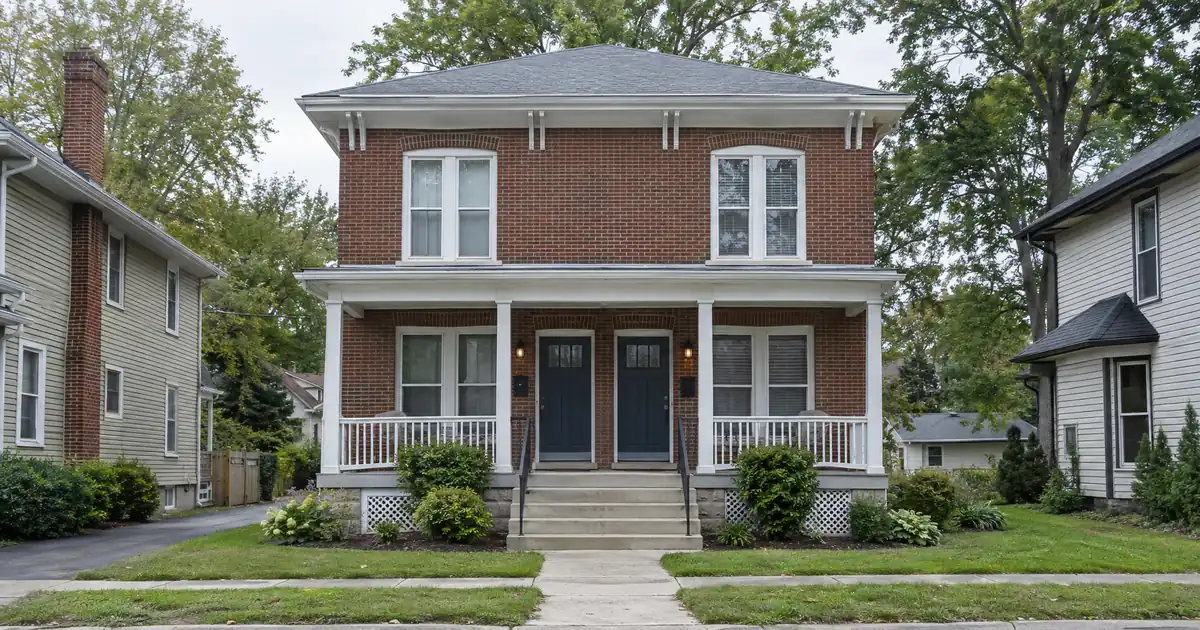
Anderson’s ten-year appreciation looks great on paper, and it is the wrong number to build a cash-out around. NeighborhoodScout’s modeled data shows a 101.21 percent cumulative gain over ten years, about 7.24 percent a year. The latest twelve months come in at 3.58 percent, lower than 70 percent of Indiana cities and towns. The decade did its work already. Whatever equity a seasoned Anderson rental holds today came from the buy price, the rehab, and the old run-up. It did not come from next year’s market.
At a Glance: A DSCR cash-out refinance on an Anderson, Indiana rental is underwritten primarily on the property’s rental income measured against its full monthly obligation, so the deal works from title seasoning and a lease-backed rent figure to an appraisal sized against the program’s LTV ceiling, then to reserves documentation and settlement reconciliation.
DSCR Cash-Out Calculator
Run the cash-out numbers in Anderson, IN
Rate source: Freddie Mac 30-yr average via FRED® — Federal Reserve Bank of St. Louis · effective Sep 24, 2026
Prefilled with starting assumptions — enter your property’s value, balance, taxes, and insurance for a more accurate picture.
Program parameters update from Lendmire’s centralized guideline source. Taxes and insurance are editable estimates.
As of Sep 24, 2026 · General Freddie Mac market benchmark, not a Lendmire loan offer. Property value, balance, taxes, and insurance are editable estimates. Maximum loan-to-value varies by lender, program, property type, and seasoning. Not a Loan Estimate, approval, or commitment to lend. Program availability and eligibility are subject to lender guidelines, credit approval, property review, and underwriting.
- Zumper puts Anderson median rent at $950 and three-bedrooms at $1,200.
- Ascension St. Vincent Anderson is the county’s largest employer at 2,108 workers, per Madison County’s employer list.
- Homes.com showed only 13 multi-family listings, so duplex appraisals run on thin comps.
- Cash-out generally requires about six months of ownership measured from title recording.
- Anderson balances are small, which routes many files through select lenders in the network.
Lendmire (NMLS# 2371349) is a DSCR-focused mortgage broker. It works with Anderson, Indiana investors through a DSCR program footprint spanning 40 states plus Washington, D.C. This article stays on the equity-extraction side: an investor who already owns the property and wants to pull capital out of it. Purchase mechanics are a different article.
What “Equity” Means When Three Sources Give Three Values
The equity number on an Anderson rental depends on which value you trust. The appraiser’s number is the only one that counts, and it usually lands closer to the sale-price data than to the list-price data. Plan around the lower reading.
Here is how the public numbers stack up. Zillow’s home value index sits at $138,938, up 3.8 percent over the past year. Redfin’s median sale price is $155,500, down 1.3 percent year over year. Movoto’s median list price is $158K. Zillow measures value, Redfin measures what closed, and Movoto measures what sellers are asking. They are not supposed to match. Indiana as a whole sits at $260,808 on Zillow’s index, so Anderson trades at roughly half the state level.
Here’s the catch. Direction is unclear. Zillow says up, Redfin says down, and NeighborhoodScout says slowing. A cash-out plan that assumes appreciation will fill the gap is guessing. Equity in Anderson has to come from an acquisition discount, a rehab that moves the appraisal, or a long hold. Size the refinance on a conservative value and treat any upside as a bonus.
The Math: 75 Percent LTV, Full PITIA, Three Modeled Cases
At the 75 percent cash-out ceiling, a typical Anderson single-family rental can land near the 1.00 coverage baseline, with only a modest cushion at median rent, while a duplex generally has more room above it. The ceiling is a hard cap on cash-out, so do not carry the 80 percent purchase figure over. Whether the number clears 1.00 depends on the lease, taxes, insurance, and the loan size, subject to lender guidelines.
These are modeled assumptions, not sourced market data. All coverage figures below are rent divided by full PITIA, meaning principal, interest, taxes, and insurance, using Indiana-average tax and insurance loads and a mid-range interest assumption. They are rounded down.
- Median-rent single-family. Assume a $150,000 appraised value (close to the $150K median listing price in Redfin’s cheap-homes search) and a $950 lease, which matches Zumper’s median. At 75 percent LTV, coverage lands around 1.05 including taxes and insurance. That is thin. One repair bill or one soft renewal and the cushion is gone.
- Three-bedroom single-family. Same value, same 75 percent LTV, but a $1,200 lease. Zumper shows $1,200 as its three-bedroom figure. Coverage moves to about 1.3 including taxes and insurance, which is a comfortable cushion by comparison.
- Duplex. Assume a $180,000 appraised value with a one-bedroom unit at $799 and a two-bedroom unit at $950 (Zumper’s figures for each size). Add the two rents together and the combined income sits well above either single-family lease. At 75 percent LTV, coverage runs about 1.6 including taxes and insurance. Two rents against one loan is the whole story.
Honestly, the duplex case is the better structure on paper. Anderson pricing is low enough that a second rent roll does more for coverage than almost anything else an investor can do. The catch is appraisal support, covered below.
If a case falls under 1.00 on lease rent, a few structures may apply: lower leverage, a pay-down at refinance, a sub-1.00 program, or an interest-only structure. Each is something a lender would review, and none is assured.
DSCR files in markets like this one typically look the same from the desk. The rents are modest, the balances are small, and the coverage is decided by the lease and the appraiser’s rent schedule rather than by anything exotic. Files with the three-bedroom lease signed and rent history in hand tend to move through review cleanly. Files that rest on an asking rent in a listing, or on a modeled neighborhood rent, tend to get questioned. The cleanest file from a documentation standpoint has complete leases, entity documents, title, and property details ready for lender review. Clean paper does not guarantee an outcome, but it removes the preventable gaps.
For the mechanics behind the ratio, see the guide “What Is a DSCR Loan”.
Seasoning: The Clock Starts at Recording
The ownership clock for a DSCR cash-out refinance generally starts at title recording, not at the contract date or the day keys changed hands. The typical requirement is about six months, documented by the recorded deed and the settlement statement.
That distinction trips files. An investor who closed in the last week of a month and assumes six months from the contract date can be off by weeks. The lender wants the recording date. Files that assume seasoning away get kicked back.
Rehab is the other seasoning trap. An Anderson investor who buys an older house, spends on repairs, and wants to cash out has to deal with how the lender treats the value. The appraiser may reflect the improved condition, but the lender’s seasoning and valuation rules still govern. Keep the purchase settlement statement, rehab invoices, and photos together so the value story is documented, not asserted.
Proceeds are not a fixed number. Equity available depends on rent used for lender review, PITIA, reserves, and the 75 percent ceiling. Reserves generally run about six months of PITIA, and those need documentation: bank or brokerage statements, not a promise. Credit tiers typically begin at a 620 floor, with better positioning at higher scores. For the program overview, see the cash-out refinance details and the rate-and-term and cash-out refi details.
Where the Pencil Works: Anderson West and the Older Core
Anderson West is the cleanest place to start for small-building equity plays, though its published numbers are modeled. NeighborhoodScout’s page for Anderson West shows a median price of $135,509 and an average rent of $1,453. It describes a mix of small to medium single-family homes and small apartment buildings, with owners and renters side by side.
Treat that rent with suspicion. $1,453 sits well above Zumper’s $950 citywide median and above RentCafe’s $1,077 average, which covers only buildings with 50 or more units. A modeled neighborhood rent is not a lease. Underwrite on a signed lease or an appraiser’s rent schedule, not on a vendor’s average. Still, the housing mix is the point: small apartment buildings alongside single-family homes is exactly where a duplex or fourplex refinance lives.
Near downtown, the West Central Historic District covers about 30 acres and runs Italianate, Bungalow, and Foursquare housing. Indiana Landmarks ties the neighborhood to the Gas Boom and notes that residents wanted more revitalization support. No reliable price or rent data turned up for it. The likely angle is older, larger homes and multi-unit conversions. That also means condition adjustments in the appraisal, and a refinance packet that documents updates.
The Downtown Historic District is smaller, about 17 acres with 32 contributing buildings, and the city’s downtown redevelopment page promotes arts, dining, and retail growth. That is a demand story, not a pricing story, since no rent figures were found.
Northeast, the Anderson University campus supports a small niche. The university reports about 1,300 students, and U.S. News says 28 percent live off campus. Enrollment figures conflict across sources, so use the university’s number. A few units near campus can lean on that pool. It is not an underwriting driver.
Other names show up in listing searches: Glyn Ellen, Perkinsville, Crestlawn, Harmeson Heights, and Forest Hills. No trustworthy neighborhood-level numbers came with them. The stronger play may be the small-building streets over the lower-priced single-family pockets. Cash-out proceeds are bigger when the appraisal can credit two rents. Investors holding cheaper single-family stock might argue otherwise, since a smaller loan is easier to carry. It is a genuine toss-up.
Why Do Anderson Duplex Appraisals Run Short?
They run short because the comp pool is small. A cash-out is sized on the appraised value, so a thin pool is the biggest practical risk to proceeds.
The Homes.com multi-family snapshot showed 13 listings priced from $85,000 to $425,000, with older duplexes in the historic core mixed in with other inventory. Redfin shows about 53 sales in its latest monthly reading against 49 a year earlier, which is steady but small. NeighborhoodScout puts single-family detached homes at 69.52 percent of the city’s housing units. Single-family comps are plentiful. Duplex comps are not.
Expect the appraiser to use a small set, sometimes reaching outside the subject’s immediate area. Comps from other pockets can drag the number, and that caps proceeds. The fix is boring and works: a local agent pulls in-neighborhood sales and condition adjustments before the file goes in. If the value comes in light, an appraisal reconsideration request with recent nearby sales and documented updates is a routine step, not an emergency. Do it with comps in hand, not with an argument.
Who Pays the Rent: The Tenant Base
Anderson’s renter pool is a workforce pool tied to health care, manufacturing, and public employers. That is steadier than the old single-plant economy. Health care is the stronger anchor for long holds.
The county’s largest-employers list is led by Ascension St. Vincent Anderson at 2,108 and Community Hospital Anderson at 1,407. Red Gold in Orestes is at 1,400, Anderson Community School Corporation at 1,067, and Nestlé USA at 813. Some listed employers sit outside the city, and the file is a 2023 data year. Ascension runs a full-service hospital with a Level III trauma center. The Encyclopedia of Indianapolis calls health care and social assistance the largest employment sector and notes a $200 million Nestlé expansion at its Anderson plant. Hospital and allied-health staff are the kind of tenant that stays through a long lease cycle.
The history is worth one line. General Motors employed nearly 22,000 people in Anderson at its peak and fewer than 2,600 after the decline. The city has since dealt with higher poverty and unemployment. Today’s mix spreads job risk across several sectors rather than one plant.
Census Bureau QuickFacts shows a population of 55,367, with 15.7 percent of adults holding a bachelor’s degree against 29.5 percent statewide. RentCafe reports 45 percent of households renter-occupied. Anderson sits 40 to 45 miles northeast of Indianapolis on I-69 and is part of the Indianapolis-Carmel-Anderson metro. Zumper shows median rent up 5.6 percent year over year. No reliable citywide vacancy figure turned up, so underwrite vacancy yourself with the lease history. Neighborhood vacancy numbers floating around online are modeled, so skip them.
The Paper That Holds Up Anderson Files
Most Anderson cash-out files stall on documentation, not on the math. The gaps are predictable.
1. Leases. Every unit needs a current lease. A duplex with one vacant side gets underwritten on the appraiser’s market rent for that unit, so have an asking-rent history ready.
2. Entity documents. Title in an LLC is workable, subject to lender program eligibility. The operating agreement, EIN letter, and a certificate of good standing should be in the package before submission.
3. Title and recording. Pull the recorded deed. Confirm the recording date supports the six-month seasoning, and clear any open liens or title exceptions before the lender finds them.
4. Reserves documentation. Statements showing about six months of PITIA, seasoned and sourced. Sudden large deposits generate questions.
5. Insurance. A current quote with full coverage details, not last year’s. A stale quote is the stealth killer on any file because the coverage ratio changes when the premium does.
DSCR vs. conventional financing
There are two common ways to finance an investment property in Anderson, IN, and they qualify you differently — here’s how investors weigh them.
Why investors choose it
- Qualifies on the property’s rental income — no personal tax returns, W-2s, or pay stubs needed to document income.
- No personal debt-to-income ceiling to clear, so existing mortgages and obligations don’t cap your borrowing the same way.
- Can be closed in an LLC, keeping the property inside a business entity.
- Built for scaling — not held to the limit on number of financed properties that conventional financing applies.
- Underwriting centers on the deal: generally qualifies when the rent covers the payment, a 1.00x coverage ratio being a common baseline (confirmed in underwriting).
- Designed specifically for investment property, including long-term and, where the program allows, short-term rentals.
Where it’s strong
- Often the lowest ongoing financing cost for a buyer who fully qualifies on personal income — a fit for a first property or a cost-first purchase.
Trade-offs for investors
- Requires full personal income documentation and must fit within a debt-to-income limit — salary, existing debts, and other mortgages all count.
- Typically held in your personal name rather than a business entity.
- Caps how many financed properties you can carry, which can become a ceiling as a portfolio grows.
- Evaluates you as a borrower as much as the property, which usually means more paperwork.
How investors usually choose: a first or single property often optimizes for the lowest financing cost; portfolio builders often optimize for leverage, vesting in an LLC, and scaling past conventional caps. The right answer depends on your goals, the property, and current guidelines — both paths run through select lenders in Lendmire’s wholesale network, with eligibility and terms confirmed in underwriting.
6. Property details. Unit count, condition notes, and any improvements. Older housing stock needs the updates documented.
Manufactured homes, log homes, and barndominiums fall outside these programs entirely. In a market with plenty of older and mixed housing stock, confirm the property type early. Before any refinance, verify current local rental rules, taxes, and insurance with qualified local professionals. Those vary by property and are outside this article.
Where the Proceeds Go
The point of a cash-out is the next deal. Anderson’s low price basis means proceeds from one refinance can go toward a down payment on the next small property. The tradeoff: pulling equity raises the loan balance and lowers coverage on the refinanced property. Run the post-refinance coverage before pulling the maximum, not after.
For the comparison with other loan types, see the guide “Where DSCR and Conventional Diverge”. For other Indiana markets and programs, the state page for Indiana DSCR investor loans covers the broader picture. To request a quote, reach Lendmire at 828-256-2183.
Frequently Asked Questions
How do you qualify for a DSCR cash-out refinance in Anderson, Indiana?
Qualification is generally built on the property’s rental income measured against its full monthly obligation, with a 1.00 baseline common across standard programs. Typical guidelines also include a 620 credit floor, about six months of ownership from title recording, about six months of PITIA in reserves, and a 75 percent LTV ceiling. Exact eligibility depends on lender guidelines, credit profile, reserves, and property review.
What are the requirements for an investment property loan in Anderson, Indiana?
Expect a lease or appraiser rent schedule, entity documents if the property sits in an LLC, a recorded deed, reserves statements, and a current insurance quote. The property must be an eligible type. Manufactured homes, log homes, and barndominiums fall outside the network’s DSCR programs. Program terms can change, so confirm current details before relying on any figure.
Does a lower-priced anderson rental still work for a cash-out refinance?
It can, but small balances are the friction point. Standard programs go up to $3,000,000, and smaller balances route through select lenders in the network rather than every program. Anderson’s values sit around $139K to $156K depending on the source, so many files land in that smaller-balance lane. Coverage on a single-family at the median rent is thin, so check it before applying.
How do appraisals affect a cash-out on an Anderson duplex?
They matter more than anywhere else in the file. With only about a dozen multi-family listings active at the time of the Homes.com snapshot, the appraiser often works from a small comp set. If the value comes in light, an appraisal reconsideration with recent in-neighborhood sales and documented condition updates is a routine request.
Can Lendmire help investors explore DSCR financing for properties outside Indiana?
Yes. Lendmire arranges DSCR investor loans. Programs are generally reviewed on property-level rental income rather than personal income, subject to lender and program guidelines.
What a Local Appraiser Would Tell You
Anderson rewards the investor who owns the property for the long haul and documents it well. The value is low, the comps are few, and the rent is modest, so a cash-out here is a small, deliberate transaction, not a windfall. Pull the comps before you order the appraisal, keep the lease current, and pull out only the equity the coverage can carry.
For current guidelines and terms, see Lendmire’s DSCR loan programs page.
About Lendmire
Lendmire is a non-QM mortgage brokerage (NMLS# 2371349) arranging DSCR investor loans in 41 markets, including Washington, D.C. DSCR eligibility is generally reviewed around property-level rental income rather than personal income, subject to lender and program guidelines. That makes it a fit for self-employed investors and LLC-owned portfolios. Lendmire was recognized as a top-ranked workplace in 2026 and as a 2025 Scotsman Guide Top Mortgage Workplace.
Get Started
Ready to find the right loan for you?
In about 30 seconds you can review financing options available for your investment property. No commitment required.
Informational only. Not a Loan Estimate, approval, or commitment to lend. Program availability and eligibility are subject to lender guidelines, credit approval, property review, and underwriting.
References
1. NeighborhoodScout, Anderson real estate
2. Zumper, Anderson rent research
3. Madison County largest employers
4. Homes.com, Anderson multi-family listings
5. Zillow, Anderson home values
6. Redfin, Anderson housing market
11. andersonecondev.com — Downtown Redevelopment
12. anderson.edu — Campus Facts
13. full-service hospital with a Level III trauma center
14. Encyclopedia of Indianapolis, Madison County
15. General Motors employed nearly 22,000 people in Anderson
17. RentCafe
18. Scotsman Guide — Top Workplaces 2026
19. a 2025 Scotsman Guide Top Mortgage Workplace
This article is part of Lendmire’s investment property cash-out refinance program — full qualification details, guidelines, and scenarios live on the program page.
Related reading: Luxury Rental DSCR Loans In New Jersey · Jersey Shore Vacation Rental Loans: DSCR Financing In Ocean City, Cape May And Long Beach Island · DSCR Cash-out Refinance In New Jersey: Pulling Equity From A Rental
Guides: Investment Property Cash-Out Refinance in Anderson, IN · Investment Property Cash-Out Refinance in Indiana
Brandon Miller
Founder & CEO, Mortgage Loan Originator, Lendmire LLC
- Mortgage Loan Originator · NMLS# 1129696 · Verify on NMLS Consumer Access
- North Carolina Real Estate Broker · License# 343312 · Verify on NCREC
- North Carolina Insurance Producer · License# 19053198 · Property, Casualty, Life, Health · Verify on NAIC SBS
- Lendmire LLC · Firm NMLS# 2371349 · Verify firm licensure
Compliance and disclosures. Lendmire (NMLS# 2371349) is a licensed mortgage broker and is not a direct lender, depository institution, financial advisor, or tax professional. Content in this article is general market analysis and educational information — not financial, legal, or tax advice for any specific situation. Lendmire does not guarantee loan approval; every transaction is subject to underwriting by the funding lender. Mortgage pricing and loan program guidelines are subject to change at any time without notice and vary by borrower characteristics, property type, and state regulations. Lendmire complies with Equal Housing Opportunity. Licensure verification: NMLS Consumer Access.