
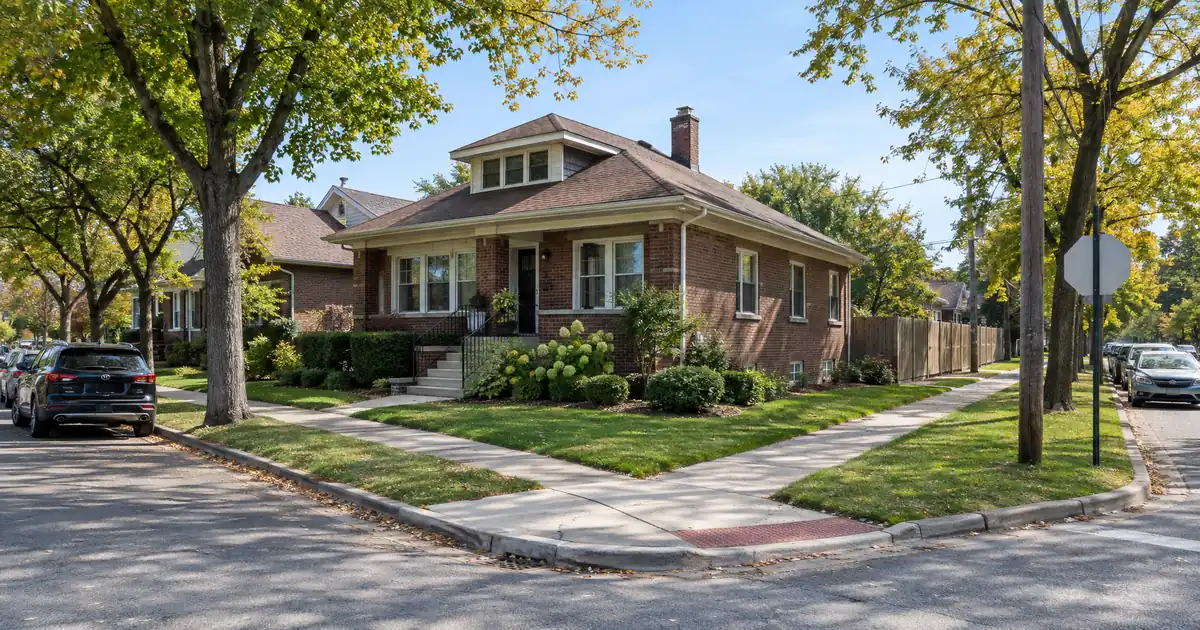
Picture an investor holding a three-bedroom single-family rental in the Downtown Arlington Heights area. She bought it several years ago, the balance has shrunk, the lease is steady, and the appraisal would now land well above her purchase price. A second property is on her watchlist but the down payment isn’t there. A DSCR cash out refinance is built for that gap: it tests the property’s rent against its full monthly obligation instead of the owner’s traditional personal-income documentation. Lendmire (NMLS# 2371349), a DSCR-focused mortgage broker, arranges these files through wholesale investor lenders. The catch in this suburb is that equity is plentiful and yield is thin, so the real question is whether coverage clears once the loan is sized.
The Quick Read: A DSCR cash-out refinance in Arlington Heights, Illinois is underwritten primarily on the property’s rental income measured against its full monthly obligation, so the path runs from an appraisal and rent schedule, through about six months of title seasoning and a 75 percent LTV ceiling, to a lender-reviewed file whose proceeds depend on coverage and reserves.
DSCR Cash-Out Calculator
Run the cash-out numbers in Arlington Heights, IL
Rate source: Freddie Mac 30-yr average via FRED® — Federal Reserve Bank of St. Louis · effective Sep 24, 2026
Prefilled with starting assumptions — enter your property’s value, balance, taxes, and insurance for a more accurate picture.
Program parameters update from Lendmire’s centralized guideline source. Taxes and insurance are editable estimates.
As of Sep 24, 2026 · General Freddie Mac market benchmark, not a Lendmire loan offer. Property value, balance, taxes, and insurance are editable estimates. Maximum loan-to-value varies by lender, program, property type, and seasoning. Not a Loan Estimate, approval, or commitment to lend. Program availability and eligibility are subject to lender guidelines, credit approval, property review, and underwriting.
- Median-priced houses rarely cover a high-LTV cash-out; the lower end of the price band does better.
- Small multifamily is only 4.12 percent of housing units, so duplex and fourplex owners hold scarce product.
- Rent portals disagree widely here, so the appraiser’s rent schedule is the number that matters.
- The Bears’ Arlington Park site is optionality, not something to underwrite.
Arlington Heights Market Snapshot
A quick read on the Arlington Heights investor landscape — figures come from the cited sources below. Confirm current property-level numbers before underwriting.
| Metric | Detail |
|---|---|
| Home prices | $547,345 median value (NeighborhoodScout) |
| University enrollment | 13,988 students (Community College Review, Harper) |
| Employment | About 100 employees (CBS Chicago) |
How the Equity Math Works Before Anyone Looks at Rent
Cash-out proceeds come from one subtraction. Appraised value times the LTV ceiling, minus the existing payoff, minus costs, equals what’s available. On most DSCR cash-out files, the ceiling is typically 75 percent of value. That is lower than the 80 percent ceiling on a purchase, and investors who blur the two overestimate their proceeds every time.
Walk through it in percentages. If an investor owes 50 percent of the appraised value, the gap to a 75 percent ceiling is 25 percent of value, before closing costs and before the lender sets aside reserves, typically about six months of the full monthly obligation. The other gate is seasoning: lenders generally want roughly six months of ownership measured from title recording. Buy in March and the cash-out conversation starts around September.
The appraised value is also the least predictable input in this market. Resideline puts the median closing price at $455,000 across 597 sales, with the middle half running from $327,500 to $628,000. That is the figure used throughout this article. Other sources land lower: Zillow’s home value index shows $401,290, a different methodology, and monthly sale counts are thin enough that medians swing. Size the loan to a conservative valuation, not a headline median. Headroom calculated on the optimistic portal gets trimmed at appraisal.
The Coverage Test in a Thin-Yield Suburb
The binding constraint here is rent against price. Using Resideline’s median price and Apartment List’s citywide median rent of $1,946, monthly rent runs about 0.43 percent of price. The two sources cover different property mixes, so read that ratio as directional. It is still low, and low-yield stock is exactly what stresses a cash-out.
Here is a modeled scenario, with inputs as assumptions, not market facts. Assume a three-bedroom rental at a rent of $2,566, Apartments.com’s three-bedroom figure. Coverage is calculated as rent divided by full PITIA (principal, interest, taxes, and insurance), with the taxes and insurance carried at Illinois-typical averages:
| Appraised value | LTV | Modeled coverage |
|---|---|---|
| $327,500 | 75% | about 1.1x |
| $455,000 | 75% | about 0.8x |
| $455,000 | 60% | about 0.9x |
Two lessons sit in that table. First, the lower end of the price band clears the 1.00 benchmark and the median does not, because the cash-out loan grows with value while rent doesn’t keep pace. Second, trimming leverage helps less than investors expect. Taxes and insurance scale with the price, not the loan, so dropping to 60 percent still leaves the file under 1.00.
A 1.00 benchmark is common because rent covers the obligation at that level. Some lenders review lower ratios, but usually with lower LTV, stronger credit, more reserves, or different pricing, and eligibility depends on lender guidelines, credit approval, and property review. If a file lands in the 0.8-0.9 zone, the options to ask about are a sub-1.00 program, an interest-only structure, or a smaller cash-out that targets a lower payoff-to-value ratio. The more honest read is that a sub-1.00 result at the median price is a signal to cash out the cheaper asset in the portfolio, not to force the expensive one.
DSCR files in markets like this one typically look the same from the inside. Appreciation is real, taxes and insurance weigh heavily on the obligation, and the appraiser’s rent schedule decides whether the file lands above or below 1.00. The stronger files are usually the lower-priced properties or multi-unit assets, and investors who decide which property to refinance before ordering the appraisal generally avoid redoing the math. Credit tiers matter too: scores typically start at a 620 floor, with better terms available at the 660, 680, and 700 tiers. Review details remain subject to lender overlays.
Property Type Decides the Answer
Single-family rentals dominate the investable stock. NeighborhoodScout shows about 54.28 percent of units are single-family detached, 6.99 percent are townhomes or attached homes, and 34.60 percent sit in large apartment complexes. Workforce houses and attached homes are therefore the most available DSCR targets, with coverage that depends on price point, as the table shows.
Small multifamily flips the math. A duplex or fourplex carries several rents against one price and one loan, which is why it covers better at comparable leverage. The tension is scarcity. At 4.12 percent of units, owners who hold one have an asset that’s hard to replace, and a cash-out can fund acquisition of the next one. Anyone expecting to find five fourplexes on the market each quarter will be disappointed.
Condos are the other wrinkle. Many DSCR programs restrict condo eligibility, so an owner holding one should confirm the project’s status with the lender before planning proceeds. Manufactured homes, log homes, and barndominiums fall outside these programs entirely.
Four Pockets Worth Knowing
Downtown Arlington Heights. A walkable core of shops and restaurants anchored by a Metra station. The Village of Arlington Heights describes more than 30 shops and nearly 40 restaurants, and two Metra stations reach the Chicago Loop in under 45 minutes, per Trade & Industry Development. Commuting renters are the tenant base, and the owner-dominated housing stock keeps competition for tenants light.
The hospital corridor near Central Road. Endeavor Health Northwest Community Hospital is the anchor health employer. The Arlington Heights Chamber listing credits it with 489 beds, more than 350,000 outpatient visits, and over 1,000 physicians on medical staff. Clinical staff and traveling nurses supply steady, longer-lease demand. Healthcare hiring isn’t immune to change, though: the system cut about 100 jobs when it ended inpatient psychiatric care, per CBS Chicago.
The Algonquin Road corridor. Here the supply story turns cautionary. Expect concessions in that zone and check comps for the effect before trusting a rent schedule.
Westridge and other workforce pockets. Apartments.com lists Westridge among the more affordable neighborhoods by rent. No reliable neighborhood-level price source surfaced, so treat any price claim here as unverified. Lower entry prices are where coverage can clear 1.00, which is the same lesson the table taught.
Rents Are Noisy. Underwrite the Appraisal.
Rent sources disagree, and the gaps are large. RentCafe shows an average of $2,050, up 3.98 percent year over year, but its data covers buildings with 50 or more units and skews toward newer product. Apartment List shows rents up only 0.1 percent, and RentHop’s listing-based data shows two-bedroom medians down 6.67 percent. Every one of those can be true at once.
The practical answer is to underwrite to the appraiser’s rent schedule and conservative comps. A portal average is a conversation starter, not a file input. RentCafe also reports that only 26 percent of households, 8,178 in all, are renter-occupied. That means low tenant competition but shallow rental comps, so appraisers sometimes reach for larger complexes that overstate what a single-family rental can command.
The Supply Side Helps Existing Owners
Few new units are coming. A 135-unit downtown project, Mylo, has stalled after zoning approval. The Daily Herald attributes the delay to trouble raising equity and higher construction costs, and its developer noted that existing Northwest suburban buildings can trade at or below construction cost. Limited new supply reduces oversupply risk for existing rentals and gives values a replacement-cost floor argument. It doesn’t create rent growth by itself, and the Arbor House lease-up shows pockets where supply still bites.
What the Bears Do and Don’t Change
The Bears own the 326-acre former racecourse, and the headlines swing constantly. After the team’s board advanced a Hammond, Indiana project, NBC Chicago reported the mayor saying the village accepts that direction. The Chicago Sun-Times later reported the team would not rule out Illinois. The team’s claim of more than 9,750 long-term jobs, per Athletic Business, is a team projection, not a forecast.
DSCR underwriting counts in-place rent, so a stadium adds zero to coverage today. Treat it as upside optionality. An investor who sized a cash-out on stadium hopes, rather than on the lease in hand, would be building on the one assumption the lender won’t credit. For context, the local economy already has depth: the Village counts over 3,000 businesses and more than 40,000 daytime workers, and Data USA shows 5,708 residents in professional services, 4,614 in manufacturing, and 4,404 in health care.
Where the Proceeds Go (and When to Skip the Cash-Out)
This one’s a toss-up for some investors. If the next acquisition is another Arlington Heights rental near the lower end of the price band, where coverage clears 1.00, the cash-out is straightforward. Pulling equity to buy a duplex or small multifamily here can also improve portfolio coverage, because those assets carry more rent per dollar of price. Pulling equity to fund something in a market where the numbers don’t pencil at current pricing is a different decision, and one worth stress-testing first.
Skip the cash-out when the property lands under 1.00 and the only fix is a smaller draw that doesn’t fund the next deal. A conventional refinance may suit a W-2 borrower with one or two rentals; the choice between DSCR and conventional, covered in “Where DSCR and Conventional Diverge”, comes down to how many financed properties the investor holds and whether personal income cleanly supports the file. For entity-held properties, LLC-titled cash-outs are subject to lender program eligibility, and owners with larger portfolios often find DSCR is the only practical lane. The investment property refinance options cover rate-and-term alternatives, and the guide “The Refi Options” walks through the mechanics. For the basics of DSCR lending, see the guide “What Is a DSCR Loan”. Investors comparing structures can review Lendmire’s Illinois DSCR loan programs or call 828-256-2183 to talk through a specific property. Confirm current local rental rules, taxes, and insurance with qualified local professionals before committing.
Frequently Asked Questions
Does the Arlington Park stadium decision affect my cash-out?
Not in underwriting. A DSCR file is reviewed on in-place rent and the appraised value, and a stadium that may or may not come doesn’t change either one. If an appraiser happens to cite the site, treat that as noise rather than a value driver.
Why does my median-priced house struggle to clear 1.00?
Rent runs around 0.43 percent of the median price, so the obligation at a 75 percent LTV outweighs typical rent once taxes and insurance are counted. Lower-priced houses or multi-unit properties do better. A lower LTV improves the ratio only partly, because taxes and insurance scale with price, not the loan.
DSCR vs. conventional financing
Two common ways to finance an investment property in Arlington Heights, IL. They qualify you differently — here’s how investors weigh them.
Why investors choose it
- Qualifies on the property’s rental income — no personal tax returns, W-2s, or pay stubs needed to document income.
- No personal debt-to-income ceiling to clear, so existing mortgages and obligations don’t cap your borrowing the same way.
- Can be closed in an LLC, keeping the property inside a business entity.
- Built for scaling — not held to the limit on number of financed properties that conventional financing applies.
- Underwriting centers on the deal: generally qualifies when the rent covers the payment, a 1.00x coverage ratio being a common baseline (confirmed in underwriting).
- Designed specifically for investment property, including long-term and, where the program allows, short-term rentals.
Where it’s strong
- Often the lowest ongoing financing cost for a buyer who fully qualifies on personal income — a fit for a first property or a cost-first purchase.
Trade-offs for investors
- Requires full personal income documentation and must fit within a debt-to-income limit — salary, existing debts, and other mortgages all count.
- Typically held in your personal name rather than a business entity.
- Caps how many financed properties you can carry, which can become a ceiling as a portfolio grows.
- Evaluates you as a borrower as much as the property, which usually means more paperwork.
How investors usually choose: a first or single property often optimizes for the lowest financing cost; portfolio builders often optimize for leverage, vesting in an LLC, and scaling past conventional caps. The right answer depends on your goals, the property, and current guidelines — both paths run through select lenders in Lendmire’s wholesale network, with eligibility and terms confirmed in underwriting.
Can I cash out on a duplex or fourplex?
Yes, these are among the stronger DSCR candidates here, subject to lender guidelines. Only 4.12 percent of local units are small multifamily, so there are few comps, and appraisers may lean on surrounding stock. Expect the appraiser’s rent schedule to drive the outcome.
How long do I have to own the property first?
Most programs want about six months of ownership, measured from title recording. Some lenders vary, and the equity available still depends on the 75 percent ceiling, coverage, and reserves.
Will new apartments near Algonquin Road hurt my rent?
They can soften it nearby. Arbor House added 301 units, and lease-up concessions can pull comparable older rentals toward lower rents. Properties farther from that corridor face less direct competition, so check comps before assuming your current lease holds at renewal.
The investors who size their cash-out to the appraiser’s rent schedule and the lower end of the price band will still be buying while everyone else waits on a stadium.
For current guidelines and terms, see Lendmire’s DSCR loan programs page.
About Lendmire
A non-QM mortgage broker (NMLS# 2371349), Lendmire arranges DSCR financing for real estate investors in 41 markets, meaning 40 states plus Washington, D.C. Because deals are underwritten primarily on property cash flow rather than personal income documentation, the structure suits self-employed buyers and entity-owned portfolios. Lendmire places loans through wholesale investor lenders and is not a direct lender. The firm is recognized as a 2026 Scotsman Guide Top Mortgage Workplace and a 2025 Scotsman Guide Top Workplace.
Get Started
Ready to find the right loan for you?
In about 30 seconds you can review financing options available for your investment property. No commitment required.
Informational only. Not a Loan Estimate, approval, or commitment to lend. Program availability and eligibility are subject to lender guidelines, credit approval, property review, and underwriting.
References
1. NeighborhoodScout, Arlington Heights
2. Community College Review, Harper
3. CBS Chicago
7. Village of Arlington Heights, Business
8. Trade & Industry Development
9. Endeavor Health Northwest Community Hospital
10. Arlington Heights Chamber listing, Northwest Community Hospital
11. RentCafe, Arlington Heights
12. Daily Herald
13. NBC Chicago
16. Data USA, Arlington Heights
17. a 2026 Scotsman Guide Top Mortgage Workplace
18. a 2025 Scotsman Guide Top Workplace
This article is part of Lendmire’s investment property cash-out refinance program — full qualification details, guidelines, and scenarios live on the program page.
Related reading: Luxury Rental DSCR Loans In New Jersey · Jersey Shore Vacation Rental Loans: DSCR Financing In Ocean City, Cape May And Long Beach Island · DSCR Cash-out Refinance In New Jersey: Pulling Equity From A Rental
Guides: Investment Property Cash-Out Refinance in Arlington Heights, IL · Investment Property Cash-Out Refinance in Illinois
Brandon Miller
Founder & CEO, Mortgage Loan Originator, Lendmire LLC
- Mortgage Loan Originator · NMLS# 1129696 · Verify on NMLS Consumer Access
- North Carolina Real Estate Broker · License# 343312 · Verify on NCREC
- North Carolina Insurance Producer · License# 19053198 · Property, Casualty, Life, Health · Verify on NAIC SBS
- Lendmire LLC · Firm NMLS# 2371349 · Verify firm licensure
Disclosure information. Lendmire is a state-licensed mortgage brokerage under NMLS# 2371349. Lendmire is not a depository institution, direct lender, or financial advisor — all loans referenced are placed through wholesale lender partners and are subject to each lender's underwriting standards. This article is provided for general informational purposes and is not a commitment to lend, nor does it constitute financial, legal, or tax advice. Loan programs, terms, rates, and qualification standards change without notice and depend on borrower profile, property type, and the state in which the subject property is located. Equal Housing Opportunity provider. NMLS Consumer Access: nmlsconsumeraccess.org.