
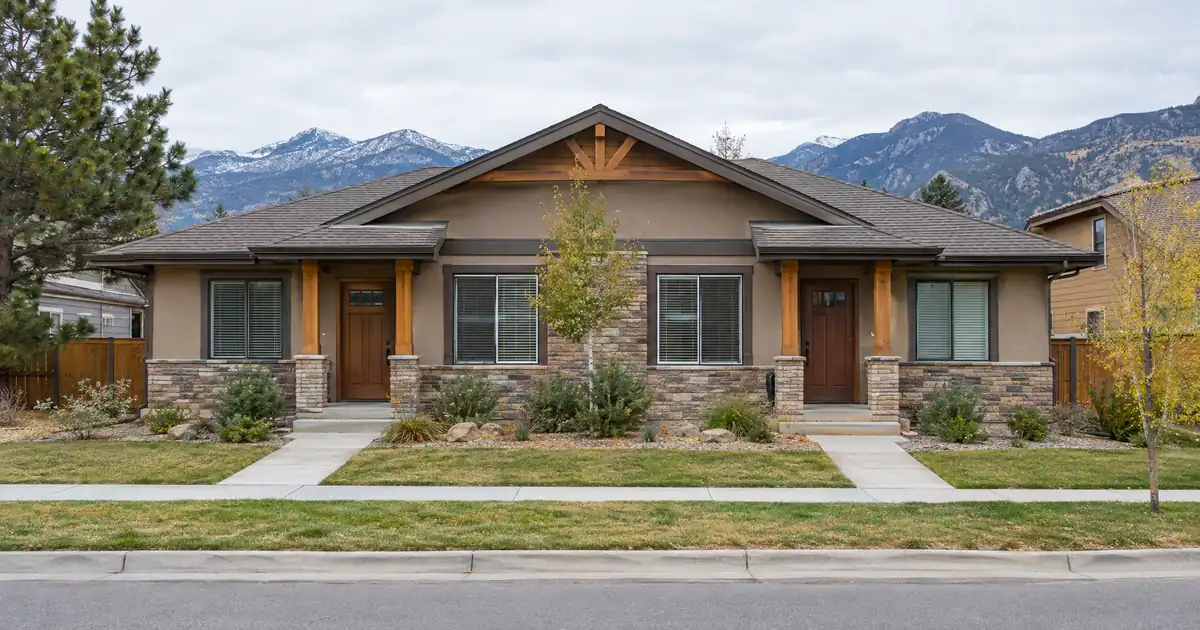
Picture an investor holding a duplex bought at a modeled $450,000 in older west-central Arvada, now appraising well above that. The plan is a DSCR cash out refinance in Arvada, Colorado to pull equity out and fund the next acquisition. The catch is that the lender reads today’s appraised value, today’s rent, and the full monthly obligation. It does not read the story of how the property got there. Arvada’s numbers make that distinction matter more than in most Front Range suburbs.
The Quick Read: A cash-out refinance on an Arvada, Colorado rental is underwritten primarily on the property’s rental income measured against its full monthly obligation, so the file must show seasoned ownership, adequate reserves, and an appraised value that supports the leverage ceiling, subject to lender guidelines.
DSCR Cash-Out Calculator
Run the cash-out numbers in Arvada, CO
Rate source: Freddie Mac 30-yr average via FRED® — Federal Reserve Bank of St. Louis · effective Sep 24, 2026
Prefilled with starting assumptions — enter your property’s value, balance, taxes, and insurance for a more accurate picture.
Program parameters update from Lendmire’s centralized guideline source. Taxes and insurance are editable estimates.
As of Sep 24, 2026 · General Freddie Mac market benchmark, not a Lendmire loan offer. Property value, balance, taxes, and insurance are editable estimates. Maximum loan-to-value varies by lender, program, property type, and seasoning. Not a Loan Estimate, approval, or commitment to lend. Program availability and eligibility are subject to lender guidelines, credit approval, property review, and underwriting.
- The citywide three-month median sits near $635K, down 3.1% year over year, per Redfin.
- Single-family rents run well under 0.5% of price, so duplexes and fourplexes carry the coverage.
- Homes.com lists only 7 active multifamily properties, so appraisal comps will be thin.
- Vacancy is about 3% per the Greater Arvada Chamber, citing Lightcast.
Arvada Market Snapshot
A quick read on the Arvada investor landscape — figures come from the cited sources below. Confirm current property-level numbers before underwriting.
| Metric | Detail |
|---|---|
| Home prices | $635K median (3 months to June 2026) (Redfin, Arvada housing market) |
| Typical rents | $3,905/month duplex (Redfin Arvada multi-family) |
| University enrollment | 1,875 students (Wikipedia, Ralston Valley High) |
| Vacancy | 3% (lightcast) (arvadachamber.org — Arvadas Current Housing Supply and Why It Matters for Business) |
Olde Town Is Where the Equity Story Starts
Olde Town Arvada is the strongest place to hold a rental for a later cash-out. The National Register historic district sits across the street from a G Line platform, and the station is the second-busiest on the line after Union Station, with roughly 1,281 average daily riders per Wikipedia’s station entry. That is the demand engine, and it is a transit story rather than a campus or hospital story.
Prices need a caveat because the sources disagree. Homes.com shows a median sale price of $582,500 over the trailing twelve months and a separate median home price of $649,000. Movoto’s median list price is $555K. Redfin shows a much lower figure, but it rests on three sales, so treat it as noise. The working range for a modeled Olde Town property is roughly $555K to $650K.
Tenant depth is the real appeal. Homes.com puts renters at 63.6% of Olde Town residents, a renter-heavy pocket in a city where RentCafe counts only 25% of households as renters. RentCafe’s Historic Olde Town apartment average is $2,177 a month, but that comes from buildings with 50 or more units and overstates what a small landlord collects.
Now the honest part. Zumper shows Olde Town rents down 2.97% year over year, even with a 1% monthly uptick. An owner who plans to refinance should use a conservative rent, not the peak lease from two years ago. Here’s the catch: cash-out proceeds ride on appraised value and rent used for lender review, and Olde Town is strong on the second and unproven on the first.
The Premium Northwest: Great Product, Tight Coverage
Candelas, Leyden Rock, and Five Parks are where the coverage number gets squeezed. The neighborhood snapshots from Redfin’s Leyden Ranch page show Valleyview at Candelas at $828,900 and Village of Five Parks at $650,000, and Redfin’s Leyden Rock pending listings carry a median near $875K. Ownify puts the Candelas single-family median at $814,600, with townhomes and duplexes at $450K to $600K.
Nobody publishes reliable neighborhood-level rents for this area, which is a finding in itself. Rents cannot scale with prices this high. An investor holding a Candelas single-family rental should expect coverage well below 1.00 on long-term rent alone. Homes.com also shows at least one Leyden Rock rental managed by a professional single-family rental operator, which signals institutional competition for tenants.
Equity is also less certain here. Redfin’s Northwest Arvada data shows a median that has slipped over a recent three-month window compared with a year earlier, while price per square foot has moved up. That mixed signal probably reflects a shift toward smaller homes rather than real appreciation. The stronger play in this pocket might be the townhome and duplex tier rather than the higher-priced detached homes, though investors chasing long-term value could argue the other way.
Older West-Central and South-Central Stock: Where Ratios Improve
Older, lower-priced stock is where cash-out math gets more workable. Ownify describes an older-character area with homes in the $400K to $550K range, though it does not name the neighborhood, so confirm the location before relying on that band. RentCafe lists South Central Arvada apartments at $1,398 a month, well below the city-wide apartment average of $1,827. Apartments.com’s neighborhood rankings put Olde Town, the Arvada Plaza area, and Downtown Arvada as the most expensive, which implies the older parts of west-central and south-central Arvada trade at a discount.
One-bedroom apartment asking rents from Rent.com illustrate the spread: $1,879 in Allendale, $1,762 in Hackberry Hill, and $1,075 in Scenic Heights. Zumper puts Scenic Heights at $1,262, so the sources conflict. These are apartment listings, not small-property rents, so use them to gauge direction rather than to underwrite.
The tenant base here is workforce renters and households priced out of Olde Town. Their demand is tied to commuting patterns. Census Reporter gives a 26.1-minute mean commute and a $97,113 median household income for Arvada overall. That is why lower-cost stock near the G Line and the Denver-bound corridors holds up.
Duplexes and Fourplexes: The Stacked-Income Fix
Small multifamily is where DSCR cash-out math clears, and Arvada has very little of it. NeighborhoodScout reports that 70.27% of housing units are single-family detached. That scarcity cuts both ways. Owners with a 2-4 unit property are sitting on an asset that beats the local single-family ratios, but the thin supply makes appraisals harder.
A side-by-side duplex listed on Redfin advertises $3,905 a month in combined rent, with three bedrooms, two baths, a basement, and a one-car garage on each side. That works out to about $1,950 per side. Other listings describe fourplexes with 3-bedroom units and individually metered gas and electric, and duplex sides with separate meters and private laundry. Separate metering keeps utilities off the owner’s books, which supports net income and coverage.
Run the numbers on it as a modeled assumption, not a market fact. Say a duplex is appraised at $600,000 and produces $3,905 in monthly rent. At the 75% LTV ceiling, full PITIA including taxes and insurance, and a standard 30-year structure, coverage lands around 1.1x. Compare that to a single-family rental at the $635K citywide median earning $2,715, the top of the surveyed 3-bedroom range. At the same leverage, coverage drops to the low-to-mid 0.7s. A townhome near $475K renting for $2,378 lands around the mid-0.8s. Same city, same leverage, very different outcomes. Every figure here varies by lender and program — guidelines, property type, leverage, and credit profile all apply.
Sub-1.00 files are not dead ends, but they are different files. A lender may review a sub-1.00 program, an interest-only structure, or a lower LTV that improves the ratio. Those paths usually come with stronger compensating factors, more reserves, or different pricing, and eligibility depends on lender guidelines, credit, and property review. Coverage of 1.00x is a common baseline in these programs because rent then covers the full obligation.
Apartments.com’s averages show the rent side of the picture: $1,656 for a one-bedroom, $1,873 for a two-bedroom, and $2,365 for a three-bedroom. Against Movoto’s $615,000 median sale price, a 3-bedroom rent is about 0.38% of price per month. That is Lendmire Research’s own arithmetic on aggregator averages, not a published ratio. It explains why the duplex gets attention while single-family homes struggle to clear 1.00 at high leverage.
What the Appraiser Will Actually See
The appraisal is the biggest single variable in an Arvada cash-out, and the market is not doing owners any favors. Zillow’s average value for Arvada is $605,230, down 2.3% over the past year. Redfin’s citywide median is down 3.1%. Orchard reports months of supply at 4.85, up from 2.11 a year earlier, with new listings up 16.8%. Other sources show tighter supply (Ownify cites 2.2 months for the metro), so treat Orchard as one source’s snapshot. The direction is what matters: more inventory, softer pricing, less generous appraisals.
Comp depth is the second problem. Homes.com shows just 7 multifamily listings in Arvada, asking $299,000 to $1,190,000, and they spend an average of 48 days on the market. With so few comparable sales, expect appraisers to lean on single-family and duplex comps or reach into nearby Denver-area markets. An owner counting on a big number should underwrite on today’s value and treat any equity from price growth as a bonus rather than a plan.
Also note the tension inside the market. Home values are flat to slipping while the Chamber cites a DRCOG assessment that Arvada needs at least 4,990 new housing units in the coming years. Supply is short over the long run, yet prices are soft near term. Equity built by paying down debt and by buying below market holds up better than equity built on projected gains.
Seasoning, LTV, and Reserves in Practice
The mechanics are straightforward. Cash-out on an investment property is capped at 75% LTV. Lenders generally look for about 6 months of ownership measured from title recording, credit scores typically starting at a 620 floor, and reserves of roughly 6 months of PITIA (higher above $1,500,000). Qualifying DSCR starts around a 1.00 benchmark, and loan amounts run up to $3,000,000 on standard programs, with smaller balances routed through select lenders in the network. Equity available depends on rent used for lender review, PITIA, reserves, and the ceiling, and it is not a guaranteed cash figure. Manufactured homes, log homes, and barndominiums fall outside these programs.
In markets like this one, the deal desk tends to see the same friction point: the borrower’s mental value comes from a listing site, and the appraisal comes in lower. The cleaner files from a documentation standpoint arrive with complete leases, entity documents, title, and property details ready for lender review, plus a conservative rent figure and a stress test at a lower appraised value. Files that model the downside first rarely get surprised.
The Tenant Base Behind the Number
Arvada is a commuter suburb, and that is a feature for long-term rental holders. Data USA counts about 69.2K employed residents, led by professional, scientific, and technical services (9,520), health care and social assistance (7,964), and retail trade (7,268). These are residents, not jobs located in Arvada, so demand follows Denver, Boulder, Golden, and Westminster employment. The poverty rate is 5.8%, and Census Reporter puts the population at 122,529.
There is no major campus or verified hospital anchor inside city limits, so the demand story is diffuse rather than concentrated. JeffCo EDC notes three G Line stops in Arvada. Ridership at the other two stations is far below Olde Town: about 536 daily riders at Arvada Ridge and 503 at Arvada Gold Strike. Investors should not assume the transit premium extends to every station area. No reliable price or rent data exists for those station neighborhoods.
Vacancy tells the same story. A 3% figure from the Chamber, citing Lightcast, supports long-term hold quality, even as rents drift flat to slightly lower. Zumper’s citywide median of $1,790 is down 12.7% year over year on a small sample of 130 rentals, and RentCafe’s apartment average of $1,827 is down 1.95%. Rents are stable at best. Verify current local rental rules, taxes, and insurance with qualified local professionals.
Where Do the Proceeds Go?
The strongest use of Arvada equity is usually a lower-priced, higher-yielding asset, not another premium single-family home. Extracting equity from an appreciated Olde Town property and redeploying it into older, cheaper small multifamily is the pattern where ratios improve. The investor refinance breakdown covers the general mechanics, and pulling equity out walks through the cash-out structure specifically.
The other route is leaving the metro. With Arvada single-family rents near 0.4% of price, some owners will use proceeds to buy where the ratio starts higher. That is a fair call. Investors weighing a file can talk to Lendmire or call 828-256-2183 to run coverage on a specific property.
Frequently Asked Questions
How much equity can an Arvada rental realistically release?
It depends on appraised value, rent used for program review, PITIA, and reserves, all under the 75% LTV ceiling. With Redfin’s citywide median down 3.1% and Zillow’s value index down 2.3%, owners who bought recently may find little equity beyond what they paid down. Long-term holders in Olde Town or older west-central stock are better positioned. Final terms depend on lender guidelines, property type, leverage, and the borrower’s complete credit picture.
DSCR vs. conventional financing
Two common ways to finance an investment property in Arvada, CO. They qualify you differently — here’s how investors weigh them.
Why investors choose it
- Qualifies on the property’s rental income — no personal tax returns, W-2s, or pay stubs needed to document income.
- No personal debt-to-income ceiling to clear, so existing mortgages and obligations don’t cap your borrowing the same way.
- Can be closed in an LLC, keeping the property inside a business entity.
- Built for scaling — not held to the limit on number of financed properties that conventional financing applies.
- Underwriting centers on the deal: generally qualifies when the rent covers the payment, a 1.00x coverage ratio being a common baseline (confirmed in underwriting).
- Designed specifically for investment property, including long-term and, where the program allows, short-term rentals.
Where it’s strong
- Often the lowest ongoing financing cost for a buyer who fully qualifies on personal income — a fit for a first property or a cost-first purchase.
Trade-offs for investors
- Requires full personal income documentation and must fit within a debt-to-income limit — salary, existing debts, and other mortgages all count.
- Typically held in your personal name rather than a business entity.
- Caps how many financed properties you can carry, which can become a ceiling as a portfolio grows.
- Evaluates you as a borrower as much as the property, which usually means more paperwork.
How investors usually choose: a first or single property often optimizes for the lowest financing cost; portfolio builders often optimize for leverage, vesting in an LLC, and scaling past conventional caps. The right answer depends on your goals, the property, and current guidelines — both paths run through select lenders in Lendmire’s wholesale network, with eligibility and terms confirmed in underwriting.
Does a single-family rental in Candelas or Leyden Rock qualify for cash-out?
It can, but coverage is the obstacle. With prices in the $650K to $875K range and no strong rent data, coverage on long-term rent alone typically falls below 1.00. A lender may review a sub-1.00 program, a lower LTV, or interest-only options, subject to guidelines and credit review.
Are appraisals a problem with so few multifamily comps?
They can be. Homes.com shows only 7 active multifamily listings, so appraisers may borrow from duplex, single-family, or Denver-area comps. Owners of 2-4 unit properties should expect wider variance in value opinions than single-family owners and plan for a conservative number.
Is Olde Town’s G Line station worth an appraisal premium?
Not automatically. The station draws about 1,281 daily riders, second on the line after Union Station, and supports renter demand. But Zumper shows Olde Town rents down 2.97% year over year. Treat the transit access as a demand factor rather than a guaranteed value bump.
How long must an investor hold before a cash-out?
Programs typically look for about 6 months of ownership, measured from title recording. Documentation matters as much as timing: leases, entity records, title, and property details ready for eligibility review keep the file clean.
The Neighbor Comparison
Set Arvada against the older inner-ring suburbs that Denver trade press groups with it as accessible entry points, and the cash-out edge goes to whichever has more small multifamily and lower price-per-door. Lakewood is the likelier winner on coverage math, since Arvada’s housing is 70% detached single-family and its rents sit near 0.4% of price. Arvada holds its own on tenant stability, with 3% vacancy and a rail-linked historic core, but for pure equity extraction it is a duplex-and-fourplex market only.
For current guidelines and terms, see Lendmire’s DSCR loan programs page.
About Lendmire
Lendmire, NMLS# 2371349, is a mortgage brokerage focused on investor financing, arranging DSCR loans in 40 states plus Washington, D.C., for 41 markets total. Qualification rests on the property’s income rather than personal income documentation, subject to lender guidelines, which suits LLC-held rentals and growing portfolios. The firm is recognized as a 2026 Scotsman Guide Top Workplace and a 2025 Scotsman Guide Top Mortgage Workplace.
For broader investor-financing rules and property-type coverage across the state, see Colorado DSCR loans.
Get Started
Ready to find the right loan for you?
In about 30 seconds you can review financing options available for your investment property. No commitment required.
Informational only. Not a Loan Estimate, approval, or commitment to lend. Program availability and eligibility are subject to lender guidelines, credit approval, property review, and underwriting.
References
1. Redfin: Arvada Housing Market
2. Greater Arvada Chamber of Commerce
3. Redfin
4. Wikipedia, Ralston Valley High
6. Homes.com
7. RentCafe: Arvada Rent Trends
8. Zumper
10. Ownify
11. Rent.com
13. Homes.com
15. JeffCo Economic Development Corporation: Arvada
16. a 2026 Scotsman Guide Top Workplace
17. a 2025 Scotsman Guide Top Mortgage Workplace
This article is part of Lendmire’s investment property cash-out refinance program — full qualification details, guidelines, and scenarios live on the program page.
Related reading: Luxury Rental DSCR Loans In New Jersey · Jersey Shore Vacation Rental Loans: DSCR Financing In Ocean City, Cape May And Long Beach Island · DSCR Cash-out Refinance In New Jersey: Pulling Equity From A Rental
Guides: Investment Property Cash-Out Refinance in Arvada, CO · Investment Property Cash-Out Refinance in Colorado
Brandon Miller
Founder & CEO, Mortgage Loan Originator, Lendmire LLC
- Mortgage Loan Originator · NMLS# 1129696 · Verify on NMLS Consumer Access
- North Carolina Real Estate Broker · License# 343312 · Verify on NCREC
- North Carolina Insurance Producer · License# 19053198 · Property, Casualty, Life, Health · Verify on NAIC SBS
- Lendmire LLC · Firm NMLS# 2371349 · Verify firm licensure
Disclosure information. Lendmire is a state-licensed mortgage brokerage under NMLS# 2371349. Lendmire is not a depository institution, direct lender, or financial advisor — all loans referenced are placed through wholesale lender partners and are subject to each lender's underwriting standards. This article is provided for general informational purposes and is not a commitment to lend, nor does it constitute financial, legal, or tax advice. Loan programs, terms, rates, and qualification standards change without notice and depend on borrower profile, property type, and the state in which the subject property is located. Equal Housing Opportunity provider. NMLS Consumer Access: nmlsconsumeraccess.org.