
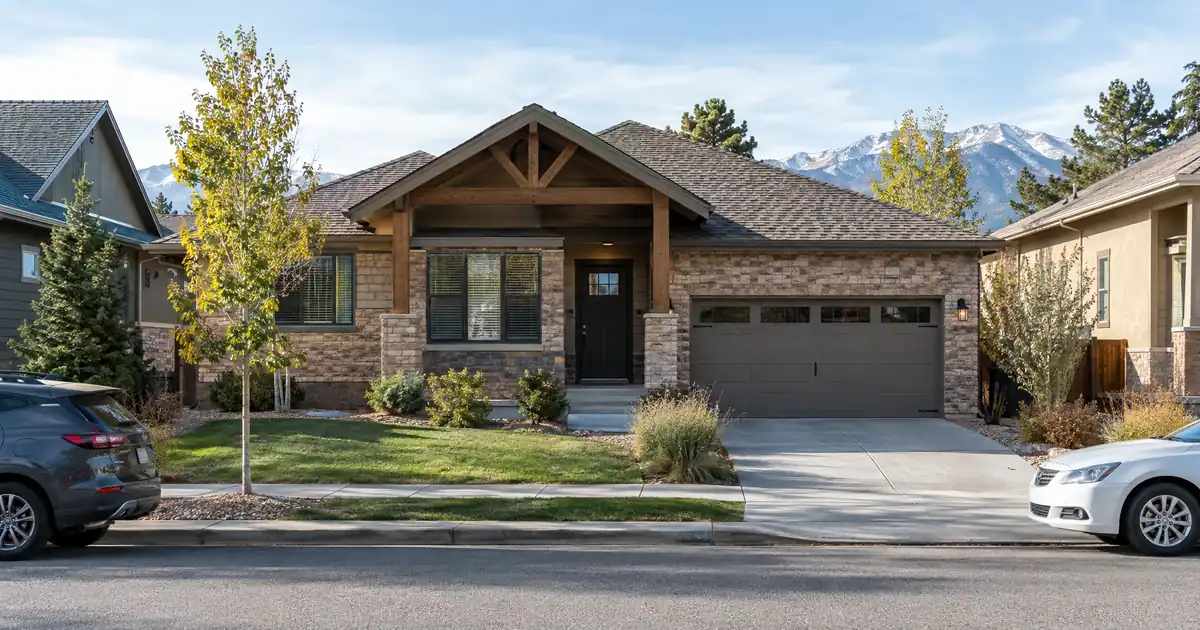
Fitzsimons has about 671 residents and 10,357 jobs, per Redfin’s neighborhood data. NeighborhoodScout shows renters occupying 99.4 percent of homes there, with 29.7 percent of residents walking to work and 93.0 percent of the housing built after 1999. That is a tenant-demand story, not a collateral story. The stock is mostly apartment complexes, which is the wrong shape for a small-balance DSCR cash-out refinance in Aurora, Colorado. The investors actually pulling equity out sit in the older neighborhoods around the campus, collecting rent from the same hospital paycheck.
TL;DR: A DSCR cash-out refinance in Aurora, Colorado is underwritten primarily on the property’s rental income measured against its full monthly obligation, and with Zillow showing typical home values down 5.2 percent over the past year, proceeds hinge on appraised value and a typical 75 percent LTV ceiling rather than market appreciation.
DSCR Cash-Out Calculator
Run the cash-out numbers in Aurora, CO
Rate source: Freddie Mac 30-yr average via FRED® — Federal Reserve Bank of St. Louis · effective Sep 24, 2026
Prefilled with starting assumptions — enter your property’s value, balance, taxes, and insurance for a more accurate picture.
Program parameters update from Lendmire’s centralized guideline source. Taxes and insurance are editable estimates.
As of Sep 24, 2026 · General Freddie Mac market benchmark, not a Lendmire loan offer. Property value, balance, taxes, and insurance are editable estimates. Maximum loan-to-value varies by lender, program, property type, and seasoning. Not a Loan Estimate, approval, or commitment to lend. Program availability and eligibility are subject to lender guidelines, credit approval, property review, and underwriting.
- Older stock near ZIP 80012 has a $325,000 median price, the best basis for coverage.
- Houses rent for a median of $2,700, so purchase price drives the ratio.
- Rents are flat to down roughly 4 to 7 percent year over year; underwrite with no growth.
- Cash-out generally needs about 6 months of seasoning and about 6 months of reserves.
- Fitzsimons creates the tenants; North Aurora and 80012 hold the 1-to-4 unit collateral.
Aurora Market Snapshot
A quick read on the Aurora investor landscape — figures come from the cited sources below. Confirm current property-level numbers before underwriting.
| Metric | Detail |
|---|---|
| Home prices | $469,100 median value (Data USA Aurora) |
| Typical rents | $2,610 (NeighborhoodScout Fitzsimons) |
| University enrollment | 4,500+ students (CU Anschutz About) |
| Employment | 37,000 employees (systemwide) (UCHealth Newsroom) |
| Vacancy | 7.5% (Denver Gazette (AAMD)) |
North Aurora and ZIP 80012 Carry the Small-Loan Product
The older, close-in stock around North Aurora, East Colfax, and ZIP 80012 is where one-to-four unit cash-out files actually live. Norada puts the 80012 median price at $325,000 and lists Meadow Hills at $325,000 and City Center North at $217,500 as affordability targets. A lower basis is the main lever for coverage in a city where rents have stopped rising.
The tenant base is straightforward. Medical campus staff, service workers, and Buckley personnel all want a short commute along the Colfax corridor. Zumper calls North Aurora one of the city’s most affordable areas, at $1,172 a month on average. The working thesis is that a duplex or fourplex stacks several of those rents against one mortgage payment, which is how small multifamily beats single-family on coverage. Treat that as analysis, not audited data. No sourced Aurora duplex or fourplex rent-and-price series exists in the research, so pull current comps before trusting any ratio.
Here’s the catch. North Aurora is also the softer market-rate pocket. A mid-year Keyrenter Denver review says an owner in North Aurora may still need to compete harder on rent, concessions, and condition. A tired property in this pocket can appraise on rent lower than the owner expects, and appraisal is where a cash-out file lives or dies.
The affordable tier further out, Delmar Parkway and Stone Ridge Park, shows the floor. Zumper lists Delmar Parkway at $1,077 a month, and RentCafe lists Stone Ridge Park at $1,365. Rent-to-value is probably strongest in those pockets, but no price source backs that up, so call it a hypothesis worth testing.
How Seasoning and the 75 Percent Cap Meet a Flat Market
A cash-out refinance is a short sequence, and each step caps the next. The investor owns the property for about 6 months, measured from title recording. An appraisal sets value. The new loan can’t exceed 75 percent of that value, and it first pays off the existing mortgage. Whatever remains is the proceeds, provided coverage and reserves clear, subject to lender guidelines. The DSCR cash-out refi mechanics page walks through the same chain in more detail.
Aurora’s market data changes how that chain plays out. Zillow’s typical home value is $477,794, down 5.2 percent over the past year. Redfin reports a lower median sale price of $462,000 over the last three months, down 2.3 percent, a different measure that moves differently. Redfin also shows 1,534 homes sold in May against 1,679 a year earlier, while price per square foot sits at $238, up 2.1 percent.
Read those together. Prices are flat to slightly down, and transaction volume is thinner. An investor should not count on appreciation to create equity during the seasoning window. Equity comes from three places: the original purchase basis, the value added through renovation, and a rent-supported appraisal. Plan on a leverage ceiling doing the limiting, not market lift doing the helping.
Approval also isn’t just about value. Credit tiers generally start at a 620 floor, with better positioning at 660, 680, and 700. Reserves run about 6 months of PITIA, a bit more on very large balances. Standard programs reach up to $3,000,000, with smaller balances routed through select lenders in the network. All of this is guideline range, not a promise, and eligibility review depends on lender review of the borrower and the property.
Running the Numbers at Three Price Tiers
Coverage is monthly rent divided by the full monthly obligation: principal, interest, taxes, insurance, and any HOA dues. Most standard DSCR programs are built around a 1.00x benchmark, since rent covers the payment at that level. The guide “What Is a DSCR Loan” covers the full definition. Some lenders will review lower ratios, but those files usually need less leverage, stronger credit, or more cash behind them.
The table below models three Aurora price points at 75 percent LTV. Coverage includes taxes and insurance at Colorado-average assumptions, and the figures are rounded down. Rents marked “modeled” are assumptions for illustration, not market data.
| Price tier | Rent used | Modeled coverage |
|---|---|---|
| $325,000 (80012 median) | $2,300 (modeled) | About 1.2x |
| $477,794 (Zillow typical) | $2,700 (Zumper house median) | Just under 1.0x |
| $775,000 (80016 median) | $3,500 (Norada median) | Around 0.75x |
The first row is the cleanest. An older house at the 80012 price point, renting at a modeled $2,300, clears the 1.0x benchmark with some cushion, leaving room for a vacancy hit before the file turns marginal. The second row is the one to stare at. A property at the citywide typical value, renting at the citywide house median, sits right at the line. It is fine for a borrower with strong credit and a seasoned reserve account, and a coin-flip for anyone else.
DSCR files in markets like this one typically look the same on paper. The rent is soft, the appraised value is flat, and the ratio lands just under or just over 1.0x depending on a single input. The stronger files usually come in with a lease at or above the appraiser’s market-rent figure, a clean reserve account, and a basis low enough that 75 percent LTV still leaves meaningful proceeds after payoff. The weaker files rely on a hopeful rent assumption and discover the appraisal disagrees.
If a property comes in below 1.00x on long-term rent, the paths are limited but real. Some lenders offer a sub-1.00 program, an interest-only structure can change the monthly obligation, and a lower-leverage request can pull the ratio back toward the benchmark. Each is a scenario a lender would review, not an assumption, and eligibility depends on guidelines, credit, and property review. Not every file fits.
Skip the Southeast Pocket for Cash-Out Math
The southeast corridor is where cash-out math goes to die. Norada’s 80016 ZIP shows a $775,000 median price against a $3,500 median rent. That is a rent-to-price ratio of roughly 0.45 percent a month, and the table above shows what it does to coverage: well below 1.00x at full leverage. A borrower would need a much smaller loan against that value to clear the line, which defeats the purpose of pulling equity.
Southlands and Tower Road are great places to live. They are poor places to find cash-flow collateral. Acquisition costs in these submarkets run high relative to the rents they can command, so coverage tends to come up short at higher leverage. Family single-family rentals and townhomes work as holds, not as cash-out machines.
The northeast has a different problem: supply. Northmarq’s Denver multifamily research says Aurora Northeast, Castle Rock, and the Denver International Airport corridor have each expanded inventory by more than 40 percent since 2020. It also reports year-over-year rent declines in 31 of 33 submarkets, with the steepest pullbacks in Aurora and the eastern suburban corridor. Murphy Creek and the Aurora Highlands area fit newer single-family and townhome rentals. RentCafe lists Murphy Creek at $2,371 a month. But new lease-up competition sets the rent an appraiser sees, and that is the number that drives proceeds. Underwrite conservatively there.
Do Small Properties Really Dodge the Apartment Glut?
Probably, with a caveat. The glut is real. The Colorado Sun reported metro Denver apartment vacancy at 7.6 percent at the end of the prior year, the highest in 16 years. The Denver Gazette put it at 7.5 percent in the next quarterly report. Mid-year commentary says the market is repairing occupancy without yet recovering pricing power.
A Denver property manager at RentGrace argues the weakness is concentrated in large institutional apartment communities, while single-family rentals, duplexes, and small multifamily trade in a different market. The manager cites metro single-family rental vacancy near 4 percent, about half the apartment figure, and forecasts 2 to 3 percent rent growth for well-located single-family rentals. That is a property manager’s view of the metro, not audited Aurora data, so attribute it that way.
This one’s a genuine toss-up. The logic favors one-to-four unit collateral, since it avoids competing with 50-plus-unit lease-ups. But the headline rent figures still show pressure: Zumper has Aurora average rent at $1,759, down about 7 percent year over year, and RentCafe shows $1,661, down 3.61 percent, though RentCafe’s data covers only 50-plus-unit buildings. Small properties may hold up better. They are not immune. Underwrite at current rents, assume no growth, and let any upside be a bonus.
The Two Engines Behind the Tenants
Few comparable Colorado cities pair a missile-warning space hub with a large academic medical campus, but Aurora does both. Buckley Space Force Base is described as the city’s largest employer, and defense contractors cluster nearby. The other engine is the Fitzsimons medical corridor. CU Anschutz reports more than 4,500 students training as doctors, nurses, dentists, pharmacists, and researchers, and the campus is served by the Fitzsimons and Colfax stations on the RTD R Line. UCHealth is headquartered in Aurora and reports 37,000 employees systemwide. That figure is not Aurora-only, so treat it as scale, not a local headcount.
Data USA shows what that does to resident employment. Health care and social assistance leads at 27,950 people, ahead of retail trade at 21,873 and construction at 21,412. Medical, retail, and trades paychecks produce reliable long-term tenants, which matters more for coverage than a flashy headline.
One caution cuts the other way. City-Data reports that 96,673 workers, or 44.5 percent, live and work in the city, with a net daytime population loss from commuting. Aurora is partly a bedroom community. Tenant demand follows regional jobs as much as local ones, and that makes it sensitive to the metro rent picture. World Population Review models the city at about 415,462 residents, up from the 386,688 counted in the 2020 Census. The Aurora Economic Development Council maintains the official regional employer list for anyone who wants to verify the anchors.
Putting the Proceeds to Work
Cash-out proceeds are capital, and in a flat market the best uses are the ones that don’t depend on appreciation. Many investors reinvest into another low-basis duplex or fourplex in the same older pockets, where the price-to-rent math works. Others pay down higher-cost debt or fund a renovation that raises the appraised rent on a tired unit. The proceeds figure itself depends on the payoff, the appraisal, rent used for lender review, reserves, and the 75 percent ceiling. No one should plan around a guaranteed number. The investor refinance breakdown compares the broader refinance options, and the side-by-side comparison shows why rental-income underwriting suits investors who hold several properties.
LLC-titled borrowers are common in this part of the market, subject to lender program eligibility. A manufactured home, log home, or barndominium falls outside these programs entirely. For lender-level questions on Colorado DSCR financing, investors can reach the brokerage at 828-256-2183. Anyone buying or refinancing in the city should also verify current local rental rules, taxes, and insurance with qualified local professionals.
Frequently Asked Questions
How do you qualify for a DSCR loan in Aurora, Colorado?
The property’s rent is compared against its full monthly obligation, including taxes and insurance, and most standard programs are built around a 1.00x benchmark. Credit, reserves, and leverage are reviewed alongside that ratio. In Aurora, where houses rent for a median of about $2,700 against typical values near $478,000, the purchase basis often decides whether a file clears. Approval depends on lender guidelines.
DSCR vs. conventional financing
There are two common ways to finance an investment property in Aurora, CO, and they qualify you differently — here’s how investors weigh them.
Why investors choose it
- Qualifies on the property’s rental income — no personal tax returns, W-2s, or pay stubs needed to document income.
- No personal debt-to-income ceiling to clear, so existing mortgages and obligations don’t cap your borrowing the same way.
- Can be closed in an LLC, keeping the property inside a business entity.
- Built for scaling — not held to the limit on number of financed properties that conventional financing applies.
- Underwriting centers on the deal: generally qualifies when the rent covers the payment, a 1.00x coverage ratio being a common baseline (confirmed in underwriting).
- Designed specifically for investment property, including long-term and, where the program allows, short-term rentals.
Where it’s strong
- Often the lowest ongoing financing cost for a buyer who fully qualifies on personal income — a fit for a first property or a cost-first purchase.
Trade-offs for investors
- Requires full personal income documentation and must fit within a debt-to-income limit — salary, existing debts, and other mortgages all count.
- Typically held in your personal name rather than a business entity.
- Caps how many financed properties you can carry, which can become a ceiling as a portfolio grows.
- Evaluates you as a borrower as much as the property, which usually means more paperwork.
How investors usually choose: a first or single property often optimizes for the lowest financing cost; portfolio builders often optimize for leverage, vesting in an LLC, and scaling past conventional caps. The right answer depends on your goals, the property, and current guidelines — both paths run through select lenders in Lendmire’s wholesale network, with eligibility and terms confirmed in underwriting.
What are the requirements for a cash-out refinance on an Aurora investment property?
Typical guidance is about 6 months of ownership from title recording, a 75 percent LTV ceiling, a 1.00 minimum coverage ratio, a 620 credit floor, and about 6 months of PITIA in reserves. Loan sizes reach up to $3,000,000 on standard programs. These are guideline ranges, not guarantees, and each lender applies its own overlays.
Does falling Aurora home value hurt cash-out proceeds?
Yes, because proceeds depend on appraised value, and Zillow shows typical values down 5.2 percent over the past year. Investors who bought at a low basis or added value through renovation are better placed than those counting on market lift. A lower appraisal shrinks the 75 percent cap, which shrinks the cash left after payoff.
Is Fitzsimons a good place to hold a rental for a cash-out refinance?
It is a strong demand source and a weak small-loan source. With 99.4 percent of homes renter-occupied and 93.0 percent built after 1999, the stock is mostly apartment complexes rather than one-to-four unit properties. Investors who want collateral for this kind of loan usually look at the older neighborhoods nearby instead.
The Number That Reframes Aurora
Houses here rent for a median of $2,700 against a typical value of $477,794, which works out to about 0.57 percent of value per month. Every dollar of basis you shave off the purchase pushes that ratio up, and in a flat market that is the only lever that reliably moves.
For current guidelines and terms, see Lendmire’s DSCR loan programs page.
About Lendmire
Lendmire (NMLS# 2371349) is a mortgage brokerage built around DSCR investor lending, with programs available in 41 markets, including Washington, D.C. DSCR lenders commonly evaluate rental-income coverage instead of personal income paperwork, a practical fit for LLC-owned and multi-property investors. Terms vary by lender, property, leverage, and program. The firm was recognized as a top-ranked workplace in 2026 and recognized by Scotsman Guide in 2025.
Get Started
Ready to find the right loan for you?
In about 30 seconds you can review financing options available for your investment property. No commitment required.
Informational only. Not a Loan Estimate, approval, or commitment to lend. Program availability and eligibility are subject to lender guidelines, credit approval, property review, and underwriting.
References
1. Redfin: Fitzsimons neighborhood
2. NeighborhoodScout: Fitzsimons
4. Norada Real Estate: Aurora housing trends
5. Zumper — Rent Research Aurora CO
7. CU Anschutz
8. UCHealth
11. RentCafe
12. Redfin: Aurora housing market
13. Northmarq: Denver multifamily research
14. Colorado Sun
15. RentGrace
16. Wikipedia — Aurora, Colorado
17. City-Data
19. Aurora Economic Development Council
20. Scotsman Guide — Top Workplaces 2026
21. recognized by Scotsman Guide in 2025
This article is part of Lendmire’s investment property cash-out refinance program — full qualification details, guidelines, and scenarios live on the program page.
Related reading: Luxury Rental DSCR Loans In New Jersey · Jersey Shore Vacation Rental Loans: DSCR Financing In Ocean City, Cape May And Long Beach Island · DSCR Cash-out Refinance In New Jersey: Pulling Equity From A Rental
Guides: Investment Property Cash-Out Refinance in Aurora, CO · Investment Property Cash-Out Refinance in Colorado
Brandon Miller
Founder & CEO, Mortgage Loan Originator, Lendmire LLC
- Mortgage Loan Originator · NMLS# 1129696 · Verify on NMLS Consumer Access
- North Carolina Real Estate Broker · License# 343312 · Verify on NCREC
- North Carolina Insurance Producer · License# 19053198 · Property, Casualty, Life, Health · Verify on NAIC SBS
- Lendmire LLC · Firm NMLS# 2371349 · Verify firm licensure
Disclosure information. Lendmire is a state-licensed mortgage brokerage under NMLS# 2371349. Lendmire is not a depository institution, direct lender, or financial advisor — all loans referenced are placed through wholesale lender partners and are subject to each lender's underwriting standards. This article is provided for general informational purposes and is not a commitment to lend, nor does it constitute financial, legal, or tax advice. Loan programs, terms, rates, and qualification standards change without notice and depend on borrower profile, property type, and the state in which the subject property is located. Equal Housing Opportunity provider. NMLS Consumer Access: nmlsconsumeraccess.org.