
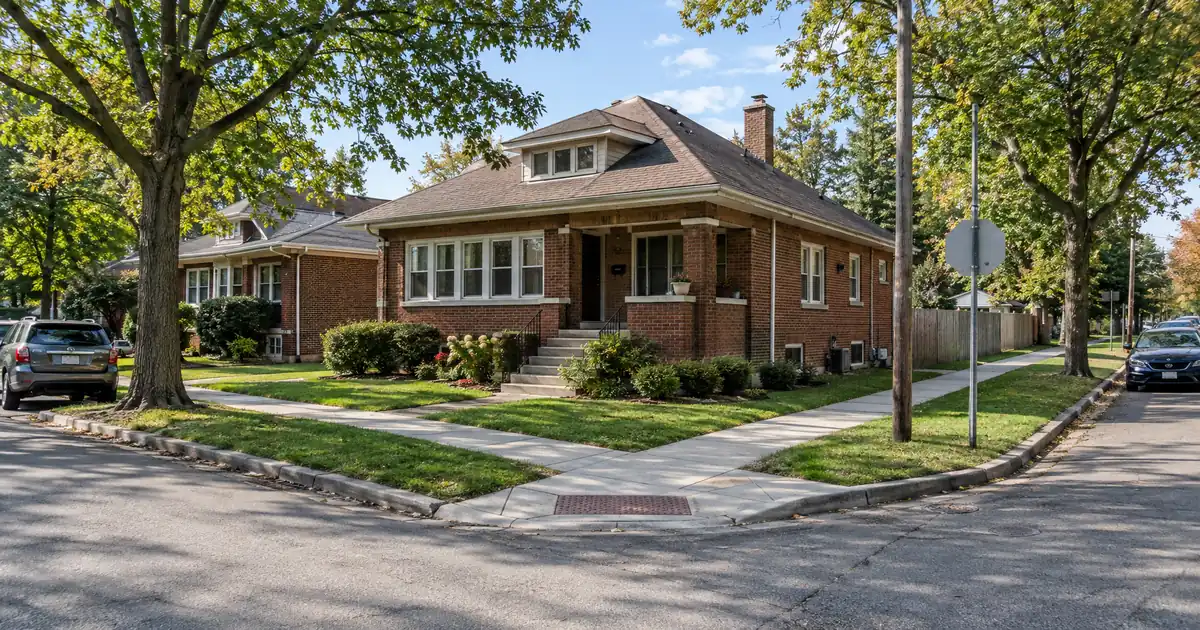
West Aurora’s older two-flats are the cleanest cash-out candidates in the city. The median sale price in zip 60505 sits near $255,000 per RealtyTrac, while zip-codes.com’s Census-derived profile puts median gross rent at $1,316. Put two units under one roof and the coverage ratio clears. Put one unit on the same lot and it often doesn’t.
DSCR Cash-Out Calculator
Run the cash-out numbers in Aurora, IL
Rate source: Freddie Mac 30-yr average via FRED® — Federal Reserve Bank of St. Louis · effective Sep 24, 2026
Prefilled with starting assumptions — enter your property’s value, balance, taxes, and insurance for a more accurate picture.
Program parameters update from Lendmire’s centralized guideline source. Taxes and insurance are editable estimates.
As of Sep 24, 2026 · General Freddie Mac market benchmark, not a Lendmire loan offer. Property value, balance, taxes, and insurance are editable estimates. Maximum loan-to-value varies by lender, program, property type, and seasoning. Not a Loan Estimate, approval, or commitment to lend. Program availability and eligibility are subject to lender guidelines, credit approval, property review, and underwriting.
The Quick Read:
A DSCR cash-out refinance in Aurora, Illinois is underwritten primarily on the property’s rental income measured against its full monthly obligation, so unit count and purchase basis matter more here than borrower income. West Aurora duplexes and older two-flats tend to carry the strongest coverage, while higher-priced single-family holds lean on appreciation.
- West Aurora duplex stock blends near $285,000 per Realmo listings.
- Cash-out caps at 75% LTV, with about six months of seasoning.
- Stonebridge’s $665,000 median sale price pushes coverage well below 1.00.
- Rush Copley, Waubonsee, and a new casino anchor tenant demand. Final terms depend on lender guidelines, property type, leverage, and the borrower’s complete credit picture.
This piece is about pulling equity out of a property already owned. Purchase mechanics are a separate conversation. Here the questions are what the appraisal might support, what the rent covers, and where the proceeds go next.
Aurora Market Snapshot
A quick read on the Aurora investor landscape — figures come from the cited sources below. Confirm current property-level numbers before underwriting.
| Metric | Detail |
|---|---|
| Home prices | $665K median sale price (Redfin) |
| Typical rents | $2,300 median (Zillow Rental Manager Market) |
| University enrollment | 5,923 total enrollment (2024) (Data USA) |
| Population | 180,791 population (Census Reporter Aurora IL) |
| Employment | 60,157 jobs (Redfin) |
West Aurora and Downtown: Where Two Units Beat One
Older brick two-flats near the Metra line and Aurora University turn equity into usable capital more reliably than anything else in the city. Realmo’s duplex listings show a small pool of three West Aurora duplexes with an estimated blended value around $285,000, and active listings there are marketed on rental potential. On the multifamily side, Homes.com shows retail-level listings running from $264,900 to $1,275,000, so there is room to enter at almost any capital level.
Run the numbers on a modeled West Aurora two-flat. Assume a $285,000 value, two units each renting near the zip’s $1,316 median gross rent, and a refinance at the full 75% LTV ceiling. Rent divided by full PITIA, meaning principal, interest, taxes, and insurance, lands around 1.3x. That is a modeled figure, not a sourced market fact, and it leans on the rent assumption. Drop each unit $150 and the cushion shrinks, but a 1.00x baseline is still in sight. These specifics are subject to lender guidelines and a full review of property, leverage, and credit.
Now the same exercise on one unit at that zip’s rent. A $255,000 single-family at the zip median price with a single $1,316 rent models closer to 0.7x including taxes and insurance. Not close. Some lenders review sub-1.00 files with stronger compensating factors, lower leverage, or different pricing, but that is a different conversation with different economics.
Here’s the catch. The per-unit rent assumption is where most two-flat files go sideways. Appraisers need market-rent support for both units, and a below-market unit on a long legacy lease drags the coverage figure down.
| Modeled scenario | Value | Modeled coverage |
|---|---|---|
| West Aurora two-flat, 2 units at $1,316 | ~$285K | ~1.3x |
| 60506 single-family, $2,400 rent | ~$330K | ~1.0x |
| 60505 single-family, $1,316 rent | ~$255K | ~0.7x |
| Stonebridge single-family, $2,500 rent | ~$665K | ~0.5x |
All rows assume a 75% LTV refinance, rent divided by full PITIA including taxes and insurance, and rounded down. Qualification remains subject to lender guidelines, credit approval, and property review.
What Does Six Months of Seasoning Actually Change?
Seasoning sets the earliest date a cash-out file can use an appraised value instead of the purchase price, typically about six months of ownership measured from title recording. That matters most for investors who bought below market and rehabbed.
Consider a scenario where an investor holds a West Aurora two-flat with a first mortgage near 55% of a $285,000 appraised value. The 75% LTV ceiling leaves roughly 20 points of value in gross cushion before payoff costs and fees. Whether that cushion is real cash depends on the appraisal, the rent used for lender review, reserves of roughly six months PITIA, and the coverage number at the new, larger balance. Equity on paper isn’t equity in hand. The cash-out refinance details page walks through how those pieces interact, and Lendmire’s refi programs overview covers the rate-and-term alternative when the goal is restructuring rather than extraction. Terms vary by lender guidelines, property type, leverage, credit profile, and full file review.
Counterintuitively, a bigger cash-out can make the file worse. Every extra point of LTV raises the monthly obligation, which lowers coverage. Borrowers sometimes chase the 75% ceiling when the better move is pulling out 60-65% and keeping the ratio comfortably above 1.00.
Most standard DSCR programs are built around a 1.00x benchmark because rent covers the obligation at that level. Exact eligibility depends on lender guidelines, credit profile (floor near 620, with better tiers at 660, 680, and 700), reserves, and property review. For the mechanics of how the ratio is built, see Lendmire’s DSCR walkthrough.
Single-Family Reality Check: 60506, Eola Yards, and Stonebridge
Aurora’s upscale single-family pockets produce strong rents and thin coverage. Appreciation drives the thesis there, not cash flow.
Take zip 60506 first. RealtyTrac puts its median sale price at $330,348, with a median gross rent of $1,343 per zip-codes.com. That’s nearly the same rent as 60505 on a price roughly $75,000 higher. Investors get more house and more appreciation upside, but less rent per dollar of value. A modeled $330,000 single-family renting at the citywide house median of $2,400 (per Zillow’s rental data) comes out right around 1.0x at 75% LTV, which is workable but not roomy. Exact terms depend on the lender’s guidelines, property type, leverage, and a full review of the borrower’s file.
Eola Yards averages $2,486 in rent per Steadily, and White Eagle averages $2,500. Those rents are strong, but purchase prices run well above the zip medians. Young professional families and move-up tenants keep them leased. A homeowner refinancing there should expect to run the coverage number at a lower LTV than the cap allows.
Then Stonebridge, the golf-course estate community. Redfin’s neighborhood page shows a $665,000 median sale price and an $873,000 average. Rents near $2,500 against that basis model at roughly 0.5x. Skip it for DSCR cash-out unless the file has a sub-1.00 path built in, such as a lender program that reviews lower ratios, interest-only structuring, or a far lower LTV. Stonebridge is an equity-and-appreciation hold, not a coverage play.
The fuller Aurora city picture: Zillow’s home value index shows an average value of $324,470, up 2.7% year over year. Other sources report a lower median sale price near $238,000. The gap reflects methodology (index average versus median closed sales), so treat neighborhood and zip-level figures as the working numbers.
Aurora Sits in Four Counties, and So Do Your Comps
Aurora is one of only three Illinois cities spanning four counties: Kane, DuPage, Kendall, and Will. For a refinance file, that means two properties both labeled “Aurora” can sit under different county records and draw comparable sales from different pools. Stonebridge and White Eagle lean DuPage. The Downtown and West Aurora stock is where most multi-unit files originate.
The practical fix is appraisal selection. A comp set that straddles county lines can be fine, but an appraiser who works the Fox Valley regularly will know which pairs are real comparables. Check county-level tax and insurance details with qualified local professionals before underwriting anything, as they vary by parcel.
Skip the Plant Narrative
Caterpillar headlines still show up on Aurora employer lists. They shouldn’t drive underwriting. The hourly production floor was eliminated years ago, with about 800 jobs cut per Illinois Policy Institute reporting, while roughly 1,200 engineering, management, and support roles remained. That is a white-collar office presence, not a blue-collar production base.
The 2020 census counted 180,542 residents. Per Census Reporter ACS data, the figure is now 180,791 across 45.1 square miles. Manufacturing still employs 13,190 residents, retail 12,015, and health care and social assistance 11,582, so the workforce is diversified. But an investor sizing rent durability for older workforce houses near the former plant should lean on the anchors below.
Demand Anchors: Hospital, Colleges, and a New Casino
Three employers and institutions hold up the tenant pool better than any manufacturer does.
Rush Copley Medical Center. Rush Copley is a 210-bed hospital with 700 physicians across more than 65 specialties, tied academically to the Rush University System for Health. A clinical campus of that size produces steady W-2 renters in the surrounding zips regardless of manufacturing or casino cycles.
Aurora University and Waubonsee. Aurora University enrolled 5,923 students in its most recent data, per Data USA. Waubonsee Community College runs two of its four campuses in Aurora (Downtown and Fox Valley) and cites more than 12,000 students each semester on its history page. That supports one- and two-bedroom demand near both nodes, and it is the main reason the university-adjacent two-flats lease so consistently.
The new Hollywood Casino. A $360 million facility near I-88 is scheduled to open in late June, with roughly 700 team members, a 226-room hotel, and about 1,700 parking spaces per a PENN Entertainment release. Service-sector workers need housing within a reasonable commute of that corridor. The effect on rents is still a forecast, not a measured change. An investor counting on a rent bump should underwrite the current lease, not the catalyst.
One more thing worth saying plainly. Cash-out investors tend to buy the story, but lenders underwrite the lease. A two-flat with signed leases at market rent beats a house in a “growth corridor” with a verbal month-to-month arrangement every time.
Where the Proceeds Go
Cash-out proceeds only matter if the next deal clears its own coverage test. The logical recycle in Aurora is to pull equity from a seasoned property and deploy it into another West Aurora or Downtown two-flat, where the modeled coverage ran near 1.3x. The recycle works against itself if the proceeds fund a Stonebridge-type hold at 0.5x.
The other consideration is sizing. Standard programs go up to $3,000,000, and smaller balances route through select lenders in the network. Most Aurora duplex and small-multifamily files sit comfortably inside that band.
Lendmire’s deal desk sees a consistent pattern on files from suburban markets structurally like this one. The cleaner files from a documentation standpoint tend to have complete leases, entity documents, title, and property details ready before lender review begins. The common friction point is a missing or outdated lease on one unit of a multi-unit property, which forces the rent used for lender review down to market-rent estimates. LLC-titled borrowers should confirm entity requirements, subject to lender program eligibility.
DSCR vs. conventional financing
Two common ways to finance an investment property in Aurora, IL. They qualify you differently — here’s how investors weigh them.
Why investors choose it
- Qualifies on the property’s rental income — no personal tax returns, W-2s, or pay stubs needed to document income.
- No personal debt-to-income ceiling to clear, so existing mortgages and obligations don’t cap your borrowing the same way.
- Can be closed in an LLC, keeping the property inside a business entity.
- Built for scaling — not held to the limit on number of financed properties that conventional financing applies.
- Underwriting centers on the deal: generally qualifies when the rent covers the payment, a 1.00x coverage ratio being a common baseline (confirmed in underwriting).
- Designed specifically for investment property, including long-term and, where the program allows, short-term rentals.
Where it’s strong
- Often the lowest ongoing financing cost for a buyer who fully qualifies on personal income — a fit for a first property or a cost-first purchase.
Trade-offs for investors
- Requires full personal income documentation and must fit within a debt-to-income limit — salary, existing debts, and other mortgages all count.
- Typically held in your personal name rather than a business entity.
- Caps how many financed properties you can carry, which can become a ceiling as a portfolio grows.
- Evaluates you as a borrower as much as the property, which usually means more paperwork.
How investors usually choose: a first or single property often optimizes for the lowest financing cost; portfolio builders often optimize for leverage, vesting in an LLC, and scaling past conventional caps. The right answer depends on your goals, the property, and current guidelines — both paths run through select lenders in Lendmire’s wholesale network, with eligibility and terms confirmed in underwriting.
For investors comparing structures, Lendmire’s guide to conventional and DSCR loans explains why property-income underwriting suits portfolio builders who have exhausted conventional financing limits. The state-level overview, DSCR loan options for Illinois investors, covers the broader program picture. When a specific Aurora property is in hand, run the numbers with Lendmire or call 828-256-2183.
Frequently Asked Questions
How do you qualify for a DSCR cash-out refinance in Aurora?
Qualification centers on the property’s rent versus its full monthly obligation, with 1.00 as the common baseline. Most files also need about six months of seasoning, a credit score of at least 620, and reserves near six months PITIA. Leverage tops out at 75% LTV, and everything remains subject to lender guidelines and property review.
What are the requirements for an investment property loan in Aurora, Illinois?
Cash-out specifically caps at 75% LTV and requires seasoning. Manufactured homes, log homes, and barndominiums fall outside these programs. Exact terms vary by lender, borrower profile, and property.
Which Aurora property type clears 1.00 most easily?
West Aurora and Downtown two-flats, based on modeled math. A roughly $285,000 duplex with two units near the zip’s median rent models around 1.3x at full PITIA, while single-family holds at similar rents fall under 1.00. Verify each unit’s market rent, because the two-unit advantage disappears if one lease is well below market.
Does Aurora’s four-county footprint complicate a cash-out refinance?
It can, mainly through comparable selection and county-level tax records. A property in the DuPage portion may draw different comps than one in Kane County. Choose an appraiser familiar with Fox Valley sales and check county-specific taxes and rules with local professionals.
For current guidelines and terms, see Lendmire’s DSCR loan programs page.
About Lendmire
A DSCR-focused mortgage broker, Lendmire (NMLS# 2371349) places investor financing across 41 markets, 40 states plus Washington, D.C., with DSCR eligibility generally reviewed by the lender on property cash flow instead of traditional personal-income documentation, subject to lender guidelines. Scotsman Guide named Lendmire a Top Mortgage Workplace in 2025 and 2026, including recognition as a 2025 Scotsman Guide Top Workplace and recognized by Scotsman Guide as a 2026 Top Workplace.
Get Started
Ready to find the right loan for you?
In about 30 seconds you can review financing options available for your investment property. No commitment required.
Informational only. Not a Loan Estimate, approval, or commitment to lend. Program availability and eligibility are subject to lender guidelines, credit approval, property review, and underwriting.
References
1. RealtyTrac: Zip 60505 Market Trends
2. Census Reporter: Aurora, IL Profile
3. $285,000 per Realmo listings
4. Redfin — Stonebridge Housing Market
6. Data USA
8. Redfin
9. Homes.com
10. RealtyTrac: Zip 60506 Market Trends
11. Steadily
13. Illinois Policy Institute: Caterpillar Aurora Closure
14. Rush Copley Medical Center
16. Waubonsee Community College
17. Waubonsee Community College: History
18. PENN Entertainment Release via Barchart
19. a 2025 Scotsman Guide Top Workplace
20. recognized by Scotsman Guide as a 2026 Top Workplace
This article is part of Lendmire’s investment property cash-out refinance program — full qualification details, guidelines, and scenarios live on the program page.
Related reading: Luxury Rental DSCR Loans In New Jersey · Jersey Shore Vacation Rental Loans: DSCR Financing In Ocean City, Cape May And Long Beach Island · DSCR Cash-out Refinance In New Jersey: Pulling Equity From A Rental
Guides: Investment Property Cash-Out Refinance in Aurora, IL · Investment Property Cash-Out Refinance in Illinois
Brandon Miller
Founder & CEO, Mortgage Loan Originator, Lendmire LLC
- Mortgage Loan Originator · NMLS# 1129696 · Verify on NMLS Consumer Access
- North Carolina Real Estate Broker · License# 343312 · Verify on NCREC
- North Carolina Insurance Producer · License# 19053198 · Property, Casualty, Life, Health · Verify on NAIC SBS
- Lendmire LLC · Firm NMLS# 2371349 · Verify firm licensure
Disclosures. The information presented in this article is general market commentary, not financial, legal, or tax advice. Lendmire is a mortgage brokerage (NMLS# 2371349) — not a direct lender or depository institution — and loan placement is subject to lender underwriting. Nothing in this content represents a commitment to lend. Loan terms, pricing, and program availability vary based on borrower qualifications, property characteristics, and state of subject property, and are subject to change at any time. Lendmire complies with Equal Housing Opportunity requirements. Consumer access: nmlsconsumeraccess.org.