
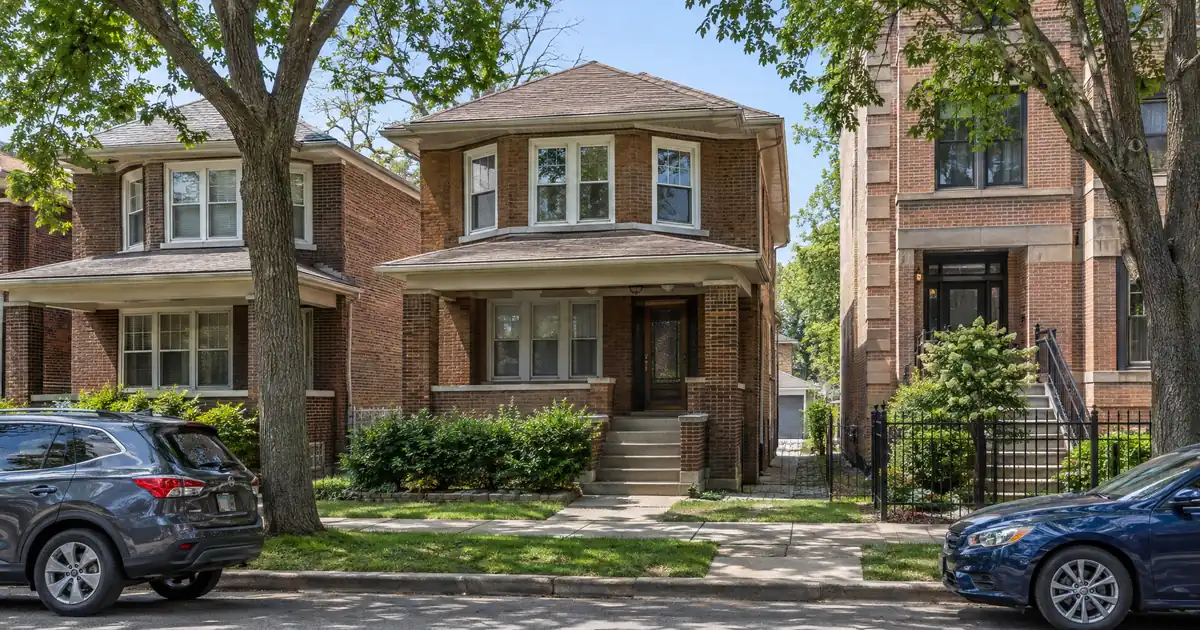
Can a Chicago two-flat or three-flat really support a cash-out refinance when the appraisal, not the rent roll, sets the ceiling? Often yes, but only if the building’s income holds up at the conservative number a lender or appraiser will use, not the one on the listing. Cash out refinance investment property loans in Chicago, Illinois tend to work best on stabilized small multifamily where rents comfortably cover the full monthly obligation. They tend to disappoint on anything bought at a stretched price in a flat submarket.
DSCR Cash-Out Calculator
Run the cash-out numbers in Chicago, IL
Rate source: Freddie Mac 30-yr average via FRED® — Federal Reserve Bank of St. Louis · effective Sep 24, 2026
Prefilled with starting assumptions — enter your property’s value, balance, taxes, and insurance for a more accurate picture.
Program parameters update from Lendmire’s centralized guideline source. Taxes and insurance are editable estimates.
As of Sep 24, 2026 · General Freddie Mac market benchmark, not a Lendmire loan offer. Property value, balance, taxes, and insurance are editable estimates. Maximum loan-to-value varies by lender, program, property type, and seasoning. Not a Loan Estimate, approval, or commitment to lend. Program availability and eligibility are subject to lender guidelines, credit approval, property review, and underwriting.
Key Takeaways:
A cash-out refinance on a Chicago, Illinois investment property is underwritten primarily on the property’s rental income measured against its full monthly obligation, so the file works when rent used for lender review covers taxes, insurance, and debt service, the building has been owned roughly six months, and requested proceeds fit within a 75 percent loan-to-value ceiling, subject to lender guidelines.
- Rogers Park and the Loop posted combined rent growth of 3.7 percent year over year, per Northmarq.
- Downtown holds 56.6 percent of proposed units, per Cushman & Wakefield, so new-supply risk sits away from neighborhood flats.
- Stabilized small buildings price near a 6 to 7 percent cap rate, per an Illinois landlord-side attorney.
- Cash-out tops out at 75 percent LTV, well below the purchase ceiling.
- Price growth is uneven by submarket, so lean on rent coverage, not appreciation.
Chicago, Illinois is one of the 41 markets — 40 states plus Washington, D.C. — where Lendmire places DSCR loans for investment-property borrowers (NMLS# 2371349). The rest of this piece is about the equity side: what a Chicago owner can realistically pull out, and where the math quietly stops working.
Chicago Market Snapshot
A quick read on the Chicago investor landscape — figures come from the cited sources below. Confirm current property-level numbers before underwriting.
| Metric | Detail |
|---|---|
| Recent appreciation | $427,500 (+6.9%) (Option Premier) |
| Cap rates | 6–7% cap (thechicagolandlawyer.com — What Is a Good Cap Rate in Chicago) |
| Vacancy | 5% vs 8.5% national (Bisnow (Chicago multifamily)) |
Rogers Park Has the Cleanest Demand Story
Rogers Park is the best-documented rental submarket in this market review. Northmarq reports that Rogers Park and the Loop led Chicago on rent growth and vacancy improvement, with combined rents up 3.7 percent year over year and vacancy improving by 90 basis points. Both areas had elevated new supply, and both still tightened.
That matters for a refinance because the tenant base is not built on a single story. Loyola University Chicago has its Lake Shore campus here and enrolls 12,640 undergraduates. Add lakefront access and Red Line transit, and the area draws steady renter demand from students, staff, and commuters. Demand that survived a supply wave is worth more in a refinance file than demand that has never been tested.
The caveat is that Northmarq’s figures describe the broader multifamily market, including larger buildings. They are not a promise about any particular two-flat on a particular block. And an owner who bought at the top of a local run-up still faces the same question: does the income, not the neighborhood’s reputation, support the value?
Avondale, Pilsen, and Bridgeport: Where Does Yield Actually Live?
The lower-priced multi-flat neighborhoods are where rent-to-value tends to look best, and where the data is thinnest. Avondale, Pilsen, and Bridgeport all carry classic Chicago two-flat and three-flat stock, and broker commentary consistently places their price points below the North Side’s. Avondale sits next to Logan Square, and local brokers describe its rent gap with Logan Square as narrowing in some segments as amenities spill over.
Here is the honest limit. The neighborhood-level price and rent figures available for these areas come from agent blogs and rental-brokerage pages, not official datasets, and they conflict with each other. Nothing here should be quoted as a hard number. What can be said is directional: these submarkets tend to offer stronger rent-to-value than Logan Square or Lincoln Park, and their appeal to tenants rests on proximity to jobs and transit. Bridgeport is minutes from the Loop, Pilsen has the 18th Street corridor, and Avondale has the Blue Line and easy access to Logan Square’s amenities.
The cash-out implication cuts both ways. Better yield means better DSCR coverage on the same leverage. But lower prices and slower appreciation mean less accumulated equity to draw on. An owner who bought recently in one of these neighborhoods may find coverage clears easily while the 75 percent ceiling leaves little cash. That is a structural feature, not a flaw.
Logan Square and the North Side: Real Equity, Thin Coverage
Logan Square, Lakeview, Lincoln Park, and Bucktown are where equity has historically built fastest, and also where coverage is tightest. Greystones, walk-ups, and two-flats near the Blue Line and the 606 trail command premium prices. Broker sources put North Side single-family homes and two-flats in a wide band that starts around the mid-six-figures and climbs well past that. They also disagree with each other on Logan Square’s median, which is reason enough to avoid quoting one.
The tension is simple. High prices mean a high loan balance at any given LTV, so rent has to sit at the top of the neighborhood range to clear the coverage benchmark. Lincoln Park did post solid fundamentals, with rents up 3.0 percent and vacancy down 30 basis points. But strong fundamentals do not fix a thin ratio.
So this is a genuine toss-up for North Side owners. The equity is there, and the coverage number may not be. An owner with large appreciation and a fully rented building can pull meaningful cash. An owner whose rents lag the neighborhood’s premium prices may find the file falls short of 1.00 before proceeds even come into play. In that case a structure with lower leverage, or a sub-1.00 program at stronger credit and more reserves, is the conversation to have, subject to lender guidelines. It is not automatic.
Skip the Downtown Condo Core.
River North, Streeterville, and the West Loop are the wrong place to start a cash-out plan. Condos are frequently excluded or restricted under DSCR programs, and association dues cut directly into coverage. Beyond financing, the supply picture is unfriendly. Cushman & Wakefield counts 31,054 proposed units citywide, with 56.6 percent of them downtown, led by West Loop and Fulton Market at 10,177 and the Gold Coast, Old Town, and Near North area at 3,758.
Contrast that with the rest of the city. The same report puts multifamily occupancy at 94.9 percent, above the 10-year average of 93.8 percent, and 24 of 26 submarkets held stabilized occupancy of 93.0 percent or higher. The oversupply risk is concentrated in downtown Class A product. It is not in neighborhood two- to four-flats.
For a cash-out, that gap matters. A refinance appraisal in a downtown tower competes against new deliveries; a refinance appraisal on a Rogers Park or Pilsen flat mostly does not.
What the Appraisal Will Do to Your Three-Flat
Listings flatter income. Appraisers and lenders do not. An Illinois attorney’s sample underwrite of a $450,000 three-flat, with two units at $1,600 and one garden unit at $1,400, shows the gap plainly. Expenses run about 51 percent of effective gross income for older stock where the landlord pays water and common-area heat. Dropping vacancy, management, reserves, and snow removal lifted the advertised cap rate to 8.6 percent, versus a stabilized range of roughly 6 to 7 percent for a solid neighborhood. Treat that as an illustrative example, not a market survey.
Run the numbers on it as a modeled scenario. Assume the rents above total $4,600 a month, a 75 percent LTV cash-out, and full PITIA including taxes and insurance at Illinois-average loads. Gross rent against that full obligation reads roughly 1.4x. That clears the 1.00 benchmark comfortably. Now stress it: if only about half of that rent reached net operating income, the same structure reads in the low 0.7s on an NOI basis.
Programs typically measure rent used for lender review against PITIA rather than NOI, so the first number is closer to what a DSCR lender reviews. The second number is closer to what the appraiser’s value conclusion reflects. Small-building valuations are income-driven, so a rent shortfall shows up as a lower value, and a lower value means a smaller cash-out at the same 75 percent ceiling. Institutional Class A cap rates are far lower, and a two-to-four-flat appraisal should not be expected to borrow them.
If a file does land under 1.00, the paths a lender may review include a sub-1.00 program, an interest-only structure, or lower leverage. All of those depend on lender guidelines, credit, reserves, and property review, and the tradeoff is less cash out, not more.
One pattern from Lendmire’s deal desk on comparable urban small-multifamily files: the cleaner files tend to arrive with signed leases for every unit, a rent schedule that matches the appraiser’s market-rent read, and a clear picture of which utilities the landlord pays. The common friction point in older Midwest stock is a rent roll that looks strong on paper but leaves out landlord-paid costs, which forces a re-sizing late in the process. Getting that reconciled up front saves an awkward conversation.
Seasoning, the 75 Percent Ceiling, and Loan Size
Three parameters shape almost every Chicago cash-out file, and all of them are guidance, not guarantees.
Seasoning. Programs in the network generally look for about six months of ownership, measured from title recording. An owner who bought with a fast rehab plan should expect the clock to run from recording, not from the day work finished.
Leverage. The cash-out ceiling is 75 percent LTV, lower than the purchase ceiling. Equity available depends on rent used for program review, PITIA, reserves, and that ceiling, so it is not a fixed cash figure. Reserves generally run about six months of PITIA on most files. Credit tiers start at a 620 floor and improve through 660, 680, and 700, with better tiers generally giving more room. Review details remain subject to lender overlays.
Loan size. Here Chicago has a wrinkle. A partner-content piece in Chicago Agent Magazine notes that several national DSCR programs exclude condos, properties above four units, or smaller loan balances, and that Chicago two-flats and other Midwest small multifamily can fall below those thresholds. Treat that as sponsored context, not neutral research. In practice, standard programs reach up to $3,000,000, and smaller balances route through select lenders in the network. A South or West Side flat with a modest balance is not necessarily stranded, but it may take a different lender lane. LLC-held properties are generally reviewable as well, subject to lender program eligibility.
Expect uneven appreciation to complicate the LTV side. Option Premier reports a citywide median of $427,500 in the most recent month tracked, up 6.9 percent year over year, with listings down 28.9 percent. Yet the broader Near South Side median was about $409,857, down 2.4 percent, and West Ridge about $334,883, up only 1.5 percent. That is an agent blog, so verify against current comps. The point stands regardless: the same city can hold a rising submarket and a falling one. Owners who bought in a flat pocket should not count on price growth to create the equity a refinance needs. Lean on the rent side.
Where Do the Proceeds Go?
The cash-out only makes sense if the next deployment clears the same coverage test. Pulling equity to acquire another two-flat in a submarket where rents still cover the full obligation is a straightforward case. Pulling equity out to fund a property in a market where coverage does not pencil is a different decision, and one worth stress-testing before committing.
The demand backdrop supports the first case more than the second. Chicago’s population sits at about 2.73 million, per NBC Chicago’s read of Census estimates, which keeps it third-largest in the country. But growth has slowed to roughly 5,300 residents added, versus nearly 28,000 the year before, per the Illinois Policy Institute. Marcus & Millichap has also flagged weak net in-migration and modest job gains as possible drags on absorption. That is a reason not to underwrite aggressive rent growth into the next deal.
DSCR vs. conventional financing
Two common ways to finance an investment property in Chicago, IL. They qualify you differently — here’s how investors weigh them.
Why investors choose it
- Qualifies on the property’s rental income — no personal tax returns, W-2s, or pay stubs needed to document income.
- No personal debt-to-income ceiling to clear, so existing mortgages and obligations don’t cap your borrowing the same way.
- Can be closed in an LLC, keeping the property inside a business entity.
- Built for scaling — not held to the limit on number of financed properties that conventional financing applies.
- Underwriting centers on the deal: generally qualifies when the rent covers the payment, a 1.00x coverage ratio being a common baseline (confirmed in underwriting).
- Designed specifically for investment property, including long-term and, where the program allows, short-term rentals.
Where it’s strong
- Often the lowest ongoing financing cost for a buyer who fully qualifies on personal income — a fit for a first property or a cost-first purchase.
Trade-offs for investors
- Requires full personal income documentation and must fit within a debt-to-income limit — salary, existing debts, and other mortgages all count.
- Typically held in your personal name rather than a business entity.
- Caps how many financed properties you can carry, which can become a ceiling as a portfolio grows.
- Evaluates you as a borrower as much as the property, which usually means more paperwork.
How investors usually choose: a first or single property often optimizes for the lowest financing cost; portfolio builders often optimize for leverage, vesting in an LLC, and scaling past conventional caps. The right answer depends on your goals, the property, and current guidelines — both paths run through select lenders in Lendmire’s wholesale network, with eligibility and terms confirmed in underwriting.
Against that, the tenant fundamentals are decent. Apartments.com reports Chicago rent growth of 2.9 percent, per its rent growth report, and Cross Street puts vacancy near 5 percent versus 8.5 percent nationally, per Bisnow. Marcus & Millichap notes renewal conversion above 60 percent, a multiyear high, which suggests sticky tenants in workforce-priced units. Supply is also easing: about 10,000 units were delivered last year, roughly 1.3 percent of inventory, while units under construction fell from about 25,000 to 18,000, per Multifamily Executive. RentCafe’s competitiveness index shows about nine renters per available apartment, per CRE Daily.
Demand anchors are deep. Crain’s Chicago Business ranks government at the top of its largest-employers list, and Advocate Health Care is the largest health care employer. Institutions like Northwestern Medicine, Rush University Medical Center, and University of Chicago Medicine give the Near West Side and Hyde Park a natural tenant pool, and the University of Chicago anchors Hyde Park. The picture is stable, not spectacular.
There is a flip point worth naming. For an owner with one or two properties, strong traditional employment income, and clean traditional personal-income documentation, conventional cash-out may carry a lower cost and be the better call, since the program-to-program comparison favors DSCR mainly for entity-held portfolios, self-employed investors, or anyone past the conventional financed-property limit. Once the portfolio grows or the traditional personal-income documentation stop telling the rental story cleanly, DSCR becomes the more practical lane. The refinance side covers both rate-and-term and cash-out structures, and Illinois-specific options are laid out in DSCR loan options for Illinois investors. Investors who want to see how a specific building pencils can request a quote or call 828-256-2183. For the underlying mechanics, Lendmire’s DSCR guide walks through how the ratio is calculated.
One last local reminder: verify current City of Chicago and Cook County rental rules, taxes, and insurance with qualified local professionals before sizing any deal.
Frequently Asked Questions
How do you qualify for a DSCR cash-out refinance on a Chicago two-flat?
Qualification centers on the property’s rent covering its full monthly obligation, with 1.00 as the common benchmark. Lenders also review credit (a 620 floor, with better tiers at 660, 680, and 700), reserves of about six months of PITIA, and roughly six months of ownership. Approval depends on lender guidelines, property review, and underwriting, so none of it is guaranteed.
What are the requirements for a cash-out refinance on an investment property in Chicago, Illinois?
Expect a 75 percent LTV ceiling, seasoning of about six months from title recording, and coverage of at least 1.00 on rent used for eligibility review versus PITIA. Loan amounts on standard programs run up to $3,000,000, with smaller balances routed through select lenders. Property type matters too: one- to four-unit buildings are the core fit, while condos are often restricted.
Do downtown Chicago condos work for a DSCR cash-out?
Usually not well. Condos are frequently excluded or restricted under DSCR programs, and association dues reduce coverage. Downtown also holds most of the proposed new supply, which adds valuation risk. Small multifamily in neighborhood submarkets is the cleaner fit.
Will a small South Side or West Side flat clear the loan-size floor?
It may, but not always through the standard lane. Some national programs set minimum loan balances that lower-priced chicago flats can fall under. Smaller balances tend to route through select lenders in the network, so the lender match matters more than the property’s quality.
Can Lendmire help arrange DSCR financing for an investment property in Chicago?
Yes. Lendmire is a mortgage broker placing DSCR investor loans, including Illinois. Its cash-out programs are reviewed primarily on the property’s rental income, with a 75 percent LTV ceiling. Eligibility is determined by the lender, subject to guidelines.
If you only take one thing from this piece, it’s this: in Chicago, size the cash-out on the conservative income an appraiser will see, not on the rent roll the listing advertises.
About Lendmire
A DSCR-focused mortgage broker, Lendmire (NMLS# 2371349) places investor financing across 41 markets — 40 states plus Washington, D.C. — with DSCR eligibility generally reviewed by the lender on property cash flow instead of traditional personal-income documentation, subject to lender guidelines. Scotsman Guide named Lendmire a 2025 Scotsman Guide Top Mortgage Workplace and a 2026 Scotsman Guide Top Mortgage Workplace.
Get Started
Ready to find the right loan for you?
In about 30 seconds you can review financing options available for your investment property. No commitment required.
Informational only. Not a Loan Estimate, approval, or commitment to lend. Program availability and eligibility are subject to lender guidelines, credit approval, property review, and underwriting.
References
1. Northmarq, Chicago multifamily report
2. Cushman & Wakefield, Chicago multifamily MarketBeat
3. Chicago Land Lawyer, cap rates in Chicago
4. Option Premier, “Where Chicago
5. Bisnow
7. NBC Chicago, Census population coverage
8. Illinois Policy Institute, Chicago population
9. Apartments.com — Learning Center Rent Growth Update May 2026
10. Multifamily Executive, Chicago supply and rents
11. CRE Daily
12. a 2025 Scotsman Guide Top Mortgage Workplace
13. a 2026 Scotsman Guide Top Mortgage Workplace
This article is part of Lendmire’s investment property cash-out refinance program — full qualification details, guidelines, and scenarios live on the program page.
Related reading: DSCR Cash Out Refinance Cicero Illinois · Cash Out Refinance Investment Property Schaumburg Illinois · DSCR Cash Out Refinance for Palatine IL Rentals
Guides: Investment Property Cash-Out Refinance in Chicago, IL · Investment Property Cash-Out Refinance in Illinois
Brandon Miller
Founder & CEO, Mortgage Loan Originator, Lendmire LLC
- Mortgage Loan Originator · NMLS# 1129696 · Verify on NMLS Consumer Access
- North Carolina Real Estate Broker · License# 343312 · Verify on NCREC
- North Carolina Insurance Producer · License# 19053198 · Property, Casualty, Life, Health · Verify on NAIC SBS
- Lendmire LLC · Firm NMLS# 2371349 · Verify firm licensure
Required disclosures. Lendmire (NMLS# 2371349) operates as a licensed mortgage broker, not a direct lender or depository. The discussion in this article is general in nature and should not be relied upon as financial, legal, or tax advice — every investment scenario is unique and should be reviewed by a qualified professional. Any loan inquiry is subject to lender underwriting, and this article is not a commitment to lend or a guarantee of approval. Mortgage rates, loan terms, and program guidelines vary by borrower, property, and state, and may change without notice. Equal Housing Opportunity. Verify licensure at NMLS Consumer Access.