
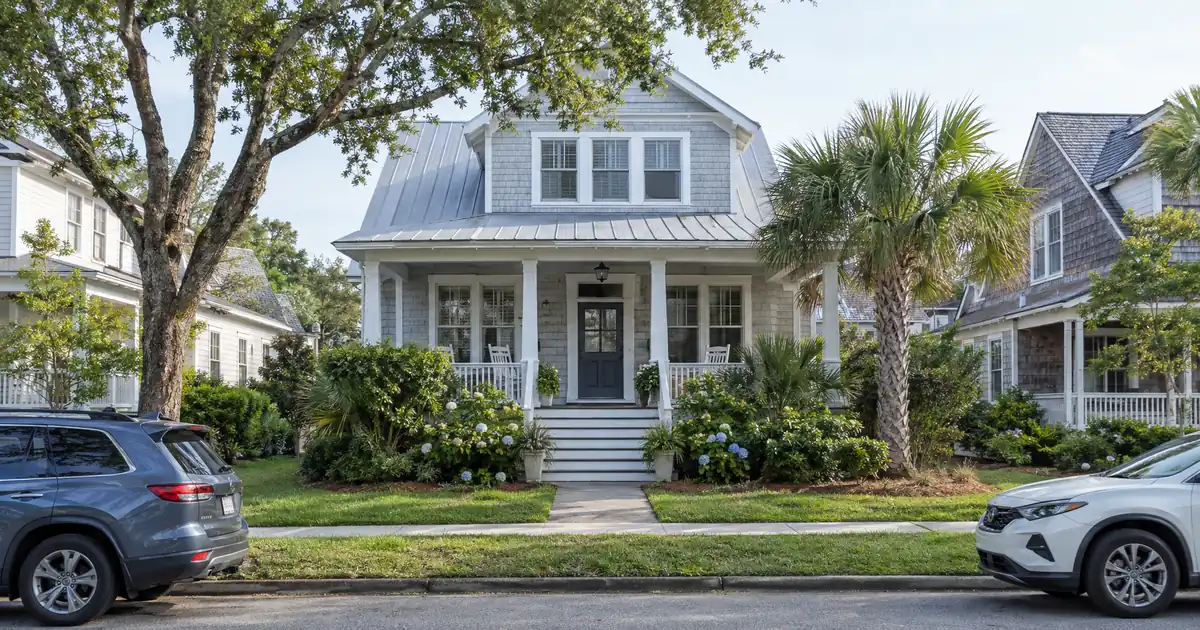
Most investors assume the hard part of a Bald Head Island cash-out is the value. It isn’t. A typical home here is worth well over a million dollars, so equity is rarely scarce. The hard part is the rent side of the ratio, and on an island with almost no long-term tenant market, that side of the fraction is the one that decides the file.
DSCR Cash-Out Calculator
Run the cash-out numbers in Bald Head Island, NC
Rate source: Freddie Mac 30-yr average via FRED® — Federal Reserve Bank of St. Louis · effective Sep 24, 2026
Prefilled with starting assumptions — enter your property’s value, balance, taxes, and insurance for a more accurate picture.
Program parameters update from Lendmire’s centralized guideline source. Taxes and insurance are editable estimates.
As of Sep 24, 2026 · General Freddie Mac market benchmark, not a Lendmire loan offer. Property value, balance, taxes, and insurance are editable estimates. Maximum loan-to-value varies by lender, program, property type, and seasoning. Not a Loan Estimate, approval, or commitment to lend. Program availability and eligibility are subject to lender guidelines, credit approval, property review, and underwriting.
The Quick Read:
A DSCR cash-out refinance on Bald Head Island, North Carolina is underwritten primarily on the property’s rental income measured against its full monthly obligation. That makes it a fit for entity-held owners with substantial equity and a documented rental history, and a poor fit for anyone counting on the island’s value alone.
- Zillow’s modeled average home value is $1,418,076, but sold-price data points the other way.
- Cash-out leverage is capped at 75 percent LTV, with about six months of seasoning from title recording.
- Long-term rent comps are scarce, so coverage is the number to stress first.
- Reserves run about nine months above $1,500,000 in loan size.
- The more realistic long-term tenant market sits across the water in Southport and Brunswick County.
Bald Head Island Market Snapshot
A quick read on the Bald Head Island investor landscape — figures come from the cited sources below. Confirm current property-level numbers before underwriting.
| Metric | Detail |
|---|---|
| Home prices | 13 sales (Redfin Housing Market, Bald Head Island) |
| University enrollment | 1,845 students (Wikipedia, Brunswick Community) |
The Equity Is Real. The Rent Is the Question.
Coverage is monthly rent divided by the full monthly obligation: principal, interest, taxes, insurance and any HOA or club dues. Most standard programs are built around a 1.00 benchmark, because rent covers the payment at that level. Some lenders review lower ratios, but those usually come with lower leverage, stronger credit, more reserves or different pricing.
Now put a $1M-plus asset in that fraction. Even the cheaper property types sit near or above $900,000. A local brokerage, Suzanne O’Bryant Real Estate, puts forest-interior and condo product at $900,000 to $1.5 million. The same brokerage says long-term rental opportunities exist but are limited compared with mainland markets. The research behind this article found no sourced long-term rent, vacancy or duplex data for the island, so no coverage band is published here. A made-up one would be worse than none.
The honest read is qualitative. A house this expensive, rented on a long-term lease, will likely land well under 1.00 including taxes and insurance. Investors who treat the island like a workforce-rental market are about to find that out.
Sub-1.00 files aren’t dead on arrival. A lender may review a sub-1.00 program, an interest-only structure, or a lower LTV with larger reserves. Qualification stays subject to lender guidelines, credit approval and property review. The question worth asking first is whether the borrower should use that flexibility at all. If the only way a property clears is by stacking exceptions, that’s a signal about the asset, not the loan type.
Appraisal Is the Real Underwriter Here
Valuation is where Bald Head Island cash-outs get decided. Sources disagree, and the disagreement matters more than any single number.
Zillow’s model shows value up 2.7 percent year over year. Redfin shows a median sale price near $1.3 million, down 27.4 percent, with 66 days on market against 25 the year before, on only 13 sales. Movoto reports a median list price near $1.23 million, down 24 percent, and a median of 140 days on market in its latest read. List medians in a market this small swing with whatever happens to be listed, and 13 sales is a thin sample. Still, the direction of the market-based data is not the direction of the model.
Underwrite to the lower trend. That’s the practical rule. Cash-out proceeds come from 75 percent of an appraised value, and the appraiser works from closed comps, not a Zillow estimate. Suzanne O’Bryant notes that cash transactions are common here, especially for luxury and second-home sales. Cash-heavy comps mean few financed sales for an appraiser to lean on.
Run it as a thought experiment. Picture an owner who bought a golf-course home near the middle of the broker-quoted range and expects an appraisal that matches the model. If the appraiser pulls from a softer set of recent closings, the usable value drops, and with it the equity that was supposed to fund the next purchase. Cash-out amounts here are a range, not a promise.
The Ferry Problem Is a Comps Problem
Cars stay on the mainland. Access is by passenger ferry from Southport, roughly a 20-minute ride from Deep Point Marina, and the Village of Bald Head Island says rentals often include the owner’s golf cart, with an 18 MPH island-wide speed limit. Groceries, contractors and tenants all move by ferry and cart.
That is charming for a visit. It is a headache for underwriting. The tenant pool for a year-round lease shrinks, because commuters don’t want to schedule their lives around a ferry. Appraisers find fewer long-term rental comparables, and much of what exists is geared toward short stays rather than annual leases. Local guides describe several hundred homes and lodging options, which tells you where the stock is aimed.
Where the Equity Sits
No neighborhood-level rent data turned up for any of these areas, so this is a map of value and character, not a rent chart.
Harbour Village. It’s the gateway area near the marina and ferry landing, per David Wray Real Estate, with the most walkability and dining. If any part of the island supports a non-seasonal tenant, proximity to services and the ferry makes it the likeliest spot. Likeliest isn’t proven.
Cape Fear Station. Newer product, every home a short walk to the beach. Newer construction can mean fewer deferred-maintenance surprises at appraisal, which helps a refinance file. A decade-old article put new homes here in the $700,000s, so treat that as history, not a current price.
Golf-course and interior homes. Broker examples run roughly $1.1 to $1.7 million. The mid-range is the sweet spot for a cash-out thesis, since these homes are big enough to carry meaningful equity and not so rare that comps vanish.
South Beach and oceanfront. Listings routinely run $3 to $7 million. Here’s the catch: the loan-amount guide on standard programs tops out at $3,000,000, so at the upper end the program ceiling can bind before the 75 percent LTV does. Reserves also step up to about nine months above $1,500,000 in loan size. Big equity, but a narrow lane.
Condos are the lowest-cost entry. Some DSCR programs restrict condos, so confirm the project’s eligibility before assuming one works as the collateral. Manufactured homes, log homes and barndominiums fall outside these programs entirely.
What a File Like This Typically Looks Like
DSCR files in markets like this one typically look like a well-capitalized owner with a clean title history and a property whose value far outruns its documented rent. The cleanest file from a documentation standpoint has complete leases, entity docs, title and property details ready for lender review. The weak spot is nearly always the rent side: a lease history that’s thin, seasonal or missing. Files that pencil tend to bring a conservative value expectation and extra reserves up front instead of arguing for the model number after the appraisal lands.
The mechanics are straightforward even when the math is tight. Cash-out leverage is capped at 75 percent LTV, not the 80 percent that applies to purchases. Seasoning runs about six months from title recording. The minimum credit tier is 620, with pricing tiers stepping up at 660, 680 and 700. Available equity depends on rent used for lender review, the full obligation, reserves and that 75 percent ceiling. It’s a result of the file, not a number to count on in advance. The equity-extraction mechanics walk through the sequence in detail.
When Conventional Is the Better Call
DSCR makes sense for an LLC-held or self-employed investor whose property income is the cleaner underwriting story. But if the owner is a high-W-2 borrower with one island property held personally, a conventional second-home or investment-property cash-out may carry lower cost and no coverage test at all. How the two loan types differ comes down to whose income is being underwritten.
The flip point is the rent. Where the rent can’t carry the debt, DSCR is the wrong tool no matter how much equity sits in the house. Where the borrower has several financed properties and conventional capacity is exhausted, DSCR becomes the practical lane. The guide “What Is a DSCR Loan” covers the basics.
Where the Proceeds Should Go
Pulling equity from an island house to buy another island house compounds the same coverage problem. Honestly, the stronger play may be the mainland. Southport and Brunswick County are where service workers, ferry and marina staff and construction trades actually live. Novant Health Brunswick Medical Center, a 74-bed hospital per ApolloMD, is one of several county anchors that support year-round tenancy. Mainland rental housing is outside this article’s scope, but redeploying island equity there is where the rent-to-debt math usually has room. The tradeoff is real: less prestige, more cash flow, and a different appraisal problem altogether.
DSCR vs. conventional financing
There are two common ways to finance an investment property in Bald Head Island, NC, and they qualify you differently — here’s how investors weigh them.
Why investors choose it
- Qualifies on the property’s rental income — no personal tax returns, W-2s, or pay stubs needed to document income.
- No personal debt-to-income ceiling to clear, so existing mortgages and obligations don’t cap your borrowing the same way.
- Can be closed in an LLC, keeping the property inside a business entity.
- Built for scaling — not held to the limit on number of financed properties that conventional financing applies.
- Underwriting centers on the deal: generally qualifies when the rent covers the payment, a 1.00x coverage ratio being a common baseline (confirmed in underwriting).
- Designed specifically for investment property, including long-term and, where the program allows, short-term rentals.
Where it’s strong
- Often the lowest ongoing financing cost for a buyer who fully qualifies on personal income — a fit for a first property or a cost-first purchase.
Trade-offs for investors
- Requires full personal income documentation and must fit within a debt-to-income limit — salary, existing debts, and other mortgages all count.
- Typically held in your personal name rather than a business entity.
- Caps how many financed properties you can carry, which can become a ceiling as a portfolio grows.
- Evaluates you as a borrower as much as the property, which usually means more paperwork.
How investors usually choose: a first or single property often optimizes for the lowest financing cost; portfolio builders often optimize for leverage, vesting in an LLC, and scaling past conventional caps. The right answer depends on your goals, the property, and current guidelines — both paths run through select lenders in Lendmire’s wholesale network, with eligibility and terms confirmed in underwriting.
Before moving forward, verify current local rental rules, taxes, HOA and club obligations and insurance with qualified local professionals. For a file-specific read on North Carolina DSCR financing, talk to Lendmire at 828-256-2183.
Frequently Asked Questions
Can a Bald Head Island vacation home qualify for a DSCR cash-out?
It can be reviewed, but the rent side is the hurdle. A property worth well over a million dollars needs substantial documented rent to approach the 1.00 benchmark.
How much equity can I actually pull out?
Cash-out is capped at 75 percent LTV of the appraised value, and the result depends on rent used for lender review, the full obligation and reserves. With sold prices softer than modeled values, the appraisal is the biggest swing factor. Treat any estimate as a range.
Does the ferry-only access affect appraisal?
Indirectly, yes. Fewer financed sales and scarce rental comparables give appraisers less to work with, and many comps are cash deals. Expect conservative valuations and a longer review, especially on non-standard properties.
Is the six-month seasoning rule different on the island?
No. The standard is about six months of ownership measured from title recording. What differs here is the thin sales history, which can make value harder to support even after seasoning is satisfied.
What if the property clears only below 1.00?
Lenders may review sub-1.00 programs, interest-only structures or reduced LTV with larger reserves. These paths usually involve tradeoffs in pricing, leverage and cash requirements, and none is assured.
For current guidelines and terms, see Lendmire’s DSCR loan programs page.
The Question Worth Asking
If the view and the ferry schedule were stripped away, would the rent a Bald Head Island house could realistically command still carry its debt, or is the equity you’re eyeing the only reason the numbers look good?
About Lendmire
Lendmire (NMLS# 2371349) is a mortgage brokerage focused on DSCR investor loans, arranging financing across 41 markets, Washington, D.C. included, through wholesale and investor-lending channels. Underwriting centers on property-level rental income as reviewed by the lender, not W-2 documentation, subject to lender guidelines, which suits entity-owned and multi-property investors. The firm was named a 2026 Scotsman Guide Top Workplace and a top-ranked workplace in 2025.
Get Started
Ready to find the right loan for you?
In about 30 seconds you can review financing options available for your investment property. No commitment required.
Informational only. Not a Loan Estimate, approval, or commitment to lend. Program availability and eligibility are subject to lender guidelines, credit approval, property review, and underwriting.
References
1. $1,418,076
2. Redfin
3. Wikipedia, Brunswick Community
4. Suzanne O’Bryant Real Estate
5. Movoto
6. 20-minute ride from Deep Point Marina
7. Village of Bald Head Island
9. Novant Health Brunswick Medical Center
10. ApolloMD
11. a 2026 Scotsman Guide Top Workplace
12. Scotsman Guide — Top Workplaces 2025
This article is part of Lendmire’s investment property cash-out refinance program — full qualification details, guidelines, and scenarios live on the program page.
Related reading: Cash Out Refinance Investment Property in Bald Head Island, North Carolina · Luxury Rental DSCR Loans In Bald Head Island: How STR Rents Are Read · Super Jumbo DSCR Loans In Bald Head Island: Leverage And Reserves
Guides: Investment Property Cash-Out Refinance in North Carolina
Brandon Miller
Founder & CEO, Mortgage Loan Originator, Lendmire LLC
- Mortgage Loan Originator · NMLS# 1129696 · Verify on NMLS Consumer Access
- North Carolina Real Estate Broker · License# 343312 · Verify on NCREC
- North Carolina Insurance Producer · License# 19053198 · Property, Casualty, Life, Health · Verify on NAIC SBS
- Lendmire LLC · Firm NMLS# 2371349 · Verify firm licensure
Legal disclosures. Lendmire (NMLS# 2371349) is a state-licensed mortgage brokerage that arranges financing through wholesale lender relationships. Lendmire is not a direct lender, depository institution, or registered financial advisor. The discussion above is general informational content about real estate financing — it is not financial, legal, or tax advice, and readers should consult licensed professionals for guidance on their individual circumstances. Loan inquiries are subject to lender underwriting; this article does not represent a commitment to lend. Loan terms, rates, and qualification standards vary by borrower, property, and state, and are subject to change at any time. Equal Housing Opportunity. NMLS Consumer Access: nmlsconsumeraccess.org.