
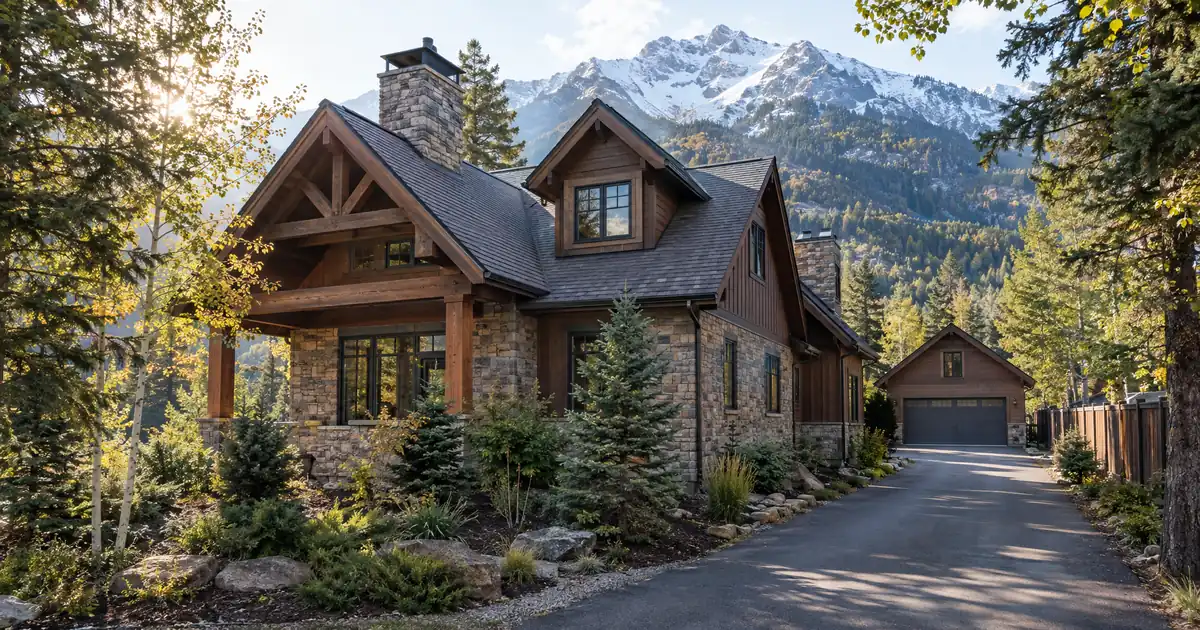
Ask two sources for the median home price in Blue Ridge and you can get answers that differ by double: one puts it near $350K, another above $700K, a spread a local North Georgia realtor’s analysis traces to city versus county, cabins versus in-town homes, and listing versus sold prices. For an investor who already owns here and wants to pull equity out, that spread is the whole story. Your cash-out number depends on an appraisal, and the appraisal depends on which Blue Ridge your property actually belongs to.
Lendmire (NMLS# 2371349) structures DSCR scenarios for investors targeting Blue Ridge, Georgia and places them with wholesale lenders across 41 markets, including D.C. This article covers the equity-extraction side only: how seasoning, the loan-to-value ceiling and rental coverage interact in a small mountain market with thin rent data.
DSCR Cash-Out Calculator
Run the cash-out numbers in Blue Ridge, GA
Rate source: Freddie Mac 30-yr average via FRED® — Federal Reserve Bank of St. Louis · effective Sep 24, 2026
Prefilled with starting assumptions — enter your property’s value, balance, taxes, and insurance for a more accurate picture.
Program parameters update from Lendmire’s centralized guideline source. Taxes and insurance are editable estimates.
As of Sep 24, 2026 · General Freddie Mac market benchmark, not a Lendmire loan offer. Property value, balance, taxes, and insurance are editable estimates. Maximum loan-to-value varies by lender, program, property type, and seasoning. Not a Loan Estimate, approval, or commitment to lend. Program availability and eligibility are subject to lender guidelines, credit approval, property review, and underwriting.
Key Takeaways:
A DSCR cash-out refinance on a Blue Ridge, Georgia investment property is underwritten primarily on the rental income measured against its full monthly obligation. An owner who has held title for roughly six months can borrow against appraised value up to a 75 percent ceiling, subject to lender guidelines.
- Zillow’s city home value index sits near $490,404, down 6.6 percent year over year.
- Redfin’s Fannin County median is $641K, skewed upward by high-end sales.
- Listing-based rents run far above HUD fair market rents, so underwrite conservatively.
- Log homes, manufactured homes and barndominiums fall outside these programs, and many mountain cabins are log construction.
Which Number Is Your Property Worth Against?
Lenders use the appraised value of your specific property, not a county median. The 75 percent ceiling applies to that appraisal, so the market’s conflicting signals matter before you apply.
Start with the conflict. Zillow’s city index says Blue Ridge homes are worth about $490,404 and have slipped 6.6 percent over the past year, with homes going pending in about 38 days. Redfin’s county figure says something different: a $641K median sale price for the three months ending in May, up 17.5 percent, at $304 per square foot, down 5.7 percent. Days on market sit at 70 versus 96 a year earlier. Overlapping geography, opposite trend arrows.
The likeliest reading is that county medians are pulled up by lakefront and luxury closings while in-town, mid-range homes drift. That matters because a mid-range rental is what most DSCR investors hold. Mountain Place Realty describes tiers of roughly $300K to $500K for mid-range, $500K to $1M for premium and $1M and up for lakefront. Several local sources have also described both the city and the county as buyer’s markets. Where you land among those tiers decides whether “equity” exists at all.
Here’s the catch for a recent buyer. If you purchased near a peak and values have softened, the appraisal may not support what you hoped to extract. If you bought earlier, or added value through a renovation, the cushion can be real. A 75 percent LTV ceiling against a flat or falling value leaves little room once the existing balance is subtracted. Run that subtraction before you pay for an appraisal.
Six Months, 75 Percent, and What’s Left
Two structural rules shape every cash-out file here: seasoning of about six months from title recording, and a hard 75 percent LTV cap on cash-out, lower than the 80 percent ceiling that applies to purchases. Proceeds equal 75 percent of appraised value minus your existing payoff, minus costs, and the file must still clear coverage and reserves.
Think of it as three gates in sequence.
1. Seasoning. Ownership is generally measured from recording of the deed. Buy in a hurry and refinance early, and the clock hasn’t finished.
2. Leverage. Take the appraised value, apply the 75 percent ceiling, and subtract what you owe. That remainder is the maximum, not a promise.
3. Coverage and reserves. Rent used for lender review divided by the full monthly obligation (principal, interest, taxes, insurance and any HOA dues) is the coverage ratio. A 1.00 baseline is common because rent covers the payment at that level. Reserves of about six months are typical, stretching to nine above $1.5 million. Credit tiers start at a 620 floor and improve through 660, 680 and 700, with better tiers generally supporting better terms.
The gates interact, and in Blue Ridge the third one does the most damage, for reasons in the next section. All of this is subject to lender guidelines, credit approval and property review. Investors who want the mechanics behind the coverage number can read the guide “What Is a DSCR Loan”.
Where the Coverage Math Gets Tight
Blue Ridge is priced like a second-home market but rented like a small mountain town, and that gap is the central challenge for rental coverage. Rent data here is unusually inconsistent, so treat any single figure with suspicion.
Homes.com shows a median single-family rent of $2,350, though the same page cites $2,297 elsewhere. Zillow Rental Manager shows a $3,000 median across property types, with listings spanning $1,300 to $3,500 (a small sample that likely includes furnished and cabin-style units). HotPads puts the county median asking rent at $2,700. Compare those to the HUD fair market rents listed by Affordable Housing Hub: $707 for a studio, $711 for a one-bedroom, $885 for a two-bedroom and $1,247 for a three-bedroom. That is a wide gap between the floor and the listings.
Run the numbers on a modeled example. These are illustrative assumptions, not sourced rents: a single-family home valued at $490,000, refinanced at 75 percent LTV, with full taxes and insurance in the obligation. At a $2,350 rent, coverage lands around 0.8x. At $3,000 it reaches roughly 1.0x. Drop leverage to 65 percent and the same two rents move to the high-0.8s and low-1.1s. Those bands are rounded down and include taxes and insurance, which is how a lender will count them.
An appraiser’s rent schedule will likely land nearer the conservative end, so underwrite against comparable long-term leases, not a listing median.
What if the number is below 1.00? A sub-1.00 file isn’t automatically dead, but it changes the conversation. Options a lender may review include a sub-1.00 program, an interest-only structure, lower leverage or stronger credit and reserves. Each carries tradeoffs in pricing and proceeds, and eligibility depends on lender guidelines and property review. The better question is whether the property belongs in your portfolio at that yield. If you’re reaching for sub-1.00 because the coverage won’t work at this price point, that’s a signal about the asset, not the loan type.
DSCR files in markets like this one typically look like a high purchase price, a rent that is supportable but modest relative to it, and a borrower who has to choose between more leverage and a cleaner coverage ratio. The stronger files usually come in with a documented lease, a rent schedule the appraiser can defend and cash reserves that exceed the minimum. Files built on a cabin-style listing rent tend to struggle once the appraiser’s number arrives.
Property Types: What Fits and What Doesn’t
Only some of Blue Ridge’s housing stock is eligible for DSCR financing, and the ineligible category is bigger here than in most markets. Manufactured homes (single- and double-wide), log homes and barndominiums are outside the network’s DSCR programs. Many mountain cabins are log construction, so confirm construction type before you count on a refinance.
The eligible lane is conventionally built single-family homes, small multifamily and workforce-oriented rentals. Small multifamily is scarce here. The Homes.com multifamily listings surface only a few examples, such as a triplex on roughly 8.65 acres about 15 minutes outside town. Apartments.com shows just 32 rentals across Fannin County. Scarcity cuts both ways. Income-stacking in a duplex or triplex can improve coverage over a single-family home, but appraisers may have to lean on distant or dissimilar sales, which can cap the value supporting a cash-out.
This is a genuine toss-up for owners of the rare multi-unit property: better coverage on paper, but less certainty about what it appraises for. If you hold one, the appraisal risk is the variable to stress-test first. Weighing a smaller, more conventional rental nearby could produce cleaner numbers, at the cost of lower total rent.
Demand Is Workers, Not Tourists
Long-term tenant demand in Blue Ridge comes from people who work in the area, and local officials say there aren’t enough places for them to live. The Fannin County Development Authority formed a housing committee after its director said the county can attract business but lacks housing for the workers, according to local reporting. Growth has pushed up home prices and limited inventory. That’s a qualitative signal, not a vacancy statistic, but it supports a workforce-rental thesis.
The employer base is consistent with it. The Fannin County Development Authority’s employer list, which dates from 2020 and should be read as qualitative, names healthcare providers (Fannin Regional Hospital, Riverstone Medical Campus, Pruitt Health Blue Ridge), a manufacturer, retailers (Ingles, Walmart, The Home Depot) and public employers including the county school system. Hospital names have shifted over the years, so verify current facility names. The Fannin County Chamber says Union General Health System operates 21 affiliated facilities, including a critical access hospital in Blue Ridge. Data USA shows city residents working mostly in manufacturing (85 people), transportation and warehousing (77) and construction (74). No headcounts for the larger employers turned up.
Scale matters too. The city itself has 1,323 residents with a median age of 46.5, against 54 for the county. The wider Blue Ridge area counts 7,329. Demand is county-wide, not city-bound, so the tenant pool is small and any single property’s vacancy risk is real.
One more check on the low end: Blue Ridge has six affordable housing properties (five tax-credit and one housing authority), and Findhelp notes subsidized properties often keep waiting lists. Waitlists suggest unmet demand at the bottom of the market. They also mean subsidized rents cap what a market-rate workforce unit can realistically charge, so don’t assume rents above what those tenants can pay.
Submarkets, Without the Fake Precision
No reliable neighborhood-level price or rent data turned up, so this article won’t rank cash-flow neighborhoods. Saying so plainly beats a made-up leaderboard. What the research does support is how each area tends to behave.
- Downtown and the depot district. Walkable, highest visibility, thin in-town inventory. Appraisal support is likely better where comparable sales exist, but rents will rarely match the price premium.
- McCaysville and Copperhill. The twin towns on the Tennessee line, reached by the scenic railway, are typically a lower-price alternative. No price data was found, so a lower basis may help coverage but needs property-level confirmation.
- Morganton. Flagged as a possible workforce and newer-construction area, though the supporting source is unofficial.
- Mineral Bluff, Lake Blue Ridge and the Toccoa River corridors. Mostly cabin and luxury inventory. Poor fit for long-term coverage math, and exposed to the log-home exclusion.
If cash-out proceeds are headed to another rental in town, the submarket pattern matters more than the loan. Pulling equity to buy a cabin in a corridor where coverage can’t work defeats the purpose.
What the Proceeds Are For
The cash-out argument is straightforward when the proceeds fund another long-term rental where coverage works, and weaker when they fund something where it doesn’t. A refinance that raises the obligation on a property already near 1.0x can push it below the baseline. Replacing a cheaper obligation with a larger one is a real cost, not a formality.
DSCR vs. conventional financing
Two common ways to finance an investment property in Blue Ridge, GA. They qualify you differently — here’s how investors weigh them.
Why investors choose it
- Qualifies on the property’s rental income — no personal tax returns, W-2s, or pay stubs needed to document income.
- No personal debt-to-income ceiling to clear, so existing mortgages and obligations don’t cap your borrowing the same way.
- Can be closed in an LLC, keeping the property inside a business entity.
- Built for scaling — not held to the limit on number of financed properties that conventional financing applies.
- Underwriting centers on the deal: generally qualifies when the rent covers the payment, a 1.00x coverage ratio being a common baseline (confirmed in underwriting).
- Designed specifically for investment property, including long-term and, where the program allows, short-term rentals.
Where it’s strong
- Often the lowest ongoing financing cost for a buyer who fully qualifies on personal income — a fit for a first property or a cost-first purchase.
Trade-offs for investors
- Requires full personal income documentation and must fit within a debt-to-income limit — salary, existing debts, and other mortgages all count.
- Typically held in your personal name rather than a business entity.
- Caps how many financed properties you can carry, which can become a ceiling as a portfolio grows.
- Evaluates you as a borrower as much as the property, which usually means more paperwork.
How investors usually choose: a first or single property often optimizes for the lowest financing cost; portfolio builders often optimize for leverage, vesting in an LLC, and scaling past conventional caps. The right answer depends on your goals, the property, and current guidelines — both paths run through select lenders in Lendmire’s wholesale network, with eligibility and terms confirmed in underwriting.
Compare the alternatives. A DSCR cash-out makes sense for investors holding properties in an LLC, subject to lender program eligibility, or for investors whose traditional personal-income documentation doesn’t show the income a bank would want. A conventional refinance may make more sense for a W-2 borrower with one rental and strong documented income. The DSCR versus conventional comparison lays out that break-even. Investors comparing structures can also review refi programs and the details on pulling equity out. Statewide program context is at Lendmire’s Georgia DSCR loan programs.
Proceeds aren’t guaranteed either. Equity available depends on rent used for lender review, the full monthly obligation, reserves and the 75 percent ceiling. Loan sizes run up to $3,000,000 on standard programs, with smaller balances routed through select lenders in the network. Verify current local rental rules, taxes and insurance with qualified local professionals before committing.
Frequently Asked Questions
How do you qualify for a DSCR cash-out refinance in Blue Ridge, Georgia?
Qualification centers on the property’s rent against its full monthly obligation, with a 1.00 baseline common on standard programs. You’ll also need roughly six months of ownership, a credit score at or above the 620 floor, about six months of reserves and a loan at or under 75 percent of appraised value. Final eligibility depends on lender guidelines, credit approval and property review.
What are the requirements for an investment property loan in Blue Ridge, Georgia?
Expect an eligible property type, a documented rental income figure, credit and reserves within program tiers and leverage at or under program ceilings. In Blue Ridge, construction type deserves special attention because log homes, manufactured homes and barndominiums fall outside these programs. Entity-owned properties are reviewed subject to program terms.
Why do Blue Ridge appraisals and medians vary so much?
The figures depend on whether a source measures the city or Fannin County, and whether it counts cabins and lakefront sales alongside in-town homes. Zillow’s city index of $490,404 and Redfin’s county median of $641K describe different slices of the market. The appraisal on your specific property is the number that governs a refinance.
Can a duplex or triplex in Fannin County improve cash-out coverage?
It can, since multiple rent streams share one obligation. The catch is thin comparable sales, which can limit appraised value and therefore proceeds. Treat multi-unit properties here as worth underwriting property by property.
What down-payment ranges may DSCR lenders review for Blue Ridge investment-property purchases?
Purchase leverage generally tops out around 80 percent LTV, so roughly 20 percent down or more, subject to lender guidelines. Lendmire arranges DSCR investor loans and most programs center on property rental income instead of personal income documents. To discuss a specific scenario, call 828-256-2183 or talk to Lendmire.
Before Anything Else, Get the Rent Schedule
The most useful step for a Blue Ridge owner isn’t a loan application. It’s assembling the evidence for what the property rents for on a long-term lease: current lease comparables within the county, not listing medians. That number decides whether the coverage ratio clears 1.00 and how much leverage the file can carry. It costs nothing, and it will tell you whether the equity in a market this spread-out is worth pulling.
About Lendmire
As a non-QM mortgage broker (NMLS# 2371349), Lendmire facilitates DSCR investor loans across 41 markets, including Washington, D.C. DSCR eligibility is generally reviewed around property-level rental income instead of personal income documentation, subject to lender guidelines, serving LLC-structured portfolios and self-employed borrowers who don’t fit conventional boxes. Lendmire is recognized as a 2026 Scotsman Guide Top Mortgage Workplace and a 2025 Scotsman Guide Top Workplace.
Get Started
Ready to find the right loan for you?
In about 30 seconds you can review financing options available for your investment property. No commitment required.
Informational only. Not a Loan Estimate, approval, or commitment to lend. Program availability and eligibility are subject to lender guidelines, credit approval, property review, and underwriting.
References
1. local North Georgia realtor’s analysis
2. Zillow Home Value Index, Blue Ridge
3. Redfin, Fannin County housing market
4. Homes.com
5. Zillow Rental Manager, Blue Ridge
6. HotPads
7. Affordable Housing Hub, Blue Ridge
8. Homes.com multifamily listings
10. Fannin.com — Fannin County Leaders Tackle Affordable Housing Shortage
11. Fannin County Development Authority, major employers
12. Fannin County Chamber of Commerce, healthcare
13. Data USA
14. Census Reporter — Blue Ridge GA
15. Blue Ridge area
16. Findhelp
17. a 2026 Scotsman Guide Top Mortgage Workplace
18. a 2025 Scotsman Guide Top Workplace
This article is part of Lendmire’s investment property cash-out refinance program — full qualification details, guidelines, and scenarios live on the program page.
Guides: Investment Property Cash-Out Refinance in Blue Ridge, GA · Investment Property Cash-Out Refinance in Georgia
Brandon Miller
Founder & CEO, Mortgage Loan Originator, Lendmire LLC
- Mortgage Loan Originator · NMLS# 1129696 · Verify on NMLS Consumer Access
- North Carolina Real Estate Broker · License# 343312 · Verify on NCREC
- North Carolina Insurance Producer · License# 19053198 · Property, Casualty, Life, Health · Verify on NAIC SBS
- Lendmire LLC · Firm NMLS# 2371349 · Verify firm licensure
Legal disclosures. Lendmire (NMLS# 2371349) is a state-licensed mortgage brokerage that arranges financing through wholesale lender relationships. Lendmire is not a direct lender, depository institution, or registered financial advisor. The discussion above is general informational content about real estate financing — it is not financial, legal, or tax advice, and readers should consult licensed professionals for guidance on their individual circumstances. Loan inquiries are subject to lender underwriting; this article does not represent a commitment to lend. Loan terms, rates, and qualification standards vary by borrower, property, and state, and are subject to change at any time. Equal Housing Opportunity. NMLS Consumer Access: nmlsconsumeraccess.org.