
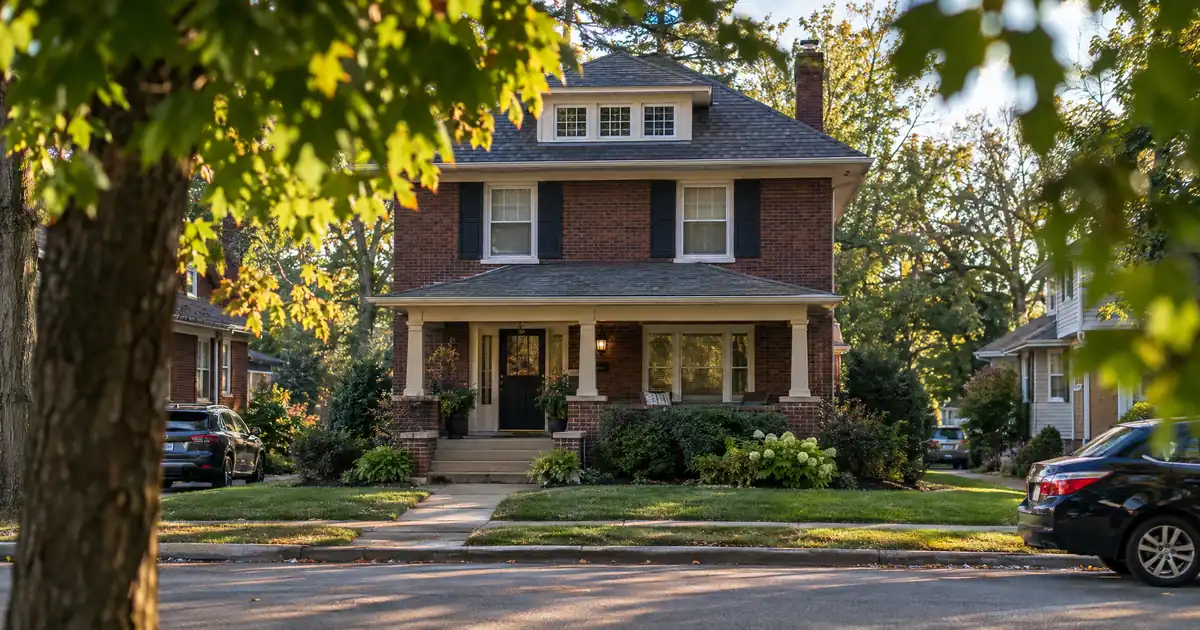
The most common way a Bowling Green cash-out refinance stalls is not seasoning or credit. It’s coverage. An investor sees a 75 percent loan-to-value ceiling, assumes that is the size of the check, and then finds that rents in a small university town cannot always carry that much debt once taxes and insurance are counted. Lender guidelines, appraisal comps and the rent roll decide the real number. Bowling Green has its own version of each problem.
This article is for investors who already own a rental here and want to pull equity out to fund the next deal. Lendmire, a DSCR-focused mortgage broker, arranges these loans through wholesale lending channels. The research below sorts out where the numbers hold and where they don’t.
DSCR Cash-Out Calculator
Run the cash-out numbers in Bowling Green, OH
Rate source: Freddie Mac 30-yr average via FRED® — Federal Reserve Bank of St. Louis · effective Sep 24, 2026
Prefilled with starting assumptions — enter your property’s value, balance, taxes, and insurance for a more accurate picture.
Program parameters update from Lendmire’s centralized guideline source. Taxes and insurance are editable estimates.
As of Sep 24, 2026 · General Freddie Mac market benchmark, not a Lendmire loan offer. Property value, balance, taxes, and insurance are editable estimates. Maximum loan-to-value varies by lender, program, property type, and seasoning. Not a Loan Estimate, approval, or commitment to lend. Program availability and eligibility are subject to lender guidelines, credit approval, property review, and underwriting.
At a Glance: A DSCR cash-out refinance in Bowling Green, Ohio is underwritten primarily on the property’s rental income measured against its full monthly obligation, with proceeds sized by appraised value, a 75 percent loan-to-value ceiling and the rent the lender accepts. BGSU reported 15,273 undergraduates.
- Renters occupy 63 percent of households, per RentCafe’s Census-based data.
- Modeled coverage on a typical single-family rental falls below 1.00 at the full 75 percent ceiling.
- Cash-out generally requires about six months of ownership, measured from title recording.
- Duplex inventory is thin, so appraisers may need to widen the comp radius.
Bowling Green Market Snapshot
A quick read on the Bowling Green investor landscape — figures come from the cited sources below. Confirm current property-level numbers before underwriting.
| Metric | Detail |
|---|---|
| Home prices | 8 sales (Redfin housing market) |
| Typical rents | $1,670 average (NeighborhoodScout) |
| University enrollment | New students up 4%/14%/36% (BGSU News) |
| Employment | 450 jobs (NBC24, Abbott plant) |
Why Bowling Green Rentals Carry Equity Worth Extracting
Bowling Green is a city of roughly 30,000 built around a growing public university, and that is the core of the equity story. BGSU’s freshman class topped 4,000 students, the largest in the university’s history, with engineering new-student growth of 36 percent. BG Independent News reports that total undergraduate enrollment rose by more than 3 percent the following fall, and that new students from Wayne County, Michigan jumped 39 percent on the strength of an in-state tuition scholarship.
Demand is growing, not eroding. That supports the rent-roll stability a lender wants to see on a refinance.
Pricing is where the sources scatter. The primary figure here is the roughly $283,000 twelve-month median sale price on Homes.com, up 6 percent. Redfin shows a lower $255,000 median, but that rests on only eight sales in a single month. Census-derived home value estimates land near $205,700 because they reflect owner-reported value, not transactions. Different yardsticks, not a contradiction. For cash-out planning, the yardstick that matters is the appraiser’s, and no published median can tell you where a specific house will land.
Equity has a second source: the price gap with the metro. Homes.com puts the Bowling Green single-family median at $295,000 against $124,000 in Toledo, about 20 miles north. That gap says the city has long priced above its regional neighbors, which is what gives longer-held campus-area houses room to appraise well above their original basis.
Where the DSCR Math Works (And Where It Doesn’t)
The math does not work equally everywhere in Bowling Green. Small multifamily near campus and downtown offers the best rent-to-value relationship in principle. Owner-occupied suburban pockets like Bowling Green West compress coverage. Treat the rent figures below as ranges with attribution, because the sources measure different things.
| Source | Rent measure | Figure |
|---|---|---|
| RentCafe | Avg, 50+ unit buildings | $1,129 |
| RentCafe | 3BR avg, same set | $1,315 |
| Apartments.com | 2BR avg | about $865 |
| Rent.com | 2BR avg | $820 |
| NeighborhoodScout | BG West avg rent | $1,670 |
Nobody should blend those into one “median rent.” RentCafe tracks larger complexes and has rents up 6.59 percent year over year. Apartments.com and Rent.com capture a broader, cheaper set of listings. The NeighborhoodScout number reflects houses in one owner-occupied area. No source in the research offers a reliable citywide vacancy figure, so vacancy assumptions should come from the property’s own history.
The Campus Core and Downtown Corridor
The campus core around East Wooster, South Enterprise and Lehman Avenue is where student demand is most direct. Off-campus listings sit anywhere from two-tenths to a half mile from campus, and BGSU’s Off-Campus Student Services maintains a landlord directory. The stock includes older houses leased by the bedroom or converted into apartments.
No source provides reliable sale prices or rents for this submarket, so it stays qualitative here. Still, it is where a small building is most likely to produce a healthy coverage number, because per-room leasing lifts gross rent well above what a single-family lease would.
Downtown and the Wooster Street corridor are similar in stock. Historic storefronts and large older homes, some converted to apartments, draw graduate students, young professionals, and BGSU and hospital staff. NeighborhoodScout puts duplexes and converted small buildings at 11.68 percent of housing units, against 39.73 percent single-family detached and 39.17 percent large apartment complexes. That middle slice is the DSCR sweet spot, and it is narrow.
Bowling Green West: Good Collateral, Tight Coverage
Bowling Green West is where the paper equity often is. NeighborhoodScout reports a median price of $318,954 and an average rent of $1,670 in this area of three- and four-bedroom single-family homes and townhomes. Most of it is owner-occupied.
A rent that is roughly 0.5 percent of value is a thin ratio for a DSCR file. Appraisals here can come in strong, especially with new-construction comps nearby. Coverage is the constraint.
The New-Build Effect on Comps
New-home supply is entering at higher price points. NewHomeSource lists Bowling Green-area new construction at $303,990 to $579,990 across 11 communities, and the Toussaint Springs subdivision was approved for 123 lots on 37 acres. Those comps can lift appraisals on larger single-family rentals on the north and west sides. Older student-area stock may not get the same lift. That comparison is inference from the price bands, not a sourced statement, and it is why appraisal outcomes on the two property types can diverge.
Running the Numbers: What 75 Percent LTV Actually Means Here
At the full 75 percent ceiling, a typical Bowling Green single-family rental models below 1.00. Cutting leverage to somewhere near 60 percent brings it to the baseline. That is the single most important point for anyone planning a cash-out in this market.
Run the numbers on a hypothetical house appraising near the $283,000 twelve-month median. Assume a modeled rent of $1,670, borrowed from the Bowling Green West average purely as an illustration and not a sourced rent for this house. Coverage here means rent divided by full PITIA, meaning principal, interest, taxes, insurance and any HOA dues. The estimates include taxes and insurance and are rounded down.
| LTV | Modeled coverage | Read |
|---|---|---|
| 75 percent | about 0.9 | Below the 1.00 baseline |
| 65 percent | about 1.0 | Borderline |
| 60 percent | about 1.05 | Clears the baseline |
A file at 0.9 is not dead. A sub-1.00 program, an interest-only structure or a lower-leverage request could each be reviewed, all subject to lender guidelines, credit approval and property review. Nothing here says a specific file will be approved.
Most standard DSCR programs are built around a 1.00 baseline because the rent covers the payment at that level. Some lenders will look at lower or no-ratio scenarios, but those usually come with stronger compensating factors, lower leverage, different pricing or more cash in the deal. So the useful question is not “what is 75 percent of my value?” It is “at what leverage does my rent clear the baseline?”
Working DSCR brokers see a recurring pattern in college-anchored small markets: the appraisal comes in fine and the rent is what limits the loan. Investors who bought a house years ago and rented it to a household or a group of students often carry meaningful equity, yet the rent on that house was never priced for today’s borrowing math. Getting a lease, a rent schedule and a fresh insurance quote in front of the lender early tends to prevent a re-size late in the file.
Honestly, this one is a toss-up for many investors. Extracting at 60 percent leaves less capital than the headline ceiling promises. But it can be the more durable structure, since a refinance that barely clears 1.00 has no cushion for a vacant summer. Many investors will prefer the smaller check.
Why Multifamily Beats the Single-Family Rental for Cash-Out
A duplex or converted small building in Bowling Green generally offers more cushion than a comparably priced house. Two or more rent streams can carry a payment better than one. Vacancy also hits differently: one empty unit in a duplex is a partial loss, not a total one.
The catch is comps. Zillow’s Bowling Green duplex page showed zero homes for sale at the time of research, while Wood County showed 27. A thin market means an appraiser working a small-building cash-out may have to widen the search to the county. That can produce conservative values. Investors holding a duplex should expect that, and should know a rare small building is hard to replace once sold.
If the goal is to reuse proceeds on another small building, that scarcity matters. The refinance can raise cash, but finding the next target is the real bottleneck. That is also why some investors here choose a smaller extraction, keeping the property and its cash flow while funding a purchase elsewhere in the Toledo area.
The Employment Layer Beyond Students
Student demand follows the academic calendar, and rentals turn over with it. Summer, semester and year leases are all common in the campus area. A cash-out file leaning entirely on nine-month cycles may get more scrutiny than one anchored by twelve-month working households.
Two anchors help. The first is healthcare: Wood County Hospital, described by the City of Bowling Green as providing cancer treatment, orthopedic surgery and rehabilitation, sits alongside the Falcon Health Primary Care Center and Urgent Care. BGSU has also announced a partnership with Mercy Health to grow health care programs. The city’s workforce page names advanced manufacturing, aerospace, automotive, logistics and robotics as skilled-labor sectors.
The second is Abbott Laboratories. JobsOhio describes a $536 million, 360,000-square-foot specialty-nutrition plant on the city’s north edge, with 450 permanent jobs expected. Abbott’s careers page describes it as under construction. Check the current status before citing an opening date, since the original plan called for completion earlier than what the employer page now suggests.
Those are non-student, year-round jobs. They are exactly the households that sign twelve-month leases on the single-family and duplex stock most likely to be refinanced.
There is a supply side too. The mayor has said the Abbott arrival increased the need to address a housing deficit, and the Sentinel-Tribune reports a $1 million state grant toward 117 workforce housing lots in the Green Acres Subdivision. Officials describe demand outrunning supply, which is friendly to low-vacancy assumptions. But new for-sale lots also give some renters a path to buying. Watch that pipeline.
Seasoning and Timing the Extraction
Seasoning is straightforward but often misread. Programs typically look for about six months of ownership measured from title recording before a cash-out. A property bought and renovated within that window may be appraised, but the lender will still count from the recording date.
For Bowling Green investors, timing interacts with the academic calendar in a practical way. A refinance packaged with a fresh lease in hand tells a cleaner story than one filed in the gap between tenants. That is not a rule. It is a structural observation about how lenders read rent rolls.
DSCR vs. conventional financing
Two common ways to finance an investment property in Bowling Green, OH. They qualify you differently — here’s how investors weigh them.
Why investors choose it
- Qualifies on the property’s rental income — no personal tax returns, W-2s, or pay stubs needed to document income.
- No personal debt-to-income ceiling to clear, so existing mortgages and obligations don’t cap your borrowing the same way.
- Can be closed in an LLC, keeping the property inside a business entity.
- Built for scaling — not held to the limit on number of financed properties that conventional financing applies.
- Underwriting centers on the deal: generally qualifies when the rent covers the payment, a 1.00x coverage ratio being a common baseline (confirmed in underwriting).
- Designed specifically for investment property, including long-term and, where the program allows, short-term rentals.
Where it’s strong
- Often the lowest ongoing financing cost for a buyer who fully qualifies on personal income — a fit for a first property or a cost-first purchase.
Trade-offs for investors
- Requires full personal income documentation and must fit within a debt-to-income limit — salary, existing debts, and other mortgages all count.
- Typically held in your personal name rather than a business entity.
- Caps how many financed properties you can carry, which can become a ceiling as a portfolio grows.
- Evaluates you as a borrower as much as the property, which usually means more paperwork.
How investors usually choose: a first or single property often optimizes for the lowest financing cost; portfolio builders often optimize for leverage, vesting in an LLC, and scaling past conventional caps. The right answer depends on your goals, the property, and current guidelines — both paths run through select lenders in Lendmire’s wholesale network, with eligibility and terms confirmed in underwriting.
Other typical file requirements include credit tiers starting at a 620 floor, with better positioning at 660, 680 and 700, and reserves of about six months of PITIA. Loan amounts can reach $3,000,000 on standard programs, though nearly every Bowling Green deal sits far below that. Manufactured homes, log homes and barndominiums fall outside these programs. Qualification always depends on lender guidelines, credit profile, reserves and property review.
For readers weighing whether a DSCR loan or a bank product fits better, the side-by-side comparison lays out the tradeoffs. The basics of how the ratio works are in the full breakdown, and the mechanics of extraction are covered in DSCR cash-out refi mechanics.
Putting the Proceeds to Work
Proceeds are only as good as the next deal. Two Bowling Green-specific uses come up repeatedly.
The first is a down payment on a small building near campus or downtown, where per-room leasing and converted units can produce stronger coverage than a house. The second is a step into the commuter belt, where the Toledo-area price gap opens opportunities that Bowling Green’s own price level does not.
Say you own a house near the campus core and have held it for several years. The refinance turns paper equity into a deposit on a second property, and if the next purchase clears the baseline on its own rent, the portfolio compounds. If the new purchase needs the first house’s cash flow to survive, the extraction has not really worked.
Investors who want to see how a specific Bowling Green file could be structured can talk through the file, or call Lendmire at 828-256-2183. Broader state-level context sits on the page for DSCR loans in Ohio.
Investors should verify current local rental rules, taxes and insurance with qualified local professionals before committing.
What to Skip
Skip any plan that assumes 75 percent leverage clears on a single-family rental without checking the coverage number first. Skip relying on a single published rent figure, since the sources here disagree by hundreds of dollars. And skip counting on a duplex appraisal that assumes deep comps, because in this market they may not exist.
If you only take one thing from this piece, it’s this: in Bowling Green, the appraisal will usually support the equity, so the rent decides how much of it you can actually pull out.
Frequently Asked Questions
How do you qualify for a DSCR cash-out refinance in Bowling Green, Ohio?
Qualification centers on the property’s rent measured against its full monthly obligation, with a 1.00 baseline common on standard programs. Lenders also review credit (a 620 floor, better tiers at 660 to 700), about six months of reserves and roughly six months of ownership. Approval depends on lender guidelines and property review.
What are the requirements for an investment property refinance in Bowling Green?
Expect a rent-based coverage test, a 75 percent loan-to-value ceiling on cash-out, seasoning measured from title recording and reserves near six months of PITIA. Eligible property types include single-family homes and small multifamily buildings.
How much equity can I actually pull from a campus-area rental?
It depends on appraised value and the rent, not just the 75 percent ceiling. On a modeled single-family rental, coverage falls below 1.00 at the full ceiling and reaches about 1.0 near 60 to 65 percent leverage. Small buildings with several rent streams often carry more.
Does student-lease seasonality hurt a Bowling Green cash-out file?
It can draw more attention to the rent roll, because campus-area leases follow the academic calendar. Files with twelve-month leases from working households, such as hospital staff or Abbott-related employment, are typically easier to present. Lender treatment varies by program.
For current guidelines and terms, see Lendmire’s DSCR loan programs page.
About Lendmire
Lendmire is a non-QM mortgage brokerage (NMLS# 2371349) arranging DSCR investor loans in 41 markets, including Washington, D.C. Eligibility is generally reviewed around a property’s rental income rather than personal income, subject to lender and program guidelines, which suits self-employed investors and LLC-owned portfolios. Lendmire was recognized as a 2026 Scotsman Guide Top Mortgage Workplace and a 2025 Scotsman Guide Top Workplace.
Get Started
Ready to find the right loan for you?
In about 30 seconds you can review financing options available for your investment property. No commitment required.
Informational only. Not a Loan Estimate, approval, or commitment to lend. Program availability and eligibility are subject to lender guidelines, credit approval, property review, and underwriting.
References
1. Redfin: Bowling Green housing market
2. NeighborhoodScout: Bowling Green West
3. BGSU: largest freshman class
5. BG Independent News: enrollment
6. Homes.com: Bowling Green local guide
7. BGSU’s Off-Campus Student Services
9. bgohio.gov — Workforce page
10. JobsOhio: Abbott announcement
11. Sentinel-Tribune: workforce housing
12. a 2026 Scotsman Guide Top Mortgage Workplace
13. a 2025 Scotsman Guide Top Workplace
This article is part of Lendmire’s investment property cash-out refinance program — full qualification details, guidelines, and scenarios live on the program page.
Related reading: Cash Out Refinance Investment Property in Bowling Green, Ohio: The 2026 DSCR Financing Guide to BGSU Rentals · Cash Out Refinance Investment Property Bowling Green Kentucky · DSCR Loans in Bowling Green, Kentucky: Investor Financing for the Corvette City Corridor, WKU Campus District, Richardsville Road Growth Zone & Real Estate Investors
Guides: Investment Property Cash-Out Refinance in Ohio
Brandon Miller
Founder & CEO, Mortgage Loan Originator, Lendmire LLC
- Mortgage Loan Originator · NMLS# 1129696 · Verify on NMLS Consumer Access
- North Carolina Real Estate Broker · License# 343312 · Verify on NCREC
- North Carolina Insurance Producer · License# 19053198 · Property, Casualty, Life, Health · Verify on NAIC SBS
- Lendmire LLC · Firm NMLS# 2371349 · Verify firm licensure
Disclosure information. Lendmire is a state-licensed mortgage brokerage under NMLS# 2371349. Lendmire is not a depository institution, direct lender, or financial advisor — all loans referenced are placed through wholesale lender partners and are subject to each lender's underwriting standards. This article is provided for general informational purposes and is not a commitment to lend, nor does it constitute financial, legal, or tax advice. Loan programs, terms, rates, and qualification standards change without notice and depend on borrower profile, property type, and the state in which the subject property is located. Equal Housing Opportunity provider. NMLS Consumer Access: nmlsconsumeraccess.org.