
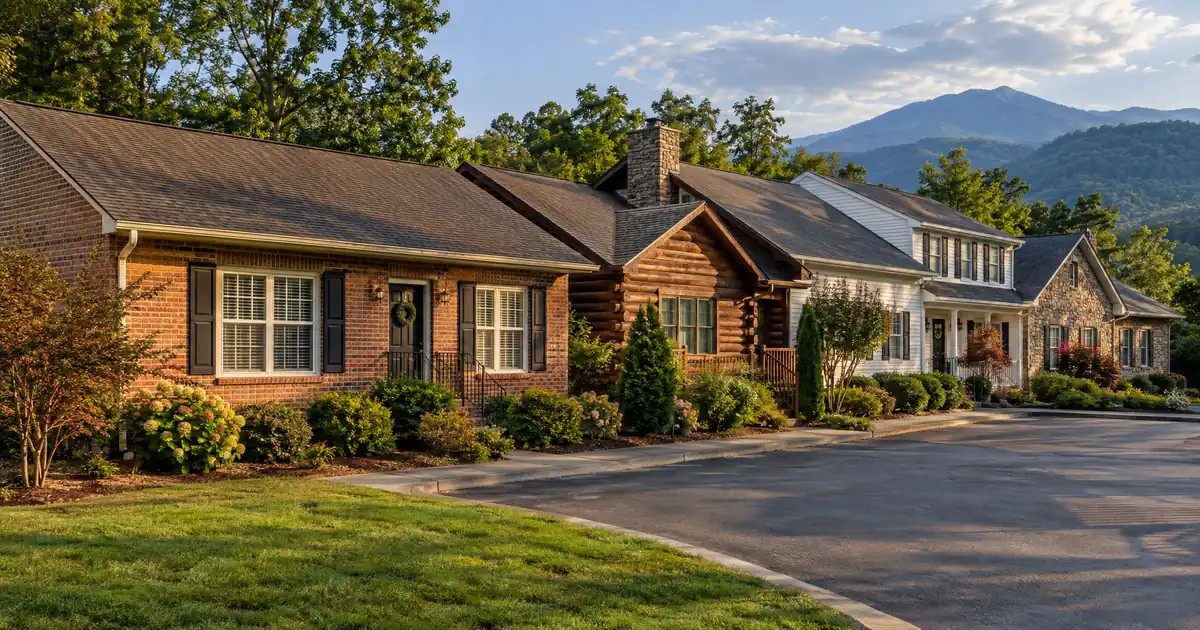
A rental in Avoca hits the DSCR math like this. Take a three-bedroom single-family home valued near the neighborhood’s modeled median of $257,858, renting at about $1,410 a month, per NeighborhoodScout’s Avoca page. Model a cash-out at the 75 percent LTV ceiling, with taxes and insurance included in the monthly obligation, and coverage lands around 0.9x. That’s below the 1.00 benchmark most standard programs are built around. The equity is there on paper, but the rent doesn’t carry a full-leverage pull.
That gap between available equity and available coverage is the whole story of cash-out refinancing in Bristol. (These are modeled assumptions, not a sourced deal.)
DSCR Cash-Out Calculator
Run the cash-out numbers in Bristol, TN
Rate source: Freddie Mac 30-yr average via FRED® — Federal Reserve Bank of St. Louis · effective Sep 24, 2026
Prefilled with starting assumptions — enter your property’s value, balance, taxes, and insurance for a more accurate picture.
Program parameters update from Lendmire’s centralized guideline source. Taxes and insurance are editable estimates.
As of Sep 24, 2026 · General Freddie Mac market benchmark, not a Lendmire loan offer. Property value, balance, taxes, and insurance are editable estimates. Maximum loan-to-value varies by lender, program, property type, and seasoning. Not a Loan Estimate, approval, or commitment to lend. Program availability and eligibility are subject to lender guidelines, credit approval, property review, and underwriting.
Key Takeaways:
A cash-out refinance on a Bristol, Tennessee rental is underwritten primarily on the property’s rental income measured against its full monthly obligation, and in a market where single-family rents sit thin against prices, the binding constraint is usually coverage rather than the 75 percent LTV ceiling, so proceeds hinge on the rent roll, reserves and appraised value.
- Avoca’s modeled median is $257,858 against $1,410 average rent (NeighborhoodScout).
- Bristol’s median sold price is $256K, down 3.9 percent year over year (Redfin).
- Duplexes and small buildings are only 12.39 percent of housing stock (NeighborhoodScout).
- Cash-out caps at 75 percent LTV after roughly six months of ownership.
- Bristol Regional Medical Center anchors clinical renter demand (Ballad Health).
Bristol Market Snapshot
A quick read on the Bristol investor landscape — figures come from the cited sources below. Confirm current property-level numbers before underwriting.
| Metric | Detail |
|---|---|
| Home prices | $256K median (Redfin, Bristol TN housing) |
| Typical rents | $1,410 avg (NeighborhoodScout, Avoca) |
| University enrollment | 1,157 total enrollment (2024) (Data USA, King University) |
| Population | 27,636 population (Census Reporter (ACS 2024 5-yr)) |
| Employment | ~1,400 permanent jobs (Virginia Business, Hard Rock) |
| Vacancy | 5.8% (NeighborhoodScout, Avoca) |
Avoca: Where the Single-Family Math Gets Tested
Avoca is the best-documented submarket in Bristol and the one most investors will actually be refinancing. HERE Bristol describes it as well established, with 3-4 bedroom homes built from the 1940s on, including the Marlyn Hills and Tennessee Hills subdivisions. NeighborhoodScout’s modeled vacancy there is 5.8 percent, and it notes most of the residential stock is owner occupied. That means your tenant pool is families and workforce renters in older single-family stock, and you’re competing with owners, not a wall of apartment supply.
Two caveats. NeighborhoodScout’s figures are third-party modeled estimates, not Census data. And a 0.9x read at full leverage doesn’t mean the property can’t be refinanced. It means the structure has to change.
Drop leverage to around 65 percent and the same home models near 1.0x to 1.05x including taxes and insurance. You’d be pulling less cash, but the file clears the baseline. Some lenders may review sub-1.00 programs or interest-only structures, usually with stronger credit, more reserves or lower leverage as the tradeoff. Qualification stays subject to lender guidelines, credit approval and property review. Those are options a lender would look at, not promises.
The honest question is whether reduced proceeds still serve the plan. If the cash funds a second deal that itself covers at 1.2x or better, a smaller pull is fine. If the cash is meant to patch a thin portfolio, re-examine the plan rather than the loan type.
Why Coverage, Not LTV, Sets the Ceiling Here
Bristol’s single-family rent-to-value is thin, and that’s the single most important fact for equity extraction. Homes.com reports a median home rent of $935 and a price-to-rent ratio of 23.1. Rentometer puts two-bedroom rents near $1,280 on average and three-bedrooms near $1,320. Against a city median sold price of $256K, monthly rent runs roughly 0.4 to 0.5 percent of value in a modeled read.
The sources disagree, which is a finding in itself. Homes.com’s median mixes unit sizes, while Rentometer’s bedroom-level figures are cleaner for underwriting. Anyone quoting one Bristol rent number with confidence is skipping a step.
The practical consequence: on most single-family homes, the 75 percent LTV cap is not what limits your proceeds. Coverage is. The DSCR qualification mechanics divide rent used for lender review by the full monthly obligation (principal, interest, taxes, insurance and any HOA dues), and in this market that denominator is heavy relative to the rent.
The deal desk at Lendmire sees a consistent pattern in small, flat-appreciation markets like this one. The cleaner files tend to arrive with a signed lease, a current insurance quote and a clear plan for the proceeds. The common friction point is an owner who assumes the 75 percent cap equals the cash available, then discovers the rent supports a lower balance. Running coverage before ordering the appraisal saves that surprise.
The Fourplex Route (and Its Comp Problem)
Small multifamily is where Bristol’s coverage math turns. Homes.com’s multifamily page shows about five listings priced from $199,999 to $425,000, with a turnkey, fully rented four-unit building among them. The Homes.com multifamily data also shows a $297,500 median list price. Rentometer puts one-bedroom medians near $1,040 and two-bedrooms near $1,300.
Run the numbers on a hypothetical fourplex priced at the top of that band, $425,000, with four units modeled at roughly $4,200 a month combined. At 75 percent LTV and including taxes and insurance, coverage models above 1.5x. Compare that to 0.9x on the Avoca single-family. Same city, same rent data, completely different outcome. Stacking rent checks on one purchase price is the most realistic way to make coverage work here.
The catch is depth. Duplexes, converted homes and small buildings are only 12.39 percent of stock, against 59.96 percent single-family detached and 15.60 percent large apartment complexes. With so few listings, appraisers may lean on regional comps, some across the Virginia line. Confirm which side of the state line a comp sits on before you count on it.
This is a genuine toss-up for some owners. A single-family house with more equity might refinance more cleanly on paper, but the small multifamily property with less equity may cash-flow better. Underwrite each one from its actual rent roll, not from market averages.
What the Appraisal Will Actually Say
Bristol gives mixed appreciation signals, and cash-out proceeds depend on appraised value, not hope. Redfin shows the city median sold price at $256K, down 3.9 percent year over year, with 159 homes sold in August. Price per square foot, though, is up 17.1 percent. Zillow’s home value index reads $237,878, down 1.1 percent. Yet ZIP 37620, which includes some non-city area, shows a $250K median and a 6.9 percent gain on Redfin’s ZIP page.
List-side figures run higher. Movoto shows a $294K median list price. Sold comps sit well below list medians, and an appraiser works from sold comps.
So underwrite on the lower sold-price figure and don’t bake in appreciation. The seasoning clock matters too: cash-out programs typically look for about six months of ownership measured from title recording. An investor who bought a value-add property last season can pull equity from the improvements, but only if the appraisal supports the new value. Equity created by renovation is more dependable in a flat market than equity waiting on the market to rise.
For leverage, expect a hard 75 percent ceiling on cash-out, typically with reserves of about six months of the full monthly obligation. Credit tiers generally run 620 to 700, with 620 as the floor. Bristol balances are small, and loans below the standard-program minimum route through select lenders in the network. All of this is subject to lender guidelines. The equity-extraction mechanics cover how the pieces fit together.
Demand Anchors Behind the Rent Checks
Tenant demand in Bristol rests on a few durable employers rather than one. Healthcare comes first. Bristol Regional Medical Center, part of Ballad Health, is one of the system’s tertiary hospitals, offering high-level acute services. That supports a steady base of nurses, technicians and travelers. Bed counts vary by source, so skip precise ones.
Then there’s the state line. Bristol shares State Street with Bristol, Virginia, and a short step across it sits the Hard Rock resort, a $515 million-plus project with about 1,400 permanent jobs, per Virginia Business. Those jobs are in Virginia, not Tennessee, but the workforce can rent on either side. Bristol Motor Speedway, with a listed capacity of 146,000 per Wikipedia, adds event-scale demand. Speedway-weekend income is not something to lean on for rent used for lender review. Keep the thesis on long-term leases.
King University enrolls 1,157 students per Data USA. That’s a small tenant pool, so don’t overstate student demand. The city itself is 27,636 people with a median age of 41.1, per Census Bureau QuickFacts, and about 35.06 percent of households rent. It’s a stable, modest-scale rental market, not a growth story.
Should You Pull Equity at All?
It depends on where the proceeds go. Pulling cash from a Bristol single-family home to buy a fourplex that covers comfortably can make sense. Pulling cash to chase markets where the math doesn’t pencil is a different decision. Stress-test it first.
Vacancy deserves respect too. The ZIP-level figure is 9.20 percent for 37620, with median gross rent of $871, per Zip-codes.com. That ZIP includes non-city area, so treat it as a caution flag, not a city reading. A property that only clears 1.0x has little margin for a vacant month.
There’s a flip point, too. An owner with a single rental and strong traditional employment income may find conventional cash-out financing carries a lower cost and cleaner cash flow than a non-QM structure. The program-to-program comparison lays out where that line falls. DSCR tends to win for LLC-held portfolios, self-employed borrowers or investors past the conventional financed-property cap. For a broader view, investor refinance options cover rate-and-term paths as well. Verify current local rental rules, taxes and insurance with qualified local professionals before committing.
Frequently Asked Questions
How do you qualify for a DSCR cash-out refinance in Bristol, Tennessee?
Qualification centers on the property’s rent against its full monthly obligation, with 1.00x as the common baseline, credit from a 620 floor upward and reserves of about six months. Most Bristol single-family homes will need reduced leverage to clear that baseline. Small multifamily clears more easily. Final eligibility depends on lender guidelines, credit and property review.
DSCR vs. conventional financing
There are two common ways to finance an investment property in Bristol, TN, and they qualify you differently — here’s how investors weigh them.
Why investors choose it
- Qualifies on the property’s rental income — no personal tax returns, W-2s, or pay stubs needed to document income.
- No personal debt-to-income ceiling to clear, so existing mortgages and obligations don’t cap your borrowing the same way.
- Can be closed in an LLC, keeping the property inside a business entity.
- Built for scaling — not held to the limit on number of financed properties that conventional financing applies.
- Underwriting centers on the deal: generally qualifies when the rent covers the payment, a 1.00x coverage ratio being a common baseline (confirmed in underwriting).
- Designed specifically for investment property, including long-term and, where the program allows, short-term rentals.
Where it’s strong
- Often the lowest ongoing financing cost for a buyer who fully qualifies on personal income — a fit for a first property or a cost-first purchase.
Trade-offs for investors
- Requires full personal income documentation and must fit within a debt-to-income limit — salary, existing debts, and other mortgages all count.
- Typically held in your personal name rather than a business entity.
- Caps how many financed properties you can carry, which can become a ceiling as a portfolio grows.
- Evaluates you as a borrower as much as the property, which usually means more paperwork.
How investors usually choose: a first or single property often optimizes for the lowest financing cost; portfolio builders often optimize for leverage, vesting in an LLC, and scaling past conventional caps. The right answer depends on your goals, the property, and current guidelines — both paths run through select lenders in Lendmire’s wholesale network, with eligibility and terms confirmed in underwriting.
What are the requirements for an investment property cash-out loan in Bristol, TN?
Expect roughly six months of ownership from title recording, a 75 percent LTV ceiling and reserves near six months. Manufactured homes, log homes and barndominiums fall outside these programs, which matters for rural parcels around the Tri-Cities. Balances up to $3,000,000 fit standard programs, and smaller ones route through select lenders. LLC-titled borrowers are common, subject to lender program eligibility.
Does the Tennessee-Virginia state line matter for a Bristol refinance?
Yes, mainly for appraisal comps and property location. The two Bristols have separate governments, and listings near State Street can sit on either side. Confirm the subject property and its comps are in Tennessee before relying on an estimate of value.
How much equity can an Avoca rental realistically support?
It depends on the lease, not just the value. At full leverage, a typical Avoca single-family rent models below 1.00x, so proceeds usually come from a lower-LTV structure. A signed lease and current insurance quote let the numbers be run precisely. The calculator converts percentages to dollars.
One Number That Reframes the Market
Bristol’s price-to-rent ratio of 23.1 explains nearly everything above. For equity extraction, the useful properties are the ones that stack rent checks, and Lendmire’s Tennessee DSCR platform is built around that kind of coverage analysis. With duplexes and small buildings making up just 12.39 percent of Bristol’s housing stock, the equity most worth pulling sits in the few properties that carry more than one lease.
For current guidelines and terms, see Lendmire’s DSCR loan programs page.
About Lendmire
Lendmire (NMLS# 2371349) is a mortgage brokerage focused on DSCR investor financing, helping arrange programs through wholesale and investor-lending channels in 41 markets, including Washington, D.C. DSCR loans are evaluated by the lender on property cash flow rather than personal income, subject to lender guidelines, supporting LLC closings and accommodating investors with four or more financed properties. Scotsman Guide named Lendmire a Top Mortgage Workplace in both 2025 and 2026.
Get Started
Ready to find the right loan for you?
In about 30 seconds you can review financing options available for your investment property. No commitment required.
Informational only. Not a Loan Estimate, approval, or commitment to lend. Program availability and eligibility are subject to lender guidelines, credit approval, property review, and underwriting.
References
2. Redfin, Bristol housing market
3. NeighborhoodScout, Bristol real estate
4. Ballad Health, Bristol Regional Medical Center
5. Data USA
6. Census Reporter (ACS 2024 5-yr)
7. Virginia Business, Hard Rock Bristol
8. HERE Bristol
11. Homes.com, Bristol multifamily
12. Zillow — Home Values Bristol TN
13. Redfin, ZIP 37620 housing market
14. Movoto
15. Wikipedia
16. King University
17. Census Reporter, Bristol TN
18. Zip-codes.com
19. 2025
20. 2026
This article is part of Lendmire’s investment property cash-out refinance program — full qualification details, guidelines, and scenarios live on the program page.
Related reading: Cash Out Refinance Investment Property Bristol Tennessee · DSCR Loans Johnson City: Investor Financing for ETSU, Tri-Cities, Bristol Motor Speedway, Watauga Lake & Real Estate Investors · Blanket DSCR Loans In Tennessee: How Multi-property Investors Qualify
Guides: Investment Property Cash-Out Refinance in Bristol, TN · Investment Property Cash-Out Refinance in Tennessee
Brandon Miller
Founder & CEO, Mortgage Loan Originator, Lendmire LLC
- Mortgage Loan Originator · NMLS# 1129696 · Verify on NMLS Consumer Access
- North Carolina Real Estate Broker · License# 343312 · Verify on NCREC
- North Carolina Insurance Producer · License# 19053198 · Property, Casualty, Life, Health · Verify on NAIC SBS
- Lendmire LLC · Firm NMLS# 2371349 · Verify firm licensure
Legal disclosures. Lendmire (NMLS# 2371349) is a state-licensed mortgage brokerage that arranges financing through wholesale lender relationships. Lendmire is not a direct lender, depository institution, or registered financial advisor. The discussion above is general informational content about real estate financing — it is not financial, legal, or tax advice, and readers should consult licensed professionals for guidance on their individual circumstances. Loan inquiries are subject to lender underwriting; this article does not represent a commitment to lend. Loan terms, rates, and qualification standards vary by borrower, property, and state, and are subject to change at any time. Equal Housing Opportunity. NMLS Consumer Access: nmlsconsumeraccess.org.