
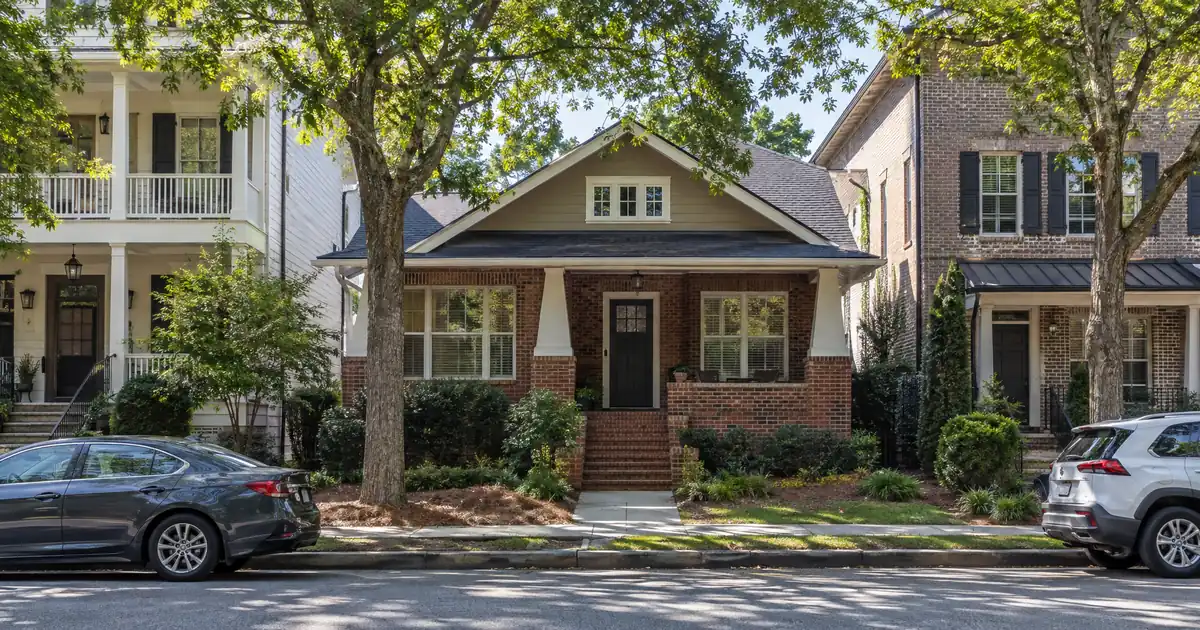
Two investors own rentals in Buford. One holds a detached three-bedroom in a newer subdivision, and the other holds a townhome or a small duplex with a lower basis. Both want cash out. The math favors the second investor, and it isn’t close. Detached homes here sit on a price floor that thins the rent-to-value ratio, so the owner of the detached house usually pulls less cash than the equity on paper suggests.
DSCR Cash-Out Calculator
Run the cash-out numbers in Buford, GA
Rate source: Freddie Mac 30-yr average via FRED® — Federal Reserve Bank of St. Louis · effective Sep 24, 2026
Prefilled with starting assumptions — enter your property’s value, balance, taxes, and insurance for a more accurate picture.
Program parameters update from Lendmire’s centralized guideline source. Taxes and insurance are editable estimates.
As of Sep 24, 2026 · General Freddie Mac market benchmark, not a Lendmire loan offer. Property value, balance, taxes, and insurance are editable estimates. Maximum loan-to-value varies by lender, program, property type, and seasoning. Not a Loan Estimate, approval, or commitment to lend. Program availability and eligibility are subject to lender guidelines, credit approval, property review, and underwriting.
Key Takeaways:
A cash-out refinance on a Buford, Georgia rental is underwritten primarily on the property’s rental income measured against its full monthly obligation. That favors investors holding lower-basis townhomes or small multifamily over owners of detached homes near the $400,000 floor, where proceeds typically depend on dropping leverage well below the 75 percent ceiling.
- Buford’s closed-sale median is $494,000 across 485 closings, with the middle half between $400,000 and $650,000.
- Detached 3BR rent sits near $2,322 on Zumper, which keeps coverage thin at high leverage.
- Cash-out appraisals run off sold comps, and list prices here run ahead of them.
- Seasoning runs about 6 months from title recording, so recent purchases need that clock documented.
- Entity documents, lease evidence, and reserves paperwork cause most of the avoidable friction.
Lendmire (NMLS# 2371349) is a DSCR-focused mortgage broker. Investors in Buford, Georgia work with Lendmire to place DSCR financing through wholesale lenders reaching 41 markets, including D.C. The rest of this piece is about what happens inside the file once the equity is already there.
The Newer Eastside Subdivisions Carry the Volume (and the Thin Yield)
Most cash-out candidates in Buford sit in newer subdivision stock, because that is where transactions concentrate. Resideline says newer subdivisions are doing most of the volume, and the same source puts the $400,000 lower quartile at the effective floor for detached homes.
That floor is the whole story for a refinance. A detached three-bedroom valued near $469,193 on Zillow rents around $2,322 per Zumper and closer to $2,101 per Rentometer. The two rent sources differ because Zumper runs off a thin listing sample of 124 units and Rentometer covers all property types. Use the lower one when you’re building a lender package. Appraisers pull their own rent schedule anyway, and the lender reviews that number, not the listing-site figure.
Zip codes here are 30515, 30518, and 30519, and the city’s northern sliver sits in Hall County. The county of record matters for clearing title and for which jurisdiction the property belongs to. A mailing address that says Buford doesn’t always mean the parcel is inside the city, and that shows up in title review before it shows up anywhere else.
Downtown, Tannery Row, and the Mall of Georgia Edge
Downtown Buford is older, walkable, and infill-driven. It includes Main Street and Tannery Row, where 21 artist studios occupy former leather tannery buildings. No sourced price or rent data exists for this pocket, so there’s no honest number to put on it. What can be said is that older and infill product here tends to come with thinner comp sets, and thin comp sets are where appraisal reconsideration requests start.
The Mall of Georgia corridor is the other node. The mall sits in unincorporated Gwinnett next to the city, and the retail and service workforce around it drives rental demand. Apartments.com listings near the mall in 30518 and 30519 showed 3-bedroom houses asking roughly $2,040 to $2,300, and 4-bedroom houses roughly $2,100 to $2,700. Those are asking rents, not closed leases, and the snapshot may have changed. They do line up with the Zumper and Rentometer figures, which is the useful part.
Lake Lanier and Buford Dam give the city its identity. Lake Lanier is described as the largest lake in Georgia, and lake-adjacent homes carry higher prices. For a cash-out file, higher basis means the appraiser has fewer true comparables. Expect more adjustments, a wider value range, and a bigger chance the final number lands below the owner’s estimate.
What Does Coverage Look Like at 75 Percent?
At the 75 percent cash-out ceiling, a detached Buford three-bedroom lands below 1.00. The baseline on most standard DSCR programs is 1.00x, meaning rent covers the full monthly obligation. Here is the modeled version.
The inputs below are modeled assumptions, not sourced market data: the Zillow value of $469,193, the Zumper 3BR rent of $2,322, and full principal, interest, taxes, and insurance (PITIA). The coverage figures are rounded down and include taxes and insurance.
| LTV on refinance | Modeled coverage (3BR) |
|---|---|
| 75 percent | about 0.80 |
| 65 percent | about 0.90 |
| 55 percent | just above 1.00 |
| 50 percent | about 1.10 |
The pattern is what matters. Coverage crosses 1.00 somewhere in the mid-50s percent range, which means an owner who wants maximum proceeds and an owner who wants a clean 1.00-plus file are asking for different things. They can’t have both on a detached house at this price.
Sub-1.00 doesn’t end the conversation, but it changes the structure. A lender may review a sub-1.00 program, an interest-only structure, or a larger equity cushion with stronger credit and reserves, at different pricing and leverage than a standard file. Whether any of those fit depends on lender guidelines, credit approval, and property review. Nobody should assume a number under 1.00 gets through. (For the mechanics of how rent used for lender review is measured, see the guide “What Is a DSCR Loan”.)
The equity available is also not a cash figure until the file says so. It depends on rent used for lender review, PITIA, reserves, and the 75 percent ceiling, and the tightest of those sets the number. On a thin-yield Buford rental, that’s usually the coverage ratio, not the LTV.
Duplex Math, If You Can Find One
Small multifamily is the structural fix for the thin-yield problem, but inventory is close to nonexistent. Homes.com showed only two multi-family listings in Buford, priced from $485,000 to $2,685,000, and one was a duplex inside city limits with two bedrooms and 1.5 baths per side. Two listings is a tiny sample, and the data was not current. Call this a watch-for-it strategy, not a repeatable one.
Run the numbers on it anyway. Model a duplex at about $485,000 with each side renting near Rentometer’s 2-bedroom figure of $1,616, as an assumption. At 75 percent LTV, full coverage with principal, interest, taxes, insurance, and any association dues (PITIA) comes out well below 1.00 at current rate levels, so the deal would not clear even a select-program floor. The same basis as a single-family house applies, and the second rent stream helps, but it does not close the distance at maximum leverage. That is the gap, and it is why a buyer would need a lower loan amount, a stronger rent schedule, or a cheaper property to make a duplex qualify.
Two cautions. One, a duplex appraisal needs a rent schedule for both units, and a vacant side or an undocumented lease drags the coverage figure down fast. Two, nothing in the research shows meaningful triplex or fourplex inventory in Buford. Anyone telling an investor it’s a strength here is guessing.
Appraisal Comps: Size It on What Sold
List prices in Buford run ahead of what buyers pay. Movoto showed a list-price median of $552K, while sold and modeled values cluster between $465,000 and $494,000. Orchard reports a $465,000 median, down 5.1 percent year over year, with 46.38 percent of listings dropping price and days on market roughly doubling from the prior year. Zillow has values down 2.5 percent over the same kind of window.
Cash-out lenders appraise off closed comps. So the planning number for a refinance is the lower sold figure, not the asking prices on the street. An investor who sized the pull on a list-price neighbor will see the gap at appraisal.
The market is buyer-leaning. Hank Bailey describes a shift from competition to a more balanced environment, and Orchard counts 673 homes for sale, up 26.3 percent year over year. Flat-to-soft values don’t break a refinance. They do mean the appraiser is unlikely to hand you a stretch number, and a documented appraisal reconsideration packet (recent in-neighborhood sales, condition adjustments) is a routine step, not a fire drill.
Appreciation is thin evidence here. No consistent multi-year appreciation figure turned up, so a cash-out plan that depends on recent gains is working from a guess. The cash-out refinance mechanics page covers the LTV and seasoning structure in general terms.
Where the Files Break
Cash-out files don’t usually fail on the math. They stall on paper. The recurring friction points:
1. Seasoning evidence. About 6 months of ownership, measured from title recording, is the typical clock. The settlement statement documents it. Files that assume the clock away get kicked back.
2. Entity documents. If the property is titled in an LLC, the operating agreement, articles, and good-standing paperwork need to match the title and the loan application, subject to lender program eligibility. A name mismatch between the deed and the entity is a preventable hold.
3. Lease evidence. A signed lease, a rent roll, and proof of payment history. Month-to-month or undocumented tenancy weakens the rent used for program review, and the appraiser’s rent schedule becomes the fallback.
4. Reserves documentation. About 6 months of PITIA is the typical ask, and about 9 months above $1,500,000. Statements need to show seasoned funds, not a transfer the week before.
5. Insurance quote completeness. A quote that’s stale or missing a component changes the PITIA the lender uses. Fresh binder before submission.
6. County and jurisdiction. With a Gwinnett and Hall split and unincorporated pockets near the city, confirm the county of record and the jurisdiction early so title doesn’t surprise anyone. Also verify current local rules, taxes, and insurance with qualified local professionals.
Here’s the pattern Lendmire’s deal desk tends to see on files from mid-priced suburban markets like this one. The cleaner files from a documentation standpoint are the ones where the borrower already has a lease packet, entity documents, and reserve statements assembled before the appraisal is ordered. The common friction point is the borrower who has a strong equity number but a rent schedule the appraiser won’t support. Fix the rent documentation first, because it moves the coverage number more than anything else in the file.
Tenant Demand Behind the Rent Roll
Buford is a job importer. City-Data shows a population near 18,642 and a daytime population that jumps by 20,350 (110.4 percent) from commuting. More people work in Buford than live in it. Data USA lists retail trade (1,027 residents), manufacturing (878), and professional and technical services (815) as the top resident job sectors, with an average commute of 27.5 minutes.
Those are cyclical sectors. Retail and industrial payrolls flex with the economy, which matters for lease renewals. The steadier layer is healthcare. A Greater Hall Chamber healthcare study found that South Hall County providers employ more than 3,250 people across Braselton, Oakwood, Flowery Branch, and Buford, and that Northeast Georgia Medical Center in Gainesville has 4,865 employees. That study is older, so treat the headcounts as dated. The City of Buford also notes that Northside Gwinnett, Northside Duluth, and Northeast Georgia Medical Center are all easily accessible, so the medical-worker pool reaches Buford’s rentals without a hospital sitting inside the city.
The city also runs its own water, sewer, gas, and electric systems, which it says give the lowest utility rates in the area. That is the city’s own claim and it’s unverified elsewhere, but it’s a tenant-cost talking point in a lease package.
Renter share is modest. RentCafe puts renter-occupied households at 30 percent, with large-building apartment rents averaging $1,822. Owner-occupancy is high, and the rental stock is small.
New Apartment Supply Sets the Rent Ceiling
The main oversupply risk is new purpose-built rental product. The Heights at Millcroft adds 158 flats and 80 carriage homes with attached garages, and Apartments.com lists 239 recently built apartments in the city. Carriage homes compete directly with the three-bedroom detached rentals investors hold.
Rent growth in the research is mixed. RentCafe shows a 1.17 percent decline for large buildings, while a separate snapshot showed a small gain, and Zumper shows a larger increase on a thin sample. Call it flat. Concessions or slow lease-up at new communities can hold rents down, and that caps the rent number an appraiser will support. No sourced vacancy rate exists, so this is a supply signal, not a vacancy measurement.
DSCR vs. conventional financing
Two common ways to finance an investment property in Buford, GA. They qualify you differently — here’s how investors weigh them.
Why investors choose it
- Qualifies on the property’s rental income — no personal tax returns, W-2s, or pay stubs needed to document income.
- No personal debt-to-income ceiling to clear, so existing mortgages and obligations don’t cap your borrowing the same way.
- Can be closed in an LLC, keeping the property inside a business entity.
- Built for scaling — not held to the limit on number of financed properties that conventional financing applies.
- Underwriting centers on the deal: generally qualifies when the rent covers the payment, a 1.00x coverage ratio being a common baseline (confirmed in underwriting).
- Designed specifically for investment property, including long-term and, where the program allows, short-term rentals.
Where it’s strong
- Often the lowest ongoing financing cost for a buyer who fully qualifies on personal income — a fit for a first property or a cost-first purchase.
Trade-offs for investors
- Requires full personal income documentation and must fit within a debt-to-income limit — salary, existing debts, and other mortgages all count.
- Typically held in your personal name rather than a business entity.
- Caps how many financed properties you can carry, which can become a ceiling as a portfolio grows.
- Evaluates you as a borrower as much as the property, which usually means more paperwork.
How investors usually choose: a first or single property often optimizes for the lowest financing cost; portfolio builders often optimize for leverage, vesting in an LLC, and scaling past conventional caps. The right answer depends on your goals, the property, and current guidelines — both paths run through select lenders in Lendmire’s wholesale network, with eligibility and terms confirmed in underwriting.
For a refinance, the practical read is to underwrite today’s documented rent, not a projection. A cash-out sized on rent that’s still climbing in someone’s spreadsheet is the version that falls short at appraisal.
Where the Proceeds Go
The point of a cash-out pull is the next deal, and for Buford that raises a fair question: should the proceeds go back into Buford? The yield evidence suggests asking it out loud. Rent-to-value is likely better in lower-priced Gwinnett or Hall County submarkets outside the city limits, but nothing in this review sources that, so treat it as a question to test with actual comps, not a conclusion. Sugar Hill and Flowery Branch are the neighboring areas investors tend to compare.
A separate route is using proceeds to pay down other debt or build reserves, which can improve coverage on the next file. That’s a structuring choice, and refinancing options for rentals vary by property and program.
A cash-out on a Buford single-family home may fit best as a deliberate reallocation: modest leverage, clean paperwork, and proceeds aimed at a lower-basis asset somewhere the rent-to-value math works harder. How DSCR stacks up against conventional financing is a separate comparison, but the property-income basis is what keeps this route open for entity-owned and multi-property investors. For state-level program context, see Lendmire’s Georgia DSCR investor loans page. Investors can also get a rental-income loan quote or call 828-256-2183 to talk through a specific file.
Frequently Asked Questions
How do you qualify for a DSCR cash-out refinance in Buford, Georgia?
Qualification centers on the property’s rent against its full monthly obligation, with a typical 1.00 benchmark, a 75 percent LTV ceiling, about 6 months of seasoning, and reserves around 6 months of PITIA. Credit tiers typically start at a 620 floor. Exact eligibility depends on lender guidelines, credit approval, and property review.
What are the requirements for an investment property loan refinance in Buford?
Expect entity documents if the property is LLC-titled (subject to program terms), a lease or rent roll, a current insurance quote, reserve statements, and an appraisal with a rent schedule. Title needs to show the ownership period. Standard programs typically run up to $3,000,000, and most Buford detached homes fall well inside that range.
What credit score ranges may DSCR lenders review for a Buford rental property?
Lendmire arranges DSCR investor loans. Lenders typically review credit tiers at 620, 660, 680, and 700, with 620 as the floor. Higher tiers can support stronger leverage and pricing, subject to lender guidelines.
Why does a detached Buford home often show thin coverage on a cash-out?
The price floor is high relative to rent. Detached homes near the $400,000 lower quartile rent for roughly $2,000 to $2,300 for a three-bedroom, which keeps coverage under 1.00 at maximum leverage once taxes and insurance are included. Dropping LTV, choosing lower-basis product, or stacking multi-unit income are the usual levers.
Should I size the refinance on list prices or sold prices?
Sold prices. Lenders appraise from closed comps, and Buford list-price medians run above sold medians. Planning the pull from asking prices in the neighborhood sets up a gap at appraisal.
The Next 6 to 24 Months
Expect Buford to stay flat to soft. Prices are drifting down, inventory is climbing, more listings are cutting price, and new apartments and carriage homes are still coming online. That combination points toward stable, not rising, rents and flat-to-lower appraised values over the next 6 to 24 months. The investors best placed in that stretch hold lower-basis product, carry moderate leverage, and have lease and entity paperwork ready. Detached-home owners chasing the full 75 percent ceiling will keep running into the same coverage wall until rents outpace prices here.
About Lendmire
Lendmire, NMLS# 2371349, is a mortgage brokerage focused on DSCR investor loans. It helps arrange financing across 41 markets, including Washington, D.C., through wholesale and investor-lending channels. Qualification looks mainly at the property’s rental income as reviewed by the lender instead of W-2 documentation, subject to lender guidelines, which suits entity-owned and multi-property investors. The firm is a 2026 Scotsman Guide Top Mortgage Workplace and was recognized by Scotsman Guide in 2025.
Get Started
Ready to find the right loan for you?
In about 30 seconds you can review financing options available for your investment property. No commitment required.
Informational only. Not a Loan Estimate, approval, or commitment to lend. Program availability and eligibility are subject to lender guidelines, credit approval, property review, and underwriting.
References
1. Resideline: Buford housing market
2. Zumper: Buford rent research
4. Rentometer: Buford average rent
5. exploregwinnett.org — Cities Buford
6. Apartments.com — Buford Mall of Georgia
7. Lake Lanier
8. Homes.com showed only two multi-family listings in Buford
9. Movoto
10. Orchard: Buford market report
11. Hank Bailey
12. City-Data
13. Data USA: Buford
14. Greater Hall Chamber: Healthcare Providers Employment Overview
15. City of Buford: Facts and Information
16. RentCafe
18. Apartments.com
19. a 2026 Scotsman Guide Top Mortgage Workplace
20. recognized by Scotsman Guide in 2025
This article is part of Lendmire’s investment property cash-out refinance program — full qualification details, guidelines, and scenarios live on the program page.
Related reading: Luxury Rental DSCR Loans In New Jersey · Jersey Shore Vacation Rental Loans: DSCR Financing In Ocean City, Cape May And Long Beach Island · DSCR Cash-out Refinance In New Jersey: Pulling Equity From A Rental
Guides: Investment Property Cash-Out Refinance in Georgia
Brandon Miller
Founder & CEO, Mortgage Loan Originator, Lendmire LLC
- Mortgage Loan Originator · NMLS# 1129696 · Verify on NMLS Consumer Access
- North Carolina Real Estate Broker · License# 343312 · Verify on NCREC
- North Carolina Insurance Producer · License# 19053198 · Property, Casualty, Life, Health · Verify on NAIC SBS
- Lendmire LLC · Firm NMLS# 2371349 · Verify firm licensure
Compliance and disclosures. Lendmire (NMLS# 2371349) is a licensed mortgage broker and is not a direct lender, depository institution, financial advisor, or tax professional. Content in this article is general market analysis and educational information — not financial, legal, or tax advice for any specific situation. Lendmire does not guarantee loan approval; every transaction is subject to underwriting by the funding lender. Mortgage pricing and loan program guidelines are subject to change at any time without notice and vary by borrower characteristics, property type, and state regulations. Lendmire complies with Equal Housing Opportunity. Licensure verification: NMLS Consumer Access.