
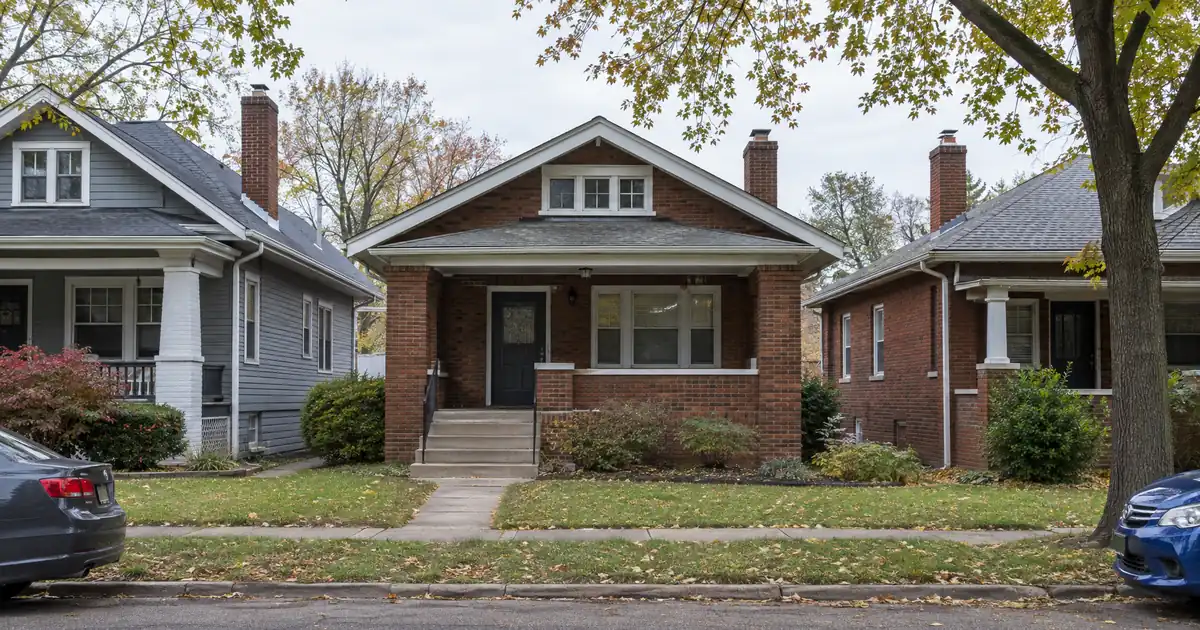
The next 6 to 18 months in Carbondale will turn on comps, not headlines. Zillow puts the average home value at $146,285, up 7.5 percent over the past year. A ZIP-level forecast for 62901 runs the other way, at a 1.2 percent decline. Southern Illinois University Carbondale reported 11,785 students, essentially flat. Anyone planning to pull equity from a Carbondale rental should underwrite today’s rent coverage and not assume the trailing price gains hold. Lendmire (NMLS# 2371349) places DSCR investor financing for Carbondale, Illinois through non-QM wholesale channels that cover 41 markets, including Washington, D.C.
At a Glance: A DSCR cash-out refinance in Carbondale, Illinois is underwritten primarily on the property’s rental income measured against its full monthly obligation. The split between low-basis near-campus stock and pricier outlying stock decides the outcome, in a city where NeighborhoodScout classifies 19.68 percent of housing as vacant.
DSCR Cash-Out Calculator
Run the cash-out numbers in Carbondale, IL
Rate source: Freddie Mac 30-yr average via FRED® — Federal Reserve Bank of St. Louis · effective Sep 24, 2026
Prefilled with starting assumptions — enter your property’s value, balance, taxes, and insurance for a more accurate picture.
Program parameters update from Lendmire’s centralized guideline source. Taxes and insurance are editable estimates.
As of Sep 24, 2026 · General Freddie Mac market benchmark, not a Lendmire loan offer. Property value, balance, taxes, and insurance are editable estimates. Maximum loan-to-value varies by lender, program, property type, and seasoning. Not a Loan Estimate, approval, or commitment to lend. Program availability and eligibility are subject to lender guidelines, credit approval, property review, and underwriting.
- Cash-out LTV tops out at 75 percent, with about six months of seasoning from title recording.
- ZIP 62901 carries a $119,000 median price against 62903 at $185,000, per Prop:Metrics.
- Roughly 73 percent of households rent.
- Ten-year appreciation runs 41.8 percent: a cash-flow market, not a growth market.
- Minimum coverage is 1.00, and reserves run about six months of PITIA.
Carbondale Market Snapshot
A quick read on the Carbondale investor landscape — figures come from the cited sources below. Confirm current property-level numbers before underwriting.
| Metric | Detail |
|---|---|
| Home prices | $97K median sale (Oct 2025) (Redfin) |
| Typical rents | $1,037 avg (RentCafe/Yardi Matrix) |
| Recent appreciation | 41.80% total, 3.55% annualized over 10 years (NeighborhoodScout Carbondale) |
| University enrollment | 11,785 total enrollment (Southern Illinois University) |
| Population | Population 22,158 (Census Reporter) |
| Employment | 4,000+ employees (Southern Illinois Healthcare) |
Why Trailing Price Gains Can’t Be Trusted Here
Carbondale is a thin market, and thin markets distort equity estimates. Zillow’s average value of $146,285 and a Rocket Homes median list price of $150,500 sit in the same neighborhood. Redfin shows a far lower October median sold price of $97,000, down 51.4 percent year over year. That is almost certainly a mix-shift artifact of a small monthly sales sample and not a real halving of values. The honest range runs from $97,000 to about $168,000 depending on the source. Underwriting a cash-out off any single headline number is a mistake.
The practical takeaway for an owner with a seasoned property: don’t size the refinance from trailing year-over-year percentages. The same Prop:Metrics data that shows double-digit trailing median gains also carries flat-to-negative forward forecasts for both core ZIPs (a 1.2 percent decline in 62901, a 0.5 percent decline in 62903). When the two signals disagree, the appraisal is the only number that matters. Budget for the valuation to land below what a listing site implies, and run the coverage math at that lower value.
A Cash-Flow Market, Not an Appreciation Bet
Carbondale house values are up 41.8 percent over ten years, an annualized pace of 3.55 percent, which NeighborhoodScout says trails appreciation in 90 percent of American cities and towns. That settles the thesis. An investor here does not refinance because equity “seasoned” into a big number. The investor refinances because a low purchase basis and steady rent produce coverage today.
Three facts define the demand side. Census Bureau QuickFacts counts 22,158 residents. RentCafe reports that about 73 percent of households rent. The same RentCafe page puts the citywide average rent at $1,037, with two-bedrooms averaging $1,121 and three-bedrooms $1,370. Zillow’s rental data runs lower, at $900 for a two-bedroom, which is what happens when a small seasonal market gets sampled different ways. The math below uses the lower ZIP-level figures deliberately.
The offsetting risk is vacancy. With 19.68 percent of the housing stock vacant, the optimistic 5 percent vacancy allowance built into many calculators does not apply. Underwrite conservatively, and favor submarkets with proven occupancy over generic citywide stock.
62901 vs. 62903: Where the Coverage Math Holds
ZIP 62901, the core near SIU and downtown, is the stronger DSCR submarket by a wide margin. Prop:Metrics shows a 62901 median price of $119,000, with rents of $937 for a two-bedroom, $1,290 for a three-bedroom, and $1,410 for a four-bedroom. The 62903 median price is $185,000 against a two-bedroom rent near $875. Price runs roughly 55 percent higher in 62903 while rent runs lower. That is a coverage problem.
The figures below are modeled assumptions, not sourced market facts. Each takes the ZIP median price, assumes a cash-out at the full 75 percent LTV ceiling, and divides the ZIP rent by full PITIA, including taxes and insurance at Illinois averages.
| Scenario | Modeled coverage | Read |
|---|---|---|
| 62901 three-bedroom, $1,290 rent | About 1.4x | Clears with room |
| 62901 two-bedroom, $937 rent | About 1.1x | Clears, thin cushion |
| 62903 two-bedroom, $875 rent | Under 0.7x | Below the 1.00 baseline |
Taking less than the full 75 percent improves every line, and a properly stress-tested 62901 file rarely needs the maximum draw anyway. The 62903 result is the warning. A sub-1.00 file is not dead on arrival, but the options get narrower. Some lenders review sub-1.00 programs with stronger compensating factors, lower leverage, or different pricing. Others will want a rent bump or a lower draw. Whatever the route, it is a lender decision subject to credit approval and property review, not something to assume.
Small Multifamily: The Coverage Lever
Duplexes and small apartment buildings are the cleanest way to stack rent checks against one loan. NeighborhoodScout shows duplexes and converted small buildings at 15.50 percent of the housing stock, behind single-family detached at 32.16 percent and large complexes at 42.84 percent. Listings for this product cluster around the SIU campus. That means local comps and property managers who understand the asset class already exist.
Run the numbers on a modeled duplex valued at $210,000 (an assumption, not a market quote) with two units renting at the $937 two-bedroom ZIP figure. At a 75 percent cash-out, rent against full PITIA comes to about 1.2x. The same $210,000 basis in a single unit at that rent would sit well below 1.00. The unit count is what fixes the coverage, not the appreciation.
Working DSCR brokers see a recurring pattern in small college-town markets: the single-family file that looks fine on a listing-site median fails once the appraiser picks conservative comps, while the duplex or fourplex with a documented rent roll carries the same borrower through. Lendmire’s team sees the cleanest files arrive with complete leases, entity documents, title, and property details ready for lender review. The weakest ones show up with verbal rents and a hoped-for valuation.
Two Tenant Bases in One Small City
Carbondale stacks two renter pools that move on different calendars. The student pool follows the academic year. SIU’s fall headcount of 11,785 was five fewer than the year before, but continuing-student retention rose 5 percent, from 7,532 to 7,898. The SIU School of Medicine admits 72 students a year, and the School of Law adds graduate renters. John A. Logan College in nearby Carterville reports annual enrollment of about 10,213.
The second pool is year-round. Southern Illinois Healthcare is headquartered in Carbondale with more than 4,000 employees. Its flagship, SIH Memorial Hospital of Carbondale, is the only designated Level II Trauma Center in Southern Illinois. Nurses, technicians, and residents rent on 12-month lease logic, which favors the stretch of stock near the hospital and the south-side single-family corridors over the student core. A reported 55 percent primary-service-area market share (down from about 59 percent) points to a dominant but not unassailable employer.
Honestly, this is a toss-up between the two pools for a refinance. Near-campus duplexes carry the best coverage, while hospital-adjacent single-family rentals carry better lease-length stability. A landlord who wants to recycle equity into the next deal probably wants one of each, but the near-campus unit does the heavy lifting on the ratio.
Seasoning, LTV Caps, and Where the Proceeds Go
On the financing side, the mechanics are straightforward. Cash-out on an investment property is capped at 75 percent LTV, and the ownership period is about six months measured from title recording. The minimum coverage baseline is 1.00, with credit tiers starting at a 620 floor and moving up through 660, 680, and 700. Reserves typically run about six months of PITIA. Loan amounts run up to $3,000,000 on standard programs, and the smaller balances common in Carbondale route through select lenders in the network. The available cash depends on rent used for lender review, PITIA, reserves, and the LTV ceiling, so it is never a guaranteed figure. All of this is subject to lender guidelines, and entity-titled properties are subject to lender program eligibility. How the qualification works and the equity-extraction mechanics are laid out in detail elsewhere. The key differences from a conventional refinance come down to whose income gets underwritten.
The better question in a cash-flow market is what the proceeds do next. In Carbondale, the logical sequence is to pull a measured draw from a seasoned 62901 asset, keep reserves intact, and deploy into another low-basis near-campus unit. Don’t stretch to the ceiling to fund a 62903-priced purchase that coverage can’t support. Refi programs exist for owners who want to restructure an existing balance as well. Investors ready to size a file can get a DSCR quote or call 828-256-2183. The broader framework sits on Lendmire’s Illinois DSCR platform.
What Could Go Wrong?
Four risks deserve real weight. First, valuation: thin sales volume means a single appraisal can swing equity. Second, vacancy: near 20 percent of the housing stock sits empty, so stress-test rent assumptions at levels the calculators don’t default to. Third, employer concentration: SIU enrollment has stabilized but is far below historical peaks, and SIH’s market share has slipped. Fourth, data gaps. No reliable submarket-level vacancy figure or neighborhood-level price series exists for Carbondale, so neighborhood commentary here is directional. Pull current local comps before committing, and confirm current local rules, taxes, and insurance with qualified professionals.
Frequently Asked Questions
How do you qualify for a DSCR cash-out refinance in Carbondale?
The property’s rent has to cover its full monthly obligation (principal, interest, taxes, insurance, and any HOA dues) at a 1.00 baseline or better, with a credit score typically at or above 620. The loan generally caps at 75 percent LTV after about six months of ownership, and reserves around six months of PITIA are typical. Final eligibility depends on the lender, property, and borrower.
What are the requirements for an investment property loan in Carbondale, Illinois?
Expect a lender to review the lease or rent schedule, title, entity documents if the property sits in an LLC, an appraisal, and reserves. Manufactured homes, log homes, and barndominiums fall outside these programs. Carbondale’s smaller loan balances route through select lenders in the network, so program fit matters more here than in higher-priced markets.
DSCR vs. conventional financing
There are two common ways to finance an investment property in Carbondale, IL, and they qualify you differently — here’s how investors weigh them.
Why investors choose it
- Qualifies on the property’s rental income — no personal tax returns, W-2s, or pay stubs needed to document income.
- No personal debt-to-income ceiling to clear, so existing mortgages and obligations don’t cap your borrowing the same way.
- Can be closed in an LLC, keeping the property inside a business entity.
- Built for scaling — not held to the limit on number of financed properties that conventional financing applies.
- Underwriting centers on the deal: generally qualifies when the rent covers the payment, a 1.00x coverage ratio being a common baseline (confirmed in underwriting).
- Designed specifically for investment property, including long-term and, where the program allows, short-term rentals.
Where it’s strong
- Often the lowest ongoing financing cost for a buyer who fully qualifies on personal income — a fit for a first property or a cost-first purchase.
Trade-offs for investors
- Requires full personal income documentation and must fit within a debt-to-income limit — salary, existing debts, and other mortgages all count.
- Typically held in your personal name rather than a business entity.
- Caps how many financed properties you can carry, which can become a ceiling as a portfolio grows.
- Evaluates you as a borrower as much as the property, which usually means more paperwork.
How investors usually choose: a first or single property often optimizes for the lowest financing cost; portfolio builders often optimize for leverage, vesting in an LLC, and scaling past conventional caps. The right answer depends on your goals, the property, and current guidelines — both paths run through select lenders in Lendmire’s wholesale network, with eligibility and terms confirmed in underwriting.
Which Carbondale ZIP codes give a refinance the best coverage?
62901 does. Its $119,000 median price against a $937 two-bedroom rent models to roughly 1.1x at a full 75 percent draw, and three-bedrooms model near 1.4x. 62903, at a $185,000 median, models well under 1.00 on comparable rents, so those files usually need a smaller draw or multiple units.
What can slow down a Carbondale DSCR cash-out refinance?
The usual culprits are a conservative appraisal in a thin market, rent documentation that doesn’t match the lease file, and reserves that fall short. Lendmire arranges DSCR investor loans, and the 75 percent cash-out LTV ceiling is the program feature that most often reshapes a file once the appraisal comes back.
Is Carbondale better for a duplex or a single-family refinance?
A duplex, usually. Two rent checks against one loan lift coverage by a meaningful margin, and small multifamily is an established local segment at 15.50 percent of stock. Single-family works best in 62901 at three or four bedrooms, where rents run $1,290 to $1,410 against a low basis.
The Bottom Line
Carbondale rewards investors who treat equity as a function of rent and basis. Near-campus 62901 duplexes and larger-bedroom rentals carry coverage, hospital-adjacent stock adds lease stability, and the 75 percent ceiling plus a cautious appraisal keeps the draw honest.
If you only take one thing from this piece, it’s this: in Carbondale, underwrite the rent coverage on the lowest credible appraisal, because the price history is too thin to trust and the rent roll is the only number that will hold.
For current guidelines and terms, see Lendmire’s DSCR loan programs page.
About Lendmire
Lendmire (NMLS# 2371349) is a mortgage brokerage built around DSCR investor lending, with programs available in 41 markets, including Washington, D.C. DSCR lenders commonly evaluate rental-income coverage instead of personal income paperwork, a practical fit for LLC-owned and multi-property investors. Terms vary by lender, property, leverage, and program. The firm was named a top-ranked workplace in 2026 and a top-ranked workplace in 2025 by Scotsman Guide, and Lendmire’s industry announcements are archived on EIN Presswire.
Get Started
Ready to find the right loan for you?
In about 30 seconds you can review financing options available for your investment property. No commitment required.
Informational only. Not a Loan Estimate, approval, or commitment to lend. Program availability and eligibility are subject to lender guidelines, credit approval, property review, and underwriting.
References
1. Zillow Home Value Index, Carbondale
3. SIU Carbondale Enrollment Release
4. NeighborhoodScout, Carbondale Real Estate
5. Redfin, Carbondale Housing Market
6. RentCafe, Carbondale Average Rent
8. Southern Illinois Healthcare
9. Census Reporter, Carbondale
11. catalog.siu.edu — Colleges Med
13. SIH Memorial Hospital of Carbondale
14. Scotsman Guide — Top Workplaces 2026
15. Scotsman Guide — Top Workplaces 2025
This article is part of Lendmire’s investment property cash-out refinance program — full qualification details, guidelines, and scenarios live on the program page.
Related reading: Luxury Rental DSCR Loans In New Jersey · Jersey Shore Vacation Rental Loans: DSCR Financing In Ocean City, Cape May And Long Beach Island · DSCR Cash-out Refinance In New Jersey: Pulling Equity From A Rental
Guides: Investment Property Cash-Out Refinance in Illinois
Brandon Miller
Founder & CEO, Mortgage Loan Originator, Lendmire LLC
- Mortgage Loan Originator · NMLS# 1129696 · Verify on NMLS Consumer Access
- North Carolina Real Estate Broker · License# 343312 · Verify on NCREC
- North Carolina Insurance Producer · License# 19053198 · Property, Casualty, Life, Health · Verify on NAIC SBS
- Lendmire LLC · Firm NMLS# 2371349 · Verify firm licensure
Legal disclosures. Lendmire (NMLS# 2371349) is a state-licensed mortgage brokerage that arranges financing through wholesale lender relationships. Lendmire is not a direct lender, depository institution, or registered financial advisor. The discussion above is general informational content about real estate financing — it is not financial, legal, or tax advice, and readers should consult licensed professionals for guidance on their individual circumstances. Loan inquiries are subject to lender underwriting; this article does not represent a commitment to lend. Loan terms, rates, and qualification standards vary by borrower, property, and state, and are subject to change at any time. Equal Housing Opportunity. NMLS Consumer Access: nmlsconsumeraccess.org.