
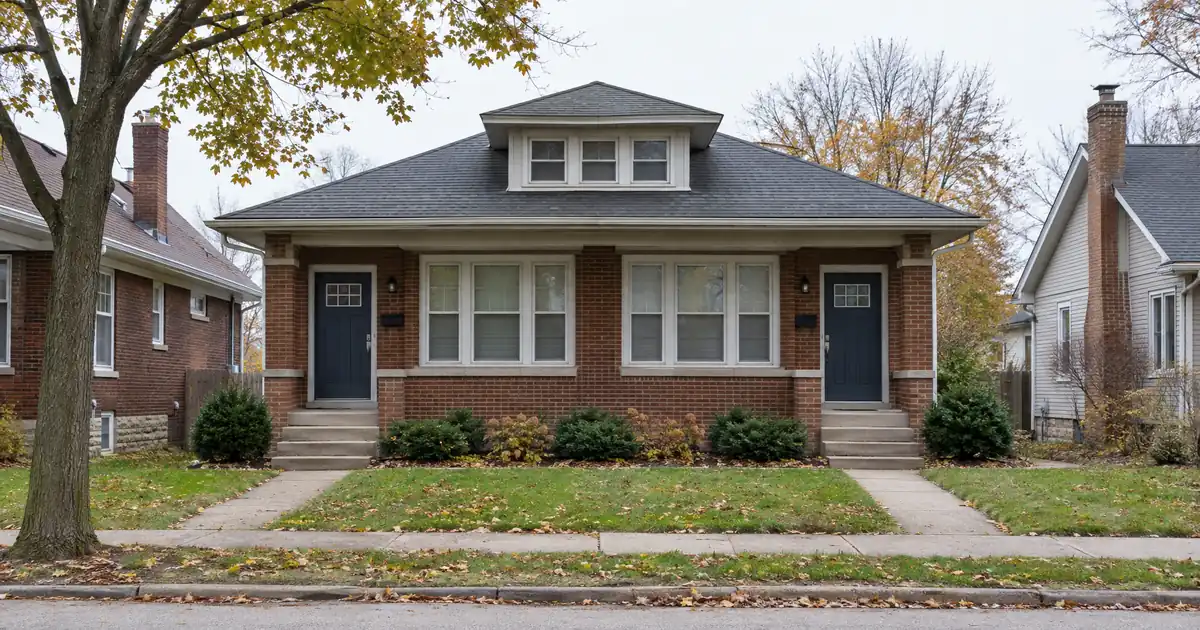
Carbondale investors face a specific question over the next 6 to 18 months: does the equity in a rental they already own survive a fresh appraisal? Fall enrollment at Southern Illinois University Carbondale held at 11,785, five students below the prior year, while continuing-student retention rose 5 percent. Demand is stable, but the pricing signals are mixed. Third-party forecasts for the two core ZIP codes run flat to slightly negative even after double-digit trailing gains. Equity here should be underwritten on rent coverage today, not on projected appreciation.
Lendmire (NMLS# 2371349) is a DSCR-focused mortgage broker. Lendmire places DSCR investor financing for Carbondale, Illinois through non-QM wholesale channels that cover 41 markets, including Washington, D.C. This piece covers the cash-out side only: what a Carbondale owner can pull from a seasoned rental, and what limits the number.
DSCR Cash-Out Calculator
Run the cash-out numbers in Carbondale, IL
Rate source: Freddie Mac 30-yr average via FRED® — Federal Reserve Bank of St. Louis · effective Sep 24, 2026
Prefilled with starting assumptions — enter your property’s value, balance, taxes, and insurance for a more accurate picture.
Program parameters update from Lendmire’s centralized guideline source. Taxes and insurance are editable estimates.
As of Sep 24, 2026 · General Freddie Mac market benchmark, not a Lendmire loan offer. Property value, balance, taxes, and insurance are editable estimates. Maximum loan-to-value varies by lender, program, property type, and seasoning. Not a Loan Estimate, approval, or commitment to lend. Program availability and eligibility are subject to lender guidelines, credit approval, property review, and underwriting.
At a Glance: A cash-out refinance in Carbondale, Illinois is underwritten primarily on the property’s rental income measured against its full monthly obligation, so the low-priced core ZIP, where rents sit against a Zillow citywide average home value of $146,285, does most of the work.
- Cash-out LTV tops out at 75 percent, and about 6 months of ownership from title recording is expected.
- Home prices in the 62901 core sit far below 62903, while 2BR rents are close.
- Roughly 73 percent of households rent, per RentCafe, which supports the rental base.
- Ten-year appreciation has been slow, so coverage matters more than equity growth.
- Small loan balances may route through select lenders in the network.
Carbondale Market Snapshot
A quick read on the Carbondale investor landscape — figures come from the cited sources below. Confirm current property-level numbers before underwriting.
| Metric | Detail |
|---|---|
| Home prices | $97K median sale (Oct 2025) (Redfin) |
| Typical rents | $1,037 avg (RentCafe/Yardi Matrix) |
| Recent appreciation | 41.80%/3.55% 10-yr (NeighborhoodScout Carbondale) |
| University enrollment | 11,785 total enrollment (Southern Illinois University) |
| Population | Population 22,158 (Census Reporter) |
| Employment | 4,000+ employees (Southern Illinois Healthcare) |
Why This Is a Cash-Flow Market, Not an Equity Story
Carbondale is a cash-flow market. Per NeighborhoodScout, house values rose 41.80 percent over ten years, an annualized 3.55 percent, which trails the appreciation of roughly 90 percent of American cities. Investors sitting on paper equity from a purchase made a few years ago should not assume the appraiser will hand it back in full.
The citywide price data is noisy. Zillow puts the average home value at $146,285, up 7.5 percent year over year. Redfin’s monthly median sold price fell to $97,000 in one recent month, a swing that reflects a thin sales sample rather than a collapse. This article uses the Zillow figure as the citywide reference and treats the rest as evidence of low transaction volume. Low volume matters for a refinance because appraisers have fewer comparable sales to lean on, and a thin comp set can cut either way.
Rents are the steadier input. RentCafe puts the average at $1,037, with 2BR units at $1,121 and 3BR units at $1,370. Zillow’s rental data runs lower at $865 overall. Investors should underwrite to signed leases, not to any of these averages.
The 62901 Versus 62903 Split
The core 62901 ZIP delivers materially stronger coverage per loan dollar than 62903. Prop:Metrics shows a median home price near $119,000 in 62901, with rents of $937 for a 2BR, $1,290 for a 3BR, and $1,410 for a 4BR. The 62903 data shows a median price of $185,000 against 2BR rents near $875. That is a much higher price for slightly lower rent.
Run the numbers on a modeled 3BR in 62901 valued near the ZIP median and rented near the $1,290 figure. These are modeled assumptions, not a quote. At a 75 percent LTV refinance, with a 30-year structure and full taxes and insurance built into the obligation, the modeled coverage lands comfortably north of 1.3x. The 62903 comparison is stark. Take a 2BR valued near that ZIP’s median and rented near $875, and the same full-obligation math falls below 0.80x.
The difference comes from the price side, not the rent side. A 62903 owner with a lightly leveraged, high-basis property may still pull cash, but at a lower LTV and with more equity left behind. For sub-1.00 files, a lender may review options such as reduced leverage, interest-only structures, or different pricing. Qualification stays subject to lender guidelines, credit approval, and property review.
Both ZIPs also carry soft forward signals. The 62901 one-year forecast sits at -1.2 percent and 62903 at -0.5 percent, even though both showed double-digit trailing gains. Treat trailing gains as noise. The appraisal is the only number that counts.
What the Near-Campus Multi-Unit Stock Offers
Duplexes, triplexes, and fourplexes near the SIU campus are where cash-out math tends to work best, because several rent checks sit against one loan. Duplexes and converted small apartment buildings make up 15.50 percent of local housing units, and RentCafe reports that 70 percent of rental complexes hold fewer than 50 units. Local listing aggregators show duplexes and fourplexes clustered within walking distance of campus, and the local property management and comp infrastructure for this asset class already exists.
Picture an investor holding a fourplex bought several years ago, with rents that have grown modestly since. Coverage on a fourplex tends to clear 1.00x with more cushion than on a single-family rental at the same price, because a vacant unit cuts income by a quarter rather than to zero. That resilience often matters more to a lender’s review than headline rent.
Working DSCR brokers see a recurring pattern in small college-town markets: the appraisal, not the coverage ratio, is what trims the final proceeds. Files with strong rent-to-debt numbers still come back with a value that fits a thin comp set, and the 75 percent cap applies to that appraised value. Investors who model proceeds off a listing price or a trailing appreciation figure are often surprised.
This scenario comes across the desk in some form regularly. A borrower has owned a near-campus rental past the seasoning window, the leases are clean, and the question is how much capital comes out for the next purchase. The answer depends on appraised value, not on what the property is “worth” in the owner’s head.
The Vacancy Question Nobody Wants to Model
Carbondale’s vacancy picture is the honest counterweight to the low prices. NeighborhoodScout classifies 19.68 percent of the housing stock as vacant. That is well above a healthy-market norm and a drag on prices. No reliable, sourced rental vacancy rate specific to Carbondale surfaced in the research, so investors should not assume a tight market.
The practical response is to underwrite realistic vacancy and favor proven sub-markets. That means near-campus multi-unit product with a documented lease history, and workforce housing near the hospital corridor. Generic citywide stock has less support. A lender reviewing coverage will use the lease income and market rent it sees documented. A property with a long vacancy history will not be supported by strong ZIP-level averages.
Two Tenant Pools, One Small City
The hospital layer is what separates Carbondale from a pure campus economy. Southern Illinois Healthcare is headquartered in Carbondale and employs more than 4,000 people across four hospitals and over 30 outpatient clinics. SIH Memorial Hospital of Carbondale, the region’s only designated Level II Trauma Center, anchors year-round employment. The SIU School of Medicine adds a training pipeline, admitting 72 students a year, according to the SIU catalog.
For a cash-out file, that diversification supports the lease story. Hospital-adjacent workforce rentals tend to be 12-month tenancies, while campus-adjacent stock turns with the academic calendar. A lender reviewing a file with a long-tenure lease and steady employment anchors nearby sees a different risk profile than one that resets each summer. Census Bureau QuickFacts puts the population at 22,158, and median household income at $32,128 reflects the large student population skewing the citywide figure, not a workforce-tenant read.
Where the Proceeds Go (and Where They Shouldn’t)
Cash-out proceeds are only as useful as the next deal they fund. Carbondale’s pricing supports a straightforward recycling play: pull capital from a seasoned near-campus fourplex and put it toward another small multi-unit, or toward a down payment on a workforce single-family in the 62901 core. The equity-extraction mechanics run on the same coverage logic as a purchase. The difference is that the seasoning clock and the 75 percent ceiling do the limiting.
The tension is that a small loan basis works against you on one point. A property valued near $119,000 supports a modest loan at 75 percent LTV, and smaller balances route through select lenders in the network rather than the standard programs, which run up to $3,000,000. Investors weighing a cash-out on a low-basis asset should ask whether the proceeds justify the file. Sometimes the better move is holding the low-basis property and cash-out refinancing a larger, higher-value building.
A cash-out at the wrong point can also leave a thin cushion in a market with forward price forecasts near flat. A borrower who takes 75 percent of a value that softens by a few points has less room than the LTV suggests. The refi programs exist for the pull-equity case, but leaving buffer is a judgment call, not a program rule.
What a Clean File Looks Like
The cleanest file from a documentation standpoint has complete leases, entity documents, title, and property details ready for lender review. Programs typically look for about 6 months of ownership from title recording, a minimum coverage benchmark of 1.00x, and reserves of about 6 months of the full monthly obligation, with credit tiers starting at a 620 floor. These are guideline ranges that vary by borrower, property, and loan scenario, and “What Is a DSCR Loan” explains that eligibility depends on lender guidelines, credit profile, and property review. Loans to LLC-titled borrowers are subject to lender program eligibility.
Manufactured homes, log homes, and barndominiums fall outside these programs. Investors holding older or unconventional stock near campus should confirm the property type early. The state-level program details are on Lendmire’s Illinois DSCR platform. As a general reminder, verify current local rules, taxes, and insurance with qualified local professionals before underwriting any Carbondale property.
For a scenario-specific look at proceeds, investors can get a DSCR quote or reach Lendmire at 828-256-2183.
DSCR vs. conventional financing
Two common ways to finance an investment property in Carbondale, IL. They qualify you differently — here’s how investors weigh them.
Why investors choose it
- Qualifies on the property’s rental income — no personal tax returns, W-2s, or pay stubs needed to document income.
- No personal debt-to-income ceiling to clear, so existing mortgages and obligations don’t cap your borrowing the same way.
- Can be closed in an LLC, keeping the property inside a business entity.
- Built for scaling — not held to the limit on number of financed properties that conventional financing applies.
- Underwriting centers on the deal: generally qualifies when the rent covers the payment, a 1.00x coverage ratio being a common baseline (confirmed in underwriting).
- Designed specifically for investment property, including long-term and, where the program allows, short-term rentals.
Where it’s strong
- Often the lowest ongoing financing cost for a buyer who fully qualifies on personal income — a fit for a first property or a cost-first purchase.
Trade-offs for investors
- Requires full personal income documentation and must fit within a debt-to-income limit — salary, existing debts, and other mortgages all count.
- Typically held in your personal name rather than a business entity.
- Caps how many financed properties you can carry, which can become a ceiling as a portfolio grows.
- Evaluates you as a borrower as much as the property, which usually means more paperwork.
How investors usually choose: a first or single property often optimizes for the lowest financing cost; portfolio builders often optimize for leverage, vesting in an LLC, and scaling past conventional caps. The right answer depends on your goals, the property, and current guidelines — both paths run through select lenders in Lendmire’s wholesale network, with eligibility and terms confirmed in underwriting.
Frequently Asked Questions
How do you qualify for a DSCR cash-out refinance in Carbondale?
Qualification centers on the property’s rent measured against its full monthly obligation (principal, interest, taxes, insurance, and any dues), with 1.00x as the common benchmark. Lenders also look at credit tiers starting near a 620 floor, about 6 months of reserves, and roughly 6 months of seasoning from title recording. Exact eligibility varies by lender, property, and borrower.
What are the requirements for an investment property refinance in Carbondale, Illinois?
Expect a 75 percent LTV ceiling on cash-out, an appraisal that supports the value, documented leases, and title and entity paperwork in order. In Carbondale, the appraisal tends to be the most variable piece because of thin comparable sales. Loans on LLC-titled properties depend on program guidelines.
Does a 62901 property refinance differently than one in 62903?
Mechanically no, but the coverage math differs sharply. Modeled full-obligation coverage on a 62901 3BR clears comfortably above 1.3x, while a 62903 2BR at typical pricing falls below 0.80x. Higher-basis property in 62903 may need reduced leverage or a different structure, subject to program review.
Can a low-priced Carbondale rental still support a cash-out refinance?
Often yes, but proceeds are small. At 75 percent LTV, a property valued near the 62901 median produces a modest loan, and smaller balances route through select lenders in the network rather than standard programs. Investors should weigh whether the proceeds justify the file.
What can slow down a Carbondale DSCR cash-out refinance?
Appraisals that come in light on a thin comp set, seasoning shorter than about 6 months, and incomplete lease or entity documents are the usual culprits. Lendmire arranges DSCR investor loans, and the 75 percent cash-out LTV cap is the program feature that most shapes the final proceeds.
For current guidelines and terms, see Lendmire’s DSCR loan programs page.
About Lendmire
Lendmire (NMLS# 2371349) is a mortgage brokerage built around DSCR investor lending, with programs available in 41 markets, including Washington, D.C. DSCR lenders commonly evaluate rental-income coverage instead of personal income paperwork, a practical fit for LLC-owned and multi-property investors. Terms vary by lender, property, leverage, and program. Lendmire was recognized as a top-ranked workplace in 2026 and a top-ranked workplace in 2025 by Scotsman Guide, and Lendmire’s industry announcements are published on EIN Presswire.
Get Started
Ready to find the right loan for you?
In about 30 seconds you can review financing options available for your investment property. No commitment required.
Informational only. Not a Loan Estimate, approval, or commitment to lend. Program availability and eligibility are subject to lender guidelines, credit approval, property review, and underwriting.
References
1. Southern Illinois University Carbondale enrollment release
2. Zillow Home Value Index, Carbondale
3. RentCafe, Carbondale rent trends
4. Redfin’s
5. NeighborhoodScout, Carbondale real estate
7. Southern Illinois Healthcare
8. Prop:Metrics
10. SIH Memorial Hospital of Carbondale
11. SIU catalog
12. Census Reporter, Carbondale profile
13. Scotsman Guide — Top Workplaces 2026
14. Scotsman Guide — Top Workplaces 2025
This article is part of Lendmire’s investment property cash-out refinance program — full qualification details, guidelines, and scenarios live on the program page.
Related reading: Luxury Rental DSCR Loans In New Jersey · Jersey Shore Vacation Rental Loans: DSCR Financing In Ocean City, Cape May And Long Beach Island · DSCR Cash-out Refinance In New Jersey: Pulling Equity From A Rental
Guides: Investment Property Cash-Out Refinance in Illinois
Brandon Miller
Founder & CEO, Mortgage Loan Originator, Lendmire LLC
- Mortgage Loan Originator · NMLS# 1129696 · Verify on NMLS Consumer Access
- North Carolina Real Estate Broker · License# 343312 · Verify on NCREC
- North Carolina Insurance Producer · License# 19053198 · Property, Casualty, Life, Health · Verify on NAIC SBS
- Lendmire LLC · Firm NMLS# 2371349 · Verify firm licensure
Required disclosures. Lendmire (NMLS# 2371349) operates as a licensed mortgage broker, not a direct lender or depository. The discussion in this article is general in nature and should not be relied upon as financial, legal, or tax advice — every investment scenario is unique and should be reviewed by a qualified professional. Any loan inquiry is subject to lender underwriting, and this article is not a commitment to lend or a guarantee of approval. Mortgage rates, loan terms, and program guidelines vary by borrower, property, and state, and may change without notice. Equal Housing Opportunity. Verify licensure at NMLS Consumer Access.