
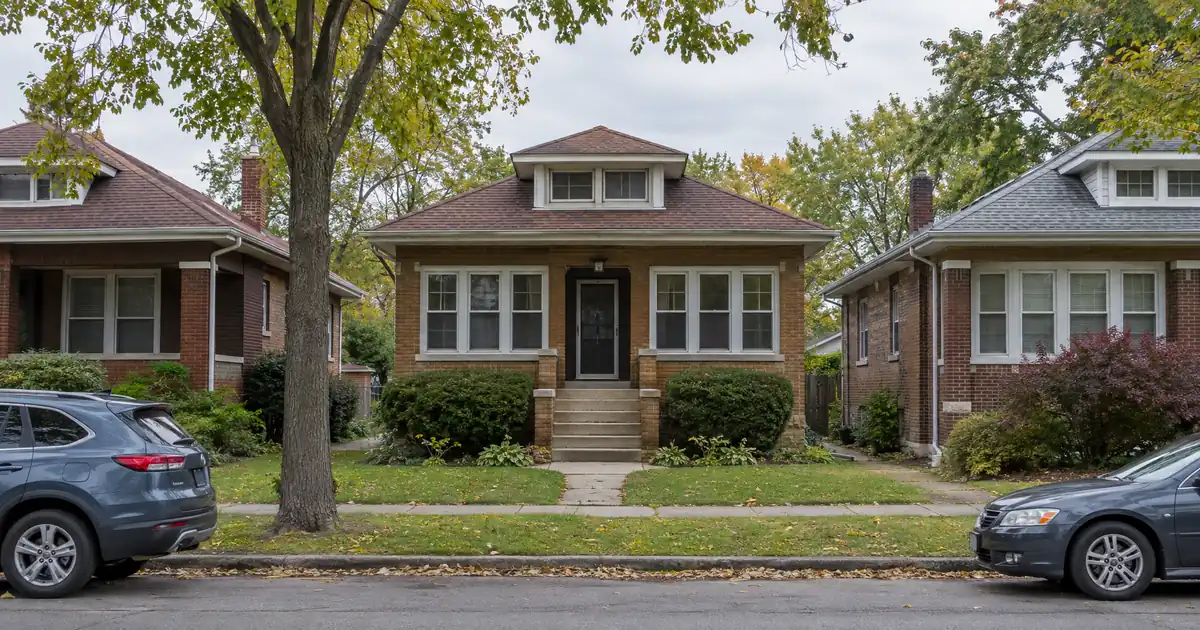
An out-of-state investor scrolling Urbana listings sees the obvious things first: a 60,000-student flagship next door, a median sale price of about $218,000 per Homes.com, and prices that sit up 11% over the trailing twelve months. What that investor tends to miss is the rental mix. 70.57% of dwellings here are rentals, and nearly half the housing units are large apartment complexes, which sit outside the 1-4 unit financing box. The equity is real, but so is the property-type sorting. Lendmire (NMLS# 2371349) is a non-QM mortgage broker, and DSCR financing for Urbana, Illinois investors runs through wholesale lenders that Lendmire works with across 41 markets, including D.C.
DSCR Cash-Out Calculator
Run the cash-out numbers in Urbana, IL
Rate source: Freddie Mac 30-yr average via FRED® — Federal Reserve Bank of St. Louis · effective Sep 24, 2026
Prefilled with starting assumptions — enter your property’s value, balance, taxes, and insurance for a more accurate picture.
Program parameters update from Lendmire’s centralized guideline source. Taxes and insurance are editable estimates.
As of Sep 24, 2026 · General Freddie Mac market benchmark, not a Lendmire loan offer. Property value, balance, taxes, and insurance are editable estimates. Maximum loan-to-value varies by lender, program, property type, and seasoning. Not a Loan Estimate, approval, or commitment to lend. Program availability and eligibility are subject to lender guidelines, credit approval, property review, and underwriting.
Key Takeaways:
A DSCR cash-out refinance in Urbana, Illinois is underwritten primarily on the property’s rental income measured against its full monthly obligation, so the appraised value and the rent, not personal income documents, determine how much equity an owner can pull.
- Duplexes and fourplexes near campus stack leases against one loan and carry the strongest coverage.
- Single-family workforce stock near the $218,000 median tends to land below 1.00x on modeled math.
- Cash-out is capped at 75% LTV, with about 6 months of seasoning from title recording.
- Buildings with 5+ units, common near campus, usually fall outside 1-4 unit DSCR programs.
Urbana Market Snapshot
A quick read on the Urbana investor landscape — figures come from the cited sources below. Confirm current property-level numbers before underwriting.
| Metric | Detail |
|---|---|
| Home prices | $218,000 median (Homes.com, Urbana city guide) |
| Typical rents | $1,023 median gross (City-Data, Urbana) |
| University enrollment | 60,848 total enrollment (University of Illinois News) |
| Vacancy | 12.9% vs. 7.4% student (CU-CitizenAccess) |
The Rental Base Behind the Refinance
Urbana’s rental base is deep but tilted toward apartments. According to NeighborhoodScout, 70.57% of dwellings are rentals and 49.44% of units sit in large apartment complexes, the single most common housing type. Population is small, at 38,447 in the most recent ACS count, but the demand engine is not. The University of Illinois Urbana-Champaign reported total enrollment of 60,848, the first time above 60,000, per the University of Illinois News Bureau. U.S. News reports 63% of those students live off campus.
That gap, a 39,000-resident city hosting a 60,000-student institution, is the structural reason small multi-unit buildings hold value here.
Students are only part of the tenant story. Carle Health runs its hospital campus in Urbana, and OSF HealthCare’s Heart of Mary Medical Center sits in town as well. The Champaign County Economic Development Corporation lists manufacturing, distribution, technology, medical, agriculture, and healthcare among the county’s industries, with Urbana as the county seat. Medical staff, research employees, and plant workers rent alongside graduate students. That mix matters for a refinance: longer-tenure tenants support the income-stability assumption a lender reviews.
The Equity Math: Seasoning, the 75% Cap, and Appraised Value
The equity pull is governed by three numbers: about 6 months of ownership measured from title recording, a hard 75% LTV ceiling on cash-out, and the coverage ratio the rent produces. The 75% figure is a cash-out cap. It is lower than the purchase-side limit, so investors who bought at 80% leverage should not expect to pull back to that level. Exact terms depend on the lender’s guidelines, property type, leverage, and a full review of the borrower’s file.
Price data in Urbana is noisy, so the direction matters more than any single figure. Homes.com shows $218,000 for the trailing twelve months. Zillow puts its typical home value lower, at $168,903, up 4.8% over the past year, reflecting a different methodology that weights the broader housing stock. Sources land roughly between $170K and $250K depending on metric. The appraisal, not an aggregator, sets the refinance balance. Owners who bought older stock in the lower-priced areas and held through recent gains are the most natural candidates.
Two other program guardrails matter here. Minimum coverage is 1.00x on most standard programs, meaning rent used for lender review versus full PITIA, though lenders may review lower ratios with stronger compensating factors, lower leverage, or different pricing. Reserves typically run about 6 months of PITIA, and credit tiers generally start at a 620 floor. All of this is subject to lender guidelines, credit approval, and property review, and equity available is never a guaranteed cash figure. Loan sizes reach up to $3,000,000 on standard programs, far above anything Urbana’s small-building stock needs. Investors who want the broader mechanics can read the refi options breakdown or the investor refinance breakdown.
Where Coverage Clears 1.00: Duplexes Versus Single-Family
Small multi-unit is the strongest DSCR fit in Urbana, and single-family workforce stock is the weakest. The reason is arithmetic: stacked leases against one loan versus a single rent against the same obligation.
Run the numbers on a modeled duplex. Assume it appraises near the $218,000 median and the investor refinances at 75% LTV, with combined rent of $2,000. Measured against full PITIA including taxes and insurance, coverage lands around 1.3x. That is a modeled assumption, not a market statistic. Every figure here varies by lender and program — guidelines, property type, leverage, and credit profile all apply.
A real listing shows how it can improve. One campus-area duplex on Homes.com’s Champaign County multi-family page shows in-place rents of $895 for a 1BR unit and $1,570 for a 3BR/2BA unit, both scheduled to step up, with the lease running well past a typical refinance date. That is roughly $2,465 a month of documented income. On the same modeled basis, coverage clears 1.5x. It is a single listing and illustrative only, but contractual escalations and a long lease term are exactly what a lender wants to see.
Now the single-family case. RentHop shows listing rents of $1,148 for a 2BR and $1,150 for a 3BR, per RentHop, which is noisy listing data. A house valued near the $218,000 median at 75% LTV with that rent covers roughly 0.74x to 0.79x once full principal, interest, taxes, and insurance are counted, with the spread reflecting where rates land within a plausible range. Illinois property taxes are a heavy line item, so they weigh on coverage more than many investors expect. Either way, the result sits well below the 1.00x level that most standard programs use as a floor. Final terms depend on lender guidelines, property type, leverage, and the borrower’s complete credit picture.
Below 1.00x is not automatically a dead end. Options a lender may review include a sub-1.00 program, interest-only structuring, lower leverage, or more cash retained in the deal. Eligibility depends on lender guidelines, credit profile, and reserves, and none of it is assured.
Median rent figures cluster between about $950 and $1,025 depending on the source: $951, $972, and $1,023 per City-Data. Rent levels this modest are why multi-unit beats single-family on coverage. (Honestly, a tidy 1.3x duplex often beats a bigger house on raw cash-out dollars too, because the appraised value is what the LTV runs against.)
Campus Core, Medical Corridor, Workforce Ring
Urbana’s submarkets differ more by tenant base than by price, and the research does not support neighborhood-level price or rent figures. What follows is qualitative, built on where each area sits relative to demand anchors.
West Urbana sits close to campus, with older housing stock near Carle Park, Blair Park, and the UI Arboretum, per Homes.com’s neighborhood guide. Expect graduate students, faculty, and staff. Older buildings are the natural duplex and small multi-unit candidates, and they also carry the capex questions that come with pre-war construction. NeighborhoodScout puts 12.34% of Urbana’s stock as built before 1939, so condition drives appraisals.
Historic East Urbana blends 19th-century homes with varied architecture near downtown and Victory Park. Larger older houses suit duplex conversions and small multi-unit, though conversion income only counts for a refinance if the lender and appraiser support the configuration.
Crystal Lake and King Park put renters near both the Carle campus and the stadium district. The demand mix includes medical staff, not just students, which broadens the pool. The Urbana Park District notes the Crystal Lake Park path connects near the Carle Hospital campus.
Fairlawn Park is mid-century housing near the University, a workforce single-family candidate. Lower entry values help coverage, but per-unit rent is limited to a single lease.
Here is the honest ranking for cash flow: duplex in the campus-adjacent core first, then workforce single-family in lower-value pockets. The stronger play might be the outer ring rather than the campus-hugging blocks, though owners chasing appreciation could argue the other way.
Rent Growth Is Outrunning the Campus Core
Matthews’ Champaign-Urbana multifamily report offers a useful tension. Student housing within a 10-minute commute of campus shows 94.3% occupancy, 2.0% rent growth, and asking rents of $777 per bed. Properties 10 to 20 minutes out show stronger rent growth of 8.7% at $616 per bed. These figures are metro-wide, not Urbana-only, but the pattern points somewhere: cash-flow-led thesis in the outer ring, stable and appreciation-oriented hold in the core.
For a refinance, that split has a practical meaning. A core duplex may appraise higher, while an outer-ring unit may show rents rising toward the appraisal. Either can support the 75% LTV cap. They just support it differently. These specifics are subject to lender guidelines and a full review of property, leverage, and credit.
The Refinance Loop: What the Proceeds Buy
Equity pulled out of a seasoned Urbana property becomes down-payment capital for the next acquisition. The 6-month seasoning clock means an investor who bought and stabilized a duplex can be refinancing before the next purchase window closes. The loop works best when the new purchase is also a small multi-unit, since the coverage math repeats.
Consider an investor with a stabilized campus-area duplex and a second target priced in the low-to-mid range of the roughly $185,000 to $949,000 spread on Urbana’s 12 active multi-family listings, per Homes.com. The low end sits near the single-family median, so small multi-unit buildings can be bought at single-family-like prices. A dozen listings also means thin comps, which can limit appraisal support for a large cash-out. Plan the refinance around a conservative appraisal, not the highest listing.
Investors who prefer to model their own scenarios can see what the numbers look like before choosing a structure.
Buildings with five or more units are a separate matter.
Skip the 5+ Unit Buildings
An 11-unit West Urbana-area listing on Redfin shows current income of $8,800 a month, or about $800 a month per unit, across ten one-bedroom and studio units plus one 2BR. It is a clean illustration of the student and workforce rent band near campus, and of why 5+ unit properties like it would probably need commercial financing rather than a 1-4 unit DSCR program. Large complexes are common in Urbana, so owners of those assets should confirm program fit before assuming DSCR applies.
ADUs are a possible income-stacking idea, but no Urbana data supports them. They count only if the lender and appraiser support them.
What Could Break the Pattern
The tightness that supports today’s coverage is real but not permanent. Matthews reports no new beds delivered over the past year and only 199 under construction, with vacancy of 6.4%, well below the 8.5% historical average. RealPage measured metro occupancy at 97.8% with average rents of $988, more than $800 below the U.S. norm. Supply is tight, and the low rent level caps coverage per unit.
Oversupply has happened here before. A federal housing analysis cited by CU-CitizenAccess found student-targeted apartment vacancy hit 12.9%, up from 7.4% a year earlier, after a wave of new construction. Underwrite on conservative rents, not peak-cycle ones.
Lendmire’s deal desk sees a consistent pattern on files from college-town markets like this one: the cleaner files from a documentation standpoint tend to carry current leases, a rent roll, and a recent appraisal that already reflects renovations. The common friction point is a value estimate built on a few thin comps, which is why a conservative comp set matters more than the highest listing.
DSCR vs. conventional financing
Two common ways to finance an investment property in Urbana, IL. They qualify you differently — here’s how investors weigh them.
Why investors choose it
- Qualifies on the property’s rental income — no personal tax returns, W-2s, or pay stubs needed to document income.
- No personal debt-to-income ceiling to clear, so existing mortgages and obligations don’t cap your borrowing the same way.
- Can be closed in an LLC, keeping the property inside a business entity.
- Built for scaling — not held to the limit on number of financed properties that conventional financing applies.
- Underwriting centers on the deal: generally qualifies when the rent covers the payment, a 1.00x coverage ratio being a common baseline (confirmed in underwriting).
- Designed specifically for investment property, including long-term and, where the program allows, short-term rentals.
Where it’s strong
- Often the lowest ongoing financing cost for a buyer who fully qualifies on personal income — a fit for a first property or a cost-first purchase.
Trade-offs for investors
- Requires full personal income documentation and must fit within a debt-to-income limit — salary, existing debts, and other mortgages all count.
- Typically held in your personal name rather than a business entity.
- Caps how many financed properties you can carry, which can become a ceiling as a portfolio grows.
- Evaluates you as a borrower as much as the property, which usually means more paperwork.
How investors usually choose: a first or single property often optimizes for the lowest financing cost; portfolio builders often optimize for leverage, vesting in an LLC, and scaling past conventional caps. The right answer depends on your goals, the property, and current guidelines — both paths run through select lenders in Lendmire’s wholesale network, with eligibility and terms confirmed in underwriting.
Watch three indicators over the next 6 to 24 months. First, new student-bed deliveries, since a jump would loosen rents. Second, appraisal comps for small multi-unit, which are thin. Third, rent growth in the outer ring versus the core, which shows where the cash-flow story is strengthening.
Investors should verify current local rental rules, taxes, and insurance with qualified local professionals before committing to a plan. Entity-owned properties are typically handled subject to lender program eligibility, and Lendmire’s Illinois DSCR loan programs cover the state-level structure. A wider comparison against agency-style loans is available, and Lendmire’s guide to DSCR explains the calculation. Questions can go to 828-256-2183.
Frequently Asked Questions
How do you qualify for a DSCR cash-out refinance in Urbana, Illinois?
Qualification centers on the property’s rent versus its full monthly obligation, with a 1.00x coverage benchmark on most standard programs, a credit floor around 620, and about 6 months of reserves. The property must have roughly 6 months of ownership from title recording, and the loan cannot exceed 75% of appraised value. Lender guidelines and credit approval determine the final outcome.
What are the requirements for an investment property loan in Urbana, Illinois?
Expect a 1-4 unit property, a credit score at or above the lender’s floor, documented rent, and reserves measured in months of PITIA. Manufactured homes, log homes, and barndominiums fall outside these programs. Larger apartment buildings with five or more units generally need commercial financing instead.
Does a duplex near campus really cover better than a single-family rental?
On modeled math, yes. A duplex valued near $218,000 with $2,000 of combined rent covers around 1.3x including taxes and insurance, while a 3BR house at the roughly $1,150 listing rent sits near 0.75x. Two leases against one obligation is the difference, though appraisal support for small multi-unit depends on comps.
How do DSCR lenders review rental income instead of traditional tax-return income in Illinois?
Lenders look at the property’s rent used for lender review against its full monthly obligation rather than the borrower’s personal income documents. Lendmire arranges these loans, through wholesale investor lenders. One key feature is a 1.00x coverage benchmark on standard programs.
Can I do a cash-out refinance on a property I just bought in Urbana?
Generally not immediately. Programs typically require about 6 months of ownership measured from title recording, though this varies by lender. The appraised value after that window, capped at 75% LTV, sets the balance.
The Real Choice for Urbana Owners
Owners of Urbana rentals are usually weighing two concrete paths. One is to refinance a campus-core duplex, where stacked leases and steady student and medical demand support coverage above 1.00x, at the cost of thin comps and higher exposure if new student housing loosens the market. The other is to refinance or buy in the outer ring, where rent growth has been stronger and entry prices lower, at the cost of thinner rents per unit and single-lease coverage that can sit below the benchmark. Neither is clearly better: the first favors stability and appraisal strength, the second favors growth but demands closer coverage math.
For current guidelines and terms, see Lendmire’s DSCR loan programs page.
About Lendmire
A non-QM mortgage broker (NMLS# 2371349), Lendmire arranges DSCR financing for real estate investors in 41 markets, meaning 40 states plus Washington, D.C. Because deals are underwritten primarily on property cash flow rather than personal income documentation, the structure suits self-employed buyers and entity-owned portfolios. Lendmire places loans through wholesale investor lenders and is not a direct lender. It is a 2026 Scotsman Guide Top Mortgage Workplace, also recognized by Scotsman Guide in 2025.
Get Started
Ready to find the right loan for you?
In about 30 seconds you can review financing options available for your investment property. No commitment required.
Informational only. Not a Loan Estimate, approval, or commitment to lend. Program availability and eligibility are subject to lender guidelines, credit approval, property review, and underwriting.
References
1. Homes.com, Urbana city guide
2. City-Data
3. University of Illinois News Bureau
6. Carle Health
8. Zillow
9. Homes.com’s Champaign County multi-family page
10. RentHop
11. Homes.com’s neighborhood guide
13. Matthews Champaign-Urbana Multifamily Report
14. Homes.com
15. Redfin
16. RealPage Analytics, Champaign-Urbana
17. 2026 Scotsman Guide Top Mortgage Workplace
This article is part of Lendmire’s investment property cash-out refinance program — full qualification details, guidelines, and scenarios live on the program page.
Related reading: Cash Out Refinance Investment Property Using DSCR in Urbana IL · Cash Out Refinance Investment Property in Crystal Lake · Cash Out Refinance on Oak Lawn Investment Property via DSCR
Guides: Investment Property Cash-Out Refinance in Urbana, IL · Investment Property Cash-Out Refinance in Illinois
Brandon Miller
Founder & CEO, Mortgage Loan Originator, Lendmire LLC
- Mortgage Loan Originator · NMLS# 1129696 · Verify on NMLS Consumer Access
- North Carolina Real Estate Broker · License# 343312 · Verify on NCREC
- North Carolina Insurance Producer · License# 19053198 · Property, Casualty, Life, Health · Verify on NAIC SBS
- Lendmire LLC · Firm NMLS# 2371349 · Verify firm licensure
Legal disclosures. Lendmire (NMLS# 2371349) is a state-licensed mortgage brokerage that arranges financing through wholesale lender relationships. Lendmire is not a direct lender, depository institution, or registered financial advisor. The discussion above is general informational content about real estate financing — it is not financial, legal, or tax advice, and readers should consult licensed professionals for guidance on their individual circumstances. Loan inquiries are subject to lender underwriting; this article does not represent a commitment to lend. Loan terms, rates, and qualification standards vary by borrower, property, and state, and are subject to change at any time. Equal Housing Opportunity. NMLS Consumer Access: nmlsconsumeraccess.org.