
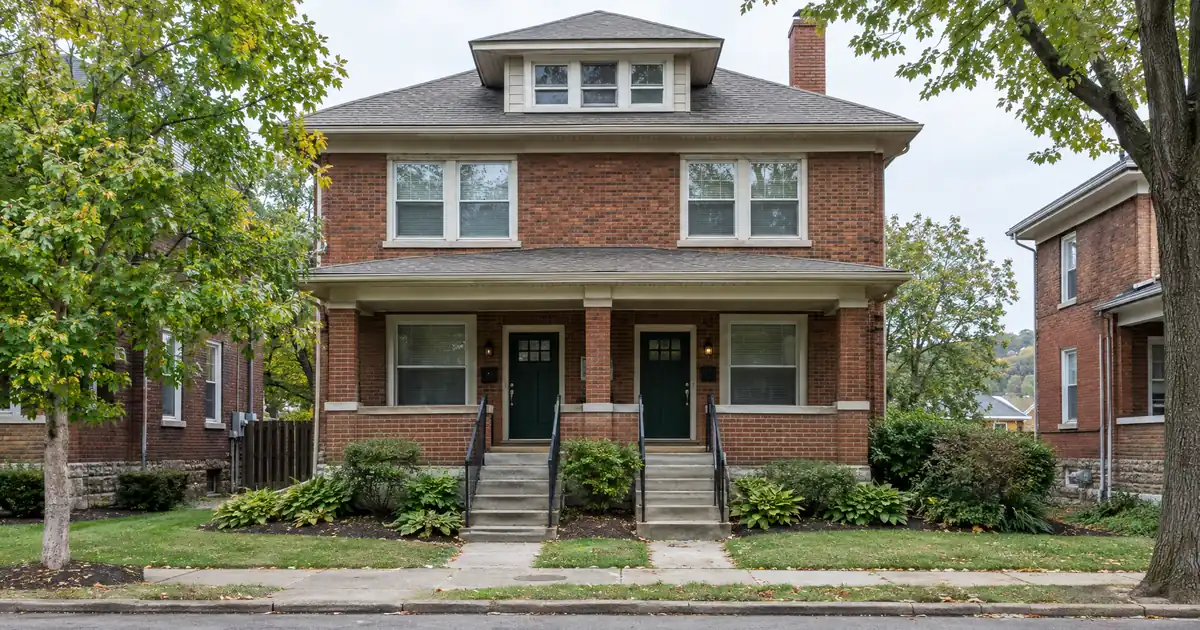
Picture an investor holding a duplex bought near $170,000 in West Price Hill, with unit rents of $975 and $1,120 on the leases. The property has been owned well past the six-month mark, the renovation is finished, and the tenants are stable. What the investor wants now is a DSCR cash out refinance that pulls equity out to fund the next acquisition. The question is how that equity gets measured, documented and sized.
TL;DR: A DSCR cash out refinance in Cincinnati, Ohio fits investors who already hold seasoned small multifamily or workforce rentals and want to recycle equity. The file is underwritten primarily on the property’s rental income measured against its full monthly obligation, with leverage capped and proceeds sized by appraisal rather than a headline city price.
DSCR Cash-Out Calculator
Run the cash-out numbers in Cincinnati, OH
Rate source: Freddie Mac 30-yr average via FRED® — Federal Reserve Bank of St. Louis · effective Sep 24, 2026
Prefilled with starting assumptions — enter your property’s value, balance, taxes, and insurance for a more accurate picture.
Program parameters update from Lendmire’s centralized guideline source. Taxes and insurance are editable estimates.
As of Sep 24, 2026 · General Freddie Mac market benchmark, not a Lendmire loan offer. Property value, balance, taxes, and insurance are editable estimates. Maximum loan-to-value varies by lender, program, property type, and seasoning. Not a Loan Estimate, approval, or commitment to lend. Program availability and eligibility are subject to lender guidelines, credit approval, property review, and underwriting.
- West Price Hill’s median home price was $189,900, per Homes.com.
- Cash-out leverage typically tops out at 75% LTV, after about 6 months of seasoning.
- Greater Cincinnati multifamily vacancy hit 9.3%, per Cushman & Wakefield, led by newer Class A stock.
- Houses rent at a $1,800 median against $1,288 for apartments, per Zumper.
Cincinnati Market Snapshot
A quick read on the Cincinnati investor landscape — figures come from the cited sources below. Confirm current property-level numbers before underwriting.
| Metric | Detail |
|---|---|
| University enrollment | 53,682 total (University of Cincinnati News) |
| Employment | 19,500+ employees (Cincinnati Children’s) |
Price Hill Is Where the Coverage Lives
Price Hill is the strongest coverage submarket in the city, and the reason is basis. West Price Hill had six multifamily listings ranging from $170,000 to $435,000, with a median home price of $189,900 and multifamily listings averaging 26 days on market, per Homes.com. The one duplex listing in that data showed unit rents of $975 and $1,120. That is a single listing, not a rent survey, so treat the math below as a modeled illustration.
Assume the two units combine for $2,095 a month and the property appraises near the neighborhood median. Gross rent against value runs about 1.10% a month. Northpoint, a local property manager, treats a rent-to-price ratio of 0.7% or more as workable for cash flow and anything under 0.5% as an appreciation bet. That is a manager’s heuristic, not a lender threshold, but it sorts submarkets quickly. At 75% LTV with full taxes and insurance loaded into the obligation, this modeled duplex lands comfortably above 1.5x coverage, rounded down. Final terms depend on lender guidelines, property type, leverage, and the borrower’s complete credit picture.
Compare that with the typical house. Zumper puts the house rent median at $1,800. Zillow’s typical home value of $238,714 implies roughly 0.75% monthly rent-to-price. Modeled the same way, at 75% LTV with taxes and insurance included, coverage sits in the low 1.1s. It clears the 1.00x benchmark. It has far less cushion than the duplex. These specifics are subject to lender guidelines and a full review of property, leverage, and credit.
The rest of the Price Hill and Westwood corridor follows the same pattern. RentCafe’s neighborhood averages show East and West Price Hill around $1,011 to $1,021 and Westwood at $1,040. Those figures come from buildings with 50 or more units, so they skew toward apartments and read as directional only. They are also the lowest rents in the city. Low rent only works when the basis is lower still.
Four Submarkets, Ranked by What They Do to the Number
Coverage in Cincinnati depends heavily on the block. RentCafe’s averages run from about $1,011 in Price Hill to $2,350 in Mt. Adams, and price does not scale in step.
| Submarket | RentCafe avg rent | Role in a cash-out |
|---|---|---|
| Price Hill / Westwood | $1,011–$1,040 | Coverage-led, low basis |
| Walnut Hills | $1,673 | Revitalization, mid basis |
| Corryville / CUF | $2,249 / $1,766 | Demand-anchored by campus |
| Over-the-Rhine | $1,978 | Higher basis, rent premium |
Walnut Hills sits near the medical district and shows a $1,673 average rent. The aggregators that price it (Follow Up Ace among them) are unverified, so the price side stays qualitative here. Investors should run actual comps before assuming the ratio holds.
Corryville and CUF are the demand-anchored plays. The University of Cincinnati reported a record 53,682 students, including 9,534 online, with the main campus in Clifton, CUF and Corryville. Cincinnati Children’s employs over 19,500 people and is the largest employer and health system in Southwest Ohio. Doorstead describes the core neighborhoods as drawing young professionals, students and hospital workers tied to UC Health and Children’s. That tenant base supports rent, though the higher basis in these blocks narrows the coverage advantage.
Oakley, Hyde Park and Mt. Adams lean appreciation over coverage. Mt. Adams rents at $2,350 on RentCafe, yet the price levels in these east-side neighborhoods are far above the west side’s. Treat them as equity-growth holdings. A cash-out refinance there is more likely to be limited by coverage than by LTV.
Seasoning, LTV and What Actually Limits the Proceeds
Three guardrails set the size of any cash-out file. First, leverage on a cash-out refinance typically caps at 75% of appraised value. The 80% figure that applies on purchases does not carry over. Second, most programs look for about six months of ownership measured from title recording. Third, the property’s rent has to cover its full obligation (principal, interest, taxes, insurance and any HOA dues) at or above the standard 1.00x benchmark. Some lenders review lower-coverage files with stronger compensating factors, lower leverage or more cash down.
Reserves matter here too. Expect roughly six months of PITIA held in reserve on most files, and closer to nine above $1,500,000. Credit tiers typically begin at a 620 floor and improve at 660, 680 and 700. Loan sizes run up to $3,000,000 on standard programs, while smaller balances route through select lenders in the network. Everything here is guideline-level and varies by borrower, property and lender.
The cash-out number is whatever is left after three constraints. The appraisal sets the value. The 75% ceiling sets the maximum loan. The coverage requirement and reserves then shrink that maximum to what the rent supports. Proceeds are never a guaranteed figure, which is why the equity recycle pathway starts with the appraisal and works backward.
Why Headline Prices Mislead the Appraisal Conversation
The value benchmarks for Cincinnati disagree, and the disagreement matters for sizing. Redfin’s median sale price was $285,000, up 8.7% at the time of that data. Zillow’s typical value was $238,714, up 3.6%. The REALTOR Alliance of Greater Cincinnati reported a five-county median sold price of $300,000, up 10.0% from a year earlier. These measure different things (sold versus whole-stock, city versus metro) and should never be blended.
Redfin also showed Cincinnati with the longest days-to-sell of Ohio’s three large metros. That means thinner comps for dated or overpriced properties. An appraiser working a duplex in a submarket with few recent sales may lean on distant comps, and the resulting value can land below what the owner expects.
Honestly, the city-level number is the wrong anchor for a cash-out. The appraiser’s block-level comps decide the file, and a borrower planning a 75% LTV draw should assume a conservative value. Terms vary by lender guidelines, property type, leverage, credit profile, and full file review.
How the Paperwork Breaks Down on Small Multifamily
Bond Hill shows where multi-unit math needs a second look. Its median home price was $215,000, while multifamily listings ranged from $285,000 to $425,000 and averaged 38 days on market. A small multifamily building can cost $70,000 to $210,000 more than the typical home nearby. The added units must bring enough rent to cover the added debt. Multi-unit coverage does not automatically win.
DSCR files in markets like this one typically look like a small building with a mix of lease ages. One unit is often on a month-to-month holdover, one has a fresh lease, and one is turned over shortly before the refinance. The friction comes from how the lender reads that schedule. Unit-level leases, a market rent opinion from the appraisal and proof of rent collection tend to matter more than the borrower’s traditional personal-income documentation. Files that arrive with clean leases, a recorded title date that clearly clears seasoning, current insurance declarations and entity documents (subject to lender program eligibility for LLC-titled properties) move through review with fewer conditions.
Units that went vacant during a renovation are a common snag. A lender may use the appraiser’s market rent instead of the vacant unit’s zero. Rent below market on the leases themselves can also cap the qualifying figure. Deal-level detail decides these outcomes, not the city.
Two more points on property type. Builders and owners of the classic Cincinnati two- to four-family product have a policy tailwind: the city received a $2 million HUD grant to pre-approve plans for 2-, 3- and 4-family middle housing, though the source says those projects are years from shifting inventory. And Redfin lists 175 multifamily homes for sale at a median list price of $295,000, a live figure that changes. Comp depth for small multifamily is real.
The Vacancy Question (Two Datasets, One Gap)
Greater Cincinnati multifamily vacancy reached 9.3% in the first quarter after four consecutive quarterly increases, per Cushman & Wakefield. The region also absorbed roughly 14,000 unit completions over five years. That is the headline, and it alarms people. It misses where the supply landed.
Institutional Property Advisors reports Class A vacancy staying above 4% against roughly 3% for lower-tier assets. It expects the bulk of new supply in Northeast Cincinnati-Warren County and Southeast Cincinnati. The two figures come from different datasets, so they cannot be reconciled directly. The pattern still points one way: oversupply pressure is concentrated in new suburban stock, not in older Class B and C duplexes in the urban core.
The forward view helps, with a caveat. MMG Real Estate Advisors projects apartment completions falling about 43% year over year. It also expects Cincinnati to lead major Ohio metros in rent growth, with effective rents up 2.1% against a 1.5% national projection. That is a forecast, not a promise. It does support flat-to-rising rents through the first stretch of a cash-out loan, which helps both the appraisal and the coverage ratio.
One contrasting read comes from the rent surveys themselves. RentCafe shows average rent of $1,482, up 2.26% year over year. Zumper shows a $1,400 median, essentially flat. Doorstead shows a metro median of $1,543, down 1.88%. The methodologies differ: RentCafe covers only 50-plus unit buildings, while Zumper draws on listings. So the direction is unclear, and the stress test should assume flat rents, not growth.
Employment Anchors Behind the Rent Roll
Demand rests on institutions, not on one employer. TriHealth is the third-largest employer in the Southwest Ohio and Tri-State region, with almost 14,000 team members across Bethesda North, Good Samaritan and other hospitals. REDI Cincinnati cites 1.3 million workers across the region. Eight Fortune 500 companies are headquartered in the area, including Kroger, Procter & Gamble and Fifth Third, per Wikipedia’s list of Greater Cincinnati companies (a secondary source, so qualitative only).
For a refinance file, this matters in one narrow way. Lenders want rental income that looks durable, and a tenant pool tied to hospitals, a university and corporate offices is easier to defend than one tied to a single plant. It does not change the math. It just supports the assumption that leases renew.
What to Line Up Before Approaching a Broker
Before requesting a quote, gather the recorded title date, current leases by unit, the last 12 months of rent collection, insurance declarations, entity documents and a realistic value estimate. Read Lendmire’s DSCR guide for the coverage calculation. If you are refinancing, confirm early whether the file is cash-out or rate-and-term, since the two are handled differently. Investors weighing this against bank financing should compare how conventional loans differ from DSCR loans. The broader Ohio DSCR financing page covers state-level program notes. When the file is ready, get a rental-income loan quote or call 828-256-2183.
Verify current Cincinnati and Hamilton County rental rules, property taxes and insurance with qualified local professionals before committing.
Frequently Asked Questions
Can a Price Hill duplex support a cash-out at 75% LTV?
Potentially, depending on the appraisal and rent schedule. In the modeled West Price Hill example, rent against a full obligation that includes taxes and insurance clears 1.00x with room to spare. The binding constraint is usually the appraised value, since thin comps can pull it below what the owner expects. Final eligibility rests with the lender.
DSCR vs. conventional financing
There are two common ways to finance an investment property in Cincinnati, OH, and they qualify you differently — here’s how investors weigh them.
Why investors choose it
- Qualifies on the property’s rental income — no personal tax returns, W-2s, or pay stubs needed to document income.
- No personal debt-to-income ceiling to clear, so existing mortgages and obligations don’t cap your borrowing the same way.
- Can be closed in an LLC, keeping the property inside a business entity.
- Built for scaling — not held to the limit on number of financed properties that conventional financing applies.
- Underwriting centers on the deal: generally qualifies when the rent covers the payment, a 1.00x coverage ratio being a common baseline (confirmed in underwriting).
- Designed specifically for investment property, including long-term and, where the program allows, short-term rentals.
Where it’s strong
- Often the lowest ongoing financing cost for a buyer who fully qualifies on personal income — a fit for a first property or a cost-first purchase.
Trade-offs for investors
- Requires full personal income documentation and must fit within a debt-to-income limit — salary, existing debts, and other mortgages all count.
- Typically held in your personal name rather than a business entity.
- Caps how many financed properties you can carry, which can become a ceiling as a portfolio grows.
- Evaluates you as a borrower as much as the property, which usually means more paperwork.
How investors usually choose: a first or single property often optimizes for the lowest financing cost; portfolio builders often optimize for leverage, vesting in an LLC, and scaling past conventional caps. The right answer depends on your goals, the property, and current guidelines — both paths run through select lenders in Lendmire’s wholesale network, with eligibility and terms confirmed in underwriting.
Do Cincinnati’s RentCafe rents apply to a duplex I own?
Only as a rough direction. RentCafe draws on buildings with 50 or more units, so its figures lean toward apartments. A duplex or house should be underwritten on its own leases and the appraiser’s market rent. Zumper’s $1,800 house median is a closer reference for single-family product, though it still varies block by block.
Does the 9.3% multifamily vacancy figure hurt a cash-out file?
Not directly. That number covers the broader multifamily market, where new Class A supply is concentrated. Institutional Property Advisors puts lower-tier vacancy near 3%. A lender still looks at the subject property’s own leases and the appraiser’s rent schedule, so strong documentation matters more than the headline.
How long must I own a Cincinnati rental before refinancing out equity?
Most programs look for about six months of ownership, measured from title recording rather than closing paperwork or renovation completion. Some lenders review shorter holds case by case, often with lower leverage. Check the recorded date before ordering an appraisal.
Why does the appraisal matter more than Cincinnati’s headline home price?
City-level medians disagree by definition. Zillow’s typical value is $238,714, while the five-county REALTOR Alliance median sold price is $300,000. Redfin’s longer days-to-sell also means fewer recent comps in some blocks. The 75% LTV ceiling applies to the appraised value of your property, not to any published median. Exact terms depend on the lender’s guidelines, property type, leverage, and a full review of the borrower’s file.
For current guidelines and terms, see Lendmire’s DSCR loan programs page.
About Lendmire
Lendmire (NMLS# 2371349) is a mortgage brokerage focused on DSCR investor lending, with programs available across 41 markets, including Washington, D.C. Lenders in the network commonly weigh a property’s rental-income coverage rather than personal income paperwork, which suits LLC-owned and multi-property investors. The firm is a 2026 Scotsman Guide Top Mortgage Workplace and was recognized by Scotsman Guide in 2025. Terms vary by lender, property, leverage and program.
Get Started
Ready to find the right loan for you?
In about 30 seconds you can review financing options available for your investment property. No commitment required.
Informational only. Not a Loan Estimate, approval, or commitment to lend. Program availability and eligibility are subject to lender guidelines, credit approval, property review, and underwriting.
References
1. Homes.com
2. Cushman & Wakefield MarketBeat
3. Zumper
4. University of Cincinnati News
6. northpointam.com — Cincinnati Best Neighborhoods Invest
7. Zillow — Home Values Cincinnati OH
8. RentCafe’s neighborhood averages
9. doorstead.com — Cincinnati Rental Market Report
10. Redfin’s median sale price was $285,000
11. REALTOR Alliance of Greater Cincinnati
12. Homes.com — Bond Hill Neighborhood Multi Family Homes for Sale
13. Redfin lists 175 multifamily homes for sale
14. Institutional Property Advisors
16. TriHealth
17. REDI Cincinnati
18. a 2026 Scotsman Guide Top Mortgage Workplace
19. recognized by Scotsman Guide in 2025
This article is part of Lendmire’s investment property cash-out refinance program — full qualification details, guidelines, and scenarios live on the program page.
Related reading: Cash Out Refinance Investment Property in Cincinnati, Ohio: The 2026 DSCR Financing Guide to Over-the-Rhine · DSCR Loans Cincinnati: Investor Financing for Over-the-Rhine, Hyde Park, Northern Kentucky, Mason & Real Estate Investors · Investment Property Loans in Cincinnati, OH: The 2026 DSCR Financing Guide
Guides: Investment Property Cash-Out Refinance in Cincinnati, OH · Investment Property Cash-Out Refinance in Ohio
Brandon Miller
Founder & CEO, Mortgage Loan Originator, Lendmire LLC
- Mortgage Loan Originator · NMLS# 1129696 · Verify on NMLS Consumer Access
- North Carolina Real Estate Broker · License# 343312 · Verify on NCREC
- North Carolina Insurance Producer · License# 19053198 · Property, Casualty, Life, Health · Verify on NAIC SBS
- Lendmire LLC · Firm NMLS# 2371349 · Verify firm licensure
Compliance and disclosures. Lendmire (NMLS# 2371349) is a licensed mortgage broker and is not a direct lender, depository institution, financial advisor, or tax professional. Content in this article is general market analysis and educational information — not financial, legal, or tax advice for any specific situation. Lendmire does not guarantee loan approval; every transaction is subject to underwriting by the funding lender. Mortgage pricing and loan program guidelines are subject to change at any time without notice and vary by borrower characteristics, property type, and state regulations. Lendmire complies with Equal Housing Opportunity. Licensure verification: NMLS Consumer Access.