
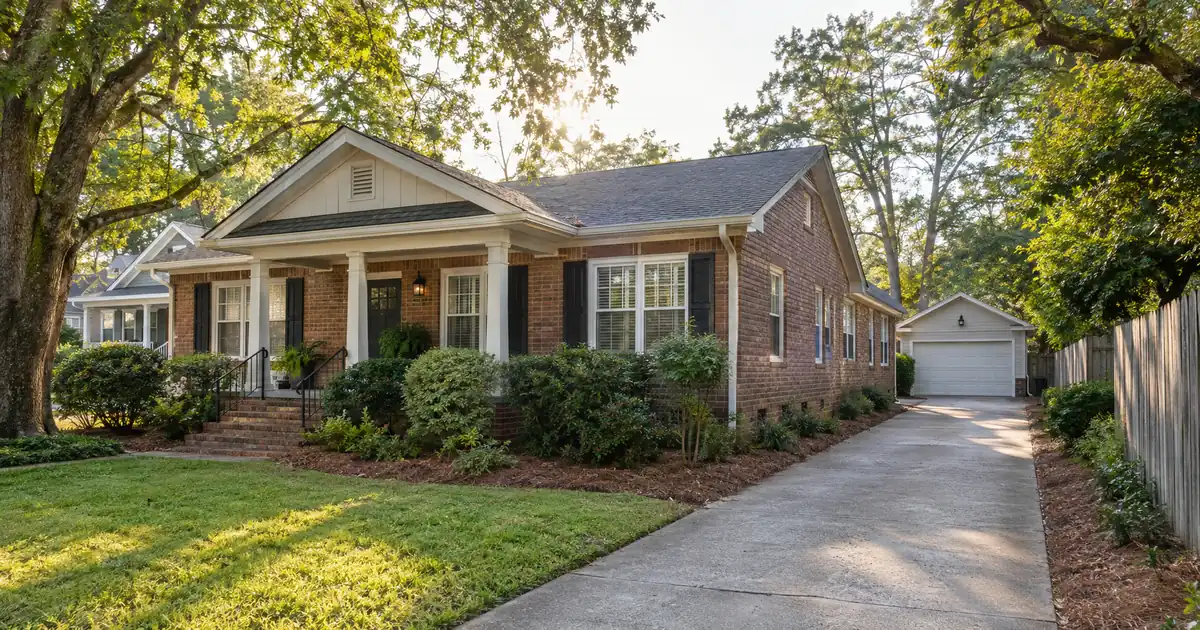
Midtown’s median multi-family listing price is $155K, per Redfin’s Midtown multi-family page. The citywide median sale price is $222K, according to Redfin’s Columbus market data. That gap explains where cash-out refinancing works in this city. A building that stacks several rent checks on a low basis clears the coverage test with room to spare. A single-family rental at the citywide median does not.
Investors underwriting deals in Columbus, Georgia can use DSCR programs Lendmire arranges — available across 41 markets, including D.C. Lendmire (NMLS# 2371349) is a DSCR-focused mortgage broker, and this analysis covers the equity-extraction side: pulling capital out of a rental you already own.
DSCR Cash-Out Calculator
Run the cash-out numbers in Columbus, GA
Rate source: Freddie Mac 30-yr average via FRED® — Federal Reserve Bank of St. Louis · effective Sep 24, 2026
Prefilled with starting assumptions — enter your property’s value, balance, taxes, and insurance for a more accurate picture.
Program parameters update from Lendmire’s centralized guideline source. Taxes and insurance are editable estimates.
As of Sep 24, 2026 · General Freddie Mac market benchmark, not a Lendmire loan offer. Property value, balance, taxes, and insurance are editable estimates. Maximum loan-to-value varies by lender, program, property type, and seasoning. Not a Loan Estimate, approval, or commitment to lend. Program availability and eligibility are subject to lender guidelines, credit approval, property review, and underwriting.
The Short Version: A DSCR cash-out refinance in Columbus, Georgia is underwritten primarily on the property’s rental income measured against its full monthly obligation, and with citywide asking rents flat, the value of the building and its unit count drive proceeds more than rent growth does.
- Midtown duplexes and small multifamily sit on a median listing price of $155K (Redfin).
- Cash-out is capped at 75 percent LTV, with about six months of seasoning.
- Citywide average rent is $1,095, down $55 year over year (Zillow).
- Single-family rentals at the median price land near 1.00x coverage.
- Fort Benning’s soldier tenant base underpins rent demand.
Columbus Market Snapshot
A quick read on the Columbus investor landscape — figures come from the cited sources below. Confirm current property-level numbers before underwriting.
| Metric | Detail |
|---|---|
| Home prices | 216 sales (Movoto, Columbus market trends) |
| Typical rents | $930 + $775 rents (Redfin, Columbus multi-family) |
| Employment | 1 in 5 jobs government (Georgia Trend, Columbus) |
Midtown Is Where the Basis Is Low
Midtown duplexes and small multifamily are the strongest equity-extraction product in Columbus. Acquisition cost is low, the buildings stack rent on one lot, and that combination gives the coverage test the most cushion. Midtown also covers the Lakebottom Park and Weracoba Heights pockets, all near downtown and the hospital corridor.
Start with the listing evidence. Redfin shows 23 multi-family homes for sale citywide at a median listing price of $160K. One Midtown duplex advertises sides rented at $930 and $775, roughly $1,705 a month from a single building, with a 7.76 percent cap rate. That is a listing-agent claim, so treat it as illustration rather than validated yield. Homes.com shows a historic Lakebottom Park duplex with two 2BR/1BA units at $850 each, plus a rare six-unit property in Weracoba Heights. Asking prices are not appraised values, and the appraisal is what sets the cash-out ceiling.
Run the numbers on a modeled Midtown duplex priced near that $155K median, with rents of $930 and $775 as assumptions. At 75 percent LTV and modeled with taxes and insurance included, coverage lands comfortably above 1.5x. That is a wide cushion. It means the binding constraint on proceeds is the 75 percent cap and the appraised value, not the rent-to-debt ratio.
The investor refinance breakdown covers how lenders look at value versus income in that situation.
Midtown isn’t a clean story, though. Redfin’s Downtown Columbus page shows a $297K median sale price, down 10 percent year over year, but on only four sales in the most recent month. That sample is too small to lean on. The same goes for any neighborhood-level rent-to-value ratio: no reliable public source was found, so this analysis stays qualitative there.
Flat Rents Change the Cash-Out Math
Columbus is a cash-flow market, not an appreciation market. Extraction sized on the appraised value today works; extraction sized on expected growth does not. Zillow puts average rent at $1,095, down $55 year over year, with a “cool” rental temperature. RentCafe shows average rent moving from $1,212 to $1,214, which is flat. Redfin has the citywide median sale price up just 0.5 percent year over year.
Metro population points the same way. USAFacts counts 324,300 people in the metro, while Census Bureau QuickFacts shows the city itself at 201,830 with a median household income of $57,010. Stable, not booming.
The value lever is therefore purchase price and rehab, which makes the BRRRR sequence the natural fit here. Buy low, renovate, let the appraisal catch up to the work, then refinance out at up to 75 percent LTV. The program ceiling does not bend: cash-out sits at 75 percent, and ownership generally needs about six months of seasoning measured from title recording. Minimum coverage is 1.00x on the standard benchmark, and reserves run about six months of full payment. Qualification remains subject to lender guidelines, credit approval, and property review.
Now the contrast case. Picture a three-bedroom single-family rental bought near the $222K citywide median, with rent at roughly $1,300, the figure Rentometer shows for three-bedroom houses. These are modeled assumptions, not sourced deal data. At 75 percent LTV with taxes and insurance included, coverage comes out just under 1.00x.
That doesn’t end the conversation. Options a lender may review include a sub-1.00 program, a lower-leverage structure, an interest-only period, or stronger compensating factors such as reserves and credit. Each usually costs something in leverage or pricing, and eligibility depends on lender guidelines. The practical read: a median-priced SFR at market rent is a coverage-constrained refinance, while a Midtown duplex at the same loan-to-value is not.
Plenty of investors go the other way and assume the SFR is the safer asset because it is simpler. On pure coverage math in this city, the duplex usually wins.
Fort Benning Is the Floor Under Rents
13,500 soldiers are stationed at Fort Benning, and 70 percent of them live in the local community, per Choose Columbus. The Georgia Encyclopedia puts installation personnel near 35,000 and the regional economic impact at an estimated $4.75 billion. (The base carried the Fort Moore name for a stretch after 2023; current Army materials use Fort Benning, and so does this article.)
Why that matters for a refinance: Basic Allowance for Housing gives soldier tenants a documented, non-discretionary rent budget. Garrison Ledger, citing DFAS figures, shows the Columbus-area range running from $1,362 to $2,502 depending on rank, and the Army remains the anchor employer. Units priced within that band have a defensible market-rent input for the appraisal and a deep tenant pool. The figures come from a secondary source, so verify against the official DoD calculator before underwriting.
The trade-off is churn. Choose Columbus says about 2,000 soldiers leave the Army from Fort Benning annually and over 700 of them stay in Columbus. PCS moves mean turnover is structurally higher than in a pure workforce market, which argues for reserves and for buildings in good condition.
The base is not the only anchor. Data USA shows resident employment led by health care at 12,814 workers, then retail at 8,462 and finance and insurance at 8,125. Georgia Trend says one in five metro jobs is a government job and lists TSYS, Aflac, Piedmont Columbus Regional, and Synovus among the top employers. Piedmont Columbus Regional’s downtown campus sits near the Midtown edge, and several Lakebottom Park duplex listings advertise that proximity. Medical workers are a credible tenant pool there.
Workforce Single-Family, North Columbus, and the Student Question
Workforce three-bedroom rentals are the volume product, and they are the coverage-tight side of the market. One local property manager, in marketing material, reports three-bedroom rentals in desirable submarkets leasing between $1,750 and $2,200. That conflicts with the Rentometer estimate and with Zillow’s $1,095 citywide average. Treat the manager’s range as a ceiling, not an underwriting input. The appraiser’s rent schedule is what counts.
North Columbus is the higher-priced suburban area, with more buyer competition per local realtor commentary. Higher basis and higher rents tend to offset, so coverage there often looks like the median SFR case, not the Midtown duplex case. South and Southeast Columbus carry the lowest rents and the lowest entry prices. Yield versus price risk is highest there, and condition matters most.
Columbus State University is worth a line. Per the Complete College Georgia campus plan, total enrollment most recently stood at 7,690, down 3.1 percent from the prior year. Student demand is real but shrinking. Don’t build a cash-out on student-oriented rent growth.
What Clean Files Look Like Here
In markets structurally like this one, low-price, flat-rent, military-adjacent, the files that move smoothest tend to arrive with complete leases, entity documents, title, and property details ready for lender review. The common friction point is the appraisal rent schedule: an investor underwrites to the optimistic end, and the appraiser lands nearer the market. Buildings with documented leases at or below local rent ceilings hold up better.
Small balances are the other pattern. Because Columbus values are low, loan sizes often fall below what standard programs target. Standard programs run up to $3,000,000, and smaller balances route through select lenders in the network. Confirming the balance fits a program before an appraisal is ordered avoids wasted spend. Lendmire’s DSCR cash-out refinance page lays out the structure and explains how the coverage ratio is calculated from monthly rent and the full monthly obligation.
For the proceeds themselves, the usual play is a second acquisition: pull equity from the stabilized duplex, then buy the next Midtown building. A fixed cash figure can’t be promised, because proceeds depend on the appraised value, rent used for lender review, reserves, and the 75 percent ceiling. DSCR loan options for Georgia investors cover the state program detail. For a quote, call Lendmire at 828-256-2183 or get a rental-income loan quote. Verify current local rental rules, taxes, and insurance with qualified local professionals before committing.
Frequently Asked Questions
How do you qualify for a DSCR cash-out refinance in Columbus, Georgia?
Qualification centers on the property’s rent against its full monthly obligation, with a 1.00x benchmark on standard programs. Borrowers also need a credit score of at least 620, roughly six months of reserves, and about six months of ownership. Leverage caps at 75 percent LTV. Final eligibility is set by lender guidelines and property review.
DSCR vs. conventional financing
There are two common ways to finance an investment property in Columbus, GA, and they qualify you differently — here’s how investors weigh them.
Why investors choose it
- Qualifies on the property’s rental income — no personal tax returns, W-2s, or pay stubs needed to document income.
- No personal debt-to-income ceiling to clear, so existing mortgages and obligations don’t cap your borrowing the same way.
- Can be closed in an LLC, keeping the property inside a business entity.
- Built for scaling — not held to the limit on number of financed properties that conventional financing applies.
- Underwriting centers on the deal: generally qualifies when the rent covers the payment, a 1.00x coverage ratio being a common baseline (confirmed in underwriting).
- Designed specifically for investment property, including long-term and, where the program allows, short-term rentals.
Where it’s strong
- Often the lowest ongoing financing cost for a buyer who fully qualifies on personal income — a fit for a first property or a cost-first purchase.
Trade-offs for investors
- Requires full personal income documentation and must fit within a debt-to-income limit — salary, existing debts, and other mortgages all count.
- Typically held in your personal name rather than a business entity.
- Caps how many financed properties you can carry, which can become a ceiling as a portfolio grows.
- Evaluates you as a borrower as much as the property, which usually means more paperwork.
How investors usually choose: a first or single property often optimizes for the lowest financing cost; portfolio builders often optimize for leverage, vesting in an LLC, and scaling past conventional caps. The right answer depends on your goals, the property, and current guidelines — both paths run through select lenders in Lendmire’s wholesale network, with eligibility and terms confirmed in underwriting.
What are the requirements for an investment property loan in Columbus, Georgia when the building is a duplex or small multifamily?
Lenders review leases or a market rent schedule, title, entity documents if the property is LLC-held (subject to lender program eligibility), and an appraisal. Unit-count limits vary by program, with some stopping at four units and others reaching eight. Manufactured homes, log homes, and barndominiums fall outside these programs.
Does a flat rental market in Columbus limit how much equity I can pull out?
It limits it more through value than through rent. With citywide rents essentially flat and prices up only slightly, proceeds track today’s appraised value at up to 75 percent LTV. Renovation that lifts the appraisal, not market lift, is what expands proceeds.
Does the Fort Benning tenant base help a DSCR refinance?
It supports the rent assumption, since housing allowances give soldier tenants a defined budget and most stationed soldiers live in the local community. It also brings turnover from PCS moves. Reserves and a well-maintained building handle that better than aggressive rent assumptions do.
How do DSCR lenders review rental income instead of traditional tax-return income in Georgia?
Lendmire, a mortgage broker placing DSCR investor loans, arranges files where the lender reviews the property’s rent against its full monthly obligation rather than traditional personal-income documentation. Eligibility remains subject to lender guidelines, credit, and property review.
For current guidelines and terms, see Lendmire’s DSCR loan programs page.
About Lendmire
A DSCR-focused mortgage broker, Lendmire (NMLS# 2371349) places investor financing across 41 markets, 40 states plus Washington, D.C., with DSCR eligibility generally reviewed by the lender on property cash flow rather than traditional personal-income documentation, subject to lender guidelines. The firm was recognized by Scotsman Guide as a 2026 Top Workplace and is a 2025 Scotsman Guide Top Mortgage Workplace.
In Columbus, the easiest equity comes from old Midtown brick bought cheap, fixed properly, and appraised on its unit count. The median-priced ranch house is the harder refinance.
Get Started
Ready to find the right loan for you?
In about 30 seconds you can review financing options available for your investment property. No commitment required.
Informational only. Not a Loan Estimate, approval, or commitment to lend. Program availability and eligibility are subject to lender guidelines, credit approval, property review, and underwriting.
References
1. Redfin’s Midtown multi-family page
2. Redfin’s Columbus market data
3. Zillow
4. Movoto, Columbus market trends
5. Redfin, Columbus multi-family
7. Homes.com
8. RentCafe
9. USAFacts
11. Rentometer
12. Choose Columbus
15. Data USA
17. Complete College Georgia campus plan
18. recognized by Scotsman Guide as a 2026 Top Workplace
19. a 2025 Scotsman Guide Top Mortgage Workplace
This article is part of Lendmire’s investment property cash-out refinance program — full qualification details, guidelines, and scenarios live on the program page.
Related reading: Cash Out Refinance Investment Property Columbus Georgia · DSCR Loans in Columbus, Georgia: Investor Financing for Midtown Columbus, Phenix City, Fort Moore & Real Estate Investors · Cash Out Refinance Investment Property in Statesboro, Georgia: Unlocking Equity Near the Blue Mile
Guides: Investment Property Cash-Out Refinance in Columbus, GA · Investment Property Cash-Out Refinance in Georgia
Brandon Miller
Founder & CEO, Mortgage Loan Originator, Lendmire LLC
- Mortgage Loan Originator · NMLS# 1129696 · Verify on NMLS Consumer Access
- North Carolina Real Estate Broker · License# 343312 · Verify on NCREC
- North Carolina Insurance Producer · License# 19053198 · Property, Casualty, Life, Health · Verify on NAIC SBS
- Lendmire LLC · Firm NMLS# 2371349 · Verify firm licensure
Compliance and disclosures. Lendmire (NMLS# 2371349) is a licensed mortgage broker and is not a direct lender, depository institution, financial advisor, or tax professional. Content in this article is general market analysis and educational information — not financial, legal, or tax advice for any specific situation. Lendmire does not guarantee loan approval; every transaction is subject to underwriting by the funding lender. Mortgage pricing and loan program guidelines are subject to change at any time without notice and vary by borrower characteristics, property type, and state regulations. Lendmire complies with Equal Housing Opportunity. Licensure verification: NMLS Consumer Access.