
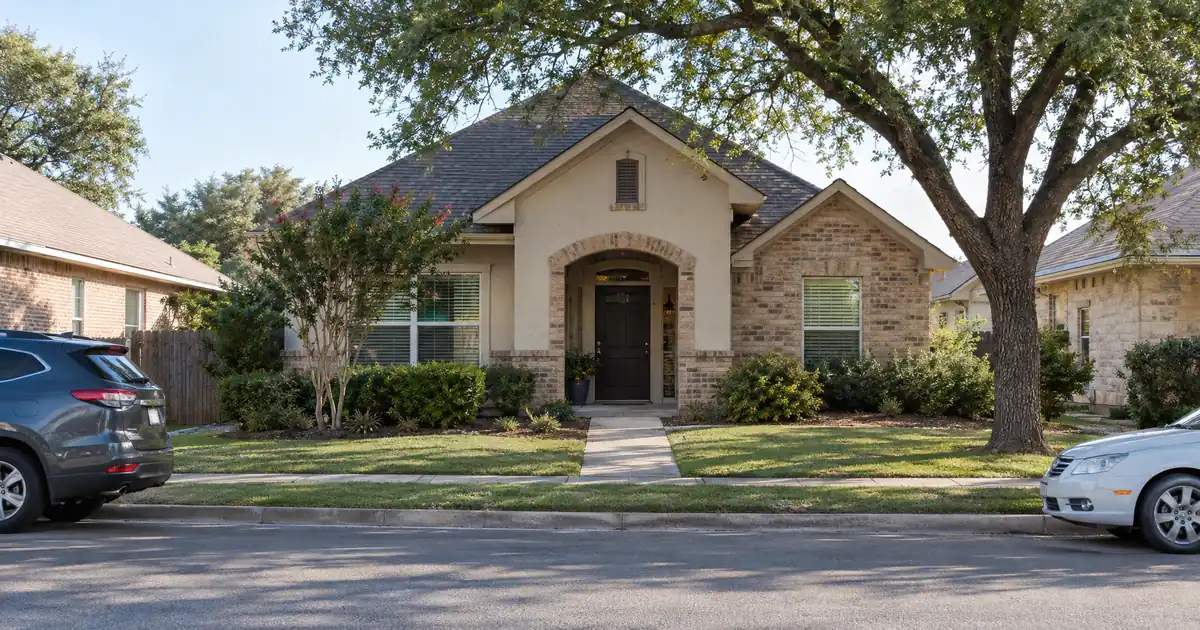
The Army post next door has had two names in recent memory. It was Fort Hood, then Fort Cavazos, then Fort Hood again, per the Texas State Historical Association. Rental listings still use both. The tenant base didn’t care. The Copperas Cove Economic Development Corporation says up to 500 soldiers leave the post each month, and the local rental market has absorbed that churn for decades.
That matters if you already own a rental here and are weighing a DSCR cash out refinance in Copperas Cove. Lendmire structures DSCR scenarios for investors targeting Copperas Cove, Texas and places them with wholesale lenders across 41 markets, including D.C. (NMLS# 2371349). This article covers pulling equity out of a property you already hold, not buying one.
DSCR Cash-Out Calculator
Run the cash-out numbers in Copperas Cove, TX
Rate source: Freddie Mac 30-yr average via FRED® — Federal Reserve Bank of St. Louis · effective Sep 24, 2026
Prefilled with starting assumptions — enter your property’s value, balance, taxes, and insurance for a more accurate picture.
Program parameters update from Lendmire’s centralized guideline source. Taxes and insurance are editable estimates.
As of Sep 24, 2026 · General Freddie Mac market benchmark, not a Lendmire loan offer. Property value, balance, taxes, and insurance are editable estimates. Maximum loan-to-value varies by lender, program, property type, and seasoning. Not a Loan Estimate, approval, or commitment to lend. Program availability and eligibility are subject to lender guidelines, credit approval, property review, and underwriting.
At a Glance:
A cash-out refinance on a Copperas Cove, Texas rental is underwritten primarily on the property’s rental income measured against its full monthly obligation, capped at 75% loan-to-value, so entry basis matters more than appreciation in a market where the median sale price sits near $260,000, per the Copperas Cove EDC.
- Seasoning is typically about 6 months from title recording.
- Reserves typically run about 6 months of PITIA, subject to lender guidelines.
- Two in-place duplex leases of $1,400 and $1,425 beat one average 3BR rent.
- Thin multifamily inventory can mean thin appraisal comps.
- Base-driven demand is steady, but it turns over on the PCS cycle.
Copperas Cove Market Snapshot
A quick read on the Copperas Cove investor landscape — figures come from the cited sources below. Confirm current property-level numbers before underwriting.
| Metric | Detail |
|---|---|
| Home prices | $260,000 median (+1.99% yoy) (Copperas Cove EDC) |
| Employment | 59,695 direct employees (Texas Comptroller) |
Cash Flow Market, Not an Appreciation Story
Copperas Cove pays you in rent, not in price gains. The EDC reports a median sale price of $260,000, up 1.99% year over year, while the Chamber of Commerce puts the median near $265,000. Other aggregators show the market flat to slightly negative on a trailing basis, with long days on market. Methodologies differ. The direction doesn’t: soft and sideways.
For an equity-extraction plan, that changes the thesis. An investor who bought in a rising market elsewhere might count on a fresh appraisal to do the heavy lifting. Here, the refinance case should rest on rent coverage at today’s value. If the plan only works when the appraisal comes in rich, the plan is the problem.
The flip side is a benefit. A market that isn’t running hot doesn’t have much to give back. Buyers here aren’t paying for a growth narrative, and the rent-to-price ratio reflects it: modest, but not speculative.
What the Base Actually Supports
Fort Hood is the demand engine, and the numbers are large. A Texas Comptroller installation study, as reported by KWTX, estimates the post supports 59,695 direct jobs and 159,692 total jobs including indirect employment, with an economic impact near $37.9 billion. FOX44 reports that 34,474 of the direct employees are active-duty soldiers. Several standing commands sit on the post, including III Armored Corps and the 1st Cavalry Division. That is a tenant base tied to institutions, not to one employer’s quarterly decisions.
Two caveats deserve space. First, the pool is concentrated. Copperas Cove sits in the Killeen-Temple-Fort Hood metro, and the EDC also notes commuting and remote workers tied to Austin, plus target sectors like healthcare and logistics, but the base still sets the tone. Second, rotation creates turnover. Summer is the season when leases flip. Vacancy between tenants is a line item you should model, not a surprise.
One underwriting tool is useful here: housing allowance. The aggregator MilPayTools, which republishes Defense Department data, lists the Fort Hood BAH tier for an E-5 at $1,695 and for an E-6 at $1,920. Treat those as a rent ceiling, not a growth assumption. Rent set at or just under a common tier is easier to fill and renew. Confirm current figures against the official DoD calculator before you rely on them, since the allowances reset annually.
Duplexes Versus Three-Bedroom Houses: Run the Numbers
Duplexes are the cleanest coverage story in town, and single-family rentals are the hardest. The reason is arithmetic. Rentometer’s listing-based averages put a 3BR and a 4+BR at different rent levels, with the larger home commanding more, per Rentometer. Apartment-type 3BR units average lower than the single-family 3BR, per Apartments.com. Against the local median price, a single-family rent works out to a thin fraction of the home’s price each month, which leaves little room for coverage once taxes and insurance are counted.
Run the numbers on a modeled single-family case. Take a $260,000 house at 75% LTV and $1,347 in rent. Coverage including full taxes and insurance lands around 0.75x. That’s well under the 1.00x benchmark most standard programs are built around. Some lenders may review sub-1.00 structures: a sub-1.00 program, interest-only terms, or lower leverage with more equity left in. Those usually carry tighter pricing, lower LTV or heavier reserves, and eligibility stays subject to lender guidelines, credit approval and property review.
Now shift the basis. Model a $200,000 three-bedroom, same rent and leverage. Coverage including taxes and insurance comes out just under 1.0x. Basis does most of the work here. A lower purchase price is worth more than a better rent.
Duplexes change the picture by stacking income on one note. A listing for a newer duplex subdivision called Freedom Ranch shows 3BR/2BA sides fully leased at $1,400 and $1,425, or $2,825 combined, per Blessed Property. That is one listing, so treat it as anecdotal. Using those leases as a modeled assumption on a $360,000 value at 75% LTV, coverage including taxes and insurance runs roughly 1.1x. Underwrite on in-place leases, not on asking-rent estimates. (Agent rent estimates on new construction run higher than signed leases more often than anyone admits.)
Per-side rent beats the single-family average because a second door shares one roof, one lot and one loan. Any duplex a lender reviews will still need its own coverage number, and the modeled figure above is illustration, not a forecast.
The Appraisal Problem Nobody Mentions
Multifamily inventory is thin. A recent Homes.com snapshot showed 35 multi-family listings priced from $168,000 to $960,000, with an average of 77 days listed. That spread is wide and the count is small. An appraiser working a cash-out on a duplex may have few close comps to draw from.
Why that matters: the 75% LTV ceiling applies to appraised value, and equity available is not a guaranteed figure. It depends on rent used for lender review, the full obligation, reserves and whatever value the appraiser lands on. Long days on market also point to negotiable purchase prices, which cuts both ways for a refinance. If you bought well, the appraisal may sit close to your basis and leave less room than expected. Ask how the lender treats comp selection before you count on a number. Every figure here varies by lender and program — guidelines, property type, leverage, and credit profile all apply.
South Side, North Side: Submarkets by Character
There is no reliable neighborhood-level price or rent source for Copperas Cove, so read this section as character, not quotes.
The older south side, near Business 190 and the Original Town area, is the lower-basis end of the market. That is where the $200,000-style math is most plausible, and where single-family coverage has the best shot at approaching the baseline. Older stock means maintenance reserves deserve an honest line in your model.
The north and west sides are where new building is happening. Subdivisions such as Mesa Verde at Skyline and the Valley at Great Hills duplex development sit in that growth pattern. Newer product brings higher basis and, for duplexes, better income stacking. The tradeoff is that higher basis pushes the single-family coverage number down, so duplexes are the structure that tends to work on the newer side.
Single-family detached homes make up 70.24% of housing units, per NeighborhoodScout. That means most of your competition for tenants is other single-family rentals, which keeps rents anchored to the 3BR and 4BR bands above. Higher-rent duplex sides compete against those houses. Whether the duplex premium holds through a soft stretch is a fair question, and it’s one worth stress-testing.
What Working Brokers See in Base-Town Markets
Working DSCR brokers see a recurring pattern in garrison-adjacent markets: the properties that refinance cleanly are the ones bought at a modest basis, leased on stable terms and held past seasoning. Files that stumble usually lean on a rent figure from a listing estimate rather than a signed lease. Modeling a turnover gap into the coverage number, rather than assuming continuous occupancy, tends to make the file easier to place and the investor easier to sleep.
When Cash-Out Is the Wrong Move
Cash-out only makes sense if the next use of the money pencils. Pulling equity to buy another low-basis rental or duplex in this same submarket, where coverage clears at current prices, is straightforward. Pulling equity to fund something in a market where the coverage number doesn’t work is a different decision. Stress-test it first.
There is also a flip point on the loan type itself. A W-2 borrower with one or two rentals and clean traditional personal-income documentation may find conventional financing carries a lower cost, and the guide “Where DSCR and Conventional Diverge” is worth reading before choosing. DSCR becomes the practical lane for entity-held properties (subject to lender program eligibility), self-employed operators, or portfolios past four financed properties. A cash-out that drops the property’s coverage below the baseline is a second flip point. Higher leverage tightens the number, and in a flat market there’s no appreciation to bail it out.
Two mechanical points round this out. Seasoning is typically about 6 months from title recording, so a recent purchase generally has to wait. And reserves matter: about 6 months of PITIA is the typical guideline, which means the cash coming out is partly spoken for before you deploy it. The guide “The Refi Options” covers the mechanics, and a separate overview of investor refinance options lays out the alternatives. Investors can also see Lendmire’s DSCR guide for the coverage formula.
For specifics, Lendmire’s Texas DSCR loan programs page lays out statewide program features. To model a particular property, see how the math pencils or call 828-256-2183. Review details are subject to lender overlays, and program terms can change.
Verify current local rental rules, taxes and insurance with qualified local professionals before you finalize any plan.
DSCR vs. conventional financing
Two common ways to finance an investment property in Copperas Cove, TX. They qualify you differently — here’s how investors weigh them.
Why investors choose it
- Qualifies on the property’s rental income — no personal tax returns, W-2s, or pay stubs needed to document income.
- No personal debt-to-income ceiling to clear, so existing mortgages and obligations don’t cap your borrowing the same way.
- Can be closed in an LLC, keeping the property inside a business entity.
- Built for scaling — not held to the limit on number of financed properties that conventional financing applies.
- Underwriting centers on the deal: generally qualifies when the rent covers the payment, a 1.00x coverage ratio being a common baseline (confirmed in underwriting).
- Designed specifically for investment property, including long-term and, where the program allows, short-term rentals.
Where it’s strong
- Often the lowest ongoing financing cost for a buyer who fully qualifies on personal income — a fit for a first property or a cost-first purchase.
Trade-offs for investors
- Requires full personal income documentation and must fit within a debt-to-income limit — salary, existing debts, and other mortgages all count.
- Typically held in your personal name rather than a business entity.
- Caps how many financed properties you can carry, which can become a ceiling as a portfolio grows.
- Evaluates you as a borrower as much as the property, which usually means more paperwork.
How investors usually choose: a first or single property often optimizes for the lowest financing cost; portfolio builders often optimize for leverage, vesting in an LLC, and scaling past conventional caps. The right answer depends on your goals, the property, and current guidelines — both paths run through select lenders in Lendmire’s wholesale network, with eligibility and terms confirmed in underwriting.
Frequently Asked Questions
How do you qualify for a DSCR loan in Copperas Cove?
Lenders look mainly at whether the property’s rent covers its full monthly obligation, including taxes and insurance, with 1.00x the common baseline. Credit is reviewed too, with tiers typically starting at a 620 floor. In Copperas Cove, where single-family rent-to-price is thin, entry basis and leverage usually decide whether the number clears. Final eligibility depends on lender guidelines, credit, reserves and property review.
What are the requirements for an investment property cash-out refinance in Copperas Cove, Texas?
Typical guidance includes a 75% maximum LTV on cash-out, about 6 months of seasoning from title recording, and reserves around 6 months of PITIA. A 1.00x coverage benchmark is common, though some lenders review lower ratios with compensating factors. Properties must also be eligible types; manufactured homes, log homes and barndominiums fall outside these programs.
How much equity can I pull from a Copperas Cove duplex?
It depends on appraised value, rent and reserves, not on a formula. The 75% LTV ceiling sets the upper bound, and the existing balance has to sit well below it for any cash to come out. Thin duplex comps here can tighten the appraisal, so the practical number is often lower than the cap implies.
What DSCR terms may lenders review for investors in Texas?
One key program feature is that the property’s rental income, rather than traditional personal-income documentation, is central to lender review. Specific terms depend on lender guidelines and the borrower’s file.
Does PCS turnover hurt coverage in Copperas Cove?
It can, through vacancy between leases rather than through lower rents. Summer rotation is the busy turnover season, so a model that assumes every month is occupied will overstate coverage. Building in a vacancy gap, and pricing rent at or just below a common BAH tier, makes the file more realistic and easier for a lender to review.
Before You Pull Anything Out
The market here is flat, the tenant base is stable and the basis is what makes it work. A duplex bought well and leased on paper is a reasonable source of equity. A single-family rental bought at the top of the local range is a harder file. Look at your own property: does the rent cover the full obligation without help from an appraisal that may not arrive, and where does the cash go next?
For current guidelines and terms, see Lendmire’s DSCR loan programs page.
About Lendmire
As a DSCR and non-QM mortgage broker, Lendmire (NMLS# 2371349) connects investors with wholesale lending channels across 41 markets, including Washington, D.C. The property’s rental income, not the borrower’s traditional personal-income documentation, is central to program review, which works for self-employed operators and portfolios beyond four financed properties. Lendmire was recognized by Scotsman Guide in 2025 and named a top-ranked workplace in 2026.
Get Started
Ready to find the right loan for you?
In about 30 seconds you can review financing options available for your investment property. No commitment required.
Informational only. Not a Loan Estimate, approval, or commitment to lend. Program availability and eligibility are subject to lender guidelines, credit approval, property review, and underwriting.
References
1. Texas State Historical Association: Fort Hood
2. Copperas Cove EDC: Area Talent
3. Copperas Cove EDC: Cost of Living
5. Copperas Cove Chamber of Commerce: Housing
6. KWTX: Fort Hood economic impact report
7. reports
8. EDC
9. MilPayTools
11. Apartments.com
12. Blessed Property
13. Homes.com
14. NeighborhoodScout: Copperas Cove
15. recognized by Scotsman Guide in 2025
16. Scotsman Guide — Top Workplaces 2026
This article is part of Lendmire’s investment property cash-out refinance program — full qualification details, guidelines, and scenarios live on the program page.
Related reading: Cash Out Refinance Investment Property in Copperas Cove, Texas: Duplex Math on Thin Margins · Cash Out Refinance Investment Property Killeen Texas · DSCR Loans in Killeen / Temple, Texas: Investor Financing for Fort Cavazos, Harker Heights, Belton & Real Estate Investors
Guides: Investment Property Cash-Out Refinance in Texas
Brandon Miller
Founder & CEO, Mortgage Loan Originator, Lendmire LLC
- Mortgage Loan Originator · NMLS# 1129696 · Verify on NMLS Consumer Access
- North Carolina Real Estate Broker · License# 343312 · Verify on NCREC
- North Carolina Insurance Producer · License# 19053198 · Property, Casualty, Life, Health · Verify on NAIC SBS
- Lendmire LLC · Firm NMLS# 2371349 · Verify firm licensure
Compliance and disclosures. Lendmire (NMLS# 2371349) is a licensed mortgage broker and is not a direct lender, depository institution, financial advisor, or tax professional. Content in this article is general market analysis and educational information — not financial, legal, or tax advice for any specific situation. Lendmire does not guarantee loan approval; every transaction is subject to underwriting by the funding lender. Mortgage pricing and loan program guidelines are subject to change at any time without notice and vary by borrower characteristics, property type, and state regulations. Lendmire complies with Equal Housing Opportunity. Licensure verification: NMLS Consumer Access.