
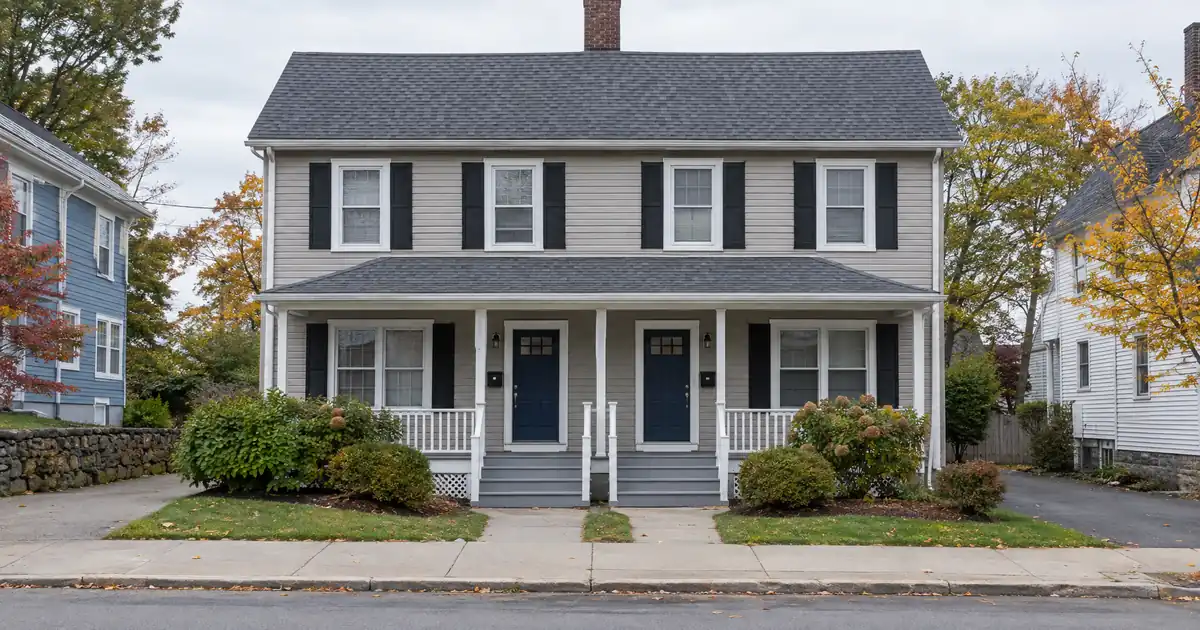
Flint is where Fall River’s equity story is easiest to read. Homes.com puts multifamily listings there between $375,000 and $982,500, against single-families from $135,000 to $560,000. Redfin shows six multifamily listings at a median ask of $644,000. The stock is mostly 1900s-to-1960s triple-deckers. Owners who bought these buildings years ago are sitting on appraisals that look very different from their purchase prices. The open question is whether the rent roll supports pulling that value out.
DSCR Cash-Out Calculator
Run the cash-out numbers in Fall River, MA
Rate source: Freddie Mac 30-yr average via FRED® — Federal Reserve Bank of St. Louis · effective Oct 1, 2026
Prefilled with starting assumptions — enter your property’s value, balance, taxes, and insurance for a more accurate picture.
Program parameters update from Lendmire’s centralized guideline source. Taxes and insurance are editable estimates.
As of Oct 1, 2026 · General Freddie Mac market benchmark, not a Lendmire loan offer. Property value, balance, taxes, and insurance are editable estimates. Maximum loan-to-value varies by lender, program, property type, and seasoning. Not a Loan Estimate, approval, or commitment to lend. Program availability and eligibility are subject to lender guidelines, credit approval, property review, and underwriting.
Key Takeaways:
A DSCR cash-out refinance in Fall River, Massachusetts is underwritten primarily on the property’s rental income measured against its full monthly obligation, with leverage capped at 75% LTV and about six months of seasoning. Rent coverage, not appraised value, usually sets the ceiling on proceeds.
- Redfin shows a $475,000 median sale price, up 5.5% year over year, per Redfin.
- Zumper’s 2BR average of $1,700 is down about 6% year over year.
- Modeled three-family coverage lands near 1.3x including taxes and insurance. Single-family coverage lands well below 1.0x.
- Waterfront supply of 1,000-plus planned homes may cap rent growth downtown.
Fall River Market Snapshot
A quick read on the Fall River investor landscape — figures come from the cited sources below. Confirm current property-level numbers before underwriting.
| Metric | Detail |
|---|---|
| Home prices | $475K median (Redfin Fall River Housing Market) |
| Typical rents | $1,800 median (Homes.com, homes for rent) |
| Recent appreciation | +5.5% yoy (Redfin Fall River Housing Market) |
Why the Triple-Decker Carries the Cash-Out
Small multifamily is the native product here. Mill-era triple-deckers put three rent streams behind one loan. That structure is the reason coverage ratios work in this city at all.
Single-family math is the contrast. Zumper reports a $1,700 average rent, with 3BR units at $1,900. Against the $475,000 median sale price, a modeled single-family at 75% LTV covers roughly 0.6x including taxes and insurance. Even at the $2,250 single-family rent median on Homes.com, the number stays below 0.8x. That leaves a single-family property poorly suited to a cash-out refinance when measured against a 1.00x coverage benchmark. These specifics are subject to lender guidelines and a full review of property, leverage, and credit.
Now run the numbers on a three-family. Assume a downtown-area building valued at $589,000 (a listing-level price, not a market statistic) with three 2BR units at $1,700 each. At 75% LTV, using an assumed high-6s rate and a full tax-and-insurance load, coverage models at about 1.35x. Those are modeled assumptions, not quotes. The shape of the answer matters more than the decimal: three units on one loan clear the benchmark, and one unit on one loan does not. Terms vary by lender guidelines, property type, leverage, credit profile, and full file review.
Value Is Outrunning Rent (And That Matters for Sizing)
Here is the tension. A broker report from EZ Home Search shows the median for two-plus-unit buildings rising from $475,000 to $655,000 across its five-year window. It is a broker blog, so verify against MLS data. Meanwhile Zumper shows rents down about 6% year over year.
Rerun the same three-family at $655,000 with the same $5,100 gross rent. Coverage compresses to roughly 1.25x. Apply the 6% rent decline and it slips toward 1.2x. Higher appraised value does not mean more proceeds. It means a larger loan against flat or falling rent.
That is the core sizing logic. The 75% LTV ceiling is the outer boundary. Rent used for lender review against full PITIA is usually the binding constraint. How the cash-out works in practice: the lender sizes to the lower of the two, and the equity available is never a guaranteed figure.
What the Seasoning and Reserve Clocks Look Like
Cash-out on these programs generally requires about six months of ownership, measured from title recording. Reserves typically run about six months of PITIA, rising to about nine months on balances above $1,500,000. Credit tiers step through 620, 660, 680, and 700, with 620 as the floor. Loan sizes run up to $3,000,000 on standard programs, subject to lender guidelines. Nearly every Fall River triple-decker sits comfortably inside that range.
Seasoning has a market-side twin. Redfin shows homes averaging 45 days on market versus 36 a year earlier, across 140 May sales. A softer market and thinner comps make appraisers more careful. Budget for a valuation that lands at or below expectations, and size the request conservatively.
How These Files Tend to Run
Working DSCR brokers see a recurring pattern in gateway-city markets built on older multifamily: the appraisal arrives strong, the rent schedule arrives soft, and the coverage ratio, not the value, decides the file. Owners who hold below-market leases on long-tenured units often find the in-place rent undercuts the market rent, which pulls proceeds down. Files with current leases and a tidy rent roll tend to run smoother.
Flint vs. the Highlands: Cash Flow or Appreciation?
This one is a toss-up, and the data cannot settle it. Nobody publishes submarket-level coverage for Fall River. What exists is a pattern.
Flint, Mechanicsville, and the downtown fringe are the lower-basis, cash-flow-led areas. Entry prices for multifamily are lowest, and the product is triple-decker heavy. These are the likely candidates for a cash-out that holds coverage.
The Highlands and North End are the higher-price, appreciation-led areas. Homes.com lists median single-family prices near $480,000 in the Highlands and $499,000 in the North End. Local guides call the Highlands the best area for investors converting multifamilies. Quality of stock is higher, but a higher basis means a thinner coverage cushion.
The honest read: buy or hold for cash flow in the cheaper submarkets, and expect the value gain in the Highlands. Neighborhood rent figures across platforms disagree, so underwrite each building on its own leases.
Supply Risk Sits Downtown
Skip the assumption that the rail story lifts rents on old triple-deckers. Phase 1 of South Coast Rail has opened, and a Fall River station now links the city toward Boston. That adds a commuter tenant pool, which supports occupancy near the North End and Bank Street. No source shows a measured rent premium, though. Treat it as a demand argument, not a rent forecast.
Supply is the counterweight. MassDOT says the 20-acre waterfront site next to the depot could deliver more than 1,000 new homes. Commonwealth Beacon reports up to 1,500, all indicated as market rate. Unit counts differ by source, and the timeline runs long. New product will compete most directly with older units in the downtown and North End corridor. Underwrite flat rents there.
The Demand Base Is Local
Fall River has about 95,579 residents per World Population Review, with a median household income of $56,673. That income level caps what rent the local workforce can bear, which is part of why rents are softening. Southcoast Health anchors the employment base alongside Amazon and Blount Fine Foods, per Livability. Education and health care round it out.
Student demand is minimal. The city has no major university, and the nearest campuses sit in New Bedford and Dartmouth. Do not pitch this as a student market. Tenants here are workers.
Putting Proceeds to Work
One caveat belongs here, once. Verify current local rental rules, taxes, and insurance with qualified local professionals before underwriting.
What to Watch Over the Next Quarter
- Zumper’s rent trend. If the 6% year-over-year decline narrows, coverage on triple-deckers stabilizes. If it widens, proceeds shrink.
- The waterfront developer award. MassDOT’s bid process determines how much new market-rate supply reaches downtown.
- Days on market. Redfin’s 45-day average rising further signals more conservative appraisals ahead.
Frequently Asked Questions
How do you qualify for a DSCR cash-out refinance in Fall River, Massachusetts?
Qualification centers on the property, not personal income. The lender compares rent used for lender review to full PITIA, and 1.00x is a common benchmark. Seasoning of about six months, reserves, credit, and the 75% LTV ceiling also apply. Final eligibility depends on lender guidelines, credit review, and property review. How the qualification works is covered on the program overview.
DSCR vs. conventional financing
There are two common ways to finance an investment property in Fall River, MA, and they qualify you differently — here’s how investors weigh them.
Why investors choose it
- Qualifies on the property’s rental income — no personal tax returns, W-2s, or pay stubs needed to document income.
- No personal debt-to-income ceiling to clear, so existing mortgages and obligations don’t cap your borrowing the same way.
- Can be closed in an LLC, keeping the property inside a business entity.
- Built for scaling — not held to the limit on number of financed properties that conventional financing applies.
- Underwriting centers on the deal: generally qualifies when the rent covers the payment, a 1.00x coverage ratio being a common baseline (confirmed in underwriting).
- Designed specifically for investment property, including long-term and, where the program allows, short-term rentals.
Where it’s strong
- Often the lowest ongoing financing cost for a buyer who fully qualifies on personal income — a fit for a first property or a cost-first purchase.
Trade-offs for investors
- Requires full personal income documentation and must fit within a debt-to-income limit — salary, existing debts, and other mortgages all count.
- Typically held in your personal name rather than a business entity.
- Caps how many financed properties you can carry, which can become a ceiling as a portfolio grows.
- Evaluates you as a borrower as much as the property, which usually means more paperwork.
How investors usually choose: a first or single property often optimizes for the lowest financing cost; portfolio builders often optimize for leverage, vesting in an LLC, and scaling past conventional caps. The right answer depends on your goals, the property, and current guidelines — both paths run through select lenders in Lendmire’s wholesale network, with eligibility and terms confirmed in underwriting.
What are the requirements for an investment property loan in Fall River, Massachusetts?
Typical guidance includes a 620 credit floor, about six months of PITIA in reserves, and coverage near 1.00x or better. Loan sizes run up to $3,000,000 on standard programs. Manufactured homes, log homes, and barndominiums fall outside these programs. Terms vary by borrower, property, and loan scenario.
What credit score ranges may DSCR lenders review for a Fall River rental property?
Lenders typically review tiers at 620, 660, 680, and 700, with 620 as the floor. Higher tiers can improve leverage and pricing options. Lendmire arranges DSCR investor loans, and the programs underwrite on rental income, subject to lender guidelines.
Can a Fall River triple-decker still support a cash-out while rents are falling?
Often yes, because three rent streams carry more cushion than one. A modeled three-family near $589,000 covers around 1.35x at 75% LTV including taxes and insurance, and still sits above 1.2x after a 6% rent drop. Single-families do not hold up the same way.
How much equity can a Fall River investor pull out?
Less than the appraisal suggests. The 75% LTV cap sets the ceiling, and rent coverage often sets a lower one. Proceeds are never guaranteed, and a scenario quote shows the actual sizing on a specific building.
For current guidelines and terms, see Lendmire’s DSCR loan programs page.
About Lendmire
Lendmire, NMLS# 2371349, is a mortgage brokerage focused on investor financing, arranging DSCR loans in 40 states plus Washington, D.C. — 41 markets total. Qualification rests on the property’s income rather than personal income documentation, subject to lender guidelines, which suits LLC-held rentals (depending on program guidelines) and scaling portfolios. The firm was recognized by Scotsman Guide as a 2026 Top Workplace and recognized by Scotsman Guide in 2025. Reach the team at 828-256-2183.
For broader investor-financing rules and property-type coverage across the state, see Massachusetts DSCR loans.
Get Started
Ready to find the right loan for you?
In about 30 seconds you can review financing options available for your investment property. No commitment required.
Informational only. Not a Loan Estimate, approval, or commitment to lend. Program availability and eligibility are subject to lender guidelines, credit approval, property review, and underwriting.
References
1. Homes.com, Flint Neighborhood Guide
2. Redfin
3. Redfin, Fall River Housing Market
4. Homes.com
5. Zumper, Fall River Rent Research
6. EZ Home Search, Fall River Market Update
8. MassDOT Waterfront Bid Release
9. Commonwealth Beacon, Fall River Waterfront Housing
10. World Population Review, Fall River
12. Livability
14. recognized by Scotsman Guide in 2025
This article is part of Lendmire’s investment property cash-out refinance program — full qualification details, guidelines, and scenarios live on the program page.
Related reading: Luxury Rental DSCR Loans In New Jersey · Jersey Shore Vacation Rental Loans: DSCR Financing In Ocean City, Cape May And Long Beach Island · DSCR Cash-out Refinance In New Jersey: Pulling Equity From A Rental
Guides: Investment Property Cash-Out Refinance in Fall River, MA · Investment Property Cash-Out Refinance in Massachusetts
Brandon Miller
Founder & CEO, Mortgage Loan Originator, Lendmire LLC
- Mortgage Loan Originator · NMLS# 1129696 · Verify on NMLS Consumer Access
- North Carolina Real Estate Broker · License# 343312 · Verify on NCREC
- North Carolina Insurance Producer · License# 19053198 · Property, Casualty, Life, Health · Verify on NAIC SBS
- Lendmire LLC · Firm NMLS# 2371349 · Verify firm licensure
Legal disclosures. Lendmire (NMLS# 2371349) is a state-licensed mortgage brokerage that arranges financing through wholesale lender relationships. Lendmire is not a direct lender, depository institution, or registered financial advisor. The discussion above is general informational content about real estate financing — it is not financial, legal, or tax advice, and readers should consult licensed professionals for guidance on their individual circumstances. Loan inquiries are subject to lender underwriting; this article does not represent a commitment to lend. Loan terms, rates, and qualification standards vary by borrower, property, and state, and are subject to change at any time. Equal Housing Opportunity. NMLS Consumer Access: nmlsconsumeraccess.org.