
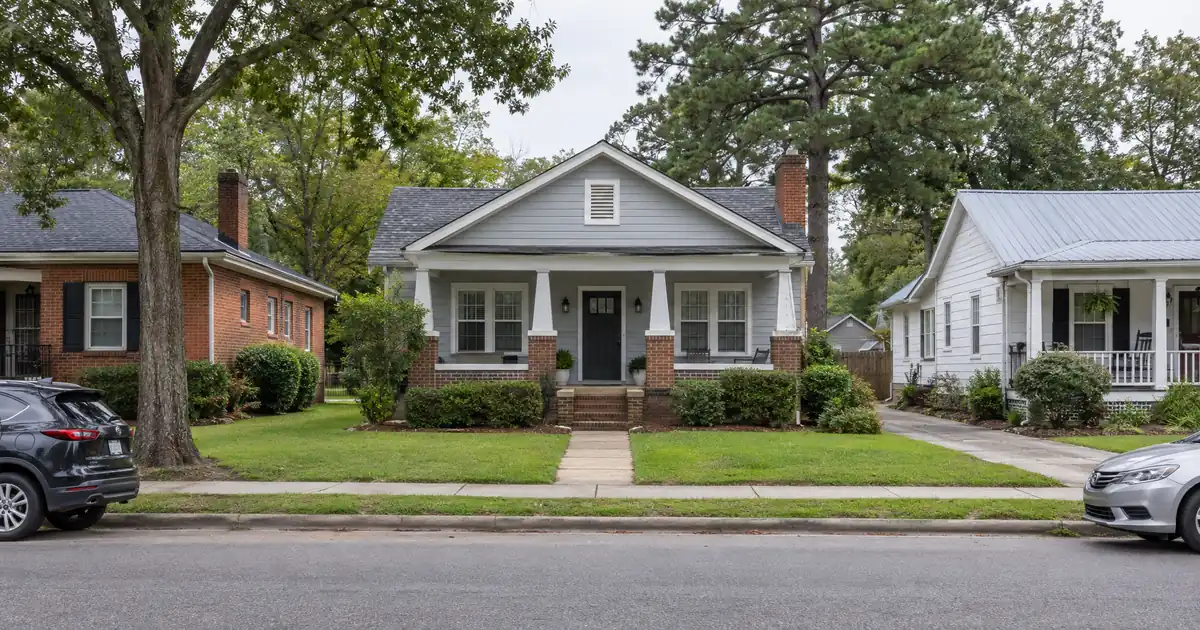
An out-of-state investor scrolling Fort Payne listings sees a small city with a sock-mill history, a national preserve on the ridge above town, and entry prices that look like a rounding error next to Nashville or Atlanta. The instinct is to assume cheap houses mean easy cash flow. What that investor usually misses is the other half of the equation: rents here sit low enough that rental coverage, not equity, decides how much a cash-out refinance can actually return. This article is about pulling capital out of a Fort Payne rental you already own, and about where that equity is real versus where it only looks real on a data aggregator.
At a Glance: A DSCR cash-out refinance in Fort Payne, Alabama fits the investor who already owns a stabilized workforce rental and wants capital for the next deal, because the loan is underwritten primarily on the property’s rental income measured against its full monthly obligation, with coverage, not the 75 percent LTV ceiling, usually setting the limit.
DSCR Cash-Out Calculator
Run the cash-out numbers in Fort Payne, AL
Rate source: Freddie Mac 30-yr average via FRED® — Federal Reserve Bank of St. Louis · effective Sep 24, 2026
Prefilled with starting assumptions — enter your property’s value, balance, taxes, and insurance for a more accurate picture.
Program parameters update from Lendmire’s centralized guideline source. Taxes and insurance are editable estimates.
As of Sep 24, 2026 · General Freddie Mac market benchmark, not a Lendmire loan offer. Property value, balance, taxes, and insurance are editable estimates. Maximum loan-to-value varies by lender, program, property type, and seasoning. Not a Loan Estimate, approval, or commitment to lend. Program availability and eligibility are subject to lender guidelines, credit approval, property review, and underwriting.
- Zillow’s smoothed index shows values near $210,534, up 2.9 percent over the past year. – Single-family detached homes are 75.16 percent of housing units, so most files are workforce houses. – Days on market rose to 96 from 77, which slows any exit plan.
- Cash-out generally requires about six months of ownership, measured from title recording.
Fort Payne Market Snapshot
A quick read on the Fort Payne investor landscape — figures come from the cited sources below. Confirm current property-level numbers before underwriting.
| Metric | Detail |
|---|---|
| University enrollment | 7,900 county students (Encyclopedia of Alabama) |
| Employment | 5,000 sock employees (dated) (Encyclopedia of Alabama) |
Coverage Is the Binding Constraint, Not LTV
In Fort Payne, the cash-out ceiling is set by rent-to-debt coverage long before it reaches the 75 percent LTV cap. Most standard programs are built around a 1.00 benchmark, measured as monthly rent divided by full PITIA (principal, interest, taxes, insurance, and any HOA dues). Rents in this market make that benchmark harder to clear than the price tags suggest.
Start with the rent picture, because the sources disagree. City-data reports a 2024 median gross rent of $725, but that figure spans every renter household, including older and lower-priced units. Current asking rents on houses run higher: HotPads shows a median near $1,000. Underwrite to asking-rent evidence for the specific property, not the blended census number.
Now consider how a modeled house might work, using illustrative assumptions rather than market data. Start with a house valued near the Zillow index, a rent in line with current asking rents on houses, a 75 percent LTV cash-out, and full PITIA including taxes and insurance. Coverage at that leverage tends to land below 1.00. Now consider a renovated unit that rents at the higher end of what rent listings show for newer product. At 75 percent LTV, coverage on that unit can clear 1.0 by a modest margin. Actual results depend on the property’s real taxes, insurance, and lender guidelines.
That spread is the whole story. If the number lands below 1.00 on long-term rent, a lender may review other structures: a sub-1.00 program, an interest-only period, or lower leverage with stronger credit and reserves. Any of those trades something away, typically pricing, proceeds, or both, and eligibility remains subject to lender guidelines, credit approval, and property review. The better question is whether the property was bought and renovated to a rent that supports the debt in the first place.
What Does Equity Look Like When Comps Are Thin?
Equity in Fort Payne is real, but its measurement is noisy, so a cash-out thesis here should rest on forced equity rather than market drift. The price sources tell different stories. The Zillow index sits near $210,534 with the modest 2.9 percent gain noted above. In contrast to that smoothed index, Movoto’s sold-transaction data shows a median sale price of $279,000 in its latest month, which reflects which homes happened to trade, not a repricing of the whole market. Redfin’s data was thinner still, with only six homes sold in one June month.
For a borrower, thin data means the appraiser has few comps, and the appraised value can swing more than it would in a deeper metro. Movoto does show activity picking up, with 103 homes sold versus 87 a year earlier, yet homes are also taking longer to sell. Volume is up and pace is down. Not a clean signal.
There is also a tension worth naming. Foreclosure.com’s valuation model shows values up 4.97 percent year over year with rent flat. Treat that as a model output, not a hard statistic. Still, the direction is plausible: values rising faster than rents helps the appraisal side of a refinance and hurts the coverage side. An investor counting on rent growth to rescue a borderline file is betting on something the data doesn’t show.
So where does the equity come from? Mostly from buying below market, renovating, and putting a stronger rent in place. A house bought at a discount, refreshed, and leased at a newer-product rent has a valuation and a coverage ratio that both improve. That is the file that supports a meaningful cash-out. Six months of seasoning, measured from title recording, is the typical minimum, so the renovation and lease-up have to be done and documented before the appraisal, not after.
Where the Tenant Base Comes From
Fort Payne’s long-term rental demand is anchored by industry, healthcare, and a regional commuting pattern, not by a university. That matters for how the reader thinks about turnover and tenant type. Northeast Alabama Community College sits in Rainsville, roughly 10 to 12 miles away, with enrollment somewhere around 2,500 to 3,200 depending on the source. There is no four-year school in town, so student-rental demand is minimal.
What does exist is a manufacturing and distribution base. The City of Fort Payne lists Ferguson Enterprises, which runs a 645,000-square-foot distribution center, alongside Heil Environmental’s flagship plant and PHOS Window. The North Alabama Industrial Development Association counts more than 135 industrial companies in DeKalb County and shows a labor force of 31,256, with 13,096 residents commuting out and 9,504 commuting in. That two-way flow suggests a regional job market rather than a single-employer town, though headcounts by employer weren’t available.
The town has been through the single-industry version of this story. Per the Encyclopedia of Alabama, the sock industry peaked at about 150 mills, and roughly 6,000 mill jobs disappeared after a 2005 trade agreement. The diversification into distribution and manufacturing since then is why the tenant base looks steadier now, but it also explains why cautious underwriters keep an eye on any single employer.
DeKalb Regional Medical Center, a 134-bed community hospital that recently became part of the Huntsville Hospital Health System, is the other anchor. Ownership by a larger network is a stability point for the town’s largest healthcare employer, and it supports a steady base of healthcare staff renting nearby.
No source provided neighborhood-level prices or rents, so the submarkets below are described by tenant profile only:
- Medical Center Drive and the I-59 corridor. The hospital sits here, and healthcare workers are the likely tenant pool. Convenient highway access helps a rental that draws from outside the city.
- Airport Road and the industrial corridor. Mills historically lined this road, and manufacturing and distribution workers are the likely tenants. Expect older stock and a price-sensitive rent band.
- Downtown and the historic core. Older housing and workforce-tenant demand are plausible. Older homes are where renovation-driven forced equity is most available, and also where condition surprises show up in an appraisal.
The stronger play might be the hospital and highway corridor for tenant durability, though the older core often offers more room to add value. This one is a genuine toss-up, and a specific property’s comps should break the tie.
Single-Family Dominates, and Small Multifamily Is Scarce
The typical Fort Payne DSCR file is a workforce single-family house, because that is what the housing stock overwhelmingly consists of. NeighborhoodScout puts single-family detached at 75.16 percent of units, with small buildings of two to four units at just 7.05 percent, large complexes at 7.91 percent, and mobile homes at 8.83 percent.
Two practical consequences follow. First, small multifamily is a hunted product. A duplex or fourplex that already exists and is well maintained can stack income against a single debt payment, which improves coverage. But comps will be limited, and finding one takes patience. Second, the mobile-home share is a reminder about eligibility: manufactured homes, whether single- or double-wide, fall outside these DSCR programs, as do log homes and barndominiums. An investor holding one of those needs a different financing path.
The renter pool is also modest. One aggregator reports a rental vacancy rate near 5 percent, with renters at 28.69 percent of the population. That is a secondary source that doesn’t name its underlying dataset, so treat it as “about 5 percent per one aggregator.” Five percent is a reasonable underwriting assumption, but the small renter pool means a vacancy can last longer than it would in a bigger metro.
Lendmire’s deal desk sees a recurring pattern on files from small, thinly traded markets like this one. The cleaner files tend to have a lease already in place at a rent supported by a comparable, a clear renovation record if value was added, and reserves documented in a way that doesn’t need explaining. The common friction point is an appraisal that comes in on sparse comps while the borrower planned around the higher aggregator number. Building the plan on the conservative number avoids that surprise.
When Cash-Out Is the Wrong Move
A cash-out refinance is the right tool when the proceeds will be redeployed into something that earns more than the added debt costs. It is the wrong one in a few Fort Payne situations.
If the property clears 1.00 only at low leverage, pulling cash means either accepting reduced proceeds or taking a sub-1.00 structure, and neither may justify the effort. Keeping the existing financing and using other capital sources could make more sense. If you plan to redeploy into out-of-state markets where coverage also fails to pencil, the cash-out just moves a problem elsewhere. And for a W-2 borrower with one or two rentals and clean traditional personal-income documentation, the guide “Where DSCR and Conventional Diverge” is worth running before defaulting to a non-QM structure, since conventional can carry lower cost on a simple file.
DSCR tends to pencil better for a LLC-held portfolio, a self-employed investor, or a borrower whose personal returns don’t cleanly show rental income. Title vesting in an LLC is generally workable, subject to lender program eligibility. If you want the mechanics, the guide “What Is a DSCR Loan” covers the ratio in detail. Typical program guidance runs a credit floor of 620 with better tiers at 660, 680, and 700, reserves of about six months of PITIA, and loan sizes up to $3,000,000 on standard programs, all subject to lender guidelines and varying by borrower and property.
Worth saying plainly: the equity available depends on rent used for lender review, PITIA, reserves, and the 75 percent LTV ceiling together. It is not a guaranteed cash figure.
Recycling the Proceeds
The point of pulling equity is to buy the next asset, and in this market the best use of proceeds is usually the same kind of file that generated them. Reinvesting in a below-market house that can be renovated and leased at a stronger rent repeats the forced-equity cycle. The equity recycle pathway explains how that loop is structured, and a separate overview of refinance programs covers the broader refinance options. Investors comparing lanes across the state can start with Alabama DSCR investor loans.
Consider an investor who owns a renovated house at a $1,300 rent and holds it in an LLC. The refinance question is less about the maximum LTV and more about whether the resulting coverage sits above the 1.00 benchmark with room to spare. Leaving that cushion, even at the cost of proceeds, is often the more durable choice, because a file that barely clears 1.00 on today’s rent has no room if a tenant leaves.
DSCR vs. conventional financing
Two common ways to finance an investment property in Fort Payne, AL. They qualify you differently — here’s how investors weigh them.
Why investors choose it
- Qualifies on the property’s rental income — no personal tax returns, W-2s, or pay stubs needed to document income.
- No personal debt-to-income ceiling to clear, so existing mortgages and obligations don’t cap your borrowing the same way.
- Can be closed in an LLC, keeping the property inside a business entity.
- Built for scaling — not held to the limit on number of financed properties that conventional financing applies.
- Underwriting centers on the deal: generally qualifies when the rent covers the payment, a 1.00x coverage ratio being a common baseline (confirmed in underwriting).
- Designed specifically for investment property, including long-term and, where the program allows, short-term rentals.
Where it’s strong
- Often the lowest ongoing financing cost for a buyer who fully qualifies on personal income — a fit for a first property or a cost-first purchase.
Trade-offs for investors
- Requires full personal income documentation and must fit within a debt-to-income limit — salary, existing debts, and other mortgages all count.
- Typically held in your personal name rather than a business entity.
- Caps how many financed properties you can carry, which can become a ceiling as a portfolio grows.
- Evaluates you as a borrower as much as the property, which usually means more paperwork.
How investors usually choose: a first or single property often optimizes for the lowest financing cost; portfolio builders often optimize for leverage, vesting in an LLC, and scaling past conventional caps. The right answer depends on your goals, the property, and current guidelines — both paths run through select lenders in Lendmire’s wholesale network, with eligibility and terms confirmed in underwriting.
Any investor buying or refinancing here should verify current local rental rules, taxes, and insurance with qualified local professionals. To see how a specific property’s coverage and leverage combine, see what the numbers look like, or call 828-256-2183.
Frequently Asked Questions
How do you qualify for a DSCR cash-out refinance in Fort Payne?
Qualification centers on the property’s rent compared with its full PITIA, with 1.00 as the common benchmark. Typical guidance includes about six months of ownership from title recording, a credit floor of 620, and reserves near six months of PITIA. Because Fort Payne rents run modest, coverage often limits proceeds before the 75 percent LTV ceiling does. Exact eligibility depends on lender guidelines and property review.
What are the requirements for an investment property loan in Fort Payne, Alabama?
Lenders generally review credit, reserves, the property’s rent, and the property type. Manufactured homes, log homes, and barndominiums fall outside these DSCR programs, which matters in a market where mobile homes are 8.83 percent of housing units. Most Fort Payne files are workforce single-family houses, which fit standard guidelines.
Will a thin sales market hurt my appraisal?
It can add variance. With sparse comps, appraisers lean on limited sales, and the spread between Zillow’s smoothed value and sold-price medians shows how different the readings can be. Building the refinance plan on the conservative value, and on forced equity from renovation, is safer than counting on appreciation.
Does Fort Payne’s manufacturing history make tenant demand risky?
The town lost roughly 6,000 mill jobs after 2005, so single-employer concentration is a fair concern. Demand today rests on a wider mix, including distribution, manufacturing, and healthcare, plus a two-way commuting flow. Diversified anchors reduce the risk without eliminating it.
The Bottom Line for Out-of-State Owners
Fort Payne rewards the owner who bought below market, renovated to a stronger rent, and documents a lease before the appraiser arrives, and it punishes the one who underwrites to the aggregator’s median. The investors who build the refinance around real rent and real comps right now will come out ahead.
For current guidelines and terms, see Lendmire’s DSCR loan programs page.
About Lendmire
A DSCR-focused mortgage broker, Lendmire (NMLS# 2371349) places investor financing across 41 markets, 40 states plus Washington, D.C., with DSCR eligibility generally reviewed by the lender on property cash flow instead of traditional personal-income documentation, subject to lender guidelines. Scotsman Guide named Lendmire a Top Mortgage Workplace in 2025 and 2026, recognized as a top-ranked workplace in 2026 and a top-ranked workplace in 2025.
Get Started
Ready to find the right loan for you?
In about 30 seconds you can review financing options available for your investment property. No commitment required.
Informational only. Not a Loan Estimate, approval, or commitment to lend. Program availability and eligibility are subject to lender guidelines, credit approval, property review, and underwriting.
References
1. Zillow home values, Fort Payne
2. NeighborhoodScout, Fort Payne real estate
3. Movoto market trends, Fort Payne
4. Encyclopedia of Alabama, DeKalb County
5. City-data reports a 2024 median gross rent of $725
6. HotPads shows a median near $1,000
7. Rent.com — Alabama Fort Payne Apartments
8. Redfin — Fort Payne Housing Market
9. Foreclosure.com’s valuation model shows values up 4.97 percent year over year with rent flat
10. City of Fort Payne, Business and Industry
11. North Alabama Industrial Development Association, DeKalb County
12. DeKalb Regional Medical Center
13. One aggregator reports a rental vacancy rate near 5 percent
14. Scotsman Guide — Top Workplaces 2026
15. Scotsman Guide — Top Workplaces 2025
This article is part of Lendmire’s investment property cash-out refinance program — full qualification details, guidelines, and scenarios live on the program page.
Related reading: Cash Out Refinance Investment Property Fort Payne Alabama · Cash Out Refinance Investment Property Florence Alabama · Cash Out Refinance Investment Property Mobile Alabama
Guides: Investment Property Cash-Out Refinance in Alabama
Brandon Miller
Founder & CEO, Mortgage Loan Originator, Lendmire LLC
- Mortgage Loan Originator · NMLS# 1129696 · Verify on NMLS Consumer Access
- North Carolina Real Estate Broker · License# 343312 · Verify on NCREC
- North Carolina Insurance Producer · License# 19053198 · Property, Casualty, Life, Health · Verify on NAIC SBS
- Lendmire LLC · Firm NMLS# 2371349 · Verify firm licensure
Required disclosures. Lendmire (NMLS# 2371349) operates as a licensed mortgage broker, not a direct lender or depository. The discussion in this article is general in nature and should not be relied upon as financial, legal, or tax advice — every investment scenario is unique and should be reviewed by a qualified professional. Any loan inquiry is subject to lender underwriting, and this article is not a commitment to lend or a guarantee of approval. Mortgage rates, loan terms, and program guidelines vary by borrower, property, and state, and may change without notice. Equal Housing Opportunity. Verify licensure at NMLS Consumer Access.