
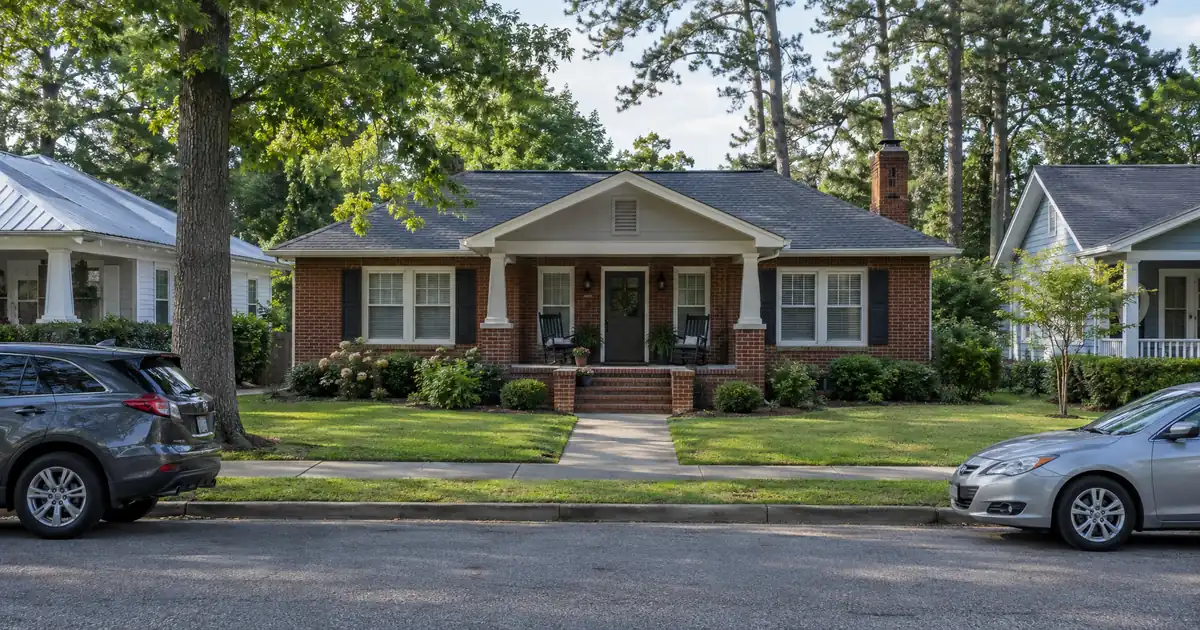
An out-of-state investor scanning Fort Payne sees a smoothed citywide home value of $210,534, up 2.9 percent over the past year. That is a cheap entry point, a steady trend, and a city of roughly 14,877 people at the base of the Cumberland Plateau. What the headline figures hide is the gap between price and rent, and that gap decides how much equity a cash-out refinance can actually pull. This piece is about the investor who already owns here, or is about to, and wants to recycle capital without breaking the coverage math.
At a Glance: A cash-out refinance in Fort Payne, Alabama fits the investor who already holds a workforce rental and can document rent that carries the full monthly obligation. The file is underwritten primarily on the property’s rental income measured against debt service, taxes, and insurance, with proceeds capped by a 75 percent LTV ceiling.
DSCR Cash-Out Calculator
Run the cash-out numbers in Fort Payne, AL
Rate source: Freddie Mac 30-yr average via FRED® — Federal Reserve Bank of St. Louis · effective Sep 24, 2026
Prefilled with starting assumptions — enter your property’s value, balance, taxes, and insurance for a more accurate picture.
Program parameters update from Lendmire’s centralized guideline source. Taxes and insurance are editable estimates.
As of Sep 24, 2026 · General Freddie Mac market benchmark, not a Lendmire loan offer. Property value, balance, taxes, and insurance are editable estimates. Maximum loan-to-value varies by lender, program, property type, and seasoning. Not a Loan Estimate, approval, or commitment to lend. Program availability and eligibility are subject to lender guidelines, credit approval, property review, and underwriting.
- Citywide values sit near $210,534 per Zillow, rising modestly.
- Cash-out LTV tops out at 75 percent, after about six months of seasoning.
- Standard DSCR programs use a 1.00 baseline, which citywide median rents struggle to clear.
- Equity here comes from forced appreciation, not market drift.
Fort Payne Market Snapshot
A quick read on the Fort Payne investor landscape — figures come from the cited sources below. Confirm current property-level numbers before underwriting.
| Metric | Detail |
|---|---|
| University enrollment | 7,900 county students (Encyclopedia of Alabama) |
| Employment | 5,000 sock employees (dated) (Encyclopedia of Alabama) |
Why Fort Payne Is a Forced-Equity Market, Not an Appreciation Market
Fort Payne rewards the investor who creates value rather than waits for it. Values are creeping up while rents are flat, so the refinance case rests on buying below the eventual appraised value, improving the property, and placing a tenant before the cash-out appraisal.
The data supports that reading. Foreclosure.com’s valuation model shows home values up 4.97 percent year over year with rent flat at 0.00 percent. Model-based figures are soft, but the direction matches the modest Zillow trend. Sales are thin and volatile, too. Redfin logged just 6 sales in a recent June, while Movoto shows 103 homes sold in a later August, up from 87 a year earlier, with days on market stretching to 96 from 77.
Sources disagree on the level, too. Zillow’s $210,534 is the figure used throughout this article. NeighborhoodScout places the median house value higher, at $239,623, while StateDemographics, built on Census survey data, lands much lower at $157,000. Different methods, different answers.
What does thin data mean for a cash-out? Appraisers have few comps, so valuations can swing. An investor who pitches a refinance as “the market will have moved by then” is betting on a signal this city doesn’t reliably send.
The Coverage Math (Modeled, Not Quoted)
At a citywide price and median rent, Fort Payne’s coverage sits below the 1.00 benchmark once taxes and insurance are included, so the refinance works only with higher rent, lower leverage, or a structure a lender agrees to review. Coverage means monthly rent divided by the full monthly obligation: principal, interest, taxes, and insurance.
Run the numbers this way. Assume a property valued at $210,000, matching the Zillow level above. Model rent two ways: $1,000, in line with HotPads’ median rent, and a higher modeled figure for a renovated house, shown as a hypothetical rather than a market-reported number. All coverage figures include taxes and insurance and are modeled assumptions, not quotes.
| Scenario | Modeled rent | LTV | Coverage (incl. Taxes, insurance |
|---|---|---|---|
| A | $1,000 | 75 percent | Mid-0.8s |
| B | $1,000 | Mid-60s percent | Just under 1.0 |
| C | $1,250 | 75 percent | About 1.05 |
Scenario A is the trap. A $1,000 rent on a $210,000 value is a rent-to-value ratio near 0.48 percent, and the full obligation outruns it. Cutting leverage into the mid-60s helps, but not enough to clear the baseline. Scenario C is where the math turns, and it turns on rent, not price.
If the file lands below 1.00, the paths a lender may review include a sub-1.00 program, an interest-only structure, or a lower LTV with more cash left in the deal. Each carries tradeoffs in pricing, leverage, and reserves. Eligibility depends on lender guidelines, credit profile, reserves, and property review.
There’s a real fork here. The investor reaching for a sub-1.00 structure because the property can’t carry itself at any leverage should probably re-examine the property. The investor whose renovated unit is about to lease at a stronger number has a defensible reason to wait for the lease before applying. Before running your own version of this table, it is worth reading how the qualification works.
Rent Bands: Why Averages Mislead
Blended rent figures in Fort Payne are dragged down by older and subsidized stock, so the only rent that matters for underwriting is the comparable for your specific unit. City-data shows median gross rent of $725, well below HotPads’ $1,000 for houses. Foreclosure.com’s range runs from $520 to $2,340. That spread is the story.
Product type explains most of it. Older apartments and mixed-tenure stock sit at the bottom. Renovated single-family houses sit at the top. For a cash-out investor, the gap between those bands is the equity opportunity, because renovated product leases at a premium the appraisal and the coverage ratio both reward.
Renters are also a smaller pool here. Affordablehousingonline reports renters at about 28.69 percent of the population and a rental vacancy near 5 percent. That aggregator doesn’t name its underlying dataset, so treat 5 percent as a reasonable underwriting placeholder, not an official figure. A shallow renter pool means a vacant unit may sit longer than it would in a bigger metro. Reserves, which run about six months of the full obligation on standard files, matter more here than the spreadsheet suggests.
Workforce Houses Dominate (and Small Multifamily Is Scarce)
Single-family detached homes are 75.16 percent of Fort Payne’s housing units, per NeighborhoodScout. Small buildings of two to four units are only 7.05 percent, and large complexes are 7.91 percent. Most cash-out files here will be single-family rentals, and small multifamily, where it exists, will be hunted by everyone with a coverage problem.
Comps for duplexes and fourplexes will be limited, which cuts both ways. A scarce product can appraise well. It can also appraise unpredictably. An investor weighing one additional unit of income against appraisal risk might reasonably pick the single-family house with cleaner comps, even if the multi-unit looks better on paper. That’s a genuine toss-up.
One housing type needs a plain statement. Mobile homes make up 8.83 percent of local units. Manufactured homes, log homes, and barndominiums fall outside the network’s DSCR programs, so they are not candidates for this kind of refinance.
Where the Demand Comes From
Tenant demand in Fort Payne traces to industrial and healthcare employment, not to a university or a tourism calendar. The North Alabama Industrial Development Association counts more than 135 industrial companies in DeKalb County and a civilian labor force of 31,256. About 13,096 residents commute out for work, while 9,504 commute in. The commute flows show a labor market that extends beyond the city limits.
Named local employers anchor the picture. The City of Fort Payne lists a 645,000-square-foot Ferguson distribution center, Heil Environmental’s flagship manufacturing plant, and PHOS Window. No reliable headcounts surfaced for these, so the read is qualitative: distribution and manufacturing workers are the backbone tenant base along the Airport Road industrial corridor.
DeKalb Regional Medical Center, a 134-bed community hospital just off I-59, has joined the Huntsville Hospital Health System. That affiliation is a stability signal for a healthcare anchor, though staffing numbers from secondary sources conflict, so none are quoted here. The Medical Center Drive corridor is the natural landing zone for healthcare staff. Northeast Alabama Community College sits in Rainsville, 10 to 12 miles away, with roughly 2,500 to 3,200 students depending on the source. Student-rental demand inside Fort Payne itself is minimal.
This is a town that has been through a single-industry collapse. Sock mills once employed about 7,800 people, and roughly 6,000 mill jobs were lost after a trade shift, per the Encyclopedia of Alabama. Distribution and manufacturing filled part of that gap. The lesson for a lender-facing file is diversification: a tenant employed by a distribution center is a different risk than one employed by a sock mill.
Submarkets Worth Underwriting
Fort Payne has no published neighborhood-level price or rent data, so submarket analysis here is qualitative. Three areas stand out for long-term rental thesis work, and each calls for unit-level comps rather than an area average.
Downtown and the historic core. Older housing stock near Gault Avenue and the railroad-era district suits workforce tenants, and renovation upside is the draw. That is also where appraisal comps are thinnest and the gap between as-is and renovated value is widest. Good for forced equity. Harder for a fast read on value.
Medical Center Drive and the I-59 corridor. Proximity to the hospital and the interstate makes this the cleaner rental-demand story for healthcare and commuting tenants.
Airport Road and the industrial belt. Mills once lined Airport Road, and the corridor still serves manufacturing and distribution workers. Tenants here are employment-anchored. Condition and rent comps matter more than address.
What Deal Desks See on Files Like This
Files from small, thin-comp markets tend to live or die on documentation of the rent. In markets like this one, the cleaner files usually arrive with an executed lease, a rent comparable for the exact unit type, and a clear record of the renovation scope. The common friction point is a property that appraises well on an after-repair basis but shows a lease that hasn’t started yet. Lendmire’s deal desk sees that pattern often enough that the practical advice is simple: lease first, then apply.
Seasoning, Leverage, and the Equity Recycle
A cash-out here typically requires about six months of ownership, measured from title recording, and caps leverage at 75 percent LTV. Reserves generally run about six months of the full monthly obligation, and credit tiers typically start at a 620 floor with stronger tiers at 660, 680, and 700. Standard programs use a 1.00 coverage baseline. Proceeds depend on rent used for lender review, the full obligation, reserves, and the LTV ceiling, so they are never a guaranteed figure. All of this is subject to lender guidelines.
DSCR vs. conventional financing
Two common ways to finance an investment property in Fort Payne, AL. They qualify you differently — here’s how investors weigh them.
Why investors choose it
- Qualifies on the property’s rental income — no personal tax returns, W-2s, or pay stubs needed to document income.
- No personal debt-to-income ceiling to clear, so existing mortgages and obligations don’t cap your borrowing the same way.
- Can be closed in an LLC, keeping the property inside a business entity.
- Built for scaling — not held to the limit on number of financed properties that conventional financing applies.
- Underwriting centers on the deal: generally qualifies when the rent covers the payment, a 1.00x coverage ratio being a common baseline (confirmed in underwriting).
- Designed specifically for investment property, including long-term and, where the program allows, short-term rentals.
Where it’s strong
- Often the lowest ongoing financing cost for a buyer who fully qualifies on personal income — a fit for a first property or a cost-first purchase.
Trade-offs for investors
- Requires full personal income documentation and must fit within a debt-to-income limit — salary, existing debts, and other mortgages all count.
- Typically held in your personal name rather than a business entity.
- Caps how many financed properties you can carry, which can become a ceiling as a portfolio grows.
- Evaluates you as a borrower as much as the property, which usually means more paperwork.
How investors usually choose: a first or single property often optimizes for the lowest financing cost; portfolio builders often optimize for leverage, vesting in an LLC, and scaling past conventional caps. The right answer depends on your goals, the property, and current guidelines — both paths run through select lenders in Lendmire’s wholesale network, with eligibility and terms confirmed in underwriting.
Loan size matters in a market where values sit near $210,000. Standard programs run up to $3,000,000, but smaller balances route through select lenders in the network, which can change pricing and terms. A Fort Payne file should be structured with that in mind from the start.
What the investor does with proceeds is the real decision. Redeploying into a second Fort Payne rental where coverage still works is a clean thesis. Pulling equity to chase a market where the coverage math doesn’t pencil is a different bet. The equity recycle pathway and the broader refi programs lay out how the structure works across property types.
Investors comparing paths should also read the guide “Where DSCR and Conventional Diverge”. A W-2 borrower with one rental and clean traditional personal-income documentation may find conventional cash-out cheaper. A LLC-held portfolio, where the entity title is subject to lender program eligibility, or a file where personal income doesn’t tell the story, is where DSCR earns its place. For a Fort Payne investor also buying in neighboring Alabama markets, the Alabama DSCR investor loans hub covers the statewide picture.
Appreciation sits at the center of the tension. Values rising faster than rents means the appraisal side of a refinance improves while coverage compresses. That favors buying at today’s price with rent already in place, and it argues against underwriting future rent growth. Pricing for a specific file is worth seeing before committing, so see what the numbers look like or call 828-256-2183. Verify current local rental rules, taxes, and insurance with qualified local professionals.
Frequently Asked Questions
How do you qualify for a DSCR cash-out refinance in Fort Payne?
Qualification centers on the property’s rent against its full monthly obligation, with a 1.00 baseline on standard programs. Lenders also review credit (typically a 620 floor), about six months of reserves, and roughly six months of seasoning. Fort Payne’s modest rents make the coverage number the piece to test first, and eligibility is subject to lender guidelines.
What are the requirements for an investment property loan in Fort Payne, Alabama?
Expect a review of credit, reserves, property type, and rental coverage. Manufactured homes, log homes, and barndominiums fall outside the network’s DSCR programs, which matters locally given the share of mobile homes. Cash-out files are capped at 75 percent LTV, and approval depends on borrower, property, and lender program terms.
Can a Fort Payne rental clear 1.00 coverage on citywide median rent?
Usually not without help. On modeled full-obligation math, a $1,000 rent against a value near $210,000 lands in the mid-0.8s. Renovated product with stronger rent, lower leverage, or an alternative structure a lender agrees to review can change that.
Does thin sales data hurt a cash-out appraisal here?
Yes, it can. With few recent sales, appraisers lean on limited comps, so values can land above or below expectations. Underwriting to the property’s actual rent and real purchase price protects the file better than leaning on a citywide median.
For current guidelines and terms, see Lendmire’s DSCR loan programs page.
About Lendmire
A DSCR-focused mortgage broker, Lendmire (NMLS# 2371349) places investor financing across 41 markets, 40 states plus Washington, D.C., with eligibility generally reviewed by the lender on property cash flow instead of traditional personal-income documentation, subject to lender guidelines. Scotsman Guide named Lendmire a top-ranked workplace in 2025 and a top-ranked workplace in 2026 as a Top Mortgage Workplace.
Get Started
Ready to find the right loan for you?
In about 30 seconds you can review financing options available for your investment property. No commitment required.
Informational only. Not a Loan Estimate, approval, or commitment to lend. Program availability and eligibility are subject to lender guidelines, credit approval, property review, and underwriting.
References
1. Zillow – Fort Payne home values
2. Wikipedia – Fort Payne, Alabama
3. Encyclopedia of Alabama – DeKalb County
4. Foreclosure.com’s valuation model
5. Redfin
6. Movoto
7. NeighborhoodScout – Fort Payne real estate
11. North Alabama Industrial Development Association – DeKalb County
12. City of Fort Payne – Business and Industry
13. DeKalb Regional Medical Center
14. Scotsman Guide — Top Workplaces 2025
15. Scotsman Guide — Top Workplaces 2026
This article is part of Lendmire’s investment property cash-out refinance program — full qualification details, guidelines, and scenarios live on the program page.
Related reading: Luxury Rental DSCR Loans In New Jersey · Jersey Shore Vacation Rental Loans: DSCR Financing In Ocean City, Cape May And Long Beach Island · DSCR Cash-out Refinance In New Jersey: Pulling Equity From A Rental
Guides: Investment Property Cash-Out Refinance in Alabama
Brandon Miller
Founder & CEO, Mortgage Loan Originator, Lendmire LLC
- Mortgage Loan Originator · NMLS# 1129696 · Verify on NMLS Consumer Access
- North Carolina Real Estate Broker · License# 343312 · Verify on NCREC
- North Carolina Insurance Producer · License# 19053198 · Property, Casualty, Life, Health · Verify on NAIC SBS
- Lendmire LLC · Firm NMLS# 2371349 · Verify firm licensure
Compliance and disclosures. Lendmire (NMLS# 2371349) is a licensed mortgage broker and is not a direct lender, depository institution, financial advisor, or tax professional. Content in this article is general market analysis and educational information — not financial, legal, or tax advice for any specific situation. Lendmire does not guarantee loan approval; every transaction is subject to underwriting by the funding lender. Mortgage pricing and loan program guidelines are subject to change at any time without notice and vary by borrower characteristics, property type, and state regulations. Lendmire complies with Equal Housing Opportunity. Licensure verification: NMLS Consumer Access.