
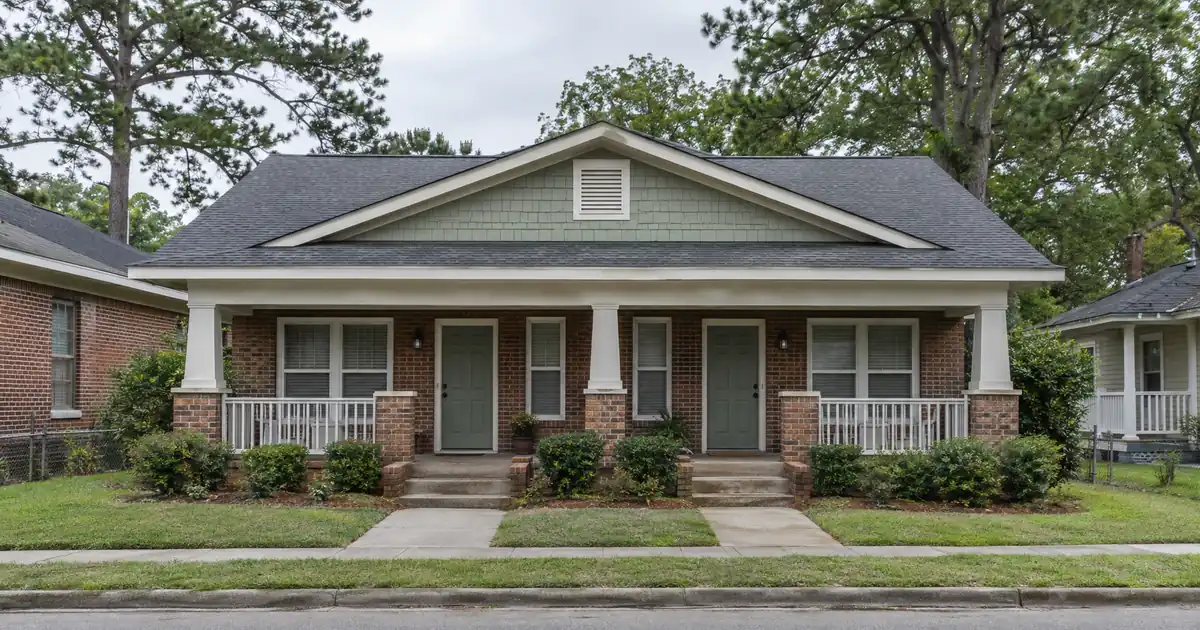
Only 18 homes sold in Talladega in December, and that counted as a good month: the same Redfin city data shows just 3 sales a year earlier. That is the thing to understand before pulling equity from a Talladega rental. Liquidity is thin, values are drifting down, and rents are modest. The deal has to be built on low basis and lease income, not on market lift.
Lendmire (NMLS# 2371349) helps arrange DSCR financing for Talladega, Alabama investors through wholesale and investor-lending channels across 41 markets, including Washington, D.C. The brokerage works with lenders that review cash-out files on the rent the property produces rather than on the owner’s personal income.
DSCR Cash-Out Calculator
Run the cash-out numbers in Talladega, AL
Rate source: Freddie Mac 30-yr average via FRED® — Federal Reserve Bank of St. Louis · effective Sep 24, 2026
Prefilled with starting assumptions — enter your property’s value, balance, taxes, and insurance for a more accurate picture.
Program parameters update from Lendmire’s centralized guideline source. Taxes and insurance are editable estimates.
As of Sep 24, 2026 · General Freddie Mac market benchmark, not a Lendmire loan offer. Property value, balance, taxes, and insurance are editable estimates. Maximum loan-to-value varies by lender, program, property type, and seasoning. Not a Loan Estimate, approval, or commitment to lend. Program availability and eligibility are subject to lender guidelines, credit approval, property review, and underwriting.
The Quick Read:
A DSCR cash-out refinance in Talladega, Alabama suits the investor who already owns low-basis single-family rentals and can accept conservative leverage. The loan is underwritten primarily on the property’s rental income measured against its full monthly obligation, so the LTV you choose, not the appraised value alone, decides what comes out.
- Cash-out caps at 75 percent LTV, with about six months of seasoning from title recording.
- Zillow’s city value index has slipped 5.7 percent year over year at $145,170.
- Homes.com shows a $775 median rent and an 18.3 price-to-rent ratio.
- Honda’s 4,400 county jobs anchor tenant retention, not rent growth.
- Expect to size below the 75 percent ceiling.
Talladega Market Snapshot
A quick read on the Talladega investor landscape — figures come from the cited sources below. Confirm current property-level numbers before underwriting.
| Metric | Detail |
|---|---|
| Typical rents | $775 median (Homes.com rentals) |
| University enrollment | 760 students (2024) (Data USA, Talladega College) |
Falling Prices Rewrite the Refinance Thesis
Talladega is not an appreciation refinance. Zillow’s city index is down 5.7 percent over the past year, and Redfin shows the December median sale price down 1.5 percent with price per square foot down 3.0 percent, at $80. Anyone planning to buy, wait, and refinance into market lift has the wrong market.
Two figures need to be kept apart. Zillow’s value index and Redfin’s December median sale price do not match, and the Redfin figure runs higher because it reflects what actually sold, not an estimated index. Use the Zillow figure as the working value and treat the Redfin median as the upper reference.
Then there’s the city-versus-county gap. Zillow’s county value is $182,858, down 1.2 percent, and the county median from Redfin is $190K. The city trades at a steep discount to that, because lake and suburban pockets pull the county number up. An appraiser working a cash-out on a rental inside city limits should not lean on those outside comps, and an investor shouldn’t either. Confirm every comp sits inside Talladega proper.
So where does the equity come from? From forced equity: buying below market, fixing the property, and refinancing once the lease is in place. Pulling equity out works here when the basis is genuinely low, and only then.
Underwrite the Rent, Not the Price
Rent-to-value in Talladega runs about 0.44 to 0.58 percent a month, well under the 1 percent rule of thumb. Homes.com puts the median rent at $775 and single-family homes at $849. Against a $145,170 value, that is thin, and it means leverage, not appraised value, controls the file.
The coverage math below is modeled. It uses assumed rents, assumes a 30-year amortization, and runs against full PITIA, with taxes and insurance included at Alabama averages. These are illustrations, not market data.
| Modeled value | Assumed rent | LTV | Approx. coverage |
|---|---|---|---|
| $145,000 | $850 | 75% | About 1.0x |
| $145,000 | $850 | 60% | Low-1.2x |
| $185,000 | $850 | 75% | About 0.8x |
| $185,000 | $850 | 60% | Just under 1.0x |
The $185,000 and $850 pairing isn’t arbitrary. A Redfin listing for a three-bedroom on Renfroe Road carried that asking price with a tenant paying $850. That is one anecdote, not a market statistic. It does show how quickly the ratio falls below 1.00 when a property is priced well above the median.
Picture an investor holding a $145,000 three-bedroom rented at $850. At the 75 percent ceiling the coverage is right around the 1.00x benchmark, which leaves almost no cushion. Stepping down to 60 percent LTV moves the number into the low 1.2s. The proceeds shrink, but the file gets cleaner. The standard 1.00x floor is common because rent covers the payment at that level, though exact eligibility depends on lender guidelines, credit, reserves, and property review.
If a file lands below 1.00 on long-term rent, there are options a lender may review: lower leverage, a sub-1.00 program, or an interest-only structure. Each usually comes with stronger credit, more reserves, or different pricing, and none is assured. The side-by-side comparison of DSCR and conventional lending explains why a conventional refinance often isn’t the alternative either.
DSCR files in markets like this one typically look the same. Rents are modest, prices are low, and the loan balance is small. Coverage lands near the benchmark at the program ceiling, so the borrower ends up choosing a lower LTV to get a cleaner file. The stronger files come in with a signed lease, a recent appraisal-ready rehab, and reserves documented before submission. Small balances also tend to route through select lenders in the network, so expect the lender pool to be narrower than it is for a $400,000 file. Qualification remains subject to lender guidelines and credit approval.
Renters here can’t absorb big increases either. Areavibes puts median renter income at $29,311 and suggests renters spend no more than $684 a month on housing. Forcing rent growth to fix a coverage problem is unrealistic. The deal has to work at today’s lease.
Where the Tenants Come From
Tenant demand is anchored by employers, not by growth. The Talladega-Lincoln Chamber lists Honda Manufacturing of Alabama at 4,400 employees, the Alabama Institute for the Deaf and Blind at 1,100, the county school board at 943, Baptist Citizens Medical Center at 346, and the Federal Correctional Institution at 330. Those are county-level figures, and they explain why a competent landlord can keep units leased even when sale prices soften. They support retention, not higher rents.
Three pockets matter for a cash-out candidate:
The college and institute corridor. Talladega College enrolls roughly 760 students per Data USA, down from a record 1,313 at its peak. AIDB runs five campuses in Talladega and employs about 1,100. Staff and college-affiliated renters are the steadier draw, and homes near the campuses around West Battle Street and South Street make sense as long-hold rentals. Enrollment is lower than it was at the peak, so don’t underwrite to a rebound.
Downtown. Homes.com notes ongoing downtown revitalization supported by a Community Development Block Grant, with shops along Court Street and dining on Battle Street. It’s a slow-burn story. Older downtown-area houses can be bought low and rehabbed, which is exactly the forced-equity path. Just don’t pay for a revitalization that hasn’t shown up in rents.
Newer subdivisions such as Timber Ridge. Homes.com describes midcentury Craftsman and ranch stock plus newer subdivisions. Newer homes can carry higher values against the same rent, which is the wrong direction for coverage. For DSCR, the older, cheaper house at the same rent usually pencils better.
One caution: Greater Alabama MLS data shows roughly 53 percent of homes owner-occupied, 32 percent rented, and 15 percent vacant. That vacancy share likely includes uninhabitable and seasonal units, so it isn’t a stabilized rental vacancy rate. Still, it signals plenty of competing stock. Check that a specific street has real tenant demand before building a refinance around it.
Skip multifamily stacking. Multi-unit stock in the city is scarce and small, with an occasional duplex and a few portfolio bundles on the MLS, and the quadplexes tend to sit outside city limits. Most deals here will be single-family or small duplex. Don’t quote multi-unit coverage numbers without local rent comps.
Seasoning and Comps: The Quiet Risk
Expect a conservative appraisal, because the comp pool is shallow. Redfin reports homes taking noticeably longer to sell than a year earlier and closing a bit below list price. With so few sales in a month, an appraiser may have very few recent transactions to work from.
The seasoning clock adds to that. Cash-out programs generally look for about six months of ownership, measured from title recording, and the 75 percent LTV ceiling is a hard cap. Reserves of roughly six months of PITIA are typical, and a minimum credit score around 620 is the floor, subject to lender guidelines. Plan the rehab so it finishes, and the lease is signed, before the seasoning date. Then plan leverage below the ceiling in case the value comes in light.
Distressed supply is the upside. RealtyTrac shows foreclosure, REO, and auction listings in Talladega running higher than in any other county city. Counts move daily and the source is lower-tier, so verify through county records. The pipeline is the realistic route to a low basis: buy under the Zillow value, renovate, lease, season, refinance. Proceeds then become capital for the next deal.
Speedway Weekends Don’t Cover the Note
Talladega Superspeedway sits on about 3,000 acres at I-20 Exit 168, and WVTM13 reported roughly $400 million in annual impact, about $200 million per race weekend. It’s a real regional draw. It is also not a lease. The track’s address is in Lincoln, not Talladega, and race-weekend demand is episodic. DSCR underwriting here should lean on the long-term lease, and any event-driven income is a separate question to check locally.
The rest of the demand picture is steadier. Baptist Health Citizens Hospital is a 122-bed facility, and the region also draws on the Anniston Army Depot, about 4,600 jobs in the next county over, per Business Alabama. That is a dated figure, so treat it as directional. The city has about 14,760 residents per Alabama-Demographics, drawn from Census data. It is a small market, and small markets punish over-leverage.
Investors comparing options statewide can start with DSCR loans in Alabama. For Talladega specifically, a scenario review or a call to 828-256-2183 is the practical way to test a file. Confirm current local rental rules, taxes, and insurance with qualified local professionals before underwriting.
Frequently Asked Questions
How do you qualify for a DSCR cash-out refinance in Talladega, Alabama?
Qualification centers on the property’s rent used for lender review measured against full PITIA, with 1.00x as the usual baseline. Lenders also review credit, reserves, ownership seasoning, and an appraisal. Talladega’s modest rents mean the LTV you request often matters more than the value. Final eligibility is set by the lender’s guidelines and credit approval.
DSCR vs. conventional financing
There are two common ways to finance an investment property in Talladega, AL, and they qualify you differently — here’s how investors weigh them.
Why investors choose it
- Qualifies on the property’s rental income — no personal tax returns, W-2s, or pay stubs needed to document income.
- No personal debt-to-income ceiling to clear, so existing mortgages and obligations don’t cap your borrowing the same way.
- Can be closed in an LLC, keeping the property inside a business entity.
- Built for scaling — not held to the limit on number of financed properties that conventional financing applies.
- Underwriting centers on the deal: generally qualifies when the rent covers the payment, a 1.00x coverage ratio being a common baseline (confirmed in underwriting).
- Designed specifically for investment property, including long-term and, where the program allows, short-term rentals.
Where it’s strong
- Often the lowest ongoing financing cost for a buyer who fully qualifies on personal income — a fit for a first property or a cost-first purchase.
Trade-offs for investors
- Requires full personal income documentation and must fit within a debt-to-income limit — salary, existing debts, and other mortgages all count.
- Typically held in your personal name rather than a business entity.
- Caps how many financed properties you can carry, which can become a ceiling as a portfolio grows.
- Evaluates you as a borrower as much as the property, which usually means more paperwork.
How investors usually choose: a first or single property often optimizes for the lowest financing cost; portfolio builders often optimize for leverage, vesting in an LLC, and scaling past conventional caps. The right answer depends on your goals, the property, and current guidelines — both paths run through select lenders in Lendmire’s wholesale network, with eligibility and terms confirmed in underwriting.
What are the requirements for an investment property loan in Talladega, Alabama?
Typical guidelines include a minimum DSCR around 1.00, credit scores starting near 620, roughly six months of PITIA in reserves, and about six months of seasoning for cash-out. The cash-out ceiling is 75 percent LTV. Manufactured homes, log homes, and barndominiums fall outside these programs, which matters in a market with older and rural stock. Exact terms depend on the lender’s guidelines, property type, leverage, and a full review of the borrower’s file.
Can county comps support a Talladega cash-out appraisal?
Usually not. County values run well above the city’s because lake and suburban areas lift the average, and appraisers generally want comps inside Talladega. With only 18 sales in a recent month, the pool is thin. Plan for a conservative valuation and size the loan with room to spare.
What down-payment ranges may DSCR lenders review for Talladega investment-property purchases?
Purchase files typically run around 20 to 25 percent down, subject to credit, reserves, and property review. Lendmire arranges DSCR investor loans, and cash-out files are capped at 75 percent LTV. That cap is the figure most Talladega owners should plan around.
Does race-weekend demand help a Talladega refinance?
Not in the DSCR math. The Superspeedway shapes the regional economy, but underwriting relies on long-term lease rent. Treat any event-driven income as a bonus to verify locally, never as the basis for coverage.
What to Watch Over the Next Quarter
Three indicators will tell you whether to move on a Talladega cash-out or wait:
- City value direction. If Zillow’s city index stops falling from its 5.7 percent decline, appraisal risk eases. If it keeps sliding, hold leverage low.
- Sales count and days on market. Watch whether December’s 18 sales and the 108-day average hold or worsen. More closed comps mean fewer conservative appraisals.
- Honda-linked hiring. The 4,400-job plant and its suppliers drive the tenant base, so any change in plant headcount matters more than the track’s next race.
About Lendmire
Lendmire is a non-QM mortgage brokerage (NMLS# 2371349) arranging DSCR investor loans in 41 markets, including Washington, D.C., through wholesale and investor-lending channels. DSCR loans are evaluated by the lender on rental income rather than personal income, subject to lender guidelines, which suits LLC-owned portfolios, self-employed investors, and operators scaling beyond conventional loan caps. Recognized as a top-ranked workplace in 2026 and a top-ranked workplace in 2025 by Scotsman Guide as a Top Mortgage Workplace.
Get Started
Ready to find the right loan for you?
In about 30 seconds you can review financing options available for your investment property. No commitment required.
Informational only. Not a Loan Estimate, approval, or commitment to lend. Program availability and eligibility are subject to lender guidelines, credit approval, property review, and underwriting.
References
1. Redfin, Talladega housing market
2. Zillow, Talladega city home values
3. Homes.com, Talladega rentals
4. Data USA
5. Zillow, Talladega County home values
6. Redfin — Talladega County Housing Market
7. Areavibes
8. Talladega-Lincoln Chamber, top employers
10. Alabama Institute for the Deaf and Blind
12. RealtyTrac
13. WVTM13
14. Baptist Health Citizens Hospital
15. Business Alabama
17. U.S. Census Bureau QuickFacts, Talladega
18. Scotsman Guide — Top Workplaces 2026
19. Scotsman Guide — Top Workplaces 2025
This article is part of Lendmire’s investment property cash-out refinance program — full qualification details, guidelines, and scenarios live on the program page.
Related reading: Luxury Rental DSCR Loans In New Jersey · Jersey Shore Vacation Rental Loans: DSCR Financing In Ocean City, Cape May And Long Beach Island · DSCR Cash-out Refinance In New Jersey: Pulling Equity From A Rental
Guides: Investment Property Cash-Out Refinance in Alabama
Brandon Miller
Founder & CEO, Mortgage Loan Originator, Lendmire LLC
- Mortgage Loan Originator · NMLS# 1129696 · Verify on NMLS Consumer Access
- North Carolina Real Estate Broker · License# 343312 · Verify on NCREC
- North Carolina Insurance Producer · License# 19053198 · Property, Casualty, Life, Health · Verify on NAIC SBS
- Lendmire LLC · Firm NMLS# 2371349 · Verify firm licensure
Disclosure information. Lendmire is a state-licensed mortgage brokerage under NMLS# 2371349. Lendmire is not a depository institution, direct lender, or financial advisor — all loans referenced are placed through wholesale lender partners and are subject to each lender's underwriting standards. This article is provided for general informational purposes and is not a commitment to lend, nor does it constitute financial, legal, or tax advice. Loan programs, terms, rates, and qualification standards change without notice and depend on borrower profile, property type, and the state in which the subject property is located. Equal Housing Opportunity provider. NMLS Consumer Access: nmlsconsumeraccess.org.