
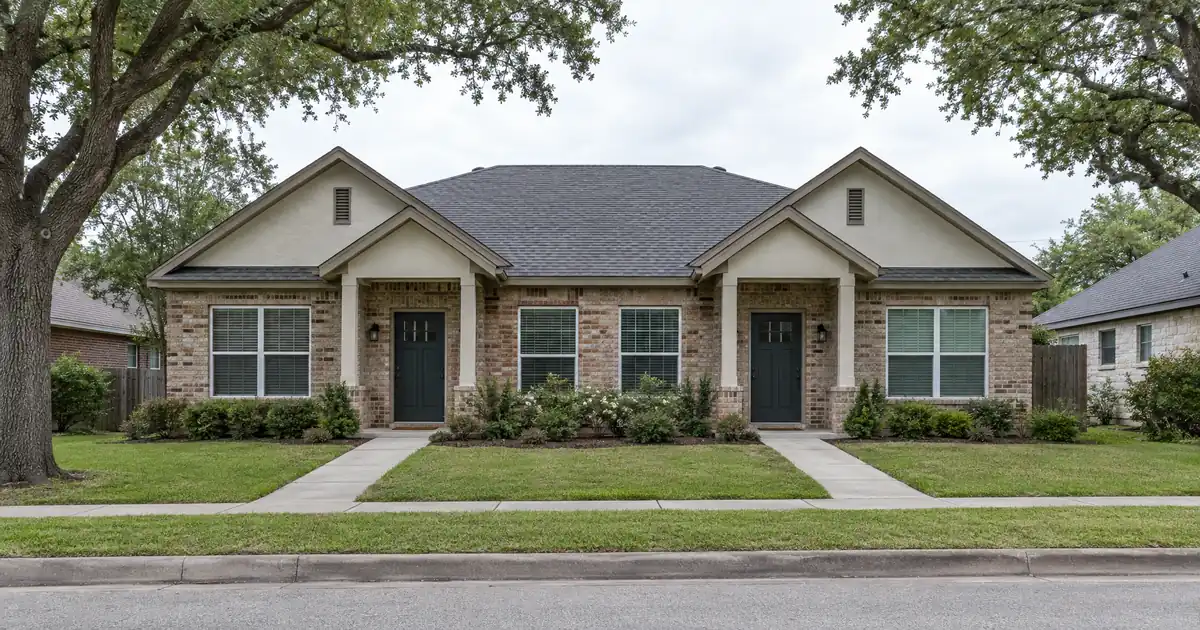
A rental in Historic Downtown Grapevine hits the DSCR math like this. Take a three-bedroom house worth about the $550,000 ZIP 76051 median, with rent near the $2,730 three-bedroom median, both per Prop-Metrics. Model it at 75% LTV with full taxes and insurance on a 30-year structure, and coverage lands around 0.7x. Drop leverage to 50% and it gets to just under 1.00x. The equity is there. The rent isn’t enough to carry all of it. Those are modeled assumptions, not a quote. These specifics are subject to lender guidelines and a full review of property, leverage, and credit.
That gap between what the appraisal supports and what the rent supports is the whole story for cash-out refinancing here. Lendmire, a non-QM mortgage broker, arranges these files through wholesale investor channels, and the pattern in Grapevine is consistent: the LTV cap is rarely the binding number.
DSCR Cash-Out Calculator
Run the cash-out numbers in Grapevine, TX
Rate source: Freddie Mac 30-yr average via FRED® — Federal Reserve Bank of St. Louis · effective Sep 24, 2026
Prefilled with starting assumptions — enter your property’s value, balance, taxes, and insurance for a more accurate picture.
Program parameters update from Lendmire’s centralized guideline source. Taxes and insurance are editable estimates.
As of Sep 24, 2026 · General Freddie Mac market benchmark, not a Lendmire loan offer. Property value, balance, taxes, and insurance are editable estimates. Maximum loan-to-value varies by lender, program, property type, and seasoning. Not a Loan Estimate, approval, or commitment to lend. Program availability and eligibility are subject to lender guidelines, credit approval, property review, and underwriting.
The Quick Read:
A DSCR cash-out refinance in Grapevine, Texas is underwritten primarily on the property’s rental income measured against its full monthly obligation, so the deal works from ownership seasoning and appraisal to a coverage test, then reserves and title review before proceeds are released, subject to lender guidelines.
- ZIP 76051 median price sits near $550,000, roughly flat year over year, per Prop-Metrics.
- Single-family coverage at 75% LTV models well under 1.00x including taxes and insurance.
- 2–4 unit inventory is thin, so appraisal comps are a valuation risk.
- Cash-out caps at 75% LTV, with about 6 months of ownership seasoning. Terms vary by lender guidelines, property type, leverage, credit profile, and full file review.
Coverage, Not LTV, Sets the Ceiling
Coverage is the constraint in Grapevine, and the 75% LTV cap comes second. The DSCR test divides monthly rent by the full monthly obligation: principal, interest, taxes, insurance, and any HOA dues. Most standard programs are built around a 1.00x baseline, and the DSCR qualification mechanics explain how that ratio gets built. Exact eligibility depends on lender guidelines, credit, reserves, and property review.
Rent-to-price here runs about 0.5% a month on the numbers above. Westrom Group, a local property manager, puts gross yields at 4.5–5.5% against 6.0–7.0% for the wider DFW area. Treat that as qualitative color, since it’s marketing from a management firm. Its 4–6% appreciation claim also conflicts with the flat 0.7% in the Prop-Metrics data. The flat figure is the safer one to underwrite on.
So the owner with a low basis has a real appraisal gain and a coverage problem. Proceeds get sized to whatever loan amount the rent can carry, which can sit well below 75% of value. Some lenders review sub-1.00 programs, interest-only structures, or lower-leverage alternatives, depending on program terms and credit approval. Those are paths to price, not promises. Anyone expecting the full 75% out of a $550,000 single-family house should run DSCR cash-out refi mechanics before ordering an appraisal.
Who Rents Here
Demand is steady and employer-driven. Grapevine has no college campus, and no enrollment number applies. Tenants come from the airport, hospitality, and corporate payrolls.
The city’s economic development office lists DFW Airport (1,500+ full-time employees), Kubota’s North American headquarters (500+), GameStop, Paycom, Gaylord Texan, Great Wolf Lodge, and Bass Pro Shops. It also counts more than 3,000 small businesses. Baylor Scott & White Medical Center – Grapevine, a 302-bed hospital, adds clinical payroll.
The regional backdrop is bigger. A Perryman Group study says DFW Airport supports more than 684,000 jobs across the region. Those are regional figures, not Grapevine headcounts. Data USA shows resident employment led by professional and technical work (3,668), health care (3,297), and retail (2,844), with a 22.3-minute average commute.
Tenure matters too. RentCafe puts 48% of households (10,335) in renter-occupied units, which is high for a suburb. The city held 50,631 residents at the last decennial count per Wikipedia, and World Population Review estimates growth near 0.27% a year. Built out, little new supply. That is an inference, and no pipeline data was found.
Rents: Pick a Source, Then Haircut It
Sources disagree on direction, so underwrite the low end. Prop-Metrics shows average rent down 2.0% year over year from a July snapshot, at $2,010. Zumper has a $1,995 median up 5%. RentCafe covers buildings with 50 or more units only and shows $1,833, up 4.82%. Call it mixed to modestly rising.
The Dallas Fed says rents are still declining in most Texas metro areas and concessions remain widespread, with new apartments as the pressure point. Apartments.com puts the average Grapevine apartment at $1,541, well under the roughly $2,000 all-property medians. That’s a metro-level risk, not a Grapevine finding. Still, a house landlord competing with concession-heavy apartments won’t push rent much.
The step from two-bedroom to three-bedroom ($1,920 to $2,730 in the Prop-Metrics data) suggests larger single-family homes carry the best rent per dollar of price. That’s an inference from two data points. Use the rent the lease shows, not the rent the aggregator shows, unless the appraiser’s rent schedule supports more.
Three Pockets, No Neighborhood Numbers
No reliable neighborhood-level price or rent source turned up, so these are qualitative.
Historic Downtown and Main Street. Walkable, tourism-adjacent, older housing stock. The entry tier of $350,000–$500,000 is limited and often needs cosmetic work. Cash-out files here depend on condition photos and clean comps.
The Grapevine Mills, Bass Pro, and Gaylord corridor. Hospitality payroll drives demand. Renters skew toward front-of-house, back-of-house, and management staff at the resort district. Lease evidence matters more than rent estimates.
Airport-adjacent areas. Airline and logistics workers. American Airlines says it employs more than 37,000 team members in the region, though that’s an airline-supplied figure from an airline-funded study. Regional again, not local.
The mid-range of $500,000–$700,000 is where most single-family stock sits. Coverage at those prices is tight at any leverage above 50%.
Six Months From Recording
Seasoning is mechanical. The program looks for about six months of ownership, measured from title recording, and the settlement statement documents it. A house bought last month isn’t eligible for cash-out yet, no matter what the appraisal says. Files that assume the seasoning away get kicked back.
Buy-and-hold owners past that line still need the appraisal to support value. Flat pricing (0.7% year over year, 33 median days on market) means no cushion from appreciation since purchase for recent buyers. Older holdings carry the gain. If title shows liens, an unreleased prior mortgage, or an entity mismatch, clearing title comes before anything else moves.
The Quadplex Question
Multi-unit is the obvious fix for the coverage problem, and the supply isn’t there. A listed quadplex near Historic Downtown has four two-bedroom, one-bath units of about 900 square feet each, per Homes.com. Apartments.com puts the average two-bedroom townhome at $1,931. Four such units gross roughly $7,700 a month (my arithmetic, not a published figure), against a single 3BR at $2,730.
Whether that helps depends entirely on price per door. The listing showed no price. If a quadplex asks close to four times a single-family price, the stacking advantage disappears. If it asks well under, coverage improves fast.
The second problem is comps. Compass showed one Grapevine multi-family listing and Zillow’s duplex page showed zero, both point-in-time snapshots. An appraiser short on local multi-unit sales may lean on single-family or out-of-city comps. Stress-test the loan against a conservative valuation. A sharp appraisal miss on a thin-comp property is how a 75% ceiling becomes 65% in practice. Refinancing owners should also keep in mind that rate-and-term and cash-out files are handled differently.
What Working Brokers See in Markets Like This
Working DSCR brokers see a recurring pattern in high-price, flat-growth suburbs: the appraisal comes in fine and the coverage test does the damage. Owners arrive expecting to pull 75% of value and leave with a smaller number sized to rent. The files that go cleanly show the current lease, a rent schedule, an entity operating agreement, and reserves documented before submission. Nothing exotic. Just fewer gaps for a reviewer to open.
What the File Needs
Program guidance, subject to lender review and confirmation:
- Leverage: 75% LTV ceiling on cash-out, not the 80% purchase figure.
- Coverage: 1.00 minimum, rent used for lender review against full PITIA.
- Credit: floor of 620, with tiers at 660, 680, and 700.
- Reserves: about six months of PITIA, more on balances above $1,500,000.
- Loan size: up to $3,000,000 on standard programs, with smaller balances routed to select lenders. Exact terms depend on the lender’s guidelines, property type, leverage, and a full review of the borrower’s file.
LLC-titled properties are workable subject to lender program eligibility, and the entity documents need to match title. Reserves need statements, not estimates. Verify current local rental rules, taxes, and insurance with qualified local professionals. Then run DSCR versus conventional if traditional employment income is on the table.
Owners with a Grapevine property in mind can request a scenario review or call 828-256-2183. Lendmire’s Texas DSCR loan programs cover the statewide overlays.
Frequently Asked Questions
How much equity can I pull from a Grapevine rental?
Less than 75% of value on most single-family files. The LTV cap is a ceiling, and the coverage test usually binds first at a $550,000-type price. Proceeds depend on rent used for lender review, full PITIA, reserves, and the appraisal. No cash figure is guaranteed.
DSCR vs. conventional financing
Two common ways to finance an investment property in Grapevine, TX. They qualify you differently — here’s how investors weigh them.
Why investors choose it
- Qualifies on the property’s rental income — no personal tax returns, W-2s, or pay stubs needed to document income.
- No personal debt-to-income ceiling to clear, so existing mortgages and obligations don’t cap your borrowing the same way.
- Can be closed in an LLC, keeping the property inside a business entity.
- Built for scaling — not held to the limit on number of financed properties that conventional financing applies.
- Underwriting centers on the deal: generally qualifies when the rent covers the payment, a 1.00x coverage ratio being a common baseline (confirmed in underwriting).
- Designed specifically for investment property, including long-term and, where the program allows, short-term rentals.
Where it’s strong
- Often the lowest ongoing financing cost for a buyer who fully qualifies on personal income — a fit for a first property or a cost-first purchase.
Trade-offs for investors
- Requires full personal income documentation and must fit within a debt-to-income limit — salary, existing debts, and other mortgages all count.
- Typically held in your personal name rather than a business entity.
- Caps how many financed properties you can carry, which can become a ceiling as a portfolio grows.
- Evaluates you as a borrower as much as the property, which usually means more paperwork.
How investors usually choose: a first or single property often optimizes for the lowest financing cost; portfolio builders often optimize for leverage, vesting in an LLC, and scaling past conventional caps. The right answer depends on your goals, the property, and current guidelines — both paths run through select lenders in Lendmire’s wholesale network, with eligibility and terms confirmed in underwriting.
Does a house bought recently qualify for cash-out?
Not until about six months of ownership, measured from title recording. The settlement statement is the document that proves it. Older holdings with a low basis get the most from the appraisal side.
Is a duplex or fourplex easier to refinance in Grapevine?
Coverage is easier, appraisal is harder. Income stacking helps the ratio, but inventory is thin, with one Compass listing and zero on Zillow at the time of the snapshot. Expect the appraiser to lean on non-local comps.
Which tenants anchor demand here?
Airport, hospitality, corporate, and health care workers. The city lists Kubota, GameStop, Paycom, Gaylord Texan, and DFW Airport as major employers, and Baylor Scott & White adds hospital payroll. No university campus exists in Grapevine.
Do the rent sources agree?
No. They range from down 2.0% to up 5% year over year, depending on source and scope. Use the lease and the appraiser’s rent schedule, and haircut the aggregator.
The Step to Take First
Pull the actual lease and order a rent schedule before anything else. Then compare that rent against a conservative valuation to see where coverage lands at 50%, 60%, and 75% LTV. In Grapevine, that comparison decides how much of the equity is usable. Check the Census Bureau QuickFacts page for current household counts, then confirm the listing-level details on any multi-unit target against a local property manager. Every figure here varies by lender and program — guidelines, property type, leverage, and credit profile all apply.
For current guidelines and terms, see Lendmire’s DSCR loan programs page.
About Lendmire
Lendmire, NMLS# 2371349, is a non-QM mortgage broker arranging DSCR investor loans across 41 markets, including Washington, D.C. Qualification is generally reviewed around the subject property’s rental income rather than the borrower’s W-2 history, which suits LLC-titled portfolios and self-employed investors. Every scenario stays subject to program review and program guidelines. The brokerage was recognized by Scotsman Guide as a 2026 Top Workplace and was a top-ranked workplace in 2025.
Get Started
Ready to find the right loan for you?
In about 30 seconds you can review financing options available for your investment property. No commitment required.
Informational only. Not a Loan Estimate, approval, or commitment to lend. Program availability and eligibility are subject to lender guidelines, credit approval, property review, and underwriting.
References
2. puts gross yields at 4.5–5.5% against 6.0–7.0% for the wider DFW area
3. Grapevine Economic Development – Major Employers
4. Baylor Scott & White – Grapevine
5. DFW Airport supports more than 684,000 jobs across the region
8. Wikipedia
10. Zumper
11. Dallas Fed Southwest Economy
12. Apartments.com
13. news.aa.com — TCU Study Finds Americans DFW Hub Supports 70 Billion
14. Homes.com
15. Apartments.com
16. Compass
18. Census Bureau QuickFacts page
19. recognized by Scotsman Guide as a 2026 Top Workplace
20. Scotsman Guide — Top Workplaces 2025
This article is part of Lendmire’s investment property cash-out refinance program — full qualification details, guidelines, and scenarios live on the program page.
Related reading: Cash Out Refinance Investment Property Grapevine Texas · Cash Out Refinance Investment Property in Colleyville, Texas: What It Takes to Refinance a Colleyville Rental · DSCR Cash Out Refinance in Nacogdoches, Texas: What Qualifying Takes on Nacogdoches Rents
Guides: Investment Property Cash-Out Refinance in Grapevine, TX · Investment Property Cash-Out Refinance in Texas
Brandon Miller
Founder & CEO, Mortgage Loan Originator, Lendmire LLC
- Mortgage Loan Originator · NMLS# 1129696 · Verify on NMLS Consumer Access
- North Carolina Real Estate Broker · License# 343312 · Verify on NCREC
- North Carolina Insurance Producer · License# 19053198 · Property, Casualty, Life, Health · Verify on NAIC SBS
- Lendmire LLC · Firm NMLS# 2371349 · Verify firm licensure
Required disclosures. Lendmire (NMLS# 2371349) operates as a licensed mortgage broker, not a direct lender or depository. The discussion in this article is general in nature and should not be relied upon as financial, legal, or tax advice — every investment scenario is unique and should be reviewed by a qualified professional. Any loan inquiry is subject to lender underwriting, and this article is not a commitment to lend or a guarantee of approval. Mortgage rates, loan terms, and program guidelines vary by borrower, property, and state, and may change without notice. Equal Housing Opportunity. Verify licensure at NMLS Consumer Access.