
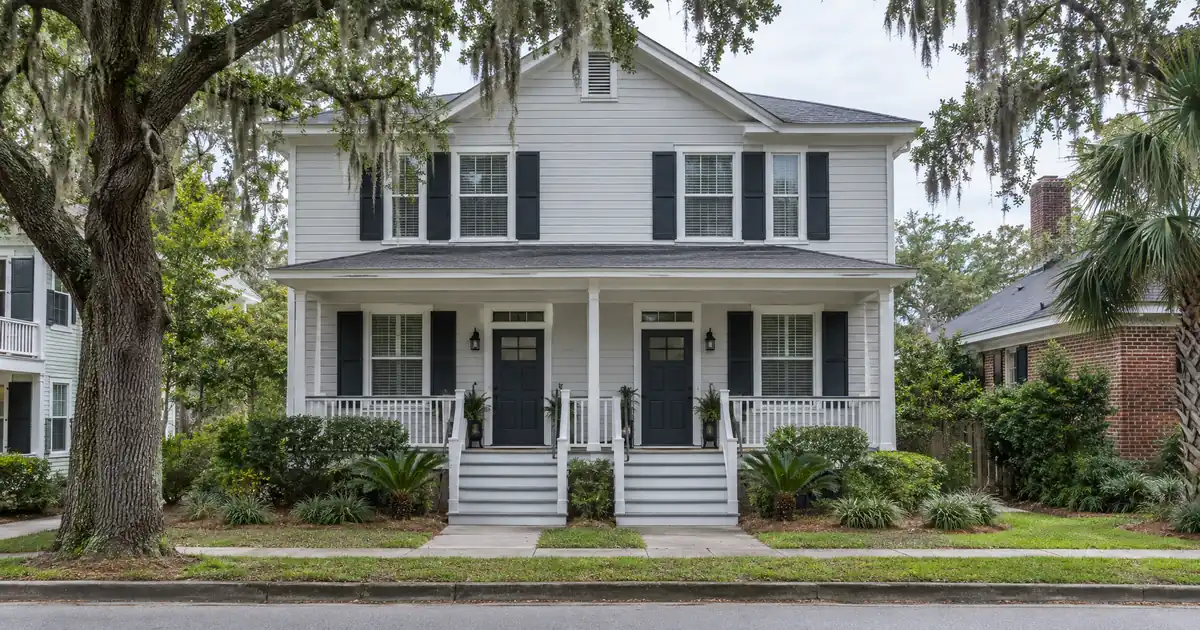
Picture two Greenville owners with the same plan: pull cash out, buy the next property. One owns a renovated house on a premium street near North Main. The other owns a mill-village house bought at a low basis. The mill-village owner has the better refinance math, and it isn’t close. The county median sale price rose only 0.4 percent year over year and is up about 25 percent over five years, according to Redfin figures reported by AOL. The premium-street owner bought most of that run-up. The low-basis owner still has room between value and debt.
DSCR Cash-Out Calculator
Run the cash-out numbers in Greenville, SC
Rate source: Freddie Mac 30-yr average via FRED® — Federal Reserve Bank of St. Louis · effective Sep 24, 2026
Prefilled with starting assumptions — enter your property’s value, balance, taxes, and insurance for a more accurate picture.
Program parameters update from Lendmire’s centralized guideline source. Taxes and insurance are editable estimates.
As of Sep 24, 2026 · General Freddie Mac market benchmark, not a Lendmire loan offer. Property value, balance, taxes, and insurance are editable estimates. Maximum loan-to-value varies by lender, program, property type, and seasoning. Not a Loan Estimate, approval, or commitment to lend. Program availability and eligibility are subject to lender guidelines, credit approval, property review, and underwriting.
Key Takeaways:
A DSCR cash-out refinance in Greenville, South Carolina is underwritten primarily on the property’s rental income measured against its full monthly obligation. With county prices nearly flat, the cash a borrower can pull comes from a low purchase basis or finished improvements, not from appreciation.
- Cash-out on investment property typically caps at 75 percent LTV, after about six months of ownership from title recording.
- Mill-village and Augusta Road stock is the likelier fit. Downtown and North Main run thin on coverage.
- Prisma Health, Michelin, and the BMW supply chain anchor long-term tenant demand.
- Recent apartment supply argues for conservative vacancy assumptions in the rent used to qualify.
- Small multifamily can stack rent, but only signed leases count.
DSCR financing for Greenville, South Carolina investors runs through wholesale lenders that Lendmire (NMLS# 2371349) works with across 41 markets, including D.C. The brokerage arranges the loan. Lenders review eligibility, and all figures here are subject to lender guidelines, credit approval, and property review. For the base mechanics, Lendmire’s DSCR walkthrough covers the coverage ratio, and the guide “The Refi Options” covers the refinance side. This piece stays on equity extraction: what is actually extractable in Greenville, and where files stall.
Greenville Market Snapshot
A quick read on the Greenville investor landscape — figures come from the cited sources below. Confirm current property-level numbers before underwriting.
| Metric | Detail |
|---|---|
| Home prices | $368,146 median (AOL/Yahoo (Redfin data)) |
| Cap rates | 5.25%–5.75% cap rates (CLS CRE) |
| University enrollment | 2,554 students (2024) (Data USA, Furman University) |
| Population | About 74,400 city residents (2024) (USAFacts, Greenville County) |
| Vacancy | 5.8% (CLS CRE) |
Why Appreciation Won’t Do the Work Here
Greenville equity is a basis story, not an appreciation story. Prices are flat, inventory is building, and appraisers will lean on flat comps. Investors who underwrite a cash-out on expected value gains are underwriting a market that isn’t delivering them.
The county median sale price was $368K over the last three months, and homes sat 57 days versus 50 a year earlier, per Redfin’s Greenville County page. Zillow’s county home value index is lower, at $340,295, up 2.1 percent. The two use different methods, so treat the gap as measurement, not a discrepancy to average away. The city shows the same split. Redfin’s city sale median was $499K in late-year data, while Zillow’s city index sits near $331K. Sale medians skew toward new and premium product. An index tracks the typical home. Pick the one that matches your property.
Supply is loosening. A local brokerage blog puts active inventory up about 21 percent year over year. Houzeo’s market page shows homes selling in about 52 days on a 4.7-month supply. That is a balanced market, not a seller’s market.
The implication for a refinance: most of the five-year gain already sits with owners who bought before it. A recent purchase at full market price has little appraisal cushion. The owner who bought below market, or who added value, has something to extract.
Where the Cash-Out Math Holds: Mill Villages and the Hospital Ring
The strongest equity-extraction candidates are workforce single-family homes in the mill villages (Judson, Woodside, Monaghan, Poe, Brandon, roughly the 29611 zip) and the Augusta Road and Alta Vista pocket near Greenville Memorial. Neither has a verified neighborhood price band in the research, so this is a directional read, not a quote.
The mill villages have the history. The Woodside Cotton Mill Village Historic District still has 343 surviving mill houses, per a local brokerage neighborhood guide, and for decades these were among the least expensive houses in the city. A long-hold owner or a value-add buyer with a low basis is the profile that clears a 75 percent LTV cap with room left over. Redevelopment at the old mills is already visible, which supports the rent story. It doesn’t guarantee a comp.
Augusta Road and Alta Vista sit close to downtown, Prisma Health, and Cleveland Park. Hospital-staff tenants are a steady rent source, and Prisma Health’s Upstate campus includes a Level I trauma center, the region’s only solid organ transplant center, and seven community hospitals. Training programs, including a nursing school building, keep some short- and mid-term housing demand in play. The catch: pricing here is higher than the mill villages, so coverage is tighter on the same rent.
Thinking out loud on which is the better bet: the mill villages likely win on ratio, and Augusta Road likely wins on tenant stability. An owner with an older basis in either area is better positioned than a recent buyer in both.
Skip the Premium Core
Downtown and North Main are the wrong places to expect a clean cash-out. They are appreciation-driven, low-yield areas.
RentCafe’s Yardi Matrix data shows downtown Greenville apartments averaging $2,810, against a citywide average of $1,580 (down 0.95 percent year over year) and $1,454 in a below-average neighborhood like Cavalier Woods. Those are apartment rents, not house rents, so the comparison is imperfect. Even so, downtown rent is high because prices are high. A single-family or condo owner there is holding value, not yield.
Hampton-Pinckney and North Main are tree-lined and historic, and the buyers there paid for it. Coverage on a house priced for lifestyle usually falls short of 1.00 on full PITIA at 75 percent LTV. Downtown stock is mostly small-lot infill and condos, so multi-unit options are thin. Condos add the HOA questionnaire and certification steps. That is one more place a file can stall.
Overbrook, Parkins Mill, and the Suburban Ring
Overbrook and Parkins Mill are mid-century ranch areas near the Laurens Road corridor. They read as mid-tier single-family rental territory, and a long-held ranch there is a reasonable cash-out candidate. It won’t be as low-basis as a mill house, but it usually has better condition than unrenovated village stock. Renovation scope is what moves value in these files.
The suburban ring is a different question. Mauldin sits near the I-385 and I-85 intersection, about 12 miles southeast of Greenville. Greer is about 15 miles northeast, close to BMW and the airport. Travelers Rest ties to downtown by the Swamp Rabbit Trail. Ring areas plausibly offer a stronger rent-to-price ratio than the core, but the research has no verified price bands to confirm it. Check ring comps property by property before assuming it.
The Demand Anchors Behind the Rent
Tenant demand here rests on employers, not on students. That supports long-term leases, which is what DSCR files want to see.
The Greenville Area Development Corporation describes a diversified base across manufacturing, healthcare, life sciences, education, and tourism, with Lockheed Martin, Verizon, and ScanSource among the named employers. USAFacts puts the city itself at about 74,400 residents, so the city is small and the county and metro carry the demand. Prisma Health is the largest metro employer. Roth Capital’s employer roundup says nearly 16,000, while another source says 10,000-plus. The counts conflict, so treat it as roughly 10,000 to 16,000.
The industrial layer is unusual for a metro this size. Michelin North America runs its whole North American operation from downtown. Lockheed Martin chose Greenville for F-16 Block 70 final assembly, per 6AM City. The Clemson University International Center for Automotive Research is a 250-acre automotive research campus that draws engineers and graduate researchers, not undergraduates. BMW’s plant in Spartanburg County builds about 400,000 vehicles a year, and pulls in a supply chain that Greer and the north side sit close to. Furman University enrolled 2,554 students per Data USA, mostly housed on campus. Don’t underwrite student demand here.
What Happens When the Number Lands Below 1.00?
A house bought near the county median and rented at an apartment-level figure will probably land below 1.00 on full PITIA. Run the numbers this way, using modeled assumptions, not market data: a property near $368K, a modeled $1,580 rent, and 75 percent LTV. Including taxes and insurance, coverage lands around 0.7. Even a well-rented house has to beat the apartment average to reach 1.00, because the key differences between DSCR and conventional underwriting put the rent-to-obligation ratio first.
The rent-to-price picture is what drives that. Apartment rent at about $1,580 against a $368K county median is well under 1 percent of price per month. RentCafe’s figures are apartment rents, so a single-family lease may differ.
A 1.00 ratio is the common benchmark because rent covers the obligation at that level. Some lenders will review lower ratios, but those files usually trade for lower leverage, different pricing, or more cash in. Options a lender may review on a sub-1.00 file:
- a sub-1.00 program, with tighter leverage;
- an interest-only structure to lower the obligation used in the ratio;
- a lower LTV to shrink the loan against the same rent;
- rent evidence from a signed lease or appraiser rent schedule, not a market average.
Whether any of these applies depends on lender guidelines, credit profile, reserves, and the property review. The wholesale network can steer a borderline file toward the structure that fits, but it can’t turn a weak rent into a clean file.
Duplexes and 5-Plus Units
Small multifamily is where Greenville coverage can improve, but only on proven rent. Income stacking on a duplex can lift coverage if the price isn’t double a comparable single-family. Listing pages for newer duplexes cite per-unit rents well above the city apartment average. Those are agent marketing claims, and mid-term furnished rents are not long-term figures. Count signed leases only.
Buildings with five or more units are appraised on income. A commercial broker blog reports Greenville multifamily cap rates of 5.25 to 5.75 percent. Treat that as directional. The cap rate sets the value ceiling and therefore the cash-out amount, so a small move in cap rate moves the proceeds. Duplexes through fourplexes are typically appraised on sales comps instead.
Vacancy is the other check. Colliers data reported by Catalyst Capital Partners put the regional construction pipeline at 2,188 units, less than a year of absorption. A syndicator blog citing Colliers showed occupancy near 89 percent in the supply wave. These are secondary figures with different definitions, so don’t blend them. The takeaway is to underwrite a conservative vacancy factor, and a shrinking pipeline helps stabilized units.
Seasoning, Appraisal, and Reserves: Where Files Stall
Most Greenville cash-out files stall on preventable documentation, not on the ratio. In markets like this one, the common friction points are:
1. Seasoning. About six months of ownership is typical, measured from title recording and documented by the settlement statement. Files that assume it away get kicked back.
2. Appraisal on flat comps. With pricing flat and days on market rising, the appraised value can land below the owner’s number. A reconsideration packet with recent in-neighborhood sales and condition adjustments is a routine step, not a fallback.
3. Rent evidence. A lease, rent schedule, or appraiser’s rent estimate for the actual unit beats a citywide average.
4. Entity documents. If the property sits in an LLC, operating agreement and formation documents need to match the title, subject to lender program eligibility.
5. Reserves documentation. Reserves of about six months of PITIA are typical, and more on larger balances. Two months of statements showing the funds are what a reviewer wants.
DSCR vs. conventional financing
Two common ways to finance an investment property in Greenville, SC. They qualify you differently — here’s how investors weigh them.
Why investors choose it
- Qualifies on the property’s rental income — no personal tax returns, W-2s, or pay stubs needed to document income.
- No personal debt-to-income ceiling to clear, so existing mortgages and obligations don’t cap your borrowing the same way.
- Can be closed in an LLC, keeping the property inside a business entity.
- Built for scaling — not held to the limit on number of financed properties that conventional financing applies.
- Underwriting centers on the deal: generally qualifies when the rent covers the payment, a 1.00x coverage ratio being a common baseline (confirmed in underwriting).
- Designed specifically for investment property, including long-term and, where the program allows, short-term rentals.
Where it’s strong
- Often the lowest ongoing financing cost for a buyer who fully qualifies on personal income — a fit for a first property or a cost-first purchase.
Trade-offs for investors
- Requires full personal income documentation and must fit within a debt-to-income limit — salary, existing debts, and other mortgages all count.
- Typically held in your personal name rather than a business entity.
- Caps how many financed properties you can carry, which can become a ceiling as a portfolio grows.
- Evaluates you as a borrower as much as the property, which usually means more paperwork.
How investors usually choose: a first or single property often optimizes for the lowest financing cost; portfolio builders often optimize for leverage, vesting in an LLC, and scaling past conventional caps. The right answer depends on your goals, the property, and current guidelines — both paths run through select lenders in Lendmire’s wholesale network, with eligibility and terms confirmed in underwriting.
The experience note: the cleaner files from a documentation standpoint tend to be the ones where the borrower assembled the lease, entity papers, and reserve statements before submitting. In markets with a mix of premium and workforce stock, Lendmire’s deal desk sees the loan-amount question resolved by the appraisal, and the delay comes from the document that wasn’t in the file. The cash isn’t guaranteed either way. Equity available depends on rent used for lender review, PITIA, reserves, and the 75 percent LTV ceiling.
Typical guideline ranges on these files: a credit floor of 620 with tiers at 660, 680, and 700, and loan amounts up to $3,000,000 on standard programs. Smaller balances route through select lenders in the network. Manufactured homes, log homes, and barndominiums fall outside these programs. Details change, so confirm current parameters when you talk to Lendmire at 828-256-2183. Also verify current local rental rules, taxes, and insurance with qualified local professionals. Exact terms depend on the lender’s guidelines, property type, leverage, and a full review of the borrower’s file.
Once proceeds land, the next-deal question is about basis again. Reusing them on another below-market or value-add property keeps the cycle going. Refinancing options for the existing property are worth comparing before you commit.
What the Next 6 to 24 Months Look Like
Expect Greenville cash-out files to be won on basis and finished work, not on price gains. Prices are near flat, inventory is up, and days on market are lengthening. That caps appraised value for owners who bought recently. The pipeline is shrinking, which supports stabilized units. Michelin, Lockheed Martin, Prisma Health, and the BMW supply chain give the rent base a floor.
The qualified call: if county pricing stays close to flat, the strongest refinance candidates will be mill-village and hospital-adjacent owners with older bases and documented rent, while recent core purchases will keep coming in under the leverage they were modeled at. If inventory keeps building, buyers gain negotiating room, and the next round of extractable equity will be created at the purchase table.
Frequently Asked Questions
How do you qualify for a DSCR cash-out refinance in Greenville?
Qualification centers on the property’s rent against its full monthly obligation, with 1.00 as the common benchmark. Beyond the ratio, lenders typically review credit (a 620 floor), reserves of about six months of PITIA, ownership seasoning of about six months, and an appraisal. Greenville’s flat pricing makes the appraisal and rent evidence the two items to prepare first. Exact eligibility depends on lender guidelines.
What are the requirements for an investment property cash-out loan in Greenville, South Carolina?
Requirements are set by the program, not the city. Typically that means a cash-out LTV ceiling of 75 percent, about six months of seasoning from title recording, a DSCR of 1.00 or better, and reserves documentation. Eligible property types are one- to four-unit and small multifamily, and manufactured homes, log homes, and barndominiums are not eligible. Local rental rules, taxes, and insurance are worth checking with qualified local professionals.
How does rental income affect DSCR refinance eligibility in Greenville?
Rental income is the main qualifier: the property’s rent is measured against its full monthly obligation. Because these loans are underwritten primarily on property cash flow, entity-owned and self-employed borrowers are a common fit, subject to lender program requirements.
Can appreciation alone support a cash-out on a recent Greenville purchase?
No, not in the current data. The county median sale price rose 0.4 percent year over year, so a recent buyer has little appraisal cushion at a 75 percent LTV cap. Equity has to come from a below-market purchase price, renovation that lifts value, or a longer hold. Seasoning also applies: about six months from title recording.
Do five-plus-unit buildings in Greenville appraise differently than a duplex?
Yes. Buildings with five or more units are typically appraised on income, so the cap rate drives value and therefore cash-out. A commercial broker blog cites cap rates of 5.25 to 5.75 percent for Greenville multifamily, which is directional. Duplexes through fourplexes are typically valued on sales comps, so the comp set matters more.
For current guidelines and terms, see Lendmire’s DSCR loan programs page.
About Lendmire
A non-QM mortgage broker (NMLS# 2371349), Lendmire arranges DSCR financing for real estate investors in 41 markets: 40 states plus Washington, D.C. Because deals are underwritten primarily on property cash flow rather than personal income documentation, the structure suits self-employed buyers and entity-owned portfolios. The brokerage places loans through wholesale investor lenders and is not a direct lender. It has been recognized by Scotsman Guide as a 2026 Top Workplace (Scotsman Guide) and as a 2025 Scotsman Guide Top Mortgage Workplace (Scotsman Guide). Investors in the state can also review Lendmire’s South Carolina DSCR platform.
Get Started
Ready to find the right loan for you?
In about 30 seconds you can review financing options available for your investment property. No commitment required.
Informational only. Not a Loan Estimate, approval, or commitment to lend. Program availability and eligibility are subject to lender guidelines, credit approval, property review, and underwriting.
References
1. Redfin, Greenville County housing market
3. Greenville multifamily cap rates of 5.25 to 5.75 percent
4. Data USA, Furman University
5. USAFacts, Greenville County
6. expertrealestateteam.com — Greenville SC Housing Market
8. mygreenvillescrealestate.com — Communities Greenville
10. RentCafe, Greenville average rent
11. Greenville Area Development Corporation
12. Roth Capital, Top Employers in the Greenville Metro
13. 6AM City
14. Wikipedia — Clemson University International Center for Automotive Research
16. investwithspark.com — Greenville Multifamily Real Estate Performance 2025 2026
17. Scotsman Guide
18. Scotsman Guide
This article is part of Lendmire’s investment property cash-out refinance program — full qualification details, guidelines, and scenarios live on the program page.
Related reading: DSCR Cash Out Refinance in Greenville, North Carolina: How Seasoning and LTV Work in Greenville · Cash Out Refinance Investment Property Greenville North Carolina · DSCR Cash Out Refinance in Georgetown, South Carolina: Pulling Equity in a Mill-Town Transition
Guides: Investment Property Cash-Out Refinance in Greenville, SC · Investment Property Cash-Out Refinance in South Carolina
Brandon Miller
Founder & CEO, Mortgage Loan Originator, Lendmire LLC
- Mortgage Loan Originator · NMLS# 1129696 · Verify on NMLS Consumer Access
- North Carolina Real Estate Broker · License# 343312 · Verify on NCREC
- North Carolina Insurance Producer · License# 19053198 · Property, Casualty, Life, Health · Verify on NAIC SBS
- Lendmire LLC · Firm NMLS# 2371349 · Verify firm licensure
Required disclosures. Lendmire (NMLS# 2371349) operates as a licensed mortgage broker, not a direct lender or depository. The discussion in this article is general in nature and should not be relied upon as financial, legal, or tax advice — every investment scenario is unique and should be reviewed by a qualified professional. Any loan inquiry is subject to lender underwriting, and this article is not a commitment to lend or a guarantee of approval. Mortgage rates, loan terms, and program guidelines vary by borrower, property, and state, and may change without notice. Equal Housing Opportunity. Verify licensure at NMLS Consumer Access.