
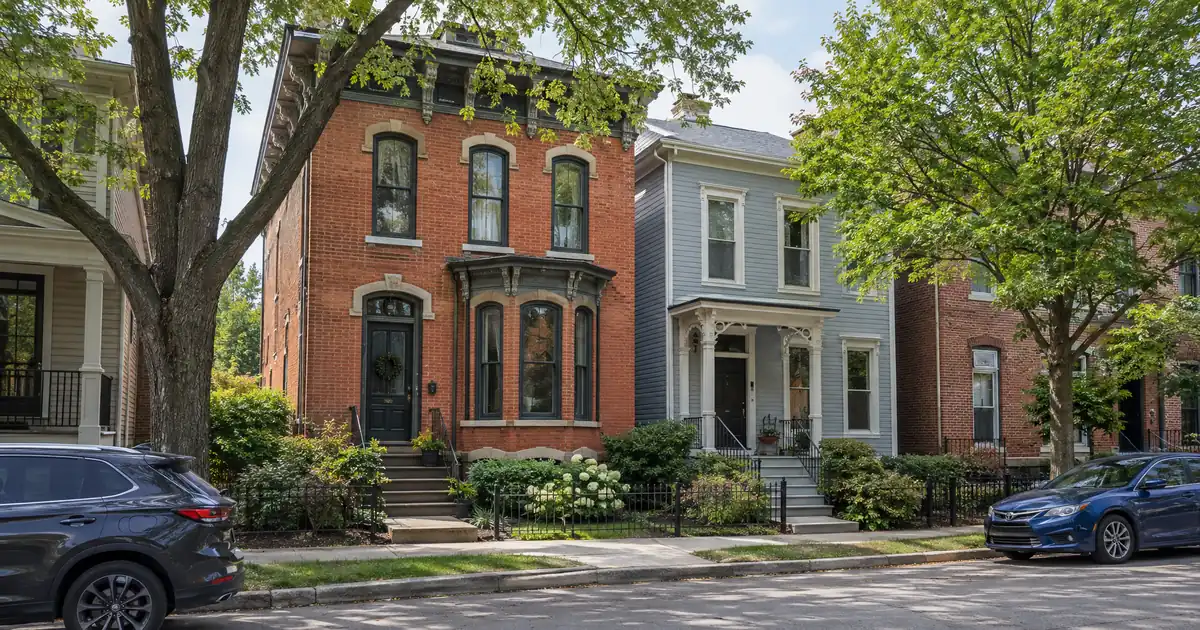
Picture an investor in another state who owns a three-bedroom rental south of Indianapolis and wants to pull capital out for the next purchase. Greenwood looks easy from a distance. The U.S. Census Bureau shows 66,296 residents, up 3.9 percent from the 2020 base, with a retail-and-healthcare economy on the southern edge of the metro. What the out-of-state investor tends to miss is that this is a flat-rent, soft-price market, and a cash-out here runs on the equity already in the property.
At a Glance: A DSCR cash-out refinance in Greenwood, Indiana is underwritten primarily on the property’s rental income measured against its full monthly obligation, with the new loan capped at 75 percent of appraised value and the title typically seasoned about six months, so the file clears only when rent, reserves, and appraisal all support the cash-out.
DSCR Cash-Out Calculator
Run the cash-out numbers in Greenwood, IN
Rate source: Freddie Mac 30-yr average via FRED® — Federal Reserve Bank of St. Louis · effective Sep 24, 2026
Prefilled with starting assumptions — enter your property’s value, balance, taxes, and insurance for a more accurate picture.
Program parameters update from Lendmire’s centralized guideline source. Taxes and insurance are editable estimates.
As of Sep 24, 2026 · General Freddie Mac market benchmark, not a Lendmire loan offer. Property value, balance, taxes, and insurance are editable estimates. Maximum loan-to-value varies by lender, program, property type, and seasoning. Not a Loan Estimate, approval, or commitment to lend. Program availability and eligibility are subject to lender guidelines, credit approval, property review, and underwriting.
- Median sale price sits near $283,000, down 12.9 percent year over year, per Redfin.
- Median rent is $1,348 and essentially flat, per Apartment List.
- Single-family detached homes are 62.98 percent of housing units, per NeighborhoodScout.
- Stones Crossing and Center Grove carry the highest asking rents and the thinnest coverage.
- Equity has to come from purchase price, rehab, or paydown, not appreciation.
Lendmire (NMLS# 2371349) is a DSCR-focused mortgage broker. DSCR financing for Greenwood, Indiana investors runs through wholesale lenders that Lendmire works with across 41 markets, including D.C. The broker arranges the file. The lender reviews it, and eligibility depends on lender guidelines, credit, reserves, and the property itself. This article covers the equity-extraction side only. Lendmire’s DSCR walkthrough covers the basics if you need them.
Does Greenwood Appreciation Fund a Cash-Out?
No. Appreciation is not doing the work here. Sources disagree on the median value, and the direction is flat to down. A cash-out on a recent purchase usually has to be funded by a below-market buy, a rehab, or loan paydown.
Redfin puts the median sale price at $283,000, down 12.9 percent year over year, at $154 per square foot. Zillow’s home value index shows an average of $319,732, up 1.1 percent. Movoto shows a $374,947 median on list prices, with homes taking 52 days to sell against 38 a year earlier. These are different series. Redfin tracks closed transactions, Zillow an index, and Movoto asking prices. Don’t blend them into one number.
NeighborhoodScout says Greenwood’s latest annual appreciation is lower than 70 percent of Indiana cities and towns. So the plan that fails here is buying at market, waiting for lift, and refinancing. The plans that work:
- Bought below appraised value, with the discount documented.
- Bought with a scope of work, and the improvements are visible in the appraisal.
- Held long enough that paydown plus original equity clears the 75 percent ceiling with room.
Seasoning is the mechanical piece. The program parameters call for about six months of ownership, measured from title recording, and the settlement statement is the document that proves it. Files that count from contract date or closing-table date instead of recording date are the ones that get kicked back.
The 75 Percent Ceiling Against Greenwood Rents
At the 75 percent cash-out ceiling, a typical Greenwood single-family rental covers its full obligation by a thin margin. Including taxes and insurance, modeled coverage lands around 1.0x to 1.2x depending on which value and rent you believe. The appraisal matters more than the headline average.
The 1.00 minimum is the standard benchmark, not a promise. Some lenders will look at lower ratios with compensating factors, lower leverage, or different pricing, and every file stays subject to lender guidelines, credit, and reserves. Here is how the modeled math moves:
| Value basis | Rent assumption | Modeled coverage |
|---|---|---|
| $283,000 (Redfin median) | $1,875 | About 1.1x |
| $319,732 (Zillow average) | $1,875 | Just under 1.0x |
| $319,732 (Zillow average) | $2,300 | About 1.2x |
These figures are modeled, not sourced market data. They assume the 75 percent LTV ceiling, rent divided by full PITIA (taxes and insurance included, at typical Indiana-average loads), and I rounded down. The $1,875 rent is the Homes.com median home rent. The $2,300 is a Center Grove-area asking rent, not a median.
As a rent-to-value check, $1,875 against $283,000 is about 0.66 percent monthly, and against $319,732 about 0.59 percent. That is workable but not generous. Compare the Center Grove asking rents of roughly $2,250 to $2,430 on three- and four-bedroom houses against the same values and the ratio is better, but those are listing asks.
When a file falls under 1.00 on long-term rent alone, the paths a lender may review include a sub-1.00 program, an interest-only structure, or a lower cash-out LTV. Each is subject to lender guidelines and credit review, and none is a given. Cutting the cash-out amount is often the cleanest fix. You take less out and the number clears.
For the mechanics behind the proceeds, see the equity-extraction mechanics. The refinance side covers the non-cash-out version.
Where the Cash-Out Files Pencil
Stones Crossing and Center Grove produce the highest rents and the thinnest coverage. Madison Avenue and the older core produce more modest rents against lower basis. The research has no reliable per-neighborhood medians, so these are qualitative reads with asking rents where available.
Center Grove and Stones Crossing (west Greenwood). Newer subdivisions with a wide price band, from the low $100,000s into the $500,000s. Apartments.com listings near Center Grove Marketplace show a three-bedroom at Flats at Stones Crossing from $2,298 and up, and single-family rentals near Center Grove Middle School North at about $2,250 to $2,430. Those are asking rents. Higher price per unit means appraisals come in high and coverage runs thinner than in older areas. Franciscan Health’s Greenwood medical office building sits at State Road 135 and Stones Crossing. An IBJ report put it at 87,000 square feet and $35 million, though the report is dated. Clinical and administrative staff are a steady renter pool, and that supports occupancy more than it supports the coverage ratio.
Greenwood Park Mall, US-31, and the Madison Avenue corridor. This is the retail and commuter core, with retail, service, and healthcare workers as the renter base. Apartment communities along Madison Avenue list two-bedrooms from $1,653 and up on Apartments.com. Hoosiers by the Numbers lists Jared, the Ulta Beauty Distribution Center, Walmart Supercenters, and Meijer among Greenwood-based employers in Johnson County, without headcounts. For a cash-out, the corridor’s value is rent stability from a broad service-sector base.
Old Town Greenwood. The city’s Comprehensive Plan places Old Town roughly between Fry Road, Home Avenue, US 31, and Polk Street. Early-20th-century homes surround the commercial strip, and the city’s projects page says the Redevelopment Commission approved an agreement with CRG Residential and Great Lakes Capital to redevelop the former Greenwood Middle School site. No price data exists in the research, so treat this as qualitative. It is the most likely spot for older conversions and duplex-type stock. Comps will be thin, which matters at appraisal.
South Perry and the Emerson side. The north and east side sits closest to the Southside Indianapolis job base. The University of Indianapolis is just north of the city and reports over 4,000 main-campus students, including over 1,300 graduate students. I found no reliable price or rent figures for this pocket, so the read is demand-side only.
Small Multifamily Is the Scarce Asset
Real two-to-four-unit stock barely exists in Greenwood, and that cuts both ways. Stacked rents would lift coverage above single-family, but the thin comp pool makes appraisals harder.
NeighborhoodScout puts single-family detached homes at 62.98 percent of housing units, large apartment complexes at 21.19 percent, and row houses and attached homes at 8.73 percent. Duplexes and small conversions are a sliver. Redfin logged 24 condos, four townhouses, and one multi-family unit for sale in a single month, per its Greenwood housing market page. The visible new duplex product is builder-sold paired homes, such as the Carriage Duplex at Grand Vista, per Homes.com new construction listings.
For a cash-out on a true duplex, underwrite the rent schedule conservatively and confirm that rent and sale comps exist before counting on multi-unit income. Appraisal reconsideration is a routine step on thin-comp files. A packet with recent in-area sales and condition adjustments can recover value, but only if those sales exist.
Flat Rents and a Heavy Pipeline
Rent growth is essentially flat, and new supply is a plausible reason. Don’t model rent growth in the DSCR rent figure.
Apartment List shows median rent at $1,348, up 0.5 percent. RentCafe shows an average apartment at $1,372, with three-bedrooms at $1,747, and 39 percent of households renting (10,068 households). Rentometer shows three-bedrooms at $1,815 and four-bedrooms and larger at $2,171. The Daily Journal’s development roundup counted about 563 single-family homes and 634 apartment units under construction at the time, with 914 more single-family starts planned. Arlington Farms on the east side adds 408 units and Oliver Springs along Emerson Avenue adds 226. That roundup is dated, so check what has actually delivered.
New apartments and new-build homes compete for the same tenants as older single-family rentals. The conservative approach is to use today’s lease, not a projected bump, and run coverage on the lower of lease or market rent.
What Derails These Files
Lendmire’s deal desk sees the same pattern in suburban markets with soft appreciation and thick new-construction pipelines. The cleaner files tend to carry a recorded-title seasoning proof, a signed lease with deposit evidence, and a current insurance quote loaded into the coverage math before submission. The common friction point is a refinance that was pencilled on purchase-day value, then comes back from the appraiser lower, and the cash-out shrinks or disappears.
A short checklist on these files:
1. Pull the settlement statement and confirm the recording date supports the six-month seasoning window.
2. Get a current lease or rent-roll page, plus proof of the security deposit.
3. If the property sits in an LLC, have the entity documents ready, subject to lender program eligibility.
4. Run the reserves figure (about six months of PITIA on standard files, about nine above $1,500,000) before the appraisal is ordered.
5. If the appraisal comes in light, assemble recent in-area comps and condition adjustments for reconsideration.
Reserves documentation is where files stall quietly. Bank statements need to show the seasoned balance, and cash from the refinance itself generally does not count toward reserves. Verify current local rental rules, taxes, and insurance with qualified local professionals before underwriting. Credit tiers run from a 620 floor up through 660, 680, and 700, and the middle tiers shape pricing and leverage. Qualification stays subject to lender overlays.
Once the numbers look workable, you can talk through the numbers with the team, or call 828-256-2183.
DSCR vs. conventional financing
There are two common ways to finance an investment property in Greenwood, IN, and they qualify you differently — here’s how investors weigh them.
Why investors choose it
- Qualifies on the property’s rental income — no personal tax returns, W-2s, or pay stubs needed to document income.
- No personal debt-to-income ceiling to clear, so existing mortgages and obligations don’t cap your borrowing the same way.
- Can be closed in an LLC, keeping the property inside a business entity.
- Built for scaling — not held to the limit on number of financed properties that conventional financing applies.
- Underwriting centers on the deal: generally qualifies when the rent covers the payment, a 1.00x coverage ratio being a common baseline (confirmed in underwriting).
- Designed specifically for investment property, including long-term and, where the program allows, short-term rentals.
Where it’s strong
- Often the lowest ongoing financing cost for a buyer who fully qualifies on personal income — a fit for a first property or a cost-first purchase.
Trade-offs for investors
- Requires full personal income documentation and must fit within a debt-to-income limit — salary, existing debts, and other mortgages all count.
- Typically held in your personal name rather than a business entity.
- Caps how many financed properties you can carry, which can become a ceiling as a portfolio grows.
- Evaluates you as a borrower as much as the property, which usually means more paperwork.
How investors usually choose: a first or single property often optimizes for the lowest financing cost; portfolio builders often optimize for leverage, vesting in an LLC, and scaling past conventional caps. The right answer depends on your goals, the property, and current guidelines — both paths run through select lenders in Lendmire’s wholesale network, with eligibility and terms confirmed in underwriting.
Using the Proceeds
Cash-out money works best when the next purchase has its own equity story. Because Greenwood appreciation is flat, redeploying proceeds into a second Greenwood single-family at market price repeats the same thin coverage. The stronger play might be buying the next asset where the basis is below value, even if that means a different submarket or property type. The cheaper path is usually the smaller cash-out on a file that clears comfortably.
For state-level program context, see Lendmire’s Indiana DSCR platform. For the differences against traditional loans, see the guide “Where DSCR and Conventional Diverge”. Standard programs run up to $3,000,000, and smaller balances route through select lenders in the network. Manufactured homes, log homes, and barndominiums fall outside these programs.
Frequently Asked Questions
How long do I have to own a Greenwood rental before a cash-out refinance?
Plan on about six months of ownership, measured from the title recording date rather than the contract date. The settlement statement is the document that proves it. Seasoning requirements are subject to lender guidelines, and files that assume the window away get returned.
Will Greenwood’s market value support a 75 percent cash-out?
Not automatically. Redfin’s median is $283,000 and down 12.9 percent year over year, while Zillow’s average is $319,732 and up 1.1 percent. Those readings diverge, so the appraisal is the number that counts. Equity usually has to come from a below-market purchase, rehab, or paydown.
Does a Center Grove house cover better than an older Greenwood rental?
The rent is higher, but so is the price, so coverage is thinner than the headline suggests. Center Grove asking rents run about $2,250 to $2,430 on three- and four-bedrooms, against a price band from the low $100,000s into the $500,000s. Coverage depends on the specific value and lease, and the higher basis can pull the number down.
Can I do a cash-out on a duplex in Old Town?
Possible, but thin. Real duplex stock is scarce, since single-family detached homes are 62.98 percent of Greenwood’s housing units. Appraisers may struggle to find comps, so the rent schedule should be conservative and documented. Redevelopment around the former Greenwood Middle School site is a local catalyst, but no price data supports a specific figure.
What if my coverage lands below 1.00 on long-term rent?
A lender may review a sub-1.00 program, an interest-only structure, or a smaller cash-out at lower LTV. None is guaranteed, and each is subject to credit approval, reserves, and property review. Trimming the cash-out amount is often the simplest adjustment.
For current guidelines and terms, see Lendmire’s DSCR loan programs page.
Where the Asymmetry Sits
The mispriced piece of Greenwood is older, near-core housing that can carry stacked rents. Old Town-area duplexes and small conversions, bought under appraised value, are the one place the rent-to-value ratio can beat the city’s thin single-family math. That is my inference, not a sourced finding. The stock is scarce and the comps are light, but a buyer who finds one near the Old Town redevelopment, documents the discount, and holds past seasoning would be refinancing from real equity in a city where appreciation won’t do it for them.
About Lendmire
Lendmire (NMLS# 2371349) is a mortgage brokerage focused on DSCR investor financing, helping arrange programs through wholesale and investor-lending channels in 41 markets, including Washington, D.C. DSCR loans are evaluated by the lender on property cash flow rather than personal income, subject to lender guidelines, supporting LLC closings and accommodating investors with four or more financed properties. Lendmire was named a Scotsman Guide Top Mortgage Workplace in both 2025 and 2026.
Get Started
Ready to find the right loan for you?
In about 30 seconds you can review financing options available for your investment property. No commitment required.
Informational only. Not a Loan Estimate, approval, or commitment to lend. Program availability and eligibility are subject to lender guidelines, credit approval, property review, and underwriting.
References
2. Redfin
6. Movoto
7. Homes.com
8. IBJ report
12. greenwood.in.gov — Division Blocks
13. University of Indianapolis
14. Homes.com new construction listings
15. RentCafe
16. Rentometer
17. Daily Journal’s development roundup
18. 2025
19. 2026
This article is part of Lendmire’s investment property cash-out refinance program — full qualification details, guidelines, and scenarios live on the program page.
Related reading: Luxury Rental DSCR Loans In New Jersey · Jersey Shore Vacation Rental Loans: DSCR Financing In Ocean City, Cape May And Long Beach Island · DSCR Cash-out Refinance In New Jersey: Pulling Equity From A Rental
Guides: Investment Property Cash-Out Refinance in Greenwood, IN · Investment Property Cash-Out Refinance in Indiana
Brandon Miller
Founder & CEO, Mortgage Loan Originator, Lendmire LLC
- Mortgage Loan Originator · NMLS# 1129696 · Verify on NMLS Consumer Access
- North Carolina Real Estate Broker · License# 343312 · Verify on NCREC
- North Carolina Insurance Producer · License# 19053198 · Property, Casualty, Life, Health · Verify on NAIC SBS
- Lendmire LLC · Firm NMLS# 2371349 · Verify firm licensure
Disclosure information. Lendmire is a state-licensed mortgage brokerage under NMLS# 2371349. Lendmire is not a depository institution, direct lender, or financial advisor — all loans referenced are placed through wholesale lender partners and are subject to each lender's underwriting standards. This article is provided for general informational purposes and is not a commitment to lend, nor does it constitute financial, legal, or tax advice. Loan programs, terms, rates, and qualification standards change without notice and depend on borrower profile, property type, and the state in which the subject property is located. Equal Housing Opportunity provider. NMLS Consumer Access: nmlsconsumeraccess.org.