
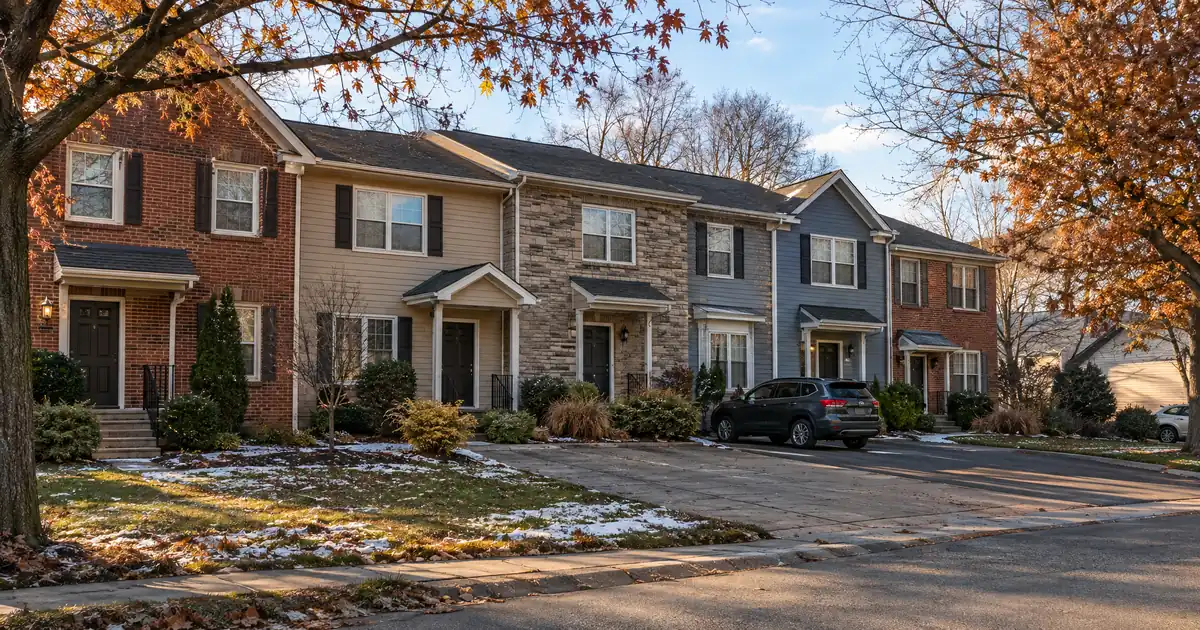
Hamilton is the only city in Ohio that owns and operates its electric, natural gas, water, and wastewater utilities, according to the City of Hamilton. The gas utility dates to 1890. The city also owns 51.4 percent of the 70.2-MW Greenup hydroelectric plant, per its utility operations page. Tenants in many buildings pay water, gas, and electric on a single city bill. For an investor pulling equity out of a Hamilton rental, that billing structure is one more line to understand when modeling a DSCR cash-out refinance.
Lendmire, a DSCR-focused mortgage broker, sees the same question from Hamilton owners again and again: is there enough equity and enough rent to pull capital out of a flat-price market? The answer depends on property type. Older two- to four-unit buildings work well. Single-family rentals are borderline.
DSCR Cash-Out Calculator
Run the cash-out numbers in Hamilton, OH
Rate source: Freddie Mac 30-yr average via FRED® — Federal Reserve Bank of St. Louis · effective Sep 24, 2026
Prefilled with starting assumptions — enter your property’s value, balance, taxes, and insurance for a more accurate picture.
Program parameters update from Lendmire’s centralized guideline source. Taxes and insurance are editable estimates.
As of Sep 24, 2026 · General Freddie Mac market benchmark, not a Lendmire loan offer. Property value, balance, taxes, and insurance are editable estimates. Maximum loan-to-value varies by lender, program, property type, and seasoning. Not a Loan Estimate, approval, or commitment to lend. Program availability and eligibility are subject to lender guidelines, credit approval, property review, and underwriting.
TL;DR: A DSCR cash-out refinance in Hamilton, Ohio is underwritten primarily on the property’s rental income measured against its full monthly obligation, with leverage capped at 75 percent of value and roughly six months of ownership required, all subject to lender guidelines and property review.
- Median sale price sits near $220,000 per Redfin, down slightly year over year.
- RentCafe puts average rent at $1,317, up 6.21 percent year over year.
- Older two- to four-unit buildings carry the strongest coverage in the core.
- Sold prices are flat, so underwrite on today’s appraisal, not assumed appreciation.
Hamilton Market Snapshot
A quick read on the Hamilton investor landscape — figures come from the cited sources below. Confirm current property-level numbers before underwriting.
| Metric | Detail |
|---|---|
| Home prices | $220K (3-mo median) (Redfin, Hamilton OH housing) |
| Typical rents | ~$2K (Repit 45011) |
Lindenwald and the Core ZIPs: Where the Equity Math Works
The city core is the strongest cash-out market in Hamilton, and Lindenwald leads it. 17STRONG calls Lindenwald the city’s most populous neighborhood, a National Historic District with park space and varied housing. It is the best fit for workforce single-family rentals and small multifamily. The East End, near Route 4 and Joyce Park, runs the same playbook: legacy blue-collar stock that suits affordable single-family and duplex rentals.
Mind the ZIP code trap. ZIP 45011 covers roughly 157 square miles, including Liberty and Fairfield townships, per PlainZip. It is not the city core. The core sits mostly in 45013 and 45015. Repit pegs the 45011 median home value near $361,000 against average rent near $2,000 and says it misses the traditional 1 percent rule. RealtyTrac shows a 45013 median sales price of $244,511. Asking rents on 45013 single-family listings run around $2,250 to $2,300 for three-bedrooms, about 0.9 percent of the median price. Those are asking rents from live listings, so treat them as ceilings, not underwriting inputs.
Coverage math needs a conservative input. Run a three-bedroom at $1,822 in rent against a price near the 45013 median, with full PITIA including taxes and insurance. That lands around 1.1x on the modeled inputs. It clears the 1.00 benchmark, but without much cushion. On a cash-out at 75 percent LTV, that cushion is what a lender reviews first.
Skip 45011 if cash flow is the goal. It is appreciation-led, coverage is thin, and a cash-out there needs either more rent or lower leverage.
German Village, Dayton Lane, and the Old Multi-Unit Stock
The best DSCR cash-out candidates in Hamilton are older two- to four-unit buildings in German Village, Dayton Lane, and downtown-adjacent blocks. Point2Homes shows about 27 percent of rental units built in 1939 or earlier, and two-bedroom units make up the largest share of rentals at 43 percent. That mix of small, old buildings is what supports income stacking.
German Village has brick streets, preserved 19th-century homes, and cafés near Marcum Park. Dayton Lane has restored historic homes and easy downtown access, with restaurants along High and Main Streets. The renter pool is walkable downtown-adjacent households, including health-care and office workers. Newer mixed-use product exists nearby, but the older buildings are where the rent-to-price gap sits.
Redfin’s Butler County listings show 23 multifamily homes for sale at a median list price of $250,000. That is close to the single-family median. One four-unit listing in Hamilton is described as below-market on rents, with separately metered units and tenants paying their own utilities. Separate meters matter. They keep owner-paid operating costs low, and coverage holds up when a unit turns.
Run the numbers on a modeled fourplex, with four units at an assumed rent per door. Rent-to-price on a small multifamily building like this generally looks stronger than it does on a comparable single-family rental in 45013. With a conservative loan-to-value, full PITIA including taxes and insurance, and a meaningful vacancy haircut, coverage can clear the select-program floor with room to spare. The rent figure is a modeled assumption, not a market fact. Apartments.com community listings show a wide spread of rents in a snapshot that is now stale, so listing rents should be verified against leases.
On deals like this, the appraisal binds before coverage does. The ratio has room. The constraint is what the appraiser says the building is worth.
Appreciation Is Flat. Underwrite Accordingly.
Hamilton’s sold prices are flat to slightly down, so a cash-out here should be modeled on today’s appraised value and never on assumed appreciation. Redfin reports a three-month median near $220,000, down 0.95 percent year over year, at $165 per square foot. Homes draw about four offers and sell in roughly 38 days. The core ZIP looks similar: Redfin’s 45013 page shows an average price of $253,000, down 0.98 percent.
Sources disagree, and the disagreement itself matters. Resideline shows a median well above Redfin’s short-window reading, with closed sales drawn from a longer period and a wide middle range between the lower and upper quartiles. That wide band means prices vary considerably from one property to the next. Redfin’s earlier strong year-over-year reading came from a single month with a thin sample of sales. It is noise, so ignore it.
The spread has a practical meaning for cash-out. Appraisal outcomes depend heavily on which comps the appraiser picks. Model proceeds across a range of appraised values, not at one optimistic number.
Here is how the program frame applies, on typical guidelines and subject to lender review:
- LTV ceiling: 75 percent on a cash-out. The 80 percent purchase figure does not carry over.
- Seasoning: roughly six months of ownership, measured from title recording.
- Coverage: most standard programs are built around a 1.00x benchmark. Some lenders review lower ratios, but expect stronger credit, lower leverage, or more reserves.
- Credit and reserves: scores from 620 up, with tiers at 660, 680, and 700. Reserves run about six months of PITIA.
Available proceeds depend on rent used for lender review, PITIA, reserves, and that 75 percent ceiling. They are not a guaranteed cash figure. The DSCR fundamentals page covers how the ratio is built, and pulling equity with a DSCR cash-out walks through the mechanics.
What a Typical Hamilton File Looks Like
DSCR files in markets like this one typically look like a bifurcated pile. Small multifamily files clear the coverage threshold with room to spare, and the conversation shifts to appraisal, reserves, and building condition. Single-family files land close to 1.00x, and the structure becomes the discussion. Older stock also brings capex, so lenders look harder at condition and reserve strength than the rent roll alone would suggest.
Consider a single-family rental appraised near $220,000 at 75 percent LTV. Assume $1,500 in monthly rent, with full PITIA including taxes and insurance. Coverage lands right around 1.0x. Drop the rent to $1,300 and the file slips into the low-0.9 range.
Sub-1.00 files can still be reviewed. A sub-1.00 program, an interest-only structure, or reduced leverage may apply, but each is reviewed subject to lender guidelines, credit approval, and property review, and each usually means more cash left in the deal. For a Hamilton single-family rental, that trade-off is often worse than simply refinancing a duplex. The stronger play for capital extraction is the small multi-unit building. Appreciation-focused investors might argue the reverse, but the price data doesn’t support it.
Rents carry source risk too. Apartment-community averages from large listing aggregators tend to run above what older duplex or single-family units achieve, while Rent.com shows noticeably lower figures. Published rent numbers vary widely depending on the source and the unit type, so treat any single figure with caution. Model on in-place leases and documented rents for the specific property.
Demand Anchors That Keep Units Full
Hamilton’s rental demand rests on health care, manufacturing, commuters, and a large renter base, not on a growing population. The Census Bureau’s QuickFacts shows an estimated 62,997 residents, down 0.6 percent from the 2020 base. RentCafe counts 11,370 renter-occupied households, 46 percent of the total. That is a deep renter pool in a city that isn’t growing, so the thesis is retention, not absorption.
The employment anchors are steady. TriHealth Bethesda Butler Hospital sits on the northern side, and Kettering Health Hamilton operates on Eaton Avenue. Community First Solutions, a health-care and senior-living provider, was listed at 625 employees in a dated Journal-News top-employer list. Call centers and manufacturing still add jobs, and many renters commute to the wider Cincinnati market, roughly 25 minutes away.
Miami University Hamilton enrolls roughly 2,400 students, per Niche. It is an open-admission commuter campus with nursing and advanced-manufacturing hubs. Workforce pipelines, not dorm overflow. Don’t pitch student housing in Hamilton.
Rossville, across the Great Miami River near SR-129 and I-75, offers highway access for commuters. The North End near Spooky Nook Sports Champion Mill draws service and hospitality workers. The Journal-News has reported the complex draws more than a million visitors a year, but the project’s city-backed financing has carried some strain. It supports the tenant base nearby. Don’t underwrite around it.
Cautions Worth Sizing
- Concessions. Two local listings offered a 20-month lease with a locked-in price and a 75 percent security deposit for new applicants. That is anecdotal, not a vacancy statistic, but it suggests softer leasing on some single-family rentals. Haircut vacancy by a few points.
- Flood exposure. Redfin reports 5 percent of Hamilton properties at severe flood risk over 30 years, about 854 properties. Earlier snapshots showed a much higher figure. Check each property’s location individually.
- Older stock. Pre-1940 buildings mean capex and reserve drain. Model the roof and mechanicals, not just the rent roll.
- Local rules. Verify current rental rules, taxes, and insurance with qualified local professionals.
LLC-titled holdings can go through these programs, subject to lender program eligibility, which helps owners who have already hit conventional financed-property limits. Lendmire’s comparison of conventional and DSCR loans covers why that matters.
Where the Proceeds Go Next
Hamilton’s edge is cost of entry. With prices around $200,000 to $220,000 and multifamily listings near $250,000, proceeds from one building can seed the next. A common path is to cash out a seasoned fourplex in German Village or Lindenwald, then reinvest in another small multi-unit building at similar price levels. That repeats the stack without chasing appreciation this market isn’t delivering. For investors comparing structures, you can compare DSCR options for Ohio programs, or call Lendmire at 828-256-2183.
If your Hamilton property has sat past the six-month mark and appraised near the middle of a $145,000 to $255,000 band, what would you do with the proceeds: buy the next building in the old core, or hold the capital until prices move?
DSCR vs. conventional financing
Two common ways to finance an investment property in Hamilton, OH. They qualify you differently — here’s how investors weigh them.
Why investors choose it
- Qualifies on the property’s rental income — no personal tax returns, W-2s, or pay stubs needed to document income.
- No personal debt-to-income ceiling to clear, so existing mortgages and obligations don’t cap your borrowing the same way.
- Can be closed in an LLC, keeping the property inside a business entity.
- Built for scaling — not held to the limit on number of financed properties that conventional financing applies.
- Underwriting centers on the deal: generally qualifies when the rent covers the payment, a 1.00x coverage ratio being a common baseline (confirmed in underwriting).
- Designed specifically for investment property, including long-term and, where the program allows, short-term rentals.
Where it’s strong
- Often the lowest ongoing financing cost for a buyer who fully qualifies on personal income — a fit for a first property or a cost-first purchase.
Trade-offs for investors
- Requires full personal income documentation and must fit within a debt-to-income limit — salary, existing debts, and other mortgages all count.
- Typically held in your personal name rather than a business entity.
- Caps how many financed properties you can carry, which can become a ceiling as a portfolio grows.
- Evaluates you as a borrower as much as the property, which usually means more paperwork.
How investors usually choose: a first or single property often optimizes for the lowest financing cost; portfolio builders often optimize for leverage, vesting in an LLC, and scaling past conventional caps. The right answer depends on your goals, the property, and current guidelines — both paths run through select lenders in Lendmire’s wholesale network, with eligibility and terms confirmed in underwriting.
Frequently Asked Questions
How do you qualify for a DSCR loan in Hamilton, Ohio?
Qualification centers on the property’s rent relative to its full PITIA, with 1.00x as a common benchmark. Lenders also review credit, typically 620 or higher, and reserves of roughly six months. For a cash-out, the property usually needs about six months of ownership from title recording. Final eligibility depends on lender guidelines, credit approval, and property review.
What are the requirements for an investment property loan in Hamilton, OH?
Typical guidelines include a 75 percent LTV ceiling on a cash-out, a DSCR near or above 1.00, and reserves around six months. Manufactured homes, log homes, and barndominiums fall outside these programs. Loan amounts run up to $3,000,000 on standard programs, with smaller balances routed through select lenders. The Ohio DSCR financing page outlines the program details.
Does Hamilton’s municipal utility setup affect DSCR coverage?
It can, but no sourced rate comparison exists, so don’t assume savings. In multi-unit buildings, the question is who pays utilities and whether units are separately metered. Separate meters with tenant-paid utilities keep the owner’s operating costs low, which supports coverage. Confirm billing arrangements building by building.
Which Hamilton property types work best for a cash-out refinance?
Older two- to four-unit buildings in German Village, Dayton Lane, Lindenwald, and the East End typically show the strongest coverage. A fourplex priced near the single-family median can clear well above 1.00x on verified rents. Single-family rentals in the core sit closer to the benchmark and leave less cushion.
For current guidelines and terms, see Lendmire’s DSCR loan programs page.
About Lendmire
Lendmire, NMLS# 2371349, is a DSCR and non-QM mortgage brokerage with investor loan programs in 41 markets, including Washington, D.C. Lenders commonly review DSCR eligibility around property-level rent rather than personal income documentation, subject to lender guidelines. The brokerage also helps arrange financing for LLC-owned portfolios beyond conventional financed-property limits. Lendmire was recognized by Scotsman Guide in 2025 and is a 2026 Scotsman Guide Top Mortgage Workplace.
Scotsman Guide’s Top Mortgage Workplace list for 2025 documents Lendmire’s recognition.
Get Started
Ready to find the right loan for you?
In about 30 seconds you can review financing options available for your investment property. No commitment required.
Informational only. Not a Loan Estimate, approval, or commitment to lend. Program availability and eligibility are subject to lender guidelines, credit approval, property review, and underwriting.
References
1. City of Hamilton, Utilities
2. City of Hamilton, Utility Operations
3. Redfin, Hamilton housing market
4. Repit
5. 17STRONG Hamilton, Our Neighborhoods
6. PlainZip
7. RealtyTrac
8. Point2Homes
9. Redfin’s Butler County listings
10. Apartments.com
11. Redfin — ZIP 45013 Housing Market
12. Resideline
13. Rent.com
14. TriHealth Bethesda Butler Hospital
17. Niche
18. a 2026 Scotsman Guide Top Mortgage Workplace
19. Scotsman Guide 2025 Top Mortgage Workplace
This article is part of Lendmire’s investment property cash-out refinance program — full qualification details, guidelines, and scenarios live on the program page.
Related reading: Luxury Rental DSCR Loans In New Jersey · Jersey Shore Vacation Rental Loans: DSCR Financing In Ocean City, Cape May And Long Beach Island · DSCR Cash-out Refinance In New Jersey: Pulling Equity From A Rental
Guides: Investment Property Cash-Out Refinance in Hamilton, OH · Investment Property Cash-Out Refinance in Ohio
Brandon Miller
Founder & CEO, Mortgage Loan Originator, Lendmire LLC
- Mortgage Loan Originator · NMLS# 1129696 · Verify on NMLS Consumer Access
- North Carolina Real Estate Broker · License# 343312 · Verify on NCREC
- North Carolina Insurance Producer · License# 19053198 · Property, Casualty, Life, Health · Verify on NAIC SBS
- Lendmire LLC · Firm NMLS# 2371349 · Verify firm licensure
Compliance and disclosures. Lendmire (NMLS# 2371349) is a licensed mortgage broker and is not a direct lender, depository institution, financial advisor, or tax professional. Content in this article is general market analysis and educational information — not financial, legal, or tax advice for any specific situation. Lendmire does not guarantee loan approval; every transaction is subject to underwriting by the funding lender. Mortgage pricing and loan program guidelines are subject to change at any time without notice and vary by borrower characteristics, property type, and state regulations. Lendmire complies with Equal Housing Opportunity. Licensure verification: NMLS Consumer Access.