
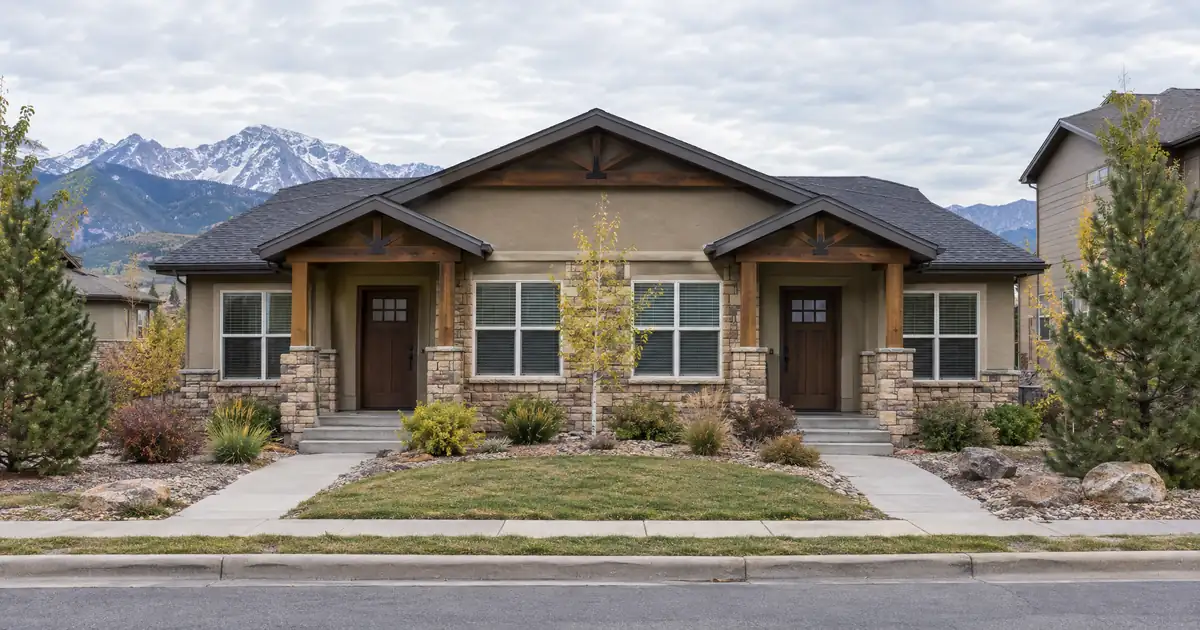
The biggest objection to this market is simple: at roughly $690,000 for a median single-family home, rent usually does not cover the debt on a high-leverage cash-out. That objection is mostly right. It is also incomplete, because coverage varies sharply by village and property type, and the investors who pull equity out successfully here size the loan to the rent instead of the appraisal.
Lendmire (NMLS# 2371349), a DSCR-focused mortgage broker, arranges these files through wholesale and investor-lending channels. This report models where a cash-out clears the 1.00 benchmark in Highlands Ranch and where it doesn’t. It covers the paperwork that trips files up and how proceeds can move into the next acquisition. Rents and prices below are attributed to their sources, which disagree in places. Any coverage ratio is a modeled figure built on full monthly obligations including taxes and insurance, not a quoted result.
DSCR Cash-Out Calculator
Run the cash-out numbers in Highlands Ranch, CO
Rate source: Freddie Mac 30-yr average via FRED® — Federal Reserve Bank of St. Louis · effective Sep 24, 2026
Prefilled with starting assumptions — enter your property’s value, balance, taxes, and insurance for a more accurate picture.
Program parameters update from Lendmire’s centralized guideline source. Taxes and insurance are editable estimates.
As of Sep 24, 2026 · General Freddie Mac market benchmark, not a Lendmire loan offer. Property value, balance, taxes, and insurance are editable estimates. Maximum loan-to-value varies by lender, program, property type, and seasoning. Not a Loan Estimate, approval, or commitment to lend. Program availability and eligibility are subject to lender guidelines, credit approval, property review, and underwriting.
TL;DR: A DSCR cash-out refinance on a Highlands Ranch, Colorado rental is underwritten primarily on the property’s rental income measured against its full monthly obligation, with proceeds capped at 75% loan-to-value and generally available only after about six months of ownership, subject to lender guidelines.
- Southridge shows the strongest rent-to-price ratio of the villages with a published rent figure.
- Townhomes near Town Center reach 1.00 coverage at lower leverage than detached homes.
- Sources put median rent anywhere from $2,146 to $2,361, so underwrite the low end.
- HRCA dues reduce net coverage and belong in the calculation.
Highlands Ranch Market Snapshot
A quick read on the Highlands Ranch investor landscape — figures come from the cited sources below. Confirm current property-level numbers before underwriting.
| Metric | Detail |
|---|---|
| Home prices | $690,000 median SFR (Property Focus) |
| Employment | 4,270 aerospace employees (Douglas County EDC, target) |
| Vacancy | 3–5% (Bergan & Company) |
Southridge Carries the Best Rent-to-Value
Southridge is the strongest DSCR submarket among the Highlands Ranch villages that publish a rent figure. Redfin’s rental market page lists a Southridge median rent of $3,100, while Denver Group Real Estate puts the village median price near $703,000. That works out to about a 0.44% monthly rent-to-price ratio. The rent is an all-property-type median and the price is a broker-blog approximation, so treat the ratio as directional.
Now the modeled coverage. Assume the Southridge property is worth $703,000, rents at $3,100, and is refinanced at the 75% LTV ceiling on a standard 30-year structure. Debt coverage including taxes and insurance lands in the mid-0.7s. Drop leverage to around 50% LTV and the same rent covers the full obligation at roughly 1.05. That gap is the whole story of this market: the property supports a cash-out, but not necessarily the maximum one. Exact terms depend on the lender’s guidelines, property type, leverage, and a full review of the borrower’s file.
Compare that with the neighboring villages. Denver Group puts Northridge near $634,000 and Eastridge near $630,000, both cheaper than Southridge. Neither has a reliable village-level rent figure, which matters for the paperwork discussed below. Without a rent comp, the lender’s market-rent review does the work, and the investor has less control over the number.
Does the 75% Cap Leave Any Cash Out at These Prices?
Yes, but the amount is set by rent coverage, not by the LTV ceiling. The program cap is 75% LTV on a cash-out. Minimum coverage on standard programs is 1.00, meaning rent used for lender review against full PITIA. Equity available depends on rent used for lender review, the monthly obligation, reserves and that ceiling. It is never a guaranteed cash figure. Every figure here varies by lender and program — guidelines, property type, leverage, and credit profile all apply.
Picture an owner whose Southridge home has appreciated meaningfully since purchase, though the specific gain would need to be confirmed by an appraisal rather than assumed. The equity is real, and at 75% LTV the modeled coverage sits below 1.00. A sub-1.00 file has options a lender would review: a sub-1.00 program, an interest-only structure, or a lower-LTV cash-out that brings the ratio up. Each depends on lender guidelines, credit approval and property review. The practical question is which combination leaves the investor with the most usable capital while still clearing lender review.
Credit tiers in the network run from a 620 floor through 660, 680 and 700, with better tiers generally supporting stronger leverage. Reserves typically run about six months of PITIA, with more required above $1,500,000. Loan sizes go up to $3,000,000 on standard programs. Those ceilings rarely bind in Highlands Ranch, so the constraint that more often decides a file is debt service coverage.
The recent price trend adds a second constraint. Zillow reports an average home value of $713,853, down 3.2% over the past year, with homes going pending in about 8 days. Meanwhile Property Focus shows a median single-family price of $690,000 across 1,428 residential sales in the past 12 months. The two figures measure different things (average value against median sale price), which is why this report uses the $690,000 median as its citywide anchor. Flat-to-soft pricing means an appraisal can land below an owner’s expectation, and a cash-out sized on the hoped-for value shrinks accordingly.
Townhomes and Westridge: Lower Ticket, Different Math
Attached product reaches coverage more easily than detached homes. Wisdom Real Estate lists condos and townhomes at $450,000 to $650,000, against $700,000 to $1 million for single-family. Local manager Bergan & Company cites townhome rents of $2,200 to $3,200, and single-family rents of $2,800 to $4,500. That is a property-management marketing page, so read the ranges as directional. Together they imply townhome rent-to-price around 0.4% to 0.5%, which is this report’s arithmetic, not a sourced ratio.
Run the numbers on a modeled townhome near the middle of those bands: a $550,000 value renting at a modeled $2,700. Full PITIA at 75% LTV gives coverage in the mid-0.8s. Pull leverage down toward 60% and the ratio approaches 1.00, before association dues. That is a better result than the detached villages produce at the same leverage. Final terms depend on lender guidelines, property type, leverage, and the borrower’s complete credit picture.
Westridge is the village where attached rentals concentrate. Redfin lists a Westridge median rent of $2,615 across all unit types. Homes.com reports a 12-month median sale price of $710,000, up 1%, with homes selling after roughly 40 days on market. Against that price, the rent-to-price ratio is about 0.37%. Westridge is priced on amenity and walkability near Highlands Ranch Town Center, and that shows in coverage. Modeled at 75% LTV, a Westridge detached home comes out in the mid-0.6s including taxes and insurance. It needs a lower cash-out target to clear program review.
The Hearth, a newer-construction pocket, shows a Redfin median rent of $3,995. The sample is small. Treat it as an upper-end SFR indicator, not a typical rent.
Lendmire’s DSCR cash-out refi mechanics page covers the general structure, and the investment property refinance options page compares refinance paths.
HRCA assessments of $174 per quarter, sit inside the obligation the lender measures rent against. Some neighborhoods also carry separate sub-association dues. Confirm the exact dues on any property before sizing a loan, because they move net coverage on a file that is already close to 1.00.
The Paper Trail That Decides the File
Most cash-out friction in a market like this is documentation, not credit. Three items cause the most delay.
Seasoning and title. The program looks for about six months of ownership measured from title recording. An investor who bought recently on a purchase file needs to check the recording date, not the closing statement date. If the property was acquired through an LLC, eligibility is subject to lender program eligibility, and entity documents should be assembled before the application, not after the first conditions list.
Rent evidence. A signed lease is the cleanest support, but the eligibility reviews market rent too. This is where the source conflict matters. Zumper reports a median rent of $2,361 across all bedroom counts and property types, down 1% over the year. RentCafe shows an average apartment rent of $2,146, with three-bedrooms at $2,812. Redfin’s community-wide median is $2,175. A property manager’s page citing Zillow data puts the average near $2,900. These sources measure different property mixes and dates. Underwrite against the conservative end. If the market-rent review comes in at the lower figure, the file still needs to work.
Association paperwork. HRCA membership and any sub-association dues appear in the obligation. A property with an unusual sub-association fee can shift the ratio enough to change the maximum cash-out. These specifics are subject to lender guidelines and a full review of property, leverage, and credit.
DSCR files in markets like this one typically look like a well-documented owner with meaningful equity and a rent that lands just under the line at high leverage. The difference between a clean file and a stalled one is usually a stale lease, a missing dues statement or an entity document that doesn’t match the title. Investors who assemble those pieces first tend to spend the review period answering appraisal questions instead of chasing paperwork. Lendmire’s team can pressure-test the structure before submission, and you can pull a DSCR quote or call 828-256-2183.
A Thin Renter Pool With Deep Pockets
Highlands Ranch is not a city. It is a census-designated place in Douglas County governed by a metro district and HRCA rather than a municipality, and Census QuickFacts tracks it as a CDP of roughly 100,000-plus residents. The renter pool is thin. RentCafe shows 21% of households renter-occupied and 79% owner-occupied. Depth comes from income: Point2Homes, citing Census data, reports an average household income of $194,718 and a poverty rate of 2.89%.
Resident employment leans professional. Data USA reports the largest resident industries as Professional, Scientific and Technical Services at 9,347 people, Health Care and Social Assistance at 6,967 and Finance and Insurance at 4,950. Those are resident counts, not local job counts. The Douglas County Economic Development Corporation counts 4,270 employees at four aerospace companies in the region, including Lockheed Martin Space Systems’ Waterton Canyon campus near the community.
Healthcare adds a steady base. HealthONE Sky Ridge Medical Center in nearby Lone Tree has more than 1,300 employees, and the parent system exceeds 11,000. The drive link from Eastridge and Southridge is this report’s inference, not a sourced fact. Denver Tech Center is a commuter destination for many residents, though it sits outside the community.
On vacancy, Bergan & Company claims a typical 3% to 5% and rents 15% to 20% above Douglas County averages, attributing the tightness to limited new construction. That is a manager’s marketing claim, not audited data, and no independent vacancy series turned up in this review. Use it as a soft signal for a modest vacancy factor, not as a number to rely on.
Skip BackCountry and the 55+ Pockets
BackCountry homes typically range from $900,000 to $1,500,000 per Schossow Group, with other sources putting the range at $700,000 to $1.4 million and up. At those prices the rent-to-price ratio is almost certainly weak. That is an inference, since no rent source exists for the gated area. New BackCountry construction has sold out. Skip it for a DSCR cash-out unless the investor is comfortable with a very low cash-out percentage.
The 55+ communities, including Gleneagles Village, can carry age restrictions and generally do not suit standard rentals. Verify before targeting them. Manufactured homes, log homes and barndominiums fall outside these DSCR programs entirely.
Frequently Asked Questions
Does a Highlands Ranch rental usually clear 1.00 at the 75% LTV cap?
Usually not on detached homes. Modeled coverage including taxes and insurance falls below 1.00 at 75% LTV in Southridge and Westridge, and townhomes come closer but still typically sit below the line. Lower leverage, an interest-only structure or a sub-1.00 program can change the picture, each subject to lender guidelines.
DSCR vs. conventional financing
Two common ways to finance an investment property in Highlands Ranch, CO. They qualify you differently — here’s how investors weigh them.
Why investors choose it
- Qualifies on the property’s rental income — no personal tax returns, W-2s, or pay stubs needed to document income.
- No personal debt-to-income ceiling to clear, so existing mortgages and obligations don’t cap your borrowing the same way.
- Can be closed in an LLC, keeping the property inside a business entity.
- Built for scaling — not held to the limit on number of financed properties that conventional financing applies.
- Underwriting centers on the deal: generally qualifies when the rent covers the payment, a 1.00x coverage ratio being a common baseline (confirmed in underwriting).
- Designed specifically for investment property, including long-term and, where the program allows, short-term rentals.
Where it’s strong
- Often the lowest ongoing financing cost for a buyer who fully qualifies on personal income — a fit for a first property or a cost-first purchase.
Trade-offs for investors
- Requires full personal income documentation and must fit within a debt-to-income limit — salary, existing debts, and other mortgages all count.
- Typically held in your personal name rather than a business entity.
- Caps how many financed properties you can carry, which can become a ceiling as a portfolio grows.
- Evaluates you as a borrower as much as the property, which usually means more paperwork.
How investors usually choose: a first or single property often optimizes for the lowest financing cost; portfolio builders often optimize for leverage, vesting in an LLC, and scaling past conventional caps. The right answer depends on your goals, the property, and current guidelines — both paths run through select lenders in Lendmire’s wholesale network, with eligibility and terms confirmed in underwriting.
Which village shows the strongest rent-to-price ratio?
Southridge, at about 0.44% using Redfin’s $3,100 median rent and Denver Group’s roughly $703,000 median price. Westridge sits near 0.37%. The ratios combine sources from different dates, so use them to compare villages rather than to underwrite a specific home.
How do HRCA dues affect a cash-out file?
They are part of the monthly obligation the rent is measured against. The standard HRCA assessment is $174 per quarter, and some neighborhoods add sub-association dues. On a file near 1.00, those dues can trim the maximum cash-out. Terms vary by lender guidelines, property type, leverage, credit profile, and full file review.
Can I cash out on a property I bought recently?
Generally only after about six months of ownership, measured from title recording. Check the recording date on your deed, then confirm with the lender, since seasoning is subject to program terms.
Are duplexes or fourplexes realistic here?
Not really. The community is predominantly HOA-governed single-family and townhome stock, and no sourced multi-unit data turned up. Small multifamily is more likely in neighboring submarkets, which this research did not cover.
Where the Asymmetry Sits
Highlands Ranch is appreciation- and quality-led, not yield-led. That is why the cash-out here works best when a long-held property has built equity from an earlier basis and the loan is sized to the rent. Investors comparing structures may also want to weigh a DSCR loan against a conventional loan, since owners with traditional employment income sometimes consider both. For the broader mechanics, see the guide “What Is a DSCR Loan” and the Colorado DSCR investor loans hub. Verify current local rental rules, taxes, insurance and HOA rental restrictions with qualified local professionals before committing.
The mispricing sits in attached product. Townhomes at $450,000 to $650,000 in Westridge and Northridge carry higher rent-to-price ratios than the $700,000-plus detached villages, in a community where rents run above county averages and the tenant pool is high-income. Detached homes get the attention. The townhome is where rent and price line up best.
For current guidelines and terms, see Lendmire’s DSCR loan programs page.
About Lendmire
Lendmire (NMLS# 2371349) is a DSCR-focused mortgage broker that helps arrange investor financing across 41 markets, including Washington, D.C., through wholesale and investor-lending channels. DSCR eligibility is generally reviewed by the lender on the property’s rental income rather than personal income documentation, subject to lender guidelines. That works for self-employed investors, LLC operators and portfolios above four financed properties. Scotsman Guide named Lendmire a Top Mortgage Workplace in both 2025 and 2026.
Get Started
Ready to find the right loan for you?
In about 30 seconds you can review financing options available for your investment property. No commitment required.
Informational only. Not a Loan Estimate, approval, or commitment to lend. Program availability and eligibility are subject to lender guidelines, credit approval, property review, and underwriting.
References
2. Douglas County Economic Development Corporation
8. Homes.com
10. RentCafe, Highlands Ranch rent trends
11. U.S. Census Bureau QuickFacts, Highlands Ranch CDP
15. Schossow Group
16. 2025
17. 2026
This article is part of Lendmire’s investment property cash-out refinance program — full qualification details, guidelines, and scenarios live on the program page.
Related reading: Cash Out Refinance Investment Property Highlands Ranch Colorado · Cash Out Refinance Investment Property Boulder Colorado · Luxury Rental DSCR Loans In Highlands: How STR Rents Are Read
Guides: Investment Property Cash-Out Refinance in Colorado
Brandon Miller
Founder & CEO, Mortgage Loan Originator, Lendmire LLC
- Mortgage Loan Originator · NMLS# 1129696 · Verify on NMLS Consumer Access
- North Carolina Real Estate Broker · License# 343312 · Verify on NCREC
- North Carolina Insurance Producer · License# 19053198 · Property, Casualty, Life, Health · Verify on NAIC SBS
- Lendmire LLC · Firm NMLS# 2371349 · Verify firm licensure
Disclosures. The information presented in this article is general market commentary, not financial, legal, or tax advice. Lendmire is a mortgage brokerage (NMLS# 2371349) — not a direct lender or depository institution — and loan placement is subject to lender underwriting. Nothing in this content represents a commitment to lend. Loan terms, pricing, and program availability vary based on borrower qualifications, property characteristics, and state of subject property, and are subject to change at any time. Lendmire complies with Equal Housing Opportunity requirements. Consumer access: nmlsconsumeraccess.org.