
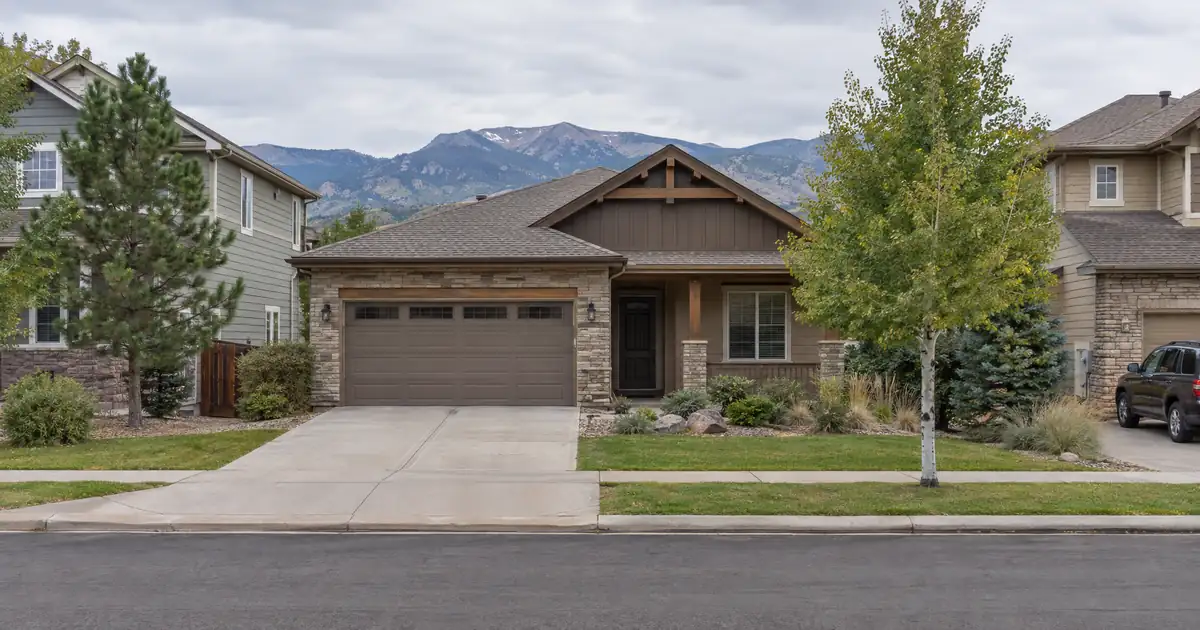
The objection comes up in nearly every Highlands Ranch conversation: the rent doesn’t cover the payment at these prices, so why bother pulling equity? It’s a fair hit. At a 75% loan-to-value ceiling, most single-family rentals in this master-planned community land below the standard 1.00x coverage benchmark once taxes and insurance are counted. This report works through where the cash-out math holds anyway, where it breaks, and how to size the loan so it clears lender review on a cash-out refinance investment property in Highlands Ranch, Colorado. Lendmire (NMLS# 2371349) is a DSCR-focused mortgage broker that arranges these files through wholesale lending channels.
TL;DR: A DSCR cash-out refinance on a Highlands Ranch, Colorado rental is underwritten primarily on the property’s rental income measured against its full monthly obligation, with the borrower’s personal income documentation playing a secondary role, subject to lender guidelines.
DSCR Cash-Out Calculator
Run the cash-out numbers in Highlands Ranch, CO
Rate source: Freddie Mac 30-yr average via FRED® — Federal Reserve Bank of St. Louis · effective Sep 24, 2026
Prefilled with starting assumptions — enter your property’s value, balance, taxes, and insurance for a more accurate picture.
Program parameters update from Lendmire’s centralized guideline source. Taxes and insurance are editable estimates.
As of Sep 24, 2026 · General Freddie Mac market benchmark, not a Lendmire loan offer. Property value, balance, taxes, and insurance are editable estimates. Maximum loan-to-value varies by lender, program, property type, and seasoning. Not a Loan Estimate, approval, or commitment to lend. Program availability and eligibility are subject to lender guidelines, credit approval, property review, and underwriting.
- Southridge carries the strongest rent-to-price ratio of the villages with published rents, about 0.44% per month.
- Full 75% LTV cash-outs on single-family homes here typically model below 1.00x coverage.
- Townhomes and condos ($450K-$650K) offer the most realistic path to 1.0x.
- Roughly 6 months of ownership, measured from title recording, must pass before a cash-out.
Highlands Ranch Market Snapshot
A quick read on the Highlands Ranch investor landscape — figures come from the cited sources below. Confirm current property-level numbers before underwriting.
| Metric | Detail |
|---|---|
| Home prices | $690,000 median SFR (Property Focus) |
| Employment | 4,270 aerospace employees (Douglas County EDC, target) |
| Vacancy | 3–5% (Bergan & Company) |
Southridge: The Highest Rent-to-Price Ratio in the Villages
Southridge is the strongest cash-flow submarket in Highlands Ranch, and it still doesn’t reach 1.00x at maximum leverage. Redfin lists a Southridge median rent, and Denver Group Real Estate reports the village’s median price as a figure in the range of the higher-priced Highlands Ranch villages. The rent sits well below that price, so the resulting monthly rent-to-price ratio is modest in absolute terms. That comparison is Lendmire Research’s own calculation, and the two inputs come from different dates and sources.
Construction here is mostly 1990s and 2000s single-family stock with some townhomes mixed in. The tenant profile is commuters and professionals who accept a drive that runs 5-10 minutes longer than from Northridge or Eastridge, according to the research. Redfin’s rent figure is an all-property-type median, so a well-kept detached home may sit above it and a townhome below.
Now the modeled math. Assume a value near $703K, a 75% LTV cash-out and a $3,100 rent used for lender review. Divide that rent by the full obligation (principal, interest, taxes, insurance and HOA dues) and coverage lands in the high-0.7s. That figure includes taxes and insurance and assumes a standard 30-year amortization. It is a modeled illustration, not a quote. Every figure here varies by lender and program — guidelines, property type, leverage, and credit profile all apply.
Pull leverage back into the mid-50s% LTV and the same rent approaches 1.0x. So the practical question isn’t whether Southridge qualifies. It’s how much equity you actually want out, since the loan amount, not the rent, is the variable you control.
What a Sub-1.00 File Looks Like (and What Lenders Review)
Most standard programs are built around a 1.00x benchmark because rent covers the payment at that level. Some lenders will review sub-1.00 or no-ratio scenarios, but those usually come with lower leverage, different pricing, larger reserves or more cash retained. Eligibility depends on lender guidelines, credit profile, reserves and property review.
For a Highlands Ranch owner sitting at 0.8x on a full-leverage request, three paths are worth raising with a broker:
- Smaller cash-out. Reducing the LTV request until coverage clears the lender’s minimum.
- Interest-only structuring. Some programs review an interest-only period, which changes the qualifying obligation.
- A sub-1.00 program. A handful of lenders in the wholesale network review below-benchmark files, generally with stronger credit and reserve profiles.
None of those is a promise. Each is an option a lender would evaluate.
Westridge: Priced for Amenity, Not Yield
Westridge trades on Town Center proximity, and the yield reflects it. Homes.com reports a 12-month median sale price of $710,000, up 1%, with homes selling after about 40 days on market. Denver Group Real Estate puts the village nearer $755K, so the two sources disagree; this report uses the Homes.com figure for the ratio math. Redfin’s Westridge median rent is $2,615, giving a ratio near 0.37% per month.
Run the numbers on a 75% cash-out at those inputs and full-obligation coverage models in the mid-0.6s. That’s a wide gap. Westridge single-family homes are an equity-and-appreciation hold, and a large cash-out there mostly turns into a coverage problem. Final terms depend on lender guidelines, property type, leverage, and the borrower’s complete credit picture.
The exception is attached product. DougCo Social notes that areas near Town Center approach genuine walkability, which is rare in Highlands Ranch, and townhomes and condos there carry far lower price tags than the detached homes around them. That brings us to the property type that actually makes the numbers work.
Townhomes: The Realistic Route to 1.0x
Attached product is the most workable DSCR cash-out target in Highlands Ranch. Wisdom Real Estate lists condos and townhomes at $450,000-$650,000 across the community, against $700,000-$1M for single-family. Bergan & Company, a local property manager, puts townhome rents at $2,200-$3,200 and single-family rents at $2,800-$4,500. Its figures are marketing-page ranges, so treat them as directional.
Combine the mid-range of each and the rent-to-price ratio runs roughly 0.4%-0.5%, which is again Lendmire Research arithmetic. Modeled at the $550K midpoint with a $2,700 rent and a 75% cash-out, coverage comes out in the mid-0.8s including taxes and insurance. Trim to a mid-60s% LTV and it gets near 1.0x. Near the top of the rent range, a full-leverage request can sit right around 1.0x. These specifics are subject to lender guidelines and a full review of property, leverage, and credit.
Here’s the catch. HOA dues sit inside the obligation. The Highlands Ranch Community Association (HRCA) standard assessment is $174 per quarter, and some neighborhoods add separate sub-association dues. Those flow straight into the coverage denominator. Get the dues in writing before the file goes to a lender.
Northridge is the other attached-friendly pocket. Homes.com says smaller properties there sell for $375,000-$425,000, which is likely attached product. The village overall carries a median near $634K, and it was among the first Highlands Ranch neighborhoods, with homes generally dating from the mid-1980s to early 1990s. Northridge and Eastridge (median near $630K) are the lowest-priced villages in the Denver Group snapshot. Redfin publishes no village-level rent for either, so coverage math there needs a fresh rent analysis rather than an assumption.
Village-level pricing and rent data differ noticeably across Highlands Ranch. Southridge and Westridge sit at the higher end on price, while Northridge and Eastridge are the lowest-priced villages. Published rent figures cover only Southridge and Westridge, and Southridge shows the stronger rent-to-price relationship of the two because its rents are higher against a slightly lower price. Rent data isn’t published for Northridge or Eastridge, so a rent-to-price comparison isn’t available there. Verify current figures against a listing or rental source before underwriting any specific property.
Skip BackCountry
BackCountry homes typically range from $900,000 to $1,500,000, and new construction there is reported sold out. Even at rents near the top of the community’s range, the ratio at those prices is likely weak. That is inference, not a sourced number. It’s a lifestyle asset. Cash-out coverage won’t carry it. The same goes for 55+ communities such as Gleneagles Village, which may carry age restrictions and aren’t built for standard rentals.
What the Rent Data Actually Says
Rent sources disagree here by a wide margin, and the file should be underwritten on the conservative end. Zumper puts the all-types median at $2,361, down 1% over the year. RentCafe’s average apartment rent is $2,146 (1BR $1,856, 2BR $2,358, 3BR $2,812). Redfin’s community-wide median is close to that, at $2,175. Zillow-derived figures cited by Colorado RPM run near $2,900. Different property mixes explain most of the spread. Terms vary by lender guidelines, property type, leverage, credit profile, and full file review.
This report uses Zumper’s $2,361 as the community-level anchor. The direction matters more than the level: rents are flat to slightly down. On the sales side, Property Focus reports a $690,000 median single-family price with 1,428 residential sales in the past 12 months. Zillow’s average home value is higher at $713,853, down 3.2% over the year, with homes going pending in around 8 days. The gap between the two reflects different methodology.
Put that together and the equity-extraction case is not a spread trade. Bergan & Company claims vacancy typically runs 3-5% and rents sit 15-20% above Douglas County averages. That is a manager’s claim, not audited data, so verify it with a current rental analysis. If the claim holds, it supports a lower vacancy factor. It doesn’t rescue a 75% cash-out on a $3,100 rent.
Who Rents Here (and Why It Matters for Renewals)
Renting is the minority choice in Highlands Ranch: RentCafe reports 21% of households as renter-occupied and 79% owner-occupied. The tenant pool is thin and well-paid. Point2Homes, citing Census data, shows an average household income of $194,718 and 2.89% poverty in Data USA’s profile of about 102,000 residents. The Census QuickFacts page for the community is the place to verify current population figures.
Resident industry counts point to steady white-collar demand. Data USA lists Professional, Scientific and Technical Services at 9,347 people, Health Care and Social Assistance at 6,967 and Finance and Insurance at 4,950. Those are resident counts; many work elsewhere.
Regional anchors reinforce that. The Douglas County Economic Development Corporation counts 4,270 employees at four aerospace companies in the region, including Lockheed Martin Space Systems’ Waterton Canyon campus, near Highlands Ranch. HCA HealthONE Sky Ridge Medical Center in Lone Tree is a 284-bed Level II trauma center with more than 1,300 employees per HealthONE, part of a system with more than 11,000. The drive-time link to the Eastridge and Southridge villages is Lendmire Research’s inference. Local property managers also name the Denver Tech Center as a key employment draw, though it isn’t in Highlands Ranch.
The Paperwork That Slows Cash-Out Files
This is the plumbing. Highlands Ranch is unincorporated: it is a census-designated place run by a metro district and the Highlands Ranch Community Association, with no mayor or city council. For a lender reviewing a file, that means the HOA and association paperwork is the primary property-level document trail.
A few items recur:
DSCR vs. conventional financing
Two common ways to finance an investment property in Highlands Ranch, CO. They qualify you differently — here’s how investors weigh them.
Why investors choose it
- Qualifies on the property’s rental income — no personal tax returns, W-2s, or pay stubs needed to document income.
- No personal debt-to-income ceiling to clear, so existing mortgages and obligations don’t cap your borrowing the same way.
- Can be closed in an LLC, keeping the property inside a business entity.
- Built for scaling — not held to the limit on number of financed properties that conventional financing applies.
- Underwriting centers on the deal: generally qualifies when the rent covers the payment, a 1.00x coverage ratio being a common baseline (confirmed in underwriting).
- Designed specifically for investment property, including long-term and, where the program allows, short-term rentals.
Where it’s strong
- Often the lowest ongoing financing cost for a buyer who fully qualifies on personal income — a fit for a first property or a cost-first purchase.
Trade-offs for investors
- Requires full personal income documentation and must fit within a debt-to-income limit — salary, existing debts, and other mortgages all count.
- Typically held in your personal name rather than a business entity.
- Caps how many financed properties you can carry, which can become a ceiling as a portfolio grows.
- Evaluates you as a borrower as much as the property, which usually means more paperwork.
How investors usually choose: a first or single property often optimizes for the lowest financing cost; portfolio builders often optimize for leverage, vesting in an LLC, and scaling past conventional caps. The right answer depends on your goals, the property, and current guidelines — both paths run through select lenders in Lendmire’s wholesale network, with eligibility and terms confirmed in underwriting.
- Seasoning. Programs typically look for about 6 months of ownership measured from title recording. A recent purchase with a renovation budget can trip this.
- Appraisal versus the pull-in number. With Zillow showing a year-over-year decline, an appraisal at or below the last sale price cuts available equity even at the 75% LTV ceiling.
- Dues documentation. Association and sub-association dues need a current statement.
- Reserves. Roughly 6 months of PITIA is typical, with more expected above $1,500,000.
- Credit. A 620 floor with tiers up at 660, 680 and 700 is typical on select programs, and stronger scores generally support better leverage.
- Loan size. Standard programs run up to $3,000,000, with smaller balances routed through select lenders in the network.
DSCR files in markets like this one typically look the same on the front end: a high-priced, low-yield property, a conservative rent, and a borrower who wants maximum proceeds. The files that move cleanly usually start from a tight rent analysis, a written dues statement and a leverage request sized to coverage rather than to the LTV ceiling. Requests sized to the ceiling and then reworked after review are the ones that stall.
The rent and dues numbers feed the coverage math covered in the full DSCR explainer, and DSCR versus conventional is worth a look for owners whose personal income would qualify them on a traditional file.
Review details are subject to lender overlays; nothing here is a commitment to lend. LLC-titled properties are eligible subject to lender program eligibility. Colorado files run through Lendmire’s Colorado DSCR investor loans hub.
Where Do the Proceeds Go?
Cash-out proceeds only earn their keep if the next deal covers itself. In Highlands Ranch that means pointing the capital at something with a better ratio than the property it came from. Options include a lower-priced attached unit in the same community or a rental in a neighboring submarket. The research turned up no sourced duplex, fourplex or ADU data here, so multi-unit stacking shouldn’t be assumed. The stock is overwhelmingly single-family and townhome under HOA governance. Multi-unit opportunities likely sit in nearby markets that this report did not research.
For the mechanics, DSCR cash-out refi mechanics covers structure in detail, and Lendmire’s guide to investment property refinance options compares the paths. Owners ready to test a scenario can pull a DSCR quote or call 828-256-2183 to talk through leverage sizing. Verify current local rental rules, taxes, insurance and HOA rental restrictions with qualified local professionals.
Frequently Asked Questions
Can I cash out on a Highlands Ranch rental if it doesn’t hit 1.00x?
Possibly, depending on the program. A lower LTV request, an interest-only structure or a sub-1.00 program may be reviewed, usually with stronger credit and reserves. Eligibility is set by the lender, not guaranteed by the broker.
Which village gives the best coverage for a cash-out?
Southridge, among the villages with published rents. Its roughly 0.44% monthly rent-to-price ratio beats Westridge’s 0.37%, though both sit below 1.00x at full leverage on the modeled math. Northridge and Eastridge lack published rents, so they need a fresh analysis.
Do HRCA dues really change the coverage number?
Yes. Association dues sit inside the monthly obligation, so they lower coverage dollar for dollar. The standard HRCA assessment is $174 per quarter, and some neighborhoods add sub-association dues, so get a current statement before requesting a cash-out.
How long after buying can I pull equity out?
Programs typically look for about 6 months of ownership, measured from title recording, and the cash-out LTV ceiling is 75%. Proceeds depend on the appraised value, the existing balance, rent used for program review and reserves, and are never a guaranteed figure.
Are townhomes here a better fit than single-family homes?
On the numbers, generally yes. Attached product priced at $450K-$650K with rents in the $2,200-$3,200 range produces a higher rent-to-price ratio than $700K-plus detached homes. HOA dues narrow that advantage, so run both.
For current guidelines and terms, see Lendmire’s DSCR loan programs page.
About Lendmire
Lendmire (NMLS# 2371349) is a DSCR-focused mortgage broker that helps arrange investor financing across 41 markets, including Washington, D.C., through wholesale and investor-lending channels. DSCR eligibility is generally reviewed by the lender on the property’s rental income rather than personal income documentation, subject to lender guidelines, which works for self-employed investors, LLC operators and portfolios above four financed properties. Scotsman Guide named Lendmire a Top Mortgage Workplace in both 2025 and 2026.
Get Started
Ready to find the right loan for you?
In about 30 seconds you can review financing options available for your investment property. No commitment required.
Informational only. Not a Loan Estimate, approval, or commitment to lend. Program availability and eligibility are subject to lender guidelines, credit approval, property review, and underwriting.
References
2. Douglas County Economic Development Corporation
4. RentCafe, Highlands Ranch rental market
7. U.S. Census Bureau QuickFacts, Highlands Ranch CDP
9. Highlands Ranch Community Association
10. 2025
11. 2026
This article is part of Lendmire’s investment property cash-out refinance program — full qualification details, guidelines, and scenarios live on the program page.
Related reading: Luxury Rental DSCR Loans In New Jersey · Jersey Shore Vacation Rental Loans: DSCR Financing In Ocean City, Cape May And Long Beach Island · DSCR Cash-out Refinance In New Jersey: Pulling Equity From A Rental
Guides: Investment Property Cash-Out Refinance in Colorado
Brandon Miller
Founder & CEO, Mortgage Loan Originator, Lendmire LLC
- Mortgage Loan Originator · NMLS# 1129696 · Verify on NMLS Consumer Access
- North Carolina Real Estate Broker · License# 343312 · Verify on NCREC
- North Carolina Insurance Producer · License# 19053198 · Property, Casualty, Life, Health · Verify on NAIC SBS
- Lendmire LLC · Firm NMLS# 2371349 · Verify firm licensure
Compliance and disclosures. Lendmire (NMLS# 2371349) is a licensed mortgage broker and is not a direct lender, depository institution, financial advisor, or tax professional. Content in this article is general market analysis and educational information — not financial, legal, or tax advice for any specific situation. Lendmire does not guarantee loan approval; every transaction is subject to underwriting by the funding lender. Mortgage pricing and loan program guidelines are subject to change at any time without notice and vary by borrower characteristics, property type, and state regulations. Lendmire complies with Equal Housing Opportunity. Licensure verification: NMLS Consumer Access.