
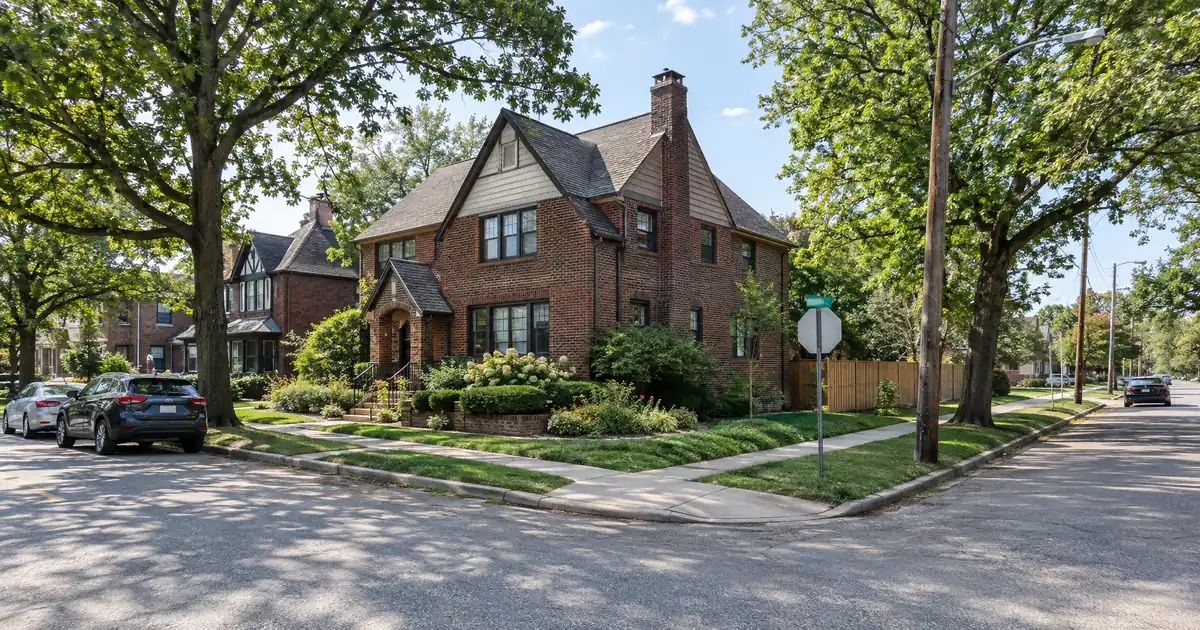
If you own a rental in Kansas City, Missouri, the useful question isn’t whether prices went up. It’s whether the equity you hold is real enough for an appraiser to count, and whether the rent behind it can carry a larger loan. Most brokers talk about a DSCR cash out refinance in Kansas City, Missouri as a single product. It’s really three different deals depending on whether the property is a rehabbed duplex, a workforce house, or a south-of-the-Plaza asset bought for appreciation.
At a Glance: A cash-out refinance on a Kansas City, Missouri rental is underwritten primarily on the property’s rental income measured against its full monthly obligation, with the loan sized against a capped share of appraised value once the property has been owned long enough to season. Lender guidelines, credit, reserves, and the appraisal decide what is available.
DSCR Cash-Out Calculator
Run the cash-out numbers in Kansas City, MO
Rate source: Freddie Mac 30-yr average via FRED® — Federal Reserve Bank of St. Louis · effective Oct 1, 2026
Prefilled with starting assumptions — enter your property’s value, balance, taxes, and insurance for a more accurate picture.
Program parameters update from Lendmire’s centralized guideline source. Taxes and insurance are editable estimates.
As of Oct 1, 2026 · General Freddie Mac market benchmark, not a Lendmire loan offer. Property value, balance, taxes, and insurance are editable estimates. Maximum loan-to-value varies by lender, program, property type, and seasoning. Not a Loan Estimate, approval, or commitment to lend. Program availability and eligibility are subject to lender guidelines, credit approval, property review, and underwriting.
- In the historic Northeast, Waldo, and midtown, the rehab spread usually creates the equity, not market lift.
- Small multifamily near UMKC’s Volker pocket stacks several rents against one basis, which helps coverage.
- Seasoning runs about six months from title recording, and reserves run about six months of full obligations.
- Appraisers on 2–4 unit files lean on the rent schedule, so in-place rents beat pro forma.
Where the Equity Comes From Here
Kansas City’s equity comes more from purchase basis and renovation than from citywide price momentum. Investors who bought below renovated value and finished the work hold the most extractable equity. Investors counting on general appreciation hold less than they think.
The citywide numbers explain why. U.S. News shows a median home value of $257,776 for Kansas City against a national average of $359,870. NeighborhoodScout puts the figure higher at $297,232, a gap that reflects methodology rather than a different market. This article uses the U.S. News figure. Census-derived data from CensusDepth shows home values up $72,400, or 46.8%, since 2019 on an ACS five-year basis. That’s a real gain. But it’s a backward-looking, citywide average, and an appraiser doesn’t price your duplex off a citywide average. The city itself is growing slowly: Census Bureau estimates put the population at 510,704, roughly 0.5% above the 2020 base of 507,978.
So the math is basis against after-repair value. Say your all-in cost, purchase plus rehab, equals 75% of the appraised value. A refinance at the 75% ceiling returns essentially all of your capital. If all-in cost is 85% of value, about ten points of your money stays in the deal. The first case recycles your capital completely. The second is a partial pull.
Run this before you apply, not after.
The 75% Ceiling, Seasoning, and Reserves
The cash-out ceiling on these programs is 75% of value, and the property needs about six months of ownership measured from title recording. Reserves run about six months of full monthly obligations, rising to about nine months on balances above $1,500,000. Credit tiers step through 620, 660, 680, and 700, with 620 as the floor.
The standard benchmark is a 1.00x coverage ratio, meaning rent used for lender review covers the full obligation of principal, interest, taxes, insurance, and any HOA dues. Some lenders will review lower or no-ratio scenarios, but those usually mean lower leverage, different pricing, or more cash in. Loan amounts run up to $3,000,000 on standard programs, with smaller balances routed through select lenders in the network. All of it is subject to lender guidelines, credit approval, and property review, and none of it is a promise of cash. The equity-extraction mechanics lay out how those pieces interact.
The six-month clock matters most for rehab investors. Six months from recording is a floor, not a plan. If the renovation runs long, the appraiser needs finished comps, not a work in progress.
Where does conventional financing fit? A W-2 borrower with one or two properties and clean traditional personal-income documentation can sometimes get cheaper money on a conventional cash-out, and the conventional-vs-DSCR tradeoffs are worth running before choosing. Past the fourth financed property, or with a LLC-held portfolio, that lane narrows fast. Entity-title closings are subject to lender program eligibility.
For taxes and insurance, verify current local figures with qualified local professionals before underwriting. Both flow straight into the coverage ratio.
Waldo, Northeast, and Midtown: The Rehab-Spread Belt
The strongest cash-out candidates in Kansas City are small multifamily properties in Waldo, outer Brookside, and the historic Northeast, bought below renovated value and then refinanced on the stabilized rent. Coverage is strongest here because several rents stack against one basis.
A Deal Run duplex survey puts duplex prices in these pockets at $120,000–$180,000 with combined rents of $1,500–$2,000 a month. Its typical deal is a $150,000 duplex renting for $1,700 combined. Treat these as indicative, since they come from a content site, not a data series. Smart Rental Investor describes early-1900s housing stock trading well below renovated value in the Northeast, Waldo, and midtown near the streetcar extension. That spread is the engine of the BRRRR-to-refinance strategy. Alpine Property Management separately reports a $400 million development project that just broke ground in the Northeast.
Run the numbers on the survey’s typical deal, treating it as a modeled assumption. Take a $150,000 appraised value, $1,700 in combined rent, and a loan at 75% LTV. Coverage including taxes and insurance lands better than 1.7x. That’s comfortable headroom, and it shows why a duplex can clear 1.0 where a single house at the same basis may not. Gross rent here is roughly 1.1% of price. Compare that to the 0.7%–0.9% typical of workforce single-family. Every figure here varies by lender and program — guidelines, property type, leverage, and credit profile all apply.
The weak point is the appraisal, not the coverage. Two-to-four unit comps are sparser than single-family comps, and the listing portals illustrate the problem. Homes.com shows multi-family listings from $140,000 to $1,995,000, while Redfin reports a median multi-family list price of $375K. Those figures mix duplexes with large buildings, and the two portals disagree sharply on how long the product sits. A duplex appraiser needs a same-submarket sale, and one thin comp can cost you meaningful proceeds.
Honestly, this is a genuine toss-up on timing. Pulling cash early with a conservative appraisal costs you proceeds. Waiting for better comps costs you months of idle capital.
Workforce Single-Family: Easy Coverage, Thin Lift
The Missouri-side workforce corridors of Independence, Raytown, Grandview, and North Kansas City clear coverage most easily, but they offer the thinnest appreciation. Equity comes from the purchase basis, so a cash-out depends on what you paid.
MoJo KC cites single-family prices of $180,000–$280,000 in North Kansas City, an agent claim. Alpine cites average metro rents of $1,300–$1,400. Smart Rental Investor puts rent-to-price ratios in Missouri-side workforce suburbs at 0.7%–0.9%, against about 0.5% in Johnson County’s premium suburbs. Median gross rent was $1,186 per the ACS data republished by CensusDepth, a useful floor for sanity-checking any rent claim.
Model a $190,000 house renting for $1,400, refinanced at 75% LTV. Coverage including taxes and insurance comes out around 1.2x. That clears the standard 1.00x benchmark with some cushion, and the rent roll carries the loan. Raise the LTV expectation and the cushion disappears. A house that appraises flat leaves little to extract beyond what you originally put down. Final terms depend on lender guidelines, property type, leverage, and the borrower’s complete credit picture.
(If your goal is a big cash pull from a house you bought near market, this belt probably disappoints. If your goal is steady carry and a refinance that mostly restructures debt, it works well.)
Brookside Is a Different Animal
Brookside is the cautionary tale. MoJo KC puts Brookside at roughly $350,000–$500,000 and Waldo at $250,000–$350,000. Alpine calls Brookside the least likely to produce meaningful monthly cash flow. That makes it an appreciation and low-turnover asset, and a hard one for coverage.
Price is the issue. At a basis this high, a loan sized at 75% of value usually needs rents well above the metro range to reach 1.00x with taxes and insurance included. Many Brookside files land below that line on long-term rent alone. If yours does, the options a lender may review include a sub-1.00 program with reduced leverage, an interest-only structure, or a smaller cash-out sized to the coverage. Each carries tradeoffs in pricing and proceeds, and qualification stays subject to lender guidelines, credit approval, and property review.
Here’s the catch: a sub-1.00 structure is defensible only if the appreciation story justifies the thin carry. If you’re reaching for it because the numbers don’t work anywhere else in your portfolio, re-examine the asset before the loan type.
What These Files Typically Look Like
DSCR files in markets like this one typically look like a small-balance 2–4 unit or workforce house with a rehab history, a lease in place, and an appraisal that decides everything. Lendmire’s team sees the same pressure points repeat: rent schedules that don’t match what the appraiser will use, seasoning clocks measured from the wrong date, and reserves that were never counted. The files that clear cleanly usually have documented in-place rents, a recorded title date, and a renovation scope the appraiser can verify against comps. Files that stall tend to be ones where the investor underwrote pro forma rent instead of leases.
The three profiles side by side:
| Profile | Equity source | Coverage read |
|---|---|---|
| Waldo/Northeast duplex | Rehab spread | Strong, comp-dependent |
| Workforce single-family | Purchase basis | Moderate, steady |
| Brookside single-family | Appreciation | Thin, often sub-1.00 |
Hospital Hill and Volker: The Demand Backbone
Tenant demand in the urban core rests on healthcare and education anchors. Hospital Hill clusters University Health, a Level I trauma center reported at 238 beds, with Children’s Mercy by skybridge and the UMKC medical campus. UMKC reports total enrollment of 15,300, and its medical school is affiliated with Truman Medical Centers, Children’s Mercy, Saint Luke’s, the KC VA Medical Center, and Research Medical Center. A new streetcar stop at UMKC extends the transit spine toward the Plaza.
Metro-level employment is broad. Kansas City Area Development Council figures relayed by KCtoday list 324,600 employees in shared services and operational centers, 152,000 in healthcare, and 118,033 in manufacturing. Burns & McDonnell, headquartered in the city, is reported at 13,500+ employees. These are metro figures, not city-only counts.
For cash-out math, Volker is the rent-premium pocket. Alpine reports average rents from around $1,200 in Marlborough Heights to over $2,100 in Volker, a manager’s average across property types. Small multifamily there can stack unit rents against one acquisition cost. Underwrite on unit-level rent schedules, since the appraiser’s rent schedule is the key document on 2–4 unit files.
Does the Supply Pipeline Threaten the Appraisal?
New supply is a modest drag on rent growth for newer product and less of a threat to older Class B and C buildings. The risk is conservative appraiser rent assumptions, so underwrite on current in-place rents.
Northmarq reports 6,900 units under construction, expects vacancy to keep trending higher with modest increases, and notes that rents have kept climbing anyway. Its forecast puts the year-end average cap rate between 5.0% and 5.5%. It also flags outsized activity in Class B assets and possible opportunities in Class C. Vacancy readings conflict: Cushman & Wakefield’s headline shows 4.5%, while Alpine reports 7.1% for central Kansas City against about 4.5% in suburban areas. Definitions differ, so call it mid-single digits and move on. Newmark puts metro office vacancy at 14.2%, a caution flag for demand tied to downtown offices.
DSCR vs. conventional financing
There are two common ways to finance an investment property in Kansas City, MO, and they qualify you differently — here’s how investors weigh them.
Why investors choose it
- Qualifies on the property’s rental income — no personal tax returns, W-2s, or pay stubs needed to document income.
- No personal debt-to-income ceiling to clear, so existing mortgages and obligations don’t cap your borrowing the same way.
- Can be closed in an LLC, keeping the property inside a business entity.
- Built for scaling — not held to the limit on number of financed properties that conventional financing applies.
- Underwriting centers on the deal: generally qualifies when the rent covers the payment, a 1.00x coverage ratio being a common baseline (confirmed in underwriting).
- Designed specifically for investment property, including long-term and, where the program allows, short-term rentals.
Where it’s strong
- Often the lowest ongoing financing cost for a buyer who fully qualifies on personal income — a fit for a first property or a cost-first purchase.
Trade-offs for investors
- Requires full personal income documentation and must fit within a debt-to-income limit — salary, existing debts, and other mortgages all count.
- Typically held in your personal name rather than a business entity.
- Caps how many financed properties you can carry, which can become a ceiling as a portfolio grows.
- Evaluates you as a borrower as much as the property, which usually means more paperwork.
How investors usually choose: a first or single property often optimizes for the lowest financing cost; portfolio builders often optimize for leverage, vesting in an LLC, and scaling past conventional caps. The right answer depends on your goals, the property, and current guidelines — both paths run through select lenders in Lendmire’s wholesale network, with eligibility and terms confirmed in underwriting.
The risk in a refinance is timing. If a new building delivers beside your duplex while the appraisal is being ordered, the rent comp set can shift against you.
Where the Proceeds Go
The cash-out thesis depends on what you do with the proceeds. Pulling equity to acquire another small multifamily in the same belt, where coverage still pencils, makes the argument straightforward. Pulling equity to chase a market where the math doesn’t work is a different decision, and one worth stress-testing before committing.
The same-city catalysts are specific. According to ESPN, the city council approved a $600 million commitment to a downtown Royals ballpark district near Crown Center, while the Chiefs plan a $3 billion domed stadium across the river in Kansas. Hallmark intends to build a new headquarters in that area. KSHB reports approval of a CPKC Stadium expansion to over 18,000 seats along the riverfront. Build-to-rent is a recognized niche too: Northmarq counts about 4,800 existing units, roughly 80% of the region’s build-to-rent on the Missouri side, with rent growth between 1% and 4% annually.
Stadium announcements aren’t rent rolls. They support demand along the streetcar corridor, but nothing on that list guarantees a single lease.
Equity pulled from a seasoned duplex can fund the next acquisition in the same submarket, and Lendmire’s investment property refinance options cover the alternatives if a cash-out isn’t the right structure. Lendmire’s Missouri DSCR platform handles the statewide program details. Investors with a seasoned property and a target acquisition can connect with Lendmire or call 828-256-2183 to walk through the structure. For the basics behind coverage, see the guide “What Is a DSCR Loan”.
Frequently Asked Questions
How do you qualify for a DSCR cash-out refinance in Kansas City, Missouri?
Qualification runs on the property’s rent against its full monthly obligation, with 1.00x the standard benchmark. The property should have about six months of ownership from title recording. Credit tiers step through 620, 660, 680, and 700, and reserves of about six months are typical. Everything remains subject to lender guidelines and property review.
What are the requirements for an investment property cash-out loan on a Kansas City duplex?
The loan is capped at 75% of appraised value, with a 620 credit floor and about six months of reserves. The appraiser’s rent schedule carries the file on 2–4 unit properties, so in-place leases matter more than projected rents. Manufactured homes, log homes, and barndominiums fall outside these programs.
How long should I hold a rehabbed Northeast or Waldo property before pulling cash out?
At least about six months from title recording, but the rehab usually sets the real timeline. The appraiser needs finished work and renovated comps, so a scope that runs long pushes the refinance back regardless of the seasoning clock.
Does new apartment supply in Kansas City hurt a cash-out appraisal?
It can, mostly through conservative rent assumptions. Northmarq reports 6,900 units under construction and modestly rising vacancy. Older Class B and C small multifamily is less directly exposed, but underwriting on in-place rents is safer than pro forma.
For current guidelines and terms, see Lendmire’s DSCR loan programs page.
Watchlist for the Next Quarter
Three indicators will tell you whether to move now or wait:
- Northmarq’s vacancy trend and construction count. If vacancy climbs past a modest increase while the 6,900-unit pipeline delivers, newer-product rents soften and appraisers get more conservative.
- Closed 2–4 unit sales in Waldo, Northeast, and Brookside-adjacent streets. Fresh same-submarket comps decide whether a duplex appraises at renovated value.
- Construction progress on the Royals ballpark district near Crown Center and the planned Hallmark headquarters. Visible groundwork would strengthen the streetcar-corridor demand case that renovated rentals depend on.
If all three move the right way, Kansas City’s urban-core rehab spread is likely to stay one of the more reliable equity sources in the Midwest.
About Lendmire
Lendmire (NMLS# 2371349) is a mortgage brokerage focused on DSCR investor financing, helping arrange programs through wholesale and investor-lending channels in 41 markets, including Washington, D.C. DSCR loans are evaluated by the lender on property cash flow rather than personal income, subject to lender guidelines, supporting LLC closings and accommodating investors with four or more financed properties. Lendmire was named a Scotsman Guide Top Mortgage Workplace in both 2025 and 2026. See Lendmire press releases and announcements for company news.
Get Started
Ready to find the right loan for you?
In about 30 seconds you can review financing options available for your investment property. No commitment required.
Informational only. Not a Loan Estimate, approval, or commitment to lend. Program availability and eligibility are subject to lender guidelines, credit approval, property review, and underwriting.
References
4. Homes.com
5. MoJo KC
6. MoJo KC
8. Northmarq
9. Newmark
10. ESPN
11. KSHB
12. Northmarq
13. 2025
14. 2026
This article is part of Lendmire’s investment property cash-out refinance program — full qualification details, guidelines, and scenarios live on the program page.
Related reading: Luxury Rental DSCR Loans In New Jersey · Jersey Shore Vacation Rental Loans: DSCR Financing In Ocean City, Cape May And Long Beach Island · DSCR Cash-out Refinance In New Jersey: Pulling Equity From A Rental
Guides: Investment Property Cash-Out Refinance in Kansas City, MO · Investment Property Cash-Out Refinance in Missouri
Brandon Miller
Founder & CEO, Mortgage Loan Originator, Lendmire LLC
- Mortgage Loan Originator · NMLS# 1129696 · Verify on NMLS Consumer Access
- North Carolina Real Estate Broker · License# 343312 · Verify on NCREC
- North Carolina Insurance Producer · License# 19053198 · Property, Casualty, Life, Health · Verify on NAIC SBS
- Lendmire LLC · Firm NMLS# 2371349 · Verify firm licensure
Important disclosures. Lendmire (NMLS# 2371349) is a licensed mortgage brokerage. Lendmire is not a direct lender, depository institution, or financial advisor. All loan inquiries are subject to lender underwriting; this article does not constitute a commitment to lend. Rates, terms, and program guidelines are subject to change without notice and vary by borrower profile, property type, and state. Information in this article is general in nature and is not financial, legal, or tax advice. Equal Housing Opportunity. NMLS Consumer Access: nmlsconsumeraccess.org.