
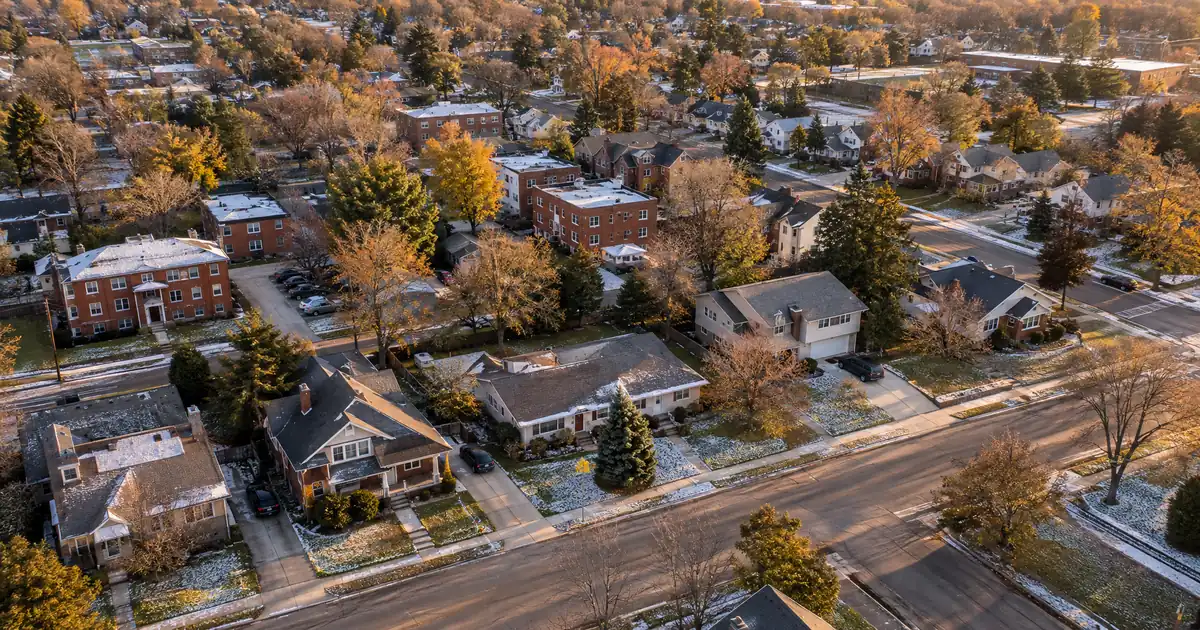
A rental in the Indian Riffle Park area hits the DSCR math like this. An investor owns a three-bedroom ranch outright and wants to refinance it. Zillow puts the typical Kettering home value at $239,030, and Rentometer’s listing data shows three-bedrooms renting around $1,733. Model that at 75 percent loan-to-value and coverage lands near 1.1x once taxes and insurance are in the payment. That clears the baseline. It doesn’t clear it by much, and that’s the whole story of cash-out lending in this suburb.
The Short Version: A DSCR cash-out refinance in Kettering, Ohio fits investors holding a paid-down three-bedroom or a scarce duplex near the Kettering Health campus. It is underwritten primarily on the property’s rental income measured against its full monthly obligation, capped at 75 percent loan-to-value after about six months of seasoning.
DSCR Cash-Out Calculator
Run the cash-out numbers in Kettering, OH
Rate source: Freddie Mac 30-yr average via FRED® — Federal Reserve Bank of St. Louis · effective Sep 24, 2026
Prefilled with starting assumptions — enter your property’s value, balance, taxes, and insurance for a more accurate picture.
Program parameters update from Lendmire’s centralized guideline source. Taxes and insurance are editable estimates.
As of Sep 24, 2026 · General Freddie Mac market benchmark, not a Lendmire loan offer. Property value, balance, taxes, and insurance are editable estimates. Maximum loan-to-value varies by lender, program, property type, and seasoning. Not a Loan Estimate, approval, or commitment to lend. Program availability and eligibility are subject to lender guidelines, credit approval, property review, and underwriting.
- Three-bedrooms rent near $1,733 per Rentometer; modeled coverage runs about 1.1x.
- Two-bedroom rents near $1,248 fall below 1.0x on full PITIA.
- Slow appreciation means basis and value-add drive proceeds, not market lift.
- Duplexes are scarce, and they are the best lever for coverage.
Lendmire is a DSCR-focused mortgage broker. It arranges these refinances through wholesale investor lenders rather than lending directly. This article covers the equity-extraction side only: what Kettering’s numbers support, which submarkets carry a refinance and which don’t.
Kettering Market Snapshot
A quick read on the Kettering investor landscape — figures come from the cited sources below. Confirm current property-level numbers before underwriting.
| Metric | Detail |
|---|---|
| University enrollment | 757 total (UnivStats) |
| Employment | 400 full-time city employees (City of Kettering) |
| Vacancy | 3.8% (NeighborhoodScout) |
Why Kettering Is an Equity-Stability Suburb, Not a Yield Play
Kettering is the most populous suburb in the Dayton metro. The City of Kettering reports 57,862 residents at the last Census, on 18.4 square miles about five miles south of Dayton. The count has been essentially flat for two decades. There’s no boom here, and no new-construction pipeline to worry about either. Kettering is a fully built inner suburb.
That combination cuts both ways for a cash-out. Flat population and steady demand mean the tenant pool doesn’t vanish. But a home value that moves in low single digits (Zillow shows 3.6 percent over one year) won’t hand you an appraisal that bails out a thin deal. Don’t underwrite a refinance on the hope that the value moves up before the appraiser arrives. The extraction has to work on today’s value and today’s rent.
Movoto reports a median sold price of $265,000 with homes averaging 12 days on market, and 147 homes sold versus 79 a year earlier. Sales volume is healthy. That helps an appraiser find comps, which matters more for a cash-out than for almost any other transaction.
The 1.0x Problem: Run It on Full PITIA
The number that decides most Kettering cash-outs is the gap between the citywide rent and the value the appraiser lands on. Rentometer shows:
| Unit type | Listing rent | Modeled coverage at 75% LTV |
|---|---|---|
| 2-bedroom | $1,248 | Around 0.8x |
| 3-bedroom | $1,733 | About 1.1x at typical value |
| 4+ bedroom | $2,198 | Comfortably above 1.2x |
Those coverage bands are modeled assumptions, not sourced market data. Each divides rent by full PITIA, including taxes and insurance, on a 30-year amortization at an assumed rate of 7.03%, and each uses the Zillow typical value as the property value. Here’s the catch: that’s an all-home average. Move the same three-bedroom rent to a $265,000 property, the Movoto median sold price, and coverage drops to roughly 1.0x. One price step and the cushion is gone.
Standard DSCR coverage math divides monthly rent by the property’s monthly debt service, with taxes, insurance and any HOA included. A 1.00x baseline is common because rent covers the payment at that level. Some lenders review lower ratios, but those files usually need lower leverage, stronger credit or more reserves.
Two-bedrooms are where the arithmetic breaks. Around 0.8x is sub-1.00 territory. Options exist, including sub-1.00 programs, an interest-only structure or a lower loan-to-value, but each one is a lender decision reviewed on the file, with tighter terms and no promises attached. Skip trying to cash out of a small two-bedroom at high leverage. The math doesn’t work, and forcing it costs more than the extra proceeds are worth.
Portal rents also disagree with each other, which matters. Zillow Rental Manager shows a $1,325 median that its own text labels as older data. Redfin’s rental page shows an average near $1,053. That spread is wide enough to move a coverage ratio by 20 percent or more. The number that counts is the appraiser’s rent schedule, not any aggregator’s median.
Where a Cash-Out Refinance Pencils Best
Indian Riffle Park and Greenmont (east Kettering, ZIP 45420). This is the strongest fit for a standard refinance. NeighborhoodScout puts average rent at $1,366 across unit types, with vacancy at 3.8 percent. The housing stock is mostly smaller single-family homes and apartment complexes built between 1940 and 1969, and most of it is owner-occupied. That last point cuts two ways. Owner-heavy areas mean thinner rental comps, so an appraiser may pull from a wider radius. On the plus side, this is a workforce single-family profile with a low vacancy figure, and it’s the type of asset a DSCR lender understands. Older housing also means deferred maintenance can eat into what you’d planned to do with proceeds.
The Kettering Health corridor (Southern Boulevard and Fairmont, ZIP 45429). Demand here is anchored by Kettering Health Main Campus, a Level II trauma center and teaching hospital at Southern Boulevard, with Kettering College on the same grounds. The system employs more than 12,000 people, per Wikipedia, though that is a system-wide count and not all of those workers are Kettering-based. Kettering College enrolls roughly 750 to 850 students depending on the source, per Data USA. Nurses, allied-health staff and travel clinicians make a recurring tenant pool that suits medium-length leases. No neighborhood-level rent figures turned up for this corridor, so any rent assumption should come from a comp set, not a guess. Directionally it should hold coverage better than the citywide average, but “should” isn’t underwriting.
The Oakwood border and Southdale (ZIP 45409). Skip this one for cash-flow-driven extraction. The area near Oakwood has historic-style homes on tree-lined streets, and neighboring Oakwood carries the highest values and rents in the metro. Higher price and higher quality do not translate into higher yield. Rent rises more slowly than value, which is exactly the wrong direction for coverage on a 75 percent loan-to-value cash-out. The border rewards a buyer chasing appreciation and stability, not one who needs the refinance to cover itself.
North Kettering and Beavertown (ZIP 45419). Along Wilmington Pike the housing stock is older and more modest. That likely fits workforce rentals, but that’s inference, since no rent or price data turned up. Treat it as a candidate to underwrite on comps, not a proven performer.
A Duplex Is the Best Lever (and the Hardest to Find)
More than a third of Kettering households rent, per older Towncharts data drawn from the American Community Survey. That renter depth supports re-leasing liquidity, and lenders and appraisers look for it. But the housing supply skews toward single-family homes. Multifamily listings are thin, with only a handful on the market in a typical month.
Run the numbers on the step-up between unit sizes. Two-bedroom units at Rentometer’s $1,248 each gross about $2,496 a month, against $1,733 for one three-bedroom. That’s roughly 44 percent more gross rent for the second unit. This is arithmetic on citywide listing medians, not sourced duplex data, so real comps have to confirm it. Say an investor holds a duplex modeled at a $300,000 value (an assumption, not a market figure). At 75 percent loan-to-value with taxes and insurance included, coverage lands around 1.2x, a wider cushion than the single-family case gives you.
That contrast is what makes a duplex or a house with a legal second unit worth the hunt. In a market where single-family rents sit near 0.7 percent of value, adding a second income stream is the most plausible way to widen the margin. Because duplexes are scarce, any owner who has one is holding an asset that’s hard to replace, which is a good reason to refinance it with modest leverage instead of selling it.
What DSCR Files in Markets Like This One Typically Look Like
DSCR files in suburbs like Kettering usually come in with coverage between 1.0x and 1.2x on long-term rent, which leaves almost no margin for surprises. The pattern is consistent: the appraisal’s rent schedule, not the investor’s projected rent, becomes the number that decides proceeds. A modest gap between the investor’s assumption and the appraiser’s figure can change the cash available. The files that go cleanly tend to carry a documented lease, a current insurance quote and reserves already sitting in an account. Files that stall are usually the ones where the investor sized the refinance off a portal median.
Seasoning, Leverage and What the Proceeds Really Are
Cash-out on these programs typically requires about six months of ownership, measured from title recording, and caps loan-to-value at 75 percent on a refinance. Unlike a purchase, the cash-out cap is not the 80 percent purchase figure, so investors shouldn’t carry their purchase leverage assumptions into the refinance. Pricing and available terms vary by lender, borrower profile, property type, and full underwriting review. Reserves of about six months of PITIA are typical on most files, and loans run up to $3,000,000 on standard programs, though a Kettering house won’t come near that ceiling.
Equity available is never a guaranteed figure. It depends on rent used for lender review, the full monthly obligation, reserves and the 75 percent cap. In Kettering, where appreciation runs modest, the equity often comes from how the property was bought, or from work done on it, and less from the market lifting everything. A Kettering investor who bought below the typical value and renovated has real room to extract. One who bought near the median a few months ago and hopes the market fills the gap will likely find nothing to pull. The cash-out qualification details spell out the seasoning and loan-to-value mechanics, and the comparison covers how this differs from a conventional cash-out refinance for someone who wants to weigh both.
Which brings up the harder question. Is the extraction worth it at all on a house that barely clears 1.0x? Sometimes the stronger play is to hold the property unleveraged and refinance a different asset with wider coverage. The refinance that pays for the next acquisition only works if the property carrying the new debt can still cover it.
How the Proceeds Become the Next Deal
The reason to extract is to recycle. A refinance on a paid-down Kettering house can fund the down payment on the next property, and in this market the smart next property is one with better rent-to-value than the one being refinanced. That points toward a duplex or a smaller-basis house in the Indian Riffle Park area or the hospital corridor. Buying another thin-coverage house with the proceeds stacks a second risky position on top of the first.
There’s also a portfolio-level view. Kettering’s employers are health care, automotive software and biotech. The city’s largest employers page lists Kettering Health, Reynolds & Reynolds, Kettering City Schools and Solvita. It also benefits from its proximity to Wright-Patterson Air Force Base. That diversity is decent for tenant retention, and it means an investor’s rent stream isn’t tied to one shutdown. It doesn’t make a marginal refinance safe.
Refinance structuring can go further than a single cash-out, and investor refinance options cover the range from rate-and-term to equity extraction. Investors can review a specific Kettering property through Ohio DSCR investor loans or reach Lendmire at 828-256-2183. Verify current local rental rules, taxes and insurance with qualified local professionals before sizing any file.
DSCR vs. conventional financing
Two common ways to finance an investment property in Kettering, OH. They qualify you differently — here’s how investors weigh them.
Why investors choose it
- Qualifies on the property’s rental income — no personal tax returns, W-2s, or pay stubs needed to document income.
- No personal debt-to-income ceiling to clear, so existing mortgages and obligations don’t cap your borrowing the same way.
- Can be closed in an LLC, keeping the property inside a business entity.
- Built for scaling — not held to the limit on number of financed properties that conventional financing applies.
- Underwriting centers on the deal: generally qualifies when the rent covers the payment, a 1.00x coverage ratio being a common baseline (confirmed in underwriting).
- Designed specifically for investment property, including long-term and, where the program allows, short-term rentals.
Where it’s strong
- Often the lowest ongoing financing cost for a buyer who fully qualifies on personal income — a fit for a first property or a cost-first purchase.
Trade-offs for investors
- Requires full personal income documentation and must fit within a debt-to-income limit — salary, existing debts, and other mortgages all count.
- Typically held in your personal name rather than a business entity.
- Caps how many financed properties you can carry, which can become a ceiling as a portfolio grows.
- Evaluates you as a borrower as much as the property, which usually means more paperwork.
How investors usually choose: a first or single property often optimizes for the lowest financing cost; portfolio builders often optimize for leverage, vesting in an LLC, and scaling past conventional caps. The right answer depends on your goals, the property, and current guidelines — both paths run through select lenders in Lendmire’s wholesale network, with eligibility and terms confirmed in underwriting.
The Investors Who Win Here
Kettering rewards patience and discipline: the appraiser’s rent schedule sets the number, a duplex beats a stack of thin single-family houses, and proceeds belong in assets with wider coverage than the one being refinanced. The investors who size leverage to the appraisal and not the portal median will come out ahead.
Frequently Asked Questions
How do you qualify for a DSCR cash-out refinance in Kettering, Ohio?
Qualification centers on the property’s rent against its full monthly obligation, with 1.00x as a common baseline. Typical guidance includes about six months of seasoning, a 75 percent loan-to-value cap, a credit floor near 620 and roughly six months of reserves. Final eligibility depends on lender guidelines, credit, and property review.
What are the requirements for an investment property loan in Kettering, Ohio?
Expect a rental income analysis, an appraisal with a rent schedule, proof of reserves and a credit review. The property must be an eligible type, since manufactured homes, log homes and barndominiums fall outside these programs. Kettering’s mostly older single-family and small multifamily stock generally fits. Details vary by lender.
Why does the appraiser’s rent number matter so much in Kettering?
Portal medians for Kettering range from roughly $1,050 to $1,325, so different sources tell different stories. The appraisal’s rent schedule is what the lender underwrites, and a shortfall against your assumption can shrink the proceeds. Get a realistic rent figure from comps before choosing a loan size.
Is a Kettering duplex a better cash-out candidate than a single-family rental?
Usually yes, on coverage. Two-bedroom units gross about 44 percent more than a single three-bedroom at citywide listing medians, which lifts the ratio above what most single-family houses produce. The catch is supply. Duplexes are scarce here, so the comps may be thin and need careful review.
For current guidelines and terms, see Lendmire’s DSCR loan programs page.
About Lendmire
A non-QM mortgage broker (NMLS# 2371349), Lendmire arranges DSCR financing for real estate investors in 41 markets, made up of 40 states plus Washington, D.C. Because deals are underwritten primarily on property cash flow rather than personal income documentation, the structure suits self-employed buyers and entity-owned portfolios. Lendmire places loans through wholesale investor lenders; it is not a direct lender. Recognized as a top-ranked workplace in 2026 and a 2025 Scotsman Guide Top Mortgage Workplace.
Get Started
Ready to find the right loan for you?
In about 30 seconds you can review financing options available for your investment property. No commitment required.
Informational only. Not a Loan Estimate, approval, or commitment to lend. Program availability and eligibility are subject to lender guidelines, credit approval, property review, and underwriting.
References
1. Zillow, Kettering Home Values
3. UnivStats
4. City of Kettering, Demographics
5. NeighborhoodScout, Indian Riffle Park
6. Movoto, Kettering Market Trends
7. Zillow — Market Trends Kettering OH
8. Redfin — Kettering Rental Market
9. Kettering Health Main Campus
11. Wikipedia
12. Data USA, Kettering College
13. Towncharts
14. City of Kettering, Largest Employers
15. Scotsman Guide — Top Workplaces 2026
16. a 2025 Scotsman Guide Top Mortgage Workplace
This article is part of Lendmire’s investment property cash-out refinance program — full qualification details, guidelines, and scenarios live on the program page.
Related reading: Cash Out Refinance Investment Property Kettering Ohio · DSCR Loans in Dayton, Ohio: Investor Financing for Wright-Patterson, Oakwood, Kettering & Real Estate Investors · DSCR Cash Out Refinance Dayton Ohio
Guides: Investment Property Cash-Out Refinance in Kettering, OH · Investment Property Cash-Out Refinance in Ohio
Brandon Miller
Founder & CEO, Mortgage Loan Originator, Lendmire LLC
- Mortgage Loan Originator · NMLS# 1129696 · Verify on NMLS Consumer Access
- North Carolina Real Estate Broker · License# 343312 · Verify on NCREC
- North Carolina Insurance Producer · License# 19053198 · Property, Casualty, Life, Health · Verify on NAIC SBS
- Lendmire LLC · Firm NMLS# 2371349 · Verify firm licensure
Important disclosures. Lendmire (NMLS# 2371349) is a licensed mortgage brokerage. Lendmire is not a direct lender, depository institution, or financial advisor. All loan inquiries are subject to lender underwriting; this article does not constitute a commitment to lend. Rates, terms, and program guidelines are subject to change without notice and vary by borrower profile, property type, and state. Information in this article is general in nature and is not financial, legal, or tax advice. Equal Housing Opportunity. NMLS Consumer Access: nmlsconsumeraccess.org.