
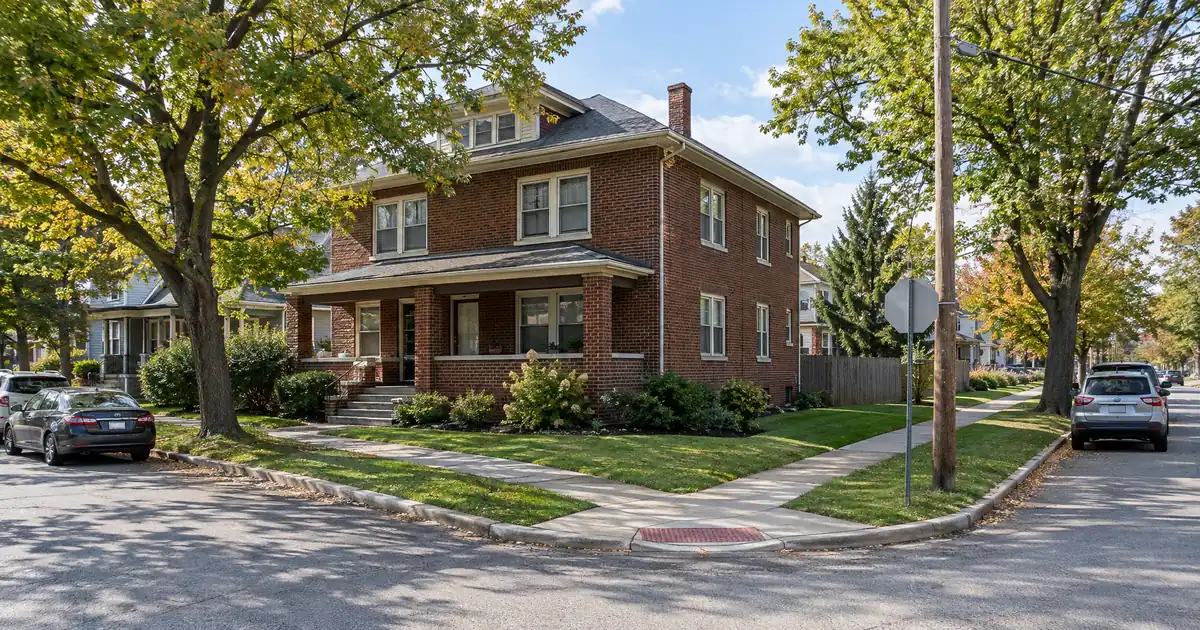
The most common failure point on a Lancaster equity pull is not credit or paperwork. It’s the appraisal. Prices here have gone sideways, one neighborhood is sliding, and the coverage math at maximum leverage lands close to the line. An investor who bought a rental a year ago and expects appreciation to hand over cash may find that the equity is mostly the paydown plus whatever value the rehab created. The refinance still works, but only if it is sized off sold prices instead of hope.
DSCR Cash-Out Calculator
Run the cash-out numbers in Lancaster, OH
Rate source: Freddie Mac 30-yr average via FRED® — Federal Reserve Bank of St. Louis · effective Sep 24, 2026
Prefilled with starting assumptions — enter your property’s value, balance, taxes, and insurance for a more accurate picture.
Program parameters update from Lendmire’s centralized guideline source. Taxes and insurance are editable estimates.
As of Sep 24, 2026 · General Freddie Mac market benchmark, not a Lendmire loan offer. Property value, balance, taxes, and insurance are editable estimates. Maximum loan-to-value varies by lender, program, property type, and seasoning. Not a Loan Estimate, approval, or commitment to lend. Program availability and eligibility are subject to lender guidelines, credit approval, property review, and underwriting.
Key Takeaways:
A DSCR cash-out refinance in Lancaster, Ohio is a loan on a rental the investor already owns, underwritten primarily on the property’s rent measured against its full monthly obligation, with proceeds sized by a 75 percent LTV ceiling and a seasoning requirement of about six months.
- Redfin’s data shows Lancaster’s median sale price nearly flat year over year, with only marginal appreciation.
- Downtown’s median sits below the citywide figure and has softened, so it is cash-flow-led, not appreciation-led.
- Rent estimates for three-bedroom homes vary across sources, so modeled coverage at a 75 percent LTV lands close to break-even.
- Multifamily inventory is thin, which raises appraisal risk on duplexes and fourplexes.
Lendmire (NMLS# 2371349), a DSCR-focused mortgage broker, places DSCR investor financing for Lancaster, Ohio through non-QM wholesale channels that cover 41 markets, including Washington, D.C. The brokerage does not lend directly. The sections below cover how the equity math behaves in a market where the data sources disagree, which submarkets support a pull, and how to structure the file so the appraisal doesn’t reset the plan.
Lancaster Market Snapshot
A quick read on the Lancaster investor landscape — figures come from the cited sources below. Confirm current property-level numbers before underwriting.
| Metric | Detail |
|---|---|
| Home prices | $250,000 median (Homes.com multi-family listings) |
| Employment | 2,200 employees (Fairfield 33 Development) |
The Appraisal Problem in a Flat Market
Lancaster’s price data points to no appreciation help, so a cash-out should be sized off the lowest credible sold-price evidence. Redfin shows a citywide median near $232K, up 0.7 percent, while a separate vendor tracks a lower closed-sale median. Plan around the lower number.
Here is how the sources line up. Redfin’s Lancaster market page shows the median sale price at $232K, up 0.7 percent year over year, with price per square foot at $183, up 8.3 percent. Those two figures don’t tell the same story: price per foot is climbing while the median barely moves, which usually means smaller or older homes are trading. Zillow’s value index reads higher at $280,902, but that is an index of all homes, not a median of sales. Treat it as context, not a comp.
Then there is the closed-sale evidence. Resideline tracked closed sales over a recent multi-month window and reported a median per-square-foot figure that sits below what Redfin shows. Homes.com’s listed median came in higher than the sold data. The gap between what homes sold for and what sellers were asking is the appraisal risk in one line. These sources use different windows and methods, so don’t mix them in one calculation. Pick the sold-price data, and let any upside be a bonus.
Seasoning is the second friction point. The program parameters call for about six months of ownership measured from title recording, and it is not a soft requirement. Investors who close a purchase and start planning the refinance in month four are early. Investors who finish a light rehab in month five and expect the appraiser to credit it should have receipts and before-and-after documentation ready.
What the Rent Sources Actually Say
Lancaster rent data is scattered across sources with different methods, and the honest read is a band, not a point. Three-bedroom figures run from about $1,499 to $1,600. Citywide averages run lower because they blend in small units. Use the three-bedroom band for workforce single-family, and don’t borrow the blended averages.
| Source | Figure | Caveat |
|---|---|---|
| RentCafe | $1,233 avg; $1,499 3BR | 50+ unit buildings only |
| Apartments.com | $977 avg; $1,513 3BR | Older reading |
| RentHop | $1,600 3BR; $1,225 2BR | Small sample, noisy |
| Redfin | $1,100 citywide avg | Blends all unit sizes |
Two things stand out. First, RentCafe covers only larger buildings, so it skews toward newer complexes and says little about a 1940s three-bedroom. Second, RentHop’s 32 percent year-over-year jump on two-bedrooms comes from a thin listing pool, and one or two new listings can swing it. The practical approach is to underwrite from actual leases or a broker-price rent survey, then use these sources as sanity checks. A rent figure that sits above every source in this table deserves a second look before it goes into a file.
Renters are a meaningful share of the housing stock. RentCafe, using Census data, puts 43 percent of Lancaster households in renter-occupied units.
Run the Numbers: A Modeled Three-Bedroom Pull
At the 75 percent LTV ceiling, a typical Lancaster three-bedroom lands near 1.0x coverage including taxes and insurance, and stepping down to roughly 65 percent LTV moves it to about 1.1x. Full-obligation coverage is the constraint here, not the equity.
Run the numbers on a modeled property. Assume a single-family three-bedroom valued at $232K on a sold-price basis, renting at $1,600 (the top of the source band). These are modeled inputs, not sourced facts about a specific property. Coverage is measured as monthly rent divided by the full monthly obligation: principal, interest, taxes, insurance, and any HOA dues, on a standard 30-year fixed structure. At a 75 percent LTV cash-out, that math comes out around 1.0x. Swap in the lower $1,499 rent and it slips under, into borderline territory. Drop the leverage to about 65 percent and coverage improves to roughly 1.1x on the higher rent and just under that on the lower one.
Most standard DSCR programs are built around a 1.00x benchmark, since that is the level where rent covers the payment. Some lenders review lower-ratio scenarios, but those typically call for compensating factors: lower leverage, stronger reserves, higher credit, or different pricing. Eligibility depends on lender guidelines, credit profile, reserves, and property review.
If the number falls under 1.00x, the options a lender might review include a sub-1.00 program, an interest-only structure, or a lower-LTV pull that shrinks the debt. None of those is a promise. Each is a path the file can be built around, subject to lender guidelines and credit approval. Reserves matter too: about six months of the full obligation is typical, and the figure rises for very large balances. Credit tiers start at a 620 floor and improve at 660, 680, and 700. Standard programs run up to $3,000,000, and smaller balances route through select lenders in the network. That matters in Lancaster, where most balances are small.
Equity available depends on rent used for lender review, the full obligation, reserves, and the 75 percent ceiling. It is not a guaranteed cash figure, and the guide “The Refi Options” is worth a read before sizing a target. For the broader mechanics, the DSCR fundamentals cover the ratio itself.
Working DSCR brokers see a recurring pattern in small Midwest markets like this one: the deals that stall are rarely undercollateralized. They stall because the rent in the file was a hopeful number, the appraisal came in near the purchase price, and nobody had modeled a lower-leverage version in advance. The strongest files carry a signed lease, entity documents, title, and an insurance quote ready for lender review before the appraisal is ordered.
Where the Equity Sits (If You Look Carefully)
Downtown and the Historic District offer the lowest entry prices and the most small-multifamily character, while the South Ewing corridor has a hospital-driven tenant base but a growing supply of new apartments. The best pull candidates are bought-right, seasoned properties, not stretched ones.
Downtown Lancaster is the cash-flow-led submarket. Redfin’s neighborhood page shows a $225K median, down 7.3 percent year over year, at $120 per square foot, down about 9 percent. A falling price is a warning for anyone who bought at the top and counts on a bigger valuation. For an investor who bought well below median, it means the property’s value is held up by rent, not momentum. Plan conservatively, and treat downtown as an income play. The Main Street program, described by Business View Magazine, keeps the commercial core active, and that supports long-term rental demand nearby from downtown workers, county staff, and hospital employees. The last point is my read of the tenant pool, not a sourced rent figure.
The Historic District and Square 13 area sits next to downtown’s commercial and governmental center. The City of Lancaster describes it as the city’s largest concentration of historic and architecturally significant properties. Older, larger homes here may include existing duplexes or convertible stock, though no source confirms the unit mix. Investors should confirm a property’s legal unit count and check current local rules with qualified local professionals before building a cash-out around it.
The South Ewing Street corridor is the demand-side story. Adena Fairfield Medical Center (formerly Fairfield Medical Center) is headquartered on North Ewing Street and is a 222-bed acute care facility. The supply-side story is Emerald Place, a 216-unit affordable community on South Ewing. LDG Development projects rents of $732 to $1,723. That range is a practical ceiling for older small rentals nearby. The direction is clear: existing rentals close to Ewing should not assume rents will climb past what a new, income-restricted building offers.
On the residential side, BestNeighborhood.org describes the northwest as the most expensive part of town and the southwest as a more affordable area. That description is directional, but it matches the general rent-to-value logic: lower entry prices produce stronger coverage, and higher-priced northwest homes produce thinner coverage for the same rent.
Small Multifamily: Familiar Format, Thin Comps
Duplexes and fourplexes are a normal rental format in Lancaster, but with very few active listings, appraisers have few comps, and that is where cash-out files get hurt. The upside is stronger coverage per dollar of debt. The downside is valuation uncertainty.
A City of Lancaster housing market study found that about 31.5 percent of the city’s rental-occupied housing is in 2-to-4-unit structures. The study relies on an older Census base, so use it for structural character only. It tells you that renters here already accept the format and that local appraisers and lenders have seen it before. The Homes.com multifamily page showed five active listings at last check, priced from $165,000 to $369,900. Five listings is not a comp set.
Picture an investor holding a seasoned duplex near downtown and planning a 75 percent cash-out. The appraiser has to reach for sales outside the neighborhood, possibly outside the city, and every adjustment adds variance. The safer plan is to order the file expecting a conservative value, run the coverage at a lower LTV in parallel, and have lease documentation ready. Underwrite rent from actual leases, not listing copy. One rehab-duplex listing projected roughly $2,000 in gross monthly rent after renovation, or about $1,000 per unit. That is the agent’s claim, unverified, and it is a reasonable reminder that value-add coverage depends on buying the rehab cheaply.
An older 2-to-4-unit property purchased at a low basis is the strongest equity-extraction candidate here, because lower debt against the same rent produces better coverage. For investors weighing whether a cash-out beats a rate-and-term move, the refinance pathway for investor properties lays out the choices.
Demand Anchors That Hold the Rent Roll Together
Lancaster’s tenant base rests on healthcare, manufacturing, and Columbus commuting, which gives long-term rentals a steadier footing than the flat price data would suggest. This is a small city with anchors that most peers of its size don’t have.
Fairfield 33 Development Alliance identifies the hospital as the county’s largest employer at 2,200 employees, and reports more than 130 manufacturers in the county. Business View Magazine puts Anchor Hocking, the city’s largest manufacturing employer, at roughly 800 workers. Both sit inside the city, not in a distant suburb.
Population is small but moving. Per Census Bureau QuickFacts, the ACS count is 41,249, with median household income of $59,133 and a median age of 37.4. Columbus Region describes Fairfield County as the fourth-fastest-growing county in Ohio over a ten-year stretch, with 165,176 residents and more than 4,300 businesses. A city official has claimed a 12 percent population gain since the last Census, but that conflicts with the ACS figure, so lean on the ACS number.
Ohio University Lancaster adds a modest layer: fall headcount of 2,457, or 842 full-time equivalents. It is a commuter campus, so don’t expect student-housing demand. The city also cites an 80,000-student regional base across the main Ohio State and Ohio University campuses as a workforce pipeline, per the City of Lancaster.
Location matters for the commuter thesis. The city sits about 28 miles from Columbus at the meeting of US 33 and US 22, which supports a “Columbus-adjacent price with a local employment base” story. Prices don’t reflect it right now, but rents on steadier employment may.
What Could Go Wrong?
Two risks matter most: new supply and unreliable vacancy data. Neither sinks the thesis, but both belong in the stress test before a cash-out is sized.
Supply first. 10TV reported construction underway on 616 single-family homes, 843 market-rate apartments, and 645 affordable apartments. The Building Industry Association says the county needs 843 to 947 units per year, so absorption may keep pace. But new apartments will compete with small rentals, especially near Emerald Place, and the state has also announced a $1 million grant for infrastructure supporting 361 workforce housing units, per the Ohio Governor’s office. A senior community adds another 95 units of 55-plus housing near the Heritage Trail, though that serves a different tenant pool.
DSCR vs. conventional financing
Two common ways to finance an investment property in Lancaster, OH. They qualify you differently — here’s how investors weigh them.
Why investors choose it
- Qualifies on the property’s rental income — no personal tax returns, W-2s, or pay stubs needed to document income.
- No personal debt-to-income ceiling to clear, so existing mortgages and obligations don’t cap your borrowing the same way.
- Can be closed in an LLC, keeping the property inside a business entity.
- Built for scaling — not held to the limit on number of financed properties that conventional financing applies.
- Underwriting centers on the deal: generally qualifies when the rent covers the payment, a 1.00x coverage ratio being a common baseline (confirmed in underwriting).
- Designed specifically for investment property, including long-term and, where the program allows, short-term rentals.
Where it’s strong
- Often the lowest ongoing financing cost for a buyer who fully qualifies on personal income — a fit for a first property or a cost-first purchase.
Trade-offs for investors
- Requires full personal income documentation and must fit within a debt-to-income limit — salary, existing debts, and other mortgages all count.
- Typically held in your personal name rather than a business entity.
- Caps how many financed properties you can carry, which can become a ceiling as a portfolio grows.
- Evaluates you as a borrower as much as the property, which usually means more paperwork.
How investors usually choose: a first or single property often optimizes for the lowest financing cost; portfolio builders often optimize for leverage, vesting in an LLC, and scaling past conventional caps. The right answer depends on your goals, the property, and current guidelines — both paths run through select lenders in Lendmire’s wholesale network, with eligibility and terms confirmed in underwriting.
Vacancy second. One aggregator that reprints Census data puts Lancaster’s rental vacancy near 4 percent. The last decennial Census, as cited on Fairfield County’s reference page, shows a county rental vacancy of 7.5 percent. The sources differ by 2.5 to 3.5 points, so no single figure is reliable. Underwrite with the higher one, and remember that the lender applies its own vacancy factor on top.
The stronger play here may be the older, lower-basis property over anything new or stretched. Investors chasing appreciation could argue the other way, but with flat prices that argument has little data behind it. Verify current local rental rules, taxes, and insurance with qualified local professionals before committing.
Putting the Proceeds to Work
The cash-out only pays off if the next deal is ready. Investors who time the refinance around a specific purchase, rather than pulling equity and hunting afterward, avoid the drag of idle capital. Because the 75 percent ceiling and reserve requirements shrink the usable figure, plan the next purchase around a smaller check than the raw equity suggests. If the target is a second Lancaster rental, DSCR versus conventional is worth a look for investors weighing entity ownership and documentation, and Lendmire’s Ohio DSCR platform covers the state-level view. Exact terms depend on the lender’s guidelines, property type, leverage, and a full review of the borrower’s file.
Subject to program terms, loans to LLC-titled entities may be available, which suits investors holding several small properties. To walk through a specific property, investors can review their scenario or call 828-256-2183.
Frequently Asked Questions
How do you qualify for a DSCR cash-out refinance in Lancaster, Ohio?
Qualification centers on the property’s rent against its full monthly obligation, typically measured against a 1.00x benchmark. Lenders also look at credit (a 620 floor, with better tiers at 660, 680, and 700), about six months of seasoning from title recording, and roughly six months of reserves. Exact eligibility depends on lender guidelines, credit approval, and property review.
What are the requirements for an investment property loan in Lancaster, Ohio when pulling cash out?
Expect a maximum of 75 percent LTV on a cash-out, a rent-based coverage test, reserves, and a valuation. Standard programs run up to $3,000,000, with smaller balances routed through select lenders in the network. Manufactured homes, log homes, and barndominiums fall outside these programs. Details are subject to lender overlays.
Will flat prices in Lancaster limit how much cash I can pull?
Yes, they can. With the citywide median up only 0.7 percent and downtown down 7.3 percent, an appraisal is more likely to land near purchase price than well above it. Equity then comes mostly from paydown and value-add work. Sizing the request off sold-price data, not asking prices, keeps the file realistic.
Is a duplex or a single-family rental easier to refinance in Lancaster?
Single-family is easier to appraise, because comps are plentiful. Duplexes often show stronger coverage per dollar of debt but face a thin listing pool, so valuation carries more uncertainty. Choose based on which risk your file can absorb.
Can Lendmire help structure DSCR financing for small multifamily investment properties in Lancaster?
Yes. Lendmire arranges DSCR investor loans through wholesale lending channels. Underwriting for these programs focuses primarily on the property’s rental income, and eligibility is subject to lender guidelines.
For current guidelines and terms, see Lendmire’s DSCR loan programs page.
About Lendmire
A non-QM mortgage broker (NMLS# 2371349), Lendmire arranges DSCR financing for real estate investors in 41 markets — 40 states plus Washington, D.C. Because deals are underwritten primarily on property cash flow rather than personal income documentation, the structure suits self-employed buyers and entity-owned portfolios. Lendmire places loans through wholesale investor lenders; it is not a direct lender. The firm has been recognized by Scotsman Guide as a 2026 Top Workplace and named a 2025 Scotsman Guide Top Mortgage Workplace.
Get Started
Ready to find the right loan for you?
In about 30 seconds you can review financing options available for your investment property. No commitment required.
Informational only. Not a Loan Estimate, approval, or commitment to lend. Program availability and eligibility are subject to lender guidelines, credit approval, property review, and underwriting.
References
2. Fairfield 33 Development Alliance, key industries
3. Redfin, Lancaster housing market
5. RentCafe
7. RentHop
8. Redfin
12. LDG Development
14. Columbus Region, Fairfield County profile
15. Ohio University, regional enrollment
17. 10tv.com — Construction Underway for 300 Million Worth of New Housing Lancaster
18. Fairfield County’s reference page
19. recognized by Scotsman Guide as a 2026 Top Workplace
20. a 2025 Scotsman Guide Top Mortgage Workplace
This article is part of Lendmire’s investment property cash-out refinance program — full qualification details, guidelines, and scenarios live on the program page.
Related reading: DSCR Cash Out Refinance in Lancaster, Texas: The 2026 DSCR Guide to Inland Port Equity · Cash Out Refinance Investment Property in Lancaster, Texas: The 2026 DSCR Guide to Inland Port · DSCR Cash Out Refinance in Elyria, Ohio: The 2026 DSCR Financing Guide to the LCCC Corridor
Guides: Investment Property Cash-Out Refinance in Ohio
Brandon Miller
Founder & CEO, Mortgage Loan Originator, Lendmire LLC
- Mortgage Loan Originator · NMLS# 1129696 · Verify on NMLS Consumer Access
- North Carolina Real Estate Broker · License# 343312 · Verify on NCREC
- North Carolina Insurance Producer · License# 19053198 · Property, Casualty, Life, Health · Verify on NAIC SBS
- Lendmire LLC · Firm NMLS# 2371349 · Verify firm licensure
Important disclosures. Lendmire (NMLS# 2371349) is a licensed mortgage brokerage. Lendmire is not a direct lender, depository institution, or financial advisor. All loan inquiries are subject to lender underwriting; this article does not constitute a commitment to lend. Rates, terms, and program guidelines are subject to change without notice and vary by borrower profile, property type, and state. Information in this article is general in nature and is not financial, legal, or tax advice. Equal Housing Opportunity. NMLS Consumer Access: nmlsconsumeraccess.org.