
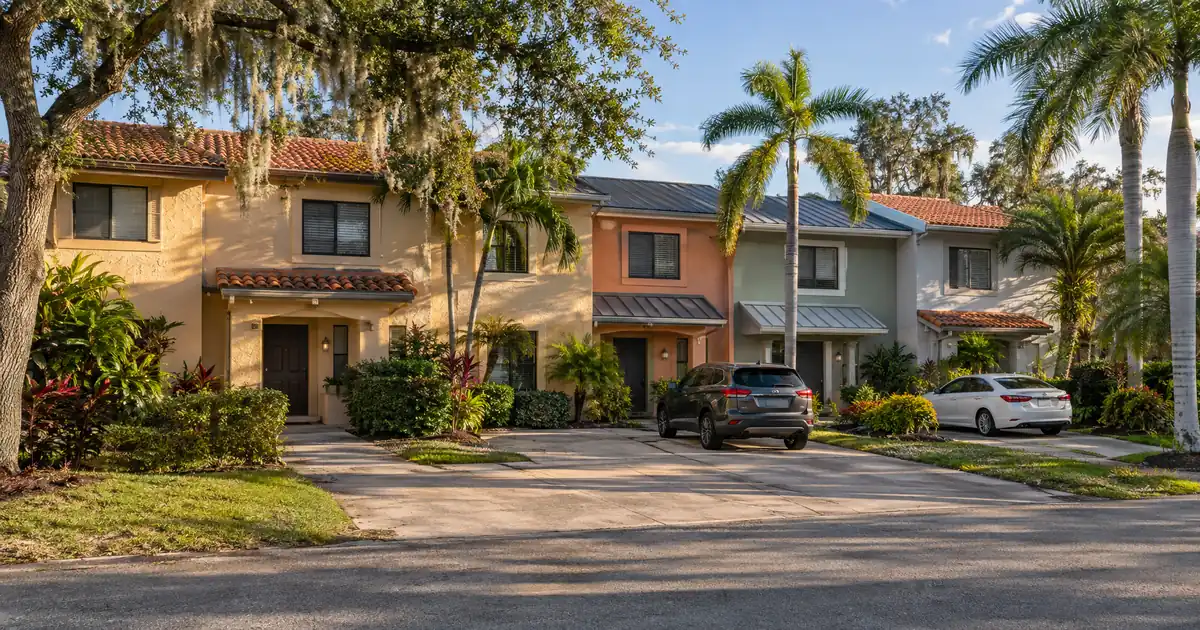
An out-of-state investor scrolling Lauderhill listings hits a pricing spread that looks like a typo: neighborhood medians run from $133,083 in Lauderhill East to $439,190 in City Center, inside a city of roughly nine square miles. The instinct is to chase the cheap end. That is usually the wrong read. The owner sitting on an existing Lauderhill rental has a different question, which is how much capital can be pulled out, at what coverage, and whether the appraisal will support it. Lauderhill, Florida is one of the 41 markets (40 states plus Washington, D.C.) where Lendmire (NMLS# 2371349), a DSCR-focused mortgage broker, places DSCR loans for investment-property borrowers.
DSCR Cash-Out Calculator
Run the cash-out numbers in Lauderhill, FL
Rate source: Freddie Mac 30-yr average via FRED® — Federal Reserve Bank of St. Louis · effective Sep 24, 2026
Prefilled with starting assumptions — enter your property’s value, balance, taxes, and insurance for a more accurate picture.
Program parameters update from Lendmire’s centralized guideline source. Taxes and insurance are editable estimates.
As of Sep 24, 2026 · General Freddie Mac market benchmark, not a Lendmire loan offer. Property value, balance, taxes, and insurance are editable estimates. Maximum loan-to-value varies by lender, program, property type, and seasoning. Not a Loan Estimate, approval, or commitment to lend. Program availability and eligibility are subject to lender guidelines, credit approval, property review, and underwriting.
Key Takeaways:
A DSCR cash-out refinance in Lauderhill, Florida is underwritten primarily on the property’s rental income measured against its full monthly obligation, with loan size capped by appraised value rather than personal income. Proceeds depend on rent, reserves, and the 75% loan-to-value ceiling, so the equity is never a guaranteed figure.
- Small multifamily carries the strongest coverage profile; listed cap rates run 6.3% to 6.67%.
- Cash-out LTV is capped at 75%, with about six months of seasoning from title recording. Lauderhill East vacancy runs 18.4% against 9.0% in Lauderhill North, so block-level diligence matters.
- Data providers disagree widely on values, so appraisal risk is the real variable.
Lauderhill Market Snapshot
A quick read on the Lauderhill investor landscape — figures come from the cited sources below. Confirm current property-level numbers before underwriting.
| Metric | Detail |
|---|---|
| Home prices | $377,625 median house value (NeighborhoodScout) |
| Typical rents | $1,859 avg (NeighborhoodScout) |
| Cap rates | 6.67%/7.04% cap (Homes.com Lauderhill) |
| University enrollment | 20,877 students enrolled (Nova Southeastern University) |
| Population | 74,482 population (2020 census) (Wikipedia: Lauderhill, Florida) |
| Vacancy | 9.0% (NeighborhoodScout) |
Why the Value Data Won’t Agree
Lauderhill’s price data is among the least consistent of any Broward city, and that inconsistency is the central risk for cash-out sizing. Proceeds are a function of appraised value, and online estimates can diverge by more than 2x depending on property type and provider.
The spread is stark. Redfin reports a median near $310K, down 11.2% year over year, while Rocket Homes showed a $315,000 median up 42.5%. PropertyShark splits the market into a $410K median for houses and $120K for condos. NeighborhoodScout’s appreciation read sits at 7.53% annually, which ranks above 90% of Florida cities.
Nobody is wrong here. The housing stock is bifurcated between older condos and single-family homes, and each provider weights the mix differently. The practical conclusion for an owner planning a refinance is that Lauderhill is not an appreciation-led story on a headline basis. A cash-out here gets underwritten on the rent roll and supported by a full appraisal, not by whichever automated estimate looks best. Property type also matters more than any citywide median. Anyone quoting a single blended “Lauderhill price” is skipping the most important variable.
Small Multifamily Is the Asset Class
The housing mix makes Lauderhill structurally friendlier to DSCR cash-outs than single-family-dominant suburbs. NeighborhoodScout’s breakdown shows large apartment complexes at 53.68% of units, single-family detached at 28.93%, duplexes and small converted buildings at 8.17%, and row houses at 7.69%. That 8%+ small-multifamily slice is what matters for this article.
Unit-stacked rent rolls change the coverage math. A single lease is a single point of failure. Four leases spread the risk, and appraisers can pull direct small-multifamily rent comps. Active fourplex listings follow a common template: roughly 3,200 square feet on lots above 8,000 square feet, four identical 2-bedroom, 1-bath units. That is about as clean a DSCR configuration as exists.
Pricing supports the thesis. Multi-family listings span $469,000 to $1,725,000, with advertised in-place caps of 6.67% (7.04% pro forma), and a legal triplex marketed at a 6.3% cap. Matthews puts the broader Fort Lauderdale multifamily cap rate at 5.6%, so Lauderhill small-multifamily listings carry a spread of roughly 70 to 110 basis points over the metro. Listed caps are seller marketing, not audited income. Still, that spread is the kind of pricing gap that produces coverage cushion.
Demand backs it up. Matthews’ report flags Oakland Park/Lauderhill among the lower-rent submarkets posting some of the strongest annual rent gains even as metro-wide vacancy rose to 7.6%, as renters shift toward cost-effective geographies. Class A deliveries elsewhere in the metro push price-sensitive tenants toward Class B and C stock like Lauderhill’s. That supports rent durability for existing owners refinancing, though it does not guarantee it.
Three Submarkets, Three Different Risk Profiles
Lauderhill is not one market. The clearest way to see it is through rent-to-value, because the same refinance looks entirely different depending on the block.
City Center (33313) is the expensive end of the city, with a median price well above the other areas and an average rent of $1,859 that does not rise in proportion. That produces a gross yield that looks modest, and once full PITIA is counted, including Florida property taxes and insurance, coverage on a median-priced asset there would likely land well below 1.00x at typical leverage. It is not a cash-out candidate on long-term rent alone. An owner there would need a sub-1.00 program, an interest-only structure, or lower leverage, each of which a lender would review individually and none of which is assured. Exact terms depend on the lender’s guidelines, property type, leverage, and a full review of the borrower’s file.
Lauderhill North shows a $222,325 median price, $3,012 average rent, and 9.0% vacancy. Be skeptical of that rent figure. A $3,012 rent on a $222K price implies a 16% gross yield, which is not a credible underwriting input and likely reflects the mix of unit types in the sample. The vacancy figure is more useful. Nine percent is the healthier of the two tracked neighborhood readings, and homes here were largely built between 1970 and 1999, so renter occupancy is high.
Lauderhill East has a $133,083 median and $2,249 average rent, but 18.4% vacancy. The yield looks spectacular and is a trap if taken at face value. Apartment List’s corridor data illustrates the swing: NW 50th St runs a 9.2% vacancy against 21.8% on the NW 55th Ave corridor, which is dominated by studio buildings and single-family homes. A double-digit vacancy gap between corridors blocks apart means zip-code averages are nearly useless. Underwrite the specific property and its actual leases.
Inverrary (the 1971 country-club community) is the condo story. Redfin shows 335 condos listed at a median near $147K, with comparable rentals listing between roughly $1,400 and $2,100 a month. That is the strongest raw rent-to-price ratio in the city. The catch: condo payments include association dues, and older associations may carry reserve and inspection obligations that surface as special assessments. Part of the low price may be capitalized risk. Confirm the association’s inspection and reserve status through the state condo resources before assuming the rent spread flows to coverage.
Run the Numbers: Fourplex, House, Condo
The scenarios below use modeled assumptions, not sourced market data except where the rent and price inputs are cited. Coverage is rent divided by full monthly obligation (principal, interest, taxes, insurance, and any association dues), measured at the 75% cash-out ceiling. Bands are rounded down. Every figure here varies by lender and program — guidelines, property type, leverage, and credit profile all apply.
Fourplex. Consider a four-unit building appraised at $800,000, a modeled price inside the listed multifamily range. Assume each 2/1 rents at $1,900, matching Zillow’s two-bedroom average. Gross rent across four units supports coverage of roughly 1.4x including taxes and insurance. That clears the 1.00x baseline with cushion, and the cushion absorbs a vacant unit better than a single-family rental would. Run the same building with one unit vacant and coverage falls toward 1.05x. Thin, but still at the baseline.
Single-family house. Take a house at $310,000, near Redfin’s median, renting at Zillow’s three-bedroom average of $2,576. Coverage lands around 1.3x including taxes and insurance. Workable, with less room for a bad month because there is one tenant.
Inverrary condo. At a $147K value and a modeled $1,400 rent, coverage before association dues runs roughly 1.4x. Dues and any assessments go into the same denominator and can erase that margin entirely. Also note that balances this small route through select lenders in the network rather than standard programs, which go up to $3,000,000.
The fourplex is the cleanest play. The house is the fallback. The condo depends entirely on what the association is carrying. Citywide rent benchmarks for context: RentCafe’s average is $2,042 (one-bedroom $1,772, two-bedroom $2,170, three-bedroom $2,706), and Zumper’s median is $1,900. Zillow reads lower at $1,911, a methodology difference and not a contradiction.
From Proceeds to the Next Deal
The mechanics are the same as any DSCR cash-out, but the Lauderhill specifics decide whether the proceeds are meaningful. Typical guidelines: a 75% LTV ceiling, about six months of ownership measured from title recording, a 1.00 minimum coverage ratio on most standard programs, a 620 credit floor, and about six months of PITIA in reserves (nine above $1,500,000 in loan size). Eligibility varies by borrower, property, and loan scenario, and exact terms depend on the lender’s overlays. The cash-out qualification details cover the full structure, and the rate-and-term and cash-out refi details explain the alternative.
DSCR vs. conventional financing
Two common ways to finance an investment property in Lauderhill, FL. They qualify you differently — here’s how investors weigh them.
Why investors choose it
- Qualifies on the property’s rental income — no personal tax returns, W-2s, or pay stubs needed to document income.
- No personal debt-to-income ceiling to clear, so existing mortgages and obligations don’t cap your borrowing the same way.
- Can be closed in an LLC, keeping the property inside a business entity.
- Built for scaling — not held to the limit on number of financed properties that conventional financing applies.
- Underwriting centers on the deal: generally qualifies when the rent covers the payment, a 1.00x coverage ratio being a common baseline (confirmed in underwriting).
- Designed specifically for investment property, including long-term and, where the program allows, short-term rentals.
Where it’s strong
- Often the lowest ongoing financing cost for a buyer who fully qualifies on personal income — a fit for a first property or a cost-first purchase.
Trade-offs for investors
- Requires full personal income documentation and must fit within a debt-to-income limit — salary, existing debts, and other mortgages all count.
- Typically held in your personal name rather than a business entity.
- Caps how many financed properties you can carry, which can become a ceiling as a portfolio grows.
- Evaluates you as a borrower as much as the property, which usually means more paperwork.
How investors usually choose: a first or single property often optimizes for the lowest financing cost; portfolio builders often optimize for leverage, vesting in an LLC, and scaling past conventional caps. The right answer depends on your goals, the property, and current guidelines — both paths run through select lenders in Lendmire’s wholesale network, with eligibility and terms confirmed in underwriting.
Seasoning is the part Lauderhill owners tend to underweight. The six-month clock runs from recording, not from closing paperwork or renovation completion. An investor who bought a value-add fourplex and stabilized rents has to wait it out before proceeds become available, and the appraisal at that point reflects stabilized income.
Working DSCR brokers see a recurring pattern in bifurcated South Florida markets like this one: owners anchor on the highest online value estimate, the appraisal comes in nearer the rent-roll-supported figure, and the proceeds land well below the napkin math. The files that work treat the lower value as the planning number and treat the extra equity as upside.
The proceeds usually become the down payment on the next acquisition, which is the point of the strategy. An owner with a stabilized fourplex refinancing out at 75% LTV can redeploy capital into a second small-multifamily asset without selling the first. Loan structures for entity-owned properties, including LLC vesting, are reviewed subject to lender program eligibility.
Who Rents Here (and Why It Holds)
Lauderhill is a bedroom community. The city’s profile shows 5,000 registered businesses and 10,475 persons employed, while daytime population drops by 27,782, or 36.3%. Only 7,569 workers (18.3%) live and work in the city. Residents commute to the wider Fort Lauderdale and Miami job base, which drives long-term lease demand for housing priced below the coastal core. The Census Bureau puts the city at 74,482 residents in the most recent decennial count, and about 44% of households rent.
The local institutional base is healthcare-heavy: Florida Medical Center (a HCA-affiliated campus just outside the city line), hospice, and skilled-nursing operators inside city limits. Nova Southeastern University enrolls over 20,000 students in the Fort Lauderdale-Davie area, and Broward College operates campuses across the county. Neither is in Lauderhill. Treat them as commuting-distance anchors, not direct tenant sources. Reliable private-employer headcounts for Lauderhill were not available, so this article doesn’t cite any.
One local landmark deserves a mention for color, not underwriting. Central Broward Park opened at a $70 million construction cost with 25,000 capacity and was the first U.S. cricket venue certified by the International Cricket Council. It is a genuine distinguishing asset. It does not show up in a DSCR file.
What’s the Catch?
Three risks deserve direct treatment. First, valuation: the provider spread means appraisal shortfalls are a live possibility, and owners should plan on the conservative number. Second, micro-location vacancy: 9% and 22% corridors sit blocks apart, and a rent roll on the wrong block can look fine on paper and churn in practice. Third, condo exposure, where association obligations sit outside the unit’s own performance.
This is a genuine toss-up for some owners: the fourplex wins on coverage, but the single-family house wins on exit liquidity and simpler management. Investors who plan to hold long term often prefer the fourplex. Those who expect to sell within a few years may rank the house higher. Verify current local rental rules, taxes, and insurance with qualified local professionals before committing.
For owners who want a number before an appraisal, Lendmire’s DSCR walkthrough explains how the coverage ratio is built, and the program-to-program comparison shows where it differs from conventional underwriting. The Florida DSCR investor loans hub collects state-level detail, and investors can get a DSCR quote or call 828-256-2183. Review details remain subject to lender overlays.
The Neighbor Test
Against Fort Lauderdale proper, where entry pricing is higher and metro cap rates sit near 5.6%, Lauderhill’s small multifamily currently offers the wider coverage spread, provided the building sits on a healthy corridor. The math favors Lauderhill fourplexes over coastal-side comparables right now. City Center’s median pricing is the exception that proves the rule.
Frequently Asked Questions
How do you qualify for a DSCR cash-out refinance in Lauderhill?
Qualification centers on the property’s rent measured against its full monthly obligation, with 1.00x as the common baseline. Typical guidelines include a 620 credit floor, about six months of seasoning from title recording, reserves near six months of PITIA, and a 75% LTV cap. Final eligibility depends on the lender, credit profile, and property review.
What are the requirements for an investment property loan on a Lauderhill fourplex?
Four-unit buildings generally fit standard DSCR programs, with loan amounts up to $3,000,000. Lenders review the rent roll or market rents, appraised value, and reserves. A vacant unit or below-market leases lower the coverage number, so stabilized occupancy helps the file.
How do DSCR lenders review rental income instead of tax-return income in Florida?
Lendmire arranges DSCR investor loans where the lender reviews the property’s rent against its monthly obligation instead of W-2 or tax-return income. A standard feature is qualification on property cash flow, subject to lender guidelines.
Why do Lauderhill value estimates vary so much?
The city has a split housing stock: condos near the low-$100Ks and houses near $400K on the same data platforms. Providers weight that mix differently, producing medians from roughly $120K to $410K. A full appraisal, not an online estimate, sets the loan amount.
Which Lauderhill areas carry the most vacancy risk for a cash-out?
Lauderhill East runs 18.4% vacancy, and the NW 55th Ave corridor is reported near 21.8%. Lauderhill North runs 9.0%. Underwrite street-level occupancy, not zip-code averages.
For current guidelines and terms, see Lendmire’s DSCR loan programs page.
Get Started
Ready to find the right loan for you?
In about 30 seconds you can review financing options available for your investment property. No commitment required.
Informational only. Not a Loan Estimate, approval, or commitment to lend. Program availability and eligibility are subject to lender guidelines, credit approval, property review, and underwriting.
About Lendmire
Lendmire, NMLS# 2371349, is a mortgage brokerage specializing in DSCR investor loans, helping arrange financing across 41 markets, including Washington, D.C., through wholesale and investor-lending channels. The model centers on rental income reviewed by the lender rather than W-2 documentation, subject to lender guidelines, which suits entity-owned and multi-property investors. Lendmire is recognized as a 2026 Scotsman Guide Top Mortgage Workplace and a top-ranked workplace in 2025.
This article is part of Lendmire’s investment property cash-out refinance program — full qualification details, guidelines, and scenarios live on the program page.
Related reading: Cash Out Refinance Investment Property in Lauderhill, FL · Cash Out Refinance Investment Property Delray Beach Florida · DSCR Cash Out Refinance in Clearwater, Florida: The 2026 Financing Guide to Clearwater Beach Rentals
Guides: Investment Property Cash-Out Refinance in Lauderhill, FL · Investment Property Cash-Out Refinance in Florida
References
1. $133,083 in Lauderhill East to $439,190 in City Center
2. Freddie Mac 30-yr average via FRED® — Federal Reserve Bank of St. Louis
3. listed cap rates run 6.3% to 6.67%
4. Lauderhill East vacancy runs 18.4%
6. Nova Southeastern University
7. Wikipedia: Lauderhill, Florida
9. median near $310K, down 11.2% year over year
10. PropertyShark splits the market
12. a legal triplex marketed at a 6.3% cap
Brandon Miller
Founder & CEO, Mortgage Loan Originator, Lendmire LLC
- Mortgage Loan Originator · NMLS# 1129696 · Verify on NMLS Consumer Access
- North Carolina Real Estate Broker · License# 343312 · Verify on NCREC
- North Carolina Insurance Producer · License# 19053198 · Property, Casualty, Life, Health · Verify on NAIC SBS
- Lendmire LLC · Firm NMLS# 2371349 · Verify firm licensure
Compliance and disclosures. Lendmire (NMLS# 2371349) is a licensed mortgage broker and is not a direct lender, depository institution, financial advisor, or tax professional. Content in this article is general market analysis and educational information — not financial, legal, or tax advice for any specific situation. Lendmire does not guarantee loan approval; every transaction is subject to underwriting by the funding lender. Mortgage pricing and loan program guidelines are subject to change at any time without notice and vary by borrower characteristics, property type, and state regulations. Lendmire complies with Equal Housing Opportunity. Licensure verification: NMLS Consumer Access.