
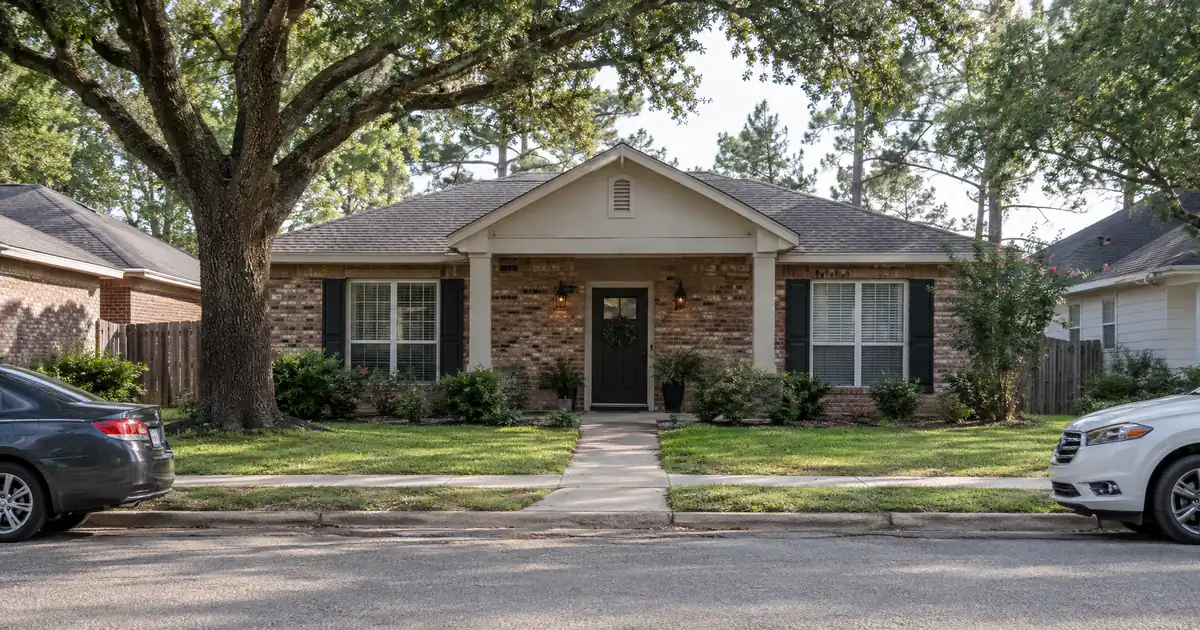
Picture an investor in Dallas or Houston who bought a rental in Nacogdoches a while back. The headline numbers looked good on paper: a university that just posted its first total enrollment gain in years, a trauma-center hospital, a 63 percent renter base. The home value is higher now. The rent is not.
That gap is the story of a Nacogdoches cash-out. The appraisal does the heavy lifting, and the rent has to carry whatever balance sits on top of it.
DSCR Cash-Out Calculator
Run the cash-out numbers in Nacogdoches, TX
Rate source: Freddie Mac 30-yr average via FRED® — Federal Reserve Bank of St. Louis · effective Sep 24, 2026
Prefilled with starting assumptions — enter your property’s value, balance, taxes, and insurance for a more accurate picture.
Program parameters update from Lendmire’s centralized guideline source. Taxes and insurance are editable estimates.
As of Sep 24, 2026 · General Freddie Mac market benchmark, not a Lendmire loan offer. Property value, balance, taxes, and insurance are editable estimates. Maximum loan-to-value varies by lender, program, property type, and seasoning. Not a Loan Estimate, approval, or commitment to lend. Program availability and eligibility are subject to lender guidelines, credit approval, property review, and underwriting.
The Quick Read:
A Nacogdoches, Texas cash-out refinance suits investors who hold small multifamily or a well-bought workforce rental and want equity out. It is underwritten primarily on the property’s rental income measured against its full monthly obligation, so the rent side of the file matters as much as the value side.
- Prices are rising while rents soften. Median price is up 4.6 percent year over year per Prop-Metrics.
- Single-family at citywide rents struggles to clear 1.00 once taxes and insurance are included.
- Two-unit and three-unit properties are where coverage improves most.
- SFA enrollment growth is a tailwind, but amenitized student complexes cap campus-edge rents.
- Cash-out is capped at 75 percent of appraised value, subject to lender guidelines.
Nacogdoches Market Snapshot
A quick read on the Nacogdoches investor landscape — figures come from the cited sources below. Confirm current property-level numbers before underwriting.
| Metric | Detail |
|---|---|
| Typical rents | $1,100 avg (Prop-Metrics (ZIP 75965)) |
| Cap rates | ~7.1% cap before capex (LoopNet 4301 Old Tyler Rd) |
| University enrollment | Total +7% (KTRE, SFA enrollment) |
| Population | 32,197 population (Census Reporter) |
Why the Appraisal Is the Whole Game
In Nacogdoches the appraisal decides the cash-out, not rent growth. The median home price is $285,000, up 4.6 percent year over year, while RentCast’s average rent is $1,100, down 5.2 percent, per Prop-Metrics. Zumper shows average rent at $950, down 6 percent.
That is the appreciation-versus-cash-flow tension in one paragraph. Value is climbing and rents are not. A cash-out sized off a higher appraisal still has to be carried by flat or falling rent.
Price sources disagree too. Movoto shows a listing median of $337K, per Movoto, which sits well above the $285,000 used here. The same Prop-Metrics page puts median days on market up 24 percent from a year earlier, and its one-year price projection is flat at 0.5 percent. Slower sales mean thinner comps. Appraisers working a market this size lean on a small pool of recent sales.
So don’t assume a big bump at refinance. Plan the cash-out on conservative value. If the appraisal comes in light, ask for an appraisal reconsideration with recent in-area sales and condition adjustments. It is a routine step, not an emergency move.
Where Equity Sits: Four Corridors
Nacogdoches, Texas is one of the 41 markets — 40 states plus Washington, D.C. — where Lendmire places DSCR loans for investment-property borrowers (NMLS# 2371349). The research found no reliable neighborhood-level price or rent data, so the corridors below are described by their demand anchors, not by measured numbers.
The SFA campus edge. Stephen F. Austin State University enrolls roughly 11,000 students, per UT Admissions. Fall brought 2,800 first-time undergraduates, up 31 percent, with total enrollment up 7 percent, per KTRE. The university calls it the first total increase since 2018 in its newsroom release. Demand may be turning up from a low, flat base. Duplexes and small multifamily around the University Drive corridor are the natural holdings here.
Mound Street and the hospital. Nacogdoches Memorial Hospital has served the community since 1928 and operates the region’s only Level III trauma center, by its own account. Nearby, two- and three-story Queen Anne and Stick houses line the east side of Mound Street. Hospital staff, faculty, and professionals are the likely tenants, though that is inference, not measured data. Older houses here may be worth more to a buyer than to a rent roll. Check the city’s historic preservation page before planning exterior work.
North Street and NE Stallings Drive. This is the retail-medical corridor, anchored by a second hospital, Nacogdoches Medical Center, and large retail employers. Apartment supply sits here as well. Tenants are workers in those jobs, which makes the demand more year-round than campus-driven.
The Loop 224 corridor. Newer small multifamily has shown up just off Loop 224, with access to SFA and employment. One three-bedroom duplex listing near Old Tyler Road advertises a cap rate of about 7.1 percent before capital expenditures, based on six months of income, per LoopNet. That is a seller-stated figure. Verify it against a rent roll. It is a listing example, not a market benchmark.
What Does the Coverage Math Look Like at 75 Percent?
At 75 percent LTV with full taxes and insurance counted, a single-family rental at citywide rents lands well below 1.00. A modeled duplex at the three-bedroom median lands near 1.2. That gap is why property type matters more than neighborhood in this market.
Run the numbers on a single-family rental. Assume the $285,000 median price, 75 percent LTV, and RentCast’s $1,100 average rent. Coverage including taxes and insurance comes out in the mid-0.5s. Swap in the higher $1,513 average house rent from Apartments.com and it still sits below 0.80. A cash-out on that profile is a thin file at best. Some lenders review sub-1.00 scenarios, but those usually bring lower leverage, different pricing, or stronger compensating factors. The standard benchmark is 1.00.
Now a modeled duplex. Assume a $360,000 purchase price (an assumption, not a market fact), 75 percent LTV, and two three-bedroom sides at RentCast’s $1,530 median for that bedroom count. That is about $3,060 in gross monthly rent. Coverage including taxes and insurance comes out around 1.2.
Same city, same financing structure. The duplex roughly doubles rent against a single loan. That is the cleanest lever for lifting coverage above what single-family reaches here.
DSCR files in markets like this one typically look like a tight single-family ratio and a comfortable small-multifamily ratio, with the appraisal as the swing factor on both. The files that move smoothly come in with a current lease or rent roll, an entity operating agreement that matches the title vesting, and a fresh insurance quote in the file. Gaps in those three items cause more kickbacks than the ratio itself.
For the mechanics behind that ratio, see the guide “What Is a DSCR Loan”.
The Seasoning Clock and the Reserve Check
Two items gate every cash-out here: ownership seasoning and reserves. Seasoning is about six months, measured from title recording, and reserves typically run about six months of PITIA. Both are documented, not assumed.
Lenders generally want roughly six months of ownership before a cash-out is available on a recent purchase, evidenced by the settlement statement. Investors who bought and renovated a campus-edge duplex are the ones most likely to hit this. Files that assume the clock away get kicked back. If the property was bought with cash and renovated, the paper trail for the renovation budget matters when the appraiser adjusts for condition.
Reserves are the other quiet friction point. Plan on roughly six months of PITIA in liquid assets, with the requirement stepping up on very large balances. Reserves documentation means recent statements that match the borrower or entity named on the loan. Subject to lender program eligibility, an LLC-held rental can go through, but the operating agreement and vesting must line up.
Credit tiers in the network run from a 620 floor up through 700, and balances up to $3,000,000 are available on standard programs, all subject to lender guidelines. Where other non-QM platforms often require 720+ FICO, Lendmire’s wholesale network lists a lower floor, though pricing and leverage tighten at the bottom tier.
One property-type note specific to East Texas. Log homes and barndominiums fall outside these programs entirely, along with manufactured homes. In piney-woods country, check the construction type before listing a rural-edge property for a cash-out.
Student Supply Is the Risk Nobody Prices
The biggest vacancy risk near campus is purpose-built student housing, not enrollment. Complexes marketing themselves as newer, furnished, and amenitized, such as those listed in College Rentals’ Nacogdoches directory, cap what a small landlord can charge students for an older duplex.
Apartments.com shows apartment rent up only 0.7 percent over the past year, per Apartments.com, against an average apartment rent of $799. No sourced vacancy or absorption rate turned up for the city, so treat this as a risk flag, not a measurement.
The stronger play might be underwriting campus-edge small multifamily as workforce housing, with student demand as upside. That is a judgment call. An investor who disagrees can point to enrollment momentum. But a cash-out file sized on student-peak rents is the one an underwriter will haircut.
Listing projections deserve the same skepticism. Homes.com showed 13 multifamily listings priced from $189,500 to $1,605,556, with slow-moving inventory. One renovated seven-unit near campus projects monthly income of nearly $5,300, which works out to about $750 a unit. That is a projection, not a rent roll. Underwrite proven rents.
Putting the Proceeds to Work
Cash-out proceeds are only useful if the next property pencils on its own. In Nacogdoches that usually means buying small multifamily with the proceeds, not another single-family at citywide rents.
Renter households number 7,807, or 63 percent of the total, per RentCafe, in a city of 32,197 people per Census Bureau QuickFacts. The population is essentially flat, so demand growth depends on SFA and the hospital sector, not on new arrivals. RentCafe’s larger-building figure for three-bedrooms is $1,665, which is above the RentCast median and shows what newer product commands.
DSCR vs. conventional financing
There are two common ways to finance an investment property in Nacogdoches, TX, and they qualify you differently — here’s how investors weigh them.
Why investors choose it
- Qualifies on the property’s rental income — no personal tax returns, W-2s, or pay stubs needed to document income.
- No personal debt-to-income ceiling to clear, so existing mortgages and obligations don’t cap your borrowing the same way.
- Can be closed in an LLC, keeping the property inside a business entity.
- Built for scaling — not held to the limit on number of financed properties that conventional financing applies.
- Underwriting centers on the deal: generally qualifies when the rent covers the payment, a 1.00x coverage ratio being a common baseline (confirmed in underwriting).
- Designed specifically for investment property, including long-term and, where the program allows, short-term rentals.
Where it’s strong
- Often the lowest ongoing financing cost for a buyer who fully qualifies on personal income — a fit for a first property or a cost-first purchase.
Trade-offs for investors
- Requires full personal income documentation and must fit within a debt-to-income limit — salary, existing debts, and other mortgages all count.
- Typically held in your personal name rather than a business entity.
- Caps how many financed properties you can carry, which can become a ceiling as a portfolio grows.
- Evaluates you as a borrower as much as the property, which usually means more paperwork.
How investors usually choose: a first or single property often optimizes for the lowest financing cost; portfolio builders often optimize for leverage, vesting in an LLC, and scaling past conventional caps. The right answer depends on your goals, the property, and current guidelines — both paths run through select lenders in Lendmire’s wholesale network, with eligibility and terms confirmed in underwriting.
Honestly, this one is a genuine toss-up. A second duplex lifts coverage but adds a thin-comps, slow-listing market on the buy side. A conservative approach keeps the cash-out well under the cap, leaves reserve cushion, and treats the new acquisition as its own file. For how the refinance side works in practice, see the guide “The Refi Options”, which covers investor refinance options. For the comparison with bank financing, weigh DSCR loans against conventional loans.
Investors who want to see how the Texas math pencils can review DSCR loan options for Texas investors, or call Lendmire at 828-256-2183. Verify current local rental rules, taxes, and insurance with qualified local professionals before sizing any file.
The Next Step
Before anything else, pull the last several sales on the street or corridor where the property sits and compare them to the number you expect the appraisal to hit. Include condition, unit count, and lease-up status. In a market with rising listing prices, slower sales, and soft rents, the gap between those sold comps and the asking prices is the single number that decides how much equity is really there.
Frequently Asked Questions
How do you qualify for a DSCR cash-out refinance in Nacogdoches?
Qualification centers on the property’s rent against its full monthly obligation, with 1.00 as the common benchmark. Lenders also review credit, which in the network starts at a 620 floor, plus reserves of about six months of PITIA and roughly six months of ownership seasoning. All of it is subject to lender guidelines and property review.
What are the requirements for an investment property cash-out loan in Nacogdoches, Texas?
Typical requirements are a cash-out LTV at or below 75 percent, documented seasoning from title recording, a lease or rent roll, entity documents if the property is LLC-held, and reserves documentation. Loan amounts go up to $3,000,000 on standard programs. Insurance quotes and the appraisal also have to be in the file.
What property types work best for DSCR cash-out in Nacogdoches?
Duplexes and small multifamily generally produce the strongest coverage because two or three rent streams sit against one loan. Lendmire, a non-QM DSCR mortgage broker, places DSCR investor loans, and the network’s cash-out programs cap at 75 percent LTV. Single-family works when the basis is well below the citywide median.
How much does the appraisal matter for a cash-out in Nacogdoches?
It matters a lot. Listing medians vary from $285,000 to $337K by source, and sales have slowed, so comps are thin. Equity available depends on the appraised value, the 75 percent ceiling, the existing payoff, and the coverage ratio. It is never a guaranteed figure.
Does SFA’s enrollment growth help a cash-out file?
It supports the demand story but not the numbers by itself. Underwriters review actual leases and rents, not enrollment headlines. Small multifamily underwritten as workforce housing, with student demand as upside, is the more defensible structure.
About Lendmire
Lendmire is a DSCR-focused mortgage brokerage, NMLS# 2371349, placing investor loans across 41 markets, including Washington, D.C. DSCR eligibility is generally reviewed by the lender on a property’s rental income rather than personal income documentation, which fits LLC-held rentals, self-employed investors, and portfolios scaling past conventional financed-property limits. The firm is recognized by Scotsman Guide as a 2026 Top Workplace and a 2025 Scotsman Guide Top Workplace.
Get Started
Ready to find the right loan for you?
In about 30 seconds you can review financing options available for your investment property. No commitment required.
Informational only. Not a Loan Estimate, approval, or commitment to lend. Program availability and eligibility are subject to lender guidelines, credit approval, property review, and underwriting.
References
2. LoopNet
3. KTRE, SFA enrollment record
5. Zumper
6. Movoto
8. SFA newsroom, fall enrollment record
9. Nacogdoches Memorial Hospital
10. City of Nacogdoches, Historic Preservation
11. Apartments.com
12. College Rentals’ Nacogdoches directory
13. Apartments.com
14. Homes.com
15. RentCafe, Nacogdoches rent trends
16. Census Reporter, Nacogdoches city profile
18. 2025 Scotsman Guide Top Workplace
This article is part of Lendmire’s investment property cash-out refinance program — full qualification details, guidelines, and scenarios live on the program page.
Related reading: DSCR Cash Out Refinance in Nacogdoches, Texas: What Qualifying Takes on Nacogdoches Rents · DSCR Cash Out Refinance in Hurst, Texas: The 2026 DSCR Financing Guide to the Bell Helicopter Belt · DSCR Cash Out Refinance in Selma, Alabama: What It Takes to Qualify on $950 Rent
Guides: Investment Property Cash-Out Refinance in Texas
Brandon Miller
Founder & CEO, Mortgage Loan Originator, Lendmire LLC
- Mortgage Loan Originator · NMLS# 1129696 · Verify on NMLS Consumer Access
- North Carolina Real Estate Broker · License# 343312 · Verify on NCREC
- North Carolina Insurance Producer · License# 19053198 · Property, Casualty, Life, Health · Verify on NAIC SBS
- Lendmire LLC · Firm NMLS# 2371349 · Verify firm licensure
Legal disclosures. Lendmire (NMLS# 2371349) is a state-licensed mortgage brokerage that arranges financing through wholesale lender relationships. Lendmire is not a direct lender, depository institution, or registered financial advisor. The discussion above is general informational content about real estate financing — it is not financial, legal, or tax advice, and readers should consult licensed professionals for guidance on their individual circumstances. Loan inquiries are subject to lender underwriting; this article does not represent a commitment to lend. Loan terms, rates, and qualification standards vary by borrower, property, and state, and are subject to change at any time. Equal Housing Opportunity. NMLS Consumer Access: nmlsconsumeraccess.org.