
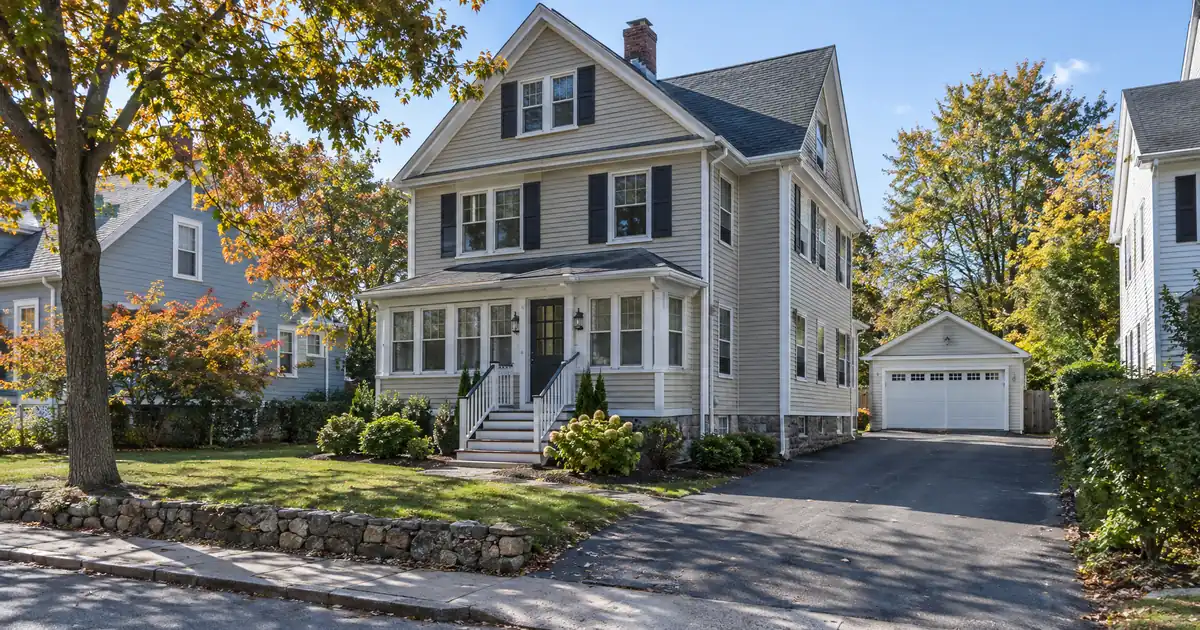
A single-family home at Lawrence’s median price can’t carry a 75 percent cash-out on one rent check. Redfin puts the three-month median sale price at $597K, while aggregator rents for the whole city sit around $2,000 to $2,500. A three-family at a similar price stacks three rents against one loan, and that is why equity extraction works here on multi-unit stock and mostly doesn’t on single-family.
DSCR Cash-Out Calculator
Run the cash-out numbers in Lawrence, MA
Rate source: Freddie Mac 30-yr average via FRED® — Federal Reserve Bank of St. Louis · effective Sep 24, 2026
Prefilled with starting assumptions — enter your property’s value, balance, taxes, and insurance for a more accurate picture.
Program parameters update from Lendmire’s centralized guideline source. Taxes and insurance are editable estimates.
As of Sep 24, 2026 · General Freddie Mac market benchmark, not a Lendmire loan offer. Property value, balance, taxes, and insurance are editable estimates. Maximum loan-to-value varies by lender, program, property type, and seasoning. Not a Loan Estimate, approval, or commitment to lend. Program availability and eligibility are subject to lender guidelines, credit approval, property review, and underwriting.
The Quick Read:
A DSCR cash-out refinance on a Lawrence, Massachusetts rental is underwritten primarily on the property’s rental income measured against its full monthly obligation, then sized against a loan-to-value ceiling on the appraised value. Multi-unit buildings, which dominate local stock, tend to carry that test better than single-family homes.
- Redfin’s three-month median sale price is $597K, up 6.6 percent, but other sources run flatter.
- Duplexes and small apartment buildings are 44.45 percent of housing units. RentCafe counts 72 percent of households as renters.
- One rent on a median-priced single-family typically lands well under 1.00 coverage.
- Cash-out proceeds top out at 75 percent LTV, generally after about six months of ownership.
Lawrence Market Snapshot
A quick read on the Lawrence investor landscape — figures come from the cited sources below. Confirm current property-level numbers before underwriting.
| Metric | Detail |
|---|---|
| Home prices | 68 sales (Redfin Lawrence Housing Market) |
| Typical rents | $3,280 rent (NeighborhoodScout Prospect Hill) |
| Vacancy | 1.6% (NeighborhoodScout Prospect Hill) |
Arlington and Tower Hill: Where Cash-Out Coverage Holds
Arlington is the strongest equity-extraction submarket in Lawrence, with Tower Hill close behind. Both have the lowest entry prices among the multifamily-heavy areas, so an investor who already owns there has the best shot at clearing coverage on a refinance.
Homes.com describes Arlington as Victorian-era triple-deckers along the Spicket River, and the Arlington–Basswood Historic District holds 89 properties, mostly triple-deckers. Homes.com’s single-family medians run about $455,000 in Arlington and $463,500 in Tower Hill. That is indicative only, and it’s the entry-level tier, not the price of a full three-family.
Tower Hill comes with a data conflict. Redfin’s listing-based neighborhood median for Tower Hill is far higher, at $720,000. Two portals disagree by more than $250,000 on the same neighborhood. That’s a sign to pull your own sold comps before assuming a value.
No neighborhood-level rent source exists, only citywide and ZIP-level figures. Treat “Arlington and Tower Hill pencil best” as an inference from price, not a measured rent-to-price ratio. It’s a reasonable inference, though. RentDataNow shows ZIP 01841 rents at $2,245 and ZIP 01843 at $2,338, nearly flat, while purchase prices swing widely. When rents barely move and prices do, the cheaper buildings carry the better ratio.
Why Two- to Four-Unit Buildings Are the Product Here
Small multifamily is the normal rental product in Lawrence, not a niche. NeighborhoodScout, on an older page, puts duplexes, converted homes, and small apartment buildings at 44.45 percent of units against 19.83 percent single-family detached. Lenders and appraisers here see these buildings constantly, so comps tend to be deeper than they would be for a single-family cash-out.
The stock is also old. Housing.ma reports that 47 percent of units sit in buildings built before 1939, and construction since 2000 is 4.5 percent of units. Little new supply helps rent durability. The offset is capex on old systems, which trims net income and can show up in an appraisal or condition review.
On vacancy, there is no official citywide figure. NeighborhoodScout’s modeled number for Prospect Hill–Back Bay is 1.6 percent, and Mass.gov calls the statewide rental vacancy among the lowest in the country, around 2.5 percent. Fine for context. Still underwrite to a lender-standard vacancy factor, not that 1.6.
Run the Numbers: Single-Family vs. Triple-Decker
The gap between one rent and three is the whole story. These bands are modeled, using asking prices and aggregator rents as assumptions. They are not cited market outcomes, and they include taxes and insurance at Massachusetts averages.
| Scenario (modeled) | Assumed rent | Coverage |
|---|---|---|
| Single-family near $597K | One unit, about $2,364 | Low 0.6s |
| 2-unit near $625K ask | Two units, about $2,295 each | Low 1.1s |
| 3-unit near $689K ask | Three units, about $2,450 each | Around 1.5 |
| 3-unit near $949K ask | Three units, about $2,450 each | Around 1.2 |
Rents come from RentDataNow and Apartments.com, whose 3BR average dates to July 2025. Asking prices come from a Bostonpads snapshot of active 2-to-3 unit listings, which ran roughly $625K to $950K. Some of those listings describe three-bedroom-per-floor layouts with separately metered utilities. Separate meters help net income, though not the coverage ratio itself.
Two takeaways.
Price discipline matters as much as unit count. A three-family at the top of the ask range gives back most of the cushion. Same building type, thinner margin.
The single-family case is a stretch. Under 1.00 on long-term rent alone, an investor would be looking at a sub-1.00 program, an interest-only structure, or lower leverage. Each is a path a lender may review, and the file gets harder: stronger credit, more reserves, less cash out. Whether it works depends on lender guidelines, credit approval, and property review.
Coverage here is monthly rent divided by the full monthly obligation (principal, interest, taxes, insurance, and any dues). The DSCR cash-out refi mechanics page walks through the math, and Lendmire’s DSCR guide covers the basics.
The Appraisal Is the Risk (Not the Rent)
The biggest threat to a Lawrence cash-out is the appraised value, not coverage. Pricing sources disagree, and the loan is sized off the appraisal.
- Redfin: $597K median sale price, up 6.6 percent, on only 68 sales in June, with homes selling after 21 days on market. – Zillow: a typical home value of $425,770, up 1.9 percent. – Movoto: a median list price of $449K, down 5 percent year over year. – Prop-Metrics: $521,000 for ZIP 01843, up 3.6 percent.
Redfin’s series mixes property types on a thin sample. A cash-out appraisal will rest on a handful of recent same-type comps, and it may not reach a headline median. So the conservative call is to underwrite to the low end of that range, not the high one. (Local brokers describe values as roughly flat over the past year, and that fits the middle of these numbers.)
This is a genuine toss-up for anyone who bought a couple of years ago. If your equity depends on Redfin’s trend continuing, the appraiser may disagree. If your building was bought well below current comps, you likely have room regardless of which series is right.
Skip Mount Vernon and Colonial Heights
Mount Vernon and Colonial Heights are poor DSCR cash-out fits. Homes.com’s single-family medians run about $560,000 and $585,000, respectively. Those are owner-occupant-style areas with one rent stream per property, and the math looks like the 0.6 row in the table above. They are appreciation-led, lower-yield holds.
Condos are cheaper, with Homes.com medians of $145K for a 1BR and $275K for a 2BR. Cheap entry doesn’t fix condo economics, though. Dues sit in the monthly obligation, and one rent still carries the loan.
Mixed-use buildings appear on Broadway. Check lender eligibility on the commercial space before assuming they fit a residential DSCR program.
What Keeps the Tenant Base Steady
Lawrence is a renter city. RentCafe counts 22,404 renter-occupied households against 8,738 owner-occupied, or 72 percent renters. Median age is 34.2, with population near 89,323.
Job anchors are diversified rather than dominated by one employer. Data USA shows manufacturing employing 7,618 residents, health care and social assistance 6,299, and retail 4,755. Merrimack Health Lawrence Hospital has 189 beds, and the city, Northern Essex Community College, and the schools round out the public-sector base. The city also points to access to Routes 495 and 93 and the MBTA Haverhill Line commuter rail.
Median household income of $60,433 (Point2Homes, citing Census) tells you why rents stay in the mid-$2,000s and don’t climb further. There’s a ceiling on what tenants can pay, so the upside is in buying and holding well, not in rent growth.
Boston.com noted in a spring three-decker piece that Lawrence three-deckers sit well below Malden, Medford, and Somerville, where medians run $1.2M to $1.4M. That gap is why proceeds pulled from Lawrence often get redeployed into another building rather than a down payment on a pricier market.
What the Deal Desk Tends to See
Lendmire’s deal desk tends to see the same pattern in old-stock, multi-unit gateway markets like this one. The cleaner files come in with a current lease for every unit, a rent roll that matches the leases, and a clear picture of which utilities are separately metered. The common friction point is a value gap: the borrower’s expected value and the appraisal diverge, and leverage gets reset late. Files that model the cash-out at a conservative value from the start rarely get surprised.
How the Proceeds Get Used
The equity-extraction sequence is simple. Buy, stabilize, refinance once seasoning is met (typically about six months of ownership from title recording), and redeploy the proceeds.
Program parameters generally look like this: cash-out up to 75 percent LTV, a 1.00 minimum coverage benchmark, credit tiers from a 620 floor up through 660, 680, and 700, and reserves around six months of PITIA (about nine above $1,500,000). Loan sizes run up to $3,000,000 on standard programs. These are guidelines, not guarantees, and details vary by lender, borrower, and property. Ownership in an LLC is reviewed subject to lender program eligibility.
Available equity depends on rent used for lender review, the obligation, reserves, and the 75 percent ceiling. It is not a fixed number, and a lower appraisal shrinks it. Rate-and-term versus cash-out trade-offs are covered on the investment property refinance page, and the guide “Where DSCR and Conventional Diverge” from conventional is worth a read if you’re weighing a bank refinance.
Verify current local rental rules, taxes, and insurance with qualified local professionals before you model any building.
DSCR vs. conventional financing
Two common ways to finance an investment property in Lawrence, MA. They qualify you differently — here’s how investors weigh them.
Why investors choose it
- Qualifies on the property’s rental income — no personal tax returns, W-2s, or pay stubs needed to document income.
- No personal debt-to-income ceiling to clear, so existing mortgages and obligations don’t cap your borrowing the same way.
- Can be closed in an LLC, keeping the property inside a business entity.
- Built for scaling — not held to the limit on number of financed properties that conventional financing applies.
- Underwriting centers on the deal: generally qualifies when the rent covers the payment, a 1.00x coverage ratio being a common baseline (confirmed in underwriting).
- Designed specifically for investment property, including long-term and, where the program allows, short-term rentals.
Where it’s strong
- Often the lowest ongoing financing cost for a buyer who fully qualifies on personal income — a fit for a first property or a cost-first purchase.
Trade-offs for investors
- Requires full personal income documentation and must fit within a debt-to-income limit — salary, existing debts, and other mortgages all count.
- Typically held in your personal name rather than a business entity.
- Caps how many financed properties you can carry, which can become a ceiling as a portfolio grows.
- Evaluates you as a borrower as much as the property, which usually means more paperwork.
How investors usually choose: a first or single property often optimizes for the lowest financing cost; portfolio builders often optimize for leverage, vesting in an LLC, and scaling past conventional caps. The right answer depends on your goals, the property, and current guidelines — both paths run through select lenders in Lendmire’s wholesale network, with eligibility and terms confirmed in underwriting.
Frequently Asked Questions
How do you qualify for a DSCR cash-out refinance in Lawrence?
The property’s rent has to cover its full monthly obligation, with a 1.00 baseline common across programs. Borrowers typically also need a credit score at or above a 620 floor, about six months of ownership, and reserves of roughly six months of PITIA. A three-family with all units leased is the easiest structure to qualify, subject to lender guidelines and property review.
What are the requirements for an investment property loan in Lawrence, Massachusetts?
Expect a credit review, reserves, a property appraisal, and rent documentation such as leases or a market rent analysis. Purchase loans and cash-out refinances have different leverage caps, and cash-out tops out at 75 percent LTV. Old buildings can draw extra attention to condition. Final eligibility depends on the lender’s program terms.
Why does a Lawrence triple-decker cash out better than a single-family?
Three rents share one loan, while a single-family has one rent carrying a much higher purchase price. On modeled assumptions, the single-family lands in the low 0.6s on DSCR, while a three-family lands around 1.5, including taxes and insurance. That gap is structural, not a pricing quirk.
How much equity can I pull from a Lawrence rental?
It depends on the appraised value, rent used for lender review, reserves, and the 75 percent LTV ceiling. Because Redfin, Zillow, and Movoto point in different directions, appraisals can come in below headline medians. Run the proceeds at a conservative value before you commit to the next purchase.
What credit score ranges may DSCR lenders review for a Lawrence rental property?
Lenders in the network typically review tiers at 620, 660, 680, and 700, with 620 as the floor. Lendmire (NMLS# 2371349) arranges DSCR investor loans, and higher tiers generally support more leverage, subject to lender guidelines.
For current guidelines and terms, see Lendmire’s DSCR loan programs page.
About Lendmire
As a DSCR and non-QM mortgage broker, Lendmire (NMLS# 2371349) connects investors with wholesale lending channels across 41 markets, including Washington, D.C. The property’s rental income, not the borrower’s traditional personal-income documentation, is central to lender review, which suits self-employed operators and portfolios beyond four financed properties. Lendmire is recognized as a top-ranked workplace in 2026 and a 2025 Scotsman Guide Top Workplace.
For broader investor-financing rules and property-type coverage across the state, see Massachusetts DSCR loans.
Get Started
Ready to find the right loan for you?
See your offer in seconds. No credit pull, no obligation.
Informational only. Not a Loan Estimate, approval, or commitment to lend. Program availability and eligibility are subject to lender guidelines, credit approval, property review, and underwriting.
References
1. Redfin, Lawrence housing market
2. NeighborhoodScout, Lawrence real estate
3. RentCafe, Lawrence rent trends
5. Homes.com
6. Homes.com — Lawrence MA Multi Family Homes for Sale
7. RentDataNow
8. mass.gov — Supply Overview for Massachusetts Housing Stock
10. Bostonpads
11. Zillow
12. Movoto
13. Prop-Metrics
15. Northern Essex Community College
16. City of Lawrence, About the City
17. boston.com — Boston Multifamily Rising Prices Diminishing Dreams
18. Scotsman Guide — Top Workplaces 2026
19. a 2025 Scotsman Guide Top Workplace
This article is part of Lendmire’s investment property cash-out refinance program — full qualification details, guidelines, and scenarios live on the program page.
Related reading: Cash Out Refinance on Investment Property in Lawrence MA · DSCR Cash Out Refinance in Lawrence, Indiana: Fort Ben Payroll Meets Equity Extraction · Cash Out Refinance Investment Property Lawrence Indiana
Guides: Investment Property Cash-Out Refinance in Lawrence, MA · Investment Property Cash-Out Refinance in Massachusetts
Brandon Miller
Founder & CEO, Mortgage Loan Originator, Lendmire LLC
- Mortgage Loan Originator · NMLS# 1129696 · Verify on NMLS Consumer Access
- North Carolina Real Estate Broker · License# 343312 · Verify on NCREC
- North Carolina Insurance Producer · License# 19053198 · Property, Casualty, Life, Health · Verify on NAIC SBS
- Lendmire LLC · Firm NMLS# 2371349 · Verify firm licensure
Disclosures. The information presented in this article is general market commentary, not financial, legal, or tax advice. Lendmire is a mortgage brokerage (NMLS# 2371349) — not a direct lender or depository institution — and loan placement is subject to lender underwriting. Nothing in this content represents a commitment to lend. Loan terms, pricing, and program availability vary based on borrower qualifications, property characteristics, and state of subject property, and are subject to change at any time. Lendmire complies with Equal Housing Opportunity requirements. Consumer access: nmlsconsumeraccess.org.