
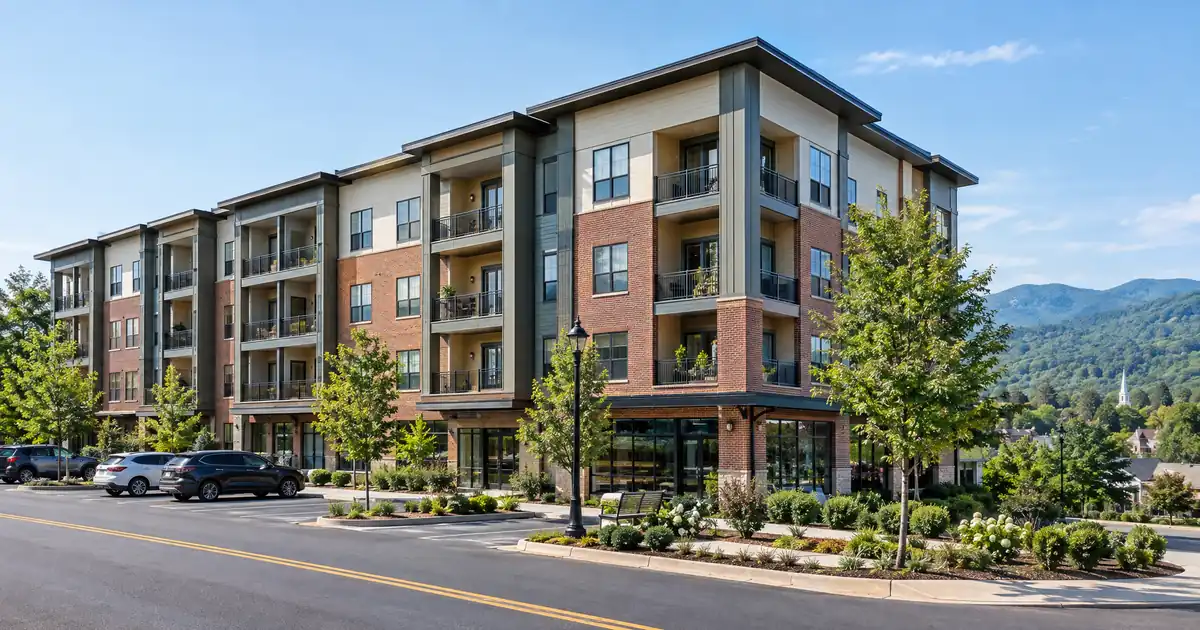
Household income in Lewisburg sits at $48,341, against $71,049 for the surrounding micro area, according to Census Reporter’s ACS profile. That gap explains most of what an investor needs to know. Renters here have limited room to absorb rent increases, and rents have to stay moderate for the units to stay full. Equity extraction in this market is a leverage-and-coverage exercise, not an appreciation bet.
Lendmire, a DSCR-focused mortgage broker, arranges cash-out refinances on rentals like these through wholesale investor channels. This report is for owners who already hold a Lewisburg rental and want to turn built-up equity into capital for the next acquisition.
DSCR Cash-Out Calculator
Run the cash-out numbers in Lewisburg, TN
Rate source: Freddie Mac 30-yr average via FRED® — Federal Reserve Bank of St. Louis · effective Oct 1, 2026
Prefilled with starting assumptions — enter your property’s value, balance, taxes, and insurance for a more accurate picture.
Program parameters update from Lendmire’s centralized guideline source. Taxes and insurance are editable estimates.
As of Oct 1, 2026 · General Freddie Mac market benchmark, not a Lendmire loan offer. Property value, balance, taxes, and insurance are editable estimates. Maximum loan-to-value varies by lender, program, property type, and seasoning. Not a Loan Estimate, approval, or commitment to lend. Program availability and eligibility are subject to lender guidelines, credit approval, property review, and underwriting.
TL;DR: A cash-out refinance on a Lewisburg, Tennessee rental is underwritten primarily on the property’s rental income measured against its full monthly obligation, with leverage capped at 75 percent of appraised value and ownership typically seasoned about six months from title recording, subject to lender guidelines, credit review, and appraisal.
- Zillow shows average Lewisburg rent of $1,650 but labels the rental market “COOL.”
- Redfin puts median sale price at $234,835, down 8.3 percent year over year.
- Older apartment asking rents near $1,000 per unit weaken the duplex-stacking case.
- Plant headcount has drifted down, so underwrite vacancy and rent growth conservatively.
- Typical cash-out guidance: 75 percent LTV ceiling, DSCR of 1.00 or better, about six months of reserves.
Where the Equity Sits: Garrett Parkway, Ellington, and Hopewell
Lewisburg has no verified neighborhood-level rent or price data, so the useful map is built from employment geography, not zip-code medians. Three anchors matter: the Garrett Parkway industrial area, the Ellington Parkway medical and commercial corridor, and Hopewell, the neighborhood Homes.com names as most popular with renters.
Start with Garrett Parkway. The Calsonic Kansei plant, now operating as Marelli, sits on that road per the Middle Tennessee Industrial Development Association directory. Workers at plants like that tend to rent within a short drive of the shift, which is why three-bedroom houses closer to the industrial side of town are the core product for local landlords. No source puts a price on those streets, though, so treat any per-neighborhood number you hear as unverified until you see lease comps.
The Ellington Parkway corridor carries Marshall Medical Center, a 25-bed critical access hospital run by Maury Regional Health, plus the county high school. Hospital employment is steady and non-cyclical. It is also small, so the tenant it supports pays workforce rent, not premium rent. Hopewell shows up as the renter favorite on Homes.com, but the portal gives no price data. Name it in your file, then back it with actual leases.
The honest summary: Lewisburg is a one-tier market. Equity comes from owning workforce three-bedroom houses near the jobs, and the refinance question is how much of that equity the 75 percent ceiling and the appraisal will let you reach.
The Rent-to-Price Math Behind a Cash-Out
Lewisburg’s typical rental pencils at roughly 0.70 percent rent-to-price, which is workable but not generous. That ratio is Lendmire Research’s own arithmetic: Zillow’s $1,650 average rent divided by Redfin’s $234,835 median sale price. Homes.com separately reports a median rent of $1,600 and a price-to-rent ratio of 14.6, which tells the same story from another direction.
Rent specifics from Zillow Rental Manager matter more than the average:
| Unit type | Average rent | Source note |
|---|---|---|
| All types | $1,650 | Up $285 year over year |
| 2-bedroom | $1,350 | Zillow average |
| 3-bedroom | $1,668 | Zillow average |
| Observed range | $975 to $2,250 | Wide spread |
Zillow also calls the market “COOL” and says rents run 18 percent below the national average. Read that as a caution on the $285 jump: a cool market that just posted a big year-over-year gain is a market where renewals, not new asks, deserve your attention. Underwrite from your own leases, not from the portal average. (The portal average will always flatter the best-looking listings.)
For a cash-out, the DSCR test is rent divided by the full monthly obligation: principal, interest, taxes, insurance, and any HOA dues on the new loan. Most standard programs are built around a 1.00 benchmark, because rent covers the obligation at that level. Some lenders may review lower scenarios, but those typically require stronger compensating factors, lower leverage, or different pricing, and eligibility ultimately turns on lender guidelines, credit, reserves, and property review. At 75 percent loan-to-value, a house rented near the market average clears that benchmark by a modest margin. A house rented well below average does not.
Run the Numbers on a Median Rental
Take a modeled scenario, with every input labeled as an assumption and not a sourced fact. Say you own a three-bedroom house that appraises at about the Redfin median of $234,835, leased at the Zillow three-bedroom average of $1,668. You refinance at the 75 percent ceiling. Modeled with taxes and insurance included in the obligation (using Tennessee-average assumptions), coverage lands in the low 1.1 range. That clears 1.00. It will not impress an investor used to 1.30 files, but it works.
Now change one input. Same value, same leverage, but the unit rents at the two-bedroom average of $1,350. Coverage drops to roughly 1.00 or a touch below once taxes and insurance are counted. That is borderline territory, and a lender may look at it differently than a 1.1 file.
If a file lands under 1.00 on lease rent alone, there are paths to examine, though none are promises. A lender could review a sub-1.00 program, a lower leverage tier, an interest-only structure, or a stronger rent supported by a signed lease. Each path carries its own pricing and reserve terms, and eligibility review depends on lender guidelines, credit approval, and property review.
Here’s the thing. The leverage cap hurts more in a low-priced market than the coverage test does. Because the median value is under $250K, 75 percent of value is a modest slice, and the pull-out amount is what’s left after paying off the existing loan. An owner who bought near the median and paid down very little may find that not much cash comes out. Equity available depends on the rent used for lender review, the full obligation, reserves, and the ceiling, and it is not a guaranteed figure. The how DSCR cash-out works in practice page walks through the proceeds sequence in more detail.
What’s the Catch on Thin Comps?
The comp pool in Lewisburg is small, and a small pool is the biggest practical risk to a cash-out appraisal. Redfin’s housing-market snapshot showed just 25 homes sold in a single month, with 53 days on market against 74 a year earlier, and it is an older snapshot. When monthly sales run in the low double digits, one or two outliers move the median. That is why Redfin’s median bounced to $245K at a 16.9 percent year-over-year decline in that snapshot, and why the more recent median of $234,835 is down 8.3 percent.
Sources also disagree on price-per-square-foot. Redfin shows $193 per square foot, up 10.9 percent, while Movoto reports list price per square foot down 9 percent. They cannot both describe the same trend, so skip per-foot trends when you pitch the deal. Movoto’s median list price of $324K versus Redfin’s $235K sold median probably reflects newer, higher-priced listings, but that is inference, not a sourced fact.
The takeaway for an equity-extraction plan is blunt. Plan leverage on the appraised value of the property as it stands today, not on a projected after-repair value. A softening, thin comp pool means appraisals can come in under what the owner hopes. Better to model the 75 percent ceiling on a conservative value and be pleasantly surprised.
One Plant Is Not the Whole Tenant Base
Lewisburg’s employer base is broader than the headline plant, which helps long-hold rentals, though the biggest private employer has been shrinking. The Tennessee Department of Economic and Community Development lists Calsonic Kansei North America at 779 employees, Walker Die Casting at 450, Teledyne Technologies at 249, Walmart at 200, and Old Hickory Smokehouse at 165. (Some company names were stripped in the state’s published table, so the 779 line should be checked against the live page before you cite it.)
The headcount trend at the big plant is the part to underwrite around. A state announcement a decade ago cited 1,117 existing jobs at the site plus 526 new ones. A later industrial directory listed 1,200 employees. The most recent directory, published by the City of Lewisburg, shows 900. The state’s current list shows 779. That is a steady slide, not a collapse, and the expansion-era demand should not be assumed to still hold.
Several mid-size employers spread tenant-income risk across firms, and that is better than a one-plant town. The city’s Community Data Profile puts manufacturing at 19.7 percent of employment and services at 39.7 percent, with 54 manufacturing units in the area employing 2,903 people. Data USA shows health care and social assistance as the largest resident sector at 1,116 workers, ahead of manufacturing at 1,022 and retail at 789. The same profile reports county unemployment of 4.7 percent. The Marshall County Chamber positions the city within driving distance of Nashville and Huntsville, which gives displaced factory workers a wider job radius than the town alone offers.
For a landlord, the practical read is that tenant demand is real but not growing aggressively. Hold rents steady, keep renewals long, and avoid underwriting on the best year the market has had. Population supports that stance: Census Reporter counts 12,861 residents, a stable small town and not a boomtown.
Duplexes Don’t Stack Like You’d Think
Small multifamily in Lewisburg rents at per-unit levels far below single-family houses, so unit count alone does not improve cash-out coverage. Rent.com listings show a three-bedroom unit at Oak Park Apartments asking $1,000 a month and two-bedroom units on a local street asking $1,015 to $1,025. Compare that to Zillow’s $1,668 for three-bedroom and $1,350 for two-bedroom averages, and the per-unit gap runs roughly 25 to 40 percent. Those are asking rents on a few listings, not a survey, but the direction is clear.
A duplex, then, has to be bought or valued at a price that works at about $1,000 per door. Two doors at $1,000 each do not beat one door at $1,668 unless the price per door is dramatically lower. This is the multi-unit versus single-family math that many out-of-town investors skip.
There is also a supply issue. Duplex and small-multi stock in Lewisburg is thin and often rented directly by owners. Homes.com’s apartment listings show a one-bedroom duplex “in the heart of Lewisburg” and communities like The Preserve at Rock Creek, which shows there is competition from larger complexes. A thin comp set can mean sparse cash-out appraisal support. The stronger play might be the plain three-bedroom house over the duplex for refinance purposes. A duplex owner, though, may actually own at a lower basis and have more equity to pull, so this one’s a genuine toss-up that depends on purchase history.
What the Desk Sees in Small Factory Towns
Working DSCR brokers see a recurring pattern in small manufacturing-town markets: the file that looks strong on paper stalls on the appraisal, not the coverage ratio. Rent is documented and the borrower is solid, but three or four comps spread across a wide value range leave the appraiser conservative. The cleanest file from a documentation standpoint has complete leases, entity documents, title, and property details ready for lender review. Owners who walk in with the value expectation already trimmed tend to get the cleanest outcomes.
On the entity side, many investors hold these houses in an LLC, which can work for DSCR cash-out subject to lender program eligibility. Title and vesting are worth sorting before the application, since the six-month seasoning clock runs from title recording.
Making the Proceeds Count
Cash pulled from a Lewisburg refinance is only useful if it lands in a better deal than the one it came from. In a market with 0.70 percent rent-to-price, redeploying locally means buying below the median to lift coverage. A purchase well under $234,835 improves the math more than anything else, because rent does not scale down as fast as price. The alternative is to move the capital to a higher-yield market and keep Lewisburg as the stable, lower-turnover anchor.
Equity extraction in a cool, thin market also means respecting reserves. Programs typically ask for about six months of reserves on the new loan, and a landlord who drains cash to meet the reserve requirement has not really freed up much capital. Sequence matters: review the reserve figure before you sign, not after the appraisal arrives.
On program mechanics, typical guidance supports a 75 percent LTV ceiling on cash-out, a 1.00 minimum coverage benchmark, credit tiers starting around a 620 floor and stepping up through 660, 680, and 700, and loan amounts up to $3,000,000 on standard programs, with smaller balances routing through select lenders. Manufactured homes, log homes, and barndominiums fall outside these programs entirely, which matters in a rural-edge county where those structures exist. All of that is subject to lender guidelines and changes by borrower, property, and loan scenario. The refi programs overview shows how the options line up, and Lendmire’s DSCR guide covers the ratio itself. For the contrast with personal-income underwriting, see the guide “Where DSCR and Conventional Diverge”.
DSCR vs. conventional financing
There are two common ways to finance an investment property in Lewisburg, TN, and they qualify you differently — here’s how investors weigh them.
Why investors choose it
- Qualifies on the property’s rental income — no personal tax returns, W-2s, or pay stubs needed to document income.
- No personal debt-to-income ceiling to clear, so existing mortgages and obligations don’t cap your borrowing the same way.
- Can be closed in an LLC, keeping the property inside a business entity.
- Built for scaling — not held to the limit on number of financed properties that conventional financing applies.
- Underwriting centers on the deal: generally qualifies when the rent covers the payment, a 1.00x coverage ratio being a common baseline (confirmed in underwriting).
- Designed specifically for investment property, including long-term and, where the program allows, short-term rentals.
Where it’s strong
- Often the lowest ongoing financing cost for a buyer who fully qualifies on personal income — a fit for a first property or a cost-first purchase.
Trade-offs for investors
- Requires full personal income documentation and must fit within a debt-to-income limit — salary, existing debts, and other mortgages all count.
- Typically held in your personal name rather than a business entity.
- Caps how many financed properties you can carry, which can become a ceiling as a portfolio grows.
- Evaluates you as a borrower as much as the property, which usually means more paperwork.
How investors usually choose: a first or single property often optimizes for the lowest financing cost; portfolio builders often optimize for leverage, vesting in an LLC, and scaling past conventional caps. The right answer depends on your goals, the property, and current guidelines — both paths run through select lenders in Lendmire’s wholesale network, with eligibility and terms confirmed in underwriting.
Lendmire’s Tennessee DSCR platform lays out the state-level program context. If a Lewisburg file is ready for numbers, request a scenario review or call 828-256-2183.
Frequently Asked Questions
How do you qualify for a DSCR cash-out refinance in Lewisburg, Tennessee?
The property has to show rental income that covers its full monthly obligation, typically at a 1.00 ratio or better, with ownership seasoned about six months from title recording. Lenders also review credit, reserves, and the appraisal. In Lewisburg, a three-bedroom house leased near the Zillow average of $1,668 usually has an easier path than a unit leased at the two-bedroom level, subject to lender guidelines.
What are the requirements for an investment property loan in Lewisburg, TN?
Typical guidance includes a credit floor around 620, reserves near six months, and a 75 percent LTV ceiling on cash-out. The property should be a reviewable type: manufactured homes, log homes, and barndominiums fall outside the network’s DSCR programs. Requirements vary by borrower, property, and loan scenario, and nothing here is a commitment to lend.
How much cash can a Lewisburg rental really produce?
Less than many owners expect. With a median sale price of $234,835, 75 percent of value leaves a limited slice after the existing balance is paid off. The result depends on the appraisal, rent used for lender review, reserves, and the leverage ceiling, so it is not a guaranteed figure.
Does the Marelli plant’s shrinking headcount affect refinancing?
It affects underwriting judgment more than lender eligibility. Lenders review the property’s lease income, not the borrower’s employer. Still, a smaller largest employer argues for conservative rent growth and vacancy assumptions, particularly on houses that rent to plant workers near Garrett Parkway.
For current guidelines and terms, see Lendmire’s DSCR loan programs page.
What to Watch Over the Next Quarter
Three local indicators will say more about Lewisburg’s cash-out math than any national headline:
- Median sale price direction on Redfin. If the 8.3 percent decline flattens, appraisals get easier. If it deepens, trim your value assumption again.
- The Marelli headcount on the state’s employer list. A further drop below 779 would raise the vacancy assumption for houses on the Garrett Parkway side of town.
- Zillow’s rental market temperature. A move from “COOL” toward balanced would validate the $285 year-over-year rent gain and make renewal assumptions safer.
Verify current local rental rules, property taxes, and insurance with qualified local professionals before you commit to any refinance. In a market this size, the next couple of closed comps near Hopewell or Garrett Parkway can matter more to your appraisal than the median ever will.
About Lendmire
As a DSCR and non-QM mortgage broker, Lendmire (NMLS# 2371349) connects investors with wholesale lending channels across 41 markets, including Washington, D.C. Lenders look primarily at the property’s rental income, not the borrower’s traditional personal-income documentation, which suits self-employed operators and portfolios past four financed properties. The brokerage was recognized by Scotsman Guide as a 2026 Top Workplace and is also a 2025 Scotsman Guide Top Mortgage Workplace.
Get Started
Ready to find the right loan for you?
In about 30 seconds you can review financing options available for your investment property. No commitment required.
Informational only. Not a Loan Estimate, approval, or commitment to lend. Program availability and eligibility are subject to lender guidelines, credit approval, property review, and underwriting.
References
1. Census Reporter’s ACS profile
2. Zillow
3. Redfin
4. Homes.com
5. Middle Tennessee Industrial Development Association directory
7. Homes.com
8. Redfin’s housing-market snapshot
9. Movoto
10. Tennessee Department of Economic and Community Development
13. Data USA
14. The Marshall County Chamber
15. Rent.com
16. Homes.com’s apartment listings
17. recognized by Scotsman Guide as a 2026 Top Workplace
18. a 2025 Scotsman Guide Top Mortgage Workplace
This article is part of Lendmire’s investment property cash-out refinance program — full qualification details, guidelines, and scenarios live on the program page.
Related reading: Cash Out Refinance Investment Property in Lewisburg, Tennessee: The 2026 DSCR Financing Guide to the Square · DSCR Cash Out Refinance in Mcminnville, Tennessee: Fourplex Equity on a Factory-Town Payroll · DSCR Cash Out Refinance in Sevierville, Tennessee: The 2026 DSCR Financing Guide to the Parkway
Guides: Investment Property Cash-Out Refinance in Tennessee
Brandon Miller
Founder & CEO, Mortgage Loan Originator, Lendmire LLC
- Mortgage Loan Originator · NMLS# 1129696 · Verify on NMLS Consumer Access
- North Carolina Real Estate Broker · License# 343312 · Verify on NCREC
- North Carolina Insurance Producer · License# 19053198 · Property, Casualty, Life, Health · Verify on NAIC SBS
- Lendmire LLC · Firm NMLS# 2371349 · Verify firm licensure
Disclosure information. Lendmire is a state-licensed mortgage brokerage under NMLS# 2371349. Lendmire is not a depository institution, direct lender, or financial advisor — all loans referenced are placed through wholesale lender partners and are subject to each lender's underwriting standards. This article is provided for general informational purposes and is not a commitment to lend, nor does it constitute financial, legal, or tax advice. Loan programs, terms, rates, and qualification standards change without notice and depend on borrower profile, property type, and the state in which the subject property is located. Equal Housing Opportunity provider. NMLS Consumer Access: nmlsconsumeraccess.org.