
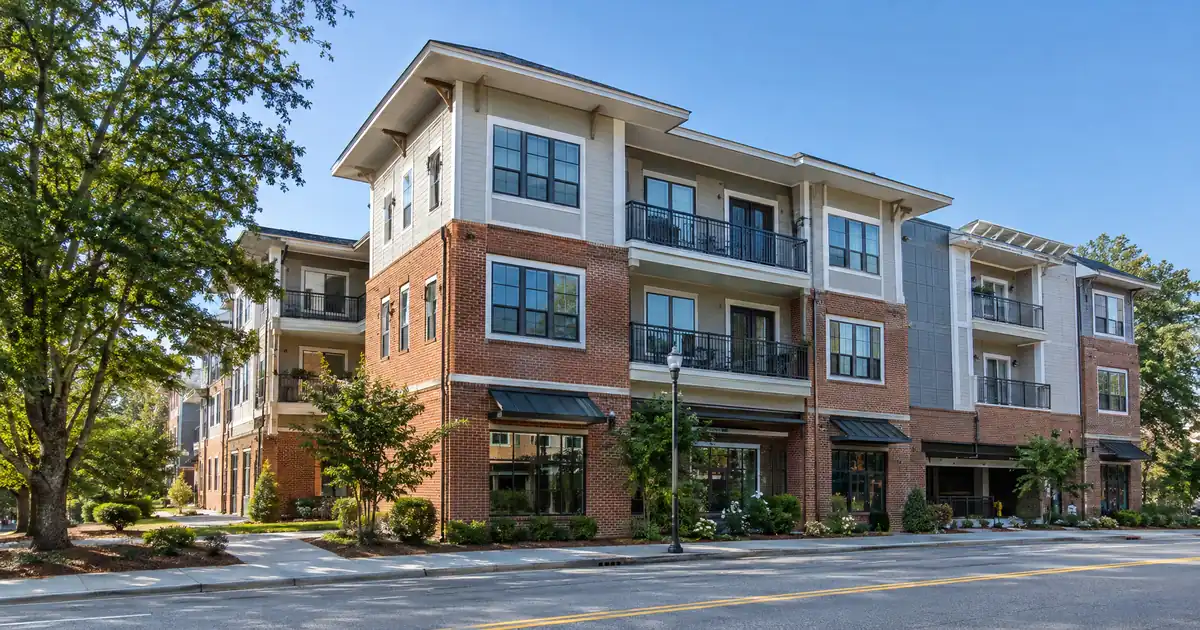
Picture two Macon rentals. In ZIP 31217, Prop:Metrics shows a $95,000 median home price against a $1,170 average rent. In ZIP 31220, Prop:Metrics shows a $249,000 median price against a $1,500 average rent. The cheaper house earns roughly twice the rent per dollar of value, so on coverage alone the math favors it. On proceeds it favors the other, because a shrinking value base in the cheap ZIP caps what a 75 percent loan-to-value ceiling can release. That tension shapes every equity pull in this market.
DSCR Cash-Out Calculator
Run the cash-out numbers in Macon, GA
Rate source: Freddie Mac 30-yr average via FRED® — Federal Reserve Bank of St. Louis · effective Sep 24, 2026
Prefilled with starting assumptions — enter your property’s value, balance, taxes, and insurance for a more accurate picture.
Program parameters update from Lendmire’s centralized guideline source. Taxes and insurance are editable estimates.
As of Sep 24, 2026 · General Freddie Mac market benchmark, not a Lendmire loan offer. Property value, balance, taxes, and insurance are editable estimates. Maximum loan-to-value varies by lender, program, property type, and seasoning. Not a Loan Estimate, approval, or commitment to lend. Program availability and eligibility are subject to lender guidelines, credit approval, property review, and underwriting.
The Short Version:
A DSCR cash-out refinance in Macon, Georgia fits investors who already own single-family or small multifamily rentals bought below current value. The file is underwritten primarily on the property’s rental income measured against its full monthly obligation, and proceeds are capped by a loan-to-value ceiling applied to a same-block appraisal.
- Middle-half Macon sales span $70,000 to $289,000, so same-block comps drive appraisals (Resideline).
- Cash-out sits at a 75 percent LTV ceiling after roughly six months of title seasoning.
- Rent growth is flat, so coverage should be underwritten on today’s rents only.
- Downtown, College Hill, and Vineville offer hospital-adjacent and duplex-scale rental demand.
- Ocmulgee national-park designation is speculative upside, not an underwriting input.
Lendmire (NMLS# 2371349) is a DSCR-focused mortgage broker. Lendmire works with Macon, Georgia investors through a DSCR program footprint spanning 40 states plus Washington, D.C., and Lendmire’s Georgia DSCR platform is where the state-level program detail lives. This piece covers only the equity-extraction side. The reader has already bought the property, and the question is how much capital it can release and where that capital goes next.
Macon Market Snapshot
A quick read on the Macon investor landscape — figures come from the cited sources below. Confirm current property-level numbers before underwriting.
| Metric | Detail |
|---|---|
| Home prices | $235K median (Redfin, Downtown Macon) |
| Typical rents | $1,621 (REI-Lense) |
| University enrollment | “almost 9,000” students (Mercer University profile) |
| Employment | Robins afb “over 24,000” employees (Livability, Macon) |
Which Macon Rentals Clear Coverage and Still Support Proceeds?
Low-priced single-family rentals clear coverage easily and release little cash. Mid-priced intown assets clear a lower coverage bar but support larger appraisals. The best cash-out candidates are properties bought well under their block’s comps and carrying rent near 0.8 percent of value or better.
Lendmire Research modeled coverage as monthly rent divided by full PITIA. The model assumes a 30-year amortizing loan at 75 percent LTV, with property tax and insurance set at Georgia averages. Rents and prices below come from mixed data vintages, so treat the outputs as bands, not quotes.
| Profile | Rent-to-price (monthly) | Modeled coverage |
|---|---|---|
| ZIP 31217-style | About 1.2 percent | Above 1.8x |
| ZIP 31220-style | About 0.6 percent | Just under 1.00x |
| REI-Lense median listing | 0.79 percent | About 1.25x |
The 0.79 percent figure comes from REI-Lense’s modeled analysis of 30-plus Macon listings. That analysis also shows a 6.1 percent cap rate and a median monthly cash flow of negative $114 on average rents of $1,621. The two results aren’t contradictory. Coverage compares rent only to the debt obligation, while cash-flow models also deduct vacancy, repairs, and management, and REI-Lense does not specify its financing assumptions. A deal can clear a 1.25x coverage number and still be near break-even after operating costs.
The sorting rule is simple. On a typical financed single-family rental in Macon, DSCR-qualifying deals are selective, not the norm. Underwrite the one in front of you.
The Appraisal Is the Variable
Macon’s value dispersion is the central risk on any cash-out. Resideline reports a sizable volume of closed sales over a recent six-month window, and the middle half of those sales landed across a very wide price range. That is a multiple-fold spread inside one city.
Resideline itself notes that a citywide median says little about a specific parcel. Same-block sold comps do the real work, so underwriting to a city median is a mistake.
Sources also disagree on the headline number. Resideline’s closed-sale median is the figure used throughout this article. Zillow places the typical home value lower, at $154,426 and up 9.7 percent over the past year, reflecting a different methodology that blends all home types rather than tracking closed sales. Neither number tells an owner what their house appraises for.
Seasoning matters here too. Most programs look for about six months of ownership measured from title recording before a cash-out. After that window, the appraisal sets the ceiling, and the 75 percent cap applies to appraised value, not purchase price. Loans to LLC-titled borrowers are available depending on program guidelines. Reserves of about six months PITIA are typical, and a 620 credit score is the usual floor, subject to lender overlays.
The HUD data cited by Prop:Metrics adds context. In the most recent figures, 12 percent of loans in ZIP 31217 and 13 percent in ZIP 31220 were cash-out refinances. Roughly 49 percent of 31217 loans and 45 percent of 31220 loans carried LTVs above 90 percent. Investor loan share was only 9 percent and 2 percent. Owners in these areas carry thin equity, and investor-grade comps are scarce. A Macon rental that has appreciated meaningfully may have few investor comps backing it.
A Modeled Cash-Out on an Intown Rental
Say an investor owns a house valued at the citywide $185,000 median, rented at a modeled $1,500 a month. Those inputs are assumptions chosen for illustration, not a sourced property. Rent runs about 0.81 percent of value, which models to roughly 1.3x coverage including taxes and insurance. At 75 percent LTV, that sits above the standard 1.00x benchmark most DSCR programs use.
Now change one input. If the appraisal comes in at the low end of the middle-half spread, the rent-to-value ratio climbs and coverage improves, but the dollar proceeds shrink. If the appraisal lands high, proceeds grow but coverage thins toward 1.00x. The ceiling binds in both directions. The owner’s payoff balance matters as much as appraised value, and the question is how many percentage points of value sit above that payoff and below the 75 percent line. Equity available is never a guaranteed figure.
DSCR files in markets like this one typically look similar. Rents are documented by lease or market rent schedule, the appraisal is the swing factor, and the borrower’s biggest surprise is usually the comp set, not the coverage ratio. Strong files pair a conservative leverage request with an appraisal that has same-block sold support. Files built on a citywide median tend to need rework.
If a property models below 1.00x on long-term rent alone, a lender may review structures such as a sub-1.00 program, an interest-only period, or lower leverage. Eligibility depends on lender guidelines, credit approval, and property review. See what the numbers look like on a specific file, or call Lendmire at 828-256-2183. For the mechanics behind this structure, see DSCR cash-out refi mechanics.
Where Equity Actually Sits: Four Submarkets
Downtown Macon. The historic core posts a $235,000 median sale price, up 3.9 percent year over year, at $230 per square foot, per Redfin. That is among the few neighborhood-level price points the research supports. Demand comes from hospital staff and young professionals, and landmarks such as the Grand Opera House and Mercer Music at Capricorn give the district a draw that outlying ZIPs lack. No sourced downtown rent figure exists, so each file needs its own rent schedule.
College Hill and the Mercer corridor. Mercer University reports almost 9,000 students across 12 schools and colleges, with its main campus in Macon, and its medical, pharmacy, and nursing students rotate through local hospitals. Per the Macon-Bibb County Industrial Authority, Piedmont Macon Medical Center is a 310-bed facility, and The Kirkland Company lists 637 beds at Atrium Health Navicent. Graduate-level and clinical tenants create a stream of rental demand that does not depend on a single employer’s payroll. No sourced price or rent figure exists for the corridor, so comps decide.
Vineville and Ingleside. The Vineville Historic District covers about 525 acres along Vineville Avenue, and Ingleside was developed starting in 1917, per the Historic Macon Foundation. These older, larger homes sit near hospital employment. Some may suit multi-tenant use, but any use restrictions are a matter for local professionals, and no sourced rent data exists here. The pull is stability: long-held housing stock with a professional tenant base.
Pleasant Hill and East Macon. This is where the value-add case lives. Macon-Bibb County’s public-spaces initiative for Pleasant Hill engaged more than 400 residents on a neighborhood vision, which signals public capital moving toward an area where older cottage-style housing dominates. East Macon sits near Ocmulgee Mounds, which per the Department of the Interior is about three miles east of downtown. For an owner who rehabbed and stabilized here, the cash-out is the BRRRR exit. Appraisal risk runs highest in these areas, because investor comps are the thinnest.
Small Multifamily: Real but Thin
Duplexes and converted homes make up about 10.16 percent of Macon housing units, while 64.53 percent are single-family detached, per NeighborhoodScout. Multifamily inventory is limited. Homes.com shows 48 multifamily listings in Macon ranging from $57,500 to $949,900, with an average of 57 days listed.
One Bibb County listing on Homes.com advertised a fully occupied quadplex of four 2BR units earning $3,367 a month, about $842 per unit. It carried no price, and it is an asking-side data point, not a closed comp. The structural point still holds: stacked unit rents give a lender four income lines against one property, but only if the purchase price sits well below the single-family price-to-rent relationship. Check the price on each deal.
What Changes Over the Next 6 to 24 Months
Macon’s rental market is flat, and the cash-out thesis has to work without growth. RentCafe puts the average apartment rent at $1,176, up only 0.37 percent from a year earlier, with 2BR at $1,214 and 3BR at $1,306. That data covers only buildings with 50 or more units, so it skews toward apartment complexes, not the single-family and small-multifamily stock DSCR investors target. It also shows 46 percent of households renting. Population per the U.S. Census Bureau is essentially flat at about 157,556. Underwrite today’s rents and treat any growth as a bonus.
Four indicators are worth tracking:
- Appraisal spreads. If Resideline’s $70,000 to $289,000 middle half tightens, comp risk falls. If it widens, leverage requests should drop.
- Anchor employment. Robins Air Force Base employs over 24,000, per Livability, though mostly in neighboring Houston County. Macon is the region’s healthcare, university, and cultural anchor, and the Industrial Authority has helped generate over 2,500 jobs and $1.3 billion in private investment, per Kirkland (a dated report, so context only).
- Student and clinical pipelines. Middle Georgia State University reported a record 8,828 students, though that count is system-wide across several campuses.
- Ocmulgee designation. Visit Macon describes the Mounds as on the way to becoming America’s 64th National Park and Georgia’s first. The legislation has moved through Congress, but its final status needs confirmation before anyone leans on it.
This one is genuinely a toss-up. A national-park designation could lift East Macon and Pleasant Hill demand, but appraisers value on closed comps, so a refinance today gets no credit for a catalyst that hasn’t happened. The patient play is to refinance on current numbers and treat designation as optional upside. Whether to wait for it is a risk judgment, not a math one. Verify current local rental rules, taxes, and insurance with qualified local professionals before sizing any deal.
Putting the Proceeds to Work
Cash-out proceeds are acquisition capital, and Macon’s price levels let them travel. An owner who pulls equity from a stabilized intown rental can redeploy it toward the next below-comp purchase, whether a duplex near the hospitals or a value-add house in East Macon. The conventional route usually asks for personal income documentation, while DSCR leans on property rent, and the guide “Where DSCR and Conventional Diverge” matters for self-employed owners and LLC portfolios. Investors weighing options can compare the investment property refinance options, and the guide “What Is a DSCR Loan” is worth reading before a file is submitted. Review details are subject to lender overlays.
Frequently Asked Questions
How much equity can a Macon investor actually pull out?
Proceeds are capped by a 75 percent loan-to-value ceiling on appraised value, less the existing payoff and reserves of about six months PITIA. The cash figure is never guaranteed. In Macon, the appraisal swing matters more than the cap, because middle-half sales run from $70,000 to $289,000.
How is the six-month seasoning measured?
Seasoning is generally measured from the title recording date, not the contract date. A buyer whose purchase has been closed and recorded for a while may be at or near the threshold, but where that line falls varies by file. Exact timing depends on the lender and program.
DSCR vs. conventional financing
There are two common ways to finance an investment property in Macon, GA, and they qualify you differently — here’s how investors weigh them.
Why investors choose it
- Qualifies on the property’s rental income — no personal tax returns, W-2s, or pay stubs needed to document income.
- No personal debt-to-income ceiling to clear, so existing mortgages and obligations don’t cap your borrowing the same way.
- Can be closed in an LLC, keeping the property inside a business entity.
- Built for scaling — not held to the limit on number of financed properties that conventional financing applies.
- Underwriting centers on the deal: generally qualifies when the rent covers the payment, a 1.00x coverage ratio being a common baseline (confirmed in underwriting).
- Designed specifically for investment property, including long-term and, where the program allows, short-term rentals.
Where it’s strong
- Often the lowest ongoing financing cost for a buyer who fully qualifies on personal income — a fit for a first property or a cost-first purchase.
Trade-offs for investors
- Requires full personal income documentation and must fit within a debt-to-income limit — salary, existing debts, and other mortgages all count.
- Typically held in your personal name rather than a business entity.
- Caps how many financed properties you can carry, which can become a ceiling as a portfolio grows.
- Evaluates you as a borrower as much as the property, which usually means more paperwork.
How investors usually choose: a first or single property often optimizes for the lowest financing cost; portfolio builders often optimize for leverage, vesting in an LLC, and scaling past conventional caps. The right answer depends on your goals, the property, and current guidelines — both paths run through select lenders in Lendmire’s wholesale network, with eligibility and terms confirmed in underwriting.
Which Macon price source should an investor trust?
Resideline’s closed-sale median of $185,000 is the most useful citywide benchmark here, since it tracks actual sales. Zillow’s $154,426 typical value runs lower because it uses a broader index. For a refinance, neither beats same-block sold comps.
Does Ocmulgee Mounds’ possible national-park status change cash-out underwriting?
No. Appraisers value on closed sales, so a potential designation does not lift a refinance appraisal until it shows up in comps. It is a speculative demand catalyst for East Macon and Pleasant Hill. Plan the refinance around today’s numbers.
Can a small multifamily in Macon support a DSCR cash-out?
It can, if the stacked rents clear the 1.00x benchmark after taxes and insurance. One advertised Bibb County quadplex showed about $842 per unit across four 2BR units, but that was an asking-side listing with no price. Run each property’s own rent and comps.
Where the Asymmetry Sits
Macon’s mismatch is not downtown, which already prices near $235,000. Rent-to-value is strongest in lower-priced stock, but the thinnest comps and shrinking values make cash-out risky there. The underpriced edge is small multifamily and older rental housing near Mercer and the hospital campuses, plus the East Macon and Pleasant Hill gateway zone, where public investment is arriving and the national-park question remains unresolved. An owner who bought below block comps in those pockets holds equity the market has not yet fully recognized.
For current guidelines and terms, see Lendmire’s DSCR loan programs page.
About Lendmire
Lendmire is a non-QM mortgage brokerage (NMLS# 2371349) arranging DSCR investor loans in 41 markets, including Washington, D.C. DSCR eligibility is generally reviewed around property-level rental income rather than personal income, subject to lender and program guidelines, which suits self-employed investors and LLC-owned portfolios. Lendmire was recognized by Scotsman Guide as a 2026 Top Workplace and was also a 2025 Scotsman Guide Top Workplace.
Get Started
Ready to find the right loan for you?
In about 30 seconds you can review financing options available for your investment property. No commitment required.
Informational only. Not a Loan Estimate, approval, or commitment to lend. Program availability and eligibility are subject to lender guidelines, credit approval, property review, and underwriting.
References
1. Prop:Metrics
2. Prop:Metrics
3. Resideline
4. Redfin
5. REI-Lense’s modeled analysis
7. Livability
8. Zillow
9. Macon-Bibb County Industrial Authority
12. Macon-Bibb County Government, Pleasant Hill initiative
13. U.S. Department of the Interior, S. 4216
15. Homes.com
16. Homes.com
17. RentCafe
18. U.S. Census Bureau QuickFacts, Macon-Bibb County
19. Middle Georgia State University
20. Visit Macon, Ocmulgee Mounds
21. recognized by Scotsman Guide as a 2026 Top Workplace
22. a 2025 Scotsman Guide Top Workplace
This article is part of Lendmire’s investment property cash-out refinance program — full qualification details, guidelines, and scenarios live on the program page.
Related reading: Cash Out Refinance Investment Property in Macon Georgia · DSCR Loans in Macon, Georgia: Investor Financing for Ingleside, Vineville, Warner Robins & Real Estate Investors · DSCR Cash Out Refinance in Albany, Georgia: Low-Basis Rentals and Thin Appraisal Comps
Guides: Investment Property Cash-Out Refinance in Macon, GA · Investment Property Cash-Out Refinance in Georgia
Brandon Miller
Founder & CEO, Mortgage Loan Originator, Lendmire LLC
- Mortgage Loan Originator · NMLS# 1129696 · Verify on NMLS Consumer Access
- North Carolina Real Estate Broker · License# 343312 · Verify on NCREC
- North Carolina Insurance Producer · License# 19053198 · Property, Casualty, Life, Health · Verify on NAIC SBS
- Lendmire LLC · Firm NMLS# 2371349 · Verify firm licensure
Important disclosures. Lendmire (NMLS# 2371349) is a licensed mortgage brokerage. Lendmire is not a direct lender, depository institution, or financial advisor. All loan inquiries are subject to lender underwriting; this article does not constitute a commitment to lend. Rates, terms, and program guidelines are subject to change without notice and vary by borrower profile, property type, and state. Information in this article is general in nature and is not financial, legal, or tax advice. Equal Housing Opportunity. NMLS Consumer Access: nmlsconsumeraccess.org.