
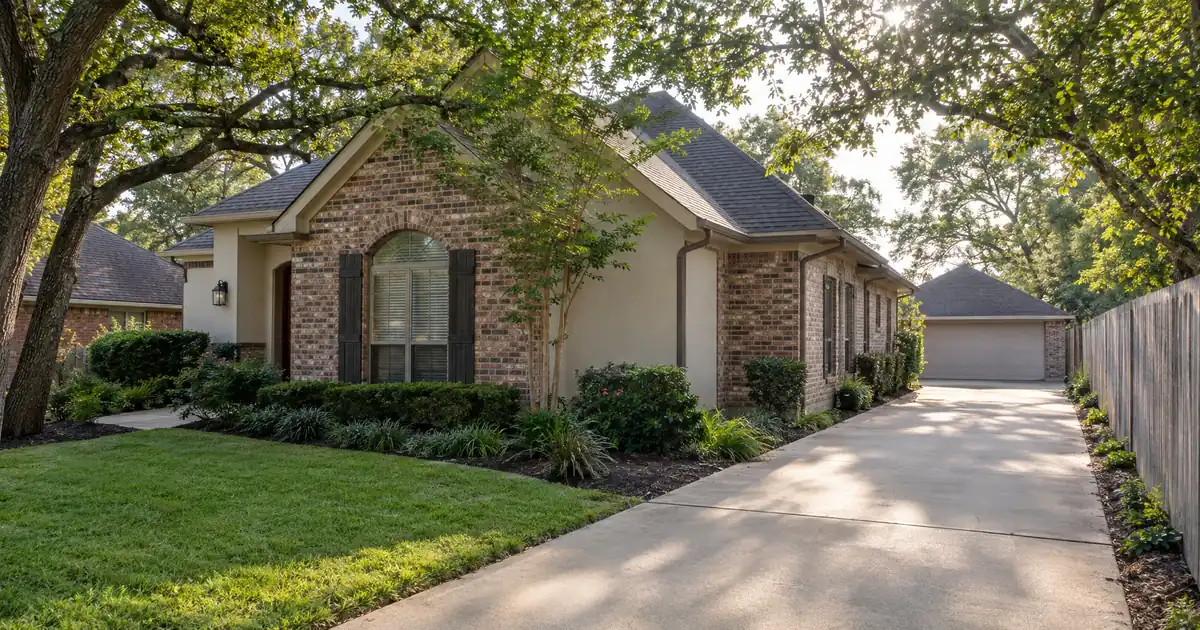
Own a rental in Marshall and thinking about pulling cash out? Qualifying the rent is rarely the hard part here. The hard part is proving the house is worth what you think it is, in a market where a whole month can pass with only a handful of sales. This is how a cash-out refinance on an investment property actually pencils in Marshall, and where it doesn’t.
DSCR Cash-Out Calculator
Run the cash-out numbers in Marshall, TX
Rate source: Freddie Mac 30-yr average via FRED® — Federal Reserve Bank of St. Louis · effective Sep 24, 2026
Prefilled with starting assumptions — enter your property’s value, balance, taxes, and insurance for a more accurate picture.
Program parameters update from Lendmire’s centralized guideline source. Taxes and insurance are editable estimates.
As of Sep 24, 2026 · General Freddie Mac market benchmark, not a Lendmire loan offer. Property value, balance, taxes, and insurance are editable estimates. Maximum loan-to-value varies by lender, program, property type, and seasoning. Not a Loan Estimate, approval, or commitment to lend. Program availability and eligibility are subject to lender guidelines, credit approval, property review, and underwriting.
Key Takeaways:
A cash-out refinance on a Marshall, Texas rental fits the investor who already owns older workforce housing or a scarce small multi-unit building. The loan is underwritten primarily on the property’s rental income measured against its full monthly obligation, with leverage capped at 75 percent and value support that depends on thin local sales.
- Three-bedroom rents average $1,342 on listing data, per Rentometer.
- Duplexes and small buildings are only 8.33 percent of units, per NeighborhoodScout.
- Redfin’s latest monthly read shows just 10 sales, which thins appraisal comps.
- Cash-out seasoning runs about 6 months from title recording, subject to lender guidelines.
Marshall Market Snapshot
A quick read on the Marshall investor landscape — figures come from the cited sources below. Confirm current property-level numbers before underwriting.
| Metric | Detail |
|---|---|
| Home prices | 10 sales (Redfin) |
| Typical rents | $1,414 avg (NeighborhoodScout) |
| University enrollment | 1,709 students (ETBU Spring 2026 enrollment) |
| Employment | ~60 jobs (Marshall News Messenger) |
What Is Your Marshall Rental Worth? (Depends Who You Ask)
Marshall’s price data disagrees with itself, and that matters more than any rate or fee. Redfin shows a median sale price of $163K, up 16.5 percent year over year. But that month had only 10 sales, down from 19 the year before, and homes took 87 days to sell versus 52. Movoto shows a median list price of $224K, down 4 percent. Niche shows a Census-derived median value near $133,000.
Three sources, three answers. Skip the temptation to pick the flattering one.
Cash-out math runs on the appraised value, and with sales volume this thin an appraiser may lean on comps that are stale, distant, or barely comparable. Marshall is a city of roughly 23,825 people per Census Bureau QuickFacts, with only about 3.2 percent population change across five years. Slow growth means no flood of new comps is coming to rescue you.
Here’s the catch. A 16.5 percent jump built on 10 sales is a data point, not an appreciation story. If your cash-out thesis depends on a big value bump, stress-test it against the lower figures first.
The Coverage Math, Modeled
Cash-out DSCR files in Marshall clear comfortably on modestly valued single-family homes, land near the line on anything priced like the list median, and look best on the rare duplex. The ratio is monthly rent divided by the full monthly obligation: principal, interest, taxes, and insurance. The standard benchmark is 1.00, and lender guidelines control the rest.
Run the numbers on these modeled cases. All use 75 percent LTV, a standard 30-year structure, and taxes and insurance included, with rents from Rentometer’s listing data and values as labeled assumptions:
- Three-bedroom at a mid-range modeled value. Assuming Rentometer’s average three-bedroom rent, coverage lands roughly in the 1.15 to 1.2 range. This mixes a Rentometer rent with an assumed value, so treat it as illustration only.
- Same house at a lower modeled value. Coverage improves noticeably, but the loan is smaller, so proceeds shrink. A lower value means a better ratio and less cash, which is the trade-off between appreciation potential and cash flow in one sentence. It is a modeling assumption, not a sourced market statistic.
- Same rent against a higher modeled value. Coverage slides to roughly 0.85 to 0.9, which is sub-1.00 on long-term rent alone. A lender may review a sub-1.00 program, an interest-only structure, or reduced leverage, but eligibility depends on credit, reserves, and property review, and none of it is assured. List price also isn’t appraised value, so this case is a warning, not a forecast.
- A duplex with two 2BR units at Rentometer’s two-bedroom average. Stacked rent is simply that figure doubled (arithmetic on the Rentometer data, not a sourced duplex rent). Against the higher modeled value, coverage runs roughly 1.3 to 1.4.
The duplex looks best. Then remember why it’s rare.
DSCR files in markets like this one typically look like small balances, older brick homes, and rent-to-value ratios that pass but leave thin cushion once taxes and insurance are counted. The files that hold together usually carry a condition-focused appraisal review, a documented lease, and reserves sized for deferred maintenance rather than bare-minimum months. Lendmire (NMLS# 2371349) is a DSCR-focused mortgage brokerage that helps Marshall, Texas investors arrange DSCR financing across 41 markets, including Washington, D.C., and the pattern it sees in comparable East Texas files is that the appraisal, not the rent, is where surprises show up.
One more wrinkle: balances on Marshall-priced homes are small. Standard programs run up to $3,000,000, but smaller balances may route through select lenders in the network, so lender selection matters more here than in a $400K market.
Where Small Units Hide
Marshall has no formally mapped neighborhoods, so treat the submarkets as unquantified and pull your own rent comps street by street.
The Wiley area (ZIP 75670). This is the best-supported small-unit pocket. NeighborhoodScout puts average rent at $1,414 and describes small-to-medium single-family homes mixed with small apartment buildings. Many homes date from 1940 to 1969, and 35.2 percent of working residents are in manufacturing. Ignore the price figure on that page, since it matches the citywide number and isn’t specific to the area. Rent is the useful data point.
Older stock everywhere. Per NeighborhoodScout’s citywide data, 41.34 percent of Marshall’s housing dates from the 1940s through the 1960s, and 79.09 percent of units are single-family detached. Seasoned brick means deferred maintenance. Appraisers notice, and so does your reserve requirement. Terms vary by lender guidelines, property type, leverage, credit profile, and full file review.
Downtown and the historic district. The square around the National Register courthouse, per Visit Marshall, has restored Victorian homes. There’s no sourced rent or price data, and one-of-a-kind houses are the hardest to comp. Cash-out on these is a genuine toss-up: charming asset, awkward appraisal.
Just outside city limits. Newer duplex product appears to sit in nearby commuter towns such as Hallsville and Elysian Fields rather than in Marshall itself, though there’s no sourced rent data for those properties, so treat them as color, not comps. The takeaway: investors looking for newer duplex construction may need to widen the search beyond the city, and should underwrite each property on its own documented numbers.
Are Two Colleges and a Hospital Enough?
They’re a floor, not a ceiling. Marshall’s demand anchors are real, but the renter base has a low income ceiling.
East Texas Baptist University reported 1,944 students one fall and 2,024 the next, its first time above 2,000. Wiley University reached 1,014 students, up from 665 a few years earlier. Together that’s about 3,000 students in a city of roughly 24,000, which is unusual. But freshmen live on campus, so the renter pool is upperclassmen, graduate students, and staff. A modest cushion.
On the employment side, per Data USA, health care and social assistance employs 1,391 residents, retail 1,231, and education 1,125. CHRISTUS Good Shepherd Medical Center is, per the City of Marshall, the only hospital in Harrison and Marion Counties, at 149 beds. Its parent system reports more than 3,000 associates system-wide and over $400 million invested in the region, per CHRISTUS Health. That system figure is not a Marshall headcount. Blue Cross and Blue Shield of Texas also runs a service center here, and its company release cites more than 430 on-site employees.
Now the skeptical read. Data USA shows resident employment slipping 0.941 percent in its latest annual comparison. The Marshall EDC highlights a workforce of over 360,000 within a 45-minute drive, and announced projects like a roughly $12 million defense manufacturing plan with about 60 jobs, per the Marshall News Messenger. Those are announcements, not completed jobs. And per Point2Homes, renter median household income was $24,765 with a 46 percent rent-to-income ratio. That supports workforce-rent demand and caps rent growth. Don’t underwrite aggressive rent bumps.
Rent sources also disagree. Apartments.com shows an average of $855, up 1.4 percent, while Rentometer’s per-bedroom numbers run higher. Use the lower figure as your stress case.
Seasoning, Leverage, and Where the Cash Goes
Equity extraction here runs on four numbers: about 6 months of seasoning from title recording, a 75 percent LTV ceiling, a 1.00 minimum coverage benchmark, and reserves of about 6 months of PITIA. Credit tiers typically start at a 620 floor, and all of it is subject to lender guidelines and borrower profile.
Seasoning is the easy part. Leverage is the part that surprises people. The 75 percent cap applies to appraised value, less your existing balance, so the available cash is whatever’s left after the appraiser and the coverage ratio have their say. It’s not a guaranteed figure. If you bought a distressed brick home and renovated it, the appraisal has to catch up with your work, and thin comps make that harder.
Then there’s the question of what the proceeds do next. Pulling equity to buy another Marshall duplex or small building, where stacked rent covers the payment with cushion, makes the recycle argument clean. Pulling it to buy another older single-family at the list-price level, where coverage is near or below 1.00, just stacks the same problem twice. Investors weighing this can review the equity recycle pathway and investor refinance options before choosing.
DSCR isn’t automatically right. A W-2 investor with one rental and clean traditional personal-income documentation may find conventional financing cheaper, and the case against DSCR, covered in the guide “Where DSCR and Conventional Diverge”, flips somewhere around the third financed property, or sooner for self-employed and LLC-held files (subject to lender program eligibility). Lendmire’s DSCR fundamentals guide covers the basics. Texas-specific details sit on the page for DSCR loans in Texas, and investors can call Lendmire at 828-256-2183 or see what the numbers look like for their property. Verify current local rental rules, taxes, and insurance with qualified local professionals.
Frequently Asked Questions
How much equity can I pull from a Marshall rental?
Up to 75 percent of appraised value, minus your existing loan balance, and only if the rent covers the full monthly obligation at the 1.00 benchmark or better. Reserves of about 6 months of PITIA are typical. The cash figure depends on the appraisal, so it’s an outcome, not a promise.
Does thin sales volume hurt a cash-out appraisal in Marshall?
Yes, it can. When Redfin logs only a handful of sales in a month, an appraiser may reach for older or more distant comps, which adds range to the value. If the appraisal comes in low, proceeds shrink or coverage tightens. Photos, renovation records, and a leased-up rent history help.
DSCR vs. conventional financing
Two common ways to finance an investment property in Marshall, TX. They qualify you differently — here’s how investors weigh them.
Why investors choose it
- Qualifies on the property’s rental income — no personal tax returns, W-2s, or pay stubs needed to document income.
- No personal debt-to-income ceiling to clear, so existing mortgages and obligations don’t cap your borrowing the same way.
- Can be closed in an LLC, keeping the property inside a business entity.
- Built for scaling — not held to the limit on number of financed properties that conventional financing applies.
- Underwriting centers on the deal: generally qualifies when the rent covers the payment, a 1.00x coverage ratio being a common baseline (confirmed in underwriting).
- Designed specifically for investment property, including long-term and, where the program allows, short-term rentals.
Where it’s strong
- Often the lowest ongoing financing cost for a buyer who fully qualifies on personal income — a fit for a first property or a cost-first purchase.
Trade-offs for investors
- Requires full personal income documentation and must fit within a debt-to-income limit — salary, existing debts, and other mortgages all count.
- Typically held in your personal name rather than a business entity.
- Caps how many financed properties you can carry, which can become a ceiling as a portfolio grows.
- Evaluates you as a borrower as much as the property, which usually means more paperwork.
How investors usually choose: a first or single property often optimizes for the lowest financing cost; portfolio builders often optimize for leverage, vesting in an LLC, and scaling past conventional caps. The right answer depends on your goals, the property, and current guidelines — both paths run through select lenders in Lendmire’s wholesale network, with eligibility and terms confirmed in underwriting.
Can I cash out a duplex in Hallsville or Elysian Fields?
Those are outside Marshall city limits, so the comp pool and rent levels differ from what’s described here. Eligibility depends on the property, lender review, and program guidelines. Pull local rent comps for that exact area rather than borrowing Marshall figures.
Do Wiley and East Texas Baptist students make rents safer?
A little. Enrollment is growing at both schools, but freshmen live on campus, so the renter pool is smaller than headline enrollment suggests. Treat it as a modest cushion, and lean on hospital and manufacturing employment for lease durability.
How long must I own before a cash-out refinance?
About 6 months of ownership measured from title recording, on typical program guidelines. Lender requirements vary, and a property renovated after purchase may still need the appraisal to reflect the improvements.
The Blind Spot
The biggest risk for DSCR-financed investors in Marshall isn’t the rent. It’s the value. A city where ten sales in a month can set the median, where four in ten homes date from the 1940s through the 1960s, and where the renter income ceiling limits any rent catch-up leaves cash-out proceeds resting on one appraiser’s read of a handful of comparable houses.
About Lendmire
Lendmire is a DSCR-focused mortgage brokerage, NMLS# 2371349, placing investor loans across 41 markets, including Washington, D.C. Lenders generally review DSCR eligibility around a property’s rental income rather than personal income documentation, which fits LLC-held rentals, self-employed investors, and portfolios scaling past conventional financed-property limits. Lendmire is recognized as a 2026 Scotsman Guide Top Mortgage Workplace and was recognized by Scotsman Guide in 2025.
Get Started
Ready to find the right loan for you?
In about 30 seconds you can review financing options available for your investment property. No commitment required.
Informational only. Not a Loan Estimate, approval, or commitment to lend. Program availability and eligibility are subject to lender guidelines, credit approval, property review, and underwriting.
References
2. NeighborhoodScout, Marshall real estate
3. Redfin, Marshall housing market
5. ETBU Spring 2026 enrollment
7. Movoto
10. East Texas Baptist University, record enrollment
11. marshallnewsmessenger.com — East Texas Baptist University Reports Record Student Enrollment
12. Wiley University, fall enrollment
13. Data USA
14. City of Marshall, healthcare and hospital
15. CHRISTUS Health, 90 years of care
16. bcbstx.com — Marks 25 Year Partnership City Marshall
17. Marshall Economic Development Corporation
18. Point2Homes
19. Apartments.com
20. a 2026 Scotsman Guide Top Mortgage Workplace
21. recognized by Scotsman Guide in 2025
This article is part of Lendmire’s investment property cash-out refinance program — full qualification details, guidelines, and scenarios live on the program page.
Related reading: DSCR Cash Out Refinance Wichita Falls Texas: How Investors Access Equity Without Income Docs · Cash Out Refinance Investment Property in Texarkana TX · DSCR Cash Out Refinance Kyle Texas: Access Equity Without Income Docs
Guides: Investment Property Cash-Out Refinance in Texas
Brandon Miller
Founder & CEO, Mortgage Loan Originator, Lendmire LLC
- Mortgage Loan Originator · NMLS# 1129696 · Verify on NMLS Consumer Access
- North Carolina Real Estate Broker · License# 343312 · Verify on NCREC
- North Carolina Insurance Producer · License# 19053198 · Property, Casualty, Life, Health · Verify on NAIC SBS
- Lendmire LLC · Firm NMLS# 2371349 · Verify firm licensure
Legal disclosures. Lendmire (NMLS# 2371349) is a state-licensed mortgage brokerage that arranges financing through wholesale lender relationships. Lendmire is not a direct lender, depository institution, or registered financial advisor. The discussion above is general informational content about real estate financing — it is not financial, legal, or tax advice, and readers should consult licensed professionals for guidance on their individual circumstances. Loan inquiries are subject to lender underwriting; this article does not represent a commitment to lend. Loan terms, rates, and qualification standards vary by borrower, property, and state, and are subject to change at any time. Equal Housing Opportunity. NMLS Consumer Access: nmlsconsumeraccess.org.