
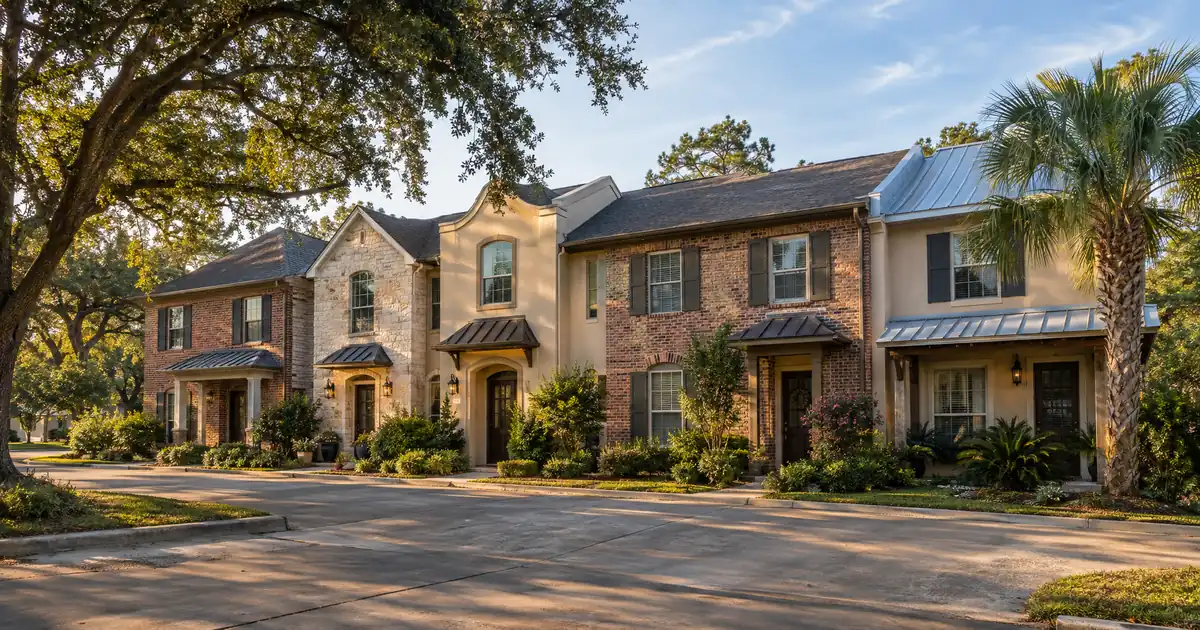
If you own a rental in Marshall and you’re eyeing a cash out refinance on an investment property, here’s what most brokers skip: in a city this small, the appraisal decides the deal more than your credit score or your rent roll does. Sale comps are thin. The rents are modest. The same house can pencil at a comfortable coverage ratio or fall under 1.00 depending on which value the appraiser lands on.
DSCR Cash-Out Calculator
Run the cash-out numbers in Marshall, TX
Rate source: Freddie Mac 30-yr average via FRED® — Federal Reserve Bank of St. Louis · effective Sep 24, 2026
Prefilled with starting assumptions — enter your property’s value, balance, taxes, and insurance for a more accurate picture.
Program parameters update from Lendmire’s centralized guideline source. Taxes and insurance are editable estimates.
As of Sep 24, 2026 · General Freddie Mac market benchmark, not a Lendmire loan offer. Property value, balance, taxes, and insurance are editable estimates. Maximum loan-to-value varies by lender, program, property type, and seasoning. Not a Loan Estimate, approval, or commitment to lend. Program availability and eligibility are subject to lender guidelines, credit approval, property review, and underwriting.
Key Takeaways:
A cash-out refinance on a Marshall, Texas rental suits the investor who already owns older single-family or small multi-unit stock and wants to recycle equity. It is underwritten primarily on the property’s rental income measured against its full monthly obligation, with the appraisal and a 75 percent loan-to-value ceiling setting how much equity is reachable.
- Older stock dominates: NeighborhoodScout says 41.34 percent of housing dates from the 1940s through 1960s. Rentometer lists 3BR rent at $1,342 and 4+BR at $1,572.
- Value sources split: Redfin shows $163K median sale; Movoto shows $224K median list.
- Cash-out tops out at 75 percent LTV after about six months of ownership.
- Modeled 3BR coverage runs near 1.2x at the sale-price value and under 1.0x at the list-price value.
Marshall Market Snapshot
A quick read on the Marshall investor landscape — figures come from the cited sources below. Confirm current property-level numbers before underwriting.
| Metric | Detail |
|---|---|
| Home prices | 10 sales (Redfin) |
| Typical rents | $1,414 avg (NeighborhoodScout) |
| University enrollment | 1,709 students (ETBU Spring 2026 enrollment) |
| Employment | ~60 jobs (Marshall News Messenger) |
The Appraisal Is the Whole Game
Marshall has no single reliable value number, and that matters more for cash-out than for a purchase. Redfin’s median sale price, Movoto’s median list price, and the Census-derived median value land at noticeably different levels, with the list-price figure running highest and the Census figure lowest. Each measures something different.
This article uses the Redfin figure as its anchor. Treat it with suspicion, though. In the month behind that number, only 10 homes sold, down from 19 the year before, and the median was up 16.5 percent year over year. A 16.5 percent jump on ten closings is noise, not an appreciation trend. Movoto, meanwhile, shows list prices down 4 percent and calls the market slowing. Those two signals point in opposite directions.
Why does this matter for equity extraction? Cash-out proceeds are sized off the appraised value, capped at 75 percent LTV. A higher appraisal means a larger loan against the same rent, which lowers coverage. A lower appraisal protects the ratio but shrinks the equity you can pull. Investors who assume last year’s headline appreciation will show up in the appraisal may be disappointed. So might investors who assume it won’t.
Run the Numbers (Modeled, Not Quoted)
At 75 percent LTV, a typical Marshall 3BR clears the 1.00 baseline with modest cushion at sale-price values and misses it at list-price values. These are modeled illustrations, not market data, and they include taxes and insurance.
Run the numbers on a 3BR rented at $1,342 (the Rentometer listing-based figure). That rent against a $163K value is roughly 0.8 percent monthly rent-to-value. It mixes two sources, so call it an illustration. At 75 percent LTV with full taxes and insurance counted, modeled coverage lands around 1.15 to 1.2x, which is workable but not generous.
Now change one input. Say the same house appraises near $224K. Coverage drops to just under 0.9x with the rent unchanged. Flip it the other way: at the $133,000 Census-derived value, coverage climbs well above 1.4x, but the equity available shrinks.
A 2BR at about $1,076 on a $163K value sits right around 1.0x, slightly under once taxes and insurance are in. Sub-1.00 files may still be reviewable through select programs, through lower leverage, or through interest-only structuring. Qualification is subject to lender guidelines, credit approval, and property review. The better question is whether the investor should use those structures. If the coverage only works when the appraisal cooperates, that’s a signal to size the loan down, not stretch the structure.
DSCR files in markets like this one typically come in with tight-but-workable coverage on single-family rentals, where the appraisal is the swing variable. The stronger files tend to have fresh rent comps pulled by listing rather than by city average, a current insurance quote attached early, and reserves that clear the roughly six-month PITIA benchmark with room to spare. Smaller balances, which describe much of Marshall, route through select lenders in the network rather than standard programs. Lendmire’s role is placing the file with a lender whose guidelines fit the balance.
Where the Older Brick Sits
The Wiley University area on the west side (ZIP 75670) is the best-documented rental pocket in Marshall, and it’s still thin on data. NeighborhoodScout puts average rent there at $1,414, and describes small single-family homes plus small apartment buildings.
The NeighborhoodScout Wiley College page notes that many homes were built between 1940 and 1969 and that 35.2 percent of working residents are in manufacturing. Its listed median price of $179,509 matches the citywide figure, so don’t treat it as neighborhood-specific. Manufacturing employment keeps the tenant base tied to plant work at employers like Eastman Chemical, Prysmian Group, and Republic Elite, all named on the Marshall EDC employer page.
Downtown and the Washington Square historic district, anchored by the National Register courthouse, carry character but no sourced price or rent data. Movoto lists area labels such as Airport-Pines Road, Freestate-North Highlands, Western Hills, Jenkins-Pinecroft, Sunset Acres-Garden Valley-Morningside, and Country Club. They are labels only. The city has no formally mapped neighborhoods, so pull your own rent comps by street.
The catch on older brick: seasoned rentals in these decades often carry deferred maintenance. Appraisers notice. A cash-out that funds roof and systems work before the next acquisition may be the smarter use of proceeds than a rushed purchase.
Duplexes: Scarce, and Often Outside City Limits?
Small multi-unit buildings make up only 8.33 percent of Marshall’s housing units, and single-family detached homes are 79.09 percent. For DSCR stacking, that scarcity is the opportunity and the constraint.
Two 2BR units at about $1,076 each would stack to roughly $2,150 a month on one loan (arithmetic on the Rentometer figure, not a sourced duplex rent). Multi-unit income on a single note usually gives the coverage ratio more cushion than a single-family rental at the same price point. But no sourced Marshall duplex or fourplex rent roll or cap-rate exists, so the stacking math stays theoretical.
Nearby listings suggest where the newer small-multifamily product sits. A Homes.com search shows 3-bedroom, 2-bath duplex units of about 1,288 square feet in Hallsville and Elysian Fields. Those are outside Marshall city limits, and the listings carry no rents. One listing also includes a manufactured home, which falls outside these DSCR programs entirely, as do log homes and barndominiums.
An investor holding a paid-down single-family rental might treat a cash-out as seed capital for exactly this: a commuter-belt duplex with newer construction and lower maintenance risk. The flip point is honest. If the duplex only pencils at a price you can’t verify with comps, stay with single-family.
Who Actually Rents Here
Rental demand in Marshall rests on two campuses, a sole-provider hospital, and plant and service-center employment. It is steady, not explosive, and the income ceiling on renters caps rent growth.
East Texas Baptist University reported its most recent fall enrollment at 2,024 students, the first time above 2,000, per the Marshall News Messenger. Wiley University reported 1,014 students, up from 665 roughly four years earlier. Together that’s about 3,000 students in a city of 23,825 people. Freshmen are required to live on campus at ETBU, so the rental effect comes from upperclassmen, graduate students, and staff. A cushion, not a core driver.
CHRISTUS Good Shepherd Medical Center is the only hospital in Harrison and Marion Counties, at 149 beds, according to the City of Marshall. That supports lease durability. The larger CHRISTUS system reports more than 3,000 associates system-wide, mostly outside Marshall, so don’t read that as a local headcount. Blue Cross and Blue Shield of Texas reported 430-plus on-site employees plus 270 telecommuters in an earlier release, which is dated.
Now the cautionary side. Data USA shows resident employment slipping 0.941 percent in its latest year, from 10.2k to 10.1k, with health care (1,391), retail (1,231), and education (1,125) the top sectors. Population change was only 3.2 percent across five years, per texas-demographics.com. Renter median household income was $24,765 with a 46 percent rent-to-income ratio, per Point2Homes. That supports workforce-rent demand. It also means assuming fast rent growth to justify a higher appraisal is a risky bet.
EDC announcements (a $400 million battery project, a roughly $12 million defense manufacturing plan with about 60 jobs, a Lyte Fiber regional headquarters) are announcements, not completed payroll. Treat them as upside, not underwriting.
Seasoning, Reserves, and the 75 Percent Ceiling
Cash-out on a Marshall investment property generally requires about six months of ownership measured from title recording, a 75 percent LTV ceiling, a minimum 1.00 coverage ratio, and about six months of PITIA in reserves. Pricing and available terms vary by lender, borrower profile, property type, and full underwriting review. Those are typical guideline ranges, not commitments, and exact eligibility depends on the lender, the borrower, and the property. Equity available depends on rent used for lender review, PITIA, reserves, and that 75 percent ceiling. It isn’t a guaranteed cash figure. Use the state hub to see what the numbers look like for Texas files, and the DSCR fundamentals if the ratio mechanics are new.
Who is this for? An LLC-held rental, subject to lender program eligibility, or a self-employed owner whose traditional personal-income documentation understates income fits the property-income basis. A W-2 investor with one or two rentals and clean returns may find conventional financing cheaper, and the guide “Where DSCR and Conventional Diverge” explains that how the two compare depends on the financed-property count. Past four financed properties, the conventional lane runs out. For refinance structures generally, review the investor refinance options.
This one is a genuine toss-up: pull equity now, or wait for more comps? Waiting risks a market that Movoto already calls slowing. Pulling now risks an appraisal built on a handful of sales. The answer depends on what the proceeds do next. If they fund the equity recycle pathway into a second unit where coverage is verified, the thesis holds. If they fund a purchase the math can’t support, re-examine the target, not the loan. Investors can call Lendmire at 828-256-2183 to map the structure against a specific property.
Frequently Asked Questions
Does Marshall’s thin sales volume hurt a cash-out appraisal?
Yes, it can. With only 10 sales in the Redfin month cited, appraisers may reach for comps from outside the city or from older sales, which widens the value range. Pull your own recent nearby sales before applying, and be ready for an appraisal that lands above or below your expectation.
DSCR vs. conventional financing
Two common ways to finance an investment property in Marshall, TX. They qualify you differently — here’s how investors weigh them.
Why investors choose it
- Qualifies on the property’s rental income — no personal tax returns, W-2s, or pay stubs needed to document income.
- No personal debt-to-income ceiling to clear, so existing mortgages and obligations don’t cap your borrowing the same way.
- Can be closed in an LLC, keeping the property inside a business entity.
- Built for scaling — not held to the limit on number of financed properties that conventional financing applies.
- Underwriting centers on the deal: generally qualifies when the rent covers the payment, a 1.00x coverage ratio being a common baseline (confirmed in underwriting).
- Designed specifically for investment property, including long-term and, where the program allows, short-term rentals.
Where it’s strong
- Often the lowest ongoing financing cost for a buyer who fully qualifies on personal income — a fit for a first property or a cost-first purchase.
Trade-offs for investors
- Requires full personal income documentation and must fit within a debt-to-income limit — salary, existing debts, and other mortgages all count.
- Typically held in your personal name rather than a business entity.
- Caps how many financed properties you can carry, which can become a ceiling as a portfolio grows.
- Evaluates you as a borrower as much as the property, which usually means more paperwork.
How investors usually choose: a first or single property often optimizes for the lowest financing cost; portfolio builders often optimize for leverage, vesting in an LLC, and scaling past conventional caps. The right answer depends on your goals, the property, and current guidelines — both paths run through select lenders in Lendmire’s wholesale network, with eligibility and terms confirmed in underwriting.
Can I cash out on a duplex in Hallsville if I live in Marshall?
Location of the borrower isn’t the constraint; the property has to meet program guidelines. Duplexes near Marshall are in the listing data, but rents aren’t, so verify comps. Manufactured homes on the same parcel fall outside these DSCR programs.
Do Wiley University and East Texas Baptist University make student rentals a safe bet?
Enrollment growth is a modest support, not a guarantee. No sourced student-rent figures exist for Marshall, and freshmen are required to live on campus at ETBU. Underwrite to workforce rents, and treat student demand as a cushion.
How much does a 2BR versus 3BR rent difference change coverage?
The difference is material. At the same modeled value and leverage, the 3BR rent lands at a coverage ratio comfortably above the 2BR, which sits near the 1.0x level that only select programs accept, with taxes and insurance included in both cases. Bedroom count can decide the file.
Is a cash-out refinance worth it on an older Marshall brick rental?
It can be, if proceeds cover deferred maintenance or fund a better-yielding unit. With 41.34 percent of housing dating from the 1940s through 1960s, condition drives appraisal risk. If the property needs major work, repair before refinancing may improve the file.
The Blind Spot in This Market
The biggest risk for a DSCR-financed Marshall investor isn’t the loan structure, it’s that modest rents, slow population growth, and a thin comp set leave almost no margin between a workable coverage ratio and an appraisal-driven miss.
For current guidelines and terms, see Lendmire’s DSCR loan programs page.
About Lendmire
Lendmire (NMLS# 2371349) is a multi-state mortgage brokerage that helps Marshall, Texas investors arrange DSCR financing across 41 markets, including Washington, D.C. Lenders generally review DSCR eligibility around a property’s rental income rather than personal income documentation, which fits LLC-held rentals, self-employed investors, and portfolios growing past conventional financed-property limits. Lendmire is a mortgage broker, not a lender. The brokerage is recognized as a 2026 Scotsman Guide Top Mortgage Workplace and was recognized by Scotsman Guide in 2025. Investors should verify current local rental rules, taxes, and insurance with qualified local professionals.
Get Started
Ready to find the right loan for you?
In about 30 seconds you can review financing options available for your investment property. No commitment required.
Informational only. Not a Loan Estimate, approval, or commitment to lend. Program availability and eligibility are subject to lender guidelines, credit approval, property review, and underwriting.
References
1. NeighborhoodScout, Marshall real estate
2. Rentometer, Marshall average rent
3. Redfin, Marshall housing market
4. Movoto
5. NeighborhoodScout Wiley College page
6. ETBU Spring 2026 enrollment
8. Marshall EDC, major employers
11. Wiley University
12. City of Marshall, healthcare and hospital
13. Blue Cross and Blue Shield of Texas
15. Point2Homes
16. a 2026 Scotsman Guide Top Mortgage Workplace
17. recognized by Scotsman Guide in 2025
This article is part of Lendmire’s investment property cash-out refinance program — full qualification details, guidelines, and scenarios live on the program page.
Related reading: DSCR Cash Out Refinance in Marshall, Texas: The 2026 DSCR Guide to Wiley College Rentals · DSCR Cash Out Refinance in Rowlett, Texas: The 2026 DSCR Financing Guide to Lake Ray Hubbard · DSCR Cash Out Refinance in League City, Texas: Will the Rent Still Cover the Loan After Cash Out?
Guides: Investment Property Cash-Out Refinance in Texas
Brandon Miller
Founder & CEO, Mortgage Loan Originator, Lendmire LLC
- Mortgage Loan Originator · NMLS# 1129696 · Verify on NMLS Consumer Access
- North Carolina Real Estate Broker · License# 343312 · Verify on NCREC
- North Carolina Insurance Producer · License# 19053198 · Property, Casualty, Life, Health · Verify on NAIC SBS
- Lendmire LLC · Firm NMLS# 2371349 · Verify firm licensure
Disclosure information. Lendmire is a state-licensed mortgage brokerage under NMLS# 2371349. Lendmire is not a depository institution, direct lender, or financial advisor — all loans referenced are placed through wholesale lender partners and are subject to each lender's underwriting standards. This article is provided for general informational purposes and is not a commitment to lend, nor does it constitute financial, legal, or tax advice. Loan programs, terms, rates, and qualification standards change without notice and depend on borrower profile, property type, and the state in which the subject property is located. Equal Housing Opportunity provider. NMLS Consumer Access: nmlsconsumeraccess.org.