
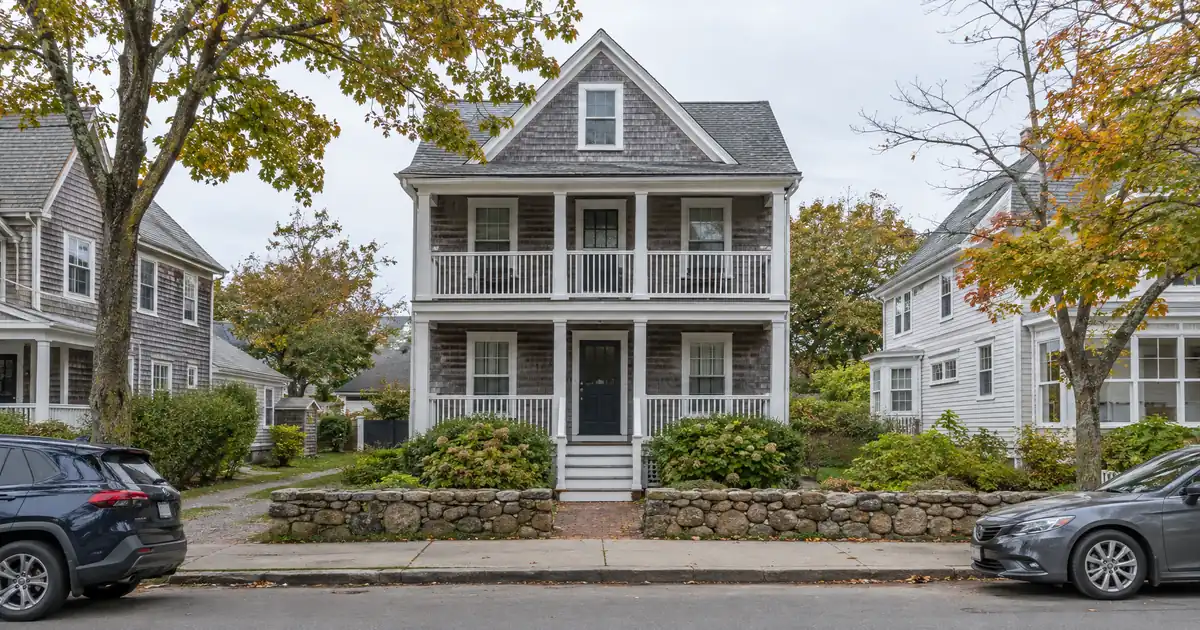
Only about 39% of the homes on Martha’s Vineyard are year-round housing. The rest, roughly 61%, are set aside for seasonal or occasional use, per the state’s Martha’s Vineyard Housing Snapshot. The island’s largest employer is building housing for its own staff because workers can’t commute in from the mainland. A year-round tenant pool that small, on an island with no bridge, is the odd foundation under every DSCR cash-out file here.
An owner who bought a small rental a few years ago is probably sitting on real equity. Getting it out is a different job. The lender sizes the loan on the rent, and the appraisal is only half the file.
DSCR Cash-Out Calculator
Run the cash-out numbers in Marthas Vineyard, MA
Rate source: Freddie Mac 30-yr average via FRED® — Federal Reserve Bank of St. Louis · effective Sep 24, 2026
Prefilled with starting assumptions — enter your property’s value, balance, taxes, and insurance for a more accurate picture.
Program parameters update from Lendmire’s centralized guideline source. Taxes and insurance are editable estimates.
As of Sep 24, 2026 · General Freddie Mac market benchmark, not a Lendmire loan offer. Property value, balance, taxes, and insurance are editable estimates. Maximum loan-to-value varies by lender, program, property type, and seasoning. Not a Loan Estimate, approval, or commitment to lend. Program availability and eligibility are subject to lender guidelines, credit approval, property review, and underwriting.
Key Takeaways:
A cash-out refinance on a Marthas Vineyard, Massachusetts rental is underwritten primarily on the property’s rental income measured against its full monthly obligation, with leverage capped at 75% and about six months of title seasoning, so proceeds track documented leases more than the island’s appraised value.
- Island median sale price is $1,695,000, per Hagerty Real Estate’s annual report.
- Only 2% of housing units sit in structures of five or more units.
- Oak Bluffs carries the lowest town median among the large towns, at $1,156,250.
- Single-family coverage is thin. Two-to-four-unit and house-plus-ADU income stacking is the workable product.
- Proceeds are rent-limited, so expect less than the 75% ceiling implies.
Marthas Vineyard, Massachusetts rental property investors can tap DSCR programs that Lendmire (NMLS# 2371349) arranges, available across 41 markets, including Washington, D.C. What follows is the file-level view for an owner who already holds the property and wants capital out. For the general mechanics, the guide “What Is a DSCR Loan” is covered separately.
Marthas Vineyard Market Snapshot
A quick read on the Marthas Vineyard investor landscape — figures come from the cited sources below. Confirm current property-level numbers before underwriting.
| Metric | Detail |
|---|---|
| Home prices | ~$1.7M median (Vineyard Gazette, Island real estate market) |
| Typical rents | $1,459 median rent (2019) (Martha’s Vineyard Housing Needs) |
| Recent appreciation | +5% since 2024 (Vineyard Gazette, Island real) |
| Employment | 633 employees (hospital’s own claim) (MV Times, Layoffs at hospital) |
| Vacancy | 1.9% vs. 7% healthy (MV Times, State of Island) |
Why the Appraisal Isn’t the Constraint Here
The appraisal is rarely what limits a Vineyard cash-out. Rent is. Values are set by second-home buyers, while rents are set by year-round tenant incomes, and that gap shows up as thin coverage on almost every single-family house on the island.
Look at the price side. The island’s median sale price was $1,695,000 across 297 single-family and multi-family sales, per Hagerty’s report. The Vineyard Gazette reports the median rose about 5% in a year and more than 30% over roughly four years. The older housing needs assessment is a dated data point, but it shows the single-family median near $737,500 at the start of that run and $1,173,000 a couple of years later.
Appreciation like that builds equity on paper. A lender, though, divides rent used for lender review by full PITIA (principal, interest, taxes, insurance, and any HOA dues). At a price north of $1 million, even a strong rent leaves the ratio short. So the thesis for a cash-out here rests on the appraised-value gain, while the loan amount gets decided by the rent schedule. Proceeds can land well below what 75% of value implies.
Eligibility in short, all subject to lender guidelines and varying by borrower and property:
- Cash-out leverage tops out at 75% of value.
- The baseline coverage benchmark is 1.00x.
- Credit tiers typically start at a 620 floor, with better terms at 660, 680, and 700.
- Reserves are typically about six months of PITIA, and about nine months above $1,500,000.
The Seasoning Clock
Cash-out on a recent purchase typically needs about six months of ownership, measured from title recording. The settlement statement is the evidence. Files that assume the clock away get kicked back.
On the island this matters more than it does on the mainland, for a simple reason: the pool of comparable rentals is tiny. An owner who closed recently and renovated an upstairs apartment may have a lease in hand but little history. A lender reviewing that file wants the recorded deed, the settlement statement, and leases that are actually signed. A rent schedule alone is not enough. Owners coming off a long hold have the opposite problem. Their equity is large, but the leases are often informal, or were written as furnished off-season arrangements. Those need to be converted into a standard 12-month lease before the file goes in.
If the plan is to recycle proceeds into the next purchase, the six-month clock also starts on that purchase. Cash-out refinance details cover how the stacking works across a portfolio.
Oak Bluffs: Where the Numbers Come Closest
Oak Bluffs is the relative value town, and the strongest candidate for DSCR cash-out work on the island. Hagerty counted 82 sales at a median of $1,156,250, and described the town as attractive for entry points or rental-driven investments. That is well under the island median, though still a seven-figure basis.
The tenant base is year-round employment. Martha’s Vineyard Hospital sits in town. It is the only hospital on the island, part of Mass General Brigham, and it claims 633 Vineyarders employed, a self-reported figure per the MV Times. The town’s own About page lists the hospital at roughly 200 employees and the YMCA at roughly 110. Those counts are undated, so read them as a rough shape and not a current roster. The hospital cut managerial and administrative roles in a round of layoffs, so stable does not mean immune.
Here’s the catch, and it’s a supply risk. Tackenash Knoll will deliver 60 affordable and workforce rental homes in Oak Bluffs, called the largest neighborhood of year-round workforce housing on the island by Connect CRE. Against a renter pool of roughly 1,600 occupied units, 60 is a real share. The effect likely lands on the lowest rent band. A well-kept unit near the center of town is less exposed than a dated one at the edge of it. Still, anyone underwriting an Oak Bluffs rent should price in that competition.
Vineyard Haven and West Tisbury: The Year-Round Workers’ Towns
Vineyard Haven is the commercial and ferry hub, and it is the most year-round-worker-oriented submarket on the island. Steamship Authority staff, town services, retail, and contractors all sit here. Hagerty describes Vineyard Haven and West Tisbury as showing steady performance with consistent median pricing. No reliable town median turned up in the research, so a Vineyard Haven file should be priced off its own appraisal and not off a town figure.
Steady pricing is a mixed signal for a cash-out. It means the appraiser is less likely to swing wildly. It also means the equity gain you’re banking on may already be in the number. The stronger play for cash flow might be the smaller two- or three-unit building near the harbor. The house on acreage up-island in West Tisbury looks better for appreciation, though rent support there is hard to document because rural rentals rarely have comps. This is a genuine toss-up, and the answer depends on whether the owner wants the proceeds for income or for holding.
Skip the Luxury Towns (for Rent-Driven Files)
Edgartown, Chilmark, and Aquinnah are poor fits for DSCR long-term-rental math. Edgartown had 101 sales at an average price of $3,557,847. The average sits above the $3,000,000 ceiling on standard programs, and rent against a number like that does not come close to covering PITIA.
Edgartown is also the island’s luxury and volume leader. Year-round tenants there are mostly service and town workers, and entry prices make rent-to-value very weak. Chilmark and Aquinnah are rural, high-end, and seasonal, with no specific data in the research. An owner there who wants cash out is usually better served by a product built on value or assets rather than rental income. That is a different conversation.
Running the Numbers (Modeled, Not Sourced)
Single-family coverage on the island is thin, and a multi-unit or ADU structure is the workable path. The housing stock explains why. The housing needs assessment puts 91% of homes as single-family detached, 5% in two-to-four-unit structures, and only 2% (375 units) in buildings of five or more.
Run the numbers on the single-family case first. Take a house at the Oak Bluffs median of $1,156,250, cash-out at the 75% ceiling, and assume a rent of $3,000 a month. That $3,000 figure is a modeled assumption. The assessment reports word-of-mouth rents near that level for a two-bedroom, and it flags the number as anecdotal. Measured against full PITIA, taxes and insurance included, coverage lands well under 0.5x. Rent would need to be more than double the anecdotal figure to reach 1.00x at that leverage.
Now consider a scenario with a three-unit building at a basis near $1.2 million, again modeled. Say the rents are $3,000 a unit on signed leases. Combined rent of $9,000, against full PITIA at 75% leverage, rounds down to roughly 1.1x. Drop the leverage and the ratio climbs, since debt service falls faster than the rent does. The lender sizes to the lesser of the LTV and coverage limits. On the island, coverage is usually the lesser.
| Structure | Coverage read (modeled) | What limits proceeds |
|---|---|---|
| Single-family, one lease | Well under 0.5x | Rent, not value |
| House plus ADU | Improves, but rent support is thin | Comparable rents for the ADU |
| Three-unit, signed leases | Around 1.1x, rounded down | Coverage before the 75% cap |
DSCR files in markets like this one typically look the same. Value is high, rent is modest, and the loan amount ends up rent-constrained rather than value-constrained. The files that clear tend to carry a full rent schedule, signed leases, and a lower leverage ask than the cap allows. The files that struggle tend to assume the 75% ceiling is the loan amount.
Reserves matter too. About six months of PITIA is typical, and about nine above $1,500,000. On a seven-figure balance, that is a large cash requirement that needs documentation: statements, not a promise. Reserves documentation is where owners who have poured cash into the property most often come up short.
Where Vineyard Files Stall
Most delays come from paper, not from the borrower. Here are the recurring friction points:
1. Thin rent comps. Small buildings and houses have few true comparables. The appraiser leans on the lease and whatever year-round rents exist. Signed leases beat asking rents every time, and off-season asking rents on listing sites are not comps.
2. Appraisal reconsideration. When a value comes in light on an unusual property, a reconsideration packet with recent in-town sales and condition adjustments is a routine step. The sample is small, so pick comps from the same town.
3. Lease evidence. Furnished seasonal arrangements don’t translate cleanly into a long-term rent number. Convert to a standard lease before submission, and keep the rent roll consistent with what the lease says.
4. Entity documents. Held in an LLC, the file is reviewed subject to lender program eligibility. Operating agreement, EIN letter, and a certificate of good standing should be ready before the file goes in.
5. Clearing title. Older island properties can have old easements or family-held interests that surface late. Order the title work early, and keep the settlement statement handy to prove seasoning.
DSCR vs. conventional financing
Two common ways to finance an investment property in Marthas Vineyard, MA. They qualify you differently — here’s how investors weigh them.
Why investors choose it
- Qualifies on the property’s rental income — no personal tax returns, W-2s, or pay stubs needed to document income.
- No personal debt-to-income ceiling to clear, so existing mortgages and obligations don’t cap your borrowing the same way.
- Can be closed in an LLC, keeping the property inside a business entity.
- Built for scaling — not held to the limit on number of financed properties that conventional financing applies.
- Underwriting centers on the deal: generally qualifies when the rent covers the payment, a 1.00x coverage ratio being a common baseline (confirmed in underwriting).
- Designed specifically for investment property, including long-term and, where the program allows, short-term rentals.
Where it’s strong
- Often the lowest ongoing financing cost for a buyer who fully qualifies on personal income — a fit for a first property or a cost-first purchase.
Trade-offs for investors
- Requires full personal income documentation and must fit within a debt-to-income limit — salary, existing debts, and other mortgages all count.
- Typically held in your personal name rather than a business entity.
- Caps how many financed properties you can carry, which can become a ceiling as a portfolio grows.
- Evaluates you as a borrower as much as the property, which usually means more paperwork.
How investors usually choose: a first or single property often optimizes for the lowest financing cost; portfolio builders often optimize for leverage, vesting in an LLC, and scaling past conventional caps. The right answer depends on your goals, the property, and current guidelines — both paths run through select lenders in Lendmire’s wholesale network, with eligibility and terms confirmed in underwriting.
Investors should verify current local rental rules, taxes, and insurance with qualified local professionals. Each town sets its own rules, and they change.
What Changes Over the Next 6 to 24 Months?
The pressure on the island points in one direction, but several indicators could bend it. The ones worth watching are listed below.
Supply. The Housing Snapshot estimates 740 additional year-round homes are needed over ten years. A year-round stock this short supports a low-vacancy assumption, though that is a state planning estimate and not a measured rate. The MV Times quoted the regional planner in an older report at a 1.9% rental vacancy against a healthy 7% (dated, so treat it as direction, not a current reading), via the MV Times. New subsidized deliveries like Tackenash Knoll will chip at that shortage at the low end.
Employer housing. The hospital and other employers are acquiring or developing housing for their staff. If that pulls workers out of the market-rate pool, it softens demand for small rentals. If it simply adds beds without replacing them, demand holds. Nobody knows yet.
Population. Census QuickFacts puts Dukes County at 21,061 people, up 2.3% from the 2020 base. The Snapshot projects an aging, declining population over the coming decade, though housing needs persist. A shrinking population with a fixed supply is not the same as weak demand, but it is something to track.
Price momentum. The median rising about 5% year over year means equity keeps building. But rents are tied to tenant incomes. Data USA reports median household income at $125,786 and an 82.1% homeownership rate, which tells you the renter pool is narrow. If prices keep climbing while rents stay anchored to local wages, the coverage gap widens, and cash-out proceeds shrink relative to value.
The practical read: an owner who waits for higher values may find the loan amount barely moves. An owner who adds a unit, or converts to a signed 12-month lease, moves the number directly. For context on the other side of the ledger, the refinance side covers rate-and-term work, and the guide “Where DSCR and Conventional Diverge” explains why a bank’s debt-to-income approach often doesn’t fit a LLC-held island rental.
Frequently Asked Questions
How do you qualify for a DSCR loan in Marthas Vineyard?
The property has to show rent that covers its full monthly obligation, with 1.00x the common baseline on most files. Lenders also review credit (typically a 620 floor), reserves of about six months of PITIA, and ownership seasoning of about six months for cash-out. On the island, signed 12-month leases carry more weight than listing rents. Exact eligibility depends on lender guidelines and the property review.
What are the requirements for an investment property cash-out refinance in Marthas Vineyard, Massachusetts?
Cash-out leverage is typically capped at 75% of value, and standard programs reach up to $3,000,000. Expect a recorded deed and settlement statement to prove seasoning, a lease and rent schedule, entity documents if held in an LLC, and reserves documentation. Smaller balances route through select lenders in the network. Terms vary by borrower, property, and loan scenario.
Why do cash-out proceeds often come in under the 75% LTV figure on the Vineyard?
The loan is sized to the lesser of the LTV limit and the coverage limit, and island rents are low relative to value. A house worth well over $1 million renting for a few thousand a month can’t carry 75% leverage at 1.00x. Multi-unit properties and house-plus-ADU setups get closer, because combined rent lifts the ratio. Terms vary by lender guidelines, property type, leverage, credit profile, and full file review.
Can a house with an accessory apartment support a cash-out?
It can, when the second unit has its own lease and the appraiser can support its rent. The hurdle is comparables: year-round rentals are scarce, and the research shows high ADU build costs in anecdotal reports. A signed lease, plus a rent schedule consistent with the appraisal, strengthens the file. Whether the unit counts toward qualifying income remains subject to lender guidelines.
How does DSCR lender review differ from a bank’s approach in Marthas Vineyard?
A bank leans on personal income documentation and debt-to-income. Lendmire arranges DSCR investor loans where the program reviews primarily the property’s rental income. That fits LLC-held rentals and self-employed owners whose traditional personal-income documentation understates cash flow. To discuss a file, reach the team at 828-256-2183 or request a scenario review.
Two Ways to Hold the Equity
The real choice on a Vineyard rental is between two paths. One is to cash out now at a leverage level the rent can carry, which means a smaller loan than the appraisal suggests, and recycle the proceeds into the next deal. The other is to add a unit or convert leases first, which takes time and cost but lifts the loan amount and keeps the building as it stands. The first path is available sooner and gives up proceeds. The second path yields more but leaves the equity tied up in an island where values have climbed and year-round homes remain scarce.
For current guidelines and terms, see Lendmire’s DSCR loan programs page.
About Lendmire
Lendmire is a DSCR-focused mortgage brokerage, NMLS# 2371349, placing investor loans across 41 markets, including Washington, D.C. Lenders in the network generally review DSCR eligibility around a property’s rental income rather than personal income documentation, which fits LLC-held rentals, self-employed investors, and portfolios scaling past conventional financed-property limits. Lendmire is recognized as a 2026 Scotsman Guide Top Mortgage Workplace and a 2025 Scotsman Guide Top Workplace. Program details are informational and subject to lender overlays; nothing here is a commitment to lend. See the Massachusetts DSCR investor loans page for state specifics.
Get Started
Ready to find the right loan for you?
In about 30 seconds you can review financing options available for your investment property. No commitment required.
Informational only. Not a Loan Estimate, approval, or commitment to lend. Program availability and eligibility are subject to lender guidelines, credit approval, property review, and underwriting.
References
1. Martha’s Vineyard Housing Snapshot, Mass.gov
2. Hagerty Real Estate, Martha’s Vineyard Market Report
3. Vineyard Gazette, Island Real Estate Market
4. Martha’s Vineyard Housing Needs Assessment, Mass.gov
5. MV Times
6. MV Times
7. oakbluffsma.gov — Oak Bluffs
8. Connect CRE, Tackenash Knoll
9. U.S. Census Bureau QuickFacts, Dukes County
11. a 2026 Scotsman Guide Top Mortgage Workplace
12. a 2025 Scotsman Guide Top Workplace
This article is part of Lendmire’s investment property cash-out refinance program — full qualification details, guidelines, and scenarios live on the program page.
Related reading: Luxury Rental DSCR Loans In New Jersey · Jersey Shore Vacation Rental Loans: DSCR Financing In Ocean City, Cape May And Long Beach Island · DSCR Cash-out Refinance In New Jersey: Pulling Equity From A Rental
Guides: Investment Property Cash-Out Refinance in Massachusetts
Brandon Miller
Founder & CEO, Mortgage Loan Originator, Lendmire LLC
- Mortgage Loan Originator · NMLS# 1129696 · Verify on NMLS Consumer Access
- North Carolina Real Estate Broker · License# 343312 · Verify on NCREC
- North Carolina Insurance Producer · License# 19053198 · Property, Casualty, Life, Health · Verify on NAIC SBS
- Lendmire LLC · Firm NMLS# 2371349 · Verify firm licensure
Required disclosures. Lendmire (NMLS# 2371349) operates as a licensed mortgage broker, not a direct lender or depository. The discussion in this article is general in nature and should not be relied upon as financial, legal, or tax advice — every investment scenario is unique and should be reviewed by a qualified professional. Any loan inquiry is subject to lender underwriting, and this article is not a commitment to lend or a guarantee of approval. Mortgage rates, loan terms, and program guidelines vary by borrower, property, and state, and may change without notice. Equal Housing Opportunity. Verify licensure at NMLS Consumer Access.