
Uptown Moline posted a median sale price of $155K over the last three months, down 8.7% year over year, on six homes sold in June. That is not a trend. It is a sample too small to draw one from. An investor who already owns a rental there and wants to pull equity out should read the number as a warning about comps, not a verdict on value.
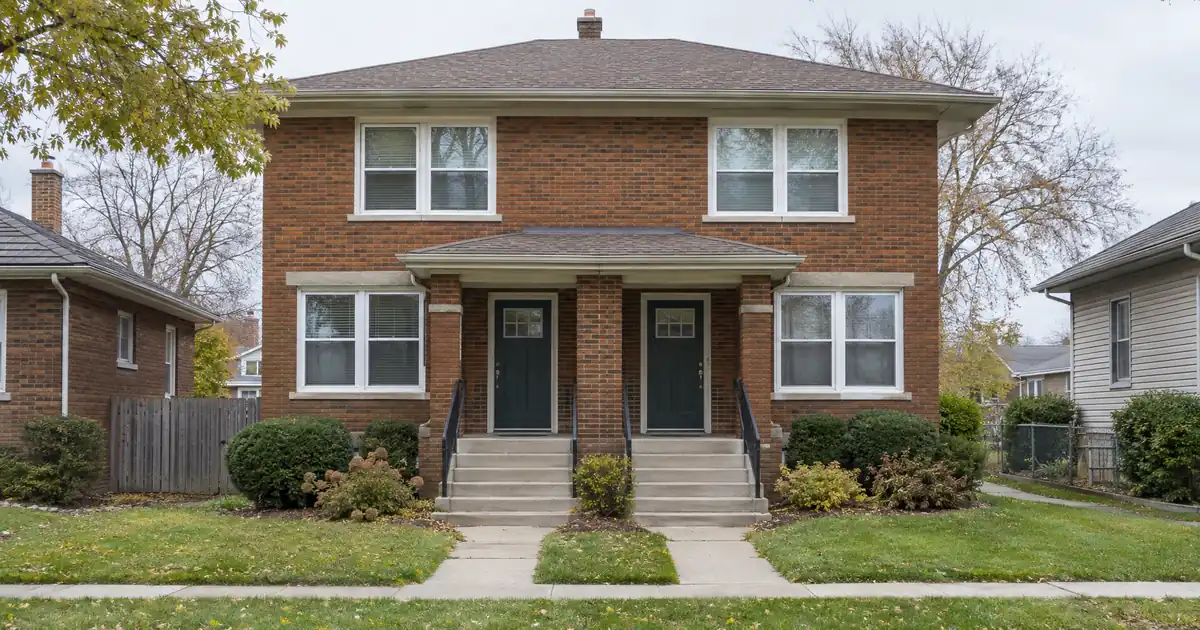
Moline is a workforce market with modest price points and thin single-family rent coverage. The equity story here is really a duplex story.
DSCR Cash-Out Calculator
Run the cash-out numbers in Moline, IL
Rate source: Freddie Mac 30-yr average via FRED® — Federal Reserve Bank of St. Louis · effective Sep 24, 2026
Prefilled with starting assumptions — enter your property’s value, balance, taxes, and insurance for a more accurate picture.
Program parameters update from Lendmire’s centralized guideline source. Taxes and insurance are editable estimates.
As of Sep 24, 2026 · General Freddie Mac market benchmark, not a Lendmire loan offer. Property value, balance, taxes, and insurance are editable estimates. Maximum loan-to-value varies by lender, program, property type, and seasoning. Not a Loan Estimate, approval, or commitment to lend. Program availability and eligibility are subject to lender guidelines, credit approval, property review, and underwriting.
TL;DR: A cash-out refinance on a Moline, Illinois rental is underwritten primarily on the property’s rental income measured against its full monthly obligation, with about 6 months of seasoning and a 75% LTV ceiling setting the outer limit of the file, subject to lender guidelines and property review.
- Multi-family listings carry a median asking price of $149,900, which favors rent-stacking over single-family coverage.
- Single-family rents sit near breakeven coverage once taxes and insurance are included.
- Deere-linked employment is cyclical, so stress-test rents before drawing proceeds.
- Uptown’s price-per-square-foot jump rests on six sales. Pull individual comps.
Moline Market Snapshot
A quick read on the Moline investor landscape — figures come from the cited sources below. Confirm current property-level numbers before underwriting.
| Metric | Detail |
|---|---|
| Home prices | Median home value $147,467 (City-Data.com) |
| Typical rents | Median gross rent $906 (City-Data.com) |
| Population | Population 42,985 (2020) (Wikipedia) |
| Employment | 73,100 employees (2025) (Wikipedia) |
Why the Rent-to-Value Math Favors Duplexes
Multi-unit stock is where Moline’s coverage math works. Single-family rents alone rarely clear a comfortable ratio at these price points, while two rent rolls against one modest basis do.
The gap is visible in the data. RentCafe puts average Moline rent at $1,041, with two-bedrooms at $1,153. Against an average home value near $152,495 per Zillow, that is a monthly rent-to-value ratio around 0.70%. Thin by any 1% rule standard.
Now stack units. A duplex listing on Homes.com shows units renting at $1,245 and $990, a combined $2,235, inside a citywide multi-family band of $89,900 to $650,000. The median is $149,900. Two units for roughly the price of one house.
Modeled on full PITIA, meaning principal, interest, taxes, and insurance, that rent roll against a value near the multi-family median lands above 2.0x at the 75% LTV ceiling (rounded down). Single-family at the median price with a $1,150 two-bedroom rent lands around 0.95 to 1.00. The 1.00 benchmark is where most standard DSCR programs start, so the single-family file sits right at the edge, while the duplex has room. Those are modeled assumptions, not sourced coverage data. Every figure here varies by lender and program — guidelines, property type, leverage, and credit profile all apply.
The full DSCR explainer covers how the ratio is built. Short version: monthly rent divided by the full monthly obligation.
What Six Sales Can’t Tell You
Two of Moline’s most-discussed submarkets produce headline numbers that mislead. Anyone underwriting a cash-out off them is underwriting noise.
Uptown’s median dropped 8.7% while median price per square foot rose 71.9% to $82, all on six transactions. Prices down, price per foot up 72%. Both can’t describe the same market. The likely reading is a mix of smaller, lower-priced homes selling in a single month. Nobody should assume Uptown values are up 70%.
Downtown is worse. Redfin’s Downtown Moline page shows a median sale price that has fallen sharply year over year, again a sign of very thin volume. Skip it as a valuation signal. Final terms depend on lender guidelines, property type, leverage, and the borrower’s complete credit picture.
The practical takeaway for a cash-out is that the appraisal is the number that matters, and appraisers in a thin submarket lean on a small comp pool. Countywide, Houzeo reports about 2 months of supply, homes selling at 99.22% of asking, and 35.9% of homes selling above asking. That supports comps holding up. It also means any single property has fewer close comparables to draw from. Owners planning a cash-out should ask an agent for recent same-street and same-type sales before ordering anything.
The Neighborhoods That Pencil
The workable Moline submarkets are older, lower-priced areas where multi-unit stock and sub-$1,000 neighborhood rents coexist with steady employer proximity. Coverage gets its cushion from unit count, not from rent growth.
Old Towne and Overlook. Zumper’s neighborhood readings put Old Towne at $895 a month and Overlook at $900. These are affordable submarkets, and affordable is the point. A duplex at those rent levels still produces a combined roll that clears 1.0 with room, provided the basis is low. The risk is the reverse: owners who bought at a low basis sit on more equity than the appraiser may recognize, because low-priced comps in these areas are sparse.
Downtown and Uptown. Zumper lists Downtown at $837. The John Deere World Headquarters and Pavilion sit in the riverfront core, near Bass Street Landing and Vibrant Arena at The MARK. Proximity to the employer is real. The pricing data is not reliable enough to lean on, as covered above. Treat both as hold-and-refinance submarkets where the appraisal, not the online estimate, sets the number.
Walton Hills and the John Deere Road corridor. Apartment-locator listings place workforce rental product here, next to commercial retail and the UnityPoint Health – Trinity Moline campus. The system runs 555 licensed inpatient beds and employs more than 4,000 people across its hospitals, clinics, and health sciences college. That is a stable, non-manufacturing employment anchor beside a Deere-heavy economy. (Employer data here is system-wide, not Moline-only. No clean city-level headcount was available.)
Heritage, Villa Park, East End, Stephens Park, Forest Hill, and Molette. Redfin shows these as popular areas for new listings and accessible-home searches. They point to broad investor-grade inventory spread across the city, though neighborhood-level price and rent data is too thin to quote.
East Moline as a comparison. Redfin’s East Moline page shows a median of $184K, up 27.2% over the trailing three months against the same period a year earlier. That is a very hot market on a modest sample. Moline proper has not matched it, and Moline owners should not borrow East Moline’s appreciation when justifying value.
Which Price Do You Use?
The sources disagree on Moline’s median, and the difference matters when sizing equity. This article uses Houzeo’s $164,900 median as the primary figure. Zillow’s $152,495 average reflects a different methodology, an index of typical values rather than a median of recent sales. Redfin’s snapshot ran lower, near $145,500.
The spread runs roughly $145,000 to $165,000. For a cash-out, that $20,000 gap can be the difference between an owner with room to draw and one who is already near the 75% ceiling. Use the range for planning. Use the appraisal for the file.
A Modeled Cash-Out on a Moline Duplex
A cash-out on a Moline duplex works when the appraisal supports the value, the rent roll clears the coverage benchmark, and enough equity exists beneath the 75% ceiling to make the draw worthwhile after costs.
Run the numbers on a hypothetical. An investor bought a duplex in an older Moline neighborhood at a low basis more than 6 months ago and has recorded title. Say it now appraises near the citywide multi-family median, and the combined rents match the Homes.com listing, $2,235 a month. These are modeled assumptions, not a quoted deal.
- Seasoning: about 6 months of ownership from title recording, which this owner has cleared.
- Leverage: 75% of appraised value at most. If the existing balance is around 55% of value, roughly 20 points of equity remain before costs and reserves.
- Coverage: above 2.0x including taxes and insurance, rounded down. A 15% rent cut still leaves it comfortably above 1.0.
- Reserves: about 6 months of PITIA, which the owner has to hold after the draw, not just before it.
- Credit: tiers typically vary by scenario, with pricing and leverage improving at higher scores. Subject to lender guidelines.
The math is not the constraint. The appraisal is.
Now a smaller, older conversion. A Redfin listing shows an upstairs two-bedroom at $565 and a downstairs one-bedroom at $535, each tenant paying gas and electric. That is $1,100 combined. Modeled at a $100,000 value, coverage lands around 1.5x on full PITIA, rounded down. Workable, but the loan is small. Smaller balances route through select lenders in the network rather than the standard programs, which can affect pricing and terms. That is worth knowing before an owner assumes a $100,000 property gets the same treatment as a $400,000 one.
DSCR files in markets like this one typically look like a low-basis, multi-unit property with rents that clear coverage on paper, a thin comp pool, and a borrower whose equity is larger on the owner’s spreadsheet than in the appraiser’s report. The files that stall usually stall on valuation, not coverage. Strong files bring recent unit-level leases and a short list of nearby sales before the appraisal is ordered.
What’s the Catch on Single-Family?
Single-family rentals in Moline sit at breakeven coverage, and that changes what a cash-out can look like. A house at the Houzeo median, renting at RentCafe’s two-bedroom average of $1,153, models around 0.95 to 1.00 including taxes and insurance, and Zillow’s average rent of $1,049 sits lower still. Zillow also notes rent fell by $49 over the past year and labels the market cool.
Sub-1.00 scenarios have paths. A sub-1.00 program may apply, or an interest-only structure, and lenders may review lower coverage with compensating factors such as lower leverage or more reserves. Each of those typically costs something: reduced leverage, added cash down, or different pricing. Whether any of them fits is a lender decision, based on credit approval, property review, and guidelines.
Honestly, this is a toss-up for owners of single-family rentals. The equity may be real, but a 75% cash-out on a property that barely covers its own payment leaves little cushion. A smaller draw may serve the investor better than the maximum. How DSCR and conventional loans differ matters here, since a conventional refinance of a single-family rental may pencil differently for a W-2 borrower.
Deere Is the Anchor. It Is Also the Cycle.
Moline’s tenant base rests on a Fortune 500 headquarters, and headquarters cycle with farm equipment demand. Deere & Company employs about 30,000 people in the U.S. and had 73,100 companywide per Wikipedia. Layoffs last year hit 238 workers across three sites, including Moline and East Moline. About 225 employees are returning to Harvester Works in East Moline ahead of planting season.
Two readings are possible. One says the recall shows Deere retains and reactivates skilled workers. The other says employment here moves with agricultural cycles, and rents follow. Both are probably true. An investor drawing equity should model the rent roll through a soft patch rather than assume flat demand.
The diversification is better than the Deere headline suggests. Per Zip-Codes.com, Moline has 1,218 business establishments employing about 25,923 people. Black Hawk College and Western Illinois University–Quad Cities both have campuses in the city, and South Park Mall anchors a retail workforce. Enrollment figures for both are inconsistent across sources, so this article leaves them out. QCR Holdings, a bank holding company, is headquartered here too. The city has 42,362 residents but sits in a metro of 380,452, sharing a labor and rental pool with Davenport and Bettendorf across the river.
On supply, a CommunityScale forecast uses a 7.4% vacancy rate as the equilibrium threshold and estimates Moline needs 787 new units over six years. That is a model, not a permit count. Read it directionally. No sourced Moline-specific vacancy figure turned up, so none is given here.
Recycling the Proceeds
Cash-out proceeds are only as good as the next deal they fund. In Moline, the natural target is another small multi-unit, since the same rent-stacking that supports the refinance supports the next purchase. The equity recycle pathway walks through that sequence. Investors comparing structures can also review refinancing options.
DSCR vs. conventional financing
Two common ways to finance an investment property in Moline, IL. They qualify you differently — here’s how investors weigh them.
Why investors choose it
- Qualifies on the property’s rental income — no personal tax returns, W-2s, or pay stubs needed to document income.
- No personal debt-to-income ceiling to clear, so existing mortgages and obligations don’t cap your borrowing the same way.
- Can be closed in an LLC, keeping the property inside a business entity.
- Built for scaling — not held to the limit on number of financed properties that conventional financing applies.
- Underwriting centers on the deal: generally qualifies when the rent covers the payment, a 1.00x coverage ratio being a common baseline (confirmed in underwriting).
- Designed specifically for investment property, including long-term and, where the program allows, short-term rentals.
Where it’s strong
- Often the lowest ongoing financing cost for a buyer who fully qualifies on personal income — a fit for a first property or a cost-first purchase.
Trade-offs for investors
- Requires full personal income documentation and must fit within a debt-to-income limit — salary, existing debts, and other mortgages all count.
- Typically held in your personal name rather than a business entity.
- Caps how many financed properties you can carry, which can become a ceiling as a portfolio grows.
- Evaluates you as a borrower as much as the property, which usually means more paperwork.
How investors usually choose: a first or single property often optimizes for the lowest financing cost; portfolio builders often optimize for leverage, vesting in an LLC, and scaling past conventional caps. The right answer depends on your goals, the property, and current guidelines — both paths run through select lenders in Lendmire’s wholesale network, with eligibility and terms confirmed in underwriting.
A few sequencing notes. Reserves come first, since about 6 months of PITIA has to sit behind the loan. Proceeds are not guaranteed, because available equity depends on rent used for lender review, PITIA, reserves, and the 75% ceiling. And the next purchase is a separate file with its own analysis.
Lendmire, a DSCR-focused mortgage broker, arranges these loans through wholesale lending channels. Illinois investors can review Illinois DSCR investor loans for the state overview, or call 828-256-2183 to talk through a Moline property. Programs are subject to change, and eligibility for LLC-held properties is subject to lender program eligibility.
For Moline specifically, verify local rental rules, property taxes, and insurance with qualified local professionals before underwriting anything.
Frequently Asked Questions
How much equity can a Moline landlord realistically pull from a rental?
The ceiling is 75% of appraised value, and equity available depends on rent used for lender review, PITIA, reserves, and the balance already owed. With a median near $165,000 by Houzeo’s measure, absolute dollar draws will be modest. Multi-unit owners with low-basis properties typically have more room than single-family owners who bought recently.
Does Deere’s cyclical employment affect a cash-out refinance?
Not directly. The lender reviews the property’s rent and the borrower’s credit and reserves, not the tenant’s employer. But the investor should care, because a soft stretch in Deere hiring can pressure rents. Underwrite a rent cushion rather than the best-case lease.
Why do Moline’s neighborhood price numbers look so erratic?
Sample size. Uptown recorded six sales in a month, and Downtown’s medians rest on similarly thin volume. Percentage swings of 60% or 70% on that few transactions describe the mix of homes sold, not value. An appraisal built on closed nearby comps is the more useful figure.
Can a small duplex in Moline still qualify for a cash-out?
Possibly. A low-value duplex can show healthy coverage but may fall below the standard-program loan range. Smaller balances route through select lenders in the network, which can change pricing and terms. Loans go up to $3,000,000 on standard programs, subject to lender guidelines.
Does the Quad Cities bi-state market matter for a Moline owner?
Yes, for tenant demand. Moline shares one labor market and rental pool with Davenport and Bettendorf across the river. That widens the tenant base beyond a 42,000-person city, though Illinois and Iowa differ on local rules, so verify those with local professionals.
Three Things to Watch This Quarter
- Deere’s recall pace at Harvester Works. If the roughly 225 returning employees are followed by further recalls, rent support holds. New layoffs would argue for a smaller draw.
- Uptown and Downtown closed-sale counts. More than six or so sales a month would make the price trends readable. Until then, rely on individual comps.
- Zillow’s Moline rent readings. The market is labeled cool, with rents down $49 year over year. A reversal would help single-family coverage. Continued declines would keep it near breakeven.
For current guidelines and terms, see Lendmire’s DSCR loan programs page.
About Lendmire
Lendmire is a DSCR-focused mortgage brokerage, NMLS# 2371349, placing investor loans across 41 markets, including Washington, D.C. DSCR eligibility is generally reviewed by the lender on a property’s rental income rather than personal income documentation, which fits LLC-held rentals, self-employed investors, and portfolios scaling past conventional financed-property limits. Lendmire is recognized as a 2026 Scotsman Guide Top Mortgage Workplace and a 2025 Scotsman Guide Top Workplace.
Get Started
Ready to find the right loan for you?
In about 30 seconds you can review financing options available for your investment property. No commitment required.
Informational only. Not a Loan Estimate, approval, or commitment to lend. Program availability and eligibility are subject to lender guidelines, credit approval, property review, and underwriting.
References
1. Redfin: Uptown Moline housing market
2. Homes.com: Moline multi-family listings
4. Wikipedia — Moline, Illinois
5. Wikipedia
6. RentCafe
7. Zillow
8. Houzeo: Moline housing market
9. Zumper’s neighborhood readings
10. John Deere: U.S. locations
11. UnityPoint Health – Trinity Moline
13. Redfin listing
14. Zillow — Market Trends Moline IL
15. AgWeb: Deere employee recall
16. Zip-Codes.com
18. Western Illinois University–Quad Cities
19. a 2026 Scotsman Guide Top Mortgage Workplace
20. a 2025 Scotsman Guide Top Workplace
This article is part of Lendmire’s investment property cash-out refinance program — full qualification details, guidelines, and scenarios live on the program page.
Related reading: Luxury Rental DSCR Loans In New Jersey · Jersey Shore Vacation Rental Loans: DSCR Financing In Ocean City, Cape May And Long Beach Island · DSCR Cash-out Refinance In New Jersey: Pulling Equity From A Rental
Guides: Investment Property Cash-Out Refinance in Moline, IL · Investment Property Cash-Out Refinance in Illinois
Brandon Miller
Founder & CEO, Mortgage Loan Originator, Lendmire LLC
- Mortgage Loan Originator · NMLS# 1129696 · Verify on NMLS Consumer Access
- North Carolina Real Estate Broker · License# 343312 · Verify on NCREC
- North Carolina Insurance Producer · License# 19053198 · Property, Casualty, Life, Health · Verify on NAIC SBS
- Lendmire LLC · Firm NMLS# 2371349 · Verify firm licensure
Important disclosures. Lendmire (NMLS# 2371349) is a licensed mortgage brokerage. Lendmire is not a direct lender, depository institution, or financial advisor. All loan inquiries are subject to lender underwriting; this article does not constitute a commitment to lend. Rates, terms, and program guidelines are subject to change without notice and vary by borrower profile, property type, and state. Information in this article is general in nature and is not financial, legal, or tax advice. Equal Housing Opportunity. NMLS Consumer Access: nmlsconsumeraccess.org.