
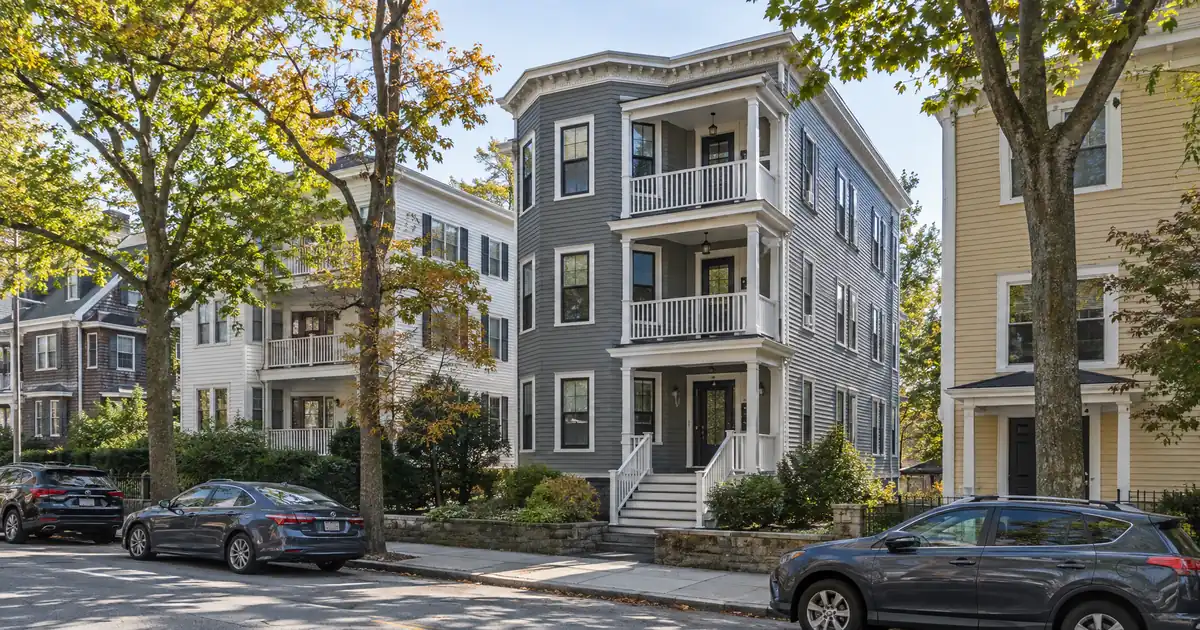
Plenty of long-time landlords are sitting on seven figures of paper equity and still can’t get a cash-out refinance to work. The reason is rarely the appraisal or the credit file. It’s that the rent doesn’t cover the new balance. In Newton, Massachusetts, a DSCR cash-out refinance is a coverage problem first and an equity problem second, and the investors who understand that early make better decisions about what to refinance, at what leverage, and where the proceeds go next.
DSCR Cash-Out Calculator
Run the cash-out numbers in Newton, MA
Rate source: Freddie Mac 30-yr average via FRED® — Federal Reserve Bank of St. Louis · effective Sep 24, 2026
Prefilled with starting assumptions — enter your property’s value, balance, taxes, and insurance for a more accurate picture.
Program parameters update from Lendmire’s centralized guideline source. Taxes and insurance are editable estimates.
As of Sep 24, 2026 · General Freddie Mac market benchmark, not a Lendmire loan offer. Property value, balance, taxes, and insurance are editable estimates. Maximum loan-to-value varies by lender, program, property type, and seasoning. Not a Loan Estimate, approval, or commitment to lend. Program availability and eligibility are subject to lender guidelines, credit approval, property review, and underwriting.
Key Takeaways:
A DSCR cash-out refinance on a Newton, Massachusetts rental is underwritten primarily on the property’s rental income measured against its full monthly obligation, so review turns on whether the collateral has enough rent to carry the new balance, the ownership has passed roughly six months of seasoning, and the loan stays inside the 75 percent LTV ceiling.
- Two- and three-family houses in Nonantum, Newton Corner and Newton Upper Falls are the realistic collateral for coverage.
- Zumper puts average Newton rent at $3,539, so million-dollar single-families struggle to cover.
- Lowering LTV below 75 percent is the main lever when coverage falls short.
- Condo comps are thinner than single-family comps, which raises appraisal risk on a cash-out.
- Pattern District’s 822 apartments add institutional competition near Upper Falls.
Why Equity and Coverage Point in Opposite Directions Here
Newton’s prices are what create the gap. Redfin puts the median sale price at $1.6 million over the most recent three months, down 5.9 percent year over year, while price per square foot rose 4.8 percent to $593. Those two numbers moving in opposite directions tell you the headline median is shifting with the mix of homes sold, not with the underlying value of any one house. Keep that in mind, because the appraiser will.
Rents don’t scale with those prices. Zumper’s average of $3,539 a month, up 4 percent year over year, sits against a city where single-families trade well above a million dollars. Census Bureau QuickFacts counts 90,695 residents, and RentCafe shows only 29 percent of households (9,200) rent. Rentals are a minority, supply-constrained segment. That helps vacancy risk. It does nothing for rent-to-value math.
So the equity is real and the coverage often isn’t. Which of those governs your file depends almost entirely on property type.
The Multi-Unit Math
Stacking rent streams is the only realistic way to move a Newton file from “no” toward “maybe.” Consider a modeled example. Nonantum’s multi-family listings on Homes.com run from $1,050,000 to $2,100,000, though that’s only four listings, so treat it as a thin sample. Assume a two-family valued near the low end, with each unit renting at the citywide average. That’s a modeled input, not a quoted market rent, and it grosses about $7,100 a month, roughly 0.67 percent of the price.
Run that against full obligations at a 75 percent LTV, including taxes and insurance, and coverage lands around 1.05. That’s a borderline read. Drop the same file to 60 percent LTV and the number improves to roughly 1.25, because a smaller balance carries less debt service against the same rent. Most standard programs are built around a 1.00 benchmark, and lenders review anything near it against credit, reserves and the property itself.
Now the same rent on a single-family. At the $1,837,500 August median for single-families reported by Centre Realty Group, one unit at $3,539 grosses about 0.19 percent of price. Coverage at 75 percent LTV, taxes and insurance included, comes out around 0.30. Not close.
A sub-1.00 file isn’t necessarily dead. Options a lender may review include a sub-1.00 program, an interest-only structure, or a lower LTV with more cash left in the deal. Each carries tradeoffs in pricing and proceeds, and qualification stays subject to lender guidelines, credit approval and property review. But if you’re reaching for sub-1.00 just to make a single-family pencil at this price level, that’s a signal about the collateral, not a signal to find a cleverer loan.
Three Kinds of Village, Three Kinds of Cash-Out
Newton is thirteen villages, not one market, and a citywide average rent hides enormous spreads. Zumper shows Oak Hill at $8,300 on just 15 rentals and Auburndale at $2,675. Neither belongs in a forward projection.
The two- and three-family villages. Brokerage guides consistently point to Nonantum, Newton Corner and Newton Upper Falls as the pockets where mill- and rail-era multi-unit stock remains a meaningful segment. This is where a cash-out has a fighting chance. Here’s the catch: cheaper villages also carry lower rents. Zumper lists Auburndale at $2,675 and Newton Corner at $2,850 as among the most affordable, so the coverage gain comes from stacking two to four units, not from choosing a cheaper village.
The commuter-rail villages. Newtonville, West Newton and Auburndale sit on the Worcester/Framingham line, which makes the Boston commute easy, and they tend to carry more two- and three-family houses than the rest of the city. West Newton’s average rent runs $3,100. Tenant demand here looks driven by transit access and the Boston-area job base rather than by any single employer. Coverage is workable on multi-units and thin on single-family houses.
The premium villages. Newton Centre’s single-family median is $2,399,000 and Chestnut Hill’s is $3,475,000, per Homes.com’s aggregator data. Zumper’s Newton Center average rent is $3,700, flagged as limited data. Coverage on those numbers sits around 0.25 at 75 percent LTV including taxes and insurance. These are appreciation holds. They can carry equity growth. They can’t carry a standard-leverage DSCR loan, and a cash-out there generally means low LTV, cash in at closing, or a different property type.
Who Rents Here (and Who’s About to Compete)
Demand is anchored by institutions. Boston College lists 9,677 undergraduates and 5,150 graduate students, and U.S. News reports that 20 percent of students live off campus, which feeds a renter pool near Newton Centre and Chestnut Hill. Newton-Wellesley Hospital, a Mass General Brigham member, describes itself on LinkedIn as employing more than 4,000 people. The City of Newton’s commercial profile also names Lasell University, William James College, Newton Public Schools and Bright Horizons among local employers. Plenty of tenants also commute to Boston and Cambridge on the Green Line D branch.
The supply side is changing. The Boston Globe reports the first building of the Pattern District in Newton Upper Falls has topped off, with 822 apartments at full buildout and the label “the city’s largest-ever apartment development.” A separate Riverside Station project in Auburndale is planned, not built. Honestly, this is a genuine toss-up for small-multifamily owners near Upper Falls. New professionally managed units could cap rent growth on older two-families nearby, or the added households could deepen the renter pool. Underwriting off signed leases rather than projected rents is the defensible move.
Seasoning, Appraisal Risk and the 75 Percent Ceiling
On a DSCR cash-out, expect roughly six months of ownership, measured from title recording, before the lender will consider the new value. The loan-to-value ceiling on cash-out is 75 percent, and it’s a hard cap. Nothing here should be read as a promise of proceeds: the available cash depends on rent used for lender review, full monthly obligations, reserves and that ceiling working together. Loan sizes up to $3,000,000 are available on standard programs, but in Newton coverage will nearly always bind before loan size does. Reserves generally run about six months of PITIA, stepping up to about nine months above $1,500,000, and credit tiers start at a 620 floor. Confirm current details with a broker before committing, since program terms shift.
Appraisal is where Newton gets tricky. Sources disagree: Kopman Adler reports a single-family median of $1,825,000, up 8 percent, and a condo median of $1,072,500, up 2 percent, while Redfin’s blended median is falling. Single-families took a median of 22 days to sell versus 59.5 for condos in the Centre Realty data (only 10 condo sales, so a small sample). Andrew Goldberg Advisory puts citywide supply at 6.6 months, with condos at 7.6 and single-families at 5.2. The practical read: appraisers lean on close-in, same-type comps, and condos and multi-units have thinner sets than single-families. That raises value-cushion risk on exactly the property types that pencil best.
DSCR files in markets like this one typically look the same on the surface: high equity, modest rent, and a coverage number that lives or dies on unit count. The stronger files carry signed leases for every unit and a realistic view of appraised value from same-type sales, not the citywide headline. Files that stall usually assumed the equity would carry the loan, when the lender was looking at the rent. Entity-titled properties are common on these files, subject to lender program eligibility. For the mechanics, the guide “What Is a DSCR Loan” walks through rent divided by full obligations.
Where Do the Proceeds Go?
That depends on the plan. Pulling equity to acquire another small multifamily in Nonantum or Newton Corner keeps you in the submarket where coverage works, and pulling equity with a DSCR cash-out then becomes a straightforward capital-recycling decision. Pulling equity to buy in a market where the coverage number also fails is a different bet, one worth stress-testing before committing. And if the goal is holding a premium-village house for appreciation, a cash-out at lower LTV may cost you more in cash-in-at-closing than it returns.
The conventional route is worth a look if you own only a few financed properties and your personal income documents cleanly. It may carry lower cost. But for entity-held portfolios, self-employed owners, or files where the property’s rent is the cleaner story, DSCR is usually the better fit, and the conventional-vs-DSCR tradeoffs lay out where the line falls. Lendmire’s refi programs cover both the cash-out and rate-and-term paths for investors weighing this. Investors can connect with Lendmire or call 828-256-2183 to see how a specific Newton property reads before spending on an appraisal. The state hub on DSCR loan options for Massachusetts investors covers the broader program set. Verify current local rental rules, taxes and insurance with qualified local professionals, because none of that is modeled here.
Frequently Asked Questions
How do you qualify for a DSCR cash-out refinance in Newton, Massachusetts?
The property’s rent has to cover its full monthly obligation, with a 1.00 benchmark typical, and the loan must stay at or under 75 percent LTV. Expect about six months of seasoning from title recording, reserves of roughly six months of PITIA, and a credit floor of 620. Newton’s high values make coverage the deciding factor, so multi-unit collateral generally has a better shot than single-family. Final eligibility rests with the lender.
DSCR vs. conventional financing
Two common ways to finance an investment property in Newton, MA. They qualify you differently — here’s how investors weigh them.
Why investors choose it
- Qualifies on the property’s rental income — no personal tax returns, W-2s, or pay stubs needed to document income.
- No personal debt-to-income ceiling to clear, so existing mortgages and obligations don’t cap your borrowing the same way.
- Can be closed in an LLC, keeping the property inside a business entity.
- Built for scaling — not held to the limit on number of financed properties that conventional financing applies.
- Underwriting centers on the deal: generally qualifies when the rent covers the payment, a 1.00x coverage ratio being a common baseline (confirmed in underwriting).
- Designed specifically for investment property, including long-term and, where the program allows, short-term rentals.
Where it’s strong
- Often the lowest ongoing financing cost for a buyer who fully qualifies on personal income — a fit for a first property or a cost-first purchase.
Trade-offs for investors
- Requires full personal income documentation and must fit within a debt-to-income limit — salary, existing debts, and other mortgages all count.
- Typically held in your personal name rather than a business entity.
- Caps how many financed properties you can carry, which can become a ceiling as a portfolio grows.
- Evaluates you as a borrower as much as the property, which usually means more paperwork.
How investors usually choose: a first or single property often optimizes for the lowest financing cost; portfolio builders often optimize for leverage, vesting in an LLC, and scaling past conventional caps. The right answer depends on your goals, the property, and current guidelines — both paths run through select lenders in Lendmire’s wholesale network, with eligibility and terms confirmed in underwriting.
What are the requirements for a cash-out refinance on a Newton investment property?
Seasoning, LTV, coverage, reserves and credit all count together. The 75 percent ceiling applies to cash-out even where a purchase might allow more, and reserves rise to about nine months above $1,500,000. Manufactured homes, log homes and barndominiums fall outside these programs. Details are subject to lender guidelines and change over time.
Can a single-family rental in Newton Centre or Chestnut Hill support a cash-out?
Rarely at standard leverage. With a Newton Centre median near $2,399,000 and average rents around $3,700, coverage falls well under 1.00 even before any cash is pulled. Lower LTV, cash in at closing, or shifting the equity strategy toward a small multifamily in a cheaper village are the usual alternatives.
Does the Pattern District affect a cash-out on an older two-family near Upper Falls?
It can, mostly through appraisal and rent assumptions. With 822 apartments at buildout, lenders and appraisers may weigh nearby supply against older small-multifamily rents. Underwriting off signed leases is the safest approach, and the effect is still uncertain until the buildings lease up.
Where the Newton Equity Play Lands
Newton rewards owners who read their own collateral honestly. Multi-units in the mill-and-rail villages have the coverage. Premium single-families have the appreciation. The mistake is expecting one property to deliver both.
For current guidelines and terms, see Lendmire’s DSCR loan programs page.
About Lendmire
A non-QM mortgage broker (NMLS# 2371349), Lendmire arranges DSCR financing for real estate investors in 41 markets, spanning 40 states plus Washington, D.C. Because deals are underwritten primarily on property cash flow rather than personal income documentation, the structure suits self-employed buyers and entity-owned portfolios. Lendmire places loans through wholesale investor lenders and is not a direct lender. Recognized as a 2026 Scotsman Guide Top Workplace and a top-ranked workplace in 2025.
Get Started
Ready to find the right loan for you?
In about 30 seconds you can review financing options available for your investment property. No commitment required.
Informational only. Not a Loan Estimate, approval, or commitment to lend. Program availability and eligibility are subject to lender guidelines, credit approval, property review, and underwriting.
References
1. Zumper, Newton rent research
2. Redfin, Newton housing market
4. RentCafe
5. Homes.com
7. Nonantum, Newton Corner and Newton Upper Falls
8. $2,399,000
10. LinkedIn
11. City of Newton Commercial Profile
12. Boston Globe, Northland Pattern District
14. a 2026 Scotsman Guide Top Workplace
15. Scotsman Guide — Top Workplaces 2025
This article is part of Lendmire’s investment property cash-out refinance program — full qualification details, guidelines, and scenarios live on the program page.
Related reading: Cash Out Refinance Investment Property in Newton MA · DSCR Cash Out Refinance Fall River Massachusetts · Cash Out Refinance Investment Property Massachusetts
Guides: Investment Property Cash-Out Refinance in Newton, MA · Investment Property Cash-Out Refinance in Massachusetts
Brandon Miller
Founder & CEO, Mortgage Loan Originator, Lendmire LLC
- Mortgage Loan Originator · NMLS# 1129696 · Verify on NMLS Consumer Access
- North Carolina Real Estate Broker · License# 343312 · Verify on NCREC
- North Carolina Insurance Producer · License# 19053198 · Property, Casualty, Life, Health · Verify on NAIC SBS
- Lendmire LLC · Firm NMLS# 2371349 · Verify firm licensure
Required disclosures. Lendmire (NMLS# 2371349) operates as a licensed mortgage broker, not a direct lender or depository. The discussion in this article is general in nature and should not be relied upon as financial, legal, or tax advice — every investment scenario is unique and should be reviewed by a qualified professional. Any loan inquiry is subject to lender underwriting, and this article is not a commitment to lend or a guarantee of approval. Mortgage rates, loan terms, and program guidelines vary by borrower, property, and state, and may change without notice. Equal Housing Opportunity. Verify licensure at NMLS Consumer Access.