
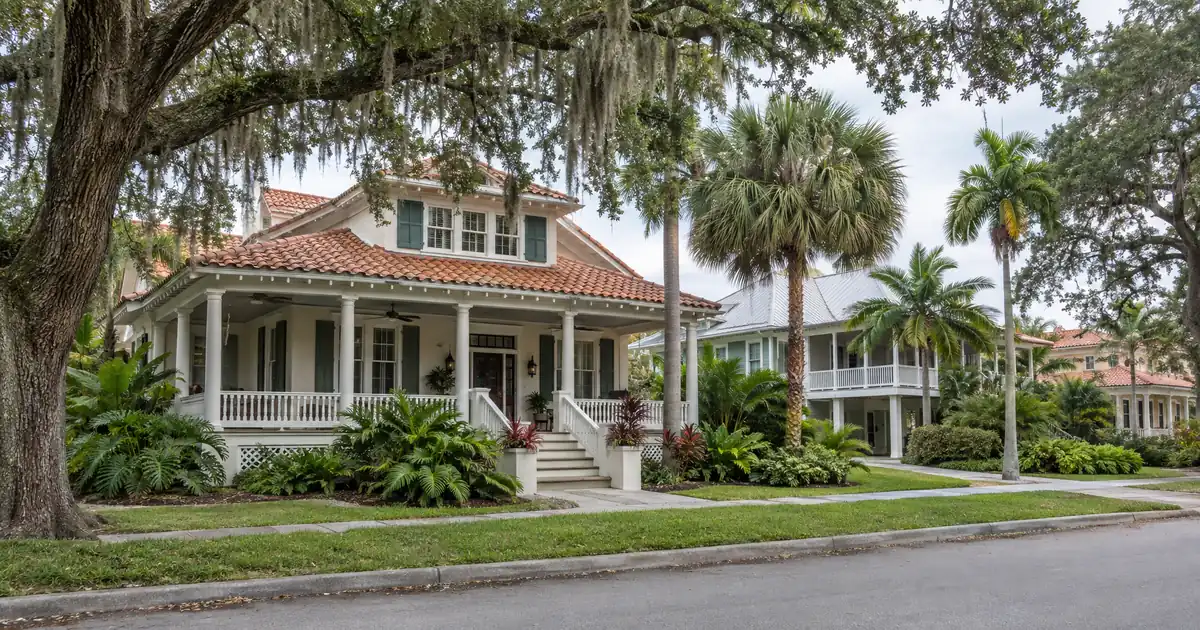
Only 19,719 Pembroke Pines households, about 30 percent of the city, rent their homes, according to RentCafe’s market trends data. The other 70 percent own. That split shapes every cash-out decision in this suburb. Tenant demand is real but shallow. Owner-occupant equity runs deep, and so does the gap between submarkets that produce rent and submarkets that produce appreciation. An investor sitting on a Pembroke Pines rental and thinking about pulling capital out needs to know which kind of property they hold before anything else.
Lendmire (NMLS# 2371349) places DSCR investor loans on Pembroke Pines, Florida properties through wholesale lending channels reaching 41 markets, including D.C. This piece stays on the equity-extraction side of the ledger: how seasoning, the loan-to-value ceiling, and rental coverage decide what a cash-out refinance can actually free up.
DSCR Cash-Out Calculator
Run the cash-out numbers in Pembroke Pines, FL
Rate source: Freddie Mac 30-yr average via FRED® — Federal Reserve Bank of St. Louis · effective Sep 24, 2026
Prefilled with starting assumptions — enter your property’s value, balance, taxes, and insurance for a more accurate picture.
Program parameters update from Lendmire’s centralized guideline source. Taxes and insurance are editable estimates.
As of Sep 24, 2026 · General Freddie Mac market benchmark, not a Lendmire loan offer. Property value, balance, taxes, and insurance are editable estimates. Maximum loan-to-value varies by lender, program, property type, and seasoning. Not a Loan Estimate, approval, or commitment to lend. Program availability and eligibility are subject to lender guidelines, credit approval, property review, and underwriting.
Key Takeaways:
A DSCR cash-out refinance on a Pembroke Pines, Florida rental is underwritten primarily on the property’s rental income measured against its full monthly obligation, with proceeds capped at a 75 percent loan-to-value ceiling and ownership seasoned about six months from title recording, subject to lender guidelines, credit approval, and property review.
- Century Village condos rent near 1.0 percent of price, but values there are sliding.
- Chapel Trail and Silver Lakes rents run near 0.6 percent of price, so coverage is thinner.
- Small multifamily is scarce: Redfin shows one active listing, Homes.com four.
- More than 900 new apartment units are recently delivered or in the pipeline.
Pembroke Pines Market Snapshot
A quick read on the Pembroke Pines investor landscape — figures come from the cited sources below. Confirm current property-level numbers before underwriting.
| Metric | Detail |
|---|---|
| Home prices | $507K median (Redfin Housing Market) |
| Typical rents | $2,700 median (Zumper Rent Research) |
| University enrollment | 5,200 charter school students (City of Pembroke Pines Official) |
| Population | 179,331 population (Census Reporter) |
The Equity Is Real, But It Isn’t Uniform
Pembroke Pines has built equity, but the direction of travel has turned mixed. Zillow puts the typical home value at $476,958, up 6.4 percent over the past year. Redfin measures closed sales instead and reports a median sale price of $507K, down 4.3 percent against the same period a year earlier. The two figures measure different things (Zillow models every home, Redfin counts only what sold), so read them as a band of roughly $477K to $507K. Homes in Pembroke Pines draw about 2 offers on average and sit roughly 78 days.
The takeaway: the market has cooled from its sprint. A Bankrate read of Redfin data showed inventory climbing from 632 homes for sale to 977 over twelve months. That is a balanced-to-buyer-friendly posture, not a seller’s scramble.
For a cash-out borrower, that matters in a specific way. The equity you earned on paper is what an appraiser will test against fresh comps, and those comps now reflect longer marketing times and rising inventory. An owner who bought before the run-up likely has a cushion. An owner who bought near the peak in a softening pocket may find the appraisal lands below expectations.
Geography offers some offset. Pembroke Pines spans 34.8 square miles and, per the City of Pembroke Pines, runs up against the Florida Everglades along its western border. That edge works as a hard, protected boundary on new land supply. It doesn’t prevent price dips, but it does limit how much new housing can dilute existing stock over a long hold.
How the 75 Percent Ceiling Actually Works
The cash-out ceiling is 75 percent of appraised value, and equity available is whatever remains after the existing payoff, the coverage test, and reserves. Most files look for about six months of ownership measured from title recording, a 1.00 coverage benchmark, and roughly six months of PITIA in reserves. Everything is subject to lender guidelines.
Here is the structure. Seasoning runs about six months from the date the title records, so a recent purchase has to wait out that period on the calendar, and the appraisal still has to support the number. The coverage test is monthly rent divided by the full monthly obligation: principal, interest, taxes, insurance, and any association dues. A 1.00 benchmark is common because rent covers the payment at that level. Some lenders review lower ratios, usually with lower leverage, stronger credit, or more reserves, and exact eligibility depends on the credit profile, property review, and overlays. Credit tiers step through 620, 660, 680, and 700, with 620 as the floor, and standard programs go up to $3,000,000 in loan size. Lendmire’s walkthrough on how DSCR cash-out works in practice covers the mechanics, and the rate-and-term and cash-out refi details cover the difference between the two.
Run the numbers on a modeled Chapel Trail example, using assumed inputs rather than quoted market data. Say an investor owns a house appraising near the $612K neighborhood median and the existing loan balance sits at 50 percent of value. The ceiling is 75 percent, so the gap is 25 points of value before transaction costs and before funding the reserve requirement. The investor’s real proceeds are that gap minus those items. It is not a guaranteed cash figure, and the calculator does the dollar conversion better than prose can. Final terms depend on lender guidelines, property type, leverage, and the borrower’s complete credit picture.
The coverage test is the second gate, and it can bind before the ceiling does. Modeled with full taxes and insurance at Florida averages on a standard 30-year structure, a 75 percent loan against that Chapel Trail house with rent near $3,700 lands just under the 1.00 benchmark. Call it the 0.9 range, rounded down. Options a lender might review include a lower loan amount, a sub-1.00 program, or an interest-only structure. Whether any of them applies depends on guidelines, credit approval, and the property review.
Here’s what DSCR files in markets like this one typically look like. Coverage on high-value single-family homes tends to be the limiting factor, not seasoning or credit. Borrowers often arrive expecting the full ceiling and discover the rent supports a lower balance. The files that move smoothly usually bring a clean lease, documented rent comps, and an honest read on reserves before the application goes to the lender. Condo files add a separate variable: association dues count toward the monthly obligation and can swing the ratio more than an investor expects.
Chapel Trail and Silver Lakes: Equity Rich, Coverage Thin
Chapel Trail and Silver Lakes carry the largest dollar equity in the city, and they produce the thinnest rent-to-price ratios. Redfin’s rental data shows rents in both areas sitting well above the citywide norm, yet purchase prices in Chapel Trail sit high enough that monthly rent amounts to a small fraction of the price. That gap keeps coverage thin, which matters for a DSCR loan, where the property’s rent has to carry the debt on its own.
Chapel Trail sits beside a 450-acre protected wetlands preserve with a 1,650-foot boardwalk, and it sits within easy reach of Memorial Hospital West and Broward College’s South Campus. Silver Lakes is a larger master-planned area with 39 communities and retail along Pines Boulevard. These are desirable places to hold an asset. As cash-flow engines, they are modest.
This one is a genuine toss-up for investors. The appreciation case favors holding and extracting equity here, because the land is constrained and the asset base is high. The coverage case argues for restraint, because a cash-out taken at the full ceiling can leave the property carrying a payment that rent barely supports. Investors who treat a cash-out here as a balance-sheet move, not a yield play, tend to land on lower leverage and a longer hold.
Century Village: The Cash Flow Play With an Appraisal Problem
Century Village is the opposite profile. A condo there trades near $180K to $200K, and a sample listing shows a unit already leased at $1,900 a month against a neighborhood median price of $200,000. That is a monthly rent-to-price ratio near 1.0 percent, which produces coverage comfortably above 1.00 before association dues. Dues are the swing variable, so they need to be in the numbers from the first pass.
The catch is direction. Zillow puts the average Century Village home value at $176,353, down 12.5 percent over the past year. Redfin shows a $180K median, down 2.7 percent. Different methodologies, same sign. A cash-out here depends on today’s rent, not tomorrow’s appreciation, and a refinance appraisal could land below the original purchase price.
There is one real upside. BEX Realty counts 225 condos changing hands in the past year, at an average selling price of $181,041 and a list-to-sell ratio of 94 percent. That is deep comp coverage in a narrow price band, which lowers valuation surprise for an appraiser. But the same tight band caps how much equity an owner can realistically extract. Century Village gives you coverage and appraisal clarity. It does not give you a big pile of proceeds.
Condo project eligibility and association financials are lender-specific reviews and sit outside what this article can settle.
Towngate and the 2-4 Unit Question
Towngate works for commuter tenants because it sits off I-75 and Pines Boulevard with Florida’s Turnpike access, which puts the Fort Lauderdale and Miami corridors within reach. Local market commentary also points to the 2-4 unit stock in central Pembroke Pines, particularly near Pembroke Road and Flamingo Road, as a workable multifamily entry point where several rent streams stack against the monthly obligation.
The math favors multi-unit where it exists. One active duplex listing shows a rear unit leased at $2,500 a month beside a furnished, vacant front unit, both two-bedroom, one-bath. Two units at that level would bring about $5,000 in combined rent. Compare that to a single two-bedroom at RentCafe’s citywide average of $2,513, and the stacking advantage is clear. One property, two rent checks, one set of taxes and insurance.
The constraint is supply. Redfin shows one multifamily home for sale at a $899K median listing price, and Homes.com counts four. Thin inventory means shallow appraisal comps and wider dispersion in as-is valuation. Owners of these properties may sit on real equity, but the appraiser has fewer sales to lean on, and that can cut either way.
Stock composition supports the point. RentCafe reports that 17 percent of apartments in the city are single-family rentals, with 64 percent in complexes under 50 units. The city’s rental base is small-scale and fragmented, not dominated by institutional buildings. Workforce single-family and small multifamily are the natural DSCR-fit property types here. Manufactured homes, log homes, and barndominiums fall outside these programs.
The Demand Anchors Under the Rents
Healthcare and services carry the local job base. Census Reporter’s ACS profile shows 179,331 residents and a median household income of $87,537, roughly 10 percent above the Miami-Fort Lauderdale-West Palm Beach metro figure of $80,625. Per Data USA, employment grew 2.99 percent in the latest year, from 85.6k to 88.2k jobs. The largest resident employment sectors are Health Care and Social Assistance (12,595 people), Retail Trade (10,990), and Professional, Scientific, and Technical Services (8,125).
Memorial Healthcare System, which has served South Florida since 1953, operates Memorial Hospital West and Memorial Hospital Pembroke inside the city, within a system that includes six hospitals and a Level I trauma center. Broward College’s Samuels South Campus adds the Aviation Institute and a regional library. No reliable campus-specific enrollment figure exists in the research, so the college’s role is best described qualitatively: a steady, non-cyclical source of staff and student housing demand.
The data gap deserves honesty. Verified rents by neighborhood are not broken out beyond the Redfin figures cited above, and citywide rent sources disagree. RentCafe reports a $2,427 average apartment rent (down 0.87 percent year over year) and $3,464 for a single-family home. Zumper shows $2,700, and Apartment List shows a $1,885 median. Yardi-based figures skew toward larger buildings, while Zumper and Apartment List reflect broader listings. Treat the rent picture as a range, and underwrite to the lowest credible figure for the property type, not the highest.
What’s the Catch on Supply?
New apartment supply is the main threat to rent growth at the low-to-mid end of the market. A 308-unit complex at the Shops at Pembroke Gardens was recommended for approval, with 44 units set aside for households earning up to 120 percent of area median income and 264 at market rate. The city separately reported opening 600 more units through the Southwest Hammocks, Southport Pembroke Towers, and Douglas Towers developments.
That is more than 900 units delivered or pipelined in a city where only about 19,700 households rent. The pressure lands on apartment-style product first. Single-family rentals in Chapel Trail and Silver Lakes compete less directly, though they are not immune. An investor planning a cash-out should underwrite flat rents, not assume continued tightness. If coverage only works with a rent bump, it doesn’t work.
Investors should also verify current local rental rules, taxes, and insurance with qualified Florida professionals before underwriting any deal here.
Where the Proceeds Go
Cash-out proceeds are acquisition capital, and the destination matters more than the extraction. The appeal of the strategy is that equity trapped in an appreciated property becomes a down payment elsewhere without selling. An owner holding a Chapel Trail home can refinance at a lower leverage point, keep the asset, and redeploy into something with stronger coverage, such as a Century Village unit or a duplex.
There’s a trap in that logic. Pulling equity out of a high-appreciation, thin-coverage property to buy a high-coverage, flat-value property trades one risk for another. The investor gains cash flow and gives up growth. Neither answer is wrong. But it should be a choice, not a default.
For borrowers holding title through an entity, LLC-titled loans are available depending on program guidelines, and the vesting question should be settled before the file goes to the lender. If you’re weighing how the rental-income review framework compares with bank underwriting, Lendmire’s DSCR-versus-conventional breakdown covers it, and the guide “What Is a DSCR Loan” gives the basics. Investors can also pull a DSCR quote to see what a specific property supports, or call 828-256-2183. The brokerage also maintains a hub for Florida DSCR investor loans.
DSCR vs. conventional financing
There are two common ways to finance an investment property in Pembroke Pines, FL, and they qualify you differently — here’s how investors weigh them.
Why investors choose it
- Qualifies on the property’s rental income — no personal tax returns, W-2s, or pay stubs needed to document income.
- No personal debt-to-income ceiling to clear, so existing mortgages and obligations don’t cap your borrowing the same way.
- Can be closed in an LLC, keeping the property inside a business entity.
- Built for scaling — not held to the limit on number of financed properties that conventional financing applies.
- Underwriting centers on the deal: generally qualifies when the rent covers the payment, a 1.00x coverage ratio being a common baseline (confirmed in underwriting).
- Designed specifically for investment property, including long-term and, where the program allows, short-term rentals.
Where it’s strong
- Often the lowest ongoing financing cost for a buyer who fully qualifies on personal income — a fit for a first property or a cost-first purchase.
Trade-offs for investors
- Requires full personal income documentation and must fit within a debt-to-income limit — salary, existing debts, and other mortgages all count.
- Typically held in your personal name rather than a business entity.
- Caps how many financed properties you can carry, which can become a ceiling as a portfolio grows.
- Evaluates you as a borrower as much as the property, which usually means more paperwork.
How investors usually choose: a first or single property often optimizes for the lowest financing cost; portfolio builders often optimize for leverage, vesting in an LLC, and scaling past conventional caps. The right answer depends on your goals, the property, and current guidelines — both paths run through select lenders in Lendmire’s wholesale network, with eligibility and terms confirmed in underwriting.
Two Paths for the Proceeds
Pembroke Pines hands an equity-rich owner a clean fork. One path: take the modest proceeds available from a high-value chapel Trail or Silver Lakes home at conservative leverage, keep an appreciating asset that barely covers itself, and use the cash as a down payment on a second property. The tradeoff is thin coverage and a bet on the western boundary holding supply tight.
The other path: refinance into or toward the Century Village and small-multifamily end of the market, where rent covers the obligation with room to spare. The tradeoff is falling values, a capped equity pool, and appraisal risk on a declining price band. Coverage or growth, and this city doesn’t offer both in the same deed.
Frequently Asked Questions
How do you qualify for a DSCR cash-out refinance in Pembroke Pines?
Qualification centers on the property’s rent relative to its full monthly obligation, including taxes, insurance, and association dues. Lenders typically look for a 1.00 benchmark, a credit score of at least 620, about six months of ownership seasoning from title recording, and roughly six months of PITIA in reserves. Everything is subject to lender guidelines, credit approval, and property review.
What are the requirements for an investment property loan in Pembroke Pines, Florida?
The property should be an eligible type such as a single-family rental, condo, or small multifamily, while manufactured homes, log homes, and barndominiums fall outside these programs. Cash-out loan-to-value tops out at 75 percent, and loan amounts run up to $3,000,000 on standard programs. Credit tiers step through 620, 660, 680, and 700, and entity vesting is subject to program terms.
Does a Century Village condo work for a cash-out given falling values?
It can work on coverage, since rents near $1,900 against prices near $180K to $200K leave room above the 1.00 benchmark before association dues. The catch is the appraisal. Zillow shows values down 12.5 percent and Redfin shows them down 2.7 percent, so the refinance value may land below purchase price. Plan the cash-out around current rent, not expected equity growth.
Is a duplex better than a single-family rental for cash-out coverage here?
Often yes, when one can be found. Two 2-bedroom units renting near $2,500 each bring roughly double the income of a single 2-bedroom averaging about $2,513, against one set of taxes and insurance. Supply is thin, though, with as few as one active multifamily listing depending on the portal, so appraisal comps can be shallow.
What property types work best for DSCR cash-out in Pembroke Pines?
Workforce single-family rentals and small multifamily fit best, with condos depending on project and dues. Lendmire arranges DSCR investor loans, and cash-out files generally cap at 75 percent loan-to-value, subject to lender guidelines.
For current guidelines and terms, see Lendmire’s DSCR loan programs page.
About Lendmire
Lendmire (NMLS# 2371349), a non-QM mortgage broker serving investors in 41 markets including Washington, D.C., helps structure DSCR scenarios commonly evaluated around a property’s rental income rather than personal income paperwork, subject to lender guidelines. Recognized as a 2025 Scotsman Guide Top Mortgage Workplace and a top-ranked workplace in 2026, Lendmire places loans through wholesale investor lenders and is not a direct lender.
Get Started
Ready to find the right loan for you?
In about 30 seconds you can review financing options available for your investment property. No commitment required.
Informational only. Not a Loan Estimate, approval, or commitment to lend. Program availability and eligibility are subject to lender guidelines, credit approval, property review, and underwriting.
References
1. RentCafe: Pembroke Pines Average Rent and Market Trends
2. Redfin: Pembroke Pines Housing Market
6. Zillow: Pembroke Pines Home Values
7. Bankrate
9. Homes.com — Century Village Neighborhood Condos for Sale
10. Zillow
11. Redfin
12. BEX Realty
13. Homes.com
14. Census Reporter: Pembroke Pines, FL Profile
15. Memorial Healthcare System
16. Broward College Campus Locations
17. Pembroke Pines News: Pembroke Gardens Apartment Proposal
19. a 2025 Scotsman Guide Top Mortgage Workplace
20. Scotsman Guide — Top Workplaces 2026
This article is part of Lendmire’s investment property cash-out refinance program — full qualification details, guidelines, and scenarios live on the program page.
Related reading: Cash Out Refinance Investment Property Pembroke Pines Florida · DSCR Cash Out Refinance in Southern Pines, North Carolina: A 2026 Guide to Broad Street Rentals · Cash Out Refinance Investment Property in Southern Pines NC
Guides: Investment Property Cash-Out Refinance in Pembroke Pines, FL · Investment Property Cash-Out Refinance in Florida
Brandon Miller
Founder & CEO, Mortgage Loan Originator, Lendmire LLC
- Mortgage Loan Originator · NMLS# 1129696 · Verify on NMLS Consumer Access
- North Carolina Real Estate Broker · License# 343312 · Verify on NCREC
- North Carolina Insurance Producer · License# 19053198 · Property, Casualty, Life, Health · Verify on NAIC SBS
- Lendmire LLC · Firm NMLS# 2371349 · Verify firm licensure
Required disclosures. Lendmire (NMLS# 2371349) operates as a licensed mortgage broker, not a direct lender or depository. The discussion in this article is general in nature and should not be relied upon as financial, legal, or tax advice — every investment scenario is unique and should be reviewed by a qualified professional. Any loan inquiry is subject to lender underwriting, and this article is not a commitment to lend or a guarantee of approval. Mortgage rates, loan terms, and program guidelines vary by borrower, property, and state, and may change without notice. Equal Housing Opportunity. Verify licensure at NMLS Consumer Access.