
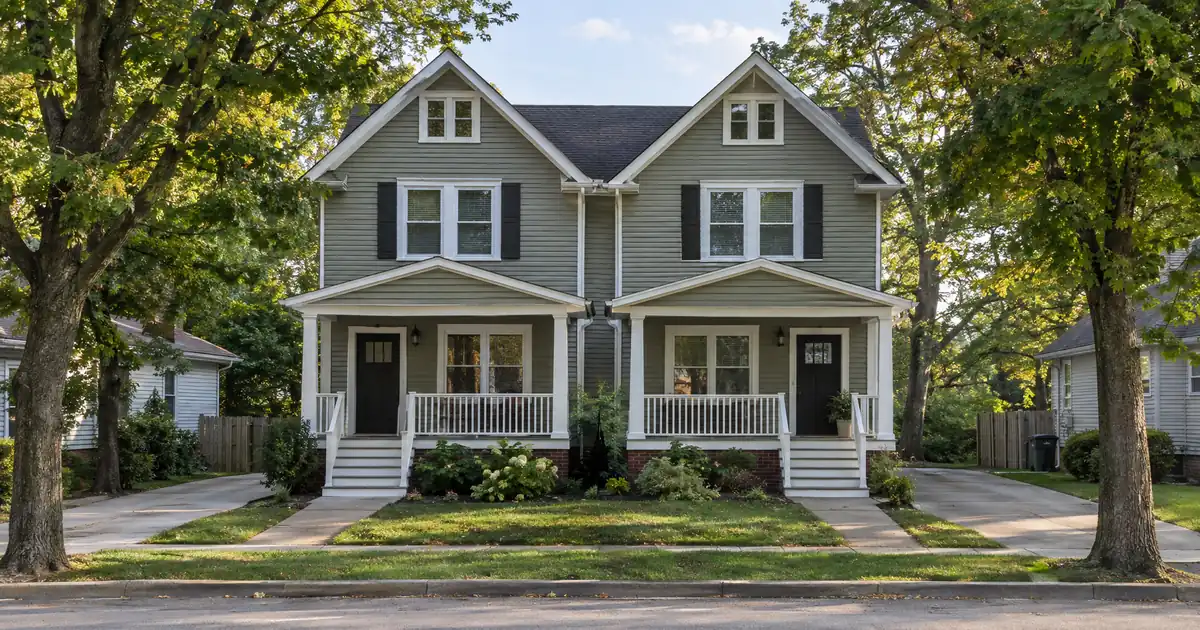
A three-bedroom rental in central Portage hits the DSCR math like this. Assume it appraises near Redfin’s $296K citywide median, rents near RentCafe’s $1,669 three-bedroom average, and gets refinanced at 75 percent LTV. Those are modeled inputs, not a sourced deal. Run rent against full PITIA, taxes and insurance included, and coverage lands just under 1.00. The file isn’t dead, but it isn’t clean either.
That tension drives every DSCR cash-out decision in Portage. Prices are flat, rents are workable but not rich, and the equity you can pull depends on appraisal comps more than on market momentum. Lendmire works with investors buying or refinancing in Portage, Indiana, helping place DSCR financing across 41 markets, including Washington, D.C. (NMLS# 2371349). This piece covers the refinance side only: what the equity looks like, where the coverage clears, and how the proceeds can fund the next deal.
DSCR Cash-Out Calculator
Run the cash-out numbers in Portage, IN
Rate source: Freddie Mac 30-yr average via FRED® — Federal Reserve Bank of St. Louis · effective Sep 24, 2026
Prefilled with starting assumptions — enter your property’s value, balance, taxes, and insurance for a more accurate picture.
Program parameters update from Lendmire’s centralized guideline source. Taxes and insurance are editable estimates.
As of Sep 24, 2026 · General Freddie Mac market benchmark, not a Lendmire loan offer. Property value, balance, taxes, and insurance are editable estimates. Maximum loan-to-value varies by lender, program, property type, and seasoning. Not a Loan Estimate, approval, or commitment to lend. Program availability and eligibility are subject to lender guidelines, credit approval, property review, and underwriting.
At a Glance: A DSCR cash-out refinance in Portage, Indiana is underwritten primarily on the property’s rental income measured against its full monthly obligation, so the file turns on ownership seasoning, a 75 percent LTV ceiling, appraisal comps, and reserves rather than on the borrower’s paycheck.
- Median value sits near $296K per Redfin, so refinance proceeds hinge on the appraisal, not appreciation.
- A median-priced single-family rental models just under 1.00 including taxes and insurance.
- Duplex asking rents near $1,200 per unit push coverage well above single-family.
- Cleveland-Cliffs runs a steel mill next door in Burns Harbor.
- Only 27 percent of Portage households rent, so the tenant pool is small.
Portage Market Snapshot
A quick read on the Portage investor landscape. Figures come from the cited sources below.
| Metric | Detail |
|---|---|
| Home prices | $296K median (Redfin, Portage housing market) |
| Typical rents | $1,000–1,500 rents 61.59% (Point2Homes, Portage rentals) |
| Employment | More than 3,000 employees (Town of Burns Harbor) |
What the Equity Looks Like When Prices Won’t Move
Portage is a flat market, and the equity story is about what you did to the property, not what the market did for you. Redfin shows the median down 0.52 percent year over year, while Zillow’s average value of $269,590 is up just 0.5 percent. Redfin’s price per square foot is up 12.1 percent to $176, which says the mix of homes selling is shifting more than the underlying values.
Sources also disagree on level. Redfin’s median is $296K. Movoto’s median list price for multi-family is $334K, with price per square foot down 5 percent. Homes.com shows a $324,900 median for multi-family. Different methods, different pools. Don’t read them as a trend.
The practical read: assume the appraiser anchors lower, closer to Zillow-type averages than to list medians. An investor who bought a dated rental, put real money into it, and has held it past the six-month seasoning point is in a better spot than someone counting on market lift. Equity from a rehab shows up in comps. Equity from hope doesn’t.
Where the Coverage Math Clears (and Where It Doesn’t)
Duplexes clear comfortably, median single-family rentals fall just short of the 1.00 baseline, and that gap is the most important thing to understand about Portage. Run the single-family case first. Apartment-based benchmarks put the three-bedroom average between $1,581 on Apartments.com and $1,669 on RentCafe. Against a price base near $296K at 75 percent LTV, with full taxes and insurance in the payment, coverage models in the low-to-mid 0.9s. Not a rounding error you can ignore.
Now the duplex. Trulia duplex listings show two-bedroom, one-bath units of about 900 square feet asking $1,195 to $1,200. Assume two units at $1,200 against a $245K value at 75 percent LTV, taxes and insurance included, and coverage models comfortably above 1.50. That’s a low-end asking-rent illustration, not a typical result. The point is the shape: stacking two rents against one price base is what makes Portage math work.
The catch is inventory. Zillow’s duplex and triplex search returned only two homes at last look. Thin supply means thin comps, and thin comps mean appraisal risk on a 2-4 unit cash-out. A single-family appraisal has a dozen sales to lean on. A Portage triplex might have one.
DSCR files in markets like this one typically look like this: the single-family units sit right around the 1.00 line, the small multifamily units clear it with room, and the deciding variable is the appraisal rather than the rent roll. The cleanest files arrive with complete leases, entity documents, title, and property details ready for lender review. Files that stall are usually the ones where the rent schedule and the appraiser’s rent estimate disagree. Pre-checking market rent before ordering anything saves a lot of grief.
What happens when the number lands under 1.00?
Sub-1.00 doesn’t end the conversation, but it changes it. Options a lender may review include a sub-1.00 program, an interest-only structure, or reduced leverage with a larger equity cushion. Each comes with trade-offs on pricing, reserves, and credit expectations, and qualification stays subject to lender guidelines, credit approval, and property review. Say you own that median-priced three-bedroom and your coverage models at 0.95. Dropping leverage below the 75 percent ceiling is the simplest fix, though it means pulling less cash.
Portage Submarkets: Where the Rent Rolls Make Sense
No reliable neighborhood-level price or rent data exists for Portage, so submarkets here are described by tenant base and demand drivers rather than numbers. Anyone claiming a precise rent figure by neighborhood is guessing.
The port corridor (northeast Portage, along US-12). This is the workforce-housing play. It sits next to Cleveland-Cliffs, the Port of Indiana–Burns Harbor, and Ameriplex, and the tenant base is tied to industrial employment. It’s the strongest fit for long-term-lease DSCR files because demand rests on jobs rather than on a lifestyle draw. Older rental stock is the trade-off: Point2Homes says 28 percent of Portage rentals were built from 1980 to 1989, with another 17 percent from 1970 to 1979 and 17 percent from 1960 to 1969. Budget reserves for roofs, systems, and turnover.
Central Portage (Willowcreek Road and Central Avenue corridors). Established neighborhoods where the city’s rental stock is concentrated. Nothing sourced to rank them, so the pitch is simple: if you hold a seasoned single-family or small multifamily property here, the refinance depends on the comps you can document.
Lakefront and the South Shore station area. The Portage/Ogden Dunes station serves a Marina Shores subdivision and sits near the Indiana Dunes National Park units. The Portage Economic Development Corporation says the station area is designated a Transit Development District, and the city is about 40 minutes from downtown Chicago. The commuter angle is real. No price data supports it, so treat it as a demand story, not a yield story. For cash flow, the port corridor beats the lakefront.
Miller border. The west edge toward Gary’s Miller Beach, served by its own South Shore station. Skip it for underwriting unless you have local comps in hand; the public rent data for this pocket is unusable.
The Tenant Base: Steel, the Port, and a Small Rental Pool
Portage rental demand rests on industrial and health care employment, and the rental pool is small. Data USA shows resident employment up 3.79 percent to 18.5K, led by manufacturing at 3,493 workers, health care and social assistance at 2,858, and retail at 1,965. Cleveland-Cliffs runs a fully integrated Burns Harbor mill with two blast furnaces and capacity near 5 million net tons of raw steel a year, and the Town of Burns Harbor says it employs more than 3,000 people.
Newer anchors add diversity. The 385-acre AmeriPlex at the Port was described as “filling up fast” by the Portage EDC director, with an Amazon data-center equipment investment on the site. Portage EDC lists 22 businesses there. No headcounts or housing-demand estimates exist, so call it supporting evidence, not a forecast.
The rent side is steady rather than hot. RentCafe puts the average at $1,362, up 2.53 percent, with 62 percent of rentals between $1,001 and $1,500. That’s an apartment benchmark covering buildings with 50 or more units, so single-family and duplex rents may differ. And no reliable vacancy figure exists, which is a real gap. Underwrite on lease-in-hand rents, not on guesses about turnover.
Seasoning, Leverage, and Putting the Proceeds to Work
The refinance sizing runs on four numbers: about six months of ownership measured from title recording, a 75 percent LTV ceiling, a 1.00 DSCR baseline, and about six months of PITIA in reserves. Credit tiers generally start at a 620 floor and step up through 660, 680, and 700, with better tiers typically supporting stronger terms. All of it is subject to lender guidelines, and the equity available is never a guaranteed figure. Seasoning, leverage, and reserves are the knobs; the appraisal sets the starting point.
Consider an investor holding a duplex in central Portage, past seasoning, with a documented rehab. At 75 percent LTV against a supportable value, the cash-out proceeds depend on the appraisal and on how much the new loan balance eats into available equity. That’s why the calculator, not a back-of-napkin guess, is the right tool before you commit. The most common use of proceeds is a down payment on the next small multifamily, which keeps the capital working inside the same rent-stacking logic.
For the mechanics, see the cash-out refinance walkthrough and the options for refinancing. Investors comparing paths can look at how conventional loans differ from DSCR loans on investor financing, and the guide “What Is a DSCR Loan” explains how coverage is calculated. Statewide context lives on the page for DSCR loans in Indiana. To model a specific property, investors can get a rental-income loan quote or call 828-256-2183. As always, verify current local rental rules, taxes, and insurance with qualified local professionals.
Frequently Asked Questions
Does a median-priced Portage single-family rental clear 1.00?
Usually not on rent alone. Modeled at 75 percent LTV with taxes and insurance included, a three-bedroom near the citywide median lands in the low-to-mid 0.9s. Lower leverage, a sub-1.00 program, or an interest-only structure may be reviewed, subject to lender guidelines.
DSCR vs. conventional financing
There are two common ways to finance an investment property in Portage, IN, and they qualify you differently — here’s how investors weigh them.
Why investors choose it
- Qualifies on the property’s rental income — no personal tax returns, W-2s, or pay stubs needed to document income.
- No personal debt-to-income ceiling to clear, so existing mortgages and obligations don’t cap your borrowing the same way.
- Can be closed in an LLC, keeping the property inside a business entity.
- Built for scaling — not held to the limit on number of financed properties that conventional financing applies.
- Underwriting centers on the deal: generally qualifies when the rent covers the payment, a 1.00x coverage ratio being a common baseline (confirmed in underwriting).
- Designed specifically for investment property, including long-term and, where the program allows, short-term rentals.
Where it’s strong
- Often the lowest ongoing financing cost for a buyer who fully qualifies on personal income — a fit for a first property or a cost-first purchase.
Trade-offs for investors
- Requires full personal income documentation and must fit within a debt-to-income limit — salary, existing debts, and other mortgages all count.
- Typically held in your personal name rather than a business entity.
- Caps how many financed properties you can carry, which can become a ceiling as a portfolio grows.
- Evaluates you as a borrower as much as the property, which usually means more paperwork.
How investors usually choose: a first or single property often optimizes for the lowest financing cost; portfolio builders often optimize for leverage, vesting in an LLC, and scaling past conventional caps. The right answer depends on your goals, the property, and current guidelines — both paths run through select lenders in Lendmire’s wholesale network, with eligibility and terms confirmed in underwriting.
Why do duplexes work better here?
Two rents stack against one price base. Listings start around $245,000 and duplex units are asking roughly $1,200 each, so modeled coverage sits well above single-family. The constraint is supply, since only a couple of duplex and triplex listings show up at any time.
Can I count on appreciation to create the equity?
No. Redfin’s median is down slightly year over year and Zillow’s average is up half a percent. Equity here comes from the purchase price, the rehab, and the appraiser’s comps, so plan around documented improvements.
Does the steel mill drive rental demand?
It anchors the area. Cleveland-Cliffs employs over 3,000 people in neighboring Burns Harbor, and manufacturing is the largest resident employment sector in Portage. Ameriplex adds newer industrial employers. That supports long-term leases, though no source quantifies housing demand.
What seasoning applies before a Portage cash-out refinance?
Programs typically look for about six months of ownership from title recording before a cash-out. The exact seasoning treatment depends on the lender and how the property was acquired.
The Renter Pool Is the Constraint
Portage rewards investors who respect its limits: flat prices, thin duplex inventory, and apartment-based rent data that only roughly describes single-family. The reframing number is the renter share. RentCafe counts just 4,051 renter-occupied households against 10,887 owner-occupied, or 27 percent. In a city that size, every well-leased unit near the port matters more than the market average ever will.
About Lendmire
Lendmire (NMLS# 2371349), a non-QM mortgage broker serving investors in 41 markets including Washington, D.C., helps structure DSCR scenarios commonly evaluated around a property’s rental income rather than personal income paperwork, subject to lender guidelines. Lendmire was recognized by Scotsman Guide in 2025 and named a 2026 Scotsman Guide Top Mortgage Workplace. It places loans through wholesale investor lenders and is not a direct lender.
Get Started
Ready to find the right loan for you?
In about 30 seconds you can review financing options available for your investment property. No commitment required.
Informational only. Not a Loan Estimate, approval, or commitment to lend. Program availability and eligibility are subject to lender guidelines, credit approval, property review, and underwriting.
References
1. Redfin’s $296K citywide median
2. RentCafe’s $1,669 three-bedroom average
4. Point2Homes, Portage rentals
6. Zillow’s average value of $269,590
7. Movoto’s median list price for multi-family
8. Homes.com
11. Zillow’s duplex and triplex search
12. Portage Economic Development Corporation
13. Data USA
14. recognized by Scotsman Guide in 2025
15. a 2026 Scotsman Guide Top Mortgage Workplace
This article is part of Lendmire’s investment property cash-out refinance program — full qualification details, guidelines, and scenarios live on the program page.
Related reading: Luxury Rental DSCR Loans In New Jersey · Jersey Shore Vacation Rental Loans: DSCR Financing In Ocean City, Cape May And Long Beach Island · DSCR Cash-out Refinance In New Jersey: Pulling Equity From A Rental
Guides: Investment Property Cash-Out Refinance in Indiana
Brandon Miller
Founder & CEO, Mortgage Loan Originator, Lendmire LLC
- Mortgage Loan Originator · NMLS# 1129696 · Verify on NMLS Consumer Access
- North Carolina Real Estate Broker · License# 343312 · Verify on NCREC
- North Carolina Insurance Producer · License# 19053198 · Property, Casualty, Life, Health · Verify on NAIC SBS
- Lendmire LLC · Firm NMLS# 2371349 · Verify firm licensure
Disclosure information. Lendmire is a state-licensed mortgage brokerage under NMLS# 2371349. Lendmire is not a depository institution, direct lender, or financial advisor — all loans referenced are placed through wholesale lender partners and are subject to each lender's underwriting standards. This article is provided for general informational purposes and is not a commitment to lend, nor does it constitute financial, legal, or tax advice. Loan programs, terms, rates, and qualification standards change without notice and depend on borrower profile, property type, and the state in which the subject property is located. Equal Housing Opportunity provider. NMLS Consumer Access: nmlsconsumeraccess.org.