
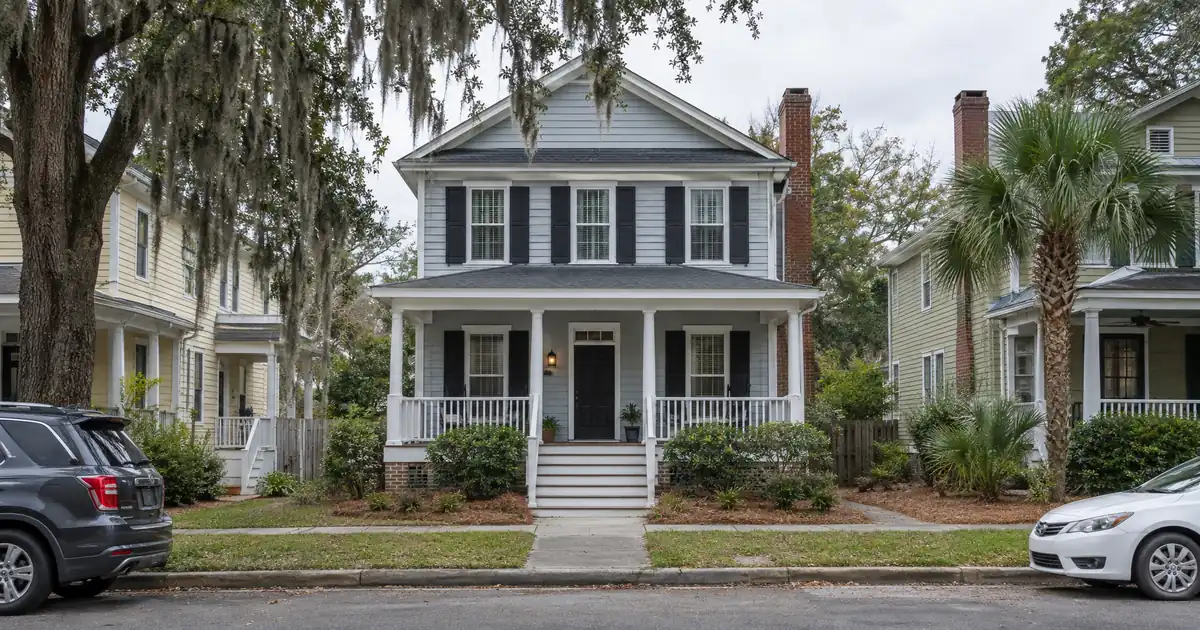
Zillow’s value index has the typical Rock Hill home down 1.4 percent year over year, yet a broker analysis from The Longleaf Group finds 58.1 percent of local sales close below asking. Together those two facts define the market. Investors who negotiated hard at purchase have day-one equity. Investors who counted on appreciation to build it may be waiting a long time. Lendmire, a DSCR-focused mortgage broker, sees this tension in most Charlotte-adjacent files. This report walks through how equity actually gets extracted here, step by step, and where the coverage math supports it.
At a Glance: A cash-out refinance on a Rock Hill, South Carolina rental is underwritten primarily on the property’s rental income measured against its full monthly obligation, then capped at 75 percent of appraised value. With Zillow showing the typical local home value down 1.4 percent year over year, proceeds depend on equity already built, not appreciation still to come.
DSCR Cash-Out Calculator
Run the cash-out numbers in Rock Hill, SC
Rate source: Freddie Mac 30-yr average via FRED® — Federal Reserve Bank of St. Louis · effective Sep 24, 2026
Prefilled with starting assumptions — enter your property’s value, balance, taxes, and insurance for a more accurate picture.
Program parameters update from Lendmire’s centralized guideline source. Taxes and insurance are editable estimates.
As of Sep 24, 2026 · General Freddie Mac market benchmark, not a Lendmire loan offer. Property value, balance, taxes, and insurance are editable estimates. Maximum loan-to-value varies by lender, program, property type, and seasoning. Not a Loan Estimate, approval, or commitment to lend. Program availability and eligibility are subject to lender guidelines, credit approval, property review, and underwriting.
- Modeled single-family coverage at a 3-bedroom rent of $1,898 lands near 1.0x including taxes and insurance.
- A low-end duplex modeled at $1,300 per unit clears roughly 1.4x or better on the same basis. Homes.com lists only 6 multi-family properties, so appraisal comps are thin.
- Cash-out sizing caps at 75 percent LTV after about 6 months of ownership from title recording.
- Winthrop enrollment reached 5,287 students, anchoring rental demand near campus.
Rock Hill Market Snapshot
A quick read on the Rock Hill investor landscape — figures come from the cited sources below. Confirm current property-level numbers before underwriting.
| Metric | Detail |
|---|---|
| Home prices | $352,604 median (NeighborhoodScout) |
| Recent appreciation | +63.8% 5-yr (City-Stats (FHFA data)) |
| University enrollment | 5,287 total fall 2025 (Winthrop University enrollment) |
Winthrop Heights and Old Town: Where Small-Building Equity Sits
The Winthrop hub and the Old Town bungalow blocks are the strongest places in Rock Hill to hold equity worth extracting. Tenant demand is anchored by an institution that is growing, and the older housing stock is the most plausible home for 2-4 unit income stacking. Inventory is thin, which cuts both ways.
Winthrop University reports total enrollment rising from 4,712 to 5,287 over three fall terms, with an entering class of 1,014 students, one of the largest in school history. That is 575 more students to house in a city of roughly 75,000 residents, per Population Review’s ACS data. Homes.com describes established Winthrop Heights as ranch-style housing, and the campus sits about 1.7 miles from the city center. Student and faculty rental demand radiates from there.
Old Town is the second piece. The City of Rock Hill calls it the original downtown, with early craftsman and bungalow housing, and ties it to the Knowledge Park redevelopment. That effort includes a 23-acre University Center district converting a textile-mill area into apartments, retail, and event space, and the city counts over $400 million in current or upcoming urban-core projects. Older bungalows and small conversions here are the profile where a rent roll can be built up unit by unit.
The catch is comps. Homes.com shows 6 multi-family listings citywide priced from $248,000 to $1,950,000, and they average 57 days listed before selling. A thin comp set changes how a cash-out appraisal behaves, which the appraisal section below covers.
How Cash-Out Math Works in a Flat Market
In Rock Hill, equity for a cash-out comes from purchase discount, forced value-add, or debt paydown. It does not come from appreciation. The 75 percent LTV ceiling applies to appraised value, so the question is how far the existing balance sits below that line.
Start with the mechanism. A cash-out refinance replaces the existing loan with a new one sized at up to 75 percent of appraised value. The proceeds are whatever remains after the old balance is paid off and closing costs are covered. Seasoning matters: most DSCR programs look for about 6 months of ownership, measured from title recording, before they will size off a new appraisal instead of the purchase price. Reserves of about 6 months of PITIA are typical, credit tiers run from a 620 floor up through 700, and standard programs reach loan balances up to $3,000,000. Every one of those terms varies by lender, borrower, and property.
Now apply it to a flat market. Picture an investor who bought a Rock Hill single-family rental at 80 percent LTV and, six months later, sees it appraise at the purchase price. The new 75 percent ceiling sits below the existing balance, so there is nothing to extract. Not a dollar. Flip the scenario: the same investor negotiated 12 percent under market, the appraisal reflects it, and the balance is roughly 70 percent of appraised value. Now the 75 percent cap frees only about 5 percent of value, before costs, which is a modest amount.
The larger numbers come from owners who have held longer or added value. The Charlotte-metro FHFA index shows prices up 63.8 percent over five years (a metro-level figure, not Rock Hill alone). An investor who bought five years ago and paid the balance down to 55 or 60 percent of today’s value is sitting on real extractable equity. Buyers from the last year or two are not.
That is also why the equity recycle pathway works better as a holding-period strategy here than as a flip-and-refi trade. The market has been rewarding patience and discounted entry, and it has not been rewarding timing.
Single-Family vs. Duplex: The Coverage Gap
A typical Rock Hill single-family rental covers its full payment at roughly 1.0x or slightly below, while a low-end duplex can clear 1.4x or better. Rent, not value, is the binding constraint on cash-out size for single-family files.
The measuring stick is the debt service coverage ratio: monthly rent divided by PITIA (principal, interest, taxes, insurance, and any HOA dues). Most standard DSCR programs are built around a 1.00 benchmark because rent covers the payment at that level. Some lenders review lower ratios with stronger compensating factors, lower leverage, or more equity. Exact eligibility depends on lender guidelines, credit profile, reserves, and property review. For a fuller walkthrough, see the guide “What Is a DSCR Loan”.
Start with the single-family inputs. Redfin puts the median sale price near $330,000, which is the canonical figure used for the modeling in this report. NeighborhoodScout’s vendor estimate runs higher at $352,604, while ACS owner-reported value runs lower at $267,400, reflecting different methodologies and vintages. Rentometer shows 3-bedroom rentals at $1,898 across property types. Model a property at that price and rent, at 75 percent LTV, with full taxes and insurance and a 30-year term at an assumed 7.03 percent rate, and coverage lands right around 1.0x. Round it down if you are being careful. That is an assumption-driven estimate, not a quote.
Then the duplex. Model a $275,000 duplex (hypothetical, inside the $248,000-$1,950,000 listing range) with two 2-bedroom units. Rentometer’s 2-bedroom figure is $1,466, but haircut it to $1,300 per unit since that figure blends all property types. On the same full-PITIA basis, coverage comes out comfortably above 1.4x. Same leverage, same assumptions, a very different number.
The ratio gap maps to cash-out capacity. A property that covers at 1.0x is barely inside the benchmark, so any vacancy assumption or insurance increase can pin the loan size to rent. A property at 1.4x has room to absorb both. Here’s the catch: the duplex is harder to find and harder to appraise.
Think about it from the investor’s side. The stronger play is probably the duplex for income and the single-family for liquidity, though an investor holding mostly single-family today may reasonably prefer to refinance what they own rather than chase a scarce asset type.
Working DSCR brokers see a recurring pattern in Charlotte-adjacent markets like this one: files get sized on city-average rents, come in under 1.0x, and then clear once the property’s own lease or a tight rent comp is used. The habit that matters is underwriting the individual rent, not the published average. Averages here are scattered enough to mislead. Apartment List has the median at $1,249, down 0.7 percent year over year and 4.7 percent below the $1,311 Charlotte-metro median, while RentCafe’s Yardi Matrix average of $1,476 covers buildings with 50 or more units only.
What Does the Appraiser Do With a Thin Comp Set?
An appraiser with few 2-4 unit sales will often lean on single-family comps or out-of-area sales, which can cap the value on a duplex or triplex cash-out. Appraisal risk, not credit, is the main variable on small-multifamily files in Rock Hill.
The constraint is arithmetic. Those 6 multi-family listings at 57 days each give a narrow comp pool, and an income approach helps only if the appraiser has rent comps to support it. A duplex priced well under its income value can therefore appraise lower than an investor expects, and because the LTV ceiling applies to that appraised number, proceeds shrink with it.
Two practical moves help. First, choose the refinance timing around documented rents: a signed lease at market rent gives the income approach something concrete. Second, size expectations off the conservative side. If the appraisal comes in at purchase price, the cash-out may be limited to paydown equity alone, which is the same flat-market math described earlier.
Market pace is also worth reading. Movoto reports 54 days on market versus 41 days a year earlier, and the Longleaf analysis cites a median of 22 days to contract. The two metrics disagree, so treat them as a range. What both imply is a market with room to negotiate, which favors discounted entry over time.
(Zillow’s average value sits at $320,953, down 2.5 percent over the past year. That is another reason not to underwrite a bump.)
Cherry Road, Riverwalk, and the Northern Edge
Rock Hill’s other submarkets are better for holding than for extracting. They are dominated by newer apartment supply, institutional competition, and family-oriented rentals where rent growth is modest.
The Cherry Road and Celanese Road corridor near I-77 combines retail, healthcare, logistics, and garden-style apartments. LoopNet listing data puts I-77 traffic at 74,500 vehicles per day, which is why Charlotte commuters show up in the tenant base. Large complexes dominate new supply here. The Post and Courier reported a 470-unit Rock Hill complex sold to a Texas firm for $77.8 million, so small-unit investors compete against institutional owners on location and basis rather than amenities.
Along the Catawba River, Riverwalk and the Patriot Parkway and Manchester Village edge carry newer-build rentals. Rents on new complexes are a poor comp for a 2-3 bedroom house, and new apartments can offer concessions that pull on small-building rents. Apartments.com and CoStar project national multifamily vacancy reaching 8.8 percent by the end of their forecast window. That is a national figure, not a Rock Hill one. No reliable local vacancy number exists in the research, so apply a conservative vacancy factor and confirm it with a local property manager.
Ebenezer Road and the Lake Wylie side lean suburban and family-oriented, with housing ranging from apartments to historic homes. Useful for holding, less obviously suited to income stacking.
Demand That Underwrites the Rent Roll
Rock Hill’s tenant base is deep and price-sensitive, and it is anchored by healthcare, education, and manufacturing employment. Coverage depends on holding rents flat rather than counting on growth.
Per RentCafe, 46 percent of Rock Hill households, about 14,332, are renter-occupied. Sixty-four percent of rentals fall between $1,001 and $1,500 a month, and rent growth runs about 1.4 percent a year. NeighborhoodScout puts single-family detached at 59.46 percent of housing units, and it reports more than 41 percent of the stock as newer construction. That is a deep renter pool in mostly detached homes, with less deferred-maintenance risk than an older city.
Jobs back it up. Data USA shows the largest resident-employment sectors as Health Care & Social Assistance (4,974 people), Manufacturing (4,638), and Retail Trade (4,524), with employment growing 2.44 percent to 39.3 thousand. The SC Department of Employment and Workforce lists the county’s largest employers without counts, including Rock Hill School District No. 3, Winthrop, Piedmont Medical Center, Comporium, Continental Tire, Schaeffler, and LPL Financial.
On the healthcare side, Piedmont Medical Center operates two hospitals and a physician network, and the Herald, via AOL reports part of the former Carolina Panthers headquarters site will become a $300 million-plus Novant Health medical campus. That is a demand catalyst for the Palmetto Research Park area. MUSC and Atrium projects of $300 million and $450 million sit in Indian Land and Fort Mill, respectively, not in Rock Hill.
Model rents flat to slightly up. Investors should also confirm current local rental rules, taxes, and insurance with qualified local professionals before underwriting.
DSCR vs. conventional financing
There are two common ways to finance an investment property in Rock Hill, SC, and they qualify you differently — here’s how investors weigh them.
Why investors choose it
- Qualifies on the property’s rental income — no personal tax returns, W-2s, or pay stubs needed to document income.
- No personal debt-to-income ceiling to clear, so existing mortgages and obligations don’t cap your borrowing the same way.
- Can be closed in an LLC, keeping the property inside a business entity.
- Built for scaling — not held to the limit on number of financed properties that conventional financing applies.
- Underwriting centers on the deal: generally qualifies when the rent covers the payment, a 1.00x coverage ratio being a common baseline (confirmed in underwriting).
- Designed specifically for investment property, including long-term and, where the program allows, short-term rentals.
Where it’s strong
- Often the lowest ongoing financing cost for a buyer who fully qualifies on personal income — a fit for a first property or a cost-first purchase.
Trade-offs for investors
- Requires full personal income documentation and must fit within a debt-to-income limit — salary, existing debts, and other mortgages all count.
- Typically held in your personal name rather than a business entity.
- Caps how many financed properties you can carry, which can become a ceiling as a portfolio grows.
- Evaluates you as a borrower as much as the property, which usually means more paperwork.
How investors usually choose: a first or single property often optimizes for the lowest financing cost; portfolio builders often optimize for leverage, vesting in an LLC, and scaling past conventional caps. The right answer depends on your goals, the property, and current guidelines — both paths run through select lenders in Lendmire’s wholesale network, with eligibility and terms confirmed in underwriting.
Recycling the Proceeds
Cash-out proceeds are only useful if the next asset clears its own coverage number. In Rock Hill that usually means redeploying into the higher-coverage small-multifamily stock near Winthrop and Old Town rather than another single-family rental at roughly 1.0x.
The sequence is straightforward. Refinance the seasoned asset, hold reserves for both properties, and buy the next one where the rent-to-debt ratio has room. A thin duplex pool means proceeds may sit on the sidelines while the investor waits for inventory, so budget for that.
Borrowers who hold properties in an LLC should note that entity-titled loans are available subject to lender program eligibility. The investor refinance breakdown covers the distinction between rate-and-term and cash-out structures, and the guide “Where DSCR and Conventional Diverge” explains why a rent-based review often suits investors with several properties. South Carolina specifics, including state overlays, live on the South Carolina DSCR financing page. To test a specific property, investors can request a quote or call 828-256-2183. Review details are subject to lender overlays, and none of this is a commitment to lend.
Frequently Asked Questions
How do you qualify for a DSCR cash-out refinance in Rock Hill?
Qualification centers on the property’s rent against its full payment, typically a 1.00 minimum DSCR, along with a credit score generally at or above a 620 floor, about 6 months of reserves, and roughly 6 months of ownership from title recording. The new loan is capped at 75 percent of appraised value. Eligibility depends on lender guidelines, credit approval, and property review.
What are the requirements for an investment property loan in Rock Hill, South Carolina?
Expect a property-level rent figure, an appraisal, and a full underwriting review of the borrower’s credit profile and reserves. Pricing and available terms vary by lender, borrower profile, property type, and that review. Standard programs reach balances up to $3,000,000, and smaller balances route through select lenders in the network. Manufactured homes, log homes, and barndominiums fall outside these programs.
Will a Rock Hill single-family rental cover its payment on a cash-out?
Often only just. At a median price near $330,000 and a 3-bedroom rent around $1,898, modeled coverage including taxes and insurance lands near 1.0x, so sizing is usually limited by rent rather than value. A duplex with two 2-bedroom units modeled at $1,300 each clears about 1.4x or higher on the same assumptions.
Does Winthrop’s enrollment growth make cash-out refinancing easier near campus?
It supports the tenant demand behind the rent figure, but it does not raise appraised value by itself. Enrollment grew from 4,712 to 5,287 students, which helps underwrite stable lease-up near campus. The appraisal still governs how much equity the 75 percent cap releases.
The Number to Carry Forward
Rock Hill has 14,332 renter households, but only 6 multi-family properties on the market at a time. That is the ratio every cash-out in this city is underwritten against: deep demand, scarce small-building supply, and equity that has to be earned at purchase rather than waited for.
For current guidelines and terms, see Lendmire’s DSCR loan programs page.
About Lendmire
Lendmire (NMLS# 2371349) is a mortgage brokerage built around DSCR investor lending, with programs available in 41 markets, including Washington, D.C. DSCR lenders commonly evaluate rental-income coverage rather than personal income paperwork, a practical fit for LLC-owned and multi-property investors. Lendmire was recognized by Scotsman Guide as a 2026 Top Workplace and is a 2025 Scotsman Guide Top Mortgage Workplace. Terms vary by lender, property, leverage, and program.
Get Started
Ready to find the right loan for you?
In about 30 seconds you can review financing options available for your investment property. No commitment required.
Informational only. Not a Loan Estimate, approval, or commitment to lend. Program availability and eligibility are subject to lender guidelines, credit approval, property review, and underwriting.
References
1. Zillow — Home Values Rock Hill SC
4. Homes.com multi-family listings
5. $352,604
6. city-stats.com — South Carolina Rock Hill
7. Winthrop University enrollment release
8. City of Rock Hill, Knowledge Park
9. Redfin — Rock Hill Housing Market
10. Apartment List
11. RentCafe’s Yardi Matrix average
12. Movoto
14. Post and Courier
15. Apartments.com — Learning Center Supply Vacancy Outlook 2026
18. Herald, via AOL
20. a 2025 Scotsman Guide Top Mortgage Workplace
This article is part of Lendmire’s investment property cash-out refinance program — full qualification details, guidelines, and scenarios live on the program page.
Related reading: Cash Out Refinance Investment Property Rock Hill South Carolina · DSCR Loans in Rock Hill, South Carolina: Investor Financing for India Hook, Riverwalk, the York County Rental Market & Real Estate Investors · Cash Out Refinance Investment Property in Spartanburg, South Carolina: Converse Heights Equity Extraction
Guides: Investment Property Cash-Out Refinance in Rock Hill, SC · Investment Property Cash-Out Refinance in South Carolina
Brandon Miller
Founder & CEO, Mortgage Loan Originator, Lendmire LLC
- Mortgage Loan Originator · NMLS# 1129696 · Verify on NMLS Consumer Access
- North Carolina Real Estate Broker · License# 343312 · Verify on NCREC
- North Carolina Insurance Producer · License# 19053198 · Property, Casualty, Life, Health · Verify on NAIC SBS
- Lendmire LLC · Firm NMLS# 2371349 · Verify firm licensure
Important disclosures. Lendmire (NMLS# 2371349) is a licensed mortgage brokerage. Lendmire is not a direct lender, depository institution, or financial advisor. All loan inquiries are subject to lender underwriting; this article does not constitute a commitment to lend. Rates, terms, and program guidelines are subject to change without notice and vary by borrower profile, property type, and state. Information in this article is general in nature and is not financial, legal, or tax advice. Equal Housing Opportunity. NMLS Consumer Access: nmlsconsumeraccess.org.