
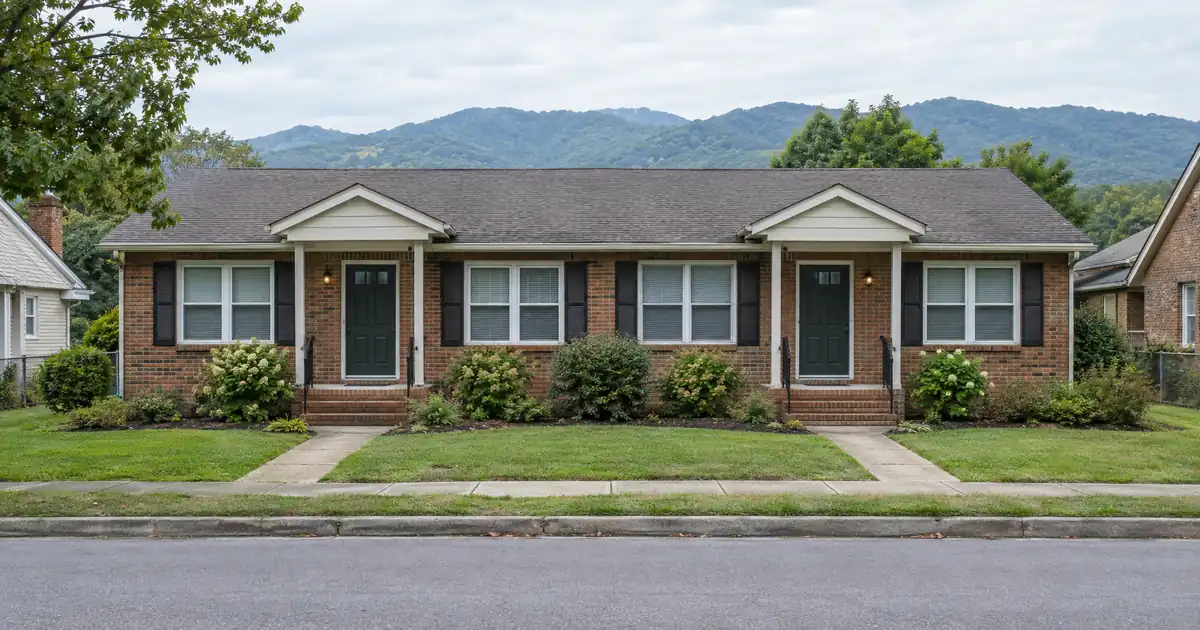
Picture an investor holding a three-bedroom rental in the College Hills area, bought more than six months ago and now appraising near the local median sale price of $271K per Redfin. The plan is to pull equity out and put it toward the next acquisition. The question is not whether equity exists on paper. It is whether the rent, measured against the full monthly obligation on a new, larger loan, clears a lender’s coverage test at a leverage level that leaves real cash behind.
In Greeneville, that gap between paper equity and extractable equity is the whole story.
DSCR Cash-Out Calculator
Run the cash-out numbers in Greeneville, TN
Rate source: Freddie Mac 30-yr average via FRED® — Federal Reserve Bank of St. Louis · effective Sep 24, 2026
Prefilled with starting assumptions — enter your property’s value, balance, taxes, and insurance for a more accurate picture.
Program parameters update from Lendmire’s centralized guideline source. Taxes and insurance are editable estimates.
As of Sep 24, 2026 · General Freddie Mac market benchmark, not a Lendmire loan offer. Property value, balance, taxes, and insurance are editable estimates. Maximum loan-to-value varies by lender, program, property type, and seasoning. Not a Loan Estimate, approval, or commitment to lend. Program availability and eligibility are subject to lender guidelines, credit approval, property review, and underwriting.
The Quick Read: A DSCR cash-out refinance in Greeneville, Tennessee is underwritten primarily on the property’s rental income measured against its full monthly obligation, and the local rent-to-value ratio, with Zillow showing a $1,200 average rent, makes the coverage ratio the binding constraint rather than the amount of equity.
- Cash-out leverage tops out at 75 percent LTV, with about six months of seasoning typical.
- Modeled coverage on a three-bedroom hovers near breakeven at full 75 percent leverage.
- Zillow describes the local rental market as “cool,” with rents softening year over year.
- Thin sales volume means appraisal comps can swing the outcome.
- Lower leverage often produces cleaner coverage than chasing maximum proceeds.
Greeneville Market Snapshot
A quick read on the Greeneville investor landscape — figures come from the cited sources below. Confirm current property-level numbers before underwriting.
| Metric | Detail |
|---|---|
| Home prices | 26 sales (Redfin) |
| Recent appreciation | +5.3% yoy (Redfin) |
| Employment | ~105 jobs (tn.gov — Governor Haslam Commissioner Boyd Announce Forward Air to Expand in Greenev) |
Why Coverage, Not Equity, Is the Constraint Here
Greeneville’s cash-out math is a coverage problem before it is an equity problem. Zillow’s home value index for ZIP 37744 sits near $250K, while Zillow’s rental data puts a three-bedroom at $1,500 and a two-bedroom at $1,150. That works out to a gross rent-to-value ratio near 0.48 percent per month across the market and about 0.6 percent for a three-bedroom, which is a thin margin for covering a full payment.
Run the numbers on a modeled three-bedroom (these are assumptions, not sourced market facts): $250K value, $1,500 rent, 75 percent LTV, full PITIA on a 30-year amortization including taxes and insurance. Coverage lands right around 1.0x. The standard DSCR benchmark is 1.00x because rent covers the payment at that level, though exact eligibility depends on lender guidelines, credit profile, reserves, and property review. A file sitting at the line has no cushion for an appraisal that comes in light or an insurance renewal that moves.
Swap in a two-bedroom at $1,150 on the same value and the same leverage, and coverage drops to the high-0.7s. That is sub-1.00 territory, where a lender may review options such as reduced leverage, a sub-1.00 program, or an interest-only structure, but any path depends on credit approval, lender guidelines, and compensating factors. Move the three-bedroom to 60 percent LTV and coverage improves to the low-1.2s. The tradeoff is obvious: less cash out, more durable file.
Here is the catch for anyone who bought at a higher basis. At a $271K value, the same three-bedroom at 75 percent leverage drops to roughly 0.95x. Higher appraised value increases the loan, but the rent doesn’t follow it.
For readers new to the mechanics, the guide “What Is a DSCR Loan” is laid out separately. The short version: monthly rent divided by principal, interest, taxes, insurance, and any HOA dues.
Appraisal Risk in a Thin-Sales Market
Small sample sizes make Greeneville’s headline prices unreliable as appraisal targets. Redfin showed a median of $271K in August, up 5.3 percent year over year, on just 26 homes sold. A later snapshot showed $281K, up 23.2 percent, on 28 sales, while days on market rose from 39 to 73. The August reading was 87 days versus 58 a year earlier. A 23 percent annual jump on 28 transactions is noise, not trend.
Zillow’s smoothed index shows roughly 2.1 percent annual appreciation. That is the better underwriting anchor. A forecast blog projecting 4.6 percent over the coming months is upside only; sizing a refinance around it would be a mistake.
Appraisers working a small comp pool can miss the headline median in either direction. The practical takeaway for an owner planning a cash-out: assume the appraisal lands closer to the smoothed trend than to a spiky sale-price headline, and reverse-engineer the plan from there. Whether the property has cleared roughly six months of ownership, measured from title recording, matters too, since that seasoning window gates the cash-out at all.
Redfin’s 87-day figure carries a second implication. A slow sales market is a slow exit. Any investor who over-extracts and then needs to sell has fewer buyers to work with than in a hotter market.
Where the Coverage Math Holds Up Best
Three pockets of Greeneville matter for equity extraction. The data is uneven across them, and it is worth saying so. No reliable neighborhood-level rent source, vacancy series, or cap-rate dataset turned up in research. What follows is directional.
The US-11E Corridor and College Hills
The East Andrew Johnson Highway corridor is the commuter-driven submarket, drawing workers heading to Johnson City and the Tri-Cities. A local storage-company blog, 10 Federal Storage, describes single-family homes here trading between $180,000 and $320,000. It is a commercial source, so treat it as a flag on the map, not an appraisal.
Why it pencils better for cash-out: a lower-basis property in that band with a three-bedroom rent near Zillow’s $1,500 figure produces a better rent-to-value ratio than a house at the top of the local range. The owner who bought toward the low end and has held past seasoning is the strongest candidate for meaningful extraction. Tenants in this pocket are commuters, which ties demand to regional employment rather than to any single Greeneville employer.
Downtown
Downtown is the historic core, anchored by the Andrew Johnson National Historic Site, the Capitol Theatre, the Arts Depot, and the Niswonger Performing Arts Center, a 1,150-seat venue. Demand comes from professionals and healthcare workers. Rent and price data for the district is absent from the research, so no coverage band is offered. Older housing stock could deliver good long-term tenancy but also invites larger repair reserves on any refinance. Without numbers, this is a qualitative hold, not a recommendation.
Tusculum
Tusculum University enrolls roughly 940 undergraduates per a regional college, with other sources placing the figure somewhat higher. Student-driven demand is modest. Adult and online programs, faculty, staff, and industrial workers matter more. The same storage-company blog puts well-maintained single-family homes near the university at $220,000 to $400,000-plus, with one-bedroom rents of $800 to $1,100 and two-bedroom rents of $950 to $1,400. If that is even directionally right, it is a premium-price, moderate-rent area: appreciation and stability, not coverage. Owners here should expect to extract less at a given LTV because rent doesn’t scale with value.
This one is a genuine toss-up. Investors focused on holding for appreciation might accept a tighter coverage number here; those whose purpose is redeploying cash into a next deal probably prefer the lower-basis corridor.
The Demand Base Behind the Rent Roll
Greeneville’s rental demand is diversified across manufacturing, logistics, and healthcare, but it is not a growth story on rents. The Greene County Partnership says it has helped place 20 manufacturing and distribution firms in 15 years, most recently US Nitrogen with a capital investment nearing $150 million (the page is undated, so “most recent” may be stale). Business View Magazine notes three industrial parks, and says tobacco, once a primary source of jobs, declined from the early 2000s. It also cites American Greetings at 540 jobs and a Magnavox plant that once employed about 5,000 before it closed.
That history is the point. Greeneville has absorbed the loss of a 5,000-job employer and kept its footing, which suggests resilience. It also shows how concentrated industrial employment can be.
Healthcare and logistics provide the more current anchors. Ballad Health runs Greeneville Community Hospital, the county’s leading hospital. Ballad has also closed or converted several rural facilities elsewhere in its system, which is worth tracking for anyone underwriting on healthcare tenant demand. Forward Air, the Greeneville-based logistics company, announced a $4.3 million expansion creating about 105 jobs through the Tennessee Department of Economic and Community Development. That is dated, so read it as evidence of the company’s local commitment, not a current jobs number. The Niswonger Foundation, which traces to the founder of Landair and Forward Air, claims the two companies employ more than 5,000 people combined. The figure is undated and likely spans more than Greeneville.
Housing stock supports single-family investing: NeighborhoodScout reports 64.67 percent of the roughly 5,970 housing units are single-family detached, in a city of about 15,979 people. Population sources conflict, running from about 15,500 to 16,000.
What the Deal Desk Sees in Markets Like This
Lendmire (NMLS# 2371349) is a DSCR-focused mortgage broker, and files from small, thinly traded markets tend to share a pattern. The friction point is rarely the borrower’s credit or reserves. It is the gap between the coverage the borrower expected from a headline rent figure and the coverage produced once the lender applies full PITIA and a conservative appraised value. Cleaner files typically bring a current lease, a rent comparable that matches the actual bedroom count, and a realistic view of leverage before the appraisal is ordered. Files that start from maximum proceeds and work backward tend to be the ones that get restructured.
Small Multifamily: Thin Inventory, Thin Doors
Multifamily could improve the coverage math by stacking rent under one loan, but Greeneville’s supply is limited. Homes.com showed only about four multifamily listings in the city, ranging from $159K to $1.1M. Seller-reported income on a small multi-building listing implied per-door rents well below the single-family figures, and seller-reported income tends toward optimism. Duplex owners with actual leases in hand, not listing pro formas, are the ones for whom a cash-out could work better than on a single-family rental. Underwrite to signed leases only.
Should You Extract Now or Wait?
Forward-looking, the choice comes down to a few indicators. Zillow’s “cool” market rating and the $18 annual rent decline mean no rent growth should sit in the model. Any coverage plan has to work at today’s rent. If rents turn upward, coverage improves without action; if they slip further, a file at 1.0x moves below it.
Three indicators are worth tracking over the next 6 to 24 months:
- Rent direction. Zillow’s asking-rent trend for two- and three-bedrooms, given the bedroom-level gap of $350.
- Days on market. Movement above the 73 to 87-day range would signal a softer resale market and a tougher appraisal environment.
- Industrial announcements. New recruitment activity through the Greene County Partnership would support tenant demand, while plant closures, given the Magnavox precedent, would do the opposite.
The stronger play is usually to extract at conservative leverage from a low-basis property and redeploy into a target that already clears coverage on its own. Aggressive extraction from a fully valued house at a tight ratio pushes the risk into the next refinance or a forced sale. For the structural details, the cash-out qualification details and the broader rate-and-term and cash-out refi details cover the mechanics. Investors weighing this against bank financing can review where DSCR and conventional diverge. State-level program context sits on the page for DSCR loans in Tennessee, and quotes can be requested at 828-256-2183.
DSCR vs. conventional financing
Two common ways to finance an investment property in Greeneville, TN. They qualify you differently — here’s how investors weigh them.
Why investors choose it
- Qualifies on the property’s rental income — no personal tax returns, W-2s, or pay stubs needed to document income.
- No personal debt-to-income ceiling to clear, so existing mortgages and obligations don’t cap your borrowing the same way.
- Can be closed in an LLC, keeping the property inside a business entity.
- Built for scaling — not held to the limit on number of financed properties that conventional financing applies.
- Underwriting centers on the deal: generally qualifies when the rent covers the payment, a 1.00x coverage ratio being a common baseline (confirmed in underwriting).
- Designed specifically for investment property, including long-term and, where the program allows, short-term rentals.
Where it’s strong
- Often the lowest ongoing financing cost for a buyer who fully qualifies on personal income — a fit for a first property or a cost-first purchase.
Trade-offs for investors
- Requires full personal income documentation and must fit within a debt-to-income limit — salary, existing debts, and other mortgages all count.
- Typically held in your personal name rather than a business entity.
- Caps how many financed properties you can carry, which can become a ceiling as a portfolio grows.
- Evaluates you as a borrower as much as the property, which usually means more paperwork.
How investors usually choose: a first or single property often optimizes for the lowest financing cost; portfolio builders often optimize for leverage, vesting in an LLC, and scaling past conventional caps. The right answer depends on your goals, the property, and current guidelines — both paths run through select lenders in Lendmire’s wholesale network, with eligibility and terms confirmed in underwriting.
Program parameters for reference, all subject to lender guidelines and typical for most files: a 75 percent LTV ceiling on cash-out, about six months of seasoning, a 1.00 minimum coverage ratio, credit tiers beginning at 620, and reserves around six months of PITIA. Equity available is not a guaranteed cash figure. Investors should also verify current local rental rules, property taxes, and insurance with qualified local professionals. Vehicles such as LLC ownership are available depending on program guidelines.
Frequently Asked Questions
How much equity can a Greeneville rental actually release?
It depends on the tightest of three tests: the 75 percent LTV ceiling, the coverage ratio, and reserves. In Greeneville, coverage is usually the binding one. A three-bedroom at Zillow’s $1,500 rent modeled near 1.0x at full leverage, so many owners will find a lower LTV gives a cleaner file.
Do Redfin’s median sale prices set the appraised value?
No. Redfin’s median moved from $271K to $281K on fewer than 30 monthly sales, so it is too volatile to anchor on. Appraisers select comparable sales for the specific house, and Zillow’s smoother appreciation trend of about 2.1 percent a year is the safer planning assumption.
Does Tusculum University drive rental demand enough to lift cash-out coverage?
Not much. A regional college reports roughly 940 undergraduates, and the campus is small and mostly residential. Faculty, staff, adult learners, and industrial workers matter more than dorm spillover, so the area leans toward appreciation rather than income.
Is a duplex easier to refinance than a single-family home in Greeneville?
It can be, if actual leases support the stacked rent. Multifamily inventory is very thin, about four listings at last count, and per-door rents run lower than single-family figures. Seller-reported income on listings should not be trusted without lease verification.
Should an owner refinance now or wait for rents to improve?
Waiting only helps if the file fails today. Zillow shows rents down $18 year over year in a “cool” market, so planning around a recovery is speculative. Extracting at a modest LTV from a lower-basis property is usually more defensible than waiting for a rent lift that may not arrive.
Greeneville rewards the owner who treats equity as something earned through coverage, not appraisal. At roughly 0.48 percent of value in gross monthly rent, every point of extra leverage costs more coverage than the market gives back.
For current guidelines and terms, see Lendmire’s DSCR loan programs page.
About Lendmire
Lendmire, NMLS# 2371349, is a mortgage brokerage specializing in DSCR investor loans, helping arrange financing across 41 markets, including Washington, D.C., through wholesale and investor-lending channels. The model centers on property-level rental income reviewed by the lender rather than W-2 documentation, subject to lender guidelines, and suits entity-owned and multi-property investors. Lendmire has been recognized by Scotsman Guide as a 2026 Top Workplace and recognized by Scotsman Guide in 2025.
Get Started
Ready to find the right loan for you?
In about 30 seconds you can review financing options available for your investment property. No commitment required.
Informational only. Not a Loan Estimate, approval, or commitment to lend. Program availability and eligibility are subject to lender guidelines, credit approval, property review, and underwriting.
References
1. Redfin, Greeneville Housing Market
2. Zillow Rental Manager, Greeneville
3. Tennessee Department of Economic and Community Development
4. Zillow Home Values, ZIP 37744
11. NeighborhoodScout, Greeneville
12. Homes.com
13. recognized by Scotsman Guide as a 2026 Top Workplace
14. recognized by Scotsman Guide in 2025
This article is part of Lendmire’s investment property cash-out refinance program — full qualification details, guidelines, and scenarios live on the program page.
Related reading: Cash Out Refinance Investment Property Greeneville Tennessee · Cash Out Refinance Investment Property in Memphis · Cash Out Refinance Investment Property Union City Tennessee
Guides: Investment Property Cash-Out Refinance in Tennessee
Brandon Miller
Founder & CEO, Mortgage Loan Originator, Lendmire LLC
- Mortgage Loan Originator · NMLS# 1129696 · Verify on NMLS Consumer Access
- North Carolina Real Estate Broker · License# 343312 · Verify on NCREC
- North Carolina Insurance Producer · License# 19053198 · Property, Casualty, Life, Health · Verify on NAIC SBS
- Lendmire LLC · Firm NMLS# 2371349 · Verify firm licensure
Compliance and disclosures. Lendmire (NMLS# 2371349) is a licensed mortgage broker and is not a direct lender, depository institution, financial advisor, or tax professional. Content in this article is general market analysis and educational information — not financial, legal, or tax advice for any specific situation. Lendmire does not guarantee loan approval; every transaction is subject to underwriting by the funding lender. Mortgage pricing and loan program guidelines are subject to change at any time without notice and vary by borrower characteristics, property type, and state regulations. Lendmire complies with Equal Housing Opportunity. Licensure verification: NMLS Consumer Access.