
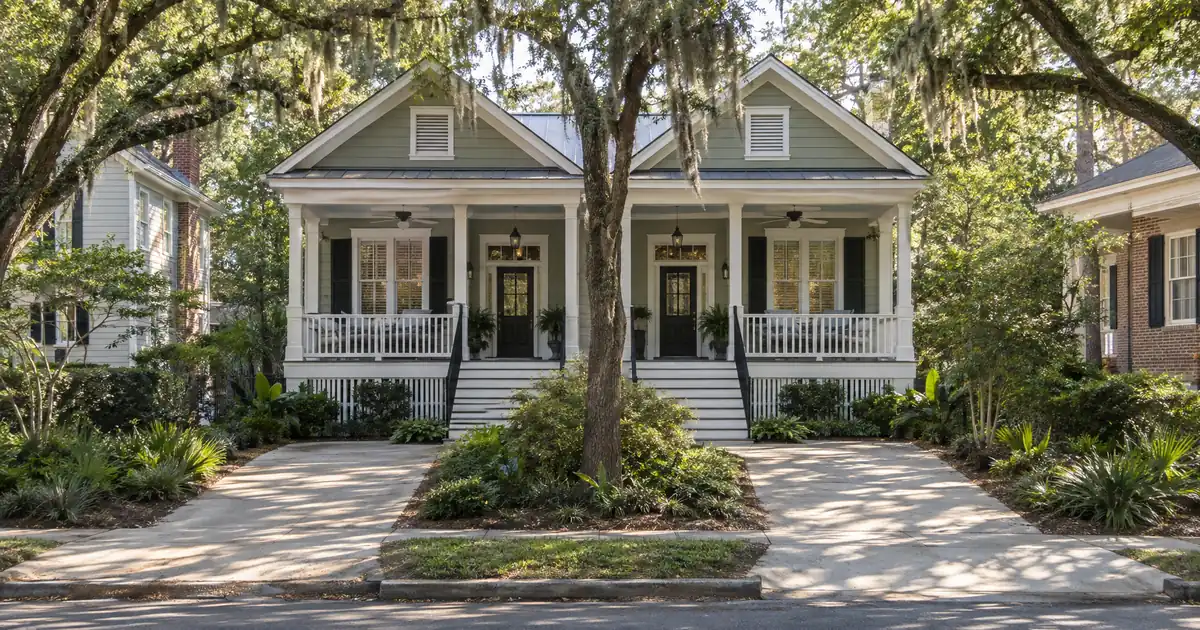
Savannah’s job market is booming. Its property values are not. Zillow shows average home values slipping slightly over the past year, and homes are taking a while to sell. Plenty of investors assume that a port, an aerospace giant, and an EV plant add up to appreciation they can borrow against. A DSCR cash-out refinance here depends far more on rent coverage and paydown than on a price run-up that hasn’t shown up.
DSCR Cash-Out Calculator
Run the cash-out numbers in Savannah, GA
Rate source: Freddie Mac 30-yr average via FRED® — Federal Reserve Bank of St. Louis · effective Sep 24, 2026
Prefilled with starting assumptions — enter your property’s value, balance, taxes, and insurance for a more accurate picture.
Program parameters update from Lendmire’s centralized guideline source. Taxes and insurance are editable estimates.
As of Sep 24, 2026 · General Freddie Mac market benchmark, not a Lendmire loan offer. Property value, balance, taxes, and insurance are editable estimates. Maximum loan-to-value varies by lender, program, property type, and seasoning. Not a Loan Estimate, approval, or commitment to lend. Program availability and eligibility are subject to lender guidelines, credit approval, property review, and underwriting.
Key Takeaways:
A DSCR cash-out refinance in Savannah, Georgia suits investors holding small multifamily or in-town houses with real equity, because the loan is underwritten primarily on the property’s rental income measured against its full monthly obligation, and a typical 75% LTV ceiling means flat local prices leave only paydown and renovation equity to draw on. Every figure here varies by lender and program — guidelines, property type, leverage, and credit profile all apply.
- Savannah home values have edged down slightly year over year.
- Citywide average rents have also softened modestly, per RentCafe.
- Modeled single-family coverage at 75% LTV lands well below 1.00 once taxes and insurance are included, so many in-town houses will not qualify without added rent, lower leverage, or a program with flexible coverage requirements.
- Roughly 6 months of seasoning and the 75% cap set the ceiling on proceeds.
- Final terms depend on lender guidelines, property type, leverage, and the borrower’s complete credit picture.
Savannah Market Snapshot
A quick read on the Savannah investor landscape — figures come from the cited sources below. Confirm current property-level numbers before underwriting.
| Metric | Detail |
|---|---|
| Typical rents | Pooler rents high $1,800s–$1,900s (Robin Lance Realty) |
| Employment | 8,500 jobs (Federal Reserve Bank of Atlanta) |
| Vacancy | 11.2% (Tactica RES) |
Flat Prices Change the Cash-Out Math
The equity story in Savannah is narrower than the headlines suggest. Sources disagree on price level. Zillow’s $335,719 is an average home value, while Resideline reports a higher closed-sale median of $359,900 across 1,341 closings, reflecting a different methodology. Neither shows meaningful momentum. A local brokerage forecasts appreciation returning, but that is opinion, and sizing a refinance on a forecast is how investors end up stuck.
Cash-out on a DSCR file typically requires about 6 months of ownership measured from title recording, and the LTV ceiling is generally 75%. That is lower than the 80% often available on a purchase. Consider an investor who bought at 80% leverage, held through a flat stretch, and now wants proceeds. The investor starts above the cap and has nothing to draw until paydown or an improved appraisal closes the gap. Not ideal.
The reverse also holds. An investor who bought below market, added a unit, or renovated an older in-town property may have real headroom. In Savannah’s market, that value-add equity is the one that counts, not market drift.
The Coverage Squeeze Nobody Mentions
Pulling cash out raises the loan balance, so it raises the monthly obligation. Rent doesn’t rise with it. A property that covered comfortably when you bought can slip under 1.00 after a cash-out, and that is where Savannah files get stuck. Most standard DSCR programs use a 1.00x benchmark, though some lenders review lower scenarios with offsetting strengths, subject to lender guidelines.
Run the numbers on three modeled cases. These are assumptions, not market data, and each coverage figure includes taxes and insurance:
- Single-family at the Zillow value, 75% LTV. Assume rent near the citywide three-bedroom apartment average (an apartment benchmark, used as a stand-in). With full principal, interest, taxes, and insurance counted, coverage lands well below 1.00, in a band of roughly 0.47 to 0.51 across a range of rate environments.
- Same house at 60% LTV. Coverage improves because the smaller balance carries less debt service. Taxes and insurance don’t shrink with the loan, so it still sits clearly below 1.00 on these assumptions.
- Duplex near $689,000, two units at the same modeled rent. Two rents against one purchase price lift coverage well above the single-family case. At 75% LTV it may still fall short of 1.00, and at 60% it may come close to or reach it, depending on actual rents and costs.
- These specifics are subject to lender guidelines and a full review of property, leverage, and credit.
That $689,000 is the multifamily median list price in Thomas Square per Homes.com, based on a small sample of listings.
So the practical lesson is that proceeds are sized by coverage, not just LTV. If a file lands below 1.00, the paths a lender might review include a sub-1.00 program, an interest-only structure, or a smaller cash-out. Qualification stays subject to lender guidelines, credit approval, and property review. If the only way to make the numbers work is the most aggressive structure, that signals the property is wrong for a cash-out. The loan type isn’t the problem.
Where the Equity Actually Sits
Several submarkets stand out, and none of them is the Historic District. Entry prices there run high enough that long-term coverage gets thin. Skip it for this thesis.
Midtown and Thomas Square. Older duplexes and small multifamily are the most plausible value-add stock. Bare Real Estate says Kensington Park, Chatham Oaks, and Greenview typically sit in a moderate price band well below the Historic District. Thomas Square multifamily listings have tended to linger on the market. Equity here comes from improving rent rolls, not from market lift.
Ardsley Park. The same guide puts typical values at $450,000 to $1,000,000+. Single-family rentals at those prices need rents to match, and the research found no sourced per-neighborhood single-family rent. This is a question for a comp-based rent schedule, not an assumption.
Pooler. It is the fastest-growing municipality in Chatham County, per a local investor site, and sits near the airport, Gulfstream, and the Hyundai supplier corridor. Robin Lance Realty places Pooler medians in the high $300s, with listings renting in the high $1,800s to $1,900s. Run those figures as a modeled $380,000 house at $1,900 and 75% LTV, and coverage lands in the low 0.8s with taxes and insurance included. Much of Pooler’s stock is also newer construction, which tends to compete with new comps. That makes it the submarket most exposed to appraisal pressure on a cash-out. Terms vary by lender guidelines, property type, leverage, credit profile, and full file review.
Oakdale and Georgetown. These central and southside neighborhoods sit near two hospitals and Hunter Army Airfield. RentCafe’s neighborhood data shows apartment averages of about $1,515 in Oakdale and $1,619 in Georgetown. Those are apartment rents, not house rents, so treat them as a floor for underwriting conversations.
Garden City, tied to port and logistics workers, is another workforce pocket. The research has no reliable price or rent figure for it, so no math appears here.
DSCR vs. conventional financing
There are two common ways to finance an investment property in Savannah, GA, and they qualify you differently — here’s how investors weigh them.
Why investors choose it
- Qualifies on the property’s rental income — no personal tax returns, W-2s, or pay stubs needed to document income.
- No personal debt-to-income ceiling to clear, so existing mortgages and obligations don’t cap your borrowing the same way.
- Can be closed in an LLC, keeping the property inside a business entity.
- Built for scaling — not held to the limit on number of financed properties that conventional financing applies.
- Underwriting centers on the deal: generally qualifies when the rent covers the payment, a 1.00x coverage ratio being a common baseline (confirmed in underwriting).
- Designed specifically for investment property, including long-term and, where the program allows, short-term rentals.
Where it’s strong
- Often the lowest ongoing financing cost for a buyer who fully qualifies on personal income — a fit for a first property or a cost-first purchase.
Trade-offs for investors
- Requires full personal income documentation and must fit within a debt-to-income limit — salary, existing debts, and other mortgages all count.
- Typically held in your personal name rather than a business entity.
- Caps how many financed properties you can carry, which can become a ceiling as a portfolio grows.
- Evaluates you as a borrower as much as the property, which usually means more paperwork.
How investors usually choose: a first or single property often optimizes for the lowest financing cost; portfolio builders often optimize for leverage, vesting in an LLC, and scaling past conventional caps. The right answer depends on your goals, the property, and current guidelines — both paths run through select lenders in Lendmire’s wholesale network, with eligibility and terms confirmed in underwriting.
Jobs Are Real, Rent Growth Isn’t
Tenant demand has solid anchors. Bloomberg reports Gulfstream Aerospace as the region’s biggest employer, at 13,000 workers. Memorial Health and St. Joseph’s/Candler are the top two private nonmanufacturing employers in the metro, per the Savannah Chamber. The Atlanta Fed says the Port of Savannah has grown 58.8% since 2014, moving from 13th to 9th among U.S. ports by value of goods. The city itself has 148,809 residents and a median age of 34, per Census Bureau QuickFacts, with 55% of households renting.
Here’s the catch: supply followed demand. TenantBase reports annual completions grew Savannah’s apartment inventory by 8.7%, more than 5,088 units. Tactica RES measured apartment vacancy at 11.2% against a five-year average of 6.3%, though Q2 commentary from Greystone says it has since compressed fast. Hyundai’s Metaplant is also only partway to its hiring target, at 1,444 workers against 8,500 planned, per a local investor site. Jobs still to come support rent over a long hold, but they are no guarantee of near-term rent growth.
Working DSCR brokers see a recurring pattern in markets with a big new-supply wave: the apartment-average rent in the headlines overstates what an older duplex or in-town house will appraise at, or understates it, depending on submarket. The stronger files pull single-family or small-multifamily comps for the rent schedule rather than leaning on a citywide average. A local property manager argues that a house in Ardsley Park doesn’t compete with a 300-unit complex in Pooler. That’s opinion, not data, but it’s a hypothesis worth testing with comps.
Should You Pull Cash Out at All?
For an LLC-held portfolio with several financed properties, a DSCR cash-out is usually the practical lane, subject to lender program eligibility. For a single rental owned personally by a high-W-2 borrower, conventional cash-out may price better, and the program-to-program comparison lays out where the break-even tips. If the property sits under 1.00 coverage after a reasonable cash-out and the investor can’t or won’t reduce the amount, the flip point has arrived: pull less, or don’t pull.
This one is a genuine toss-up for Pooler holders. The tenant pipeline argues for keeping capital in place, while flat comps and new supply argue for caution on appraisal. Stress-testing the appraisal before committing makes sense.
What the proceeds do matters too. Pulling equity to buy another small multifamily where coverage works at lower leverage is a coherent plan. Pulling equity to cover a shortfall on the property you’re refinancing is not. For more on mechanics, see pulling equity out. Reserves of around 6 months of the full obligation are typical, so proceeds that get immediately consumed by reserves aren’t proceeds. Verify current local rental rules, taxes, and insurance with qualified local professionals before sizing anything. To see where a file might land, compare DSCR options or call 828-256-2183.
Frequently Asked Questions
How do you qualify for a DSCR cash-out refinance in Savannah?
The property needs to have been owned for about 6 months from title recording, appraise high enough that the loan stays at or under a 75% LTV ceiling, and show rent covering the full monthly obligation at roughly 1.00 or better. Credit tiers generally run from 620 to 700, and reserves of about 6 months are typical. All of it is subject to lender guidelines.
What are the requirements for an investment property loan in Savannah, Georgia?
Expect the lender to review the property’s appraised rent, credit score, reserves, and loan amount, which can reach $3,000,000 on standard programs. Manufactured homes, log homes, and barndominiums fall outside the network’s DSCR programs. Entity vesting is possible depending on program guidelines.
Does flat appreciation in Savannah rule out a cash-out?
No, but it narrows who benefits. Without market lift, proceeds come from paydown, a below-market original purchase, or value-add work like adding a unit. Investors who bought at 80% leverage may need time before the 75% cap leaves any room. Exact terms depend on the lender’s guidelines, property type, leverage, and a full review of the borrower’s file.
Should I use the citywide average rent to estimate coverage?
No. The $1,703 figure is an apartment average and sits in a market with a heavy new-apartment pipeline. Older in-town duplexes and houses can behave differently, so single-family or small-multifamily comps give a more honest rent estimate.
For current guidelines and terms, see Lendmire’s DSCR loan programs page.
Get Started
Ready to find the right loan for you?
In about 30 seconds you can review financing options available for your investment property. No commitment required.
Informational only. Not a Loan Estimate, approval, or commitment to lend. Program availability and eligibility are subject to lender guidelines, credit approval, property review, and underwriting.
About Lendmire
Lendmire (NMLS# 2371349) is a DSCR-focused mortgage broker that helps arrange investor financing across 41 markets, including Washington, D.C., through wholesale and investor-lending channels. DSCR eligibility is generally reviewed by the lender on the property’s rental income rather than personal income documentation, subject to lender guidelines. That structure works for self-employed investors, LLC operators, and portfolios above four financed properties. Scotsman Guide named Lendmire a Top Mortgage Workplace in both 2025 and 2026.
If your Savannah rental’s rent hasn’t moved while the neighborhood’s jobs have, would pulling equity out fund a better unit count, or just a thinner margin on the one you already own?
References
1. Zillow
2. Freddie Mac 30-yr average via FRED® — Federal Reserve Bank of St. Louis
3. RentCafe
5. Federal Reserve Bank of Atlanta
6. Tactica RES
7. Resideline
8. Homes.com
10. RentCafe’s neighborhood data
11. Bloomberg
12. Savannah Chamber
This article is part of Lendmire’s investment property cash-out refinance program — full qualification details, guidelines, and scenarios live on the program page.
Related reading: Cash Out Refinance Investment Property in Savannah GA · DSCR Loans Savannah: Investor Financing for Savannah Rental Properties, Airbnb, and Real Estate Investors · DSCR Investment Property Loans in Savannah, GA: What It Takes to Qualify
Guides: Investment Property Cash-Out Refinance in Savannah, GA · Investment Property Cash-Out Refinance in Georgia
Brandon Miller
Founder & CEO, Mortgage Loan Originator, Lendmire LLC
- Mortgage Loan Originator · NMLS# 1129696 · Verify on NMLS Consumer Access
- North Carolina Real Estate Broker · License# 343312 · Verify on NCREC
- North Carolina Insurance Producer · License# 19053198 · Property, Casualty, Life, Health · Verify on NAIC SBS
- Lendmire LLC · Firm NMLS# 2371349 · Verify firm licensure
Disclosure information. Lendmire is a state-licensed mortgage brokerage under NMLS# 2371349. Lendmire is not a depository institution, direct lender, or financial advisor — all loans referenced are placed through wholesale lender partners and are subject to each lender's underwriting standards. This article is provided for general informational purposes and is not a commitment to lend, nor does it constitute financial, legal, or tax advice. Loan programs, terms, rates, and qualification standards change without notice and depend on borrower profile, property type, and the state in which the subject property is located. Equal Housing Opportunity provider. NMLS Consumer Access: nmlsconsumeraccess.org.