
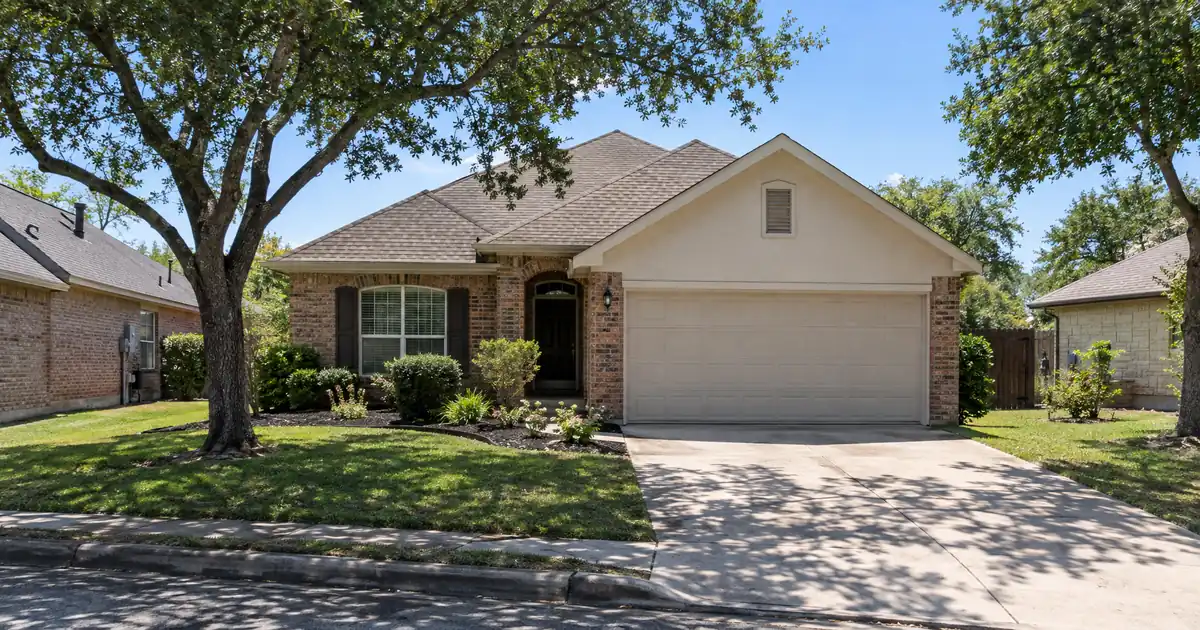
If you own a rental in Seguin that would sell near the $300K median sale price, the question isn’t whether you have equity. It’s whether the property’s rent can carry a new loan sized at up to 75 percent of today’s appraised value. On a single-family house, often not. On a small older multi-unit building, often closer. Most of the work in this refinance happens in that gap.
The Short Version: Cash-out refinancing in Seguin, Texas fits owners of small older multi-unit buildings and workforce rentals with verified in-place rents, because the loan is underwritten primarily on the property’s rental income measured against its full monthly obligation, and proceeds are sized off current value, not hoped-for appreciation.
DSCR Cash-Out Calculator
Run the cash-out numbers in Seguin, TX
Rate source: Freddie Mac 30-yr average via FRED® — Federal Reserve Bank of St. Louis · effective Sep 24, 2026
Prefilled with starting assumptions — enter your property’s value, balance, taxes, and insurance for a more accurate picture.
Program parameters update from Lendmire’s centralized guideline source. Taxes and insurance are editable estimates.
As of Sep 24, 2026 · General Freddie Mac market benchmark, not a Lendmire loan offer. Property value, balance, taxes, and insurance are editable estimates. Maximum loan-to-value varies by lender, program, property type, and seasoning. Not a Loan Estimate, approval, or commitment to lend. Program availability and eligibility are subject to lender guidelines, credit approval, property review, and underwriting.
- A three-bedroom at Rentometer’s $1,648 rent models below 1.00 at 75 percent LTV including taxes and insurance.
- Duplexes and fourplexes on older in-town lots stack rent, which is where coverage improves.
- Plan on in-place value: sales volume is thin and days on market are long.
- A 17,000-plus-unit residential pipeline can cap rent growth on workforce rentals.
Seguin Market Snapshot
A quick read on the Seguin investor landscape — figures come from the cited sources below. Confirm current property-level numbers before underwriting.
| Metric | Detail |
|---|---|
| Home prices | Median home value $317,722 (Guadalupe Valley Economic) |
| University enrollment | ~1,369 tlu students (Seguin EDC) |
Start With the Older Lots Near Downtown
Older central Seguin is where rent stacking gives a cash-out the best shot at clearing the coverage benchmark. The stock near the downtown square and the Max Starcke Park side is older and smaller, and it is where duplex and quadplex listings tend to show up.
Homes.com shows 15 multi-family homes for sale in Seguin, priced from $150,000 to $499,900, with an average of 104 days on market. Listing snippets describe a quadplex anchored by a 3BR/2BA main house and a 2-unit property with a 2BR/1BA plus a 1BR/1BA. That’s the typical shape: small, older, and mixed-bedroom.
No reliable neighborhood-level rent or price series exists for Seguin. That’s a real limit, and this article doesn’t pretend otherwise. What the sourced citywide numbers do support is a structural point. A 1BR and a 2BR rent only about $60 apart on Rentometer ($1,121 versus $1,182), while a 3BR jumps to $1,648. Unit count moves gross income more than bedroom count does. Two units on one lot beat one bigger house.
Nob Hill and the established central blocks are described in local guides as the more affordable renter areas, though the guide is a weak source. Treat it as a pointer for where to look at rent rolls, not as evidence.
The newer-build subdivisions on the growth side, such as Navarro Ranch and Meadows of Mill Creek, are a different animal. Production builders dominate there. It’s single-family rental territory with no multi-unit stock, which puts it squarely in the thin-coverage category covered below.
Run the Numbers on Three Property Types
The modeled coverage ratios below run from roughly 0.8 on a single-family house to about 1.4 on a fourplex, with a duplex sitting near 1.0. All three inputs are assumptions for illustration, not sourced deal data. Each ratio is rent divided by full monthly obligation, including taxes and insurance at Texas-average assumptions, at 75 percent LTV.
| Property (modeled) | Assumed rent | Modeled coverage |
|---|---|---|
| 3BR house near $300,000 | $1,648 | Around 0.8 |
| Duplex near $350,000 | Two 2BRs at $1,182 | Near 1.0, could land just under |
| Fourplex near $450,000 | Two 1BRs, two 2BRs | About 1.4 |
The rents come from Rentometer’s bedroom averages. Zillow Rental Manager shows a higher $1,750 average, reflecting a different mix and methodology, so sources don’t agree. A real file uses the property’s own leases and the appraiser’s rent schedule, not any of these.
Picture an investor with a house bought at a price close to the median. At 0.8, the property doesn’t cover its own debt at 75 percent LTV. Nothing about that is unusual for Seguin’s price-to-rent relationship. The gross rent runs about 0.55 percent of price per month, which is thin for cash-out sizing.
The duplex is the interesting case. Coverage near 1.0 means the outcome depends on the real rent roll, the real tax bill, and the real insurance quote. A few hundred dollars of rent either way moves the number across the line.
The fourplex is where the stacking argument pays off. If in-place rents are even close to the model, the file clears the standard 1.00x baseline with room to absorb a soft appraisal or an insurance increase. (Older buildings also raise condition questions, so the appraisal matters as much as the rent roll.)
DSCR files in markets like this one typically look like a split: the multi-unit properties carry the coverage, while the single-family rentals get restructured, either with lower leverage or a different program, before the numbers work. Owners tend to arrive expecting the house to qualify the way the fourplex does. The better conversations start with the rent roll and the insurance quote on the table, not the equity estimate.
What’s the Catch on Sub-1.00 Deals?
A sub-1.00 structure may be available through select lenders, but whether to use one is the real question. Reduced leverage, stronger credit, and larger reserves usually come with it. Options a lender might review include a lower LTV, a sub-1.00 program, or interest-only structuring. Whether any of them applies depends on lender guidelines, credit approval, and property review.
For a Seguin house at roughly 0.8 coverage, the tradeoff comes down to why you’re refinancing. Sub-1.00 is a defensible choice if the property has a real appreciation or rent-growth story. Seguin’s story is thinner than the growth headlines suggest. If you’re reaching for sub-1.00 because nothing in your portfolio clears 1.00 at this price-to-rent relationship, re-examine the property mix, not just the loan type.
Conventional financing may be the better call in one case. A single rental owned personally by a borrower with strong traditional employment income and few financed properties can often do better there. The comparison tips toward DSCR when the borrower is self-employed, holds properties in an LLC (subject to lender program eligibility), or is approaching the financed-property limits conventional lenders apply.
The Equity You Can Pull (and What It Depends On)
Cash-out proceeds in Seguin depend on in-place value, not projected appreciation. The standard ceiling is 75 percent LTV on a cash-out, and the property typically needs about six months of ownership, measured from title recording. The equity-extraction mechanics cover the full sequence. The Seguin-specific part is how much value the appraiser can support.
Redfin’s market data points to modest year-over-year appreciation, homes sitting on the market for a long time, and a drop in March sales compared with a year earlier. Orchard puts the median price lower than Redfin does and reports that about half of listings carry price drops. Methodologies differ, but the direction is consistent: modest appreciation, long marketing times, and thinner comps.
For a cash-out, that matters in a specific way. Thin sales volume gives an appraiser fewer recent comparables to lean on, so a large appraisal-driven equity gain is unlikely. An owner who bought during a run-up should assume the appraisal lands conservatively. Buying before the market softened helps if the price was right, and hurts if the purchase was aggressive. The Texas Real Estate Research Center maintains a Seguin housing activity dataset worth checking before you commit.
The proceeds are not a guaranteed figure. Equity available depends on rent used for lender review, the full monthly obligation, reserves (typically about six months of it), and that 75 percent ceiling. A borrower with a 620 credit score sits at the program floor, and stronger tiers at 660, 680, and 700 generally improve the terms available, subject to lender guidelines.
Where the Proceeds Go (and Where They Shouldn’t)
The cleanest use of cash-out proceeds is a second Seguin property whose coverage already clears 1.00 at current pricing. Buyers have leverage in a market with long days on market and frequent price cuts, so a small multi-unit acquisition could come at a negotiated price. That’s plausible, not verified.
Using the proceeds to fund properties in markets where the math doesn’t pencil is a different decision, and one worth stress-testing first. Pulling equity from a 0.8-coverage house to buy another 0.8-coverage house compounds the problem. Pulling it to add a fourplex near 1.4 changes the portfolio’s overall coverage, which matters when the next refinance comes up.
It’s a genuine toss-up for owners with a paid-down single-family rental: hold it and keep the equity idle, or refinance at thin coverage to buy a stronger property. The second path works if the new acquisition’s numbers are solid. It doesn’t if they’re optimistic.
Demand Holds; Supply Is the Question
Seguin’s tenant base rests on manufacturing shifts, not San Antonio or Austin commuters, which gives workforce rentals steadier demand than a typical bedroom community. The City of Seguin names Caterpillar, Vitesco Technologies, Tyson Foods, Georgia Pacific, Niagara Bottling, Alamo Group, Hexcel, and CMC Steel among its major manufacturers. Data USA lists manufacturing (2,755 workers), health care and social assistance (2,059), and retail trade (1,881) as the largest industries. Its top occupations are office and administrative support, production, and sales.
The Seguin EDC also notes that Lippert’s Ranch Hand division broke ground on a 400,000-square-foot manufacturing facility. Those are wage-earner jobs, which supports steady demand for 2-3BR rentals and small multi-unit buildings. Texas Lutheran University enrolls only about 1,369 students, so student housing isn’t a demand driver here.
The population data fits the pattern. The Guadalupe Valley Economic Development profile, citing ESRI data, shows 39,459 residents growing at 2.15 percent, with 4,808 of 14,370 households renting, roughly one-third. Median household income is $74,245.
Here’s the catch. Supply is arriving fast. The Seguin EDC housing page says more than 17,000 residential units are tied to developments under construction or in plan review, across more than 25 subdivisions under construction within city limits. A 282-unit, $57 million Class A apartment community called Lily Springs is under construction, described by the city manager as workforce housing for local employees. Its lease-up will compete directly with 2-3BR workforce rentals.
Rent trends already look flat: Zumper shows rents up 1 percent in the last month and down 1 percent over the year. Underwrite conservatively if your refinance will season into that lease-up.
DSCR vs. conventional financing
There are two common ways to finance an investment property in Seguin, TX, and they qualify you differently — here’s how investors weigh them.
Why investors choose it
- Qualifies on the property’s rental income — no personal tax returns, W-2s, or pay stubs needed to document income.
- No personal debt-to-income ceiling to clear, so existing mortgages and obligations don’t cap your borrowing the same way.
- Can be closed in an LLC, keeping the property inside a business entity.
- Built for scaling — not held to the limit on number of financed properties that conventional financing applies.
- Underwriting centers on the deal: generally qualifies when the rent covers the payment, a 1.00x coverage ratio being a common baseline (confirmed in underwriting).
- Designed specifically for investment property, including long-term and, where the program allows, short-term rentals.
Where it’s strong
- Often the lowest ongoing financing cost for a buyer who fully qualifies on personal income — a fit for a first property or a cost-first purchase.
Trade-offs for investors
- Requires full personal income documentation and must fit within a debt-to-income limit — salary, existing debts, and other mortgages all count.
- Typically held in your personal name rather than a business entity.
- Caps how many financed properties you can carry, which can become a ceiling as a portfolio grows.
- Evaluates you as a borrower as much as the property, which usually means more paperwork.
How investors usually choose: a first or single property often optimizes for the lowest financing cost; portfolio builders often optimize for leverage, vesting in an LLC, and scaling past conventional caps. The right answer depends on your goals, the property, and current guidelines — both paths run through select lenders in Lendmire’s wholesale network, with eligibility and terms confirmed in underwriting.
Honestly, the stronger play may be the older in-town stock over the new-build corridors, since it competes less directly with new product. A local storage-company blog points the other way, calling the northeast corridor the highest near-term appreciation area while warning that oversupply can moderate it. It’s a non-neutral source, so weigh it accordingly.
What Stalls Files (Plumbing, Not Strategy)
Most cash-out files in a market like this slow down on documentation, not on the borrower. The plumbing is the same on every file: a lease for each unit, a current rent roll for multi-unit, a fresh insurance quote, the title recording date, and proof of reserves.
- Seasoning clock. The six months runs from title recording, not the contract date. Check it before ordering anything.
- Rent documentation. Leases that don’t match the rent roll, or month-to-month tenants with no paper, invite questions. The appraiser’s rent schedule may override the lease figure.
- Insurance. On a coverage number near 1.0, the quote moves the ratio. Get it in before the file goes to the lender, not after.
- Property details. Older small-multifamily buildings draw extra attention to unit count, condition, and how each unit is configured. Some listings in the area are flagged as commercially zoned, so confirm the classification with the city.
- Entity paperwork. LLC-held properties need operating agreements and entity documents in order, per lender program requirements.
Program terms change, so confirm current guidelines before you plan around any figure here. Verify local rental rules, taxes, and insurance with qualified local professionals.
Investors who want the DSCR mechanics first can start with the DSCR fundamentals, and the refinance side covers how rate-and-term and cash-out options differ. For the statewide picture, see DSCR loans in Texas. Investors can also reach Lendmire at 828-256-2183 or request a quote.
Frequently Asked Questions
How do you qualify for a DSCR cash-out refinance in Seguin, Texas?
Qualification centers on the property’s rent against its full monthly obligation (principal, interest, taxes, insurance, and any HOA dues), with 1.00 as the common baseline, plus credit, reserves, and a property review. Typical guidance includes a 620 credit floor, a 75 percent LTV ceiling on cash-out, and about six months of reserves. Final eligibility depends on lender guidelines and the specific property.
What are the requirements for an investment property loan in Seguin, Texas?
On most files, expect a minimum 1.00 DSCR benchmark, credit in the 620-700 range depending on tier, reserves of roughly six months, and ownership seasoning of about six months for a cash-out. Properties like manufactured homes, log homes, and barndominiums fall outside these programs. Terms vary by borrower, property, and loan scenario.
How long do I need to own a Seguin rental before a cash-out refinance?
About six months, measured from title recording. A property bought recently with heavy renovation may still need the appraiser to support the value, which is harder with thin Seguin sales volume. Until that clock runs, the conversation is about planning, not proceeds.
Does a duplex or fourplex beat a single-family rental for cash-out in Seguin?
Often, because rent stacks across units while the price-to-rent relationship on single-family homes stays thin. A modeled three-bedroom at $1,648 lands around 0.8 coverage at 75 percent LTV including taxes and insurance, while a fourplex with mixed 1BR and 2BR units models closer to 1.4. The in-place rent roll and the appraiser’s rent schedule decide what actually applies.
Where Seguin Owners Land
Seguin rewards owners who underwrite the actual rent roll rather than the equity estimate. The investors who stack units on older central lots and size every refinance off in-place value, with new supply in view, will come out ahead.
For current guidelines and terms, see Lendmire’s DSCR loan programs page.
About Lendmire
Lendmire is a DSCR-focused mortgage brokerage, NMLS# 2371349, placing investor loans across 41 markets, including Washington, D.C. Lenders generally review DSCR eligibility around a property’s rental income rather than personal income documentation, which fits LLC-held rentals, self-employed investors, and portfolios scaling past conventional financed-property limits. Lendmire has been recognized by Scotsman Guide in 2025 and named a top-ranked workplace in 2026, as covered in the 2026 industry recognition release.
Get Started
Ready to find the right loan for you?
In about 30 seconds you can review financing options available for your investment property. No commitment required.
Informational only. Not a Loan Estimate, approval, or commitment to lend. Program availability and eligibility are subject to lender guidelines, credit approval, property review, and underwriting.
References
1. Redfin, Seguin Housing Market
2. Guadalupe Valley Economic Development, Seguin Profile
3. Seguin EDC
4. Homes.com, Seguin Multi-Family Listings
6. Texas Real Estate Research Center, Seguin Housing Activity
7. City of Seguin, About the Community
9. Seguin EDC
10. Seguin Economic Development Corporation, Housing
11. 282-unit, $57 million Class A apartment community called Lily Springs
12. recognized by Scotsman Guide in 2025
13. Scotsman Guide — Top Workplaces 2026
14. EIN Presswire — Lendmire Recognized as a 2026 Top Workplace by Scotsman Guide
This article is part of Lendmire’s investment property cash-out refinance program — full qualification details, guidelines, and scenarios live on the program page.
Related reading: Cash Out Refinance Investment Property in Seguin, Texas: Plant-Town Equity Strategy · Cash Out Refinance Investment Property in Weatherford, Texas: A 2026 DSCR Guide to Downtown Square · DSCR Cash Out Refinance in Midland, Texas: The 2026 DSCR Refi Guide to Downtown Midland
Guides: Investment Property Cash-Out Refinance in Texas
Brandon Miller
Founder & CEO, Mortgage Loan Originator, Lendmire LLC
- Mortgage Loan Originator · NMLS# 1129696 · Verify on NMLS Consumer Access
- North Carolina Real Estate Broker · License# 343312 · Verify on NCREC
- North Carolina Insurance Producer · License# 19053198 · Property, Casualty, Life, Health · Verify on NAIC SBS
- Lendmire LLC · Firm NMLS# 2371349 · Verify firm licensure
Disclosure information. Lendmire is a state-licensed mortgage brokerage under NMLS# 2371349. Lendmire is not a depository institution, direct lender, or financial advisor — all loans referenced are placed through wholesale lender partners and are subject to each lender's underwriting standards. This article is provided for general informational purposes and is not a commitment to lend, nor does it constitute financial, legal, or tax advice. Loan programs, terms, rates, and qualification standards change without notice and depend on borrower profile, property type, and the state in which the subject property is located. Equal Housing Opportunity provider. NMLS Consumer Access: nmlsconsumeraccess.org.