
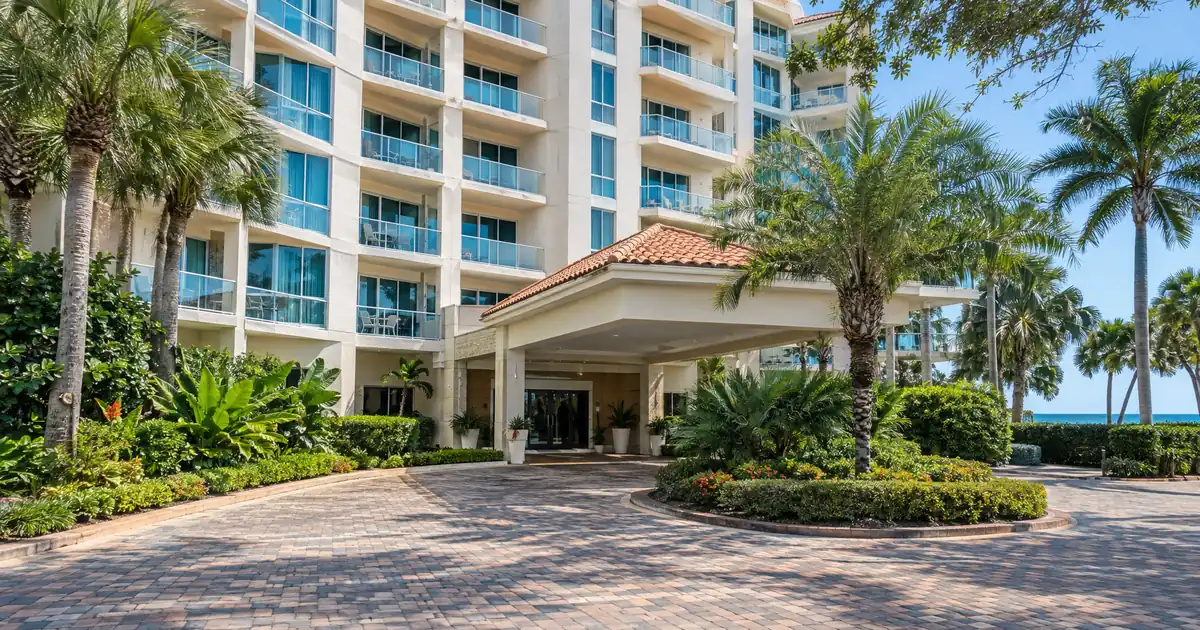
A condo in the oceanfront tower corridor, valued near Zillow’s $868,925 average for Singer Island, hits the DSCR math like this. At a modeled rent of $6,000 and a 65% LTV, coverage lands in the low 1.2s once taxes and insurance are included, before association dues. Drop the modeled rent to $4,500 and the same file slips just under 1.00. Those rent figures are assumptions, not market data, and the swing between them is the whole story of a DSCR cash-out refinance on an investment property here. The equity usually sits in the island’s condo towers, while the yield that justifies redeploying it sits across the bridge on the mainland.
The Short Version: A cash-out refinance on a Singer Island, Florida rental is underwritten primarily on the property’s rental income measured against its full monthly obligation, with leverage capped by the lender’s loan-to-value ceiling and the appraised value, while seasoning, reserves, and building type often decide how much equity actually comes out.
DSCR Cash-Out Calculator
Run the cash-out numbers in Singer Island, FL
Rate source: Freddie Mac 30-yr average via FRED® — Federal Reserve Bank of St. Louis · effective Oct 1, 2026
Prefilled with starting assumptions — enter your property’s value, balance, taxes, and insurance for a more accurate picture.
Program parameters update from Lendmire’s centralized guideline source. Taxes and insurance are editable estimates.
As of Oct 1, 2026 · General Freddie Mac market benchmark, not a Lendmire loan offer. Property value, balance, taxes, and insurance are editable estimates. Maximum loan-to-value varies by lender, program, property type, and seasoning. Not a Loan Estimate, approval, or commitment to lend. Program availability and eligibility are subject to lender guidelines, credit approval, property review, and underwriting.
- Island inventory is condo-heavy: Redfin counted 202 condos, 2 townhouses, and 1 multi-family unit for sale in a recent month.
- Island liquidity has stretched: Redfin’s November snapshot shows 202 days on market versus 65 a year earlier.
- Cash-out leverage tops out at 75% LTV, with about six months of seasoning from title recording.
- Mainland single-family at the city median does not clear 1.00 on long-term rent alone.
- These specifics are subject to lender guidelines and a full review of property, leverage, and credit.
The Island Corridor: Where the Equity Sits
Singer Island’s equity is concentrated in oceanfront and Intracoastal condo towers, and that is where most cash-out candidates live. It is also where coverage is thinnest, because the market is priced for appreciation and seasonal premium, not stacked long-term yield.
Some geography first. Singer Island is a barrier island in Palm Beach County, not an incorporated city. Most of it falls inside Riviera Beach, a city of 37,604 people in the last Census count, and the southern tip is the separate town of Palm Beach Shores, with 1,330 residents. Island-only population figures conflict across sources, so “a few thousand year-round residents” is the honest description. Each figure below is labeled by geography.
The price signals are mixed. Zillow’s average value is flat year over year. Redfin’s island median sale price was $912,500 in its November snapshot, down 24.0% from the prior year, while Movoto’s April median was $999,000 with 115 days on market against 90 the year before. Medians in a small, luxury-weighted sample swing with sales mix, so treat the 24% drop as noisy. The days-on-market direction is the better tell, and it is consistently longer. Nothing here describes a strong-appreciation market.
Buyer behavior matters for appraisals too. The Sotheby’s Singer Island team’s market update reports 129 condo sales year-to-date, versus 126 the year before and 183 two years before, with about 78% of purchases paid in cash. Fewer financed sales means fewer financed comparables for an appraiser to lean on. Condo supply is tighter than the county’s, at 4.2 months versus 6.38 in a brokerage report from Atlis Realty, which mildly supports values. It does not guarantee a favorable appraisal.
Working DSCR brokers see a recurring pattern in resort-adjacent condo markets: the owner’s mental valuation is anchored to the peak, the appraisal comes back anchored to recent financed sales, and the cash-out proceeds come in smaller than the owner planned. The files that go cleanly are the ones where the owner sized the request off a conservative value from the start, with reserves already documented.
Run the Appraisal Down Before You Apply
The cash-out math here is a three-way squeeze. The lender caps the new loan at 75% of appraised value, subtracts the existing payoff, and then checks that the rent still covers the new obligation. How DSCR coverage is calculated is simple: monthly rent used for lender review divided by principal, interest, taxes, insurance, and any association dues. Most programs are built around a 1.00 benchmark, though exact eligibility depends on lender guidelines, credit profile, reserves, and property review.
Consider an owner whose existing loan sits at 50% of the current appraised value. That leaves up to 25 points of LTV headroom under the 75% ceiling. If the appraisal comes in 10% lower than expected, the ceiling falls to about 67.5 points of the original value, so the headroom shrinks from 25 points to roughly 17, and the coverage test may bind first anyway. Reserves of about six months of PITIA come on top, and about nine months once a loan passes $1,500,000. Credit tiers generally start at a 620 floor, and standard programs run up to $3,000,000, though all of it is subject to lender guidelines.
Non-warrantable condo buildings are the other wrinkle. Leverage on those files is typically tighter than the 75% ceiling, often around 65% LTV in the network, which is why the opening scenario used it. Whether a given building is warrantable is a per-building question. Confirm it before sizing any request.
The proceeds are a function of the appraisal, not the owner’s expectation. Plan for the lower number.
Skip the Median Rent
Rent data for this market conflicts, and a single “market rent” figure would mislead you. Redfin’s September snapshot puts the Singer Island median rent at $6,245, but that reflects a thin, luxury-skewed sample. Mainland Riviera Beach shows different pictures by source: Zumper reports a $3,000 average in August, up 7% year over year, on only 334 rental units, while Redfin’s citywide median was $1,925 the previous August and Repit models an average of $2,617.
For a condo, DSCR rent should come from the actual lease or an appraiser’s rent schedule on that unit. Not a submarket median. Not a listing portal.
The tension is easy to see in the numbers. Against the roughly $913,000 island median sale price, a $6,245 rent looks like a strong yield (about 8% gross by simple division). Against a realistic lease on a mid-tier unit, it looks like the opening scenario’s sub-1.00 case. Same building, same market, different rent assumption.
Mainland Yield: Where the Proceeds Make Sense
The mainland, specifically Riviera Beach’s small multifamily stock, is where proceeds are most likely to produce real coverage. The island rarely offers duplexes through fourplexes at all.
Redfin’s September medians for mainland submarkets cluster tightly: $2,422 in Kelsey City, $2,400 in North Palm Beach Village, and $2,350 in Northwood Harbor. Those are the closest thing to a workforce-rent benchmark in the research, though none is bedroom-specific. Redfin’s citywide median sale price was $505K in January, up 5.2% year over year.
Run the numbers on a single-family rental at that median. Assume $2,422 rent and a 75% LTV, with Florida-average taxes and insurance and a high-6s loan cost modeled. Coverage lands around 0.7x. Even at a 60% LTV it stays short of 1.00. Repit’s model reports that none of Riviera Beach’s ZIP codes meet the 1% rent-to-value rule, and the arithmetic bears that out. The mainland single-family lane is an appreciation play with a thin yield, and DSCR will punish thin yield. Terms vary by lender guidelines, property type, leverage, credit profile, and full file review.
Small multifamily is a different equation. NeighborhoodScout puts duplexes and small apartment buildings at 12.71% of Riviera Beach’s housing stock, versus 41.23% single-family detached, so 2-4 unit comps do exist citywide. They are almost certainly mainland. Supply is the catch: an older Homes.com snapshot showed 7 multi-family listings priced from $424,000 to $850,000, so comps will be thin.
Take a modeled quadplex at $650,000 and a 75% LTV. One listing there claimed market rents of $2,600 for a 3BR, $1,800 for a 2BR, and $1,400 for an efficiency, with separate electric and water meters per unit. Those are listing-agent claims, not verified rents. Assume two 2BRs, one 3BR, and one efficiency, haircut 20% below the claims to approximate in-place leases. Pricing and available terms vary by lender, borrower profile, property type, and full underwriting review. That gap between claim and lease, and between rent and carrying cost, is where underwriting earns its keep, and it is why the appraiser’s rent schedule matters more than the listing. A deal like this would likely need lower leverage, a larger down payment, or a different price point to pencil. Exact terms depend on the lender’s guidelines, property type, leverage, and a full review of the borrower’s file.
This is the math behind a cash-out-and-redeploy thesis. A condo equity release, run through pulling equity with a DSCR cash-out structure, can fund a down payment on a mainland 2-4 unit asset. The same sum used to buy more island condos tends to repeat the sub-1.00 problem. Honestly, the stronger play for yield is the mainland. Investors buying for appreciation might argue otherwise, but they should know they’re giving up coverage for it.
Park Manor and Woodbine are described by Apartments.com as Riviera Beach’s most affordable neighborhoods, and the city’s redevelopment agency cites progress in Riviera Beach Heights and Park Manor. No reliable rents or prices came up for them, so treat those as areas to research, not to underwrite.
Why Port Jobs, Not Beaches, Back the Tenant Base
The island’s glamour doesn’t drive mainland rent; employment does. The Port of Palm Beach sits in Riviera Beach and reports more than 3,800 jobs regionally and over $14 billion in commodities moved, with almost 80% of goods being exports. The Business Development Board’s top employers list shows two Riviera Beach-based names that matter for local rental demand: Lockheed Martin/Sikorsky with about 1,052 employees in aerospace engineering, and Cheney Brothers with about 1,050 in food distribution. Regional anchors include NextEra Energy at 6,139 and U.S. Sugar at 1,300.
Healthcare and education sit within commuting range of the mainland, though none is on the island. St. Mary’s Medical Center, part of the Palm Beach Health Network, has more than 400 beds and a Level 1 Trauma designation. Palm Beach Atlantic University enrolled 4,147 students in West Palm Beach, and Palm Beach State College adds tens of thousands more across the county.
That mix points to long-term workforce rental demand on the mainland, supported by industrial, healthcare, and logistics jobs. The island’s tenant base leans seasonal and executive, which makes its rents harder to underwrite on a standard 12-month lease.
Should the Proceeds Leave the Island at All?
For an entity-owned portfolio, a self-employed investor, or a borrower whose traditional personal-income documentation doesn’t show the rental income cleanly, DSCR is typically the practical cash-out path. For a W-2 borrower with one or two properties and strong personal income, conventional may carry lower cost with less friction. How the two loan types differ comes down to income documentation, property count, and how much flexibility the borrower needs. The break-even tends to come around the third financed property, or sooner when personal returns don’t support add-backs. If the loan is held by an LLC, entity eligibility is subject to lender program eligibility.
The redeployment question is separate. Pulling equity to acquire a mainland quadplex is straightforward only where the coverage number clears 1.0 at standard leverage. Pulling equity to fund an out-of-state purchase that doesn’t pencil at current pricing deserves a stress test first. And a sub-1.00 structure on the island condo itself may exist through select lenders, but ask first whether it should be used. Reduced leverage and stronger credit are part of that tradeoff. If the property has an appreciation story that justifies lower current yield, it’s defensible. If the borrower is reaching because the numbers don’t support standard lender review anywhere, that signals a submarket problem, not a loan-type problem.
The Next 6-24 Months: What to Watch
The next two years will likely hinge on a handful of indicators more than any single headline. The current pattern is flat-to-soft island pricing with long days on market, and a few things could break it either way.
- Days on market and cash share. If island days on market keep stretching past the figures above, appraisals will likely stay conservative. If the cash share of purchases falls, more financed comps could support values.
- Condo supply versus the county. The 4.2 months versus 6.38 gap is mildly supportive. A narrowing gap would signal the island losing its supply cushion.
- Public pipeline. The Riviera Beach CRA’s workforce housing push, reported by The Real Deal, includes a 149-unit project, a 175-unit project, a proposed 508-condo mixed-use plan, and a proposed $556 million Marina Village. Meanwhile the Singer Island Gateway proposal, with a workforce component, is still in approvals. New mainland units could soften rents for the small multifamily the redeployment thesis relies on. That is a genuine toss-up: more workforce supply helps the area’s long-term demand story and could compress near-term rent growth on older small buildings.
- Rent data volatility. Zumper’s 7% annual gain sits against other sources showing flat or falling rents. Until the sources converge, underwrite from leases.
The Ocean Mall/Ocean Walk redevelopment, with more than 60,000 square feet of retail and restaurant space through the CRA, and the area’s draw as a dive and snorkel destination (Phil Foster Park’s 800-foot snorkel trail via Visit Florida) support the island’s lifestyle premium. They don’t change the coverage math.
Frequently Asked Questions
How do you qualify for a DSCR cash-out refinance in Singer Island, Florida?
The property’s rent has to cover its full obligation (principal, interest, taxes, insurance, and any association dues) at or above the lender’s benchmark, commonly 1.00. Typical guidelines add about six months of ownership from title recording, reserves of about six months of PITIA, and a credit floor of 620, subject to lender review. The new loan can’t exceed 75% of appraised value, so existing debt limits the proceeds.
What are the requirements for an investment property loan on a Singer Island condo?
Expect a per-building review, because warrantability affects leverage. Non-warrantable condo files typically face tighter limits than the 75% cash-out ceiling, often around 65% LTV. Documented rent from a lease or appraiser schedule, reserves, and association financials all feed the lender’s review, and details vary by program and borrower.
DSCR vs. conventional financing
There are two common ways to finance an investment property in Singer Island, FL, and they qualify you differently — here’s how investors weigh them.
Why investors choose it
- Qualifies on the property’s rental income — no personal tax returns, W-2s, or pay stubs needed to document income.
- No personal debt-to-income ceiling to clear, so existing mortgages and obligations don’t cap your borrowing the same way.
- Can be closed in an LLC, keeping the property inside a business entity.
- Built for scaling — not held to the limit on number of financed properties that conventional financing applies.
- Underwriting centers on the deal: generally qualifies when the rent covers the payment, a 1.00x coverage ratio being a common baseline (confirmed in underwriting).
- Designed specifically for investment property, including long-term and, where the program allows, short-term rentals.
Where it’s strong
- Often the lowest ongoing financing cost for a buyer who fully qualifies on personal income — a fit for a first property or a cost-first purchase.
Trade-offs for investors
- Requires full personal income documentation and must fit within a debt-to-income limit — salary, existing debts, and other mortgages all count.
- Typically held in your personal name rather than a business entity.
- Caps how many financed properties you can carry, which can become a ceiling as a portfolio grows.
- Evaluates you as a borrower as much as the property, which usually means more paperwork.
How investors usually choose: a first or single property often optimizes for the lowest financing cost; portfolio builders often optimize for leverage, vesting in an LLC, and scaling past conventional caps. The right answer depends on your goals, the property, and current guidelines — both paths run through select lenders in Lendmire’s wholesale network, with eligibility and terms confirmed in underwriting.
Does a Singer Island condo usually cover itself at a 1.00 ratio?
Not automatically. At a modeled 65% LTV, a unit near the island’s average value covers in the low 1.2s only if it leases near $6,000, before dues, and falls just under 1.00 near $4,500. Association dues pull both numbers down, so the specific lease and building decide it.
Is a mainland duplex or fourplex a better home for the proceeds than another island condo?
For coverage, usually yes. Riviera Beach’s small multifamily stock, about 12.71% of the city’s housing per NeighborhoodScout, produces stacked unit rents that a single condo can’t. The tradeoff is thin inventory and thin comps, so underwrite from actual leases.
The Question Worth Asking First
Cash-out proceeds from a Singer Island tower are only as useful as the next asset they buy. Is your next purchase one whose rent clears the coverage number on its own, or one that depends on the island’s appreciation story to work?
For current guidelines and terms, see Lendmire’s DSCR loan programs page.
About Lendmire
A DSCR-focused mortgage broker, Lendmire (NMLS# 2371349) places investor financing across 41 markets, 40 states plus Washington, D.C. DSCR eligibility is generally reviewed by the lender on a property’s cash flow instead of traditional personal-income documentation, subject to lender guidelines. Lendmire was recognized by Scotsman Guide as a 2026 Top Workplace and recognized by Scotsman Guide in 2025 as a Top Mortgage Workplace. Investors can review DSCR loan options for Florida investors for the statewide picture.
Get Started
Ready to find the right loan for you?
In about 30 seconds you can review financing options available for your investment property. No commitment required.
Informational only. Not a Loan Estimate, approval, or commitment to lend. Program availability and eligibility are subject to lender guidelines, credit approval, property review, and underwriting.
References
1. Zillow, Singer Island home values
2. Redfin — Singer Island Luxury Condos
3. Redfin, Singer Island housing market
7. singerislandcondos.com — Singer Island Real Estate Market Update September 2026
8. Atlis Realty
9. Redfin, Riviera Beach rental market
10. Zumper
11. Redfin — Riviera Beach Housing Market
12. NeighborhoodScout, Riviera Beach
14. Florida Ports Council, Port of Palm Beach
15. Business Development Board of Palm Beach County, Top Employers
16. Palm Beach Health Network, St. Mary’s Medical Center
17. Palm Beach Atlantic University
18. The Real Deal, Riviera Beach workforce housing
20. CRA
21. Visit Florida
22. recognized by Scotsman Guide as a 2026 Top Workplace
23. recognized by Scotsman Guide in 2025
This article is part of Lendmire’s investment property cash-out refinance program — full qualification details, guidelines, and scenarios live on the program page.
Related reading: Cash Out Refinance Investment Property in Singer Island, Florida: The 2026 DSCR Financing Guide to Ocean Drive · DSCR Cash Out Refinance in Amelia Island, Florida · Investment Property Loans in Key West, FL: Can the Rent Carry the Loan Here?
Guides: Investment Property Cash-Out Refinance in Florida
Brandon Miller
Founder & CEO, Mortgage Loan Originator, Lendmire LLC
- Mortgage Loan Originator · NMLS# 1129696 · Verify on NMLS Consumer Access
- North Carolina Real Estate Broker · License# 343312 · Verify on NCREC
- North Carolina Insurance Producer · License# 19053198 · Property, Casualty, Life, Health · Verify on NAIC SBS
- Lendmire LLC · Firm NMLS# 2371349 · Verify firm licensure
Disclosures. The information presented in this article is general market commentary, not financial, legal, or tax advice. Lendmire is a mortgage brokerage (NMLS# 2371349) — not a direct lender or depository institution — and loan placement is subject to lender underwriting. Nothing in this content represents a commitment to lend. Loan terms, pricing, and program availability vary based on borrower qualifications, property characteristics, and state of subject property, and are subject to change at any time. Lendmire complies with Equal Housing Opportunity requirements. Consumer access: nmlsconsumeraccess.org.