
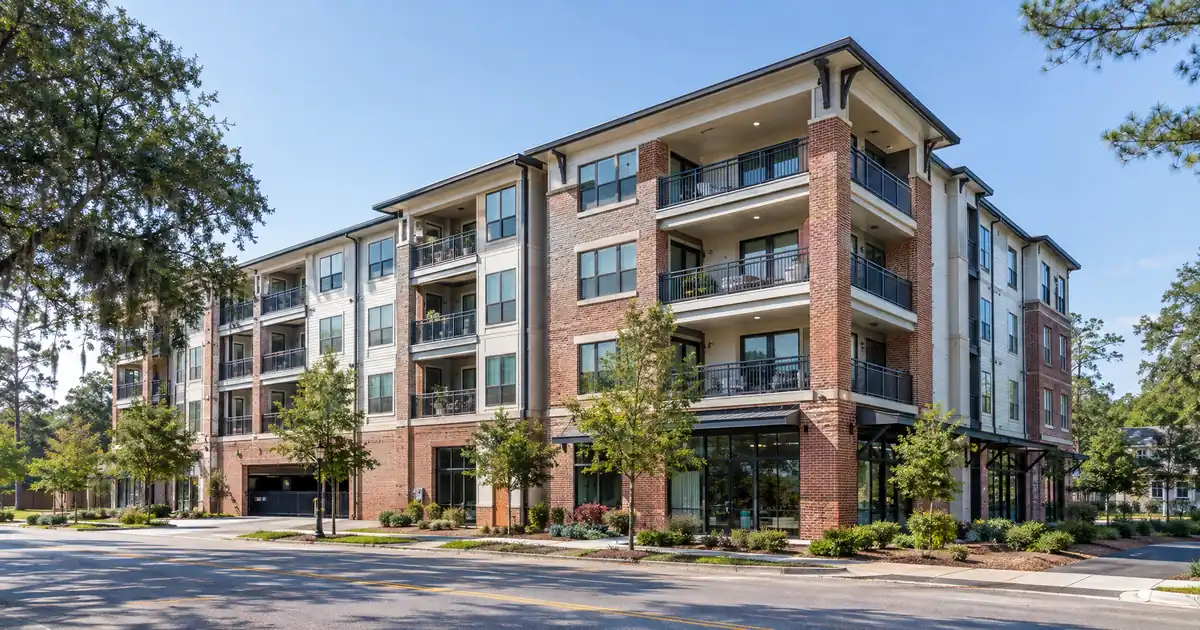
The friction on a Statesboro cash-out refinance is rarely the rent. It’s the appraisal. Redfin shows average days on market at 90 versus 50 a year earlier, and only 11 homes sold in November versus 18 the prior year. That is a thin comp set for a lender’s appraiser to work with. A DSCR cash out refinance here depends on two things: whether the rent covers the full monthly obligation, and whether the appraised value holds up when few sales support it. Lendmire (NMLS# 2371349) is a mortgage brokerage that helps Statesboro, Georgia investors arrange DSCR financing across 41 markets, including Washington, D.C. This piece is about pulling equity out of a rental already owned, not about buying one.
The Quick Read: A DSCR cash-out refinance in Statesboro, Georgia fits the investor who already owns a small multifamily or workforce rental near Georgia Southern and wants to redeploy equity, because the loan is underwritten primarily on the property’s rental income measured against its full monthly obligation, with leverage and proceeds set by lender guidelines and appraised value.
DSCR Cash-Out Calculator
Run the cash-out numbers in Statesboro, GA
Rate source: Freddie Mac 30-yr average via FRED® — Federal Reserve Bank of St. Louis · effective Sep 24, 2026
Prefilled with starting assumptions — enter your property’s value, balance, taxes, and insurance for a more accurate picture.
Program parameters update from Lendmire’s centralized guideline source. Taxes and insurance are editable estimates.
As of Sep 24, 2026 · General Freddie Mac market benchmark, not a Lendmire loan offer. Property value, balance, taxes, and insurance are editable estimates. Maximum loan-to-value varies by lender, program, property type, and seasoning. Not a Loan Estimate, approval, or commitment to lend. Program availability and eligibility are subject to lender guidelines, credit approval, property review, and underwriting.
- Renters make up 78% of Statesboro households, per RentCafe. Georgia Southern reached a record 29,633 students, up 7.73%.
- A modeled 3BR at the median price lands near 1.05 coverage including taxes and insurance.
- Low-basis duplex math models far stronger, but the listing sample is tiny.
- Cash-out caps at 75% LTV, with about six months of seasoning from title recording. These specifics are subject to lender guidelines and a full review of property, leverage, and credit.
Statesboro Market Snapshot
A quick read on the Statesboro investor landscape — figures come from the cited sources below. Confirm current property-level numbers before underwriting.
| Metric | Detail |
|---|---|
| Home prices | $449,900 median (Homes.com multifamily page) |
| University enrollment | 29,633 total (Georgia Southern University) |
The Campus Corridor Is Where Stacked Rent Shows Up
The strongest cash-out candidates in Statesboro sit on the lower-priced small multifamily stock around Georgia Southern. That includes the S. College Street corridor and the “Blue Mile,” where listings include everything from duplexes to a 16-unit property within walking distance of campus. Stacked rents against a modest value are the core argument. The demand behind them is hard to argue with.
Georgia Southern’s total enrollment reached 29,633 in the most recent fall, up 7.73%, per the university’s enrollment release. That figure spans all campuses. A JLL listing puts the Statesboro campus alone at 18,258 students the prior fall. The same listing describes a 164-unit student community as 98% occupied. That is a broker’s marketing claim about one property, so read it as directional only. Still, a city of about 33,400 people carrying a university this size is unusual. Wikipedia’s Statesboro entry lists the decennial census count at 33,438.
Next door, Northside Drive East has mixed-use buildings with four to six apartments plus a small commercial component. They look strong on income. They also raise a program-fit question, because a commercial component can complicate eligibility under residential DSCR programs, and the answer varies by lender. Past five units, financing typically moves toward commercial products altogether. A 16-unit building near the Blue Mile is a different loan category. It isn’t a bigger version of the duplex.
Run the Numbers: Duplex, Single-Family, and the Six-Unit Trap
On a modeled basis, a duplex at a low price basis covers far better than a median single-family home, while older stacked student units may not cover better at all. Every figure below is a modeled assumption on full PITIA, meaning principal, interest, taxes, and insurance, with bands rounded down. None of it is a quote.
| Scenario (modeled) | Value basis | Rent assumed | Coverage incl. Taxes and insurance |
|---|---|---|---|
| 3BR single-family, 75% LTV | $259,000 | $1,690 | about 1.05 |
| Duplex, two 2BR units, 75% LTV | $165,000 | $2,380 | above 2.0 |
| Six-unit near campus, 75% LTV | $925,000 | $6,060 | low 1.0s |
The single-family row uses the $259,000 median and the $1,690 3BR rent from Prop:Metrics. That is about 0.65% monthly rent-to-value. Coverage clears the 1.00x benchmark that most standard programs are built around, but without much cushion. Any vacancy or repair surprise eats it.
The duplex row mixes two sources, so treat it as a hypothesis. Redfin’s multifamily page shows five listings at a median list price of $165,000. Two 2BR units at the Prop:Metrics median of $1,190 each produce $2,380 in gross rent, roughly 1.4% rent-to-value. With a sample of five, that isn’t a market statistic. It shows the direction, which is that stacked income on lower-priced small multifamily works harder than single-family.
The third row is the warning. A six-unit listing near campus was asking $925,000, and the listing text suggested a lease renewal of $1,010 a month. If that is per unit, gross rent lands around 0.65% of price, which is no better than the median single-family house. The same listing shows 18 beds and 9 baths, which doesn’t fit six 3BR/2BA units, so the figure may be per bed. Nobody should underwrite from a listing blurb. Underwrite from the rent roll.
Here’s the catch. Unit count alone doesn’t clear coverage. Price per door does the work.
Skip the Assumption That Older Stacked Units Pencil
Rents on older student-oriented units can sit far below new-construction rents. One listing cites three units in a student-area complex rented at $750, $800, and $925. A new 3BR/2BA duplex side of 1,362 square feet was tenant-occupied at $1,675 a month, per Homes.com, which also shows multifamily asking prices from $215,000 to $690,000. Those listings are dated and unverified, but the spread is the point. Newer small multifamily at the right basis is where coverage looks strongest. Older stacked units may not deliver it.
The city’s own citywide housing study explains why. Student housing and most multifamily sit near campus or downtown, where the stock is oldest, and the study projects more than half of the city’s housing units will be over 50 years old within a decade. Newer development sits at the periphery. The study is dated, so use it for structure and not for current numbers. The practical read is that campus-side income stacking is realistic, but condition and repair assumptions matter to both the appraisal and the coverage math.
There’s also competing supply. Apartments.com lists 60 recently constructed apartments with rents from $812 to $1,603, and Zillow shows new professionally managed communities asking $1,365 for a 1BR and $1,775 for a 3BR. These are listing aggregates, not absorption data, and no reliable vacancy rate turned up. Even so, a small owner should compare their unit to that new product, not just to older comps, before assuming rent growth in a cash-out package.
What Does the Appraiser Do With Thin Comps?
The appraisal sets the ceiling on proceeds, and in Statesboro the ceiling is softer than the rent story suggests. Redfin puts the median sale price at $260,000, up 4.0% year over year, and Prop:Metrics shows $259,000 with 67 median days on market. Other sources disagree. Movoto shows a median listing price of $304,000, down 10%, while Homes.com shows a far higher median that appears skewed by listing mix. Treat them as a range. Don’t assume the positive Redfin trend continues. Terms vary by lender guidelines, property type, leverage, credit profile, and full file review.
The 75% LTV ceiling applies to appraised value, not to what an investor paid or hopes the property is worth. Fewer sales means fewer comparables and more room for a conservative number. This is a genuine toss-up for investors sitting on a recent purchase: the equity may look large on paper, but the lender’s number decides. Size the plan off conservative comps. If the cash-out only works at an optimistic appraisal, the plan has a hole in it. Exact terms depend on the lender’s guidelines, property type, leverage, and a full review of the borrower’s file.
Lease timing matters too. Rentable says student-driven leasing peaks in summer, with supply lowest in September. That is aggregator commentary, so it’s directional only. It still points to a practical step. Make sure the rent schedule and leases in the file run through the fall, and avoid submitting during a vacant summer turnover.
Demand That Isn’t Wearing a Backpack
Not every Statesboro tenant is a student, and that matters for the workforce single-family side of a portfolio. The Georgia Department of Labor lists the top Bulloch County employers, alphabetically and without counts. They include Briggs & Stratton, Great Dane, Georgia Southern, East Georgia Regional Medical Center, Publix, and Walmart. Choose Bulloch adds GAF and Cardinal Glass, and notes the county sits about an hour from the Port of Savannah along US-301 and I-16. The Development Authority describes East Georgia Regional Medical Center as a 150-bed hospital serving as the healthcare hub for an eight-county region.
Bulloch County’s population was 81,099 in the last census, up from 70,217 a decade earlier. Manufacturing, healthcare, and logistics jobs support year-round leasing that doesn’t depend on the academic calendar. The newer single-family subdivisions in ZIP 30461, on the south and east side, fit this tenant base, though no reliable rent data exists for that area. Brief caveat: newer single-family there carries the same thin rent-to-value as the median house, so it’s a stability play, not a coverage play.
Renters are the majority. RentCafe counts 9,776 renter households, 78% of the total, and Point2Homes puts the share near 80%.
Rent sources conflict widely. RentCafe reports an average of $1,789 and a 3BR at $1,815, Zumper puts the 3BR near $1,650, and Prop:Metrics says $1,690. The 3BR range of roughly $1,650 to $1,815 has decent agreement. The 2BR range, from about $1,063 to $1,475, does not. For a cash-out file, use the conservative end.
Seasoning, LTV, and Reserves in Plain Terms
For equity extraction, the parameters are few, and all of them depend on lender guidelines, credit approval, and property review. Typical guidance for this program looks like this:
- LTV: 75% is the ceiling on a cash-out refinance, and it is a hard cap for this program. Purchase leverage runs higher, but that number doesn’t carry over.
- Seasoning: about six months of ownership, measured from title recording.
- Coverage: standard programs are built around a 1.00x benchmark, where rent covers the full monthly obligation. Some lenders may review lower scenarios, but those usually require lower leverage, stronger credit, different pricing, or more reserves.
- Credit and reserves: a 620 floor, with tiers at 660, 680, and 700, and about six months of PITIA in reserves.
- Loan size: up to $3,000,000 on standard programs, with smaller balances routed through select lenders in the network.
Equity available is not a guaranteed cash figure. It depends on the rent used for lender review, the monthly obligation, reserves, and that 75% ceiling. Investors who want the mechanics can read Lendmire’s DSCR cash-out refi mechanics or the broader investor refinance options. The shorter version is that the ratio is monthly rent divided by the monthly obligation, including taxes, insurance, and any HOA dues, and the DSCR walkthrough covers the rest.
Picture an investor who owns a duplex near campus with a balance around 55% of its appraised value. The loan could go up to 75%, which leaves roughly 20 points of value as potential proceeds, before costs and subject to the appraisal. If the appraiser lands 8% below the investor’s expectation, that 20-point cushion shrinks fast. Model that version before committing to a purchase contract on the next deal.
What the Deal Desk Tends to See in Markets Like This
In college-town markets with thin sales volume, the common friction point is not coverage. It’s the file. The cleaner files from a documentation standpoint tend to arrive with complete leases, entity documents, title, and property details already assembled for lender review. They also include a rent roll that separates per-unit from per-bed rent. Files that lean on listing-page rents, or mix academic-year and twelve-month leases without saying so, tend to stall on the rent question before the coverage number is even calculated. Condition of older campus-area stock is the other recurring snag, because it feeds both the appraisal and the lender’s view of the property.
Where the Proceeds Go (and When Conventional Wins)
Cash-out proceeds are capital, and Statesboro gives an investor a few places to put it. The better use is usually another small multifamily at a low basis in the same submarket, where coverage still works and the tenant base is known. Deploying the proceeds into a median-priced single-family house is a different decision. At about 1.05 modeled coverage, it works but leaves little room, so it deserves a stress test first.
There is a flip point. An investor with one or two rentals, strong traditional employment income, and a property held personally may find a conventional cash-out refinance cheaper and simpler. The comparison between DSCR and conventional tends to tilt toward DSCR for entity-owned portfolios, self-employed borrowers, and files where property income is the cleaner basis. LLC-titled borrowers are reviewed subject to lender program eligibility. The stronger play for someone with many financed properties, where conventional limits run out, is DSCR, and it’s hard to see another practical path.
Before any of it, verify current local rental rules, taxes, and insurance with qualified local professionals. Those vary and sit outside the coverage math here. Investors who want to pressure-test a specific property can talk through the numbers or call 828-256-2183. The broader Lendmire’s Georgia DSCR platform covers how the state’s other markets compare.
Frequently Asked Questions
How do you qualify for a DSCR loan in Statesboro?
Qualification centers on the property’s rent relative to its full monthly obligation, including taxes and insurance. Most standard programs use 1.00x as the baseline, with credit tiers starting at a 620 floor. In Statesboro, the rent figure deserves the most care, because sources for a 3BR range from roughly $1,650 to $1,815. A lease-backed rent schedule beats an aggregator average. Final eligibility depends on lender guidelines, credit, reserves, and property review.
DSCR vs. conventional financing
Two common ways to finance an investment property in Statesboro, GA. They qualify you differently — here’s how investors weigh them.
Why investors choose it
- Qualifies on the property’s rental income — no personal tax returns, W-2s, or pay stubs needed to document income.
- No personal debt-to-income ceiling to clear, so existing mortgages and obligations don’t cap your borrowing the same way.
- Can be closed in an LLC, keeping the property inside a business entity.
- Built for scaling — not held to the limit on number of financed properties that conventional financing applies.
- Underwriting centers on the deal: generally qualifies when the rent covers the payment, a 1.00x coverage ratio being a common baseline (confirmed in underwriting).
- Designed specifically for investment property, including long-term and, where the program allows, short-term rentals.
Where it’s strong
- Often the lowest ongoing financing cost for a buyer who fully qualifies on personal income — a fit for a first property or a cost-first purchase.
Trade-offs for investors
- Requires full personal income documentation and must fit within a debt-to-income limit — salary, existing debts, and other mortgages all count.
- Typically held in your personal name rather than a business entity.
- Caps how many financed properties you can carry, which can become a ceiling as a portfolio grows.
- Evaluates you as a borrower as much as the property, which usually means more paperwork.
How investors usually choose: a first or single property often optimizes for the lowest financing cost; portfolio builders often optimize for leverage, vesting in an LLC, and scaling past conventional caps. The right answer depends on your goals, the property, and current guidelines — both paths run through select lenders in Lendmire’s wholesale network, with eligibility and terms confirmed in underwriting.
What are the requirements for a cash-out refinance on an investment property in Statesboro, Georgia?
Typical guidance is about six months of ownership measured from title recording, a 75% LTV ceiling, and about six months of PITIA in reserves. Coverage is reviewed against the 1.00x benchmark. The appraisal is the variable that matters most here, since thin sales volume can hold values down. Mixed-use buildings with commercial space and properties with five or more units may fall outside residential programs. Every figure here varies by lender and program — guidelines, property type, leverage, and credit profile all apply.
Do duplexes near Georgia Southern cash out better than single-family homes?
On modeled math, duplexes and small multifamily at a low basis cover much better than median single-family, but the listing sample is only five properties. Older stacked student units can rent far below newer duplexes, so basis and condition decide the result. A single-family 3BR at the median price models near 1.05 including taxes and insurance, which clears the benchmark with little room.
Does the academic calendar affect a Statesboro cash-out refinance?
It can. Student leasing peaks in summer, so the rent schedule should show leases running through the fall, not a vacant turnover period. Leases that look strong on paper during the academic year but lapse in summer may draw questions from a lender reviewing rent used for program review.
Can a self-employed investor refinancing in Statesboro be reviewed for DSCR financing?
Yes, subject to lender guidelines. Lendmire arranges DSCR investor loans, and the program centers on property rental income rather than personal income documentation. That often suits self-employed and entity-owned investors, though credit and reserves are still reviewed.
The Statesboro investors who underwrite from rent rolls, conservative comps, and a low price per door will come out ahead.
For current guidelines and terms, see Lendmire’s DSCR loan programs page.
About Lendmire
Lendmire, NMLS# 2371349, is a mortgage brokerage specializing in DSCR investor loans. It helps arrange financing across 41 markets, including Washington, D.C., through wholesale and investor-lending channels. The model centers on property-level rental income reviewed by the lender instead of W-2 documentation, subject to lender guidelines, and suits entity-owned and multi-property investors. Lendmire was recognized by Scotsman Guide as a 2026 Top Workplace and recognized by Scotsman Guide in 2025.
Get Started
Ready to find the right loan for you?
In about 30 seconds you can review financing options available for your investment property. No commitment required.
Informational only. Not a Loan Estimate, approval, or commitment to lend. Program availability and eligibility are subject to lender guidelines, credit approval, property review, and underwriting.
References
1. Redfin, Statesboro housing market
3. Georgia Southern University enrollment release
4. Homes.com
5. JLL listing
6. Wikipedia’s Statesboro entry
9. City of Statesboro citywide housing study
10. Apartments.com
11. Zillow
12. Rentable
13. Georgia Department of Labor, Bulloch County profile
14. Choose Bulloch, major employers
15. Zumper
16. recognized by Scotsman Guide as a 2026 Top Workplace
17. recognized by Scotsman Guide in 2025
This article is part of Lendmire’s investment property cash-out refinance program — full qualification details, guidelines, and scenarios live on the program page.
Related reading: Luxury Rental DSCR Loans In New Jersey · Jersey Shore Vacation Rental Loans: DSCR Financing In Ocean City, Cape May And Long Beach Island · DSCR Cash-out Refinance In New Jersey: Pulling Equity From A Rental
Guides: Investment Property Cash-Out Refinance in Georgia
Brandon Miller
Founder & CEO, Mortgage Loan Originator, Lendmire LLC
- Mortgage Loan Originator · NMLS# 1129696 · Verify on NMLS Consumer Access
- North Carolina Real Estate Broker · License# 343312 · Verify on NCREC
- North Carolina Insurance Producer · License# 19053198 · Property, Casualty, Life, Health · Verify on NAIC SBS
- Lendmire LLC · Firm NMLS# 2371349 · Verify firm licensure
Disclosures. The information presented in this article is general market commentary, not financial, legal, or tax advice. Lendmire is a mortgage brokerage (NMLS# 2371349) — not a direct lender or depository institution — and loan placement is subject to lender underwriting. Nothing in this content represents a commitment to lend. Loan terms, pricing, and program availability vary based on borrower qualifications, property characteristics, and state of subject property, and are subject to change at any time. Lendmire complies with Equal Housing Opportunity requirements. Consumer access: nmlsconsumeraccess.org.