
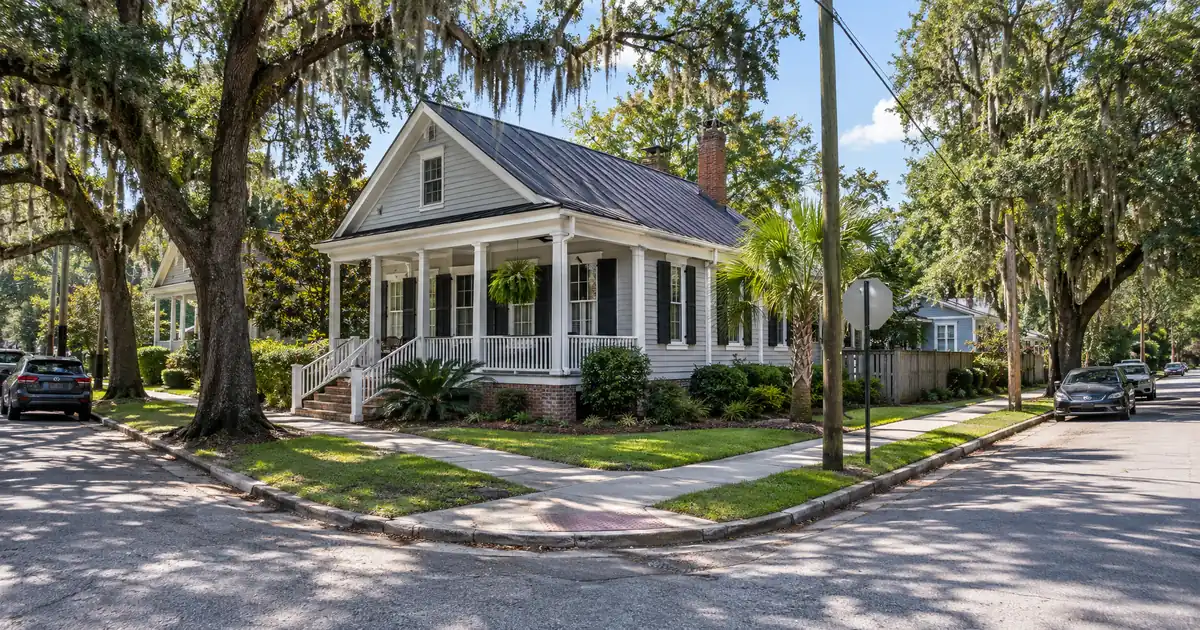
Picture an investor who bought a remodeled three-bed brick ranch in the Windsor Drive area at around $220,000 (a hypothetical, but close to what similar homes list for). The loan is a year old and the rent has been steady. Now the question is how much equity can come out, and whether the rental income still supports the loan after the refinance. That’s a cash out refinance investment property decision, and in Cayce the answer turns on appraisal evidence and rent ceilings more than on any appreciation story.
TL;DR: A cash-out refinance on a Cayce, South Carolina rental is underwritten primarily on the property’s rental income measured against its full monthly obligation, with the appraised value, roughly six months of seasoning, and a 75 percent LTV ceiling setting how much equity can be pulled, subject to lender guidelines and property review.
DSCR Cash-Out Calculator
Run the cash-out numbers in Cayce, SC
Rate source: Freddie Mac 30-yr average via FRED® — Federal Reserve Bank of St. Louis · effective Oct 1, 2026
Prefilled with starting assumptions — enter your property’s value, balance, taxes, and insurance for a more accurate picture.
Program parameters update from Lendmire’s centralized guideline source. Taxes and insurance are editable estimates.
As of Oct 1, 2026 · General Freddie Mac market benchmark, not a Lendmire loan offer. Property value, balance, taxes, and insurance are editable estimates. Maximum loan-to-value varies by lender, program, property type, and seasoning. Not a Loan Estimate, approval, or commitment to lend. Program availability and eligibility are subject to lender guidelines, credit approval, property review, and underwriting.
- Zillow’s typical Cayce value is $193,931, while Redfin’s sales median is $236K. The appraisal settles it.
- Sample asking rents for three-bed houses run roughly $1,525 to $1,850.
- Modeled coverage on a workforce three-bed lands around 1.15 to 1.20, taxes and insurance included.
- Zumper shows rents down 10 percent year over year, so size to in-place rent.
- Seasoning is about six months, and cash-out tops out at 75 percent LTV.
Lendmire (NMLS# 2371349) is a DSCR-focused mortgage broker that arranges investor loans across 40 states plus Washington, D.C., 41 markets total. LLC-titled borrowers are welcome, subject to lender program eligibility. Lendmire’s South Carolina DSCR loan programs cover this metro, and the cash-out qualification details lay out the mechanics. This piece covers the Cayce-specific part: what the numbers look like once you already own the asset.
The Appraisal Is the Whole Game
Cayce’s value data contradicts itself, and that makes the appraisal the deciding variable. Zillow’s smoothed index is up 9.1 percent over the past year. Redfin’s median of closed sales is down 2.5 percent, with a median price per square foot of $145. Homes.com shows a 12-month median sale price of $238,500, up 4 percent. Zillow’s ZIP 29172 figure is essentially flat at +0.1 percent.
Three portals, three directions. That’s not a market with a clear appreciation signal.
The practical read is that a small city with thin comps pushes appraisers toward West Columbia and Columbia sales. Homes.com’s multifamily page lists only three multi-family properties for sale, so comps for anything beyond a single-family house are shallow. Plan the cash-out at a conservative LTV and don’t bank on a renovation bump. The 75 percent ceiling is a cap, not a target. Equity available depends on the appraised value, the rent used for lender review, reserves of about six months of PITIA, and the payoff on the existing loan. It’s never a guaranteed cash figure.
Prior ownership matters too. Seasoning runs about six months, measured from title recording. An investor who bought, renovated, and waited that long is in a very different position from one who closed last quarter.
Where Coverage Holds: Windsor, Westview, and the Avenues
The Windsor Drive and Westview Drive area (ZIP 29033) is the workforce single-family submarket that pencils best for a cash-out. Sample listings put three-bed homes at roughly $215K to $249K to buy and $1,525 to $1,850 to rent, per Zillow’s rental listings. Those are asking rents on individual listings, not medians.
Run the numbers on a modeled case: a $220,000 appraised value, 75 percent LTV, and a $1,525 rent. Coverage including taxes and insurance comes out around 1.15 to 1.20. That clears the 1.00 benchmark that standard programs are built around, with some cushion. Drop to the $1,350 asking rent on a smaller two-bed and the number sits near 1.00, so the file gets thinner. If a property falls below 1.00 on long-term rent, the paths a lender might review include lower leverage, an interest-only structure, or a sub-1.00 program at a select lender. All of those depend on credit, reserves, and property review.
The older “Avenues” stock near Old Cayce (Michaelmas Avenue, Poplar Street, Lexington Avenue, Hudson Avenue) has the lowest entry prices, from about $125K to $295K. Demand there comes from tenants who work close to downtown Columbia. Lower basis helps coverage, but older homes bring condition issues that show up in appraisals. A cash-out on a $125K house at 75 percent LTV leaves little to work with after payoff, so this is more of a hold-and-improve play than an equity-extraction one.
DSCR files in markets like this one typically look the same. The rent comp set is built from asking listings, the appraiser leans on adjacent-city sales, and the file clears 1.00 but not by a wide margin. The stronger files usually pair a conservative LTV with documented in-place leases rather than market-rent projections. They also come in with reserves already sorted before the lender asks.
Duplexes: Don’t Assume They Win
Multi-unit looks better on paper than it does in Cayce. Take the low end of that Homes.com multifamily range, a duplex listed at $348,000. Two 2-beds at Zumper’s roughly $1,250 each gives $2,500 a month in rent, about 8.6 percent gross rent-to-price. A 3-bed at $1,650 against Redfin’s $236K median is about 8.4 percent. That’s essentially a tie. (This is illustrative arithmetic mixing sources, not a published yield.)
Modeled at 75 percent LTV on that $348,000 value, coverage including taxes and insurance lands around 1.2. So the duplex works, but it doesn’t clearly beat the single-family. Its real advantage is diversified income: one vacancy doesn’t zero out the property. The tradeoff is scarcity. With three listings on the market, finding one is harder than finding a three-bed ranch, and appraisal comps are thinner.
The Rent Ceiling Across the River
Older single-family and duplex rentals compete with new Class A product, and the supply picture is the main risk to watch. Columbia Metropolitan Magazine reports metro multifamily inventory up 7 percent since 2020, against about 2 percent in Charleston and Greenville, with another 1,800 units under construction. Colliers calls the market “balanced” and reports 92.3 percent Class A occupancy. Its later report says the downtown pipeline will add 25.29 percent to multifamily inventory.
The two sources differ in tone. Treat supply as a risk to monitor, not a crisis.
New communities near Knox Abbott and Brickworks ask well above the citywide figure. Advenir at One Eleven lists 2-beds from $1,898, and a nearby community was advertising one month free, per Apartments.com. Concessions at the top of the market suggest a ceiling. Underwrite the refinance at the lower Zumper and listing-level figures, never at new-build asking rents. The stronger play for a cash-out might be a mid-priced house that rents at a discount to that new product, though investors holding older units could argue the opposite if their basis is low enough.
Who Is Actually Renting in Cayce?
Commuters, mostly. The city’s population is 13,741 with a median household income of $62,045, and growth is essentially flat. Demand doesn’t come from Cayce itself. It comes from the metro economy next door. Per Data USA, residents work mainly in health care and social assistance (956), educational services (908), and construction (817).
The regional anchors are large. Central South Carolina reports Blue Cross Blue Shield of SC above 10,000 employees, and Prisma Health Midlands plus Lexington Medical Center above 21,000 combined. Lexington Medical Center sits in West Columbia, adjacent to Cayce. Dominion Energy has its South Carolina headquarters in the city, and Columbia Metropolitan Airport borders it. Cayce also sits at the junction of I-20, I-26, and I-77, which is why logistics expansion nearby, like the 45-job U.S. Venture project at the 803 Industrial Park, feeds rental demand.
Colliers also notes Columbia workforce growth of 3.43 percent year over year. That supports occupancy, but it isn’t a reason to underwrite rent growth.
Skip the Riverfront Without a Flood Check
The Riverwalk and River Arts District are a real amenity. The city’s Riverwalk page describes a 12-mile path along the Congaree and the Timmerman Trail near Dominion’s headquarters. But Redfin flags that 15 percent of Cayce properties face severe flood risk over 30 years. For a cash-out, that matters at the property level because the collateral gets reviewed, not just the rent. Pull flood status on the specific parcel before you plan the refinance around it.
Where the Proceeds Go
Cash-out proceeds only matter if the next deal works. In this market, the entry-price gap is the argument: Redfin lists Columbia at $259,900, against Charleston at $650,000 and Greenville at $499,500. Cayce’s typical value sits below even Columbia’s. Equity pulled from a seasoned Cayce rental can fund a down payment on another workforce house without stretching into a high-priced metro.
Mind the sequence. The refinance has to clear on the existing property’s coverage first. Credit tiers start from a floor of 620, with pricing and leverage typically improving as scores rise through 660, 680, and 700. Program details move, so confirm them before planning a purchase around the proceeds. For the broader picture, see the investor refinance breakdown. A rental held in an LLC with a self-employed owner is exactly the profile that breakdown covers.
Investors who’d rather run their own property through a scenario can pull a DSCR quote or call 828-256-2183.
Frequently Asked Questions
How long do I have to own a Cayce rental before a cash-out?
About six months, measured from title recording, though specifics vary by lender. A purchase that closed more recently generally needs to season first. Renovation spend doesn’t usually shorten that clock.
Which value will the appraiser use, given Zillow and Redfin disagree?
Neither one. The appraiser builds an opinion from closed comps, and in Cayce that often means West Columbia and Columbia sales because local volume is thin. Plan on a value near the Redfin closed-sales median rather than the Zillow index for a house in the Windsor and Westview area.
DSCR vs. conventional financing
There are two common ways to finance an investment property in Cayce, SC, and they qualify you differently — here’s how investors weigh them.
Why investors choose it
- Qualifies on the property’s rental income — no personal tax returns, W-2s, or pay stubs needed to document income.
- No personal debt-to-income ceiling to clear, so existing mortgages and obligations don’t cap your borrowing the same way.
- Can be closed in an LLC, keeping the property inside a business entity.
- Built for scaling — not held to the limit on number of financed properties that conventional financing applies.
- Underwriting centers on the deal: generally qualifies when the rent covers the payment, a 1.00x coverage ratio being a common baseline (confirmed in underwriting).
- Designed specifically for investment property, including long-term and, where the program allows, short-term rentals.
Where it’s strong
- Often the lowest ongoing financing cost for a buyer who fully qualifies on personal income — a fit for a first property or a cost-first purchase.
Trade-offs for investors
- Requires full personal income documentation and must fit within a debt-to-income limit — salary, existing debts, and other mortgages all count.
- Typically held in your personal name rather than a business entity.
- Caps how many financed properties you can carry, which can become a ceiling as a portfolio grows.
- Evaluates you as a borrower as much as the property, which usually means more paperwork.
How investors usually choose: a first or single property often optimizes for the lowest financing cost; portfolio builders often optimize for leverage, vesting in an LLC, and scaling past conventional caps. The right answer depends on your goals, the property, and current guidelines — both paths run through select lenders in Lendmire’s wholesale network, with eligibility and terms confirmed in underwriting.
Do Cayce rents support a cash-out at 75 percent LTV?
On a workforce three-bed, often yes. Modeled with taxes and insurance, coverage lands around 1.15 to 1.20 at a rent near $1,525. Two-beds near $1,350 sit close to 1.00, where the file gets thinner. Zumper shows rents down 10 percent year over year, so use in-place leases.
Does a duplex give better coverage than a single-family in Cayce?
Not clearly. Gross rent-to-price comes out around 8.6 percent on a duplex versus 8.4 percent on a three-bed single-family, based on illustrative listing math. The edge is income diversification, not yield, and comps are scarcer.
Does flood exposure along the river affect a cash-out?
Yes, it can. Redfin reports 15 percent of Cayce properties face severe flood risk over 30 years, and collateral review is part of the refinance. Check flood status on the specific property before you count on the proceeds.
The One Step Worth Doing First
Before sizing any refinance, pull the closed comps within a mile of the property and compare them to your in-place lease. If the appraised value and the rent both hold up against that set, the 75 percent LTV math takes care of itself. Most Cayce files get decided by that comparison, not by what the portals say about the city.
For current guidelines and terms, see Lendmire’s DSCR loan programs page.
About Lendmire
As a DSCR and non-QM mortgage broker, Lendmire (NMLS# 2371349) connects investors with wholesale lending channels across 41 markets, including Washington, D.C. The property’s rental income, not the borrower’s traditional personal-income documentation, is central to lender review, an approach that suits self-employed operators and portfolios beyond four financed properties. The firm is recognized as a 2026 Scotsman Guide Top Mortgage Workplace and a 2025 Scotsman Guide Top Mortgage Workplace, as covered in Lendmire’s 2026 Top Workplace announcement.
Get Started
Ready to find the right loan for you?
In about 30 seconds you can review financing options available for your investment property. No commitment required.
Informational only. Not a Loan Estimate, approval, or commitment to lend. Program availability and eligibility are subject to lender guidelines, credit approval, property review, and underwriting.
References
2. Redfin Housing Market, Cayce
3. Zillow — Cayce SC Rent Houses
4. Zumper, Cayce rent research
6. Homes.com — Cayce SC Multi Family Homes for Sale
7. Columbia Metropolitan Magazine, State of the Market
8. Colliers, Columbia multifamily report
9. Colliers — Columbia SC Columbia Multifamily Market Report 2026
10. Apartments.com
11. 13,741
12. Data USA, Cayce
13. Central South Carolina, Columbia metro employers
15. Dominion Energy
16. Riverwalk page
17. a 2026 Scotsman Guide Top Mortgage Workplace
18. a 2025 Scotsman Guide Top Mortgage Workplace
19. Lendmire’s 2026 Top Workplace announcement
This article is part of Lendmire’s investment property cash-out refinance program — full qualification details, guidelines, and scenarios live on the program page.
Related reading: Luxury Rental DSCR Loans In New Jersey · Jersey Shore Vacation Rental Loans: DSCR Financing In Ocean City, Cape May And Long Beach Island · DSCR Cash-out Refinance In New Jersey: Pulling Equity From A Rental
Guides: Investment Property Cash-Out Refinance in South Carolina
Brandon Miller
Founder & CEO, Mortgage Loan Originator, Lendmire LLC
- Mortgage Loan Originator · NMLS# 1129696 · Verify on NMLS Consumer Access
- North Carolina Real Estate Broker · License# 343312 · Verify on NCREC
- North Carolina Insurance Producer · License# 19053198 · Property, Casualty, Life, Health · Verify on NAIC SBS
- Lendmire LLC · Firm NMLS# 2371349 · Verify firm licensure
Disclosures. The information presented in this article is general market commentary, not financial, legal, or tax advice. Lendmire is a mortgage brokerage (NMLS# 2371349) — not a direct lender or depository institution — and loan placement is subject to lender underwriting. Nothing in this content represents a commitment to lend. Loan terms, pricing, and program availability vary based on borrower qualifications, property characteristics, and state of subject property, and are subject to change at any time. Lendmire complies with Equal Housing Opportunity requirements. Consumer access: nmlsconsumeraccess.org.