
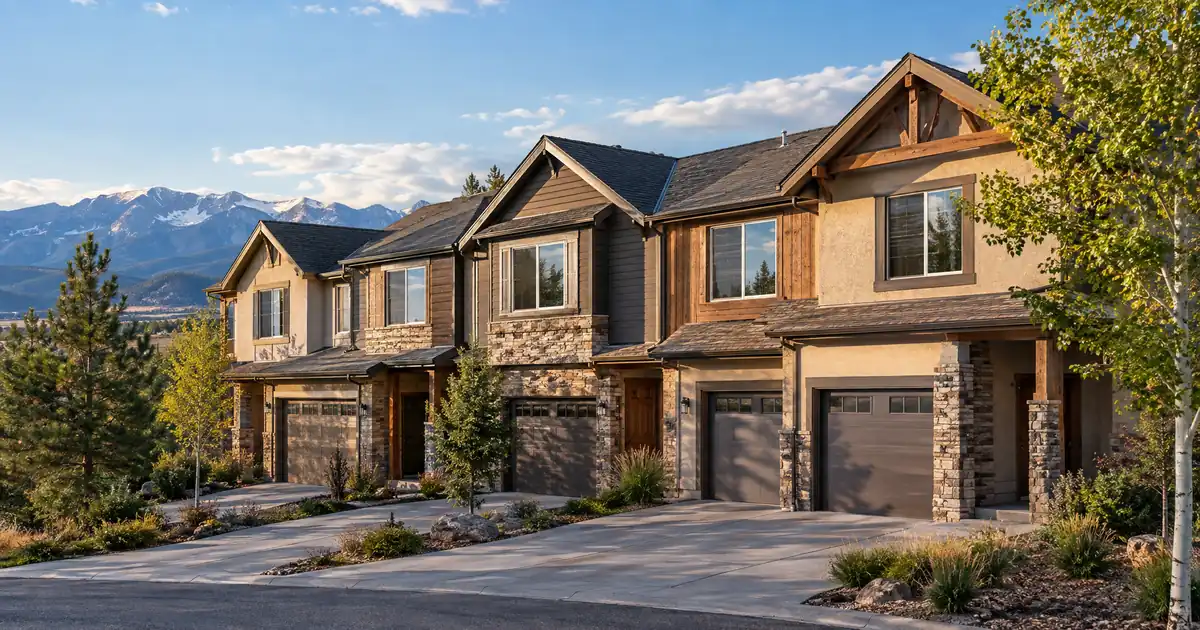
Thornton’s equity story is shifting from momentum to maintenance. Price indicators are flat to slightly negative, apartment supply keeps arriving, and the transit and water projects that underpin long-term demand are still unfinished. For owners weighing a DSCR cash-out refinance over the next 6 to 18 months, the decision is less about riding appreciation and more about sizing a loan to the rent and appraisal available today.
The Quick Read: A DSCR cash-out refinance in Thornton, Colorado is a loan on a rental the investor already owns, underwritten primarily on the property’s rental income measured against its full monthly obligation, with proceeds limited by a 75 percent loan-to-value ceiling and roughly six months of ownership seasoning, subject to lender guidelines.
DSCR Cash-Out Calculator
Run the cash-out numbers in Thornton, CO
Rate source: Freddie Mac 30-yr average via FRED® — Federal Reserve Bank of St. Louis · effective Sep 24, 2026
Prefilled with starting assumptions — enter your property’s value, balance, taxes, and insurance for a more accurate picture.
Program parameters update from Lendmire’s centralized guideline source. Taxes and insurance are editable estimates.
As of Sep 24, 2026 · General Freddie Mac market benchmark, not a Lendmire loan offer. Property value, balance, taxes, and insurance are editable estimates. Maximum loan-to-value varies by lender, program, property type, and seasoning. Not a Loan Estimate, approval, or commitment to lend. Program availability and eligibility are subject to lender guidelines, credit approval, property review, and underwriting.
- Redfin puts the median sale price near $520,000, down 1.6 percent year over year.
- Zumper lists 3-bedroom rents at $2,545, so max-leverage cash-outs land below 1.00 on modeled coverage.
- Older southern Thornton near the N Line likely offers the best rent-to-price, though no verified neighborhood figures exist.
- Cash-out proceeds should be sized on today’s appraisal and rent, with no growth assumed.
Thornton Market Snapshot
A quick read on the Thornton investor landscape — figures come from the cited sources below. Confirm current property-level numbers before underwriting.
| Metric | Detail |
|---|---|
| Home prices | $520K median (Redfin Thornton Housing Market) |
| Typical rents | $1,845 average (RentCafe) |
| Population | 240,000 potential population in 40 years (Colorado Sun, Thornton water) |
| Vacancy | Denver county 8.3% (Denver Gazette) |
Why the Number Looks Different on a Refinance
A cash-out refinance is judged on the same coverage test as a purchase, but the inputs change. The lender looks at rent used for lender review against full PITIA (principal, interest, taxes, insurance and any HOA dues), and a larger loan balance pushes that ratio down. Program guidance for this article’s network runs like this, subject to lender guidelines and borrower profile:
- Leverage: cash-out LTV tops out at 75 percent, a lower ceiling than purchase loans.
- Seasoning: about six months of ownership, measured from title recording.
- Coverage: a 1.00 minimum is the common baseline.
- Credit: tiers start at a 620 floor.
- Reserves: about six months of PITIA.
- Loan size: up to $3,000,000 on standard programs.
Equity available is not a guaranteed cash figure. It depends on the appraisal, the rent used for lender review, the reserves and that 75 percent ceiling working together. For the mechanics behind the coverage ratio, see the guide “What Is a DSCR Loan”, which explains how DSCR is calculated, and for the refinance-specific process, the guide “The Refi Options” covers it step by step.
Where Thornton Equity Actually Sits
Thornton equity is real but plateaued. Redfin reports a median sale price of $520K over the three months ending May, down 1.6 percent year over year, with homes selling in about 17 days and receiving roughly 2 offers. Price per square foot is up 5.1 percent to $246, which suggests smaller or older homes are holding value even as the headline median slips. Zillow measures differently, with an average home value of $503,275 and a 3.0 percent annual decline. The two sources disagree by a few percent on level, but they agree on direction.
This article uses Redfin’s $520K as the working median throughout. Population supports the demand side: World Population Review estimates 149,318 residents, up about 5 percent since the last census, with median household income of $103,088.
What does that mean for someone who bought years ago? Equity likely exists from the purchase-era basis. The next 6 to 18 months probably won’t add much to it. The appraisal is the variable that matters, and no one should model a refinance on the assumption that it will come in higher than a recent comparable sale.
Run the Numbers on a 3-Bedroom
Take a modeled scenario. An investor owns a 3-bedroom single-family rental in Thornton and expects an appraisal near the citywide median of $520K. Zumper lists 3-bedroom rents at $2,545 a month. Divide that rent by the median price and the gross monthly yield comes to about 0.49 percent, which is Lendmire Research’s own calculation and not a published statistic. That sits well below the 1 percent rule of thumb.
Now the coverage math, labeled as a modeled assumption: rent divided by full PITIA, including taxes and insurance at Colorado averages.
| Cash-out LTV | Modeled coverage (full PITIA) |
|---|---|
| 75 percent | Mid-0.80s, below 1.00 |
| 60 percent | Roughly 1.0 |
Max leverage does not clear the 1.00 baseline on that rent. Here’s the catch: the 75 percent ceiling is a cap, not a target, and in Thornton the rent rarely supports pulling to the cap.
A borrower in that position has several paths a lender may review. One is a smaller cash-out at lower LTV. Another is a sub-1.00 program, which typically carries stronger compensating factors, different pricing or more cash down. A third is an interest-only structure. Which of these apply depends on lender guidelines, credit profile, reserves and property review. Nothing here implies a particular file will qualify.
Proceeds matter as much as the ratio. If the goal is capital for the next acquisition, a smaller cash-out that keeps the existing rental clear of 1.00 often beats a larger one that strains it. The stronger play may be pulling less and keeping the property’s coverage cushion, though an investor with a high-conviction next deal could reasonably argue for maximum extraction and a sub-1.00 program.
Working DSCR brokers see a recurring pattern in suburban markets where price outran rent: the appraisal gets the attention, but the rent schedule decides the loan size. Files that pencil are usually the ones where the borrower brings a lease at or near market comps, and the ones that stall are those built on asking rents from an older listing.
Which Submarkets Carry the Coverage?
Thornton has no verified neighborhood-level rent or price dataset, so the picture below is qualitative and drawn from local characterizations.
Original Thornton and the south side. Near 88th Avenue and the N Line station, this is the oldest housing, with 1950s to 1980s ranches and split-levels. Would You Live There describes the lowest prices in the city and a buyer pool split roughly evenly between first-time owners and investors. Lower basis against a similar rent premium is what makes coverage work. This is likely the strongest rent-to-price pocket in the city, but no source quantifies it.
Eastlake and the 124th Avenue station. Newer townhomes and condos have grown up around the N Line’s current northern terminus. Houzeo puts the average condo near $342,287 against about $572,495 for single-family homes, and it is a secondary aggregator, so treat the spread as directional. Homes.com reports about 34 percent of Eastlake Village residents rent, which suggests an established rental pool. Lower entry prices help coverage, but HOA rental rules and dues need review before anyone models a refinance.
Thornton Crossroads and the 104th corridor. Another N Line stop with 880 parking spaces, near Amazon operations. It is a commuter-friendly location without published rent data.
South Thornton near 102nd and Milwaukee. New-construction communities here start in the mid-$400Ks per a builder-affiliated guide from Liveparterre. New product competes with existing rentals for tenants, and it resets comparable-sale ceilings.
What Does Tenant Demand Rest On?
Demand rests on jobs, not on a campus. Thornton has no verified university enrollment base, so the tenant pool is workers. The city’s 2025 annual accomplishments report lists the top ten employers as Adams 12 Five Star Schools, Amazon, American Furniture Warehouse, Murphy, the City of Thornton, North Suburban Medical Center, King Soopers, Main Event, Topgolf and Walmart. It names retail, business services, logistics and advanced manufacturing as key industries, with projects tied to Google, Forge Nano, Solid Power and Gordon Foods. Headcounts weren’t available, so the point is breadth: retail, logistics and healthcare tenants across several sectors rather than one dominant payroll.
DSCR vs. conventional financing
Two common ways to finance an investment property in Thornton, CO. They qualify you differently — here’s how investors weigh them.
Why investors choose it
- Qualifies on the property’s rental income — no personal tax returns, W-2s, or pay stubs needed to document income.
- No personal debt-to-income ceiling to clear, so existing mortgages and obligations don’t cap your borrowing the same way.
- Can be closed in an LLC, keeping the property inside a business entity.
- Built for scaling — not held to the limit on number of financed properties that conventional financing applies.
- Underwriting centers on the deal: generally qualifies when the rent covers the payment, a 1.00x coverage ratio being a common baseline (confirmed in underwriting).
- Designed specifically for investment property, including long-term and, where the program allows, short-term rentals.
Where it’s strong
- Often the lowest ongoing financing cost for a buyer who fully qualifies on personal income — a fit for a first property or a cost-first purchase.
Trade-offs for investors
- Requires full personal income documentation and must fit within a debt-to-income limit — salary, existing debts, and other mortgages all count.
- Typically held in your personal name rather than a business entity.
- Caps how many financed properties you can carry, which can become a ceiling as a portfolio grows.
- Evaluates you as a borrower as much as the property, which usually means more paperwork.
How investors usually choose: a first or single property often optimizes for the lowest financing cost; portfolio builders often optimize for leverage, vesting in an LLC, and scaling past conventional caps. The right answer depends on your goals, the property, and current guidelines — both paths run through select lenders in Lendmire’s wholesale network, with eligibility and terms confirmed in underwriting.
Transit widens the pool. The N Line put four stations inside city limits, and the city is planning stations at York/144th and North Thornton/CO 7. The RTD N Line page describes an 18.5-mile line with 13 miles built. There’s no estimated completion date for the extension, so investors should not underwrite around future stations.
Skip the Northern Subdivisions?
For cash-out purposes, mostly yes. Heritage Todd Creek, Trail Winds, Amber Creek and Todd Creek Farms are newer, higher-priced areas where Would You Live There cites $530,000 to $700,000 for most single-family homes, and builders list from the $550Ks to $800Ks and above. Rent-to-price compresses further as prices climb, so coverage at any meaningful LTV gets harder. These areas may suit an owner focused on appreciation or tenant quality, but a coverage-driven cash-out is a weak fit.
The Rent Picture Has Conflicting Signals
Read the rent data with care, because sources disagree. Zumper’s average rent is $2,250, up 4 percent year over year, with apartments at $1,680 and houses at $2,695. Point2Homes shows apartment rents down about 5 percent from a year earlier. Those directions can’t both describe the same tenants, which is a reason to pull leasing comps yourself before appraisal.
Two other data points matter. RentCafe puts average apartment rent at $1,845, roughly $700 below Zumper’s 3-bedroom figure, and says buildings average about 28 years old with 51 percent built since 2000. Single-family rentals compete against a lower-priced, mostly newer apartment stock, which limits how far rent can be pushed to reach coverage on a roughly $520K house. Underwrite at market comps, not at asking rents.
On vacancy, an aggregator shows a 3 percent rental vacancy in Thornton, but it names no underlying source or date. Meanwhile the Denver Gazette reports Denver County apartment vacancy at 8.3 percent per the Apartment Association of Metro Denver, and lists Thornton among suburban areas receiving new residential projects. Keep a vacancy reserve in the model rather than trusting the tighter number.
Water Is the Quiet Support Beam
Thornton’s growth is tied to water it does not yet fully have. The Colorado Sun reports the city could reach 240,000 people in 40 years, but only with access to distant water. It also reports a 25-home project near the Eastlake station was scrapped because the city couldn’t promise water. Larimer County commissioners later approved the pipeline project, a step toward relief but not a finished supply.
The inference, and it is only an inference, is that constrained new taps may support the value of existing rentals by limiting how much competing product can be built. Investors should treat that as a slow-moving tailwind and not as an appraisal argument. The city’s report also notes tiered water-connection fees, and builders are still active from the mid-$400Ks upward, so supply has not stopped.
Small Multifamily Is Thin
Investors hoping to use a duplex or fourplex as the refinance asset should check the comps first. Homes.com showed only 4 multifamily listings in Thornton at the time of research, including a 5 to 6 unit townhome complex with unit rents starting around $2,100 for 2-bed/1.5-bath units. That is a snapshot, not a survey. Scarce comps limit both acquisition options and appraisal support, and no source verifies multi-unit rents or prices here. Workforce single-family in the older south and townhomes near the stations are the more plausible fits.
Frequently Asked Questions
How much equity can a Thornton owner realistically pull out?
The ceiling is 75 percent of appraised value, but the rent often sets a lower limit. On a 3-bedroom near the citywide median, modeled coverage falls below 1.00 including taxes and insurance at the cap. A smaller draw usually fits better, subject to lender guidelines and borrower profile.
Does Thornton’s flat pricing hurt a cash-out?
It removes any cushion for appreciation. Redfin shows prices down 1.6 percent year over year and Zillow shows a 3.0 percent decline, so the appraisal should be treated as the ceiling. Size the loan on today’s value and today’s rent, and expect no help from growth.
Is the N Line a reason to favor certain submarkets?
It is a demand support for areas within walking or short driving distance of the four in-city stations, such as Original Thornton and Eastlake. It should not be a growth assumption, because the extension to York/144th and North Thornton has no estimated completion date.
Do townhomes near Eastlake work better than single-family?
Lower entry prices help coverage, and about 34 percent of Eastlake Village residents rent. HOA dues and rental rules can offset that. Review them before modeling, since dues count toward the monthly obligation in the ratio.
How does this compare with a conventional refinance?
DSCR files are reviewed on property income, while a conventional loan on an investor property turns on personal income documentation. For a broader view of paths, see these refinancing options or talk to Lendmire at 828-256-2183.
The Blind Spot Most Thornton Refinances Miss
The biggest risk is modeling on the wrong rent. Thornton’s rent sources disagree on direction, apartments compete on price and age, and single-family yields sit near 0.49 percent of value. A refinance sized on an optimistic rent schedule can look fine in a spreadsheet and fall short when the lender applies market comps. Start from what similar leases are actually signing at, keep a vacancy reserve, and treat the 75 percent ceiling as a limit you probably won’t reach. Investors who want a lender-side read on their file can talk to Lendmire, and those looking at the wider state can review Colorado DSCR investor loans. Investors should also verify current local rental rules, taxes and insurance with qualified local professionals.
In Thornton the equity is already in the walls, and the rent decides how much of it a DSCR loan can release.
Get Started
Ready to find the right loan for you?
In about 30 seconds you can review financing options available for your investment property. No commitment required.
Informational only. Not a Loan Estimate, approval, or commitment to lend. Program availability and eligibility are subject to lender guidelines, credit approval, property review, and underwriting.
About Lendmire
As a non-QM mortgage broker (NMLS# 2371349), Lendmire facilitates DSCR investor loans across 41 markets, including Washington, D.C. DSCR eligibility is generally reviewed around property-level rental income instead of personal income documentation, subject to lender guidelines, serving LLC-structured portfolios and self-employed borrowers who don’t fit conventional boxes. Lendmire is a two-time Scotsman Guide Top Mortgage Workplace, recognized as a top-ranked workplace in 2025 and a top-ranked workplace in 2026, as covered in the 2026 Top Workplace recognition announcement.
This article is part of Lendmire’s investment property cash-out refinance program — full qualification details, guidelines, and scenarios live on the program page.
Related reading: Luxury Rental DSCR Loans In New Jersey · Jersey Shore Vacation Rental Loans: DSCR Financing In Ocean City, Cape May And Long Beach Island · DSCR Cash-out Refinance In New Jersey: Pulling Equity From A Rental
Guides: Investment Property Cash-Out Refinance in Thornton, CO · Investment Property Cash-Out Refinance in Colorado
Brandon Miller
Founder & CEO, Mortgage Loan Originator, Lendmire LLC
- Mortgage Loan Originator · NMLS# 1129696 · Verify on NMLS Consumer Access
- North Carolina Real Estate Broker · License# 343312 · Verify on NCREC
- North Carolina Insurance Producer · License# 19053198 · Property, Casualty, Life, Health · Verify on NAIC SBS
- Lendmire LLC · Firm NMLS# 2371349 · Verify firm licensure
Important disclosures. Lendmire (NMLS# 2371349) is a licensed mortgage brokerage. Lendmire is not a direct lender, depository institution, or financial advisor. All loan inquiries are subject to lender underwriting; this article does not constitute a commitment to lend. Rates, terms, and program guidelines are subject to change without notice and vary by borrower profile, property type, and state. Information in this article is general in nature and is not financial, legal, or tax advice. Equal Housing Opportunity. NMLS Consumer Access: nmlsconsumeraccess.org.